Showy Milkweed (Asclepias speciosa)
Asclepias speciosa, commonly known as Showy Milkweed, is a robust, rhizomatous perennial wildflower found across much of the western two-thirds of the United States. A member of the Apocynaceae (dogbane family, in the former milkweed family Asclepiadaceae), it is prized by gardeners for its large, softly fragrant pink flower clusters and by conservationists as one of the most important monarch butterfly host plants west of the Rocky Mountains.
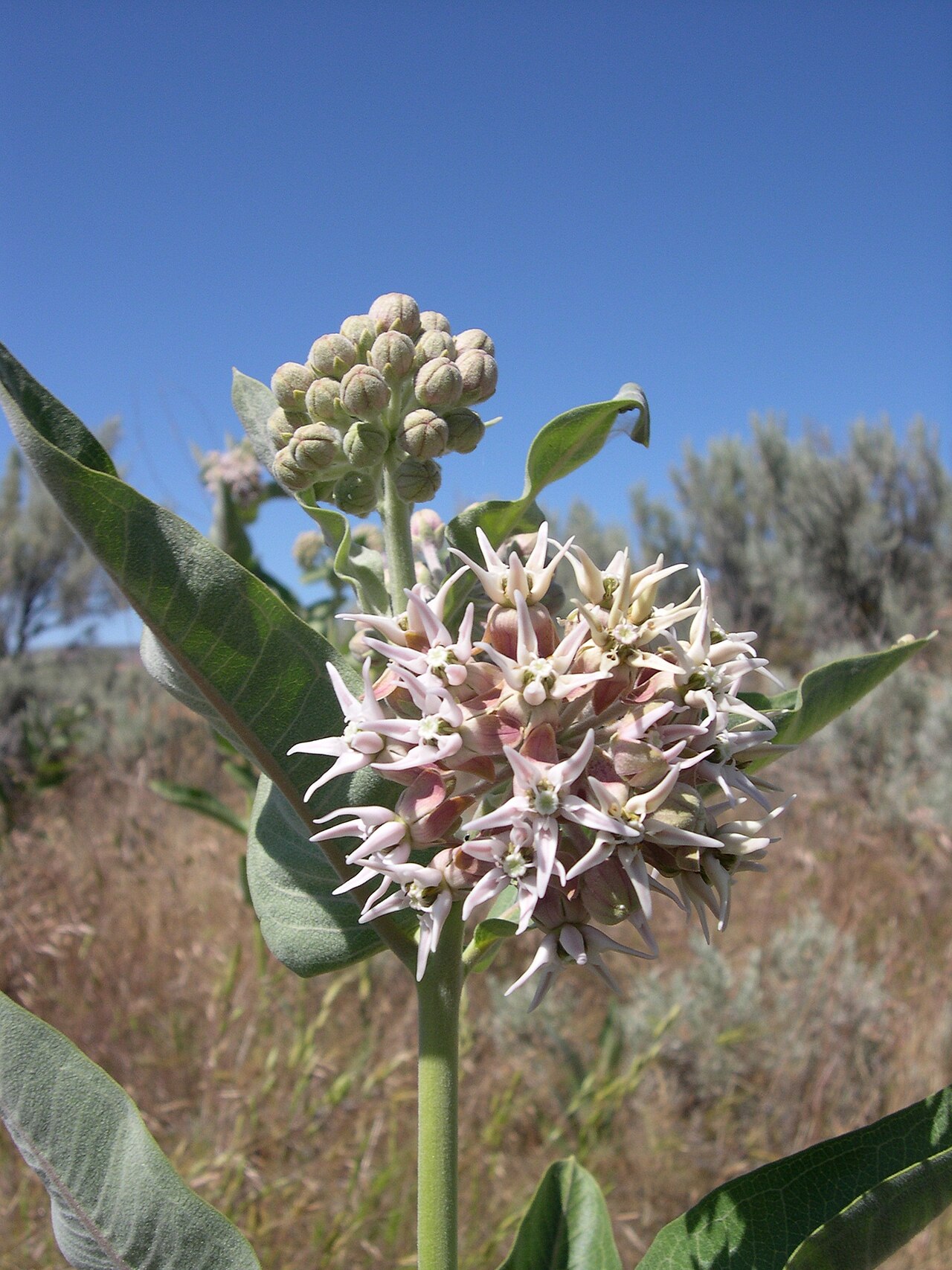
Showy Milkweed typically grows 2 to 4 feet tall on thick, unbranched stems covered in fine, velvety white hairs. Its broad, gray-green leaves have the same soft, felted texture, giving the whole plant a slightly silvery look that sets it apart from the smoother-leaved Common Milkweed (Asclepias syriaca) of the eastern states. Round, ball-shaped clusters of large star-shaped pink-to-rose flowers appear at the stem tips from early to mid-summer, followed by warty, spindle-shaped seed pods that split open in fall to release seeds on silky white floss.
Like all milkweeds, every part of this plant contains milky latex sap laden with cardiac glycosides (cardenolides) — compounds that make it toxic if eaten by people, pets, or livestock, and that can irritate skin and especially the eyes on contact. That same chemistry is also what makes milkweed essential to monarch butterflies: monarch caterpillars sequester the toxins from the leaves they eat, which protects both the caterpillars and the adult butterflies from most predators. Showy Milkweed is one of the best native larval host plants for monarchs across the Great Plains, Rocky Mountains, and Intermountain West, and no native plant garden in its range is complete without it.
Identification
Showy Milkweed is a clump- and colony-forming perennial that spreads by rhizomes, so an established patch often consists of many unbranched stems arising from the same connected root system rather than a single fixed clump.
Stems
Stems are stout, upright, and typically unbranched, reaching 2 to 4 feet (occasionally 5 feet) tall. They are covered with short, soft, grayish hairs (tomentose) and exude a milky white latex sap immediately when cut or broken — the defining feature of the milkweed genus.
Leaves
Leaves are opposite, broadly oval to oblong, 4 to 8 inches long, with a prominent pale midrib and a short petiole. Both surfaces are densely covered in fine white hairs, giving the foliage a soft, felt-like, grayish-green appearance that is one of the easiest ways to distinguish this species from Common Milkweed, whose leaves are smoother and more uniformly green.
Flowers
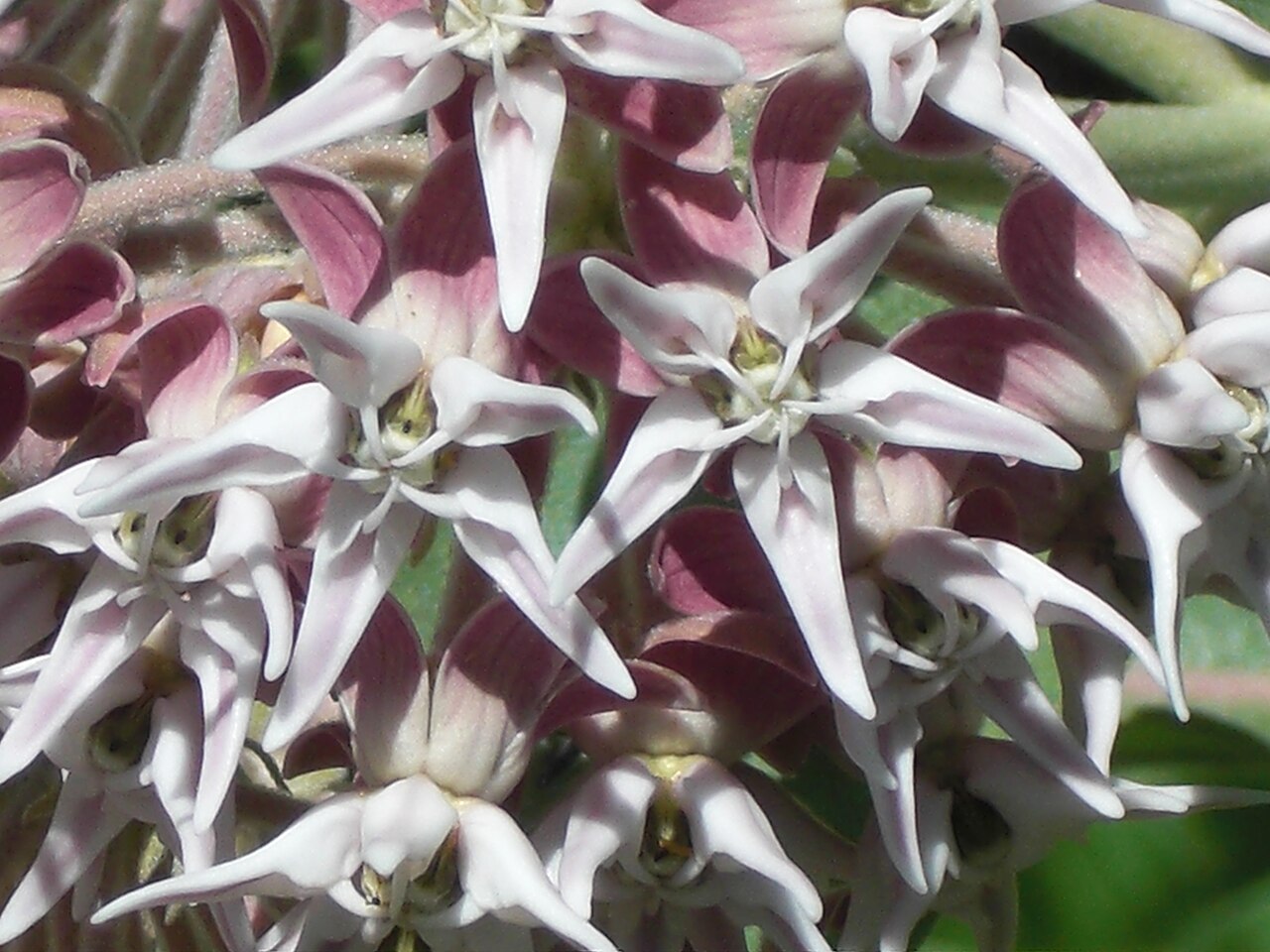
Flowers are borne in rounded umbels, 2 to 4 inches across, at the top of the stem and in the upper leaf axils. Each individual flower is unusually large for a milkweed — up to ¾ inch across — with five reflexed pink-to-rose petals beneath a crown of pale pink hoods and incurved horns, a structure typical of the genus but on a notably showy scale here, hence the common name. Flowering runs from June through August depending on elevation and latitude, with a strong, sweet fragrance that draws large numbers of pollinators.
Fruit & Seeds
The fruit is a large, spindle-shaped follicle (pod), 3 to 5 inches long, covered in soft, warty protuberances rather than the sharper spines found on some other milkweeds. Pods ripen and split open from late summer into fall, releasing flat brown seeds, each attached to a tuft of silky white floss (coma) that carries it on the wind.
Quick Facts
| Scientific Name | Asclepias speciosa |
| Family | Apocynaceae (Dogbane/Milkweed) |
| Plant Type | Herbaceous Perennial Wildflower |
| Mature Height | 2–4 ft |
| Mature Spread | Colonizes by rhizome; individual stems 1–2 ft apart |
| Growth Rate | Moderate to fast once established |
| Sun Exposure | Full Sun to Part Shade |
| Water Needs | Average, tolerates periodic dryness once established |
| Soil Type | Adaptable; best in loam or sandy loam |
| Soil pH | 6.0–8.0 (neutral to slightly alkaline) |
| Bloom Time | June – August |
| Flower Color | Rose-pink to mauve |
| Fall Color | Foliage yellows and dies back to the ground |
| Fruit | Warty gray-green follicles with silky-tufted seeds |
| Deer Resistant | Yes (toxic foliage deters browsing) |
| USDA Hardiness Zones | 3–9 |
Native Range
Showy Milkweed is native across a huge swath of the western and central United States and adjacent Canada, from Washington and British Columbia east through the northern Rockies and Great Plains to the upper Midwest, and south through the Great Basin and the Southwest into Texas. It is genuinely common within this range, found in dozens of states from the Pacific Coast to the Mississippi River valley, though it thins out and becomes absent across most of the Southeast and Northeast.
Within that broad range it favors open, sunny ground with some seasonal moisture: roadsides, irrigation ditches, streambanks, moist meadows, pasture edges, and disturbed or fallow fields. It is notably absent as a native species from Arkansas and Louisiana, where it has only been recorded as a non-native escape, and its native range in Oklahoma and Texas is confined to the western parts of those states, so it is not a local native in eastern Oklahoma, East Texas, Arkansas or Louisiana.
Because it spreads readily by both rhizome and wind-blown seed, Showy Milkweed can form large colonies in favorable disturbed sites such as ditch banks and field margins. This vigor is an asset in a wildlife garden or restoration planting but worth planning for — give it room, or plant it where a spreading patch is welcome rather than in a tightly bordered bed.
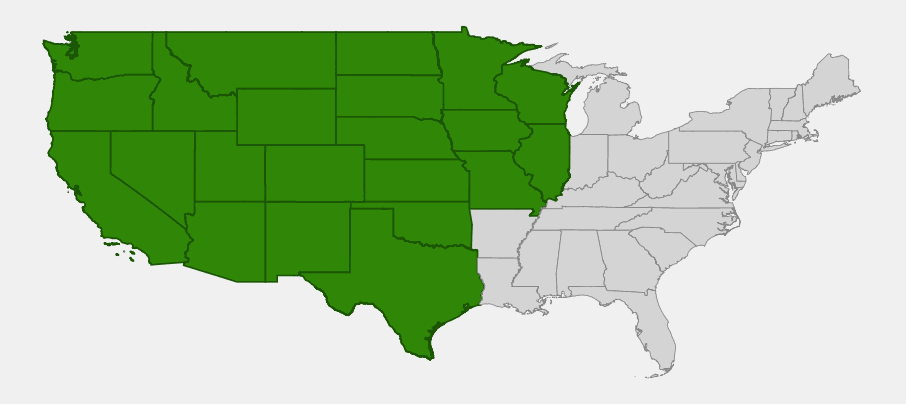
📋 Regional plant lists featuring Showy Milkweed: Arizona & New Mexico · Utah & Western Colorado · Nebraska, Kansas & Eastern Colorado · Montana & Wyoming · Idaho, Eastern Oregon & Eastern Washington · Western Oregon & Western Washington · North Dakota, South Dakota & Western Minnesota · Michigan, Wisconsin & Eastern Minnesota · Illinois, Iowa & Missouri
Growing & Care Guide
Showy Milkweed is an easy, rewarding native for gardeners across its wide range, especially in regions with cold winters and hot, dry summers where many showier perennials struggle. It needs little beyond sun and occasional water to thrive.
Light
Plant it in full sun for the densest growth and best flowering. It will tolerate light or part-day shade, particularly in hotter climates, but stems tend to grow taller and lankier with fewer flowers as shade increases.
Soil & Water
Showy Milkweed is not fussy about soil type and grows in loam, sand, or clay as long as drainage is reasonable. In the wild it is most abundant where some extra moisture collects — ditch banks, low spots, streamside terraces — and garden plants perform best with regular water through their first one or two seasons. Once the rhizome system is established, plants tolerate considerable summer dryness, though they will look better and bloom longer with an occasional deep watering during extended drought.
Planting Tips
Set out container plants in spring or fall, spacing them 18 to 24 inches apart to allow for rhizome spread. Showy Milkweed can also be started from seed, which germinates best after a period of cold moist stratification (store seed in the refrigerator in damp sand for 4 to 6 weeks before sowing, or simply sow outdoors in fall and let winter do the work). Choose its location carefully — because it spreads by rhizome, it is best suited to a dedicated wildflower patch, meadow planting, or back border rather than a small, tightly maintained bed.
Propagation
The easiest method is division of the rhizome mat in early spring or fall; each piece with a bud will produce a new stem. Seed propagation works well too and is the preferred method for large-scale meadow or restoration plantings.
Landscape Uses
Showy Milkweed earns its place in several kinds of native plantings:
- Pollinator and monarch waystation gardens — a core host and nectar plant
- Naturalized meadows and prairie plantings, where its colonizing habit is an asset
- Roadside and ditch-bank restoration
- Rain gardens and low spots that collect occasional runoff
- Cut flower gardens, where the fragrant flower heads hold up well in arrangements
- Dry, informal borders once the colony is established and summer-tolerant
Maintenance
Established plants need little care. Cut spent stems back after seed pods have dried and split in fall, or leave them standing through winter for visual interest and to let seed disperse naturally. Because the plant contains toxic sap, wear gloves when cutting it back, and keep cut stems and foliage away from pets and grazing livestock. Deadheading spent flower clusters before pods form will curb unwanted seed spread in a tidy garden setting, though leaving pods is better for supporting wild seed dispersal.
Wildlife & Ecological Value
Few native perennials do as much single-handed ecological work as Showy Milkweed does across its range, and its toxicity to generalist browsers is part of what makes it so valuable to the specialists that depend on it.
For Monarch Butterflies
Showy Milkweed is one of the primary larval host plants for the western monarch butterfly population, which overwinters along the California coast and breeds across the Great Basin, Rockies, and Great Plains in summer. Female monarchs lay eggs almost exclusively on milkweed species, and the caterpillars that hatch feed only on milkweed leaves, absorbing the plant’s cardiac glycosides as a chemical defense that is passed on through the pupal stage to the adult butterfly. Planting Showy Milkweed in its native range directly supports monarch breeding habitat at a time when western monarch numbers have declined sharply.
For Other Pollinators
The large, fragrant flower clusters produce copious nectar and draw an exceptional range of visitors — native bumblebees, honeybees, wasps, butterflies beyond monarchs, and day-flying moths. The flower structure, with its waxy pollen masses (pollinia) that attach to visiting insects’ legs, is a specialized and often-discussed example of coevolution between milkweeds and their pollinators.
For Other Insects
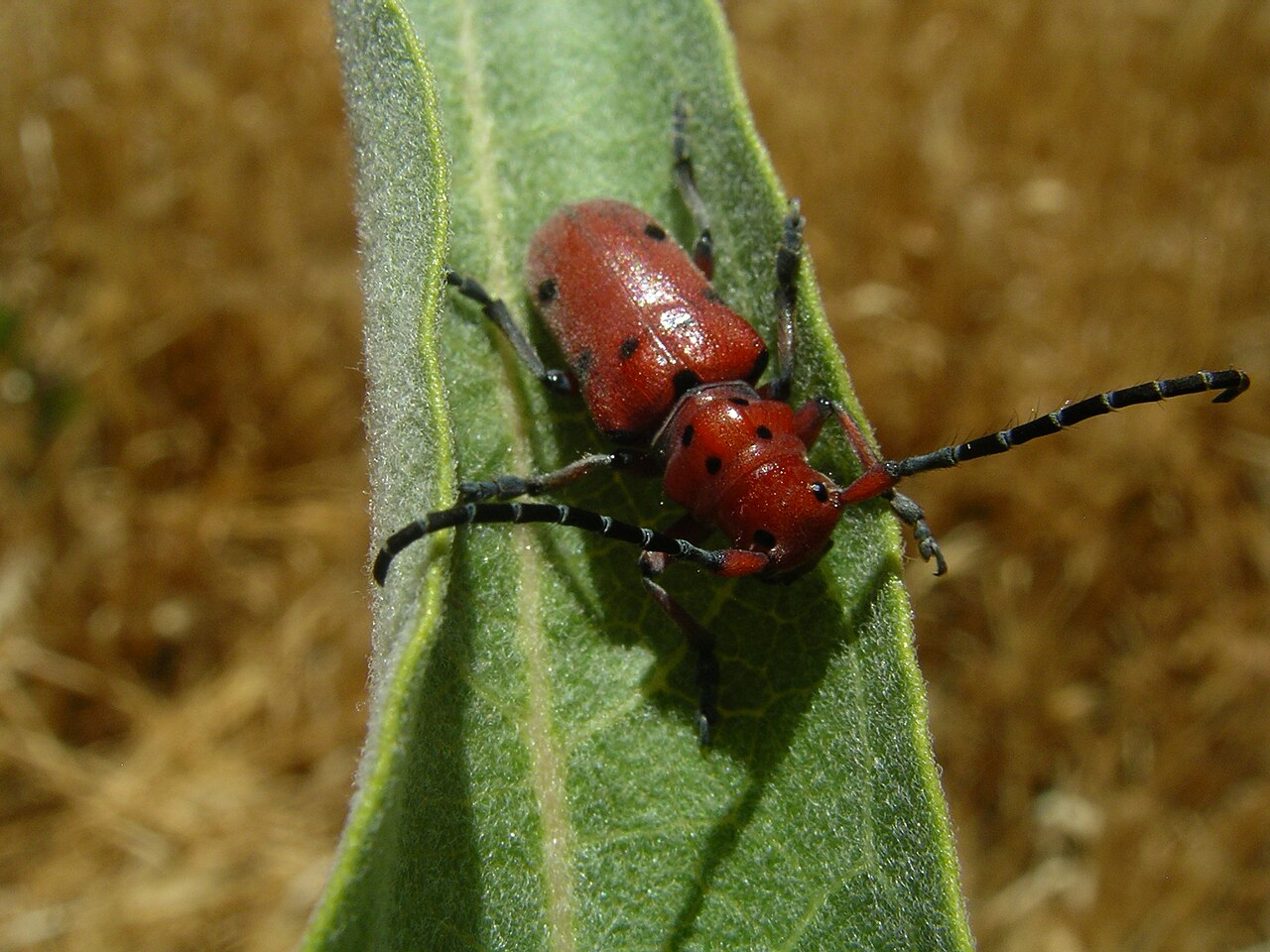
A whole community of insects has evolved to tolerate or exploit milkweed’s toxic sap, including red-and-black milkweed longhorn beetles (Tetraopes species), orange milkweed bugs, and yellow oleander aphids. Gardeners often see these insects on healthy plants; they rarely cause serious damage and are part of the plant’s normal ecological community.
Toxicity Caution
The cardiac glycosides in Showy Milkweed’s sap and tissues are toxic if ingested by people, pets, and livestock, and can cause serious illness in grazing animals if eaten in quantity. The milky sap is also an eye and skin irritant — avoid rubbing your eyes after handling the plant, and wash hands after pruning or removing spent stems. Site it out of reach of grazing livestock and curious pets, and supervise young children around it as you would any toxic garden plant.
Cultural & Historical Uses
Showy Milkweed held significant practical value for Indigenous peoples across its range long before European contact. The tough fibers in its stems were processed into strong cordage used for rope, nets, and textiles — a use shared with other milkweed species across North America. The silky floss attached to the seeds was gathered and used as insulation, padding, and tinder.
Early written accounts also describe the young shoots, flower buds, and immature pods being boiled — often through multiple changes of water — and eaten by some Indigenous groups and later by settlers, a practice that required real skill and knowledge to render the toxic plant safe. This traditional preparation is a matter of historical record, not a practice this guide recommends; the plant’s cardiac glycosides make it unsafe to eat without the specific knowledge and preparation methods used historically, and modern gardeners should treat Showy Milkweed strictly as an ornamental and wildlife plant rather than a food source.
The plant’s genus name, Asclepias, honors Asclepius, the Greek god of medicine, reflecting the long history of milkweeds being investigated — and sometimes used with caution — in folk medicine across many cultures. Today, Showy Milkweed’s primary importance is ecological: as western monarch populations have declined, this species has become a flagship plant for pollinator conservation and habitat restoration programs throughout the western United States.
Frequently Asked Questions
Is Showy Milkweed poisonous?
Yes. All parts of the plant contain cardiac glycosides that are toxic if ingested by people, pets, and livestock, and the milky sap can irritate skin and eyes on contact. It should never be eaten and should be sited away from grazing animals.
Will Showy Milkweed take over my garden?
It spreads by rhizome and can form sizeable colonies over a few years, especially in moist, loose soil. It is best planted where a spreading patch is welcome — a meadow, back border, or dedicated pollinator bed — rather than in a small, tightly bordered space.
How is it different from Common Milkweed?
Showy Milkweed has densely hairy, gray-green leaves and stems, larger individual flowers, and warty (not spiny) seed pods, while Common Milkweed (Asclepias syriaca) of the eastern states has smoother, greener foliage. Their ranges overlap only narrowly in the central states.
Do I need both male and female plants to get flowers?
No — unlike dioecious shrubs such as coyote bush, Showy Milkweed flowers are perfect (containing both male and female structures), so a single plant or colony will flower and set seed on its own.
Does Showy Milkweed need a lot of water?
It benefits from regular water while getting established but tolerates considerable dryness once its rhizome system is in place, especially in soils that hold some moisture at depth. It is not a true xeriscape plant, but it is far more drought-tolerant than its preference for moist ditch banks in the wild might suggest.

Looking for a nursery that carries Showy Milkweed?
Browse our native plant nursery directory: California · Oregon · Washington · Colorado · Arizona · Nevada, New Mexico, Nebraska, North Dakota & Oklahoma · Idaho, Illinois, Iowa & Kansas · Minnesota, Missouri & Montana · South Dakota, Texas & Utah · Wisconsin & Wyoming