
Front Range Beardtongue (Penstemon virens)
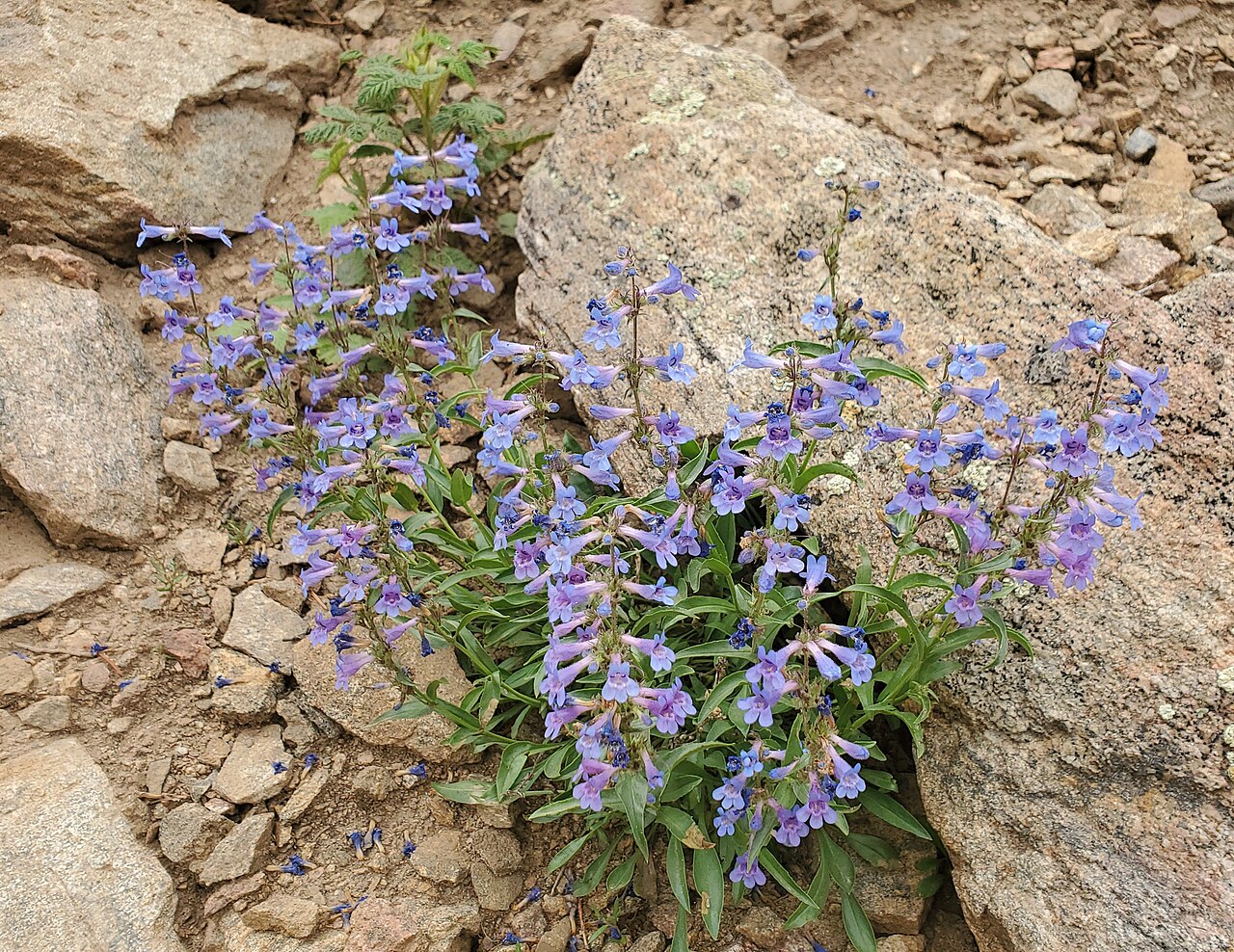
Penstemon virens, known as Front Range Beardtongue or Front Range penstemon, is a low, mat-forming perennial wildflower found almost entirely along the eastern face of the southern Rocky Mountains. It grows about 4 to 16 inches tall, with tufts of glossy, bright green leaves and many short spikes of small blue to blue-violet tubular flowers in late spring and summer.
It is a regional endemic: nearly all of its range lies along the Colorado Front Range, from the foothills west of Colorado Springs and Denver north through Boulder and Rocky Mountain National Park, and across the state line into the Laramie Mountains and nearby ranges of southeastern Wyoming. There it grows on rocky slopes, granite outcrops, road cuts and gravelly openings in ponderosa pine, Douglas-fir and lodgepole pine forests, from the foothills up toward treeline.
For Rocky Mountain gardeners it is one of the best small penstemons: tough, cold-hardy, drought tolerant, and covered in intense blue flowers that are busy with native bees.
Identification
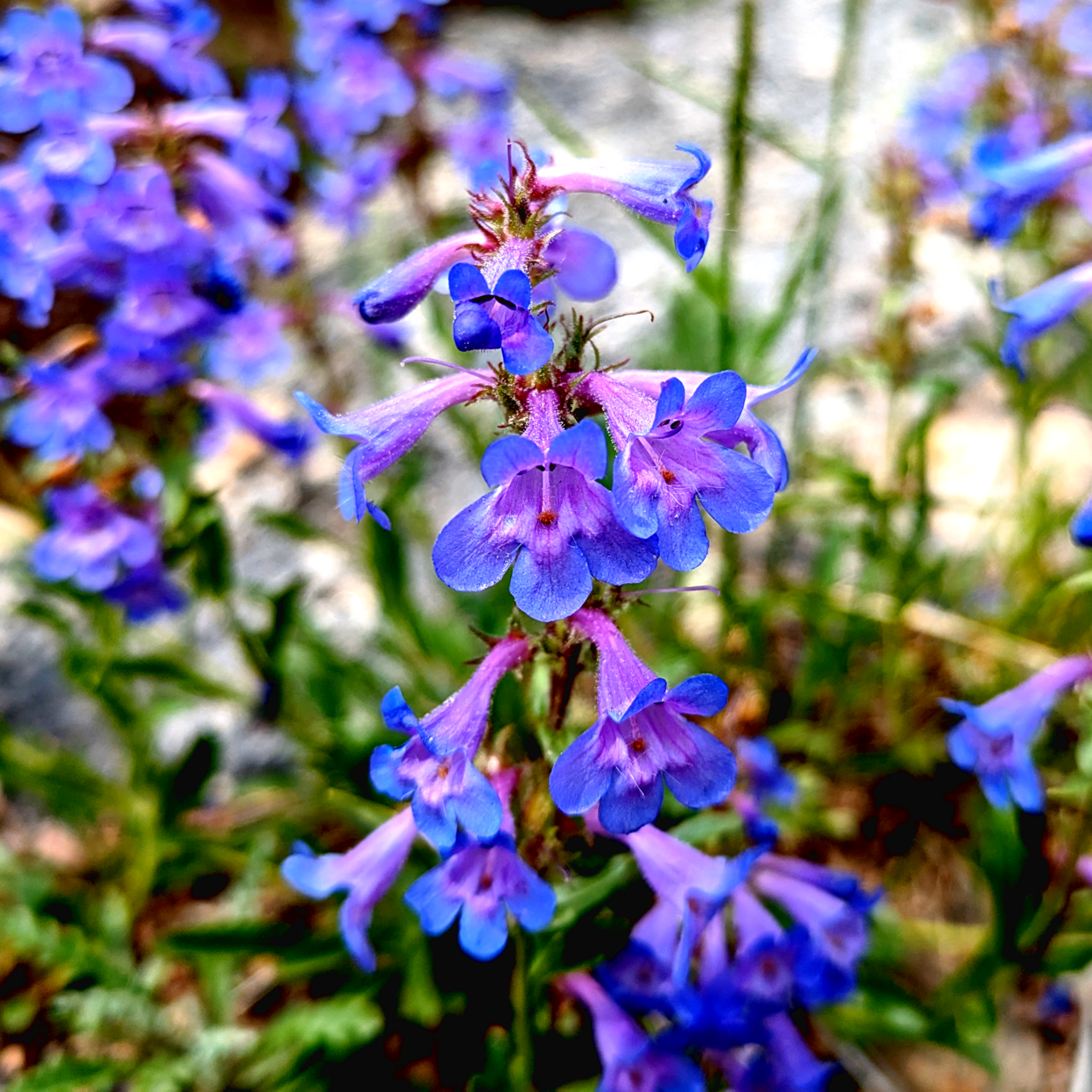
Look for low tufts of smooth, bright green leaves with several short, glandular spikes of small blue-violet beardtongue flowers, usually on rocky granite soils in Front Range forests.
Growth Habit
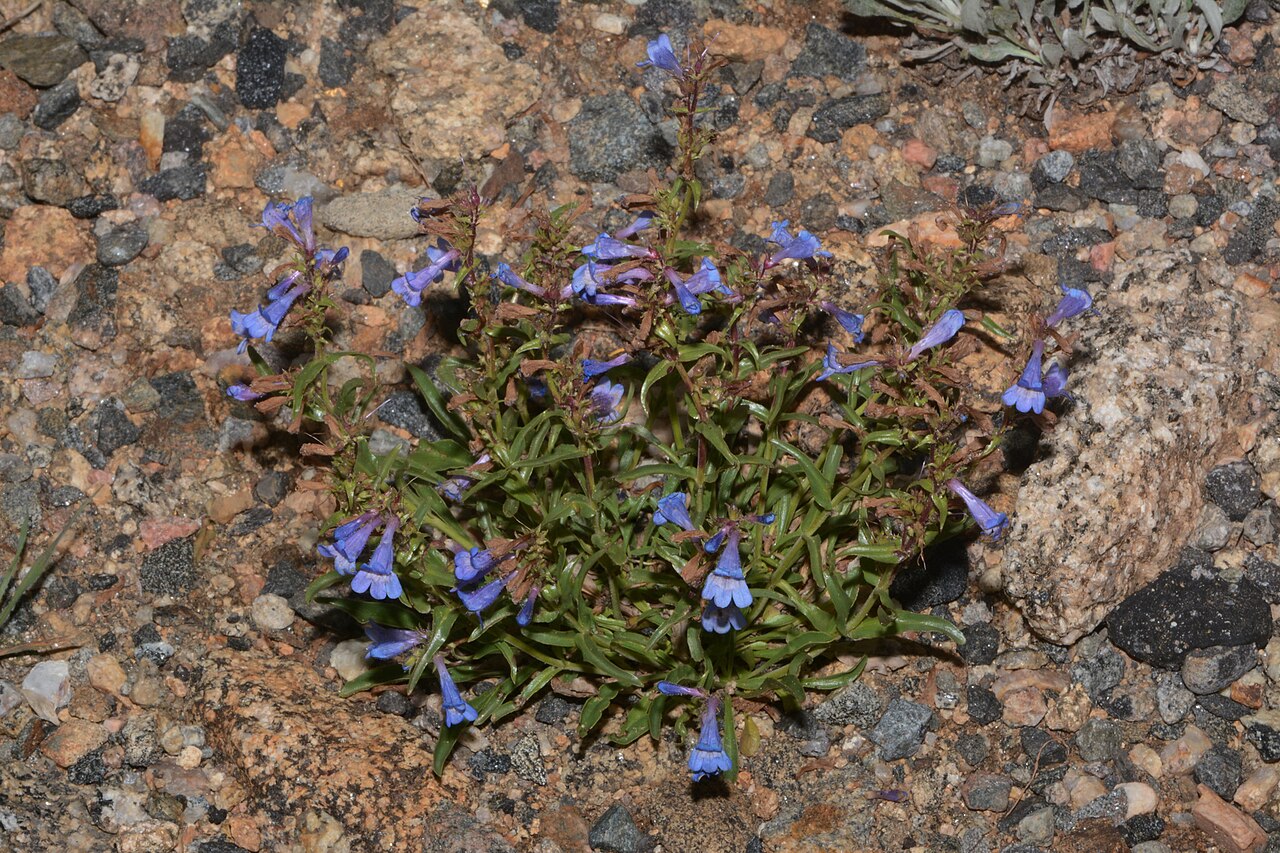
Front Range beardtongue is a clumping, mat-forming perennial with a woody base. It produces several to many upright flowering stems, usually 4 to 16 inches tall, from a tuft of basal leaves. Older plants can form patches a foot or more across.
Leaves
The basal leaves are lance-shaped to narrowly spoon-shaped, about 1 to 4 inches long, smooth, and bright to dark glossy green, with entire or slightly toothed edges. Stem leaves are smaller and paired. The species name virens, meaning “green,” refers to this fresh, green foliage, unlike the gray leaves of some related penstemons.
Flowers
The flowers are about 1/2 inch long, two-lipped tubes in bright blue to blue-violet, sometimes lavender, with darker guidelines and whitish hairs on the lower lip. They are arranged in several whorled clusters along a narrow, sticky-glandular spike. The sterile stamen (staminode) is bearded with yellow hairs, the feature behind the name beardtongue. It blooms from about May to August, later at higher elevations.
Fruit
The fruit is a small, dry capsule that splits open in late summer to release many tiny seeds.
Look-alikes
Low beardtongue (Penstemon humilis) is similar but has grayish, finely hairy leaves and is widespread in the Great Basin and Rocky Mountains. Lilac penstemon (Penstemon gracilis) is taller, with pale lilac flowers and narrower leaves on the plains and foothills. Rocky Mountain penstemon (Penstemon strictus) is much taller, with larger, deep blue-purple flowers on one-sided spikes.
Quick Facts
| Scientific Name | Penstemon virens |
| Family | Plantaginaceae (plantain family) |
| Plant Type | Mat-forming herbaceous perennial with a woody base |
| Mature Height | 4–16 in |
| Mature Spread | 6–12 in |
| Growth Rate | Moderate |
| Sun Exposure | Full sun to part shade |
| Water Needs | Low; drought tolerant once established |
| Soil Type | Rocky, gravelly, decomposed granite; well-drained |
| Soil pH | Slightly acidic to neutral (about 6.0–7.5) |
| Bloom Time | May–August |
| Flower Color | Blue to blue-violet, sometimes lavender |
| Fall Color | None; leaves stay green in mild winters |
| Fruit | Small dry capsule with tiny seeds |
| Deer Resistant | Fairly; penstemons are seldom heavily browsed |
| USDA Hardiness Zones | 3–7 |
Native Range
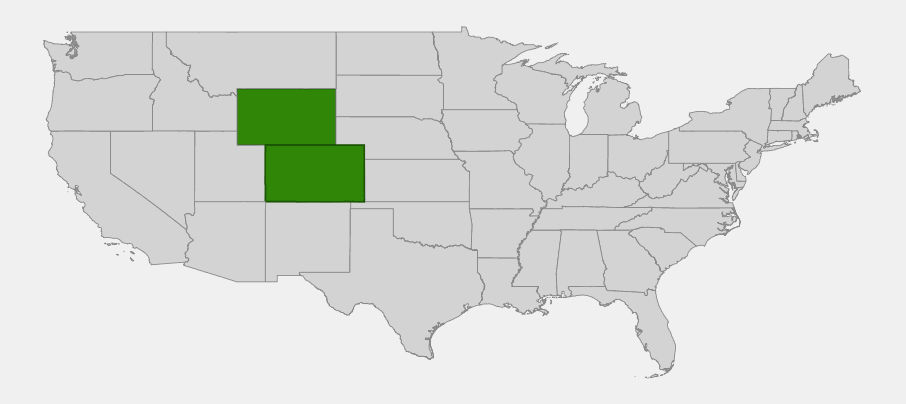
USDA PLANTS lists Front Range beardtongue as native in only two states, Colorado and Wyoming. It is a regional endemic of the southern Rocky Mountains and is not found outside this small area.
In Colorado it is common along the Front Range and its foothills, from the area around Pikes Peak and Colorado Springs north through the mountains west of Denver, Clear Creek County, Boulder and Rocky Mountain National Park, to the Wyoming border. In Wyoming it grows in the southeastern mountains, including the Laramie Mountains.
It grows on rocky and gravelly slopes, granite outcrops and crevices, road cuts and open forest clearings in ponderosa pine, Douglas-fir, lodgepole pine and spruce-fir forests, at about 5,500 to 11,500 feet.
📋 Regional plant lists featuring Front Range Beardtongue: Montana & Wyoming
Growing & Care Guide
Front Range beardtongue is an easy, long-lived penstemon for rock gardens and dry beds in cold climates, especially along the Front Range itself.
Light
Full sun gives the most flowers and the tightest mats. It also does well in part shade, such as the dappled light of open pines.
Soil & Water
Plant it in lean, fast-draining soil: decomposed granite, gravel or rocky loam. Avoid rich, heavy, wet soils, which cause crown rot. Water regularly the first season, then only during long dry spells. Mulch with gravel rather than bark to keep the crown dry.
Planting Tips
Plant in spring or early fall, about 8 to 12 inches apart, among rocks, along walls or at the front of a dry border. It pairs well with buckwheats, low grasses and other small mountain wildflowers.
Pruning & Maintenance
Cut off spent flower spikes after blooming to keep it tidy, or leave a few to set seed. Avoid fertilizing, which makes plants floppy and short-lived. Remove any dead stems in spring.
Propagation
Sow seed outdoors in late fall, or give it about 8 to 12 weeks of cold, moist stratification before sowing in spring. Seedlings often bloom in their second year. Mature clumps can be divided carefully in early spring, and stem cuttings root in late spring. Buy plants from native nurseries rather than digging wild plants.
Landscape Uses
- Rock gardens: a compact, blue-flowered mat for gravel and crevices
- Xeriscapes: thrives on little water once established
- Pollinator gardens: a magnet for native bees, especially bumblebees and mason bees
- Mountain and foothill landscapes: a local native for Front Range yards
- Slope and road-cut revegetation: colonizes rocky, disturbed ground
Wildlife & Ecological Value
Like other penstemons, Front Range beardtongue is an important early-summer flower for native bees in the foothills and mountains.
For Pollinators
Bumblebees, mason bees (Osmia), specialist penstemon bees and other native bees visit the flowers for nectar and pollen. Hummingbirds and butterflies may also stop at the blooms.
For Birds
Seed-eating birds may pick at the ripening capsules, and the rocky habitat it grows in supports ground-foraging birds.
For Mammals
Deer and elk generally browse penstemons only lightly. Small mammals may eat the seeds.
Ecosystem Role
It is a pioneer of rocky, open ground, helping to stabilize gravelly slopes and road cuts. Its flowers support the diverse native bee community of the Front Range foothills and montane forests.
Cultural & Historical Uses
The genus name Penstemon comes from Greek words for “five” and “stamen,” referring to the five stamens, one of which is sterile. The bearded sterile stamen inspired the name beardtongue. The species name virens means “green.”
The species was named by Francis W. Pennell and published by Per Axel Rydberg in the early 1900s, and it remains one of the signature wildflowers of the Colorado foothills.
Because so much of its range lies near Denver, Boulder and Fort Collins, Front Range beardtongue is a favorite of local native plant gardeners and is grown by regional nurseries for water-wise landscapes.
Frequently Asked Questions
Where does Front Range beardtongue grow?
Almost only along the Colorado Front Range and in the mountains of southeastern Wyoming, on rocky slopes and open forest from about 5,500 to 11,500 feet.
Why is it called virens?
Virens means “green” in Latin, describing its smooth, bright green leaves, which stand out from the grayish leaves of some related penstemons.
When does it bloom?
From about May to August. It blooms earlier in the foothills and later at high elevations.
Can I grow it in my garden?
Yes. It is easy in well-drained, gravelly soil with full sun to part shade and little water. It is hardy to about zone 3 and best in the Rocky Mountain region.
Does it attract pollinators?
Yes. Its blue flowers are visited by many native bees, especially bumblebees and mason bees, and occasionally by hummingbirds and butterflies.
