How to Transplant Wildflowers Successfully for a Thriving Garden
Last updated: November 16, 2026
Transplanting wildflowers is a practical way to start native wildflower patches in new spots without waiting forever for seeds to sprout.
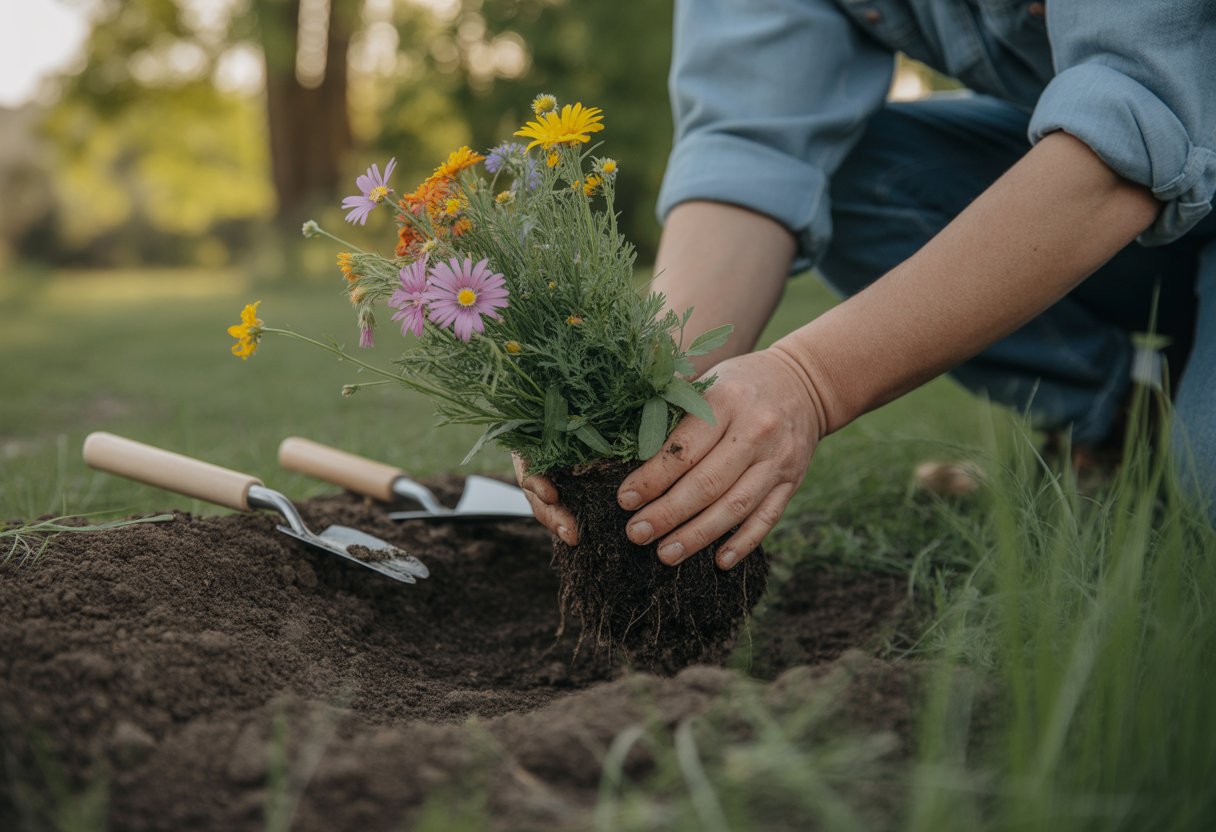
The trick is to gently remove plants with their roots intact and tuck them into soil that feels like home. This approach helps wildflowers settle in with less stress and adapt a lot faster.
Try to transplant wildflowers when they’re dormant or just starting to grow. This timing gives them a better shot at surviving.
Native wildflower species usually handle local conditions best. Choosing and moving these plants supports the ecosystem and boosts biodiversity.
Handle the plants gently, pick the right spot, and pay attention to timing. These steps really matter for wildflower success.
Preparation And Timing
If you want wildflowers to thrive, choose the right species, move them at the right time, and find a good spot. Each decision shapes plant health and future growth.
Choosing Suitable Wildflowers
Go for native plants—they just seem to settle in better. Species like penstemon, columbine, salvia, rudbeckia, monarda, and milkweed help local pollinators and grow naturally.
Wildflowers like daucus carota (Queen Anne’s lace) can adapt well, but only if the site matches what they like. Skip invasive or pushy species that might take over the garden.
Think about soil, moisture, and light needs. Ferns want full shade, while rudbeckia and monarda are sun-lovers.
Identifying Ideal Transplant Time
Move wildflowers during their dormant or early growing phase—usually early spring or late fall. This gives roots time to settle before the plant gets busy growing.
Avoid hot summer days or dry spells. If you transplant when seeds are just sprouting or seedlings are small, they tend to do better.
Cooler weather and moist soil make transplanting easier. It’s especially important for plants like milkweed and salvia, which can struggle if moved in rough conditions.
Selecting The Right Location
Pick a spot that feels like the wildflower’s original home. Match sunlight and soil drainage.
| Wildflower | Light Requirement | Soil Type |
|---|---|---|
| Penstemon | Full sun to partial | Well-drained |
| Columbine | Partial shade | Moist, rich |
| Rudbeckia | Full sun | Average, well-drained |
| Ferns | Full shade | Moist, humus-rich |
Clear out weeds and loosen the soil. This gives roots room to grow.
If you plant near existing pollinator habitats, species like monarda and milkweed will do even better. Plus, you’re helping the ecosystem.
Transplanting Wildflowers Step-By-Step
To get wildflowers settled in, focus on soil preparation, lifting them carefully, and planting with care. Paying attention to these details really helps native plants take root.
Preparing The Soil
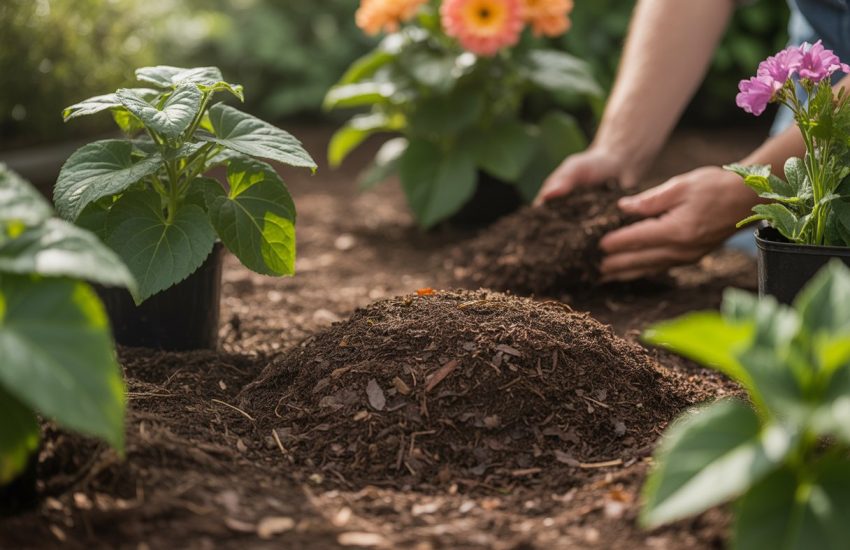
Make sure the soil drains well and has plenty of organic matter. Toss in some compost to boost nutrients and hold moisture.
Clear weeds and loosen the soil down to about 6 inches. Roots need space and air.
If you can, check the soil pH. Most wildflowers do well in slightly acidic to neutral soil (pH 6.0-7.0). Adjust with lime or sulfur if needed.
Lifting And Handling Wildflowers
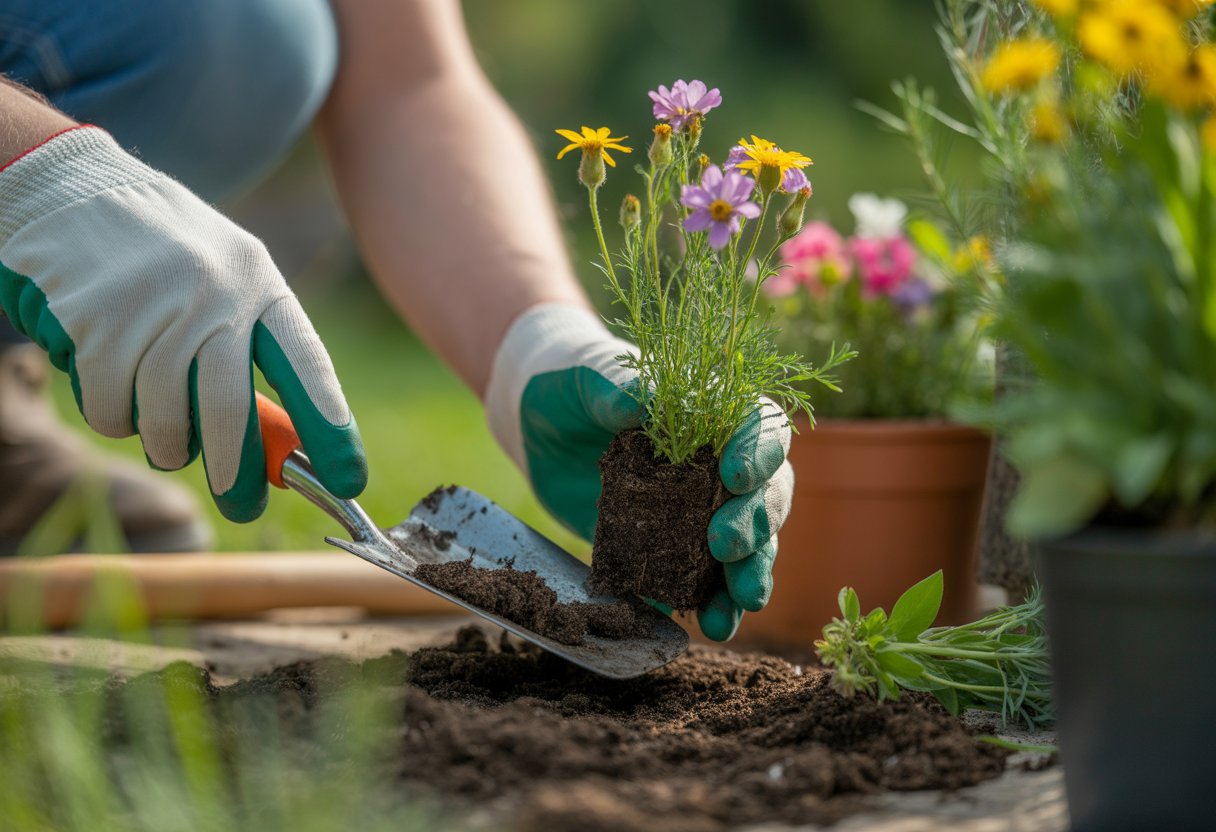
Dig carefully around each wildflower, keeping the root ball and soil together. A small shovel or trowel works well for this.
Hold plants by the root area or soil ball, not the stems or flowers. That way, you protect the delicate parts and lower the risk of shock.
If roots end up exposed, keep them damp with a wet cloth or pop them in water briefly. Don’t wait too long to replant.
Planting And Watering Techniques
Dig holes a bit larger than the root ball so roots can spread. Set the wildflower in so the top of the root ball lines up with the soil surface.
Fill in gently, pressing the soil around roots to get rid of air pockets. Don’t bury the crown too deep—rot is not your friend.
Water thoroughly right after planting. For the first few weeks, keep the soil consistently moist but don’t drown it. A light mulch layer helps hold moisture and keeps weeds down.
Caring For Transplanted Wildflowers
After transplanting, wildflowers need some extra attention to settle in. Managing moisture, shielding them from stress, and giving them a little support can make a big difference.
Watering And Mulching
Newly transplanted wildflowers need steady moisture, but not soggy roots. Water right after transplanting and keep the soil evenly moist for the first couple of weeks.
Mulch with shredded leaves or compost around the base. Two to three inches is plenty—just keep it off the stems to avoid rot.
Watering in the morning helps reduce evaporation and leaves flowers open for pollinators later. Once native wildflowers are established, they often need less frequent watering.
Protecting Wildflowers From Stress
Transplanted wildflowers can struggle with heat, wind, and hungry wildlife. Sometimes a shade cloth or a simple windbreak helps.
Put up mesh or fencing to keep rabbits and deer away. Skip harsh chemicals that might harm pollinators or good bugs.
Try not to disturb the soil around new transplants. Too much foot traffic can compact the soil and mess with root growth.
Encouraging Long-Term Growth
Mixing compost into the soil before transplanting helps boost nutrient availability. This approach avoids over-fertilizing, which can actually harm wildflowers that thrive in poor soils.
Supporting native pollinators goes a long way toward healthy seed production. When you plant wildflowers in clusters, you ramp up their value for wildlife and make it easier for them to self-sow.
Keep an eye out for pests or diseases so you can jump in early if needed. As time goes on, you can ease up on extra care and let the wildflowers find their own balance in the ecosystem.