Shade Tolerant Ground Covers Minnesota: Best Plants for Low-Light Landscapes
Last updated: August 24, 2026
Minnesota’s filled with shady spots where traditional lawns or sun-hungry plants just won’t cut it. If you want something green that’ll actually thrive in those dim corners, ground covers built for low-light are a lifesaver.
Shade tolerant ground covers for Minnesota include native and adaptable species like pachysandra, ajuga, and vinca minor. These handle the climate and shade with surprising ease.
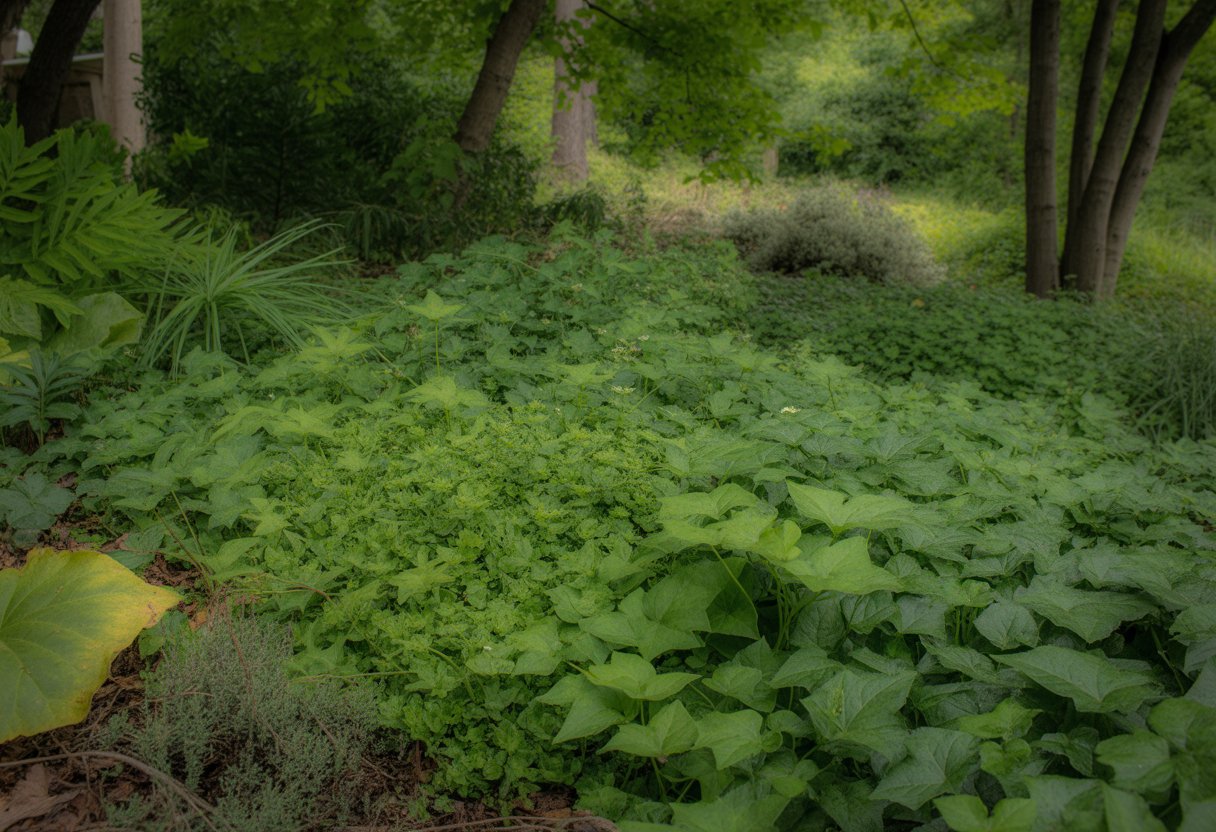
These plants control erosion, cut down on maintenance, and add a welcome burst of green where grass just gives up. Picking the right one depends on your soil and moisture, but these species won’t let you down.
If you know which ground covers can handle Minnesota shade, you can turn neglected patches into something actually nice to look at.
Understanding Shade-Tolerant Ground Covers in Minnesota
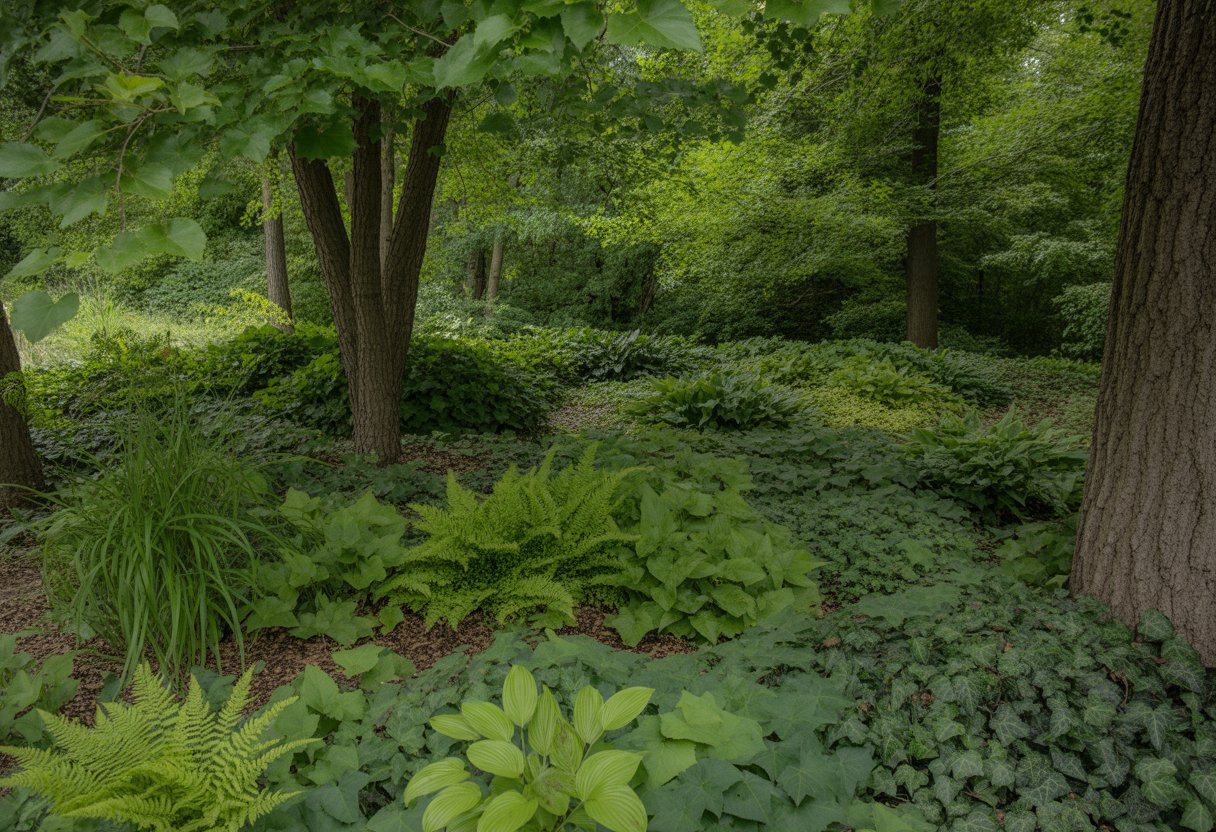
Shade-tolerant ground covers thrive in the low-light spots that show up in a lot of Minnesota gardens. Their success really depends on understanding shade tolerance, the regional climate, and the benefits they bring.
Defining Shade Tolerance
Shade tolerance means a plant can grow and stick around even with limited sunlight. In Minnesota, that’s under tree canopies, beside fences, or next to buildings that block direct sun most of the day.
These plants photosynthesize just fine at lower light. Many have bigger or thinner leaves to soak up whatever sun they can get.
That’s especially important here, where winters are rough and trees can block a lot of light during the growing season.
Most shade ground covers need less water than plants that crave sun, since shaded areas hold onto moisture longer. Still, they need decent soil to really settle in.
Regional Climate and Hardiness Zones
Minnesota stretches from USDA hardiness zones 3a to 5a, so winter can get brutally cold. Ground covers for these zones have to handle temperatures way below zero—sometimes even -30°F.
Plants that make it here often go dormant or resist frost. Gardeners should pick species rated for zones 3 through 5 to give them a fighting chance.
Soil’s another wild card. North-central and northern Minnesota usually have acidic soils, while the south can be more alkaline. It’s worth matching your ground cover to your local soil for the best results.
Benefits of Using Shade-Tolerant Varieties
Shade-tolerant ground covers stop erosion in those dim spots where grass fails. They help keep soil loose and support a healthier garden ecosystem by covering soil under trees or in shady borders.
They’re also great at choking out weeds. Their thick growth blocks sunlight from reaching weed seeds, so you’ll spend less time yanking out invaders.
In Minnesota, these ground covers add year-round interest. Many keep their leaves through winter or offer unique foliage textures, making shady areas look less forgotten.
Top Shade-Tolerant Ground Cover Varieties for Minnesota Gardens

Plenty of shade-tolerant ground covers do well in Minnesota’s cool climate and mixed soils. They come in different heights, textures, and care levels, so there’s something for every shady spot.
Hostas and Their Adaptability
Hostas are a go-to for shade in Minnesota. They don’t fuss much about soil, though they’ll thank you for rich, well-drained dirt.
Most hostas grow between 6 and 24 inches tall, with leaves that show off deep green, blue-gray, or variegated patterns.
They shrug off cold winters and deer usually leave them alone. Hostas cover ground well and keep weeds down, but slugs can be a pain, so keep an eye out.
They grow slowly, but once they’re set, they stick around for years.
Ajuga and Other Low-Growing Perennials
Ajuga, or bugleweed, loves shade and forms thick mats that keep soil from washing away. It usually grows 4 to 12 inches tall and spreads quickly by sending out runners.
The foliage can be dark green or purple, adding some color, and in spring, it puts up little flower spikes.
Ajuga likes moist, well-drained soil but will survive dry spells once it’s established. It’s solid for keeping weeds out under trees and shrubs.
Since it’s short, ajuga fits nicely along borders or in tight, shady spots.
Creeping Thyme and Drought-Tolerant Options
Creeping thyme is a low-growing, drought-tolerant ground cover that does well in partial shade. It stays about 2 to 3 inches tall and spreads by runners to form a dense mat.
The tiny, aromatic leaves and purple-pink flowers attract pollinators in summer.
It does best in sandy or loamy, well-drained soil. Pests and diseases rarely bother it, and once it’s settled, it barely needs attention.
Creeping thyme prefers a bit of sun but can handle the dappled shade you find in a lot of Minnesota gardens.
Plumbago (Ceratostigma plumbaginoides)
Plumbago, or Ceratostigma plumbaginoides, is a tough perennial ground cover known for its bright blue flowers in late summer and reddish fall leaves.
It grows 8 to 12 inches tall and spreads out fast, covering soil well.
Plumbago can handle a variety of soils, even clay, and likes partial shade to full sun. Once established, it doesn’t mind dry spells, though a little water during drought helps.
Deer and rabbits usually leave it alone, and it’s great for adding a splash of color to shady spots.
Design and Care Tips for Shaded Minnesota Landscapes
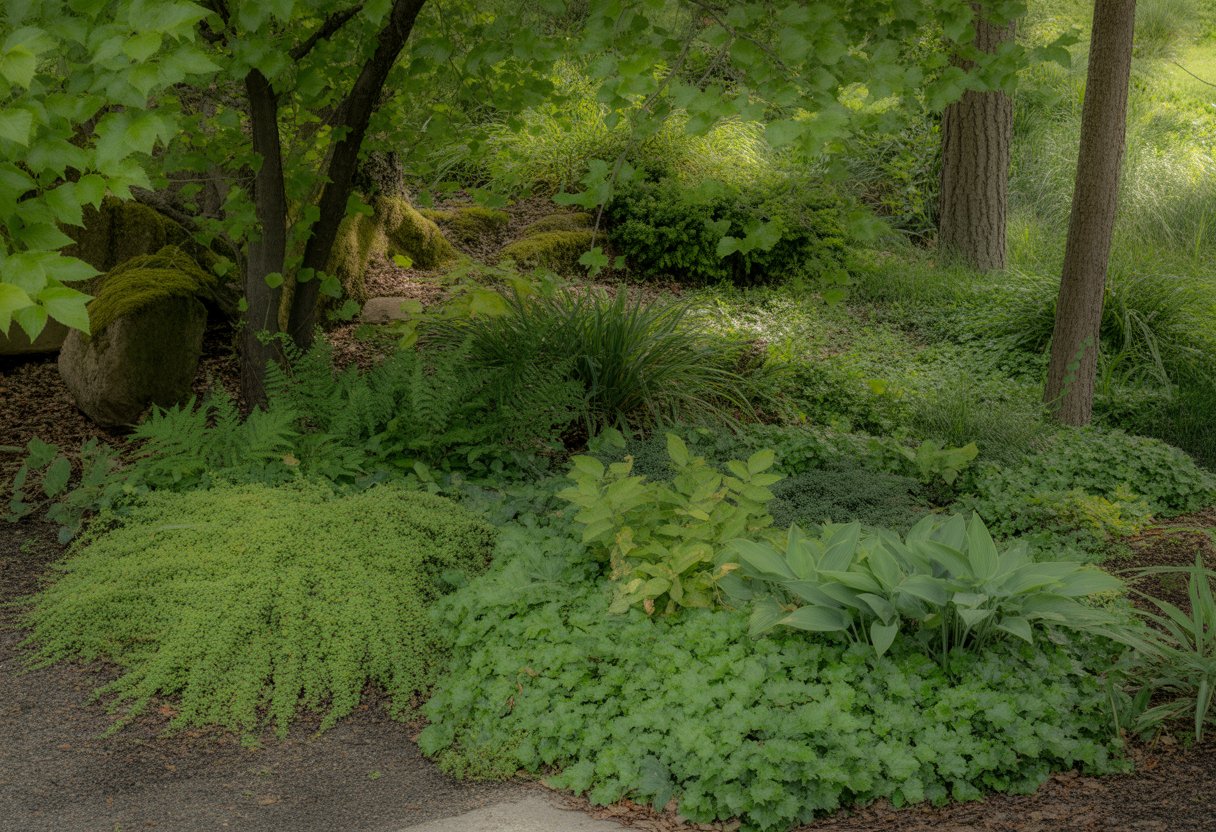
Landscaping shady Minnesota spots isn’t just about picking plants—it’s about paying attention to soil, moisture, and how things change through the seasons. Mixing in shrubs and trees with ground covers can make the whole area look better and grow stronger.
Integrating Shrubs and Trees with Ground Covers
When you mix shrubs and trees with ground covers, give everything enough space so they’re not fighting for food and light. Shade-tolerant covers like sweet woodruff or pachysandra do well under big trees like maples and oaks.
Plant ground covers around tree bases to add greenery, but don’t crowd shrub stems—too much moisture there can invite disease. Trimming trees and shrubs now and then lets in more light and helps ground covers thrive.
Managing Dry Shade and Moisture Levels
Dry shade happens a lot under old trees, where roots hog the water and rain barely makes it through. Mulching with shredded bark keeps moisture in and soil temps steady.
Try drought-tolerant covers like ajuga or hardy ferns for these spots.
Water deeply but not too often, so roots grow down instead of out. Overwatering can cause root rot, so don’t go overboard.
Mixing in compost boosts water retention and adds organic matter, which really helps in dry shade.
Seasonal Maintenance and Growing Season Strategies
During Minnesota’s growing season, keep an eye out for pests and diseases—shady, humid spots can be a magnet for those. Spring’s a good time for slow-release fertilizer, so plants get a steady boost.
In fall, clear out dead leaves and debris to keep fungi at bay. You might need to trim ground covers lightly in late summer to keep them tidy and encourage thick growth.
As it gets cooler, ease up on watering to match the plants’ needs.
Expanding Your Shade Garden: Inspiration Beyond Minnesota
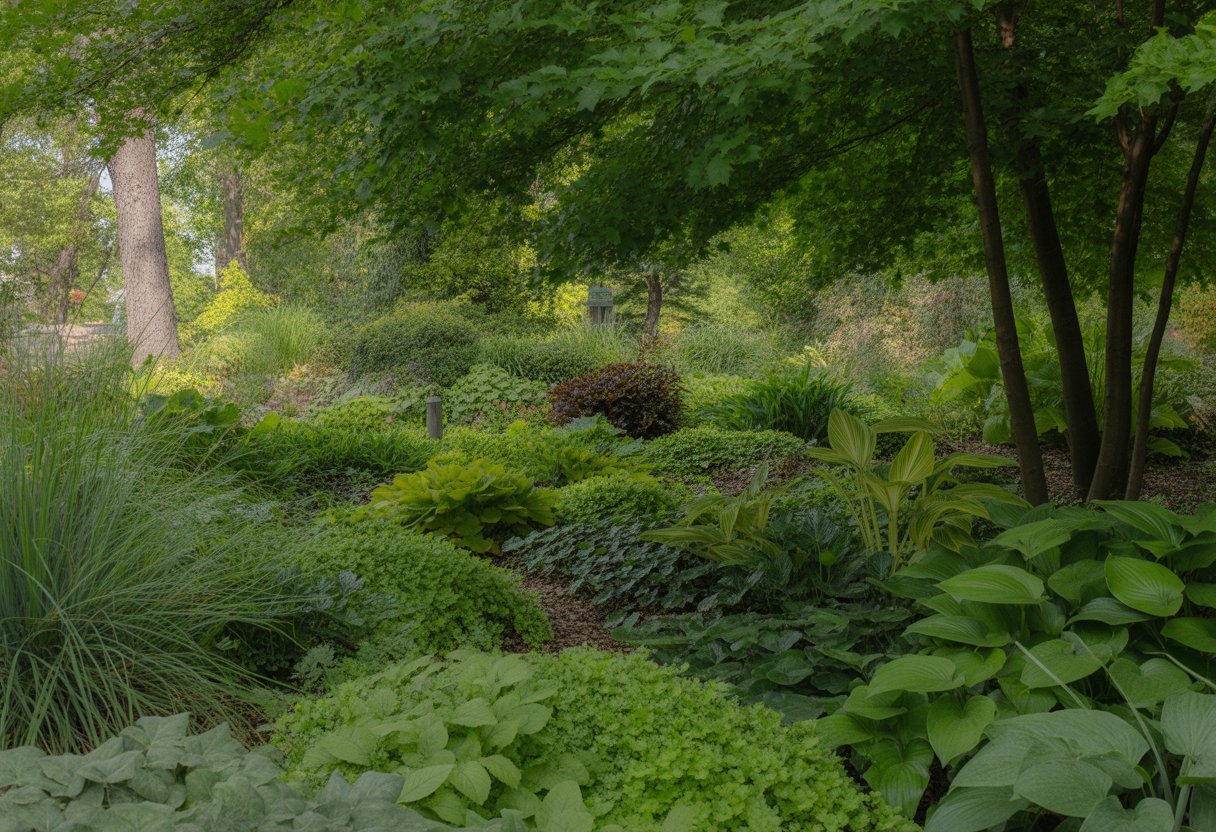
If you want to branch out, it’s worth checking out plants that do well in similar climates or even some that thrive elsewhere. Looking at what works in other places can spark new ideas.
Comparing Minnesota to Wisconsin and New York
Minnesota and Wisconsin have a lot in common—cold winters, humid summers—so many shade-tolerant plants work in both. Wild ginger (Asarum canadense) and foamflower (Tiarella cordifolia) are good bets for both states.
New York’s climate is a bit different but still supports loads of shade-loving perennials and ground covers. Plants like Polygonatum (solomon’s seal) and European ginger (Asarum europaeum) can handle deep shade and add something different.
Gardeners in Wisconsin and New York often go for native species, but they’ll also try adaptable varieties that can take a range of soil or moisture levels. Comparing these regions can help you pick new favorites and grow your shade garden with a little more confidence.
Exploring Less Common Shade Plants
Beyond the usual Minnesota varieties, gardeners can try less common shade ground covers to add some texture and interest. For example, Epimedium species handle dry shade really well—they thrive where a lot of traditional plants just give up.
Some desert plants, like certain sedums, can actually tolerate partial shade if the soil drains well. That’s a way to sneak in some drought resistance while keeping things low to the ground.
There’s also the fern Athyrium niponicum. Its colorful fronds are pretty eye-catching. And if you want something evergreen, Vinca minor (periwinkle) is tough and forms a dense carpet.
Why stick with the same old plants? Mixing in these lesser-known options adds both diversity and resilience to a shade garden. You get a more interesting mix that’s adaptable and decorative, even if Minnesota weather tries to throw you a curveball.
 Looking for a nursery that carries native ground cover in Minnesota?
Browse our native plant nursery directory: Minnesota