Leaf Mold Benefits for Gardens: Enhancing Soil Health and Plant Growth
Last updated: August 24, 2026
Leaf mold is a natural soil amendment that a lot of gardeners just skip over. It forms when fallen leaves decompose over time, creating a rich, crumbly material.
Its primary benefit is improving soil structure by increasing moisture retention and aeration without adding excess nutrients.
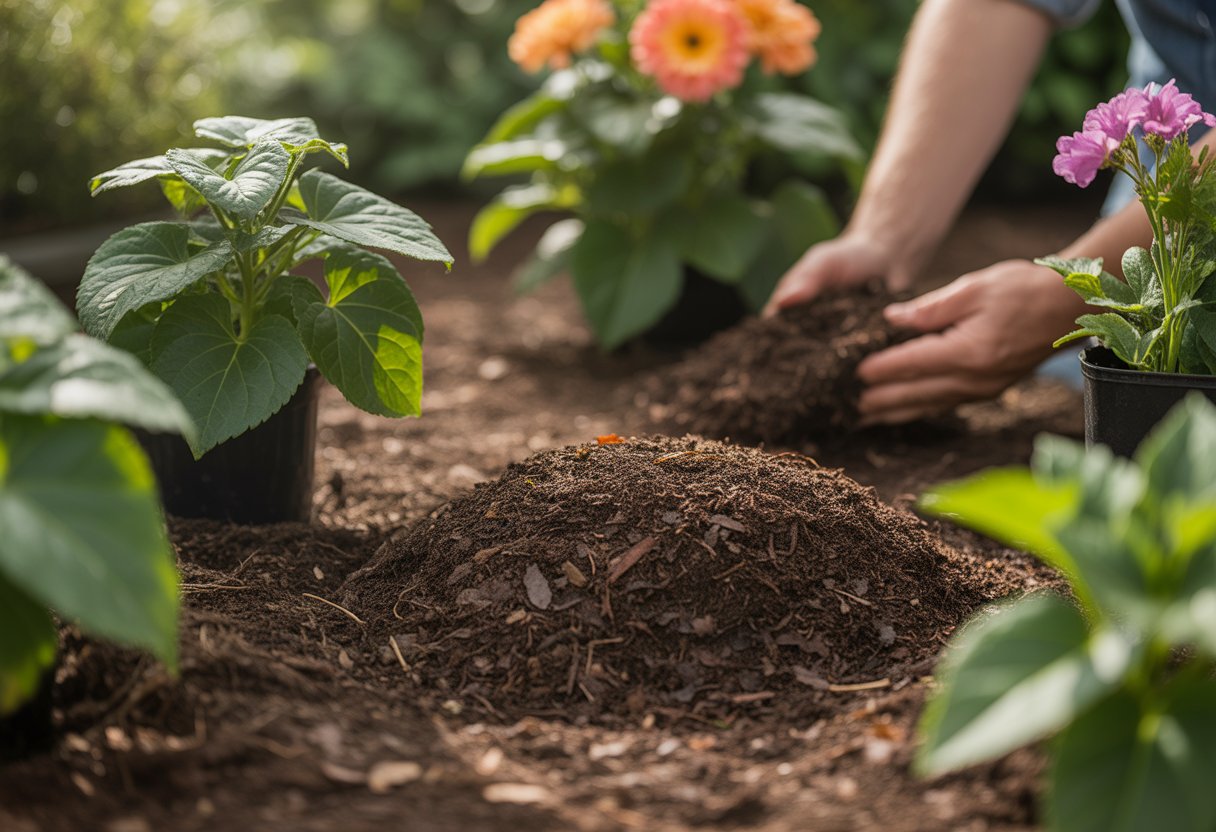
Unlike compost, leaf mold focuses on enhancing soil texture rather than feeding plants directly. It’s especially handy for improving clay or sandy soils, helping roots get stronger and healthier.
Gardeners who use leaf mold often notice better water management and more life in their soil. It’s an eco-friendly way to recycle garden waste into something actually useful for plants.
What Is Leaf Mold and How Is It Made?
Leaf mold is basically decomposed leaves, mostly broken down by fungi over time. You’ll find it forming naturally outdoors, but gardeners can make it too, just by letting piles of leaves sit and decay slowly.
Understanding Leaf Mold
Leaf mold is what’s left when dead leaves lose their original structure, turning into a dark, crumbly material. You gather fallen leaves and let them break down in damp, shaded spots for anywhere from 6 to 18 months.
Leaves take their sweet time to decompose because they’re packed with lignin—a tough compound that resists quick breakdown. The result? Leaf mold that boosts soil structure, holds moisture, and improves aeration, but doesn’t really add a ton of nutrients.
Leaf Decomposition and the Role of Fungi
Fungi do the heavy lifting in turning leaves into leaf mold. Unlike compost piles where bacteria dominate, fungi break down those stubborn lignin fibers, transforming leaves into a soft, humus-like substance.
This process works best in moist, oxygen-rich places. You might spot white fungal threads weaving through leaf piles—that’s a good sign things are happening. Fungi convert the leaves into humus that’s great for soil health.
How Leaf Mold Differs from Compost
Leaf mold and compost both come from decomposed organic stuff, but they’re not the same. Compost mixes kitchen scraps, grass, and leaves, and breaks down quickly thanks to bacteria and fungi in a hot pile.
Leaf mold comes only from leaves and breaks down slowly at cooler temps, mainly through fungi. It’s richer in fungal goodness and does a better job conditioning soil, while compost is more about adding nutrients for plants.
| Aspect | Leaf Mold | Compost |
|---|---|---|
| Material Source | Fallen leaves only | Mixed organic waste |
| Decomposition | Slow, fungal-driven | Faster, bacterial + fungal |
| Temperature | Cold/Warm | Hot (thermophilic phase) |
| Nutrient Content | Low | Moderate to high |
| Soil Benefit | Improves moisture/aeration | Adds nutrients and organic matter |
Key Benefits of Leaf Mold for Gardens
Leaf mold brings several perks for garden soil and plant health. It’s a natural conditioner that boosts the physical qualities of soil and supports helpful soil life.
Improving Soil Structure and Texture
Leaf mold seriously improves soil structure by adding organic matter. It breaks up compacted soil, making it crumbly and easier for roots to grow.
Heavy clay soils, especially, benefit from this. They can get dense and soggy if you don’t amend them.
Adding leaf mold increases soil porosity, so air and water move through more freely. This keeps roots happy and encourages earthworms, which further aerate the soil and mix in organic material.
By improving texture, leaf mold creates a much friendlier environment for roots to grab oxygen, nutrients, and moisture. Plants just seem tougher and more resilient when you use it.
Enhancing Moisture Retention
Leaf mold acts like a sponge in the soil, soaking up water and releasing it slowly. That means you don’t have to water as often, and the soil stays moist for longer stretches.
Its high organic matter boosts water-holding power, which is a lifesaver for sandy soils that usually dry out fast. Plants handle dry spells better with leaf mold around.
Slow decomposition helps soil store water without getting swampy. That balance is key for healthy roots and better nutrient uptake. You’ll probably notice happier, more vigorous plants and less wasted water.
Providing Essential Nutrients
Leaf mold offers a slow trickle of nutrients, like nitrogen, calcium, and magnesium—all important for plant growth. These nutrients release gradually as the leaf bits break down, syncing up with what plants need.
It’s not as nutrient-rich as compost, but it still boosts soil fertility by raising organic matter. That gets microbes working, turning minerals into forms plants can actually use.
Adding leaf mold to your beds creates a gentle, nutrient-rich environment that supports strong growth. It also helps you cut back on chemical fertilizers by enhancing natural nutrient cycling.
Promoting Healthy Soil Microorganisms
Leaf mold encourages a wide variety of beneficial microorganisms. These little guys break down organic material, release nutrients, and generally make soil better.
A healthy microbial community keeps nutrients moving and helps protect plants from diseases. Leaf mold draws in fungi and bacteria that team up with roots to help plants absorb more nutrients.
Earthworms love soil with leaf mold, too. Their tunneling and digestion ramp up microbial activity and improve soil aeration.
That kind of balanced soil life keeps gardens productive and more resilient against pests and diseases.
How to Use Leaf Mold in the Garden
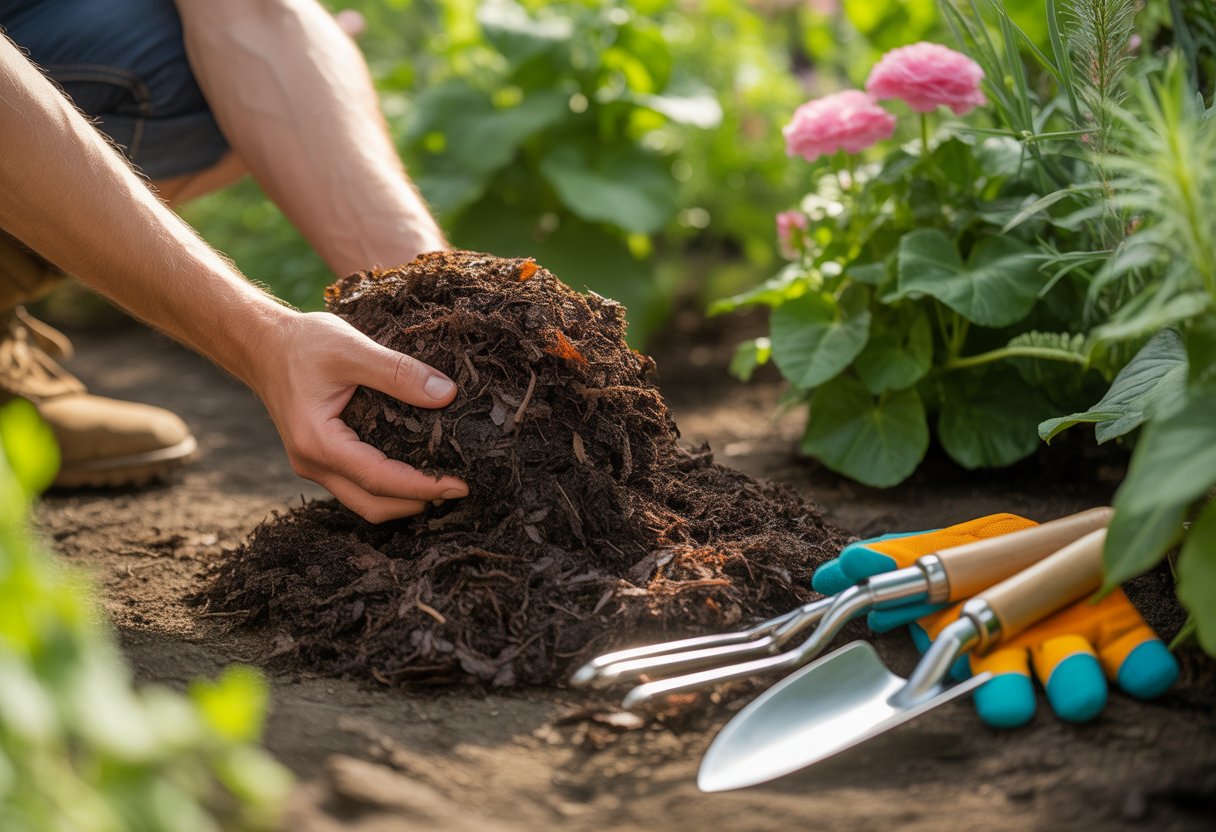
Leaf mold improves soil structure and helps soil hold moisture. It also suppresses weeds when you use it right.
It works as mulch, a soil amendment, and fits into both veggie gardens and perennial beds.
As Mulch for Garden Beds
When you spread leaf mold as mulch, it helps the soil hold onto moisture by cutting down on evaporation. It also keeps soil temperatures steadier, which shields roots from wild temperature swings.
Spread a 2–3 inch layer of shredded leaf mold around your plants. It keeps weeds down and, unlike fresh leaves, doesn’t mat up or form a soggy mess.
You can mix it with other mulches like peat moss or vermiculite for better aeration and drainage. This combo keeps soil conditions balanced for your plants.
Leaf Mold as a Soil Amendment
Mixing leaf mold into your soil boosts texture by adding organic matter. It helps sandy soils hang onto water and makes clay soils drain better.
Work leaf mold into the top 6–8 inches of soil. Roots will love the crumbly, nutrient-rich medium, and beneficial microbes will thrive.
Unlike peat moss, leaf mold is sustainable and doesn’t make soil super acidic, so it’s good for most garden plants. Because it breaks down slowly, you get long-lasting benefits.
Application in Vegetable Gardens and Perennials
In veggie gardens, mulch crops with leaf mold or till it in before planting. You get better moisture retention, less compaction, and healthier roots.
With perennials, spread leaf mold as mulch to prevent erosion and protect crowns in winter. It also feeds plants over time as it breaks down.
Adding leaf mold regularly around established plants keeps soil fertile without causing nutrient imbalances. It’s especially helpful in perennial borders where you want steady soil improvement.
Best Practices for Making Leaf Mold at Home
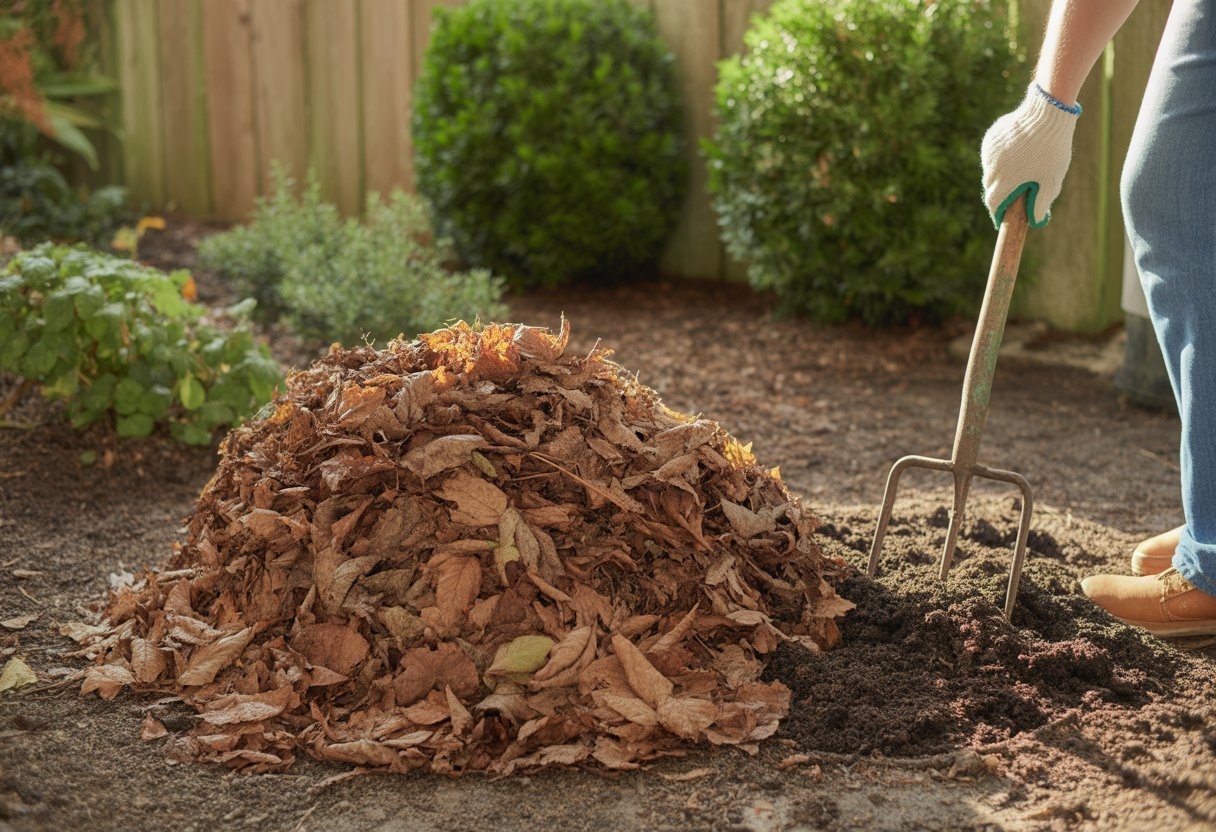
Making leaf mold is pretty straightforward, but you do need to handle fallen leaves the right way and manage the breakdown process. Good prep, keeping the pile healthy, and a few tricks to speed things up all help.
Collecting and Preparing Fallen Leaves
Collect dry leaves that are mostly free of sticks and stones. Oak, beech, and maple leaves are great—they’re high in lignin and decompose into rich humus.
Try to gather leaves soon after they drop to avoid unwanted mold. Skip leaves that have been sprayed with herbicides or pesticides.
You can store them in bags or piles in a shady spot to dry out a bit more before you start.
Shredding and Managing Materials
Shredding the leaves makes them break down faster. Use a leaf shredder or mulcher to break them into small pieces.
Pile shredded leaves loosely in a heap or compost bin. Mist them if they’re too dry, but don’t soak them. Turn the pile every couple of weeks to keep things moving.
Tips for Accelerating Decomposition
Keep the pile moist—think wrung-out sponge, not soggy mess. Good airflow and a little warmth help too.
If you want to speed things up, toss in a bit of nitrogen-rich stuff like grass clippings or kitchen scraps, but don’t overdo it. Too much nitrogen can make things smelly or too hot.
Throw a tarp over the pile to hold moisture and keep out heavy rain. Turning the pile once a month keeps air flowing and prevents it from getting compacted.
Balancing Carbon-to-Nitrogen Ratio
Leaves have a lot of carbon but not much nitrogen. Their carbon-to-nitrogen (C) ratio usually sits around 60:1, which isn’t ideal for quick decomposition.
If you want things to break down faster, toss in some materials with more nitrogen. Stuff like green yard waste or manure works well.
Try for a C ratio closer to 30:1 so microbes can really get to work. You might want to check the pile’s nitrogen content now and then to see if you’re on track.
Too much nitrogen can make things smelly and waste nutrients. Not enough, and you’ll be waiting forever for results.
Turn the pile regularly and tweak what you add. That’s how you keep everything humming along for good leaf mold.