Growing Vegetables in Raised Beds for Optimal Yield and Easy Maintenance
Last updated: August 26, 2026
Growing vegetables in raised beds gives you a lot of control over soil quality, drainage, and pest management. It lets you craft an environment that suits your plants, which often means healthier crops and better yields.
Raised beds improve soil structure and reduce compaction. Roots have an easier time growing and grabbing nutrients.
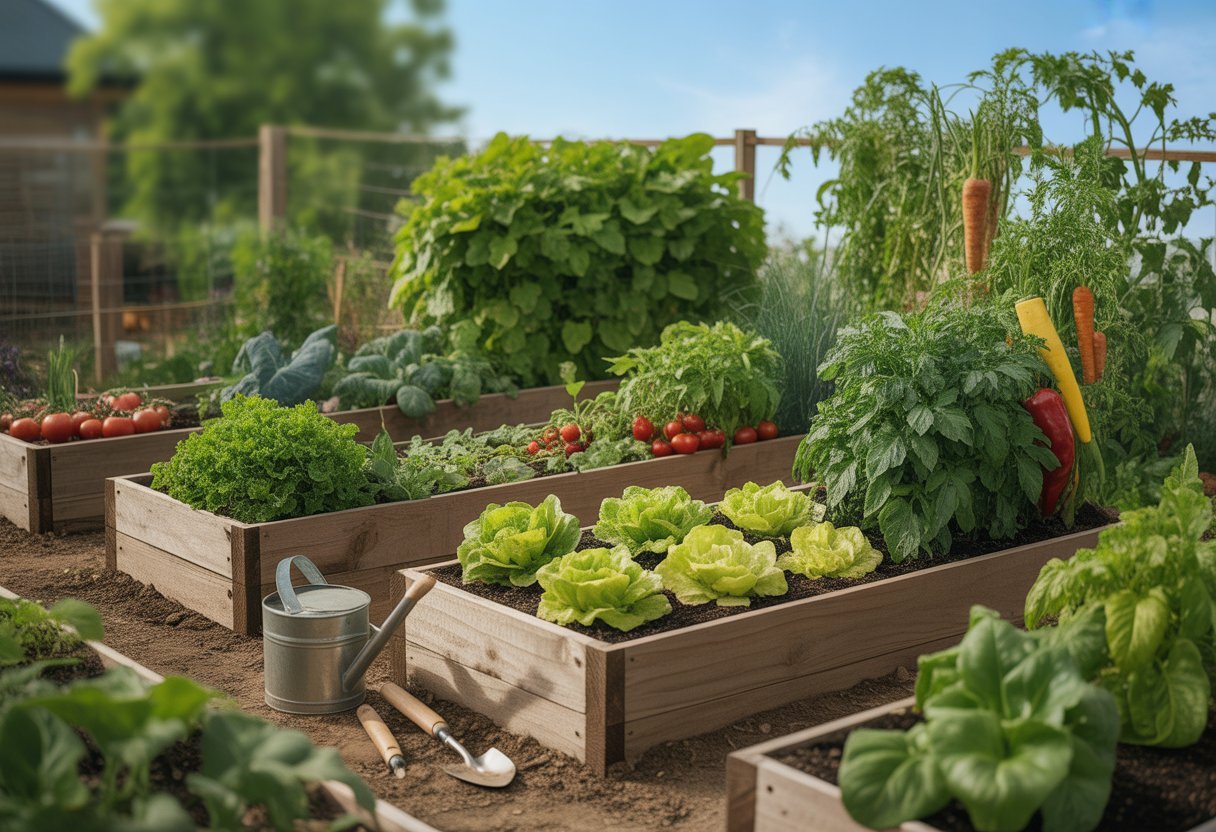
If your yard has poor or even contaminated soil, raised beds open up new options for growing vegetables. They warm up faster in spring, so you can get a jump on the season.
With some upfront planning, raised beds help you use space efficiently and cut down on tedious maintenance. Gardening feels more manageable, whether you’re just starting out or you’ve been at it for years.
Benefits of Growing Vegetables in Raised Beds
Raised beds really shine when it comes to controlling soil quality, managing water, and squeezing the most out of your planting area. These perks lead to healthier plants and, honestly, more veggies on your table.
Improved Soil Conditions
Using garden boxes means you can skip the problems of crummy native soil. You get to build your own soil composition from scratch.
Because you’re not stepping on the soil, it stays loose and airy. Roots love that. Raised beds also warm up quickly in spring, which stretches out your growing season.
It’s super easy to add compost and other organic matter, so your soil stays rich and full of life.
Enhanced Drainage and Air Circulation
The elevation of raised beds helps water drain away fast. That means roots don’t sit in soggy soil and rot.
Good drainage also keeps soil from getting compacted, so roots can breathe. Plants get better air circulation, and that helps keep leaves dry—always a plus for avoiding fungal issues.
A well-designed garden box balances moisture and runoff, which is just what healthy roots need.
Efficient Use of Space
Raised beds make it simple to plant intensively. You can really dial in your row spacing and rotate crops to get the most from every square foot.
Vertical gardening comes into play here, too—think trellises for peas or tomatoes. Organizing plant varieties is easier in beds, so you’re not constantly hunting for what’s growing where.
Honestly, a tidy, productive garden just feels good to work in.
Planning and Building Raised Beds for Vegetables
Getting started with raised beds takes a little planning, but it’s worth it. Where you put them, what you build them with, and how deep you make them all matter for your plants.
Selecting the Best Location
Pick a spot that gets at least 6 to 8 hours of sun—most veggies need full sunlight. The area should drain well, so roots don’t drown after heavy rain.
Keep your beds close to a water source and make sure you can get around them easily. Try to avoid spots blasted by wind or shaded by buildings and trees.
Choosing the Right Materials
Untreated cedar, redwood, or composite wood are popular for raised beds since they resist rot without nasty chemicals. I’d steer clear of treated wood, just in case toxins leach into your soil.
Concrete blocks, bricks, or metal can work, but keep in mind they might hold heat differently. Recycled plastic or fabric planters are lightweight and easy to move, as long as they’re deep enough.
Building Steps and Design Tips
Mark out your bed—rectangles are easiest for most spaces. Use screws or brackets to hold the frame together so it won’t bow out with the weight of the soil.
Fill the beds with a mix of high-quality topsoil, compost, and organic matter. Blending these keeps things draining well and packed with nutrients.
Leave at least 18 inches between beds for walking and working. If you can, add drip irrigation to keep watering consistent.
Determining Ideal Bed Size and Soil Depth
A width of 3 to 4 feet works best since you can reach the middle without stepping in. The length? That’s up to your space.
Most veggies do fine with 12 inches of soil, but root crops like carrots want 18 inches or more. Deeper beds mean more soil to fill, but they also support bigger harvests.
Preparing and Managing Raised Bed Soil
If you want your veggies to thrive, start with good soil. It’s about picking the right ingredients, mixing in organic matter, and keeping things healthy through the season.
Selecting Soil and Organic Matter
Raised beds need soil that drains well, has good texture, and packs in nutrients. Most folks use a blend of topsoil and potting soil or potting mix to keep things light but stable.
The topsoil brings minerals and structure, while the potting mix helps with drainage. Toss in organic matter like compost or leaf mold to boost moisture retention and add nutrients.
Most veggies like soil pH between 6.0 and 7.0. It’s a good idea to test before planting and adjust with lime or sulfur if needed.
Mixing Compost and Composted Manure
Compost and composted manure bring nutrients and helpful microbes to your soil. Make sure your compost is well-rotted, so it won’t rob plants of nitrogen.
Only use manure that’s fully composted—raw stuff can carry pathogens or burn your plants. Cow, horse, or chicken manure are all solid choices.
Mix compost and manure into the top 6 to 8 inches of soil before planting. Here’s a common ratio for raised beds:
- 40% topsoil
- 30% compost
- 20% composted manure
- 10% potting mix
This blend keeps the soil fertile, drains well, and supports healthy plants.
Maintaining Soil Quality
Keep raised bed soil healthy by adding fresh compost after each growing season. That way, you’re always topping up nutrients.
Don’t walk on your beds—keep the soil loose. Mulch with straw or leaves to hang onto moisture and block weeds.
Test your soil every year or two to spot any issues. If something’s off, add the right fertilizer or lime.
Good soil management pays off with strong, happy veggies.
Vegetable Growing and Care in Raised Beds
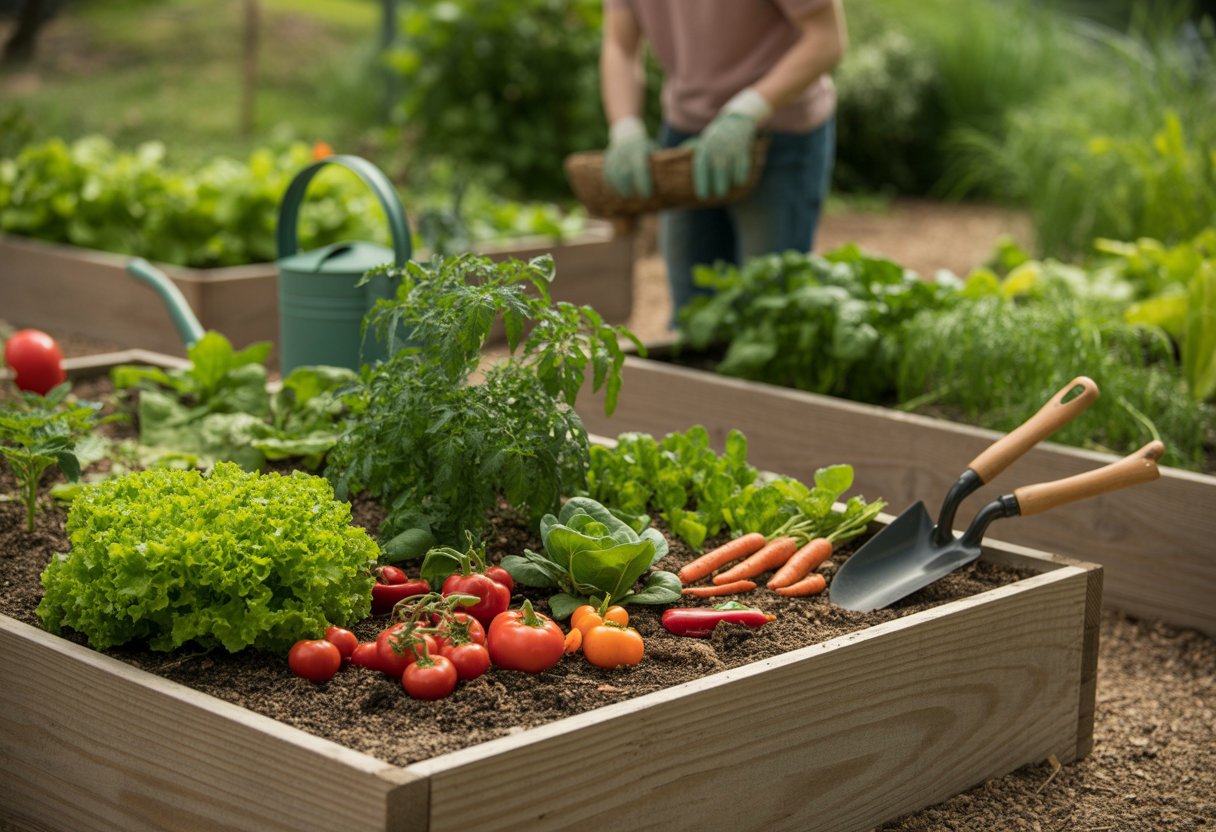
Raised beds set the stage for healthy vegetables by improving soil and drainage. The way you plant, water, and manage crops makes a big difference in how things grow.
Choosing and Planting Vegetables
Pick veggies that do well in raised beds—leafy greens like lettuce and herbs like parsley love rich, loose soil. Root crops need that fluffy texture to form properly.
Space your plants so they’re not fighting for room. Bunching onions need about 3 inches between each, while lettuce likes 6–8 inches, depending on the type.
Starting seeds indoors or using a vegetable greenhouse can give you a head start. Mix in compost before planting for a nutrient boost.
Don’t crowd your plants; too many in one spot can mean more disease and less sun.
Watering Strategies and Irrigation
Soil in raised beds dries out faster, so keeping it moist is key. Drip irrigation or soaker hoses work great since they send water right to the roots and keep leaves drier.
Aim to water deeply but not constantly—the goal is even moisture. Morning is the best time, so leaves dry out by evening. Mulch helps the soil stay damp and keeps temperatures steady.
If you can, set up an automated drip system. It’s a lifesaver during heatwaves or for thirsty crops like lettuce. Overhead sprinklers waste water and can make fungal problems worse, so I’d skip those.
Crop Rotation and Succession Planting
Switching up what you plant in each bed each year helps keep soil healthy and pests at bay. For example, follow leafy greens with beans or root veggies to keep the soil balanced.
Succession planting keeps your harvests coming. Once early crops finish, swap them out for something new—maybe summer veggies or quick-growing greens.
Plan out your crop sequences based on how long things take to grow and how much space you have. Overlapping planting cycles in a greenhouse or under row covers can stretch your harvest even further.
It helps to keep notes on what you plant and when. That way, you can rotate crops more effectively next season.
Maximizing Growth and Harvest
Raised beds warm up fast in spring. That means you can plant earlier and usually see quicker plant growth.
If you orient your beds north-south, you’ll catch more even sunlight. It’s a small tweak, but it can really help.
Fertilize with organic amendments on a regular schedule to keep nutrients up. I like to side-dress veggies with compost tea or a balanced organic fertilizer as the season goes on.
Thin or prune crowded plants to boost air flow. Better circulation helps cut down on disease.
Harvest leafy greens like lettuce often. Snipping them back encourages new, tender growth.
Try using trellises or vertical supports for vining crops. It’s a clever way to save space.
Companion planting and some basic pest management can make a big difference too. Healthier beds, better yields—what’s not to like?