
Needle Spikerush (Eleocharis acicularis)
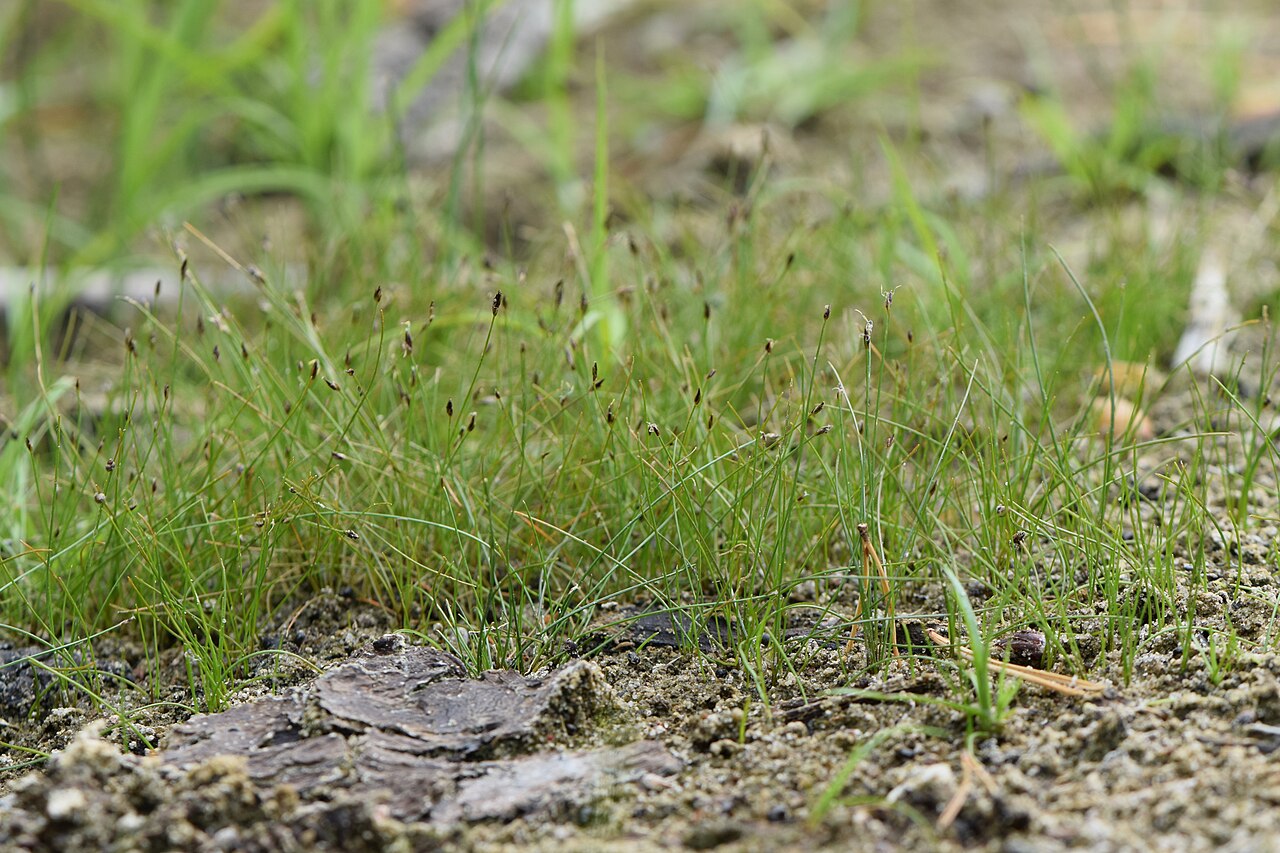
Eleocharis acicularis, known as Needle Spikerush or least spikerush, is a tiny, grass-like sedge that forms dense mats of hair-thin green stems in shallow water and on wet mud. Its stems are usually only 1 to 6 inches tall and no thicker than a needle, and each one is tipped with a single, minute spikelet. Spreading by slender runners, it can carpet a pond margin or lake bottom like a fine green lawn.
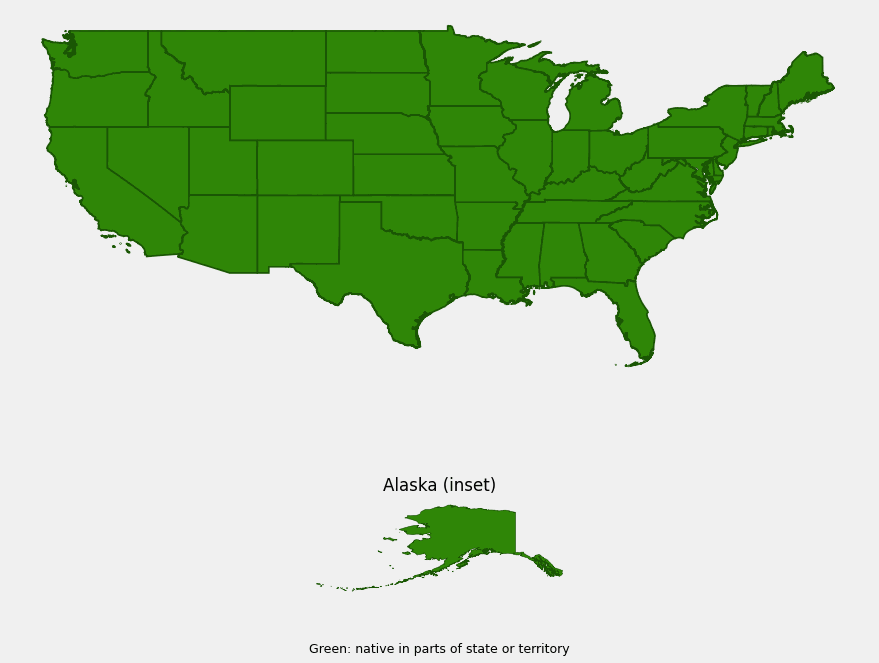
Needle spikerush is one of the most widespread wetland plants in North America. USDA PLANTS lists it as native in every one of the lower 48 states and Alaska, as well as every Canadian province and territory. It grows on the muddy and sandy shores of ponds, lakes, reservoirs and rivers, in wet meadows, ditches and vernal pools, and fully underwater in clear lakes.
Aquarium keepers know it as “dwarf hair grass,” a popular carpeting plant for planted tanks. In outdoor gardens it is a useful native groundcover for pond edges, bog gardens and rain gardens. This page explains how to identify it, its range, how to grow it in ponds and aquariums, and its value for wildlife.
Identification
Needle spikerush is one of the smallest members of the sedge family. Look for very fine, leafless green stems in tufts connected by thread-like runners, each stem ending in a single tiny spikelet.
Stems & Leaves
The plant consists mostly of bright green, thread-like stems, typically 1 to 6 inches tall and occasionally up to about a foot in deep water. They are round to slightly angled and only about a fiftieth of an inch thick. There are no leaf blades; the leaves are reduced to small sheaths at the base of the stems, which are often reddish or purplish.
Runners
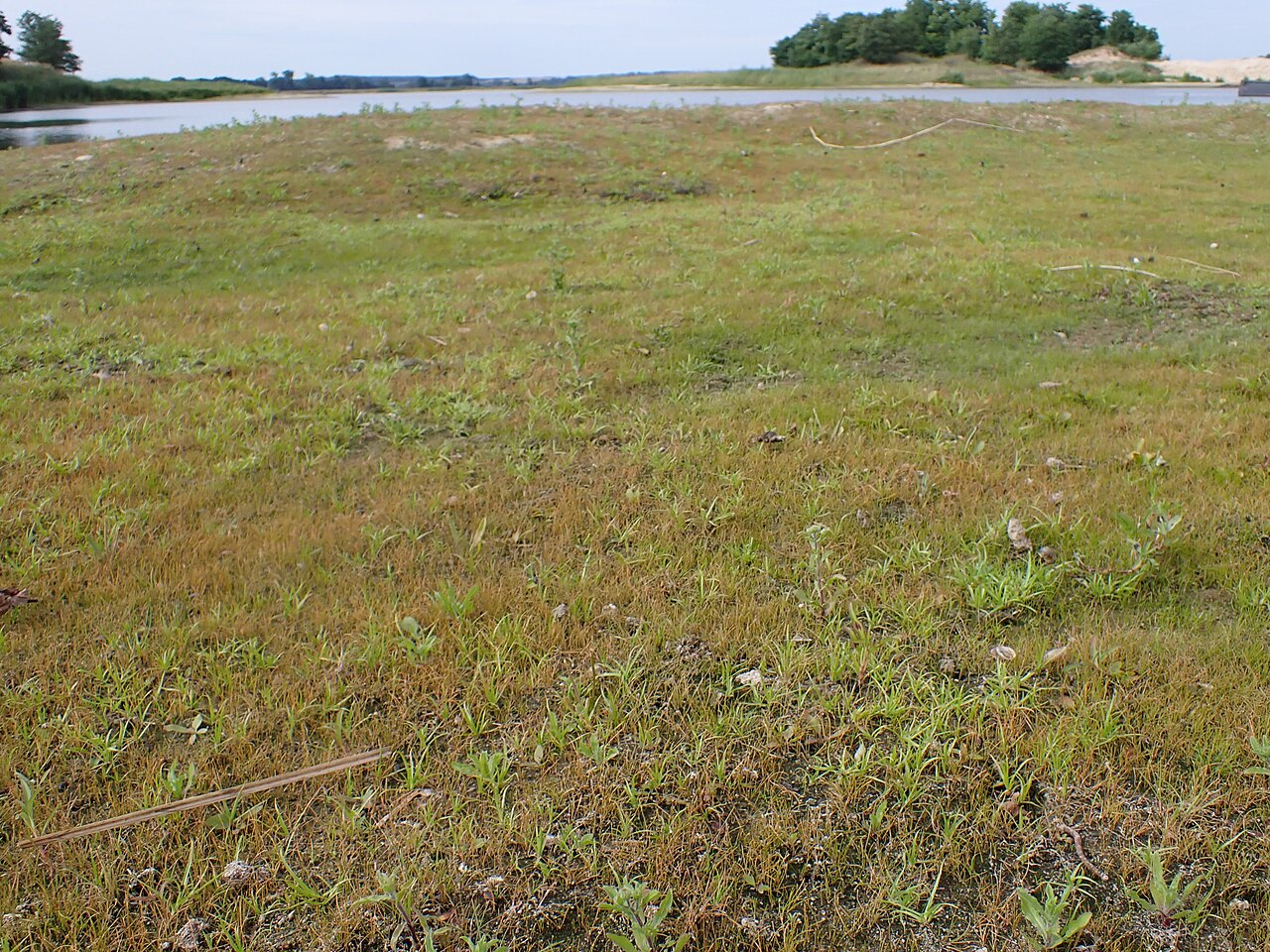
Thin, creeping rhizomes connect the tufts, rooting as they go. Over a season a single plant can spread into a dense mat several feet across.
Spikelets & Flowers
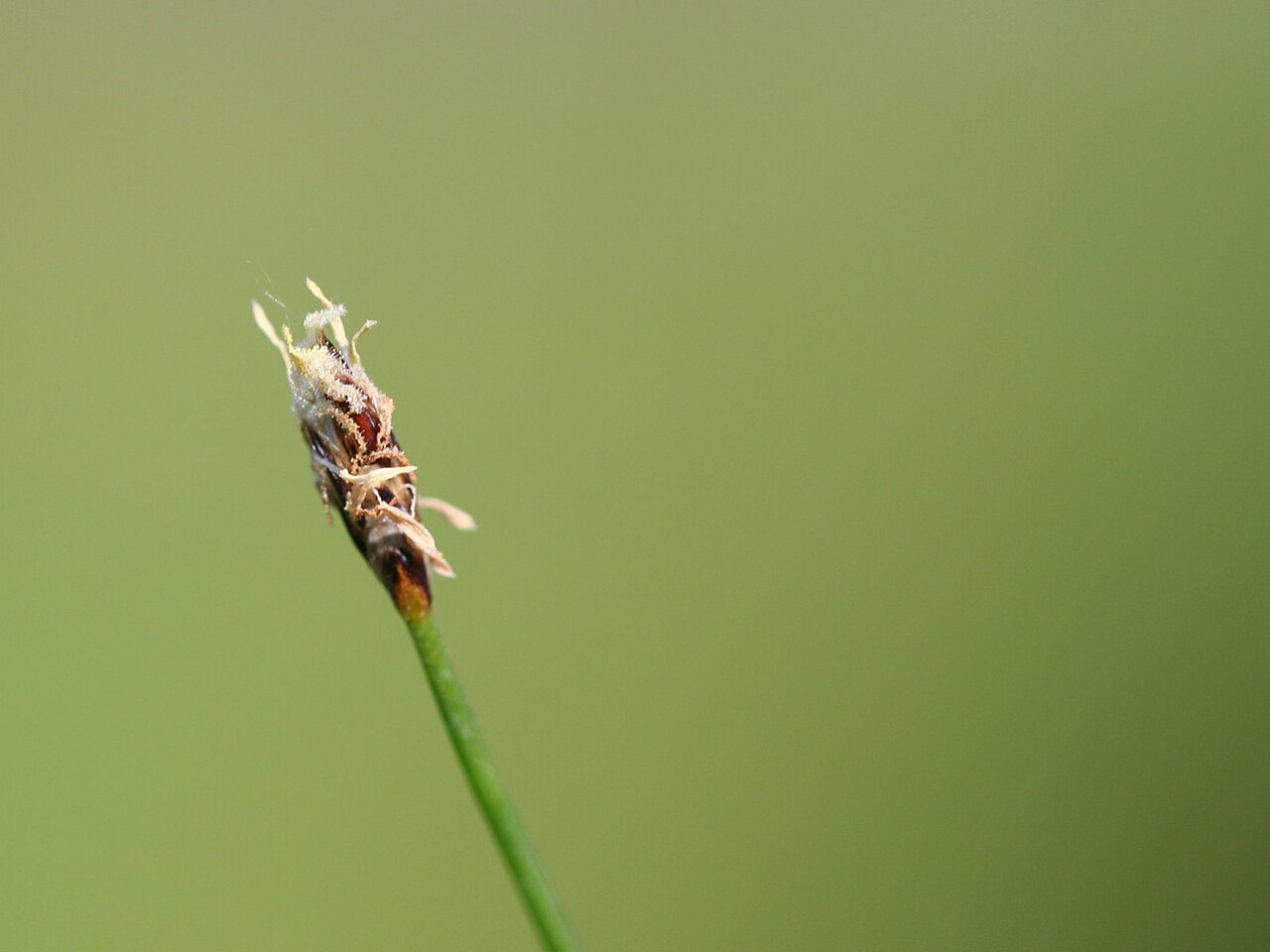
Each fertile stem has a single narrow, egg-shaped spikelet at its tip, about 1/16 to 1/4 inch long, with a few to about 15 tiny flowers. The scales are greenish with purplish-brown sides and pale edges. Flowering and fruiting run from late spring to fall. Plants growing permanently underwater often stay sterile and form only leafy turf.
Seeds
The fruit is a minute achene, whitish to pale gray, with fine lengthwise ribs and many tiny cross-lines, giving it a ladder-like or net-like texture under a hand lens. It is capped by a small, cone-shaped tubercle. This textured achene is the most reliable feature for separating needle spikerush from its tiny relatives.
Similar Species
Several other small spikerushes look similar. Dwarf spikerush (Eleocharis parvula), of salty and brackish shores, has smooth, shiny achenes. Larger species such as Common Spikerush (E. palustris) are much taller, with thicker stems. Some young rushes and quillworts can resemble needle spikerush when growing underwater, but they lack the stem-tip spikelets.
Quick Facts
| Scientific Name | Eleocharis acicularis (L.) Roem. & Schult. |
| Family | Cyperaceae (sedge family) |
| Plant Type | Perennial grass-like sedge; mat-forming aquatic or emergent plant |
| Mature Height | 1–6 in (to about 1 ft in deep water) |
| Mature Spread | Spreads by runners into mats several feet wide |
| Growth Rate | Moderate to fast |
| Sun Exposure | Full sun to part shade |
| Water Needs | High; wet soil or shallow water up to several feet deep |
| Soil Type | Mud, sand, silt or gravel; wet mineral soils |
| Soil pH | About 5.5–8.0 |
| Bloom Time | Late spring–fall |
| Flower Color | Inconspicuous; purplish-brown and green spikelets |
| Fall Color | Stems turn tan to brown |
| Fruit | Tiny whitish achene with ladder-like ridges |
| Deer Resistant | Yes |
| USDA Hardiness Zones | 2–10 |
Native Range
USDA PLANTS lists needle spikerush as native in Alaska and every state of the lower 48 (it also has an old record in the District of Columbia), and in all Canadian provinces and territories, Greenland and St. Pierre and Miquelon. It is most common in the northern states, the Great Lakes region and the West, and it is scattered and less common on the southeastern Coastal Plain and in Florida. In Texas it occurs in scattered wetlands from the east to the Panhandle and the Trans-Pecos.
It grows in nearly any shallow, open freshwater wetland: muddy and sandy lake and pond shores, the drawdown zones of reservoirs, river bars, wet meadows, ditches, seeps, vernal pools and playas. It also grows submerged in clear lakes, sometimes to depths of several feet, forming underwater turf. It is classified as an obligate wetland plant (OBL) throughout the United States.
Beyond North America, needle spikerush is native across Europe and temperate Asia. USDA also lists records from Guam and Palau, which are not covered by this site. Several varieties have been described, and some botanists separate a few western and Asian plants as distinct varieties or species, but most floras treat it as one widespread, variable species.
📋 Regional plant lists featuring Needle Spikerush: Alaska · Alabama, Georgia & Mississippi · Arkansas, Louisiana, Eastern Oklahoma & Eastern Texas · Arizona & New Mexico · California & Nevada · North Dakota, South Dakota & Western Minnesota · Delaware, Southern New Jersey & Long Island · North & South Florida · Illinois, Iowa & Missouri · Idaho, Eastern Oregon & Eastern Washington · Ohio & Indiana · Kentucky & Tennessee · Maryland, Virginia & West Virginia · Michigan, Wisconsin & Eastern Minnesota · Montana & Wyoming · North & South Carolina · Nebraska, Kansas & Eastern Colorado · New Hampshire, Maine & Vermont · Connecticut, Massachusetts & Rhode Island · New York, Pennsylvania & Northern New Jersey · Western Oregon & Western Washington · South & West Texas · Utah & Western Colorado
Growing & Care Guide
Needle spikerush is easy to grow wherever it can stay wet. It is sold by aquatic plant nurseries for ponds and, very widely, by aquarium suppliers as “dwarf hair grass.” Note that some aquarium plants sold under this name are other small Eleocharis species or selections.
Light
Outdoors, grow it in full sun to light shade; it thins out in deep shade. In an aquarium it needs moderate to high light to form a dense, low carpet.
Soil & Water
Plant it in wet mud, sand or gravel at a pond edge, or in water up to about a foot deep. It tolerates fluctuating water levels and short dry periods once established, and it is not fussy about soil type. In aquariums it grows best in a fine nutrient-rich substrate, with added CO2 and fertilizer for the fastest, densest growth.
Planting Tips
Divide a clump into small plugs of a few stems and press them into the wet soil or substrate a few inches apart; the runners will fill in the gaps. In outdoor ponds, plant on a shallow shelf or along a muddy edge. In aquariums, trim the plugs short before planting to encourage spreading.
Pruning & Maintenance
Outdoors it needs little care. In aquariums, trim it periodically to keep it short and dense, and remove dead stems. Because it spreads steadily, keep it away from very small tanks or pond features where it could crowd out other low plants.
Propagation
Propagate it by dividing the mats at any time in the growing season. It also grows from seed sown on wet mud, but division is much faster. Always use nursery-grown plants rather than collecting from wild wetlands.
Landscape Uses
- Pond and water garden edges: a fine-textured, mat-forming groundcover for shallow water and wet mud
- Aquariums: the popular carpeting plant known as dwarf hair grass
- Rain gardens and bioswales: tolerates alternating flooding and drying in the lowest zone
- Wetland restoration: quickly stabilizes muddy shores and reservoir drawdown zones
- Bog and container water gardens: a soft green accent at the base of taller wetland plants
Wildlife & Ecological Value
Needle spikerush is small, but its dense mats are an important part of shallow-water habitat across the continent.
For Pollinators
Like other sedges, needle spikerush is wind-pollinated and offers no nectar. Its value lies in the habitat it creates rather than in flowers for pollinators.
For Birds
Ducks, geese and shorebirds eat the seeds and the tender stems and rhizomes, and they forage among the mats for the snails, insect larvae and other small invertebrates that live there. Exposed mats on mudflats are good feeding areas for migrating shorebirds.
For Mammals
Muskrats and other wetland mammals may graze on the stems, and the mats provide feeding areas for animals that forage along shorelines.
Ecosystem Role
Underwater turfs of needle spikerush stabilize lake and pond bottoms, reduce shoreline erosion, and offer cover for small fish and aquatic invertebrates. As a pioneer of bare mud, it is one of the first plants to colonize reservoir drawdowns and new wetlands, binding the soil with its runners.
Cultural & Historical Uses
The genus name Eleocharis comes from Greek words meaning “marsh” and “grace,” and acicularis means “needle-like,” describing the very fine stems. Linnaeus first named it Scirpus acicularis in 1753.
In the aquarium hobby, “dwarf hair grass” is one of the most widely used plants for creating a lawn-like carpet in planted tanks and aquascapes. Its popularity has made a once-obscure wetland sedge familiar to many people who have never seen it growing wild on a lake shore.
Needle spikerush is also used in lake and wetland management. Because its low, dense turf can cover shallow lake bottoms and drawdown zones, it is valued as a native groundcover in wetland restoration, and wetland botanists often find it on clear-water lakes with sandy or muddy shores.
Frequently Asked Questions
Is needle spikerush the same as dwarf hair grass?
Usually, yes. “Dwarf hair grass” is the aquarium-trade name for Eleocharis acicularis, although some plants sold under that name are other small spikerushes or selected forms.
Is needle spikerush a grass?
No. Despite its grass-like look, it is a sedge (family Cyperaceae). Its stems are round and leafless, and it bears its flowers in a single small spikelet at the tip of each stem.
Where does needle spikerush grow?
It is native to all of the lower 48 states, Alaska and all of Canada, as well as Europe and Asia. It grows on muddy or sandy shores, in wet meadows and ditches, and underwater in clear lakes and ponds.
Can needle spikerush grow fully underwater?
Yes. It can grow submerged and form a low, lawn-like carpet, which is why it is popular in aquariums. Submerged plants often stay sterile and spread by runners.
Is needle spikerush invasive?
It is a native plant across North America and is not considered invasive here. It spreads readily by runners in wet ground, so in small ponds or aquariums it may need occasional trimming.

Looking for a nursery that carries Needle Spikerush?
Browse our native plant nursery directory: Alabama, Alaska, Arizona & Arkansas · California · Colorado, Connecticut, Delaware, Florida & Georgia · Idaho, Illinois, Indiana, Iowa & Kansas · Kentucky, Louisiana, Maine, Maryland, Massachusetts, Michigan, Minnesota, Mississippi, Missouri & Montana · Nebraska, Nevada, New Hampshire, New Jersey, New Mexico, New York, North Carolina, North Dakota, Ohio & Oklahoma · Oregon · Pennsylvania, Rhode Island, South Carolina, South Dakota, Tennessee, Texas, Utah, Vermont & Virginia · Washington · West Virginia, Wisconsin & Wyoming

