
Native Ferns for Woodland Gardens: Essential Species and Care Tips
Last updated: November 25, 2026
Native ferns work beautifully in woodland gardens because they adapt easily to shady, moist spots. They add texture and depth without crowding out other plants.
By using native ferns, you’re supporting local ecosystems and choosing plants that actually fit your garden’s conditions.
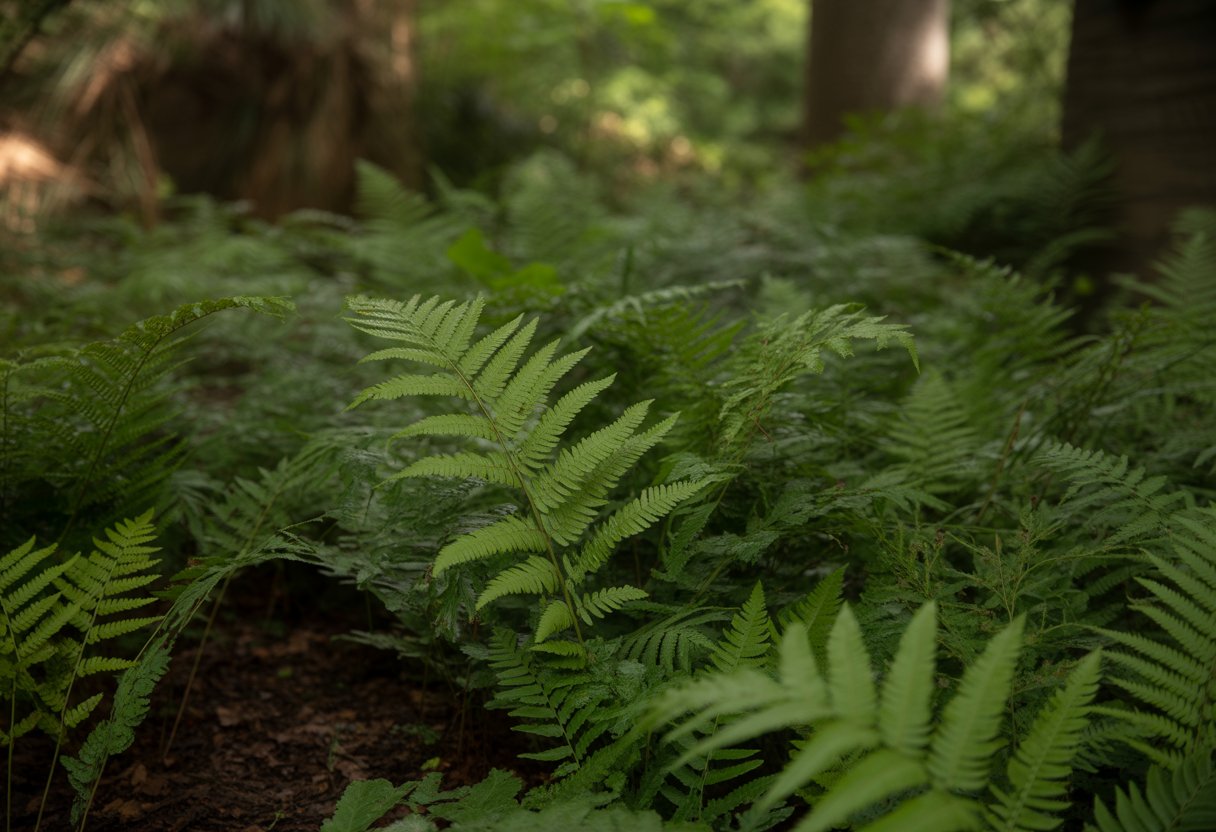
These ferns need little fuss and thrive in the dappled light that most woodlands offer. They create natural layers and attract wildlife, making the garden feel alive.
Picking the right native species keeps your landscape resilient and diverse.
Benefits of Growing Native Ferns in Woodland Gardens
Native ferns bring both ecological and visual perks to woodland gardens. They handle shade well and, with their spreading growth, look natural in these settings.
Ecological Advantages
Native ferns support local ecosystems in subtle but important ways. Their roots hold soil in place, so erosion slows down in shady areas.
They also give insects, amphibians, and small mammals places to hide and live.
Since these ferns are native plants, they fit right in with the other local plants and animals. They boost biodiversity by helping native pollinators and soil life that non-native plants might ignore.
Their knack for thriving in moist, shady spots means they work alongside other native shade plants, building healthy layers in the garden.
Visual Appeal and Foliage Color
Native ferns come in all kinds of shapes and shades of green, adding texture you just can’t fake. Some have those classic, feathery fronds, while others show off broader, bolder leaves.
You’ll notice some ferns change color as the seasons shift—bright greens in spring, sometimes bronzy hues in fall. This splash of color helps brighten up shady spots where flowers might be lacking.
Their spreading growth covers ground, softening garden edges and filling awkward gaps beneath trees. It’s a lush, layered look without constant replanting.
Low Maintenance and Adaptability
Native ferns are tough perennials that don’t ask for much once they’re settled in. They’ll put up with different soils but really like it moist and well-drained, which is pretty common in woodlands.
Because they tolerate shade, you can plant them under tree canopies where other plants might struggle. Most of the time, you won’t need to water or fertilize them, which makes life a lot easier.
Their spreading habit keeps weeds in check too, so there’s less weeding for you. If you want a reliable, low-effort plant for your woodland, it’s hard to go wrong with native ferns.
Popular Native Fern Species for Woodland Gardens
There’s a surprising variety among native ferns for woodland gardens. Some have delicate fronds, others are bold and architectural.
Most of them love shady, moist environments—just what you’d expect in the woods.
Lady Fern and Lady Ferns
The lady fern (Athyrium filix-femina) stands out for its finely divided, feathery fronds that reach 2 to 3 feet tall. It grows best in moist, well-drained soil with partial to full shade.
Lady ferns spread by creeping rhizomes, forming pretty clumps. Their light green fronds arch gracefully, and they’re easy to care for—no wonder they’re so popular in woodland borders.
Maidenhair Fern Varieties
American maidenhair (Adiantum pedatum) and southern maidenhair (Adiantum capillus-veneris) are both native options. The American type has fan-shaped leaflets on wiry black stems and thrives in consistently moist, shady woodland floors.
Southern maidenhair likes warmer, more humid spots and has thinner, very delicate fronds. Both need acidic, well-drained soils and do best where shade and moisture stick around.
Ostrich Fern
Ostrich fern (Matteuccia struthiopteris) shoots up tall, plume-like fronds, kind of like ostrich feathers. It usually grows 3 to 6 feet and spreads quickly with underground rhizomes.
This fern prefers rich, moist soil in shade or part shade. Its upright fronds die back in winter, but they return strong in spring.
Ostrich fern’s fertile fronds have a unique look, making it easy to spot. Its height and texture give woodland gardens a nice vertical lift.
Christmas Fern and Evergreen Fronds
Christmas fern (Polystichum acrostichoides) stays green all year, even through winter. It grows about 1 to 2 feet tall and does well in well-drained, acidic woodland soils.
It can handle drier shade better than most ferns. The leathery, lance-shaped leaflets have “toe-like” tips, and the dense, arching growth makes it great for groundcover or planting under shrubs.
Cultivation and Planting Considerations
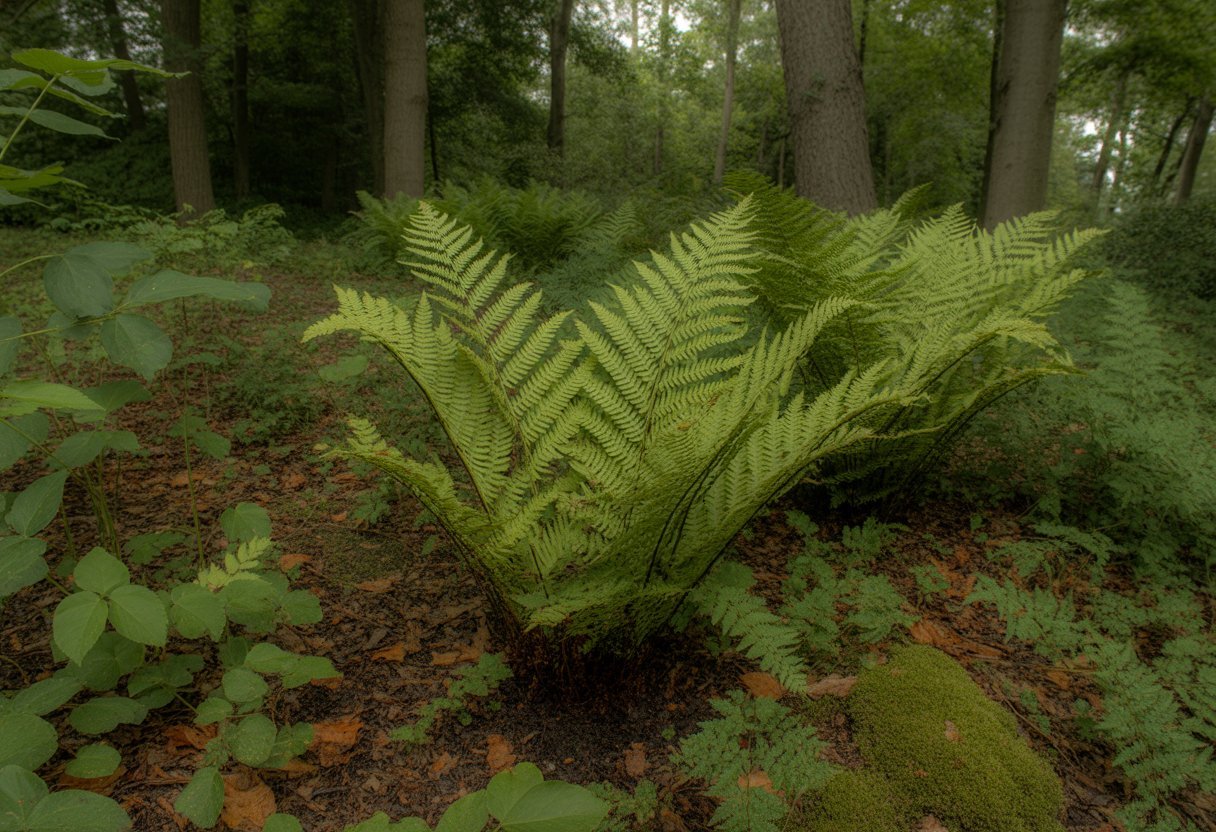
Getting native ferns established takes a bit of prep, but it’s not rocket science. Picking the right spot, working the soil, choosing how to propagate, and paying attention to ongoing care are the basics.
Shade tolerance, moisture needs, and plant structure all matter for healthy growth. Good techniques help both deciduous and evergreen ferns settle in.
Site Selection: Shade and Moisture
Native ferns do best in shaded or partly shaded areas, which most woodland gardens have in spades. Full shade works for most deciduous ferns, while many evergreen ferns can take a bit more light.
Keeping the soil moist but not soggy is key. Ferns like steady moisture and well-drained soil, so avoid spots that flood or dry out completely.
If you can find a site near a stream or where natural mulch builds up, you’re halfway there. Matching light and moisture to the fern species you’re planting really pays off.
Soil Preparation and Rhizomes
Soil rich in organic matter and loose enough for rhizomes to spread works best. Add leaf mold or compost to boost moisture retention and nutrients.
Aim for a pH between 5.5 and 7.0—slightly acidic to neutral. If your soil is heavy clay, mix in something to improve drainage.
Plant rhizomes just below the surface, about 1-2 inches deep, and let them run horizontally. Give them some space so they aren’t fighting with tree roots.
A layer of mulch after planting keeps moisture steady and protects against temperature swings.
Propagation Methods: Spores and Division
You can propagate native ferns by spores or by division. Division is way faster for getting a woodland patch going.
To grow from spores, you’ll need to collect them from mature fronds and sow them on a sterile, moist medium. It’s slow and a bit tricky.
Division is more straightforward. Split sections of rhizome with healthy buds in early spring or late fall.
As long as each piece has roots and some fronds, it should take off. Division keeps the plant’s traits consistent, which is handy if you’re trying to fill a shady area with the same fern.
Seasonal Care and Maintenance
Keep ferns watered through the growing season, especially in summer when things dry out. Water deeply during dry spells, but don’t let the soil get soggy.
Cut away dead fronds to improve air flow and reduce disease. Deciduous ferns drop their fronds in winter, while evergreens hold onto theirs but might need a quick cleanup.
A little slow-release organic fertilizer in spring helps new growth, but skip high-nitrogen stuff—it can make ferns floppy. Mulch in winter if you’re in a colder spot to protect the rhizomes.
Keep an eye out for slugs and fungal problems. A quick check now and then goes a long way.
Designing Woodland Gardens with Native Ferns
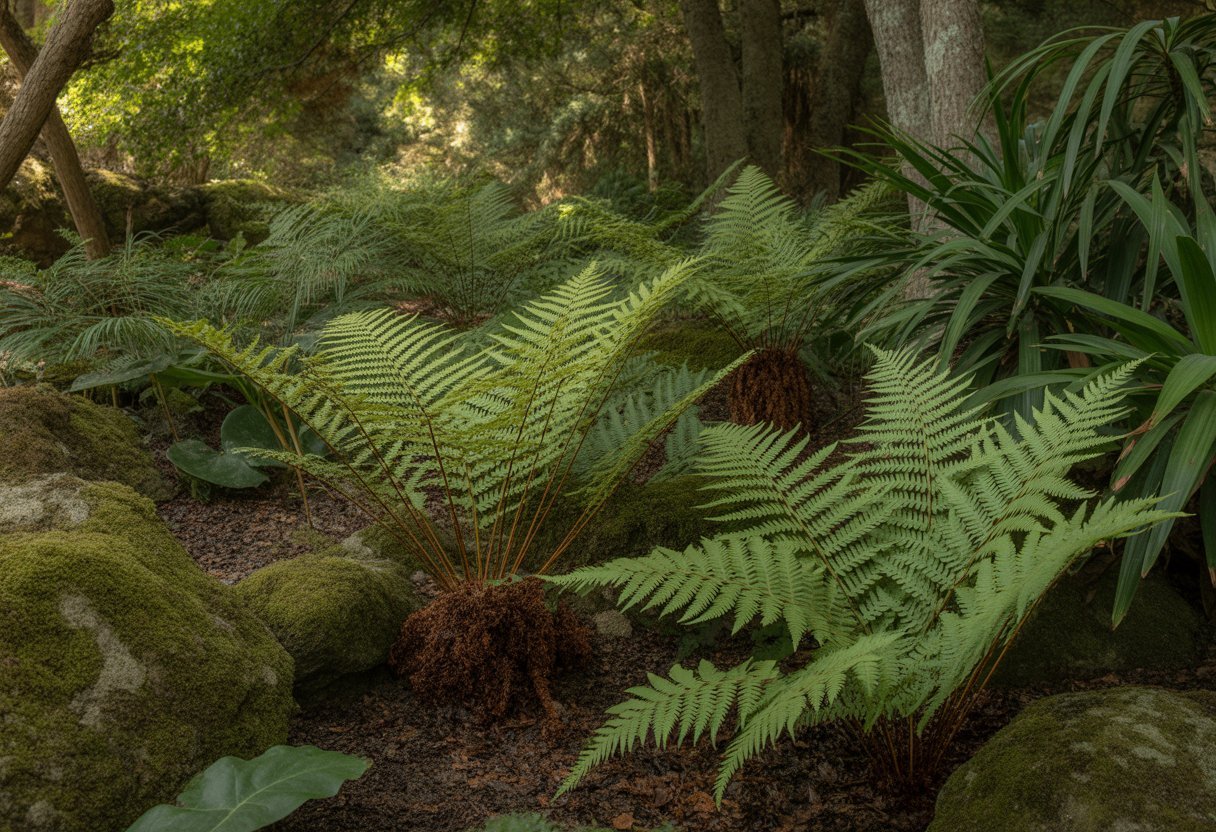
Designing with native ferns in woodland gardens is a bit of an art. It’s about mixing plant groupings, textures, and colors to get that wild-but-intentional vibe.
Choosing companion plants, playing with structure, and mixing up fern species all help create a lively, layered space.
Incorporating Companion Plants
Native ferns play nicely with other shade-loving plants that like similar soil and moisture. Wild ginger, trilliums, and foamflower are good picks—they won’t crowd out the ferns.
Mixing in plants with different leaf shapes and colors keeps things interesting. For example, the fine fronds of royal fern (Osmunda regalis) look great next to hostas or the shiny leaves of Solomon’s seal.
Spring ephemerals fill gaps before the ferns leaf out, adding some early-season action. Companion plants also draw in pollinators and good bugs, which helps the whole garden.
Achieving Structural Variation and Texture
A woodland garden really comes alive when you mix up fern heights and textures. Tall types like cinnamon fern (Osmundastrum cinnamomeum) and royal fern add some drama.
Medium ferns, such as autumn fern (Dryopteris erythrosora) and hairy lip fern (Cheilanthes lanosa), bring in different textures at eye level. For groundcover, holly fern (Cyrtomium falcatum) and sensitive fern (Onoclea sensibilis) do the job.
Try blending the airy fronds of wood ferns (Dryopteris spp.) with the sturdy leaves of western sword fern (Polystichum munitum). This mix guides your eye and helps define spaces, so the garden never feels flat or boring.
Notable Species for Unique Effects
Several native ferns bring something special to woodland settings. The Japanese painted fern (Athyrium niponicum) stands out with its silver and purple foliage, really brightening up those dim, shaded spots.
The Australian tree fern (Dicksonia antarctica) isn’t native everywhere, but it sure creates a dramatic focal point where the climate’s right. Tongue ferns and royal ferns give some nice height and structure.
Cinnamon fern’s rusty-colored fertile fronds add those cool seasonal accents. Sensitive fern (Onoclea sensibilis) handles wet soils like a champ, which makes it perfect for boggy woodland corners.

