
Western Rattlesnake Plantain (Goodyera oblongifolia)
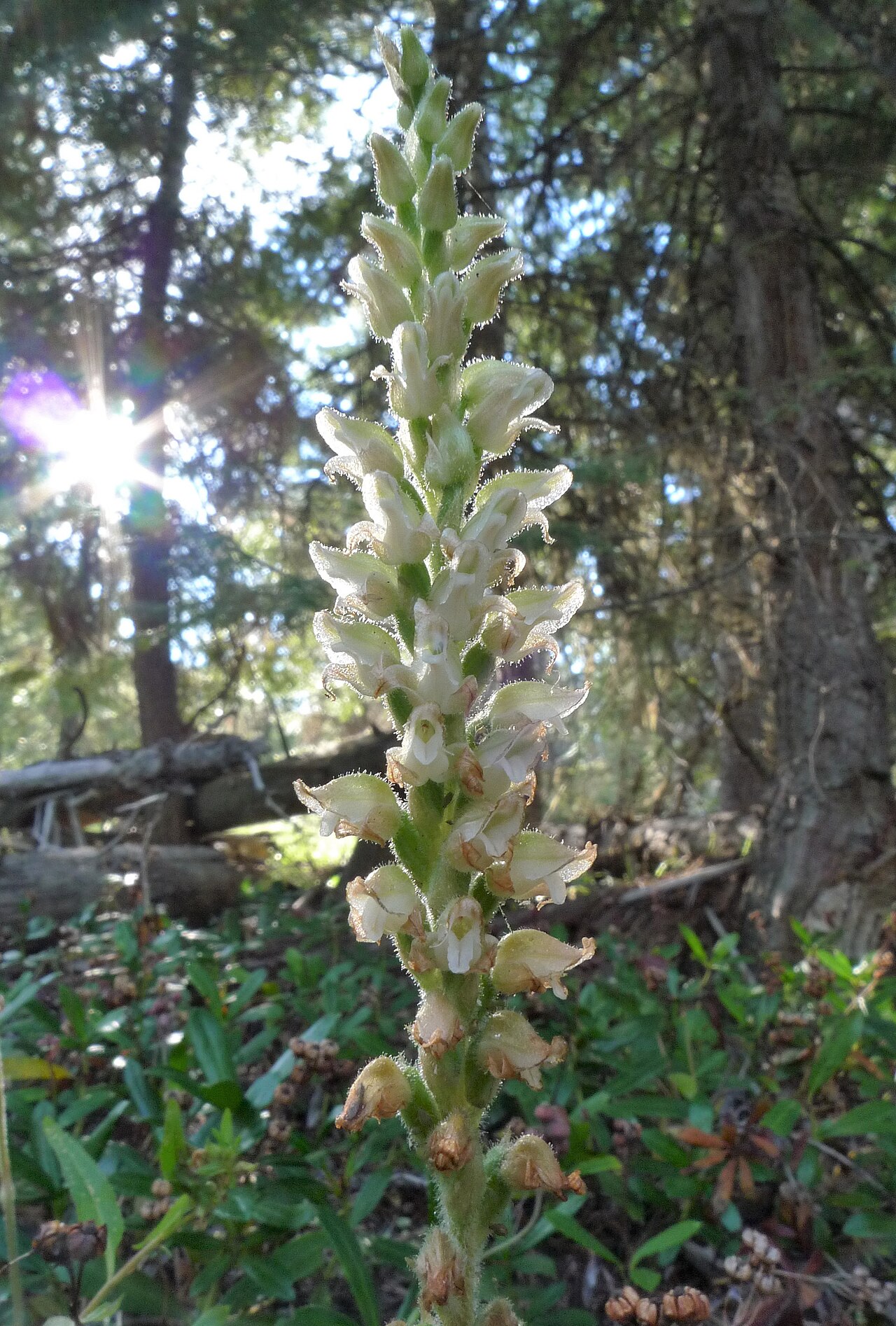
Goodyera oblongifolia, known as Western Rattlesnake Plantain or giant rattlesnake plantain, is the largest of North America’s rattlesnake plantain orchids. It grows as a flat rosette of dark green, evergreen leaves on the shady floor of conifer and mixed forests, usually with a bold white stripe down the center of each leaf. In mid to late summer a single downy stalk 8 to 16 inches tall rises from the rosette and carries dozens of small, greenish-white, hooded flowers.
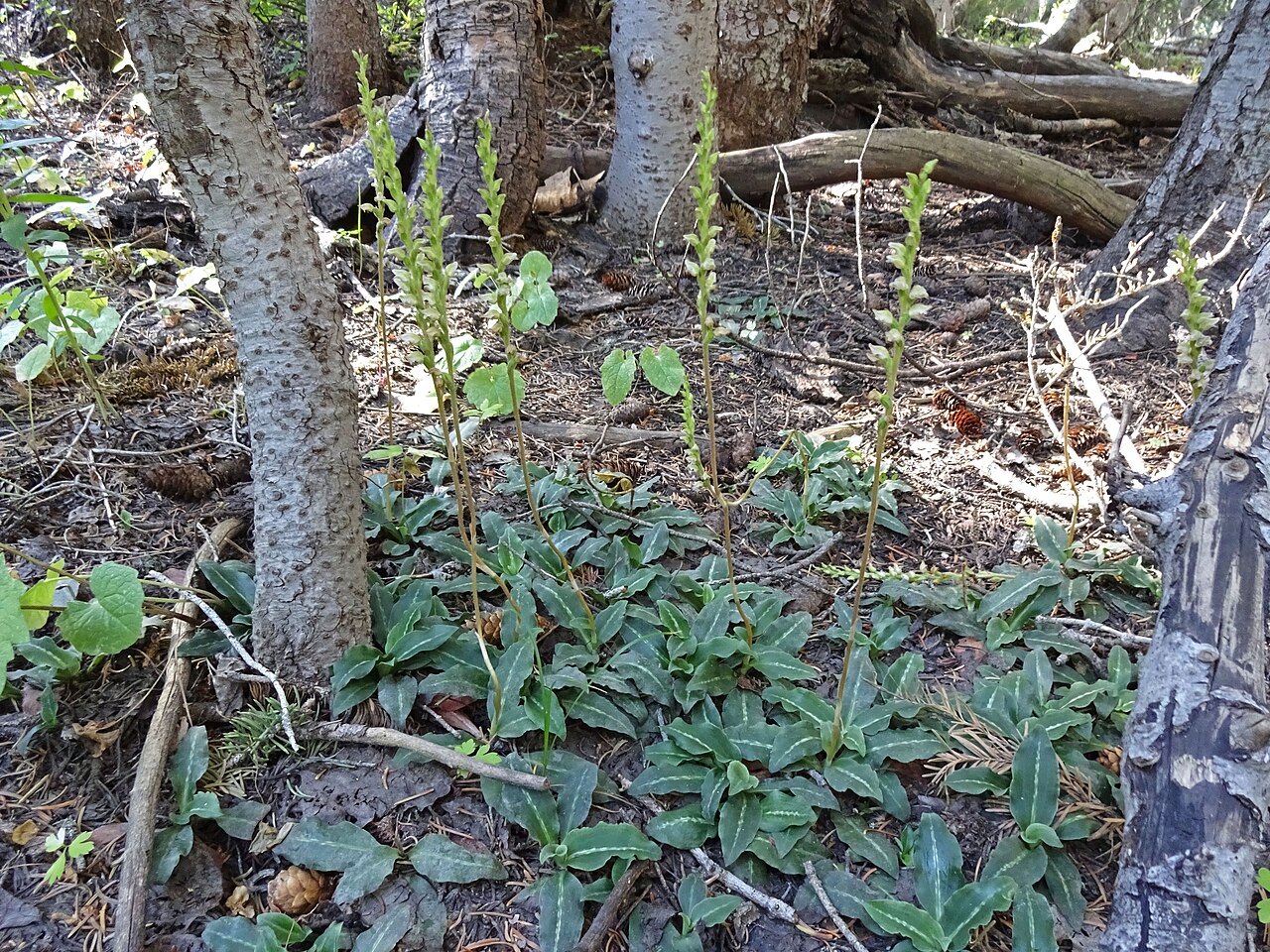
The plant belongs to the orchid family (Orchidaceae), and like all orchids it depends on soil fungi throughout its life. Its rosettes spread slowly by short underground stems, so it often forms loose colonies under Douglas-fir, hemlock, spruce, pine and aspen. The “rattlesnake” in the name refers to the patterned leaves, which reminded early settlers of snakeskin, and to old folk beliefs that the plant could treat snakebite.
Western rattlesnake plantain is widespread in the mountains of the West from Alaska to Arizona and New Mexico, and it also grows around the upper Great Lakes, in Maine and across much of Canada. Although it is one of the more common native orchids, it should never be dug from the wild: transplanted plants almost always die once separated from their fungal partners. This guide covers how to identify it, where it grows and how to protect it.
Identification
Rattlesnake plantains are easy to spot by their evergreen rosettes of patterned leaves. Western rattlesnake plantain is distinguished by its larger size, its central white stripe and its range in the West and the far North.
Leaves
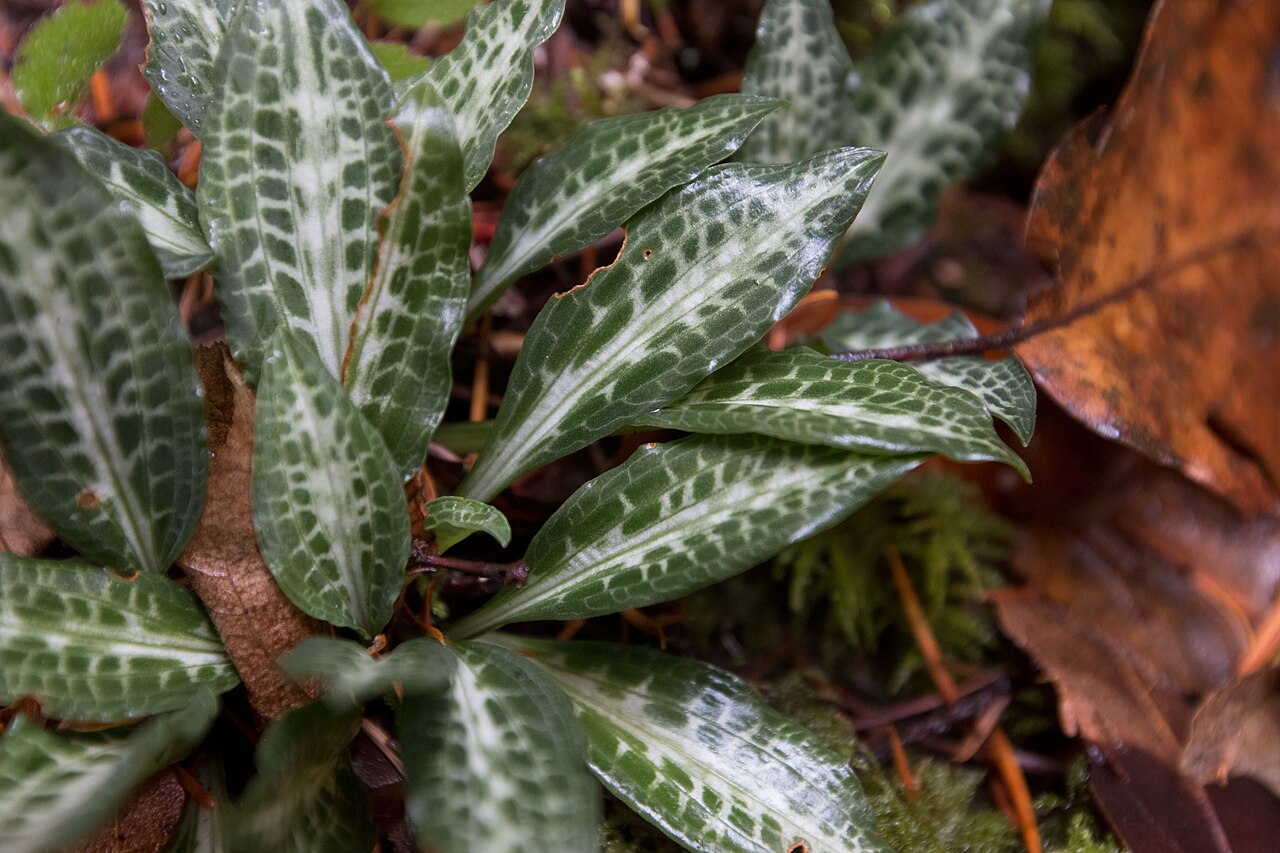
Each rosette has 3 to 7 or more lance-shaped to oblong leaves about 1½ to 3½ inches long that lie close to the ground. They are thick, dark bluish green and evergreen, staying green under the snow through winter. Most plants have a wide white stripe along the midrib and little other marking. In parts of the range, especially near the Great Lakes and the Northeast, some plants also show a fine white net of side veins, which can make them look like the eastern downy rattlesnake plantain.
Flower Stalk
A single, upright flowering stalk 8 to 16 inches tall grows from the center of a mature rosette in summer. It is covered in fine glandular hairs and carries a few small, scale-like leaves. The flowers are crowded along the top several inches of the stalk, either in a loose spiral or mostly turned to one side.
Flowers
The flowers are small, about ¼ to ⅓ inch long, white to greenish white and hooded. The upper sepal and petals form a hood over a pouch-shaped lip with a long, pointed beak. The plant flowers from July to September in most of its range, depending on elevation and latitude. After flowering, an individual rosette usually dies, and the colony continues from side shoots.
Fruit & Seeds
Pollinated flowers form small, upright capsules that ripen in late summer and fall. The dry stalks often stand into winter. Each capsule releases thousands of dust-fine seeds that need a compatible soil fungus to germinate, as all orchid seeds do.
Look-alikes
Downy Rattlesnake Plantain of the East has a full network of white veins and a dense, cylindrical spike of flowers. Lesser and checkered rattlesnake plantains (Goodyera repens and G. tesselata) are smaller, with leaves under about 1½ inches and smaller flowers. Pipsissewa and other wintergreens have glossy, toothed leaves and nodding pink or white flowers, not orchid flowers.
Quick Facts
| Scientific Name | Goodyera oblongifolia (syn. Goodyera decipiens, Peramium decipiens) |
| Family | Orchidaceae (orchid family) |
| Plant Type | Evergreen terrestrial orchid; herbaceous perennial |
| Mature Height | 2–4 in rosette; flower stalks 8–16 in |
| Mature Spread | 4–6 in per rosette; slowly forms colonies |
| Growth Rate | Slow |
| Sun Exposure | Shade to part shade |
| Water Needs | Moderate; evenly moist to fairly dry forest soil |
| Soil Type | Humus-rich forest duff over well-drained loam, sand or gravel |
| Soil pH | Acidic to near-neutral |
| Bloom Time | July–September |
| Flower Color | White to greenish white |
| Fall Color | None; evergreen leaves |
| Fruit | Small upright capsules with dust-like seeds |
| Deer Resistant | Moderate; occasionally browsed |
| USDA Hardiness Zones | 2–8 |
Native Range
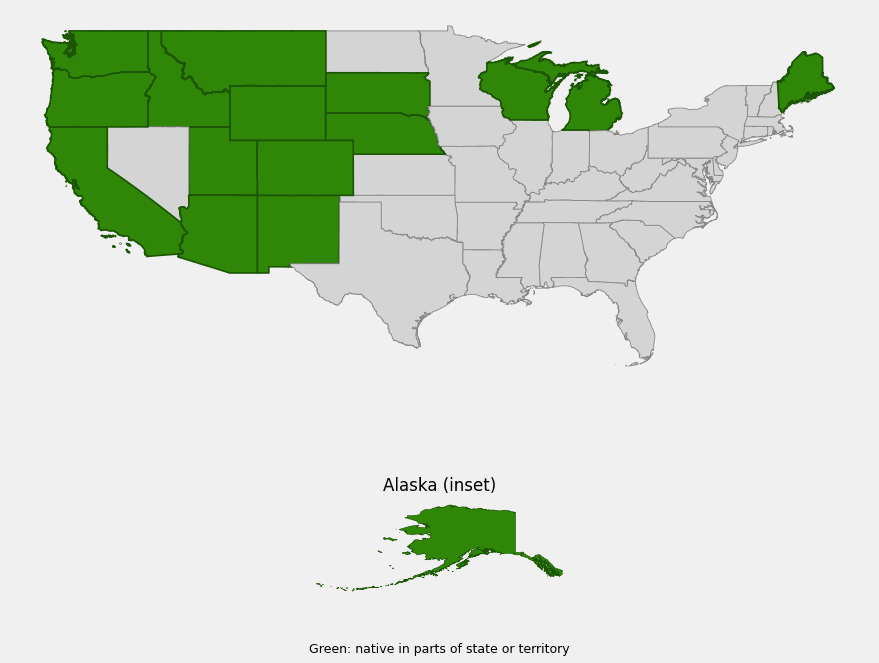
USDA PLANTS lists western rattlesnake plantain as native in 16 states: Alaska, Arizona, California, Colorado, Idaho, Maine, Michigan, Montana, Nebraska, New Mexico, Oregon, South Dakota, Utah, Washington, Wisconsin and Wyoming. In Canada it ranges from British Columbia and Alberta east through Saskatchewan, Ontario and Quebec to New Brunswick, Nova Scotia and Newfoundland. To the south it reaches the mountains of northern Mexico.
In the West it is a typical plant of mountain conifer forests: Douglas-fir, western hemlock and western red cedar in the Pacific Northwest, ponderosa pine, lodgepole pine, spruce and fir in the Rockies and Southwest, and aspen groves. On the northern Great Plains it is limited to scattered pine forests, such as those of the Black Hills. In the East it occurs around the upper Great Lakes and in northern New England, usually in cool, mossy coniferous or mixed woods.
Throughout its range it prefers dry to moist, well-drained, acidic forest floors with plenty of needle litter and humus. It tolerates deep shade better than most wildflowers and is often one of the few green plants under dense conifers. It is uncommon near the edges of its range, and some eastern states treat it as rare.
📋 Regional plant lists featuring Western Rattlesnake Plantain: Idaho, Eastern Oregon & Eastern Washington · Montana & Wyoming · Michigan, Wisconsin & Eastern Minnesota · Nebraska, Kansas & Eastern Colorado · Utah & Western Colorado · New Hampshire, Maine & Vermont · Arizona & New Mexico · Alaska
Growing & Care Guide
Western rattlesnake plantain is not a typical garden plant, and it should never be dug from the wild. Like all orchids it lives in partnership with soil fungi, and plants that are moved almost always fade away within a few years. It is seldom sold, and any plant offered for sale should come from nursery propagation, not wild collection. The best way to enjoy it is to protect existing forest colonies and the shady, undisturbed duff they grow in.
Light
It grows in shade to part shade under conifers and aspens. Openings that suddenly let in full sun, such as after clearing, tend to dry the soil and weaken colonies.
Soil & Water
It needs a deep layer of needle litter and humus over well-drained mineral soil, kept lightly moist but never waterlogged. Do not rake away needles or add fertilizer, lime or rich compost where it grows. These change the soil chemistry and the fungi that the orchid depends on.
Planting Tips
If you have a wooded property where it already grows, mark the colonies so they are not trampled during work, and route paths and firewood piles away from them. If you garden near conifer forests in its range, keeping a shady, undisturbed woodland corner with native shrubs and groundcovers is the best way to give it room. Do not move plants from the wild, even from land about to be cleared, unless you are working with a local native plant society rescue program.
Pruning & Maintenance
No pruning is needed. Leave dried flowering stalks to drop their seeds. Keep out invasive groundcovers such as English ivy and periwinkle, which can smother the low rosettes.
Propagation
In nature it spreads by short underground stems and by dust-like seeds that need a fungal partner to germinate. Propagation from seed requires laboratory culture and is best left to specialists.
Landscape Uses
- Woodland stewardship: a sign of healthy, undisturbed conifer forest duff worth protecting
- Wildflower walks: evergreen rosettes are easy to find in any season
- Nature study: a good example of an orchid that depends on soil fungi
- Photography: patterned evergreen leaves and late-summer flower spikes
- Shade woodland preserves: part of the native groundcover layer under conifers
Wildlife & Ecological Value
Western rattlesnake plantain is a modest plant, but its evergreen leaves and late flowers are part of the life of the forest floor.
For Pollinators
Bumblebees are the main reported pollinators. They visit the small flowers for nectar in late summer, when fewer woodland wildflowers are in bloom, and carry away the orchid’s pollen packets on their mouthparts.
For Birds
Birds make little direct use of the plant. Grouse and other forest birds forage in the same shady understory where it grows.
For Mammals
Deer and elk occasionally browse the rosettes or flower stalks, and small mammals live among the litter and groundcovers around it. It is not an important food plant.
Ecosystem Role
Rattlesnake plantains form close partnerships with soil fungi, which help supply water and nutrients, especially to young plants. Their evergreen rosettes keep photosynthesizing through mild winter days. Colonies are often found in old, undisturbed forests and recover slowly after logging or soil disturbance.
Cultural & Historical Uses
The genus Goodyera honors the seventeenth-century English botanist John Goodyer. Rafinesque named the species in 1833; the name oblongifolia means “oblong-leaved.” For many years it was also called Goodyera decipiens and Peramium decipiens, names that still turn up in older floras.
Several Indigenous peoples of the Pacific Northwest and the Rockies used rattlesnake plantain leaves in traditional medicine, and like other rattlesnake plantains it has a long folk reputation as a snakebite remedy based on its snakeskin-patterned leaves. There is no evidence that it works against venom, and the plant should not be collected.
For hikers and naturalists in western forests, the evergreen rosettes are a familiar sight in every season, and the plant is often the first native orchid people learn to recognize. It is a reminder that many orchids grow quietly in ordinary forests, not only in remote bogs.
Frequently Asked Questions
Can I grow western rattlesnake plantain in my garden?
It is rarely grown and difficult to establish because it depends on soil fungi. Do not dig it from the wild. If you live in its range and have a shady conifer woodland, protecting the forest floor is the best way to keep it.
Why is it called rattlesnake plantain?
The leaves are patterned like snakeskin, and the plant was traditionally said to cure snakebite. “Plantain” refers to its flat rosette of leaves, which looks a little like the unrelated common plantain.
How is it different from downy rattlesnake plantain?
Western rattlesnake plantain usually has a single white stripe along the midrib of each leaf, while downy rattlesnake plantain of the East has a full white net of veins and a denser flower spike. The two overlap only around the Great Lakes and in the Northeast.
When does it bloom?
Mostly from July to September, depending on elevation and latitude. The evergreen rosettes can be found all year.
Is it rare?
It is fairly common in many western conifer forests but uncommon in parts of the Great Lakes region and New England, and it may be protected under state wildflower or orchid laws. Leave all wild plants in place.

Looking for a nursery that carries Western Rattlesnake Plantain?
Browse our native plant nursery directory: Alaska & Arizona · California · Colorado · Idaho · Maine, Michigan & Montana · Nebraska & New Mexico · Oregon · South Dakota & Utah · Washington · Wisconsin & Wyoming