
Indian Tobacco (Lobelia inflata)
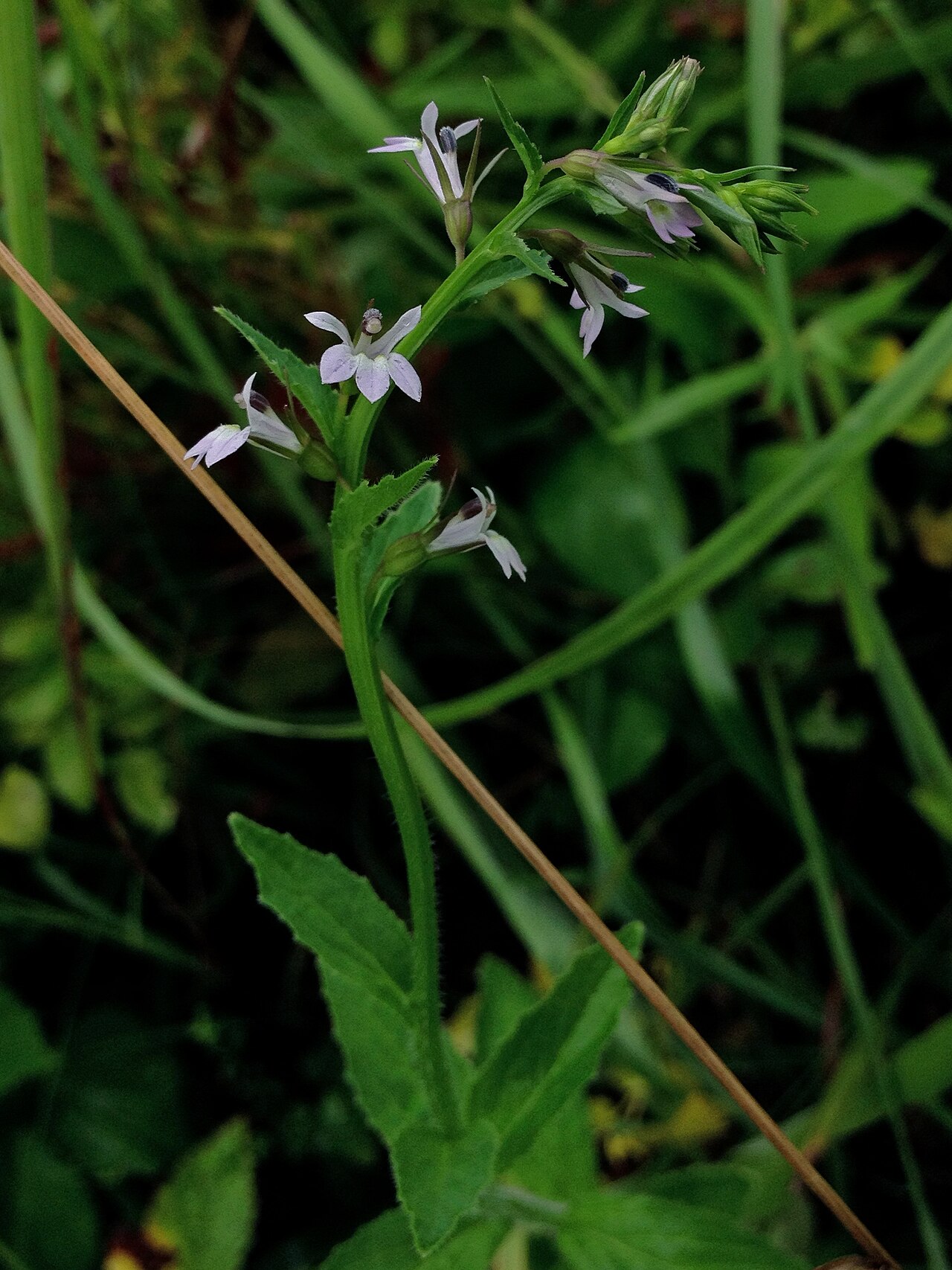
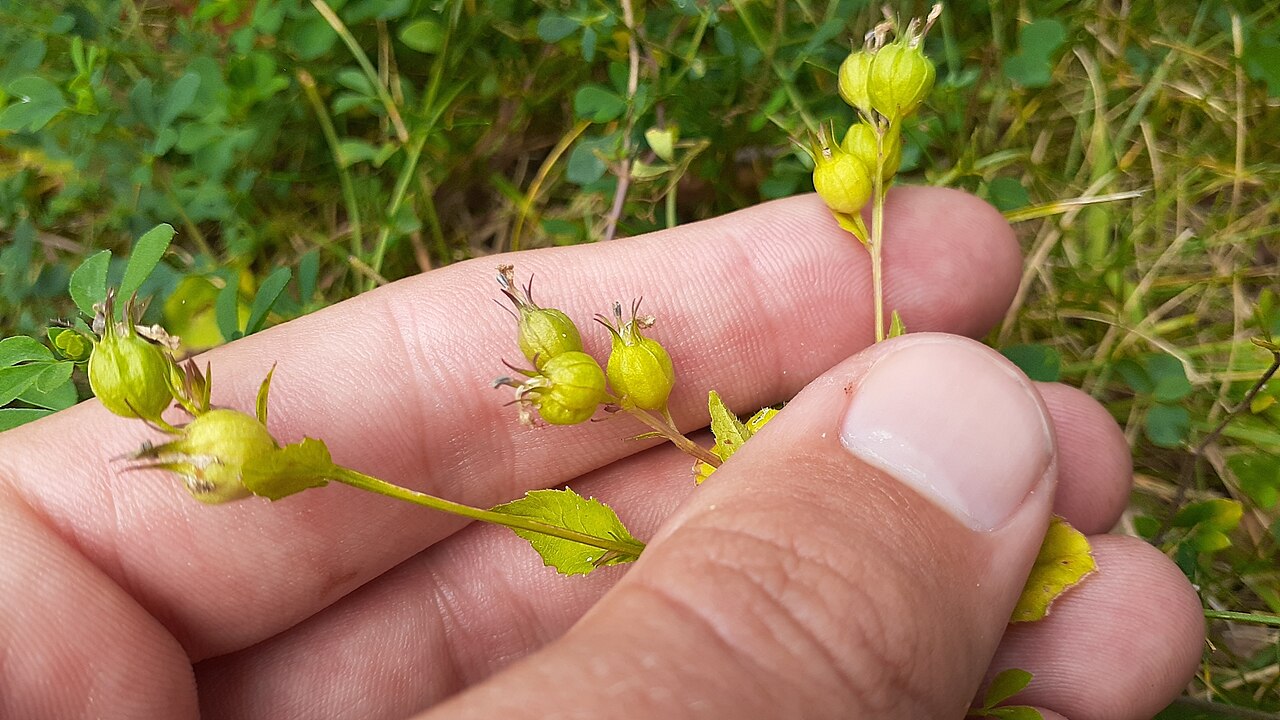
Lobelia inflata, known as Indian Tobacco (written Indian-tobacco by USDA), is a small native annual of fields, woodland edges and roadsides across eastern North America. It grows 1 to 2 feet tall, with hairy stems and toothed leaves, and from midsummer to fall it bears scattered tiny pale blue to white flowers. After flowering, each flower leaves behind a swollen, papery seed pod. These inflated pods, the source of the species name inflata, are the easiest way to recognize the plant.
It is a member of the bellflower family (Campanulaceae), and a modest relative of the showy cardinal flower and great blue lobelia. Its fame comes from its strong chemistry rather than its looks. The plant contains lobeline and related alkaloids, and it was one of the most widely used and controversial herbs in nineteenth-century American medicine. Its folk names, including puke weed, gagroot, vomitwort and asthma weed, describe what it was used for.
Safety note: all parts of Indian tobacco are poisonous if eaten. Small amounts cause nausea and vomiting, and larger amounts can cause serious poisoning. It is a fine plant to recognize, conserve and leave in place in a wild garden, but it should never be used as home medicine, and it should be kept out of reach of children and pets. This guide covers its identification, range, ecology and history.
Identification
Indian tobacco is easy to overlook when it is not in fruit. Look for an upright, hairy, usually branched plant with alternate, toothed leaves and widely spaced tiny flowers, then check for the inflated pods, which no other common eastern lobelia has.
Growth Habit & Stems
Indian tobacco is an annual or winter annual. Seeds germinate in late summer or fall and form a flat rosette of leaves that overwinters, and the rosette sends up a flowering stem the next summer. The stem is usually 1 to 2 feet tall (occasionally to 3 feet), branched in the upper part, and covered with spreading hairs, especially near the base. It contains a milky, acrid sap.
Leaves
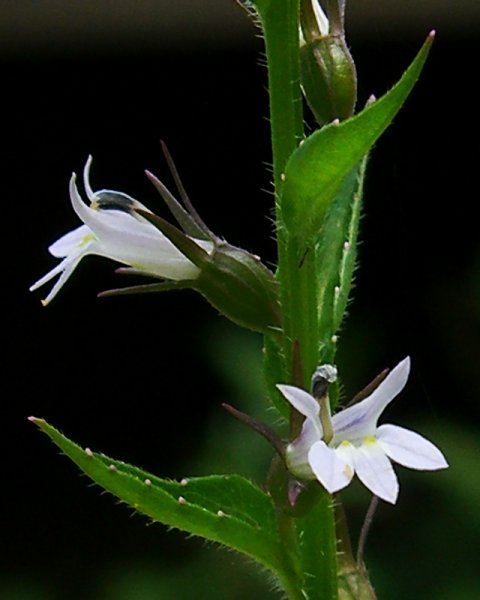
The leaves are alternate, oval to oblong, 1 to 3½ inches long, and edged with irregular, blunt teeth. They are pale green and hairy, and their stalkless bases sit directly on the stem. Leaves get smaller toward the top of the stem, where they grade into small leafy bracts beneath the flowers.
Flowers
From about July to October, small flowers appear singly in the axils of the upper leaves, forming loose, leafy spikes at the branch tips. Each flower is only about ¼ inch long and pale blue, violet or nearly white. Like other lobelias, the flower has two lips: a small upper lip with two narrow lobes, and a larger lower lip with three lobes, often with a small yellowish or greenish spot at its base.
Fruit & Seeds
After flowering, the base of the flower (the calyx tube) swells into an oval, inflated, ribbed capsule about ⅓ inch long, with the small calyx lobes on top. The capsules turn from green to yellowish or tan and split to release many tiny brown seeds. Pods are present from late summer into fall and make the plant easy to identify.
Quick Facts
| Scientific Name | Lobelia inflata L. |
| Family | Campanulaceae (bellflower family) |
| Plant Type | Annual or winter annual herb (forb); USDA common name Indian-tobacco |
| Mature Height | 1–2 ft (occasionally to 3 ft) |
| Mature Spread | 6–12 in |
| Growth Rate | Fast |
| Sun Exposure | Full sun to part shade |
| Water Needs | Low to moderate; tolerates dry soil |
| Soil Type | Poor, sandy, gravelly, loamy or clay soils; tolerates disturbed ground |
| Soil pH | About 5.0–7.5 |
| Bloom Time | July–October |
| Flower Color | Pale blue, violet or white |
| Fall Color | None; the plant dies after setting seed |
| Fruit | Inflated, balloon-like capsule with many tiny seeds |
| Deer Resistant | Yes; the acrid, toxic foliage is rarely browsed |
| USDA Hardiness Zones | 3–9 (as an annual or winter annual) |
Native Range
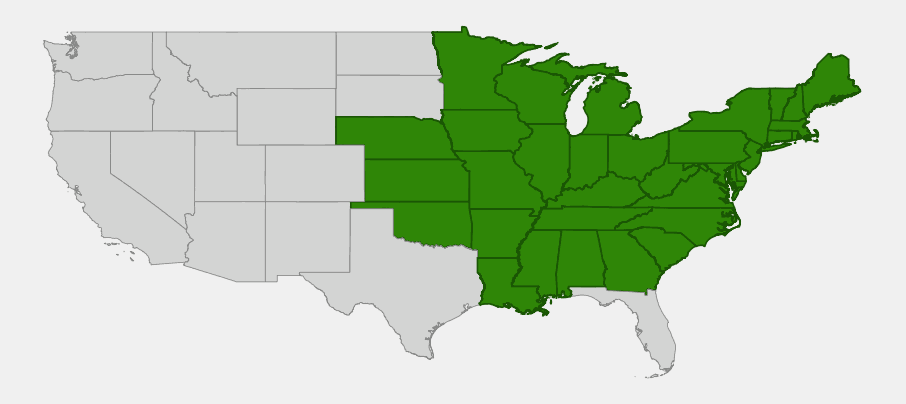
Indian tobacco is native across eastern North America. USDA PLANTS records it as native in 33 states and the District of Columbia, from Maine, Vermont and the Great Lakes states west to Minnesota, Iowa, Nebraska and Kansas, and south to Georgia, Alabama, Mississippi, Louisiana and Oklahoma. In Canada it grows in Ontario, Quebec, New Brunswick, Nova Scotia and Prince Edward Island, and USDA also lists British Columbia, far west of the main range.
It is most common in the Northeast, the Appalachians, the Ohio Valley and the Great Lakes region, becoming scattered toward the western and southern edges of its range. It is generally absent from peninsular Florida and does not grow in the Gulf Coast lowlands of Texas.
It favors sunny or lightly shaded open ground: old fields, pastures, meadows, open woods and woodland clearings, roadsides, trailsides, railroad banks and the edges of lawns. It is common on thin, poor, acidic soils and readily colonizes disturbed ground, then fades as taller vegetation closes in.
📋 Regional plant lists featuring Indian Tobacco: New York, Pennsylvania & Northern New Jersey · Ohio & Indiana · Michigan, Wisconsin & Eastern Minnesota · Kentucky & Tennessee · Nebraska, Kansas & Eastern Colorado · Connecticut, Massachusetts & Rhode Island · New Hampshire, Maine & Vermont · Maryland, Virginia & West Virginia · Delaware, Southern New Jersey & Long Island · Illinois, Iowa & Missouri · Alabama, Georgia & Mississippi
Growing & Care Guide
Indian tobacco is rarely sold, but it often appears on its own in meadow plantings, gravelly paths and the sunny edges of woodland gardens. It is easy to keep, because it reseeds itself in open ground. Because it is poisonous, plant or keep it only where children and pets will not chew on it, and do not use it as an herbal remedy.
Light
Full sun to part shade. It grows most compactly and flowers best in sun or light, dappled shade at woodland edges.
Soil & Water
It prefers poor, well-drained soils such as sand, gravel or thin loam, and it tolerates clay and compacted ground. It needs no fertilizer or watering once established. Rich, well-watered garden beds tend to favor bigger competitors that crowd it out.
Planting Tips
Sow seed on the soil surface in fall in an open patch with little competition. The seeds are tiny and need light to germinate, so press them in but do not cover them. Seedlings form small rosettes that overwinter and flower the following summer.
Pruning & Maintenance
There is little to do. Leave plants standing until the pods have split if you want it to reseed. Light disturbance, such as raking a bare patch in fall, keeps a population going. Wear gloves when pulling plants, as the sap can irritate sensitive skin and should be kept away from eyes and mouth.
Propagation
Grow it from seed only. Collect ripe, tan pods in fall, shake out the seed, and sow it right away outdoors, or store it in the refrigerator and sow it on the surface in early spring.
Safety
All parts of Indian tobacco, including the leaves, roots and seeds, contain lobeline and other alkaloids. Eating the plant causes nausea, vomiting, salivation and diarrhea, and larger amounts can cause sweating, weakness, a dangerously slow or rapid heartbeat, tremors, convulsions, collapse and coma. Deaths have been reported from its use as a home remedy. Do not eat it, brew it, or smoke it. If a child or pet eats any part of the plant, contact Poison Control (1-800-222-1222 in the United States) or a veterinarian right away.
Landscape Uses
- Meadow and prairie gardens: a small, late-flowering annual among grasses and taller wildflowers
- Woodland edges and paths: fills sunny gaps and gravelly margins with little care
- Restoration of disturbed sites: a native pioneer on poor, open soil within its range
- Native plant education: a fascinating plant for teaching about plant chemistry and the history of herbal medicine
Wildlife & Ecological Value
Indian tobacco is a minor but useful part of open, disturbed habitats in the East. Its late-season flowers and its seeds contribute to the food web of meadows and old fields.
For Pollinators
The tiny flowers are visited mainly by small bees, such as sweat bees, which can reach the nectar in the short flower tube. The flowers also self-pollinate readily, which helps explain how reliably the plant sets seed.
For Birds
Its tiny seeds are of limited importance to birds, but its meadow and old-field habitats are home to field sparrows, indigo buntings, eastern bluebirds and other birds of open country.
For Mammals
Deer and most other mammals avoid it because of its acrid taste and toxic alkaloids. It is usually left untouched in grazed pastures.
Ecosystem Role
Indian tobacco is an early-successional plant. It quickly colonizes bare, poor soil after disturbance, helps cover the ground, then gives way to perennials and shrubs. Its seeds persist in the soil and germinate when the ground is disturbed again.
Cultural & Historical Uses
The common name Indian tobacco is said to come from reports that Native Americans smoked or chewed the leaves. Native peoples in the East used it, often in small amounts and mixed with other plants, as a medicine for breathing problems, as an emetic, and in ceremonies. Those uses carried great risk, and they depended on careful knowledge of dose.
In the early 1800s, the New Hampshire herbalist Samuel Thomson made Lobelia inflata the centerpiece of his Thomsonian system of medicine, which relied on vomiting and sweating to “cleanse” the body. Thomsonianism became very popular in the United States, and lobelia was used as an emetic, an expectorant and an asthma remedy. It was also controversial: Thomson was tried for murder in 1809 after a patient died following his treatment. He was acquitted, but the case helped make lobelia notorious.
Lobeline, the main alkaloid, acts on some of the same receptors in the nervous system as nicotine. For decades it was sold in over-the-counter smoking-cessation products, until the U.S. Food and Drug Administration concluded in the 1990s that there was not enough evidence that it worked. Today Indian tobacco is mainly of interest to botanists, historians and pharmacologists, and medical authorities warn against using it as an herbal remedy.
Frequently Asked Questions
Is Indian tobacco poisonous?
Yes. All parts contain lobeline and other alkaloids. Eating it causes nausea and vomiting, and larger amounts can cause dangerous heart, nervous system and breathing effects. Do not use it as a home remedy, and contact Poison Control or a veterinarian if a child or pet eats it.
Is Indian tobacco related to real tobacco?
No. Tobacco (Nicotiana) belongs to the nightshade family, while Indian tobacco is a lobelia in the bellflower family. The name comes from reports of the leaves being smoked or chewed, and its main alkaloid, lobeline, has some effects similar to nicotine.
How can I recognize Indian tobacco?
Look for an upright, hairy annual 1 to 2 feet tall with toothed, alternate leaves, tiny pale blue or white two-lipped flowers in the leaf axils, and, most distinctively, swollen, balloon-like seed pods from late summer to fall.
Is Indian tobacco an annual?
Yes. It is an annual or winter annual. Seeds sprout in late summer or fall, overwinter as a small rosette, flower the following summer, set seed and die. It persists in gardens and meadows by reseeding.
Does Indian tobacco attract pollinators?
Its flowers are small and visited mostly by small bees, and the plant also self-pollinates. It is not a major pollinator plant like its relatives great blue lobelia and cardinal flower, but it adds late-season diversity to meadows.

Looking for a nursery that carries Indian Tobacco?
Browse our native plant nursery directory: Alabama & Arkansas · Connecticut, Delaware & Georgia · Illinois, Indiana, Iowa & Kansas · Kentucky, Louisiana, Maine, Maryland, Massachusetts, Michigan, Minnesota, Mississippi & Missouri · Nebraska, New Hampshire, New Jersey, New York, North Carolina, Ohio & Oklahoma · Pennsylvania, Rhode Island, South Carolina, Tennessee, Vermont & Virginia · West Virginia & Wisconsin