
Silky Lupine (Lupinus sericeus)
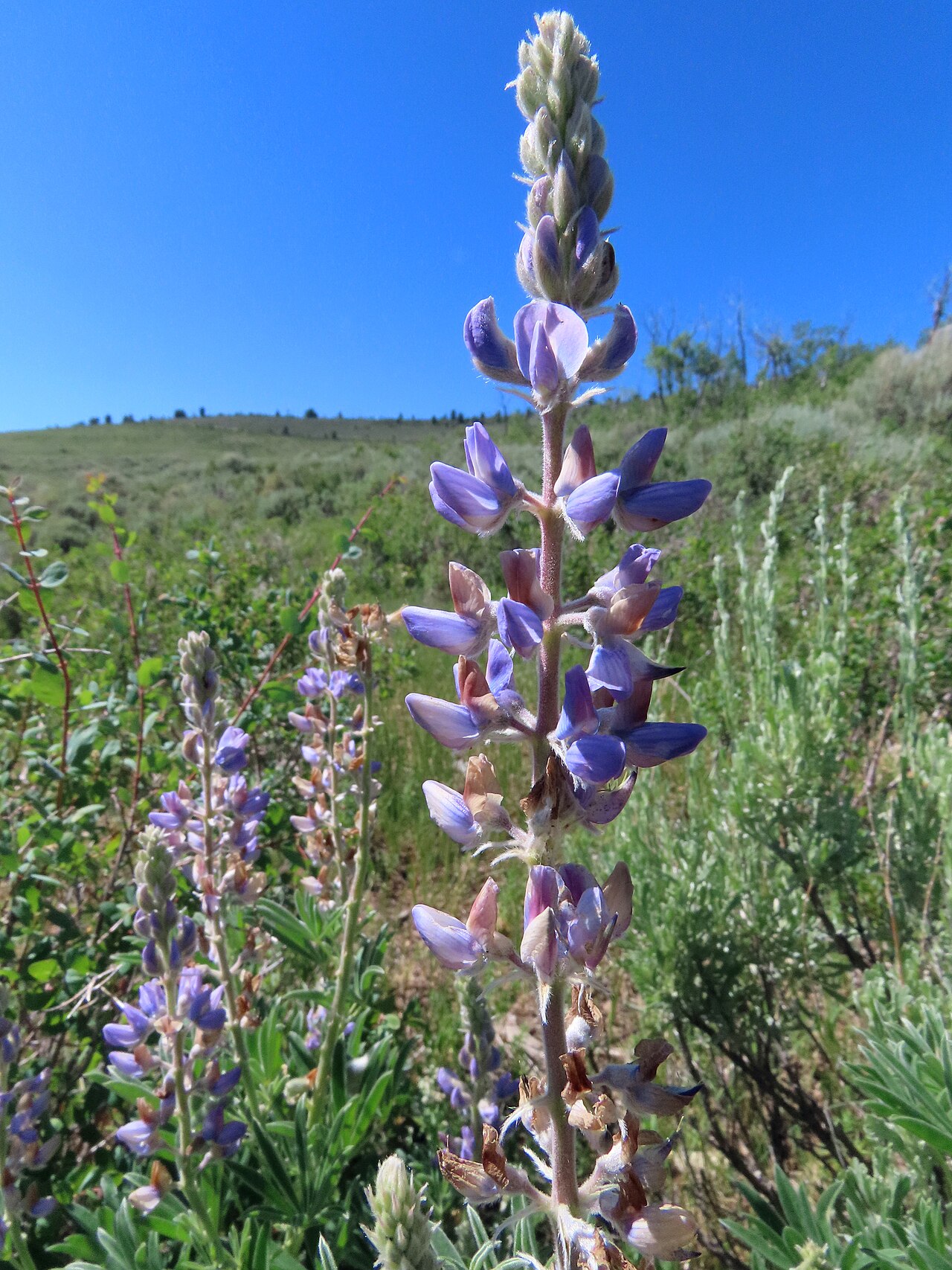
Lupinus sericeus, the Silky Lupine, is a showy native perennial wildflower of the interior West. It grows from southern British Columbia and Alberta south through the Rocky Mountains, the Columbia Plateau and the Great Basin to Arizona and New Mexico, and east to the Black Hills of South Dakota. It is one of the most common lupines of sagebrush steppe, dry grasslands, open pine and aspen woods and mountain meadows.
It forms leafy clumps 1 to 2 feet tall with palmately compound leaves whose narrow leaflets are covered in silky, silvery hairs. From late spring to midsummer it sends up dense spikes of blue to purple (occasionally whitish) pea flowers that are visited heavily by bumble bees. Like other lupines, it fixes nitrogen and improves poor, dry soils.
Silky lupine is a beautiful, drought-tolerant plant for western native gardens and restoration seedings, but all parts, especially the seeds, are poisonous to people and livestock. This guide covers how to identify it, where it grows, how to grow it and its value to wildlife.
Identification
Silky lupine is a clump-forming perennial with silky-hairy, palmately compound leaves and dense spikes of blue to purple pea flowers whose upper petal (the banner) is hairy on the back.
Growth Form
It grows from a stout, branched root crown and woody taproot, producing several to many leafy stems in a rounded clump, usually 1 to 2 feet tall and about as wide. The stems are covered in fine, appressed or spreading silky hairs.
Leaves
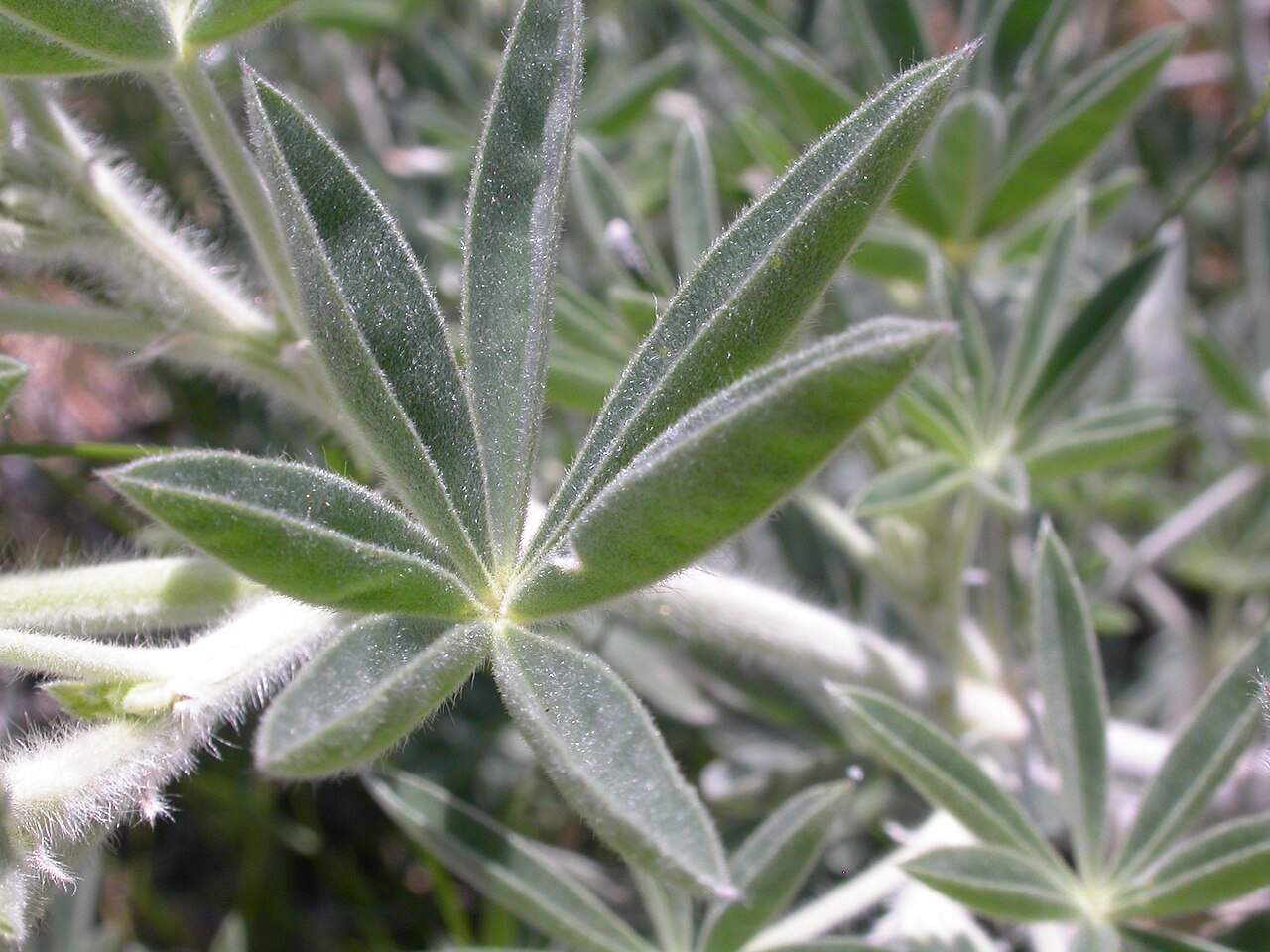
The leaves are palmately compound, like a small hand, with usually 7 to 9 narrow leaflets about 1 to 2½ inches long, on long stalks. Both surfaces of the leaflets are densely covered in silky hairs, giving the plant a silvery-green to gray-green look.
Flowers
From about May to August, depending on elevation, the stems end in dense, upright spikes (racemes) 3 to 6 inches long of pea-shaped flowers about ½ inch long. They are usually blue to violet, sometimes pale lavender or nearly white, and the banner often has a white or yellowish center that darkens after pollination. A useful field mark is that the back of the banner is hairy.
Fruit & Look-alikes
The flat pods are about 1 inch long, densely silky, and hold several seeds; they split open explosively when dry. Silvery Lupine is very similar and grows in the same areas, but its banner is usually smooth or only sparsely hairy on the back, and its leaflets are often less hairy on the upper surface. The two hybridize and are sometimes hard to separate. Nootka Lupine is a larger, broader-leaved plant of wetter northern and coastal habitats.
Quick Facts
| Scientific Name | Lupinus sericeus Pursh |
| Family | Fabaceae (pea or legume family) |
| Plant Type | Herbaceous perennial wildflower |
| Mature Height | 1–2 ft |
| Mature Spread | 1–2 ft |
| Growth Rate | Moderate |
| Sun Exposure | Full sun to partial shade |
| Water Needs | Low; drought tolerant once established |
| Soil Type | Well-drained sandy, gravelly or loamy soil |
| Soil pH | About 6.0–8.0 |
| Bloom Time | May–August |
| Flower Color | Blue to purple, occasionally white |
| Fall Color | None; foliage dries to tan |
| Fruit | Silky pod with several seeds; poisonous |
| Deer Resistant | Generally resistant; toxic alkaloids |
| USDA Hardiness Zones | 3–7 |
Native Range
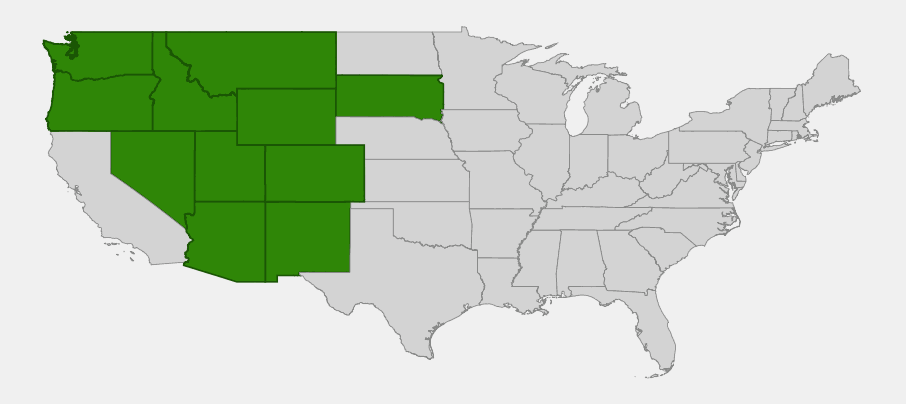
Silky lupine is a plant of the interior western United States and southwestern Canada. USDA PLANTS lists it as native in Washington, Oregon, Idaho, Montana, Wyoming, South Dakota, Colorado, Utah, Nevada, Arizona and New Mexico, and in British Columbia and Alberta. In Washington and Oregon it grows mainly east of the Cascades, and in South Dakota mainly in the Black Hills.
It is especially common in the northern Rocky Mountains, the Columbia Plateau and the mountains of the Great Basin, and becomes less common toward its southern limit in the mountains of northern Arizona and New Mexico. Several varieties are recognized, which differ in hairiness, flower size and growth form.
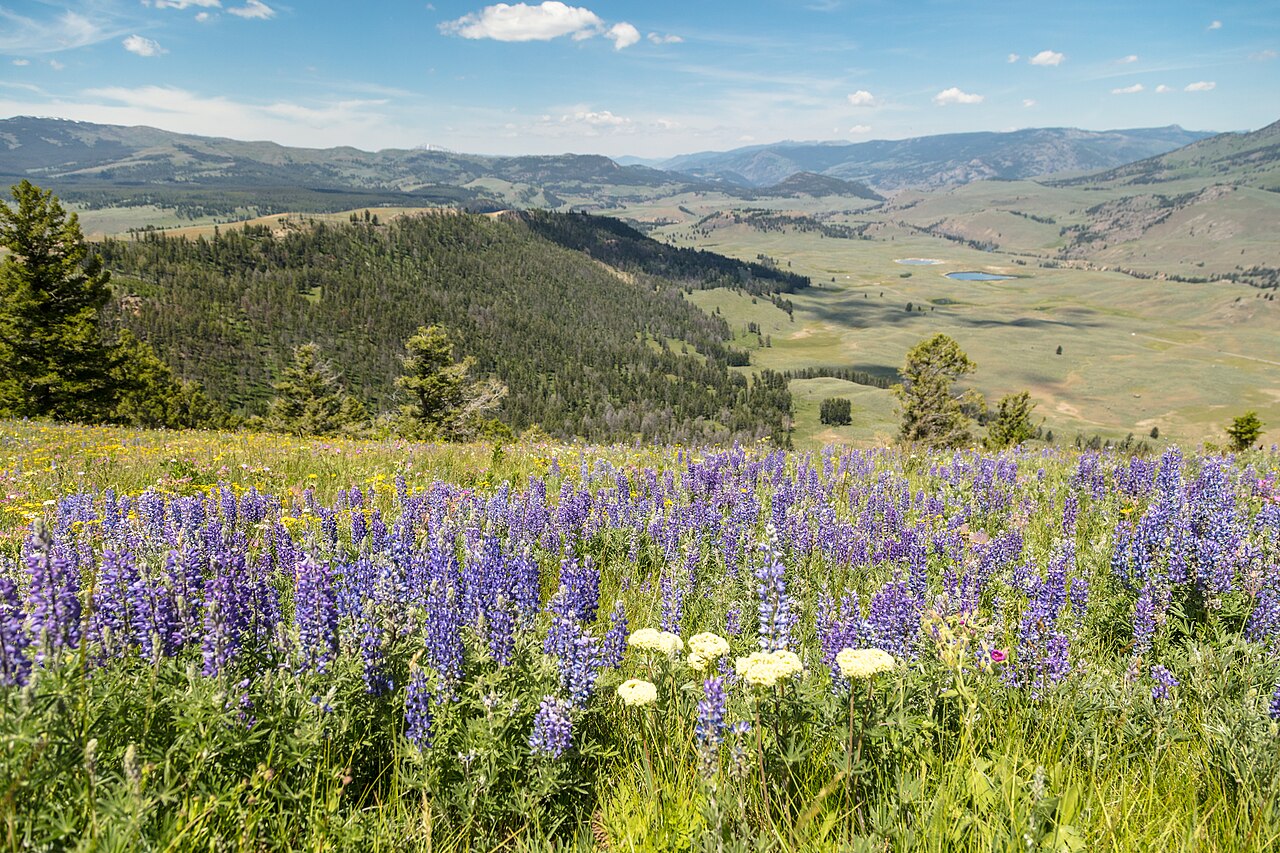
It grows in dry to moderately moist, open places: sagebrush steppe, bunchgrass prairie, open ponderosa pine and Douglas-fir forest, aspen groves, mountain meadows and roadsides, from foothills to around 7,000 feet in the north and higher in the southern mountains. It often increases after fire or moderate disturbance.
📋 Regional plant lists featuring Silky Lupine: Idaho, Eastern Oregon & Eastern Washington · Montana & Wyoming · Utah & Western Colorado · Arizona & New Mexico · North Dakota, South Dakota & Western Minnesota · California & Nevada · Western Oregon & Western Washington
Growing & Care Guide
Silky lupine is grown from seed by native seed companies and some western native nurseries, and is used in restoration and roadside seed mixes. It is easy in a sunny, well-drained spot within its native range but dislikes heavy, wet soils, humid summers and root disturbance. Plant it where children and livestock will not eat the seeds.
Light
Full sun gives the most flowers and the most compact plants. It also grows in the light, broken shade of open pine and aspen woods.
Soil & Water
Plant in well-drained sandy, gravelly or loamy soil. It tolerates poor, rocky and somewhat alkaline soils, and its nitrogen-fixing root nodules let it thrive without fertilizer. Water young plants through their first summer; established plants need little or no supplemental water in most of the interior West. Avoid wet, poorly drained ground, where the crown rots.
Planting Tips
Sow seed directly in fall so winter conditions break dormancy, or plant small container seedlings in spring. Its deep taproot makes established plants hard to move, so choose the spot carefully. Space plants 1 to 2 feet apart, and combine them with native bunchgrasses, balsamroot and penstemons for a natural sagebrush or meadow planting.
Pruning & Maintenance
Little care is needed. Cut off spent flower spikes if you want to prevent seeding, or leave them for wildlife and to let the plants self-sow. Cut the dried stems back in late fall or early spring. Aphids sometimes cluster on the spikes; a strong spray of water usually controls them.
Propagation
Grow it from seed. The hard seed coat must be scarified (nicked, sanded or soaked briefly in hot water) and the seed benefits from a period of cold, moist stratification; fresh seed sown outdoors in fall often germinates well on its own. Seedlings resent transplanting, so start them in deep pots. Mature clumps can sometimes be divided, but it is rarely successful because of the taproot.
Landscape Uses
- Sagebrush and meadow gardens: silvery foliage and blue spikes in dry western gardens
- Restoration and reclamation: nitrogen-fixing native for disturbed and burned ground
- Pollinator plantings: abundant pollen for bumble bees and native bees
- Low-water landscaping: drought-tolerant perennial for xeriscapes
Wildlife & Ecological Value
Silky lupine supports native bees, butterflies and the wider sagebrush and mountain ecosystem.
For Pollinators
The flowers are pollinated mainly by bumble bees and other large bees, which are strong enough to trip the keel and release the pollen. Lupines offer pollen rather than much nectar. Silky lupine is also a larval host for several blue butterflies, including the silvery blue, and for other butterflies and moths that feed on lupines.
For Birds
Sage-grouse, other grouse and songbirds eat insects found on the plants, and some birds and small mammals eat the seeds despite their alkaloids. The clumps provide cover for ground-nesting birds in sagebrush.
For Mammals
Because of its toxic alkaloids, livestock and most wild grazers usually avoid silky lupine, though elk, deer and pronghorn browse the flowers and pods lightly. Toxicity note: the plant, and especially the seeds and pods, contain quinolizidine alkaloids that can poison sheep and cattle. When pregnant cows eat it at certain stages of gestation it can cause skeletal birth defects in calves (crooked calf disease). Do not eat any part of the plant.
Ecosystem Role
As a legume, silky lupine fixes nitrogen with root bacteria and enriches dry, nutrient-poor soils. It often increases after fire and helps hold soil on disturbed slopes, and it is a characteristic wildflower of sagebrush steppe and mountain grassland.
Cultural & Historical Uses
Frederick Pursh described Lupinus sericeus in his Flora Americae Septentrionalis in the early 1800s. The species name sericeus means “silky,” for the hairs on the leaves and pods.
Range managers in the West have long studied silky lupine because of its effects on livestock. It is one of the lupines linked to crooked calf disease, and ranchers often manage grazing so pregnant cattle avoid dense lupine stands at sensitive times.
Silky lupine is variable, and botanists have named many varieties and closely related forms over the years. It hybridizes with silvery lupine and other western lupines where they grow together, which makes some plants difficult to identify with certainty.
Frequently Asked Questions
Is silky lupine poisonous?
Yes. All parts, especially the seeds and pods, contain alkaloids that are toxic to people and livestock. It can poison sheep and cause birth defects in calves. Keep children and pets from eating the seeds.
How do I tell silky lupine from silvery lupine?
Look at the back of the upper flower petal (the banner). In silky lupine it is hairy; in silvery lupine it is usually smooth or only sparsely hairy. Silky lupine leaflets are also silky on both surfaces.
When does silky lupine bloom?
From about May at low elevations to August in the mountains, with the peak in June and July.
Can I grow silky lupine in my garden?
Yes, in a sunny, well-drained spot in the interior West. Sow scarified seed in fall or plant young seedlings, water them the first summer, and avoid wet or heavy soils.
Does silky lupine help the soil?
Yes. Like other legumes, it hosts nitrogen-fixing bacteria in root nodules, which enrich poor, dry soils and help other plants grow.

Looking for a nursery that carries Silky Lupine?
Browse our native plant nursery directory: Arizona · Colorado · Idaho · Montana · Nevada & New Mexico · Oregon · South Dakota & Utah · Washington · Wyoming

