Silvery Lupine (Lupinus argenteus)
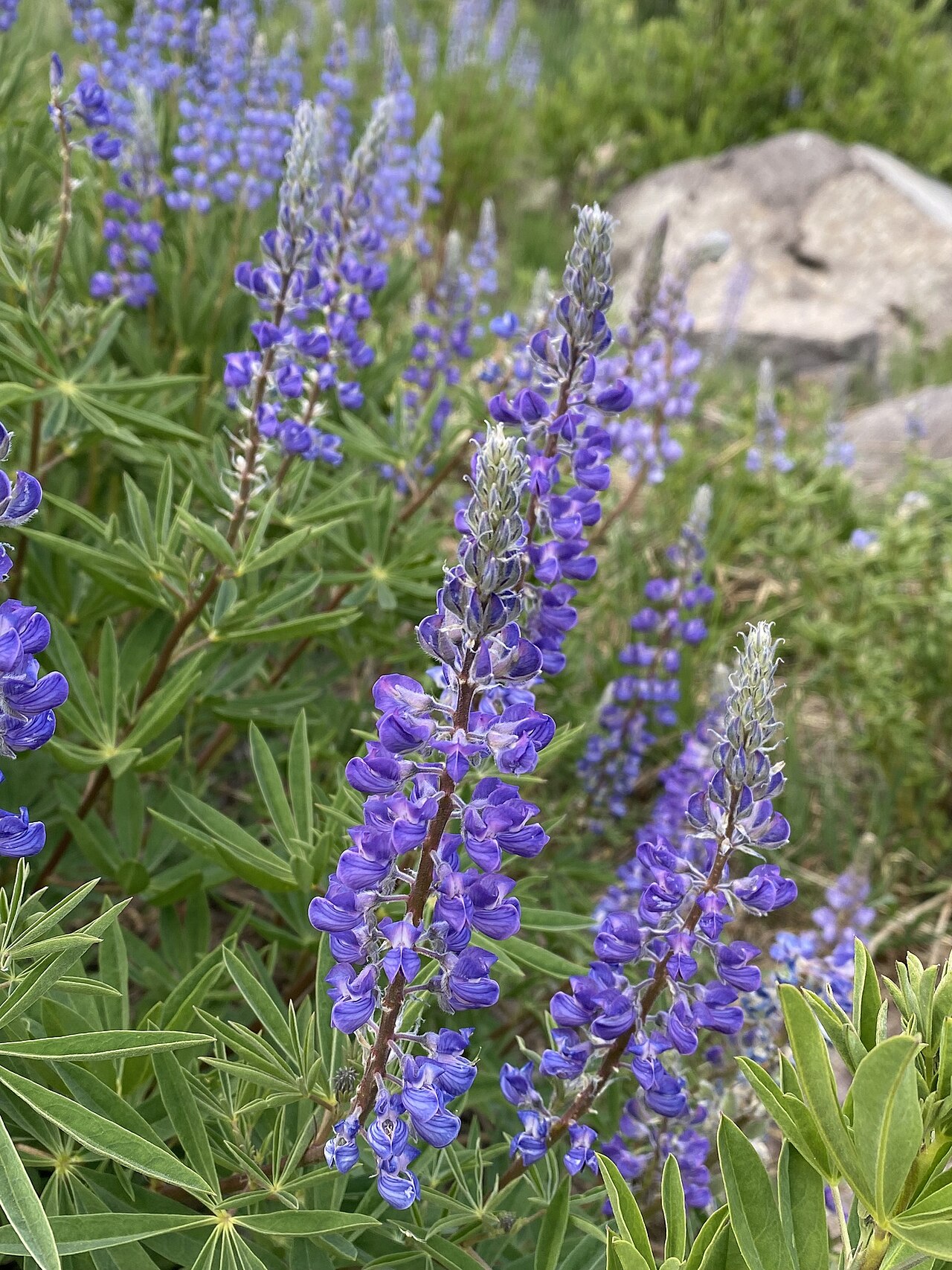
https://www.inaturalist.org/people/sarah1990 — Wikimedia Commons, CC0.
Silvery lupine brings upright blue-purple flower clusters above leaves divided into a star of narrow leaflets. It is a familiar perennial across much of the interior West, including Utah and the inland Northwest. In a suitable garden it offers both a distinctive leaf texture and a concentrated flowering season, but it should be selected as a regional wild species rather than confused with the tall, heavily bred lupines of conventional flower borders.
Lupinus argenteus is variable and includes several accepted subspecies and varieties. Hairiness, stature and flower appearance are not identical across its large range. A local plant may be short and compact while another population is more robust. This page treats the species broadly, with photographs from Utah and northern Arizona, and does not claim that one pictured form represents every named variety.
The plant belongs to the pea family, but that does not make it a food plant. Botanical and land-management sources warn that lupines, including this species, can be poisonous. Keep it out of edible-plant labeling and consider livestock access before planting. Its value in a native garden lies in its flowers, foliage and ecological relationships, not in treating attractive pods as a harvestable crop.
Identification
Habit and stems
Silvery lupine is a perennial herb with flowering stems arising from a persistent base. Regional gardening descriptions often place plants around one to two feet high, while broader species variation can produce a different stature. The two regional rows here list overlapping ranges of roughly eight to twenty-four and twelve to twenty-four inches. Those are useful local expectations, not a complete description of every population across the West.
Leaves
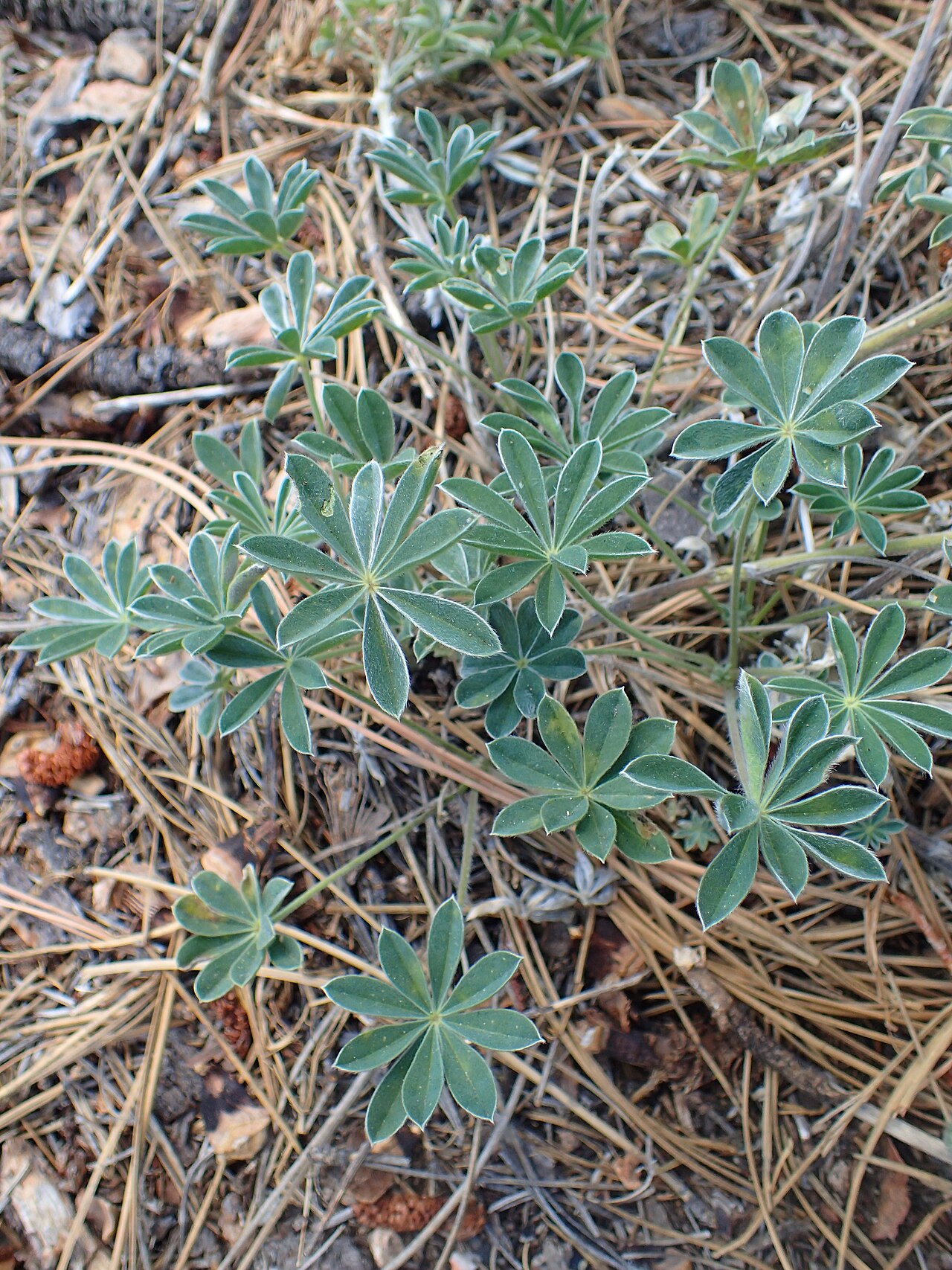
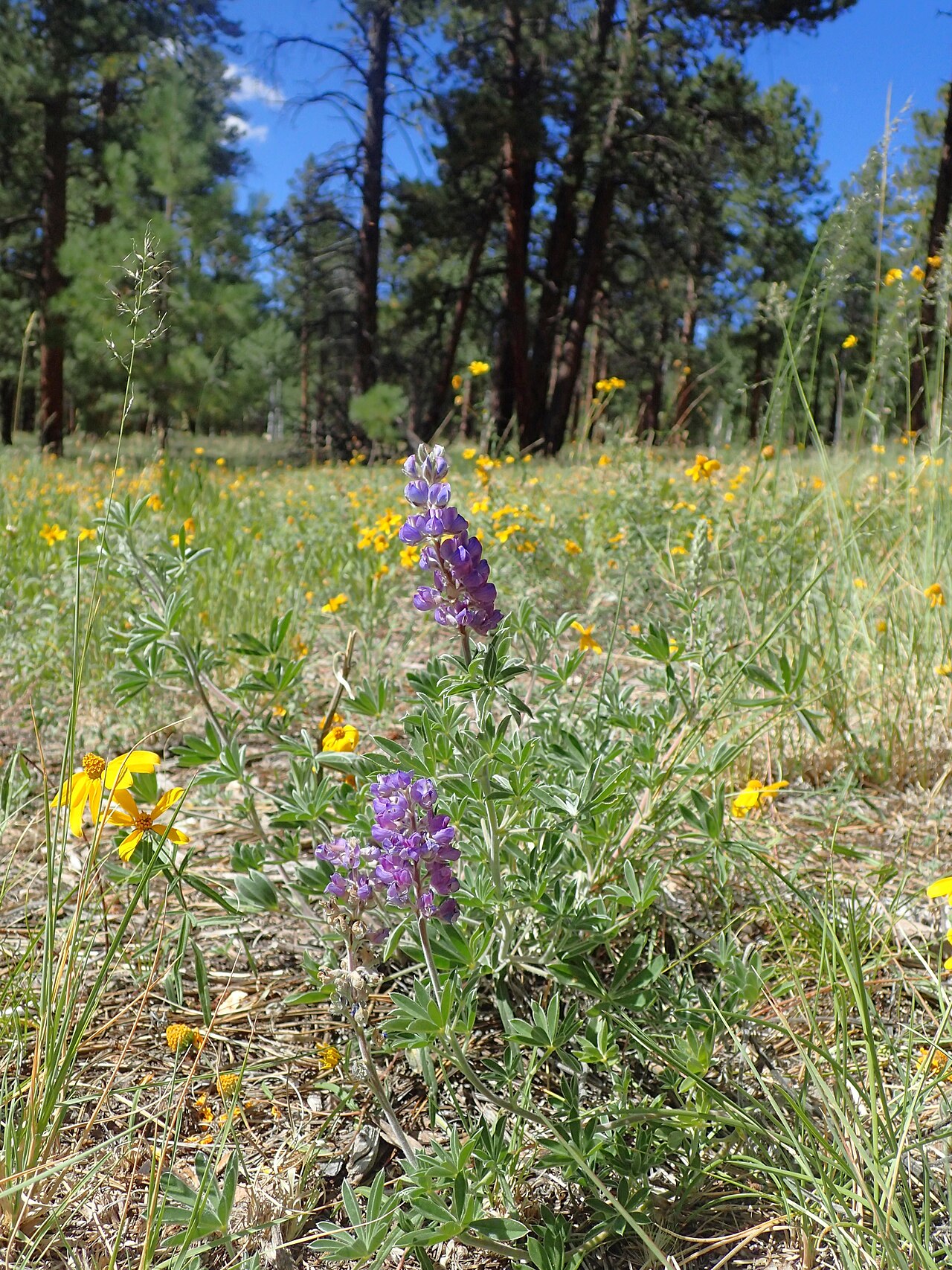
The leaves are palmately compound: several leaflets radiate from the end of one stalk like fingers from a hand. Hairs can give the foliage a gray or silvery appearance, although their density varies. Look at several leaves and the stems rather than relying on a single especially hairy leaflet. Related lupines overlap in appearance, so vegetative characters alone may not support a confident species identification.
Flowers
Flowers are arranged along an upright axis and have the characteristic pea-family form, with a banner, wings and keel. Blue, violet and pale tones occur, and contrasting pale markings may be visible. The arrangement and fine floral details help distinguish lupines, but color is not a sufficient key. Photograph the full flowering stem and close details, and compare with a regional flora when a wild identification matters.
Pods and identity
After flowering, pods develop along the stem and dry as seeds mature. They are useful identification features, but they are not edible peas. Avoid confusing this species with silky lupine, broadleaf lupines or a horticultural hybrid. Taxonomic treatments have changed for some forms formerly included in a broad argenteus concept, so retain the original provenance and variety information on any supplied material.
Quick Facts
| Scientific Name | Lupinus argenteus |
| Family | Fabaceae |
| Plant Type | Herbaceous perennial; variable species complex |
| Mature Height | Regional garden rows approximately 8–24 inches; population variation applies |
| Mature Spread | Clumping perennial; allow room for a leafy crown |
| Growth Rate | Seasonal perennial growth |
| Sun Exposure | Full sun to partial sun, matched to provenance |
| Water Needs | Average to seasonally dry, well-drained conditions; avoid standing water |
| Soil Type | Regional mineral soils with drainage; provenance matters |
| Soil pH | No single narrow species-wide garden target asserted |
| Bloom Time | Summer in regional lists; varies with elevation and snowmelt |
| Flower Color | Blue to violet, sometimes pale or white |
| Fall Color | Not primarily a fall-foliage plant |
| Fruit | Pods containing potentially toxic seeds |
| Deer Resistant | Not a safety or browse-resistance guarantee |
| USDA Hardiness Zones | Choose regionally adapted stock; climate and provenance outweigh a generic zone label |
Native Range
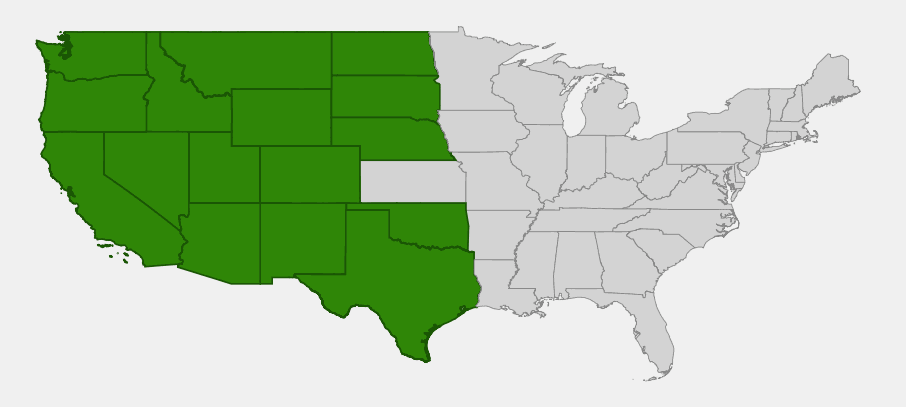
Kew describes a native range from western and central Canada into northern Mexico. In the United States it includes Arizona, California, Colorado, Idaho, Montana, Nebraska, Nevada, New Mexico, North Dakota, Oklahoma, Oregon, South Dakota, Texas, Utah, Washington and Wyoming. The map is for the species as treated there, not a map of a single subspecies or of every historical use of the name.
Habitats vary from open foothill and sagebrush settings to meadows and openings in mountain vegetation. A plant from a dry foothill population and one from a cool montane opening may experience very different seasonal moisture. That is why a broad native-range map cannot be translated directly into one watering schedule. In a garden, match the source material to the site's light, drainage and summer conditions as closely as possible.
The Utah and inland Northwest regional lists both include this species. For a restoration planting, use local botanical confirmation and suitable seed provenance rather than simply buying a generic western wildflower mixture. A garden trial can be more flexible, but records still matter: knowing where the seed originated makes it easier to interpret flowering time, survival and any differences from nearby wild plants.
📋 Regional plant list: Utah and Western Colorado
📋 Additional regional plant list: Idaho, Eastern Oregon and Eastern Washington
Growing & Care Guide
Light
Use sun to partial sun according to the source population. A lightly shaded mountain opening is not the same as deep shade beneath dense evergreen branches. Observe whether neighboring plants will shade the lupine's lower foliage as the season advances. A small open group is easier to monitor than one plant buried in a vigorous border.
Soil and water
Aim for a root zone that drains while retaining enough moisture for establishment. The regional moisture code A describes an average-moisture garden expectation, not a requirement for constant wetness. Water young plants when their root zone needs it, then adjust intervals as roots develop. Avoid interpreting a drought-tolerant population as proof that newly planted nursery material can survive without establishment care.
Planting tips
Start with healthy propagated plants or a documented seed lot. Prepare the site by removing strong weed competition before planting rather than digging repeatedly around established lupine roots. Keep the crown at its original level and allow space for its mature foliage. If the first trial fails, examine drainage, heat and provenance before buying a larger quantity of the same material.
Maintenance
Remove dead flowering stems selectively, leaving some pods only where seed production is desired and safe from accidental consumption. Keep labels visible in gardens visited by children or near edible crops. Do not scatter trimmings into livestock feeding areas. Minor insect feeding does not automatically require treatment; inspect plant vigor and identify the cause before intervening.
Propagation
Lupine seeds often have a hard coat, but treatment requirements vary among species and seed lots. Follow a supplier's verified protocol for Lupinus argenteus rather than applying a recipe for ornamental hybrids. Test a small portion, label treatments and keep notes. Avoid damaging the embryo with aggressive scarification. Transplant young seedlings carefully and do not keep them cramped indefinitely in shallow containers.
Fertility and nitrogen
Like many legumes, silvery lupine can form nitrogen-fixing associations in root nodules. Research shows that water and nitrogen conditions influence this process. It is not a guarantee that planting one lupine fertilizes an entire bed, nor a reason to add large amounts of nitrogen fertilizer. Manage the whole planting for appropriate soil conditions and avoid turning a naturally adapted community into an overfed border.
Landscape Uses
- Regional native perennial plantings with compatible drainage.
- Blue-flowered accents among open dryland grasses.
- Montane or foothill garden trials using documented local stock.
- Educational displays of palmate leaves and pea-family flowers.
- Pollinator-oriented plantings separated from edible and livestock-use areas.
Wildlife & Ecological Value
For pollinators
The flowers are used in native pollinator plantings, and their pea-like structure rewards observation at close range. Watch how insects interact with the flower rather than assuming all visitors collect the same resource. Combine lupine with plants flowering before and after it. Avoid broad-spectrum spraying of a plant installed to support insects.
For birds
A mixed native planting can support birds through vegetation structure and insect activity, but the presence of pods should not be turned into an unsupported promise of safe bird food. This guide does not recommend harvesting lupine seeds for feeders. Leave habitat decisions tied to the whole garden rather than treating every seed-bearing native as interchangeable.
For mammals and livestock
Toxicity is an important constraint. Do not use the plant as deliberate forage or infer safety from membership in the pea family. A native species can be ecologically appropriate and still unsuitable where domestic animals can browse freely. Where livestock access is possible, obtain local agricultural guidance before introducing lupines; simple decorative fencing may not provide adequate separation.
Soil processes
Research on this species shows active root nodules and potential contributions to soil nitrogen cycling. Those findings describe biological processes affected by the environment, not a fixed fertilizer dose. In a diverse planting, litter, roots, microbes and neighboring species all influence soil conditions. Keeping the system appropriate to the region is more useful than trying to maximize one nutrient in isolation.
Cultural & Historical Uses
The epithet argenteus refers to a silvery appearance, reflected in the common name. Yet the species is variable enough that hairiness should never replace a botanical identification. Historical names such as spurred lupine may appear in regional publications, and some forms have been treated differently by successive floras. Keep synonym and provenance information when comparing an older reference with a modern supplier.
Silvery lupine has been studied in western plant-community and restoration research, including work on nitrogen fixation and cultivation methods. Those studies offer useful context, but a research planting is not automatically a universal garden prescription. Differences in seed source, soil and climate should stay attached to the findings when they are used outside the original setting.
No food or medicinal use is recommended here. The documented toxicity makes it especially important not to borrow recipes or cultural claims from unrelated lupines. A good garden record can instead focus on observable history: where the material came from, how it established, what insects visited and how it responded to the site's seasonal changes.
Frequently Asked Questions
Are silvery lupine pods edible?
Do not eat them. Sources warn that this species and other lupines can be poisonous. They should not be treated as garden peas or labeled as an edible crop.
Why do two regional tables give slightly different heights?
They describe local expectations within a variable species. The ranges overlap, and population, conditions and flowering-stem development affect the final size. Neither row should be read as a universal measurement.
Does it fix nitrogen?
It can form nitrogen-fixing root nodules, and this has been studied experimentally. The amount and ecological effect depend on conditions; it is not a guaranteed substitute for all soil management.
Can I replace it with a Russell lupine hybrid?
A horticultural hybrid may be attractive, but it is not equivalent to Lupinus argenteus for a species-level native planting. Use correctly identified material with suitable provenance.
Should every seed be scarified?
Do not assume one treatment fits every lot. Follow verified supplier instructions, test a small sample and record results. Excessively aggressive treatment can damage seeds rather than improve germination.
Sources & Further Reading
- Kew POWO: Lupinus argenteus accepted species and distribution
- USDA Forest Service: plant descriptions including silvery lupine and toxicity
- Utah State University: silvery lupine species finder
- Research: water and nitrogen effects on Lupinus argenteus
- USDA PLANTS: LUAR3
Find Native Plants
Ask growers about nursery propagation and regional provenance. Browse our Utah native plant nurseries, Colorado native plant nurseries directory for suppliers.