
Pollinator Garden Design Basics for Creating Vibrant, Wildlife-Friendly Landscapes
Last updated: August 31, 2026
Creating a pollinator garden means picking a mix of native plants that bloom at different times. That way, you’ll always have something in flower for the bees, butterflies, and maybe even a hummingbird or two.
A pollinator-friendly garden needs to offer continuous food and a safe haven for pollinators. These creatures show up when there’s something to eat and somewhere to hang out.
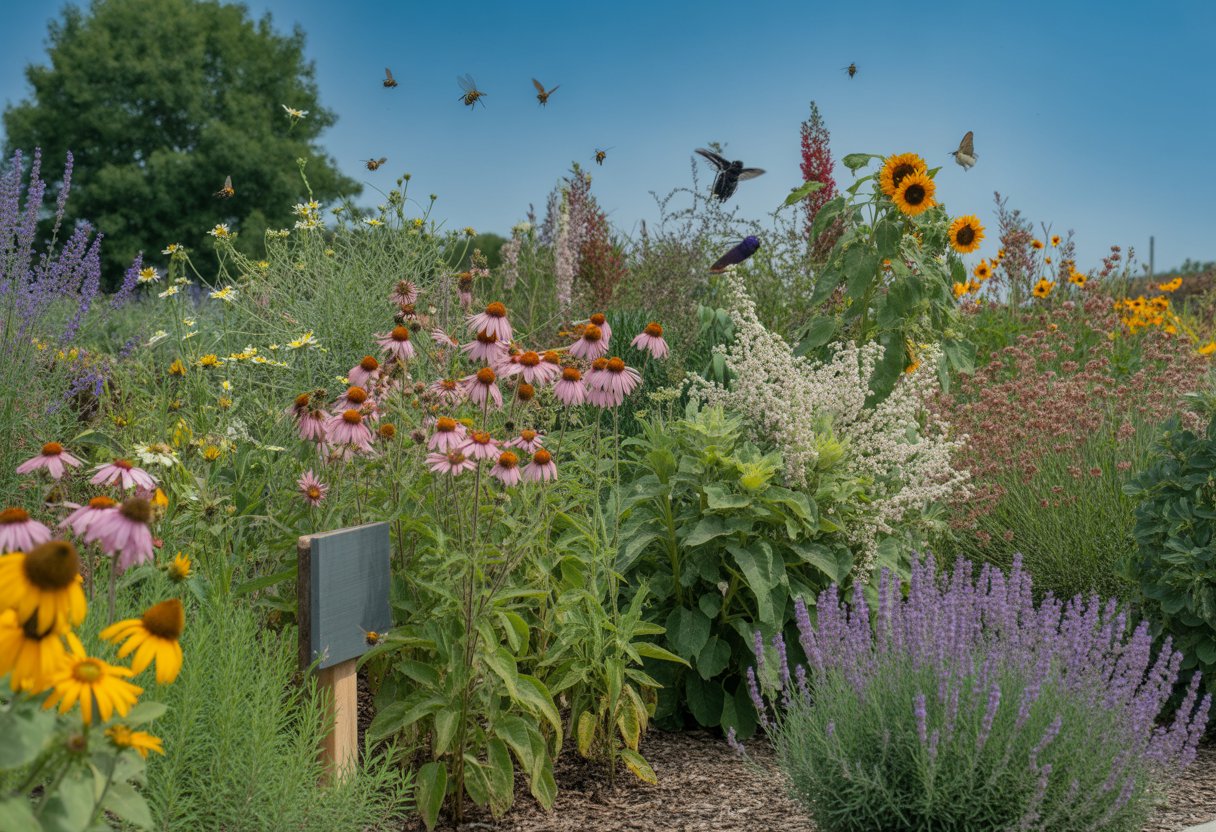
When you’re laying out your garden, group similar plants together in clusters. Pollinators find it easier to spot big blocks of color and scent.
Mixing up plant types and skipping pesticides keeps the environment healthy. That’s what brings pollinators back.
Don’t forget about shelter and a bit of water. Even a shallow dish or a patch of damp soil can make a difference for thirsty butterflies or bees.
Core Principles of Pollinator Garden Design
Supporting pollinators starts with plant choices. Pick varieties that offer food all season long.
Think about how you arrange things. A mix of heights, shapes, and bloom times keeps the ecosystem buzzing.
Attracting Pollinators
When you’re trying to bring in pollinators, pay attention to where you plant. They love sunny, sheltered spots with little wind.
Native plants adapted to your area get more attention from local bees and butterflies. They just seem to know what’s good.
Water helps, too. Put out a shallow dish or leave a patch of soil a little damp.
Skip the pesticides—they do more harm than good. Cluster your plants instead of scattering them so pollinators don’t waste energy traveling.
Pollinator-Friendly Plants
You want plants that offer nectar and pollen all season. Native wildflowers are the gold standard because pollinators evolved with them.
Choose blooms from early spring through late fall. That way, there’s always something for everyone.
Mix up flower shapes—tubular, flat, bell-shaped. Each pollinator has its favorite.
Stay away from hybrids that don’t offer much nectar. Non-native invasives? Better to avoid them.
Plants like coneflowers, milkweed, and goldenrod are tried-and-true pollinator magnets.
Nectar and Pollen Sources
Pollinators need both nectar and pollen—adults for energy, larvae for growth. Some flowers, especially those high in nectar and sugar, make butterflies and hummingbirds really happy.
Bees want pollen-rich plants, so include those, too.
Try to offer a range of options. Mix in trees, shrubs, and herbaceous plants, each with different bloom times.
Clover’s great for bee pollen, and asters are perfect for late-season nectar.
Selecting and Planting for Pollinators
A good pollinator garden depends on picking the right plants and arranging them for year-round support. Use a mix of nectar-rich flowers—perennials, annuals, and even flowering trees and shrubs.
That way, bees, butterflies, and their friends always have something to eat.
Choosing Nectar-Rich Plants
Nectar-rich plants are the main draw for pollinators. Try agastache, coneflowers, and French lavender—bees and butterflies can’t resist them.
Choose varieties that bloom at different times. Sweet alyssum and Snow Princess sweet alyssum kick things off early and stick around late.
Plant these flowers in groups, not singles. Big patches are easier for pollinators to find.
Clusters also make the garden feel more inviting and keep pollinators around longer.
Perennial Varieties and Annual Flowers
Perennials form the backbone of your pollinator garden. They come back every year and don’t need much fuss.
Coneflowers are reliable and add some structure, too.
Annuals bring bursts of color and fill in when perennials take a break. Sweet alyssum is a favorite for those in-between times.
By mixing perennials and annuals, you keep the garden blooming all season. Pollinators always have a snack waiting.
Incorporating Flowering Trees and Shrubs
Flowering trees and shrubs add height and create more layers in your garden. Think crabapples or serviceberries for trees, and butterfly bush for shrubs.
These plants offer nectar early and mid-season. They also give pollinators places to hide or even nest.
Plant them near clusters of nectar-rich flowers to draw in more wildlife.
Tree and shrub blossoms sometimes attract pollinators you don’t see on your flowers. That diversity keeps things interesting.
Supporting a Diverse Pollinator Community
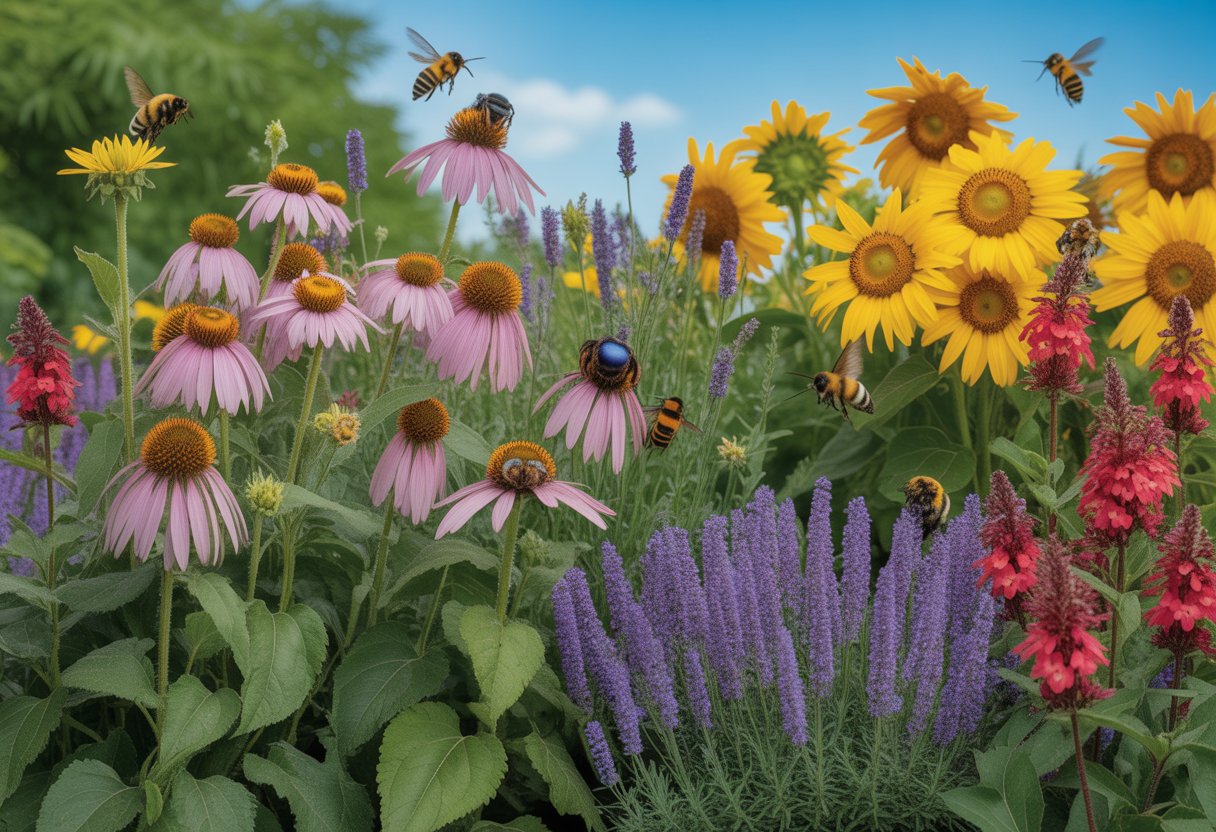
A successful pollinator garden welcomes all sorts of creatures. Each has different needs for food, shelter, and places to breed.
For a stunning vertical accent in your pollinator garden, consider adding fireweed (Epilobium angustifolium), a native wildflower that attracts bees and butterflies with its vibrant pink blooms.
You’ll want to pick plants and features that help bees, butterflies, hummingbirds, and all the other little beneficial insects out there.
Providing for Bees and Wild Bees
Bees need a steady supply of flowering plants blooming across the seasons. Native wildflowers and herbs like coneflower, goldenrod, and lavender are especially helpful.
Leave some bare ground or dead wood for wild bees to nest in. Not all bees live in hives!
Skip the pesticides and set out shallow water sources, maybe a dish with stones so bees can land safely.
Group similar flowers together. It makes foraging easier.
Don’t forget those early bloomers—queen bees need food right after hibernation.
Creating Butterfly Habitats
Butterflies need nectar plants for adults and host plants for their caterpillars. Milkweed is a must for monarchs, and violets help fritillaries.
Flat, open flowers like asters and zinnias are perfect landing pads for butterflies.
Give them shelter with tall grasses or shrubs. That way, they can hide from wind and predators.
Avoid spraying chemicals—caterpillars and butterflies are sensitive to that stuff.
A patch of moist soil or sand lets butterflies “puddle” and pick up minerals. It’s a quirky but important habit.
Catering to Hummingbirds
Hummingbirds love tubular, bright flowers like bee balm, salvia, and trumpet vine. Plant these in sunny spots so the birds can see and reach them.
Pick flowers that bloom from spring through fall. Hummingbirds have big appetites and stick around as long as there’s food.
Thin branches and small shrubs give them places to perch and rest.
Don’t use insecticides. They hurt both the birds and the bugs they eat.
If you put out feeders, clean them often to keep the birds healthy.
Practical Design and Maintenance Tips
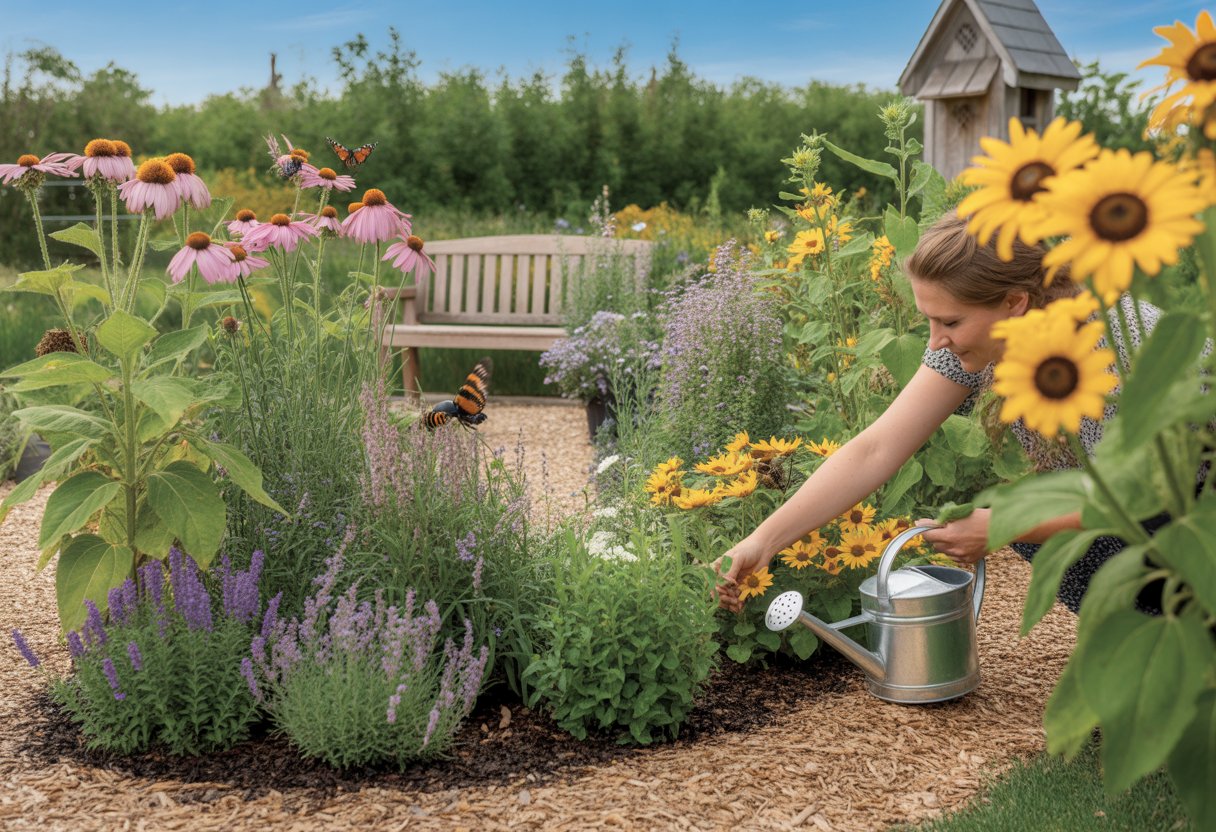
A pollinator garden works best when you plan where everything goes and keep up with a few simple maintenance habits. Here are some real-world tips for layout, space, and care.
Pollinator Garden Bed Layout
Arrange your garden beds so plants with overlapping bloom times are close together. That way, pollinators always find something in flower.
Group flowers of the same type in clusters of three to five. It’s easier for pollinators to spot and visit them.
Mix up plant heights and shapes. Put taller ones in the back or center, and shorter plants at the edges.
Leave paths or open spots so you can get in there and air can move around.
Mulch helps with weeds and moisture, but don’t pile it too high around seedlings. Pollinators need to get to the plants.
Place water sources nearby to encourage bees and butterflies to stop by.
Hexagonal Shape and Small-Space Planting
A hexagonal layout gives every plant equal sunlight and keeps air moving. It’s a bit like a honeycomb—efficient and tidy.
For small spaces, go vertical or try container gardens. Herb towers, hanging baskets, and tiered beds let you fit more flowers in less space.
Compact native herbs and annuals work well in tight spots. Mixing up colors and shapes attracts a wider range of pollinators, even if you’re short on room.
Reducing Pesticide Use
Minimizing pesticide use really matters if you want to protect pollinators. Skip systemic insecticides—they stick around in nectar and pollen way too long.
Instead, try natural pest control methods. Companion planting with marigolds or nasturtiums can make a real difference.
If you absolutely have to use a pesticide, pick selective products. Apply them early in the morning or late in the evening, when pollinators aren’t out and about.
Go for spot treatments instead of spraying everything. That way, you keep chemical exposure lower.
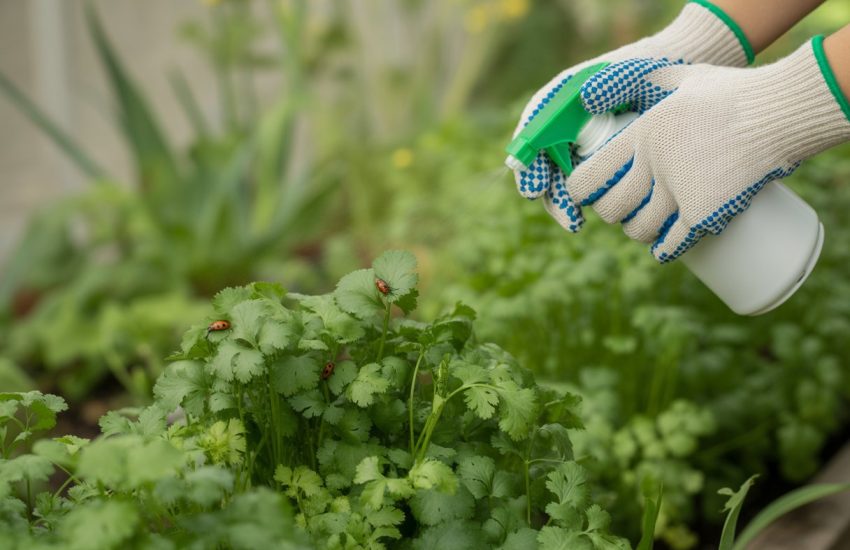
Take some time to check your plants for pests. If you notice an infestation, just remove it by hand when you can.
Encourage beneficial insects like ladybugs and lacewings. They’ll help with pest management naturally, and honestly, it’s kind of cool to see them at work.
 Looking for a nursery that carries native plants?
Browse our native plant nursery directory
How many plants should I group together in a cluster for pollinators? The article says to plant in blocks.