Slender Wheatgrass (Elymus trachycaulus)
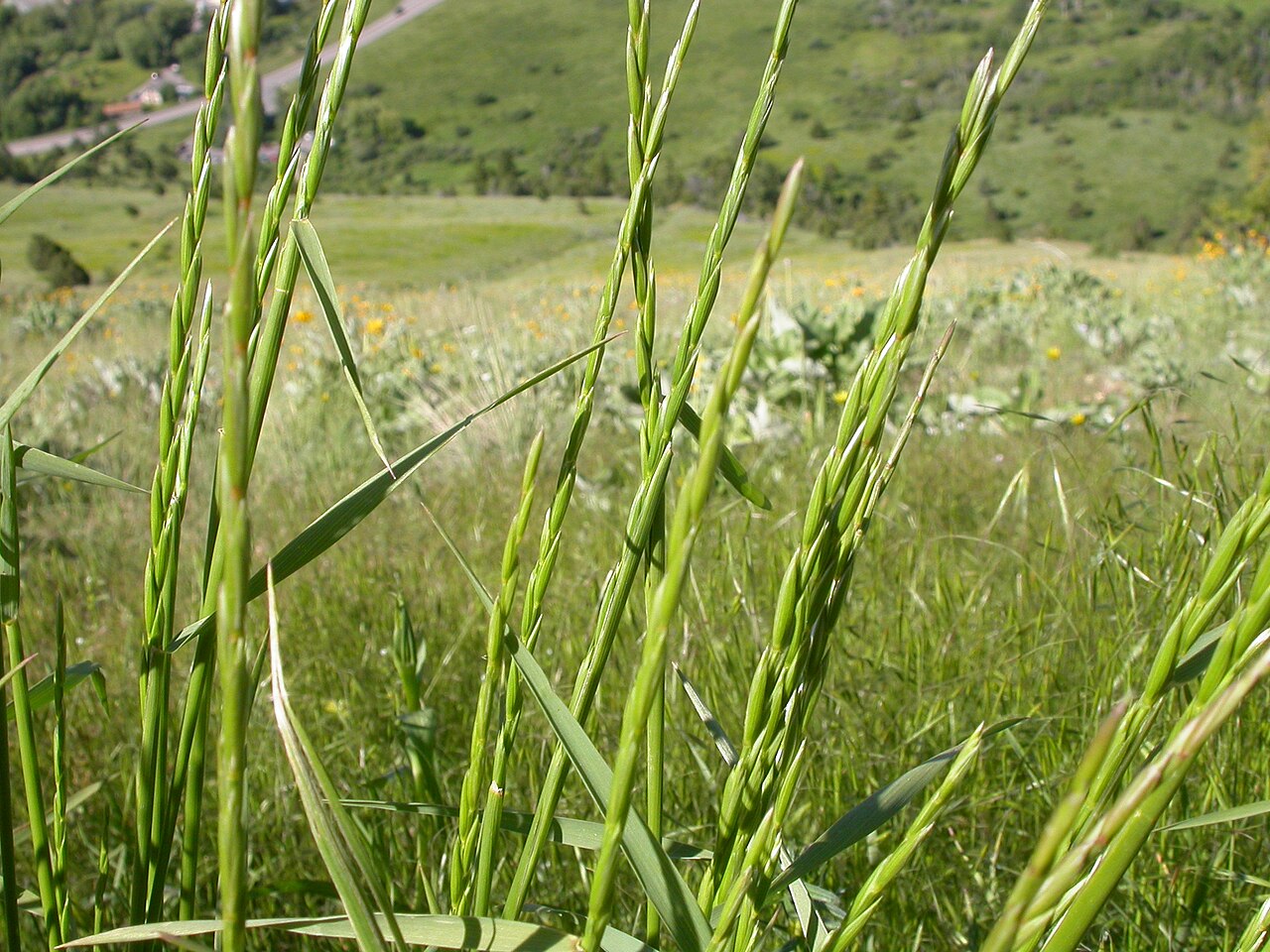
Slender wheatgrass is a cool-season native bunchgrass with a useful talent: it can occupy open ground quickly while slower perennial neighbors are still getting established. Its upright seed spikes are narrow rather than feathery, and its green leaves bring a meadow texture to sunny mountain gardens and restoration plantings. In Utah and western Colorado, it belongs on sites with some spring moisture, not automatically in the driest gravel bed simply because it is native.
The familiar scientific name is Elymus trachycaulus; Agropyron trachycaulum is an important older synonym. This guide follows the USDA treatment of slender wheatgrass rather than applying the names of neighboring wheatgrasses interchangeably. It is usually a short-lived perennial, often about three to five years, so a successful planting is a changing population of clumps and seedlings rather than a permanent row of identical ornamental grass specimens.
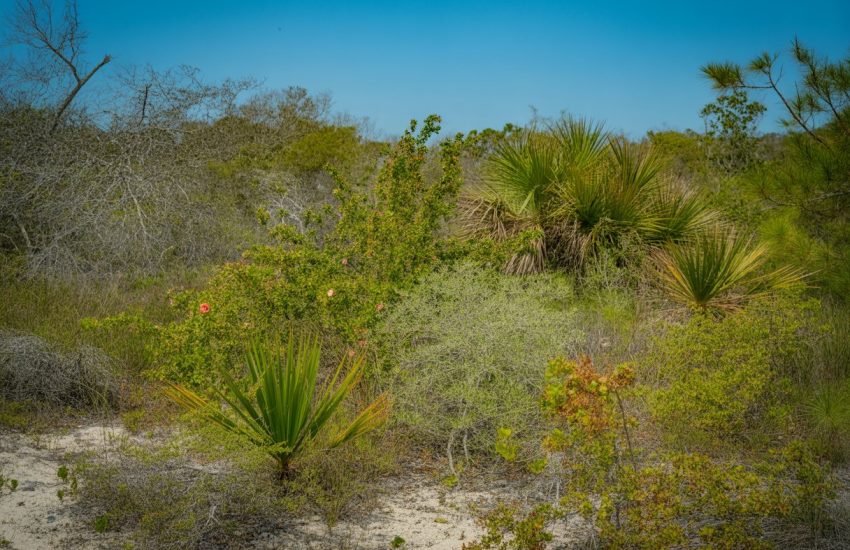
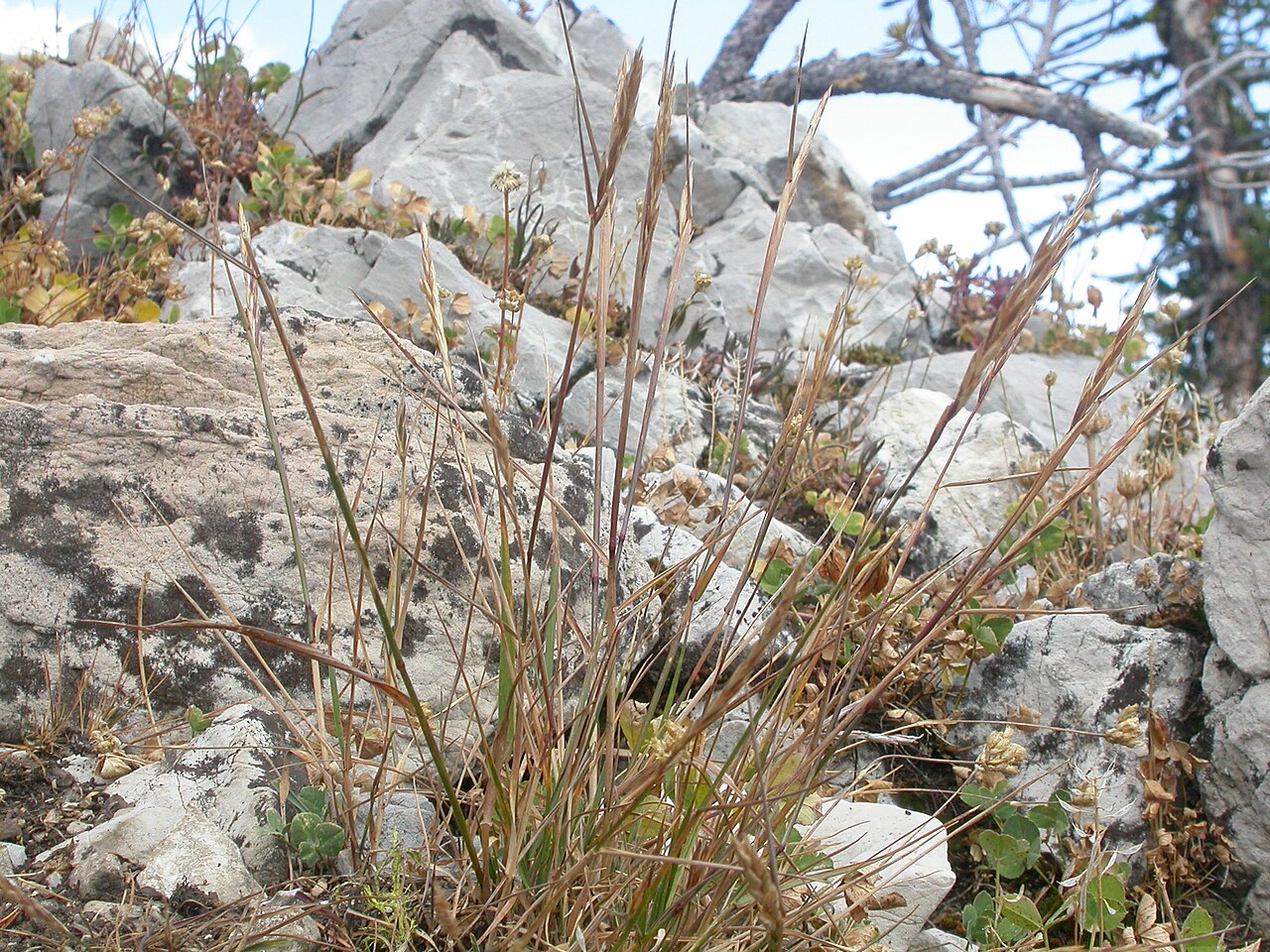
Choose it for a mixed native meadow, a disturbed bank with suitable soil, or an informal transition between a garden and open land. Its seedlings are vigorous, but its mature plants have only moderate drought tolerance. A local seed source, a clean seedbed, and room for longer-lived grasses to develop are more valuable than rich fertilizer or frequent clipping. The photographs show both green flowering stems and the compact form that can occur on rocky mountain sites.
Identification
Stems and growth habit
Look for a tuft of jointed grass stems rather than a mat of long underground runners. Stems may lean at their base before rising, and the lower portions sometimes have a reddish or purplish tint. USDA describes flowering culms commonly around 20–40 inches, with smaller alpine plants and occasional taller individuals outside that range. A short plant photographed on an exposed slope is not evidence that every garden plant will stay twelve inches tall. Mature height includes the seed spike; the leafy portion is lower.
Leaves and collars
The blades are flat to somewhat folded and narrow, often a few millimeters wide, with a fine grass texture rather than the broad leaves of an ornamental switchgrass. Inspect the junction between blade and sheath: the collar and small auricles are useful identification clues, but they vary and may become less obvious as the plant dries. A plant should not be named from leaf color alone. Drought, altitude and stage of growth can change both its color and apparent stiffness.
Flowering spikes
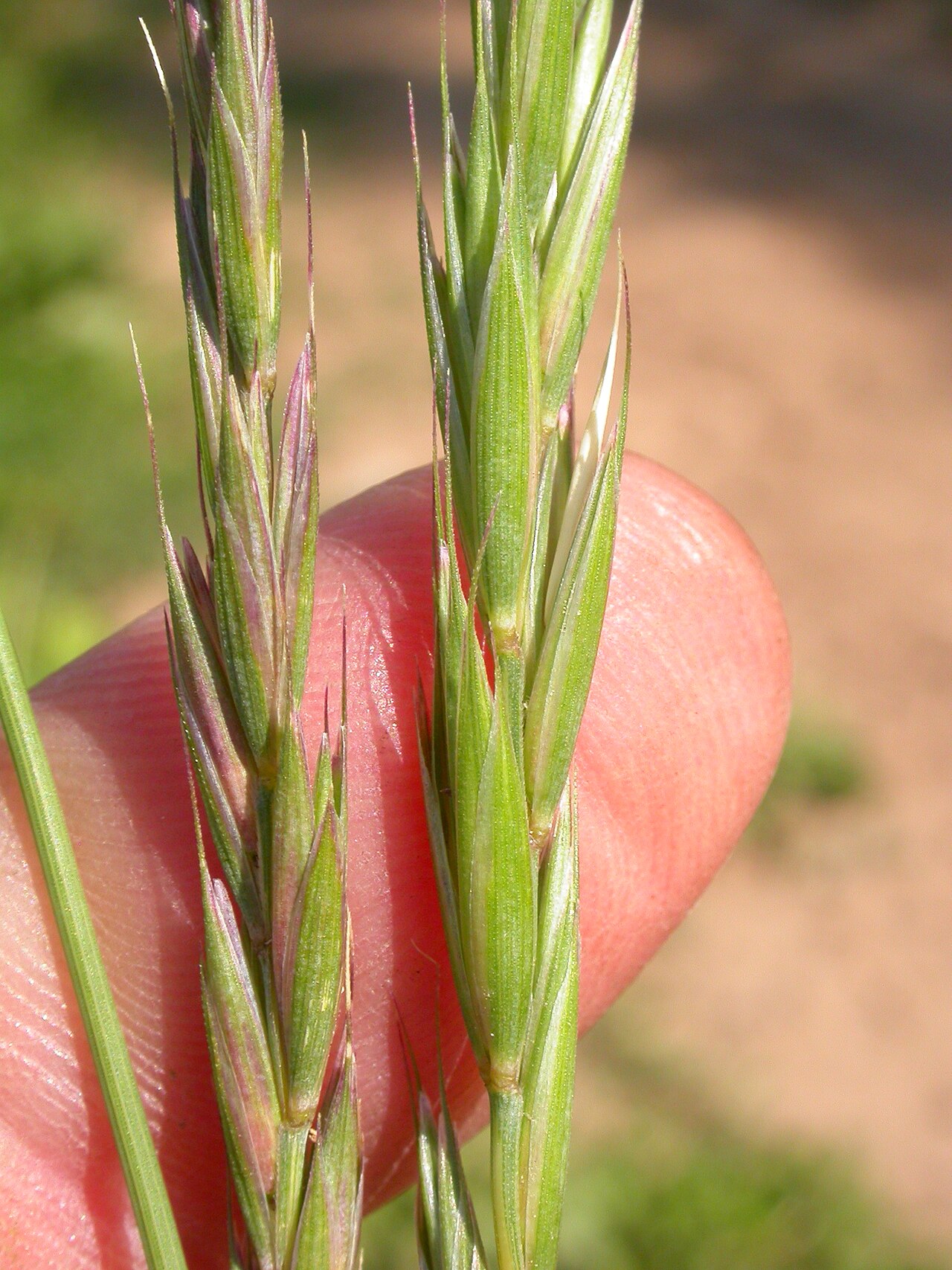
The inflorescence is an unbranched, wheatlike spike with individual spikelets placed along a central axis. Each spikelet contains several florets and is enclosed at the base by relatively conspicuous glumes. Some forms have noticeable awns and others much shorter ones. The spike does not open into the loose branching panicle characteristic of many bluegrasses. At flowering, observe the arrangement of spikelets and use a regional grass key if identification affects a seed purchase or restoration prescription.
Seeds and similar grasses
Small dry grains mature inside the florets. Plants sold as crested wheatgrass, quackgrass, or a generic pasture wheatgrass mix are not substitutes for this native species. Quackgrass is typically a running rhizomatous grass; slender wheatgrass usually forms tufts, although short rhizomes have been reported. The Native Plant Trust key also uses anther length and glume characters to distinguish it from superficially similar species. Keep the scientific name and seed-lot origin on file rather than relying only on the word wheatgrass.
Quick Facts
| Scientific Name | Elymus trachycaulus; synonym Agropyron trachycaulum |
| Family | Poaceae (grass family) |
| Plant Type | Short-lived perennial, cool-season bunchgrass |
| Mature Height | Usually 20–40 inches in flower; exposed mountain forms shorter |
| Mature Spread | Clumping; allow roughly 12–18 inches as a planting spacing, not a fixed botanical maximum |
| Growth Rate | Relatively fast establishment; individual plants often 3–5 years |
| Sun Exposure | Full sun; open woodland conditions also occur |
| Water Needs | Dry to moderately moist; moderate drought tolerance, not a desert-lawn grass |
| Soil Type | Well-drained loam, sandy loam or clay loam; tolerates some salinity |
| Soil pH | Moderately acidic to alkaline; site and seed source matter |
| Bloom Time | Late spring through summer, later at high elevations |
| Flower Color | Inconspicuous green to purplish grass florets |
| Fall Color | Straw tan as stems cure |
| Fruit | Dry grain within a wheatlike spike |
| Deer Resistant | No; native ungulates may graze it |
| USDA Hardiness Zones | Broad cold-climate adaptation; select regional provenance rather than one universal zone rating |
Native Range
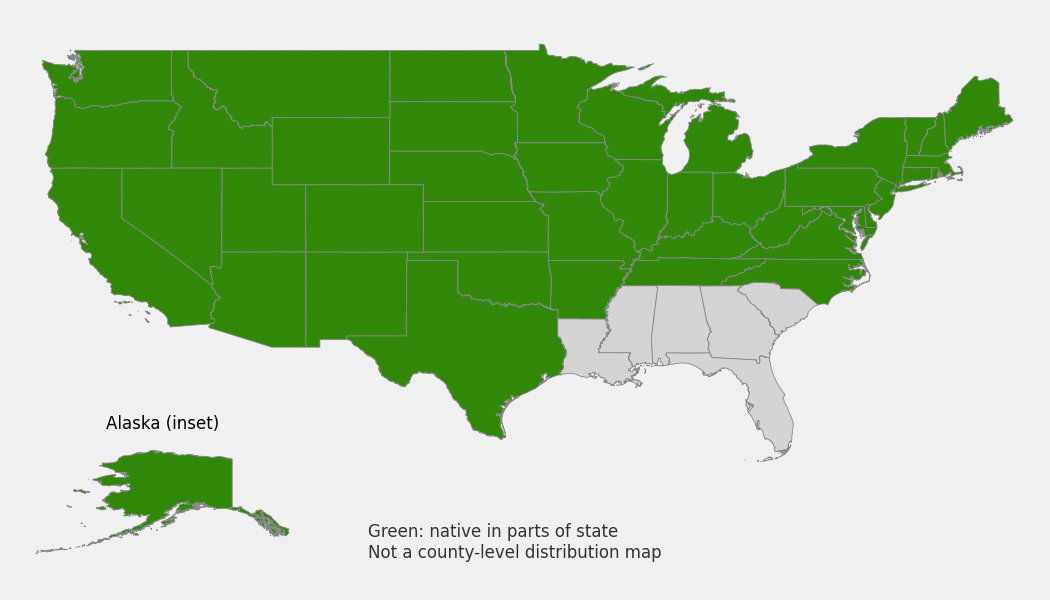
Slender wheatgrass is native over a broad part of North America, from Alaska and Canada through the western United States and much of the northern and central United States into Mexico. The distribution is not equivalent to a recommendation for every garden within those states. Historic plantings and differing treatments of subspecies complicate some edge-of-range records. The map emphasizes the documented mainland range and does not treat a Hawaiian occurrence record as evidence of Hawaiian nativity.
In Utah and Colorado it occurs in a range of open habitats, from sagebrush and mountain-brush communities to meadows and openings among aspen or conifers. Forest Service accounts report elevations around 4,500–12,000 feet in Colorado and a similarly broad mountain span in Utah. These records explain why elevation, snow cover and soil moisture are important when buying seed: a high mountain population and a lower foothill population need not behave identically in a garden.
The coarse state map is an orientation tool only. Use the USDA county-level link and local botanical records to decide whether a particular seed source is appropriate. Preserve existing native vegetation where it is healthy; creating a bare seedbed is useful on disturbed ground but is not a reason to cultivate intact meadow or biological soil crust. Slender wheatgrass can assist a restoration mixture without replacing the other species that give a local plant community its character.
📋 Regional plant list: Utah and Western Colorado
Growing & Care Guide
Light
Choose an open place where direct sunlight reaches the clumps for much of the day. Light woodland openings can support it, but a dark shrub border encourages weak stems and reduces flowering. In a designed meadow, avoid planting it immediately under a tree that will soon close its canopy. Consider the mature shade pattern, not just the amount of sun present on planting day.
Soil and water
Moderate drought tolerance does not mean that newly sown seed can germinate without moisture. Spring soil moisture is especially important, and the plant is less reliable on chronically parched sites than several dryland bunchgrasses. A loamy, draining soil is a good starting point. Some saline or alkaline conditions are tolerated, but a laboratory tolerance value is not a promise that an untested salt-affected garden will succeed. Test a problem site and choose locally appropriate material.
Planting tips
For a small garden, nursery-grown plugs make it easier to distinguish the desired grass from seedlings of annual weeds. Plant with the crown at the soil surface, firm the surrounding soil gently, and water the rootball and adjacent ground. For seed, use a firm, weed-reduced seedbed and follow the supplier's tested lot instructions. USDA gives a shallow sowing depth around one-quarter to one-half inch. Deep burial is not helpful. Use it as one component of a mixture, not as an excuse to over-seed an entire site with a vigorous nurse grass.
Establishment and seasonal observation
Mark a few clumps during their first growing season and compare new leaf production, flowering and weed pressure. This makes it easier to tell poor establishment from normal curing. A recently planted rootball may need supplemental water even when nearby established plants are dormant and surviving on rainfall. As roots develop, reduce irrigation according to soil moisture rather than maintaining a lawn-watering schedule. Keep competing annual grasses from producing seed around the seedlings.
Pruning and maintenance
Leave some seed spikes if population renewal is part of the planting goal. An annual late-winter or early-spring cleanup can remove collapsed stems before new growth becomes tall, but repeated close mowing defeats the meadow habit. Where local fire-safety requirements call for clearing dry vegetation near structures, those requirements take priority over winter seed display. Do not infer from fire-ecology studies that burning a garden planting is necessary or appropriate.
Propagation and renewal
Seed is the usual means of maintaining a population. Because the plant is relatively short lived, plan for gaps to be occupied by seedlings or by other perennial species in the mix. Heavy thatch can prevent seed from reaching suitable ground; small patches of exposed soil on an already disturbed site are more useful than thick, wet mulch over the crown. Keep the original seed label so replacement material does not silently change the taxon or geographic origin.
Problems to watch for
Drought during active growth, persistent shade and repeated heavy defoliation can shorten persistence. Smuts and other grass diseases are reported, but discolored leaves alone do not identify a pathogen. Inspect the whole plant, drainage and seasonal conditions before choosing any treatment. A meadow does not need to be sterile or perfectly green to be functioning. If seed heads are abnormal across many plants, obtain a local diagnosis rather than applying a routine pesticide program.
Landscape Uses
- A modest, fast-establishing component in a diverse native meadow.
- Temporary living structure while slower, longer-lived grasses establish on disturbed land.
- Open mountain or foothill gardens where spring moisture is available.
- Seed and cover for wildlife in a planting allowed to mature.
- An educational grass grouping with labeled regional seed sources; not a clipped turf replacement.
Wildlife & Ecological Value
Pollinators and insects
Like other wheatgrasses, slender wheatgrass does not provide conspicuous nectar flowers. Its ecological role is different from that of a penstemon or milkweed. Include locally native flowering plants alongside it if bee and butterfly forage is a priority. The grass canopy and leaf litter add structure to the planting, but this guide does not assign unverified specialist insect-host relationships to the species.
Birds
The seeds and standing vegetation can be useful to small birds and upland game birds. A mixed planting with different heights gives more options than a pure strip of one grass. Leaving a proportion of the stems standing allows animals to use those resources; clear paths and access areas separately instead of cutting the entire meadow at one time.
Mammals
Elk, bighorn sheep and livestock use slender wheatgrass as forage. That makes it a poor choice if a gardener's main requirement is absolute deer resistance. Protect new plugs where browsing pressure is high, and separate wildlife value from the expectation that every plant will retain an untouched ornamental form.
Soil and plant-community role
A fibrous root system and relatively quick establishment help cover suitable disturbed ground. The species is often used as a nurse component rather than the final dominant of a long-lived planting. Keep its proportion moderate enough that slower neighbors can develop. Its presence does not by itself prove that erosion has stopped; examine runoff paths and bare patches after substantial rain.
Cultural & Historical Uses
The succession of names attached to slender wheatgrass reflects changing grass taxonomy, not a series of different garden products. Older seed and range literature often uses Agropyron trachycaulum, while USDA material uses Elymus trachycaulus. Retaining the synonym makes it possible to interpret older recommendations without confusing the plant with introduced crested wheatgrasses.
Slender wheatgrass has a well-documented modern role in revegetation and reclamation. Its quick establishment and tolerance of some difficult soils made it useful on disturbed western sites, but selected commercial releases are not automatically equivalent to nearby wild populations. A restoration specification should state whether it calls for locally collected seed, source-identified material, or a named release.
This guide does not turn the word wheatgrass into a food or medicinal recommendation. A native grass with a role in rangeland restoration still requires correct identification and appropriate sourcing. For home landscapes, its strongest contribution is usually ecological structure and early cover rather than a harvestable crop or a permanent specimen plant.
Frequently Asked Questions
Will slender wheatgrass stay twelve inches tall?
Not reliably. Exposed mountain plants may be very short, but flowering stems commonly reach about 20–40 inches. Allow room for that height instead of copying the shortest local observation as a universal maximum.
Is it the same as crested wheatgrass?
No. Similar common names do not establish taxonomic identity. Buy a labeled Elymus trachycaulus lot and retain its origin and purity information.
Why has my planting become thinner after several years?
Individual plants are often short lived. Check whether seedlings or other native perennials are replacing them, and distinguish normal succession from drought, grazing or weed competition.
Can I grow it without irrigation in Utah?
Sometimes, with suitable local material and enough seasonal moisture. Newly planted plugs and germinating seed still need moisture; the driest low-elevation sites may favor other native grasses.
Should I fertilize it to keep it green all summer?
Usually that is the wrong goal. Seasonal curing is normal, and excessive fertility can favor weeds or lush growth that exceeds the site's water supply. Base amendments on a soil test and the intended plant community.
Sources & Further Reading
- USDA NRCS: Slender Wheatgrass Plant Guide
- US Forest Service FEIS: Elymus trachycaulus
- Native Plant Trust: identification key
- Calflora: California nativity and taxonomy
Find Native Plants
Ask growers about nursery propagation and regional provenance. Browse our UT native plant nurseries, CO native plant nurseries directory for suppliers. Explore the native nursery finder.