Most Common Trees in Massachusetts: A Guide to Identifying Local Species
Last updated: August 25, 2026
Massachusetts is home to a diverse array of trees that contribute to its beautiful landscapes and ecosystems. From the towering Eastern White Pine to the colorful Red Maple, these trees play a vital role in the environment and provide numerous benefits to both wildlife and humans alike.
Understanding the most common trees in Massachusetts is essential for anyone interested in the state’s natural environment. These trees provide food and shelter for a variety of animals, help regulate the climate, and contribute to the state’s economy through the timber industry. Additionally, many of these trees have cultural and historical significance, making them an important part of the state’s heritage.
In this article, we will explore the most common trees in Massachusetts, their characteristics, and their importance to the state’s ecosystem. Whether you’re a nature enthusiast, a student, or simply curious about the trees around you, this guide will provide valuable insights into the diverse and fascinating world of Massachusetts trees.
Native Tree Species of Massachusetts
Massachusetts is home to a diverse range of native tree species, each with its unique characteristics and ecological importance. The following section will provide an overview of the most common deciduous and coniferous trees found in Massachusetts.
Deciduous Trees
Deciduous trees are hardwood trees that lose their leaves in the fall. They play an essential role in the ecosystem by providing wood, food, and habitat for wildlife. The following are some of the most common deciduous trees found in Massachusetts:
Maple
Maple trees are highly valued for their wood and syrup. They are a common sight in Massachusetts, with two species, Acer rubrum (Red Maple) and Acer saccharum (Sugar Maple), being particularly prevalent. They grow well in a variety of soils, including acidic soils, and are known for their vibrant fall foliage.
Oak
Oak trees are another common sight in Massachusetts, with several species being native to the state, including Quercus alba (White Oak), Quercus velutina (Black Oak), and Quercus rubra (Northern Red Oak). They are valued for their wood and provide essential habitat and food for a variety of wildlife.
Birch
Birch trees are characterized by their distinctive bark, which peels off in thin, papery layers. Two species of birch, Betula populifolia (Gray Birch) and Betula alleghaniensis (Yellow Birch), are native to Massachusetts. They grow well in acidic soils and are a common sight in disturbed sites.
Beech
Beech trees are known for their smooth, gray bark and distinctive, toothed leaves. They are valued for their wood and provide essential habitat and food for a variety of wildlife. Fagus grandifolia (American Beech) is the only species of beech native to Massachusetts.
Black Cherry
Black Cherry trees are valued for their wood and fruit, which is an important food source for birds and other wildlife. They are a common sight in Massachusetts and are characterized by their dark, fissured bark and serrated leaves.
Coniferous Trees
Coniferous trees are evergreen trees that retain their needles year-round. They play an essential role in the ecosystem by providing wood, shelter, and habitat for wildlife. The following are some of the most common coniferous trees found in Massachusetts:
Eastern White Pine
Eastern White Pine is the state tree of Massachusetts and is highly valued for its wood. It is a fast-growing tree that can reach heights of up to 150 feet. It grows well in a variety of soils and is a common sight in Massachusetts forests.
Eastern Hemlock
Eastern Hemlock is a slow-growing tree that can live for over 800 years. It is valued for its wood and provides essential habitat for a variety of wildlife. It is a common sight in Massachusetts forests and is characterized by its drooping branches and small, flat needles.
Tamarack
Tamarack is a coniferous tree that is native to Massachusetts. It is highly valued for its wood and is characterized by its small, needle-like leaves that turn yellow in the fall. It grows well in wet, swampy soils and is a common sight in Massachusetts swamps.
Cypress
Cypress trees are highly valued for their wood and are a common sight in Massachusetts wetlands. They are characterized by their buttressed trunks and distinctive, knobby knees that rise above the water.
Black Spruce
Black Spruce is a slow-growing tree that is highly adapted to living in cold, wet environments. It is valued for its wood and is a common sight in Massachusetts bogs and wetlands.
Balsam Fir
Balsam Fir is a coniferous tree that is highly valued for its wood and is a common sight in Massachusetts forests. It is characterized by its fragrant needles and distinctive, cone-shaped crown.
In summary, Massachusetts is home to a diverse range of native tree species that play an essential role in the ecosystem. From hardwood deciduous trees like maple and oak to evergreen coniferous trees like Eastern White Pine and Tamarack, each species has its unique characteristics and ecological importance.
Human and Ecological Significance
Economic Impact
The trees in Massachusetts have significant economic importance. The state’s forestry and related industries support almost 38,000 jobs, $3.1 billion in labor income, $3.8 billion in value-add, and $9.2 billion in output 1. The hardwood species such as oak, birch, and maple are commonly used for furniture and flooring, while softwood species such as white pine and spruce are used for construction lumber. The nuts of hickory and walnut trees are also harvested for food.
Environmental Importance
Trees play a vital role in the ecosystem, providing habitat and food for wildlife and contributing to soil and water conservation. The leaves of deciduous trees such as the scarlet oak and sweet birch decompose and add organic matter to the soil, while coniferous trees such as the white pine and black spruce provide year-round cover for wildlife 2.
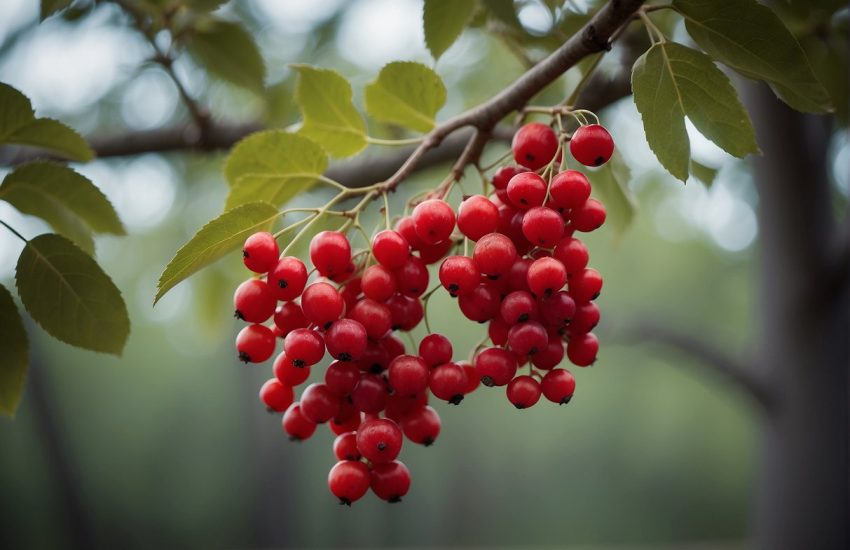
The acorns of the red oak and the red berries of the black tupelo are important food sources for many wildlife species, including squirrels, deer, and birds. The river birch is commonly found near streams and rivers, and its roots help to stabilize the soil and prevent erosion. The quaking aspen is known for its ability to colonize disturbed areas, and its leaves turn a brilliant yellow in the fall.
In addition to their ecological importance, trees also play a role in mitigating climate change. Through the process of photosynthesis, trees absorb carbon dioxide from the atmosphere and store it in their biomass. This carbon sequestration helps to reduce the amount of greenhouse gases in the atmosphere 3.
Overall, the trees in Massachusetts are an important resource for both humans and the environment. They provide economic benefits through the production of wood products and support a diverse range of wildlife species. Trees also contribute to soil and water conservation and help to mitigate climate change through carbon sequestration.