Broadleaf Lupine (Lupinus latifolius)
Lupinus latifolius, commonly known as broadleaf lupine or broad-leaved lupine, is a long-lived perennial wildflower in the pea family (Fabaceae) that is one of the most widespread and recognizable lupines of the American West. Its tall spikes of blue-purple, pea-shaped flowers rising above a rosette of palmate leaves are a familiar sight in mountain meadows from the Olympic Peninsula to the Sierra Nevada, and in scattered desert mountain ranges as far east as New Mexico.
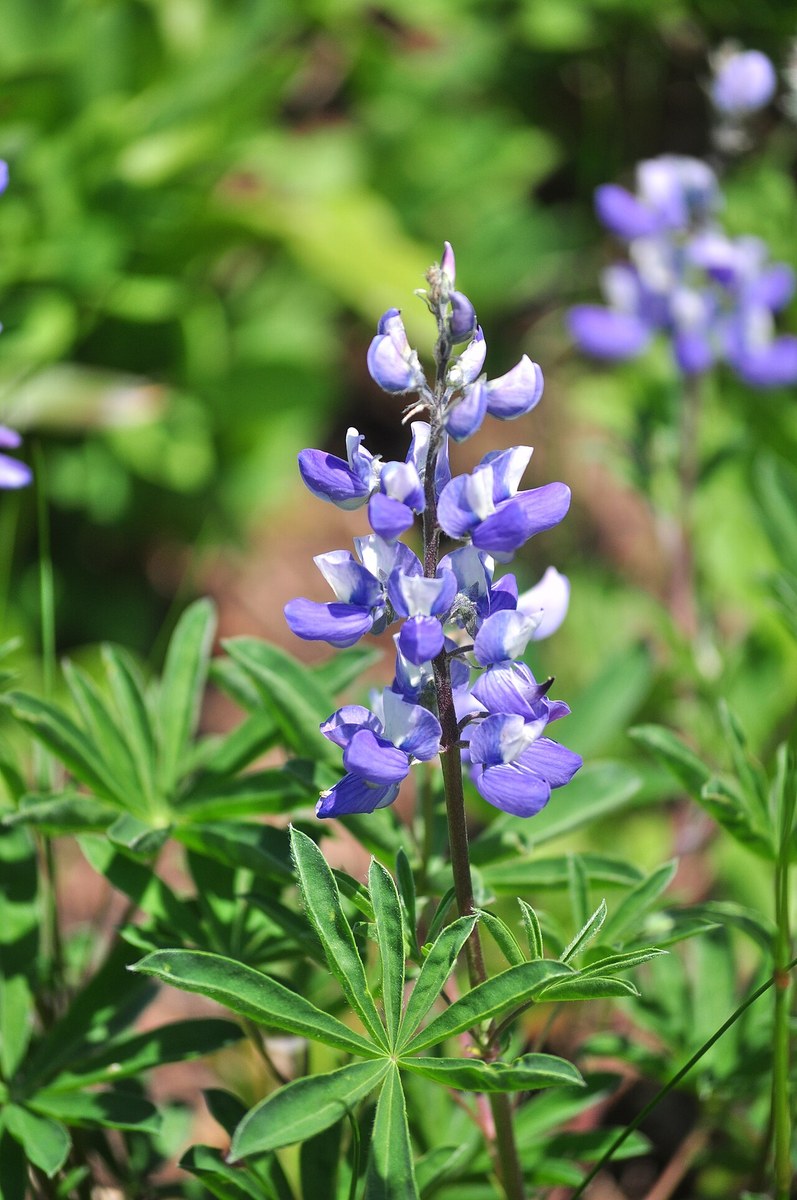
Broadleaf lupine typically forms a bushy clump 1 to 3 feet tall and wide, with leaves divided into 5 to 9 broad, dark green leaflets radiating from a central point like fingers of a hand. From late spring into summer it sends up dense, showy racemes of flowers in shades of blue, violet, and occasionally white, followed by hairy seed pods. Like other lupines, it hosts nitrogen-fixing bacteria in root nodules, allowing it to thrive in the lean, rocky soils typical of subalpine meadows, open forest clearings, and dry foothill slopes.
This species is an excellent choice for a native pollinator garden, a naturalistic meadow planting, or a rock garden in its home range. It asks for little beyond good drainage and a sunny-to-partly-shaded site, and it rewards the gardener with months of color, a steady stream of bumblebees, and the quiet benefit of soil-building nitrogen fixation. Gardeners outside its native range should choose a regionally appropriate lupine instead, since the species listed here is adapted to specific mountain and foothill conditions in the West.
Identification
Broadleaf lupine is a herbaceous perennial that dies back to a woody crown each winter and resprouts from the same root system for many years. Plants typically reach 1 to 3 feet tall, though they can grow taller in moist, rich sites; several stems usually rise from the same base, giving the plant a bushy, rounded profile. Stems are faintly hairy to nearly hairless depending on variety.
Leaves
The leaves are palmately compound, meaning 5 to 9 narrow-to-broad leaflets radiate outward from a single point at the end of a long petiole, much like the fingers of a spread hand. Leaflets are typically 1 to 2½ inches long, dark green above and lightly silky-hairy beneath, with a soft sheen that becomes more pronounced after rain or dew, when water beads on the leaf surface in the fashion common to lupines.
Flowers
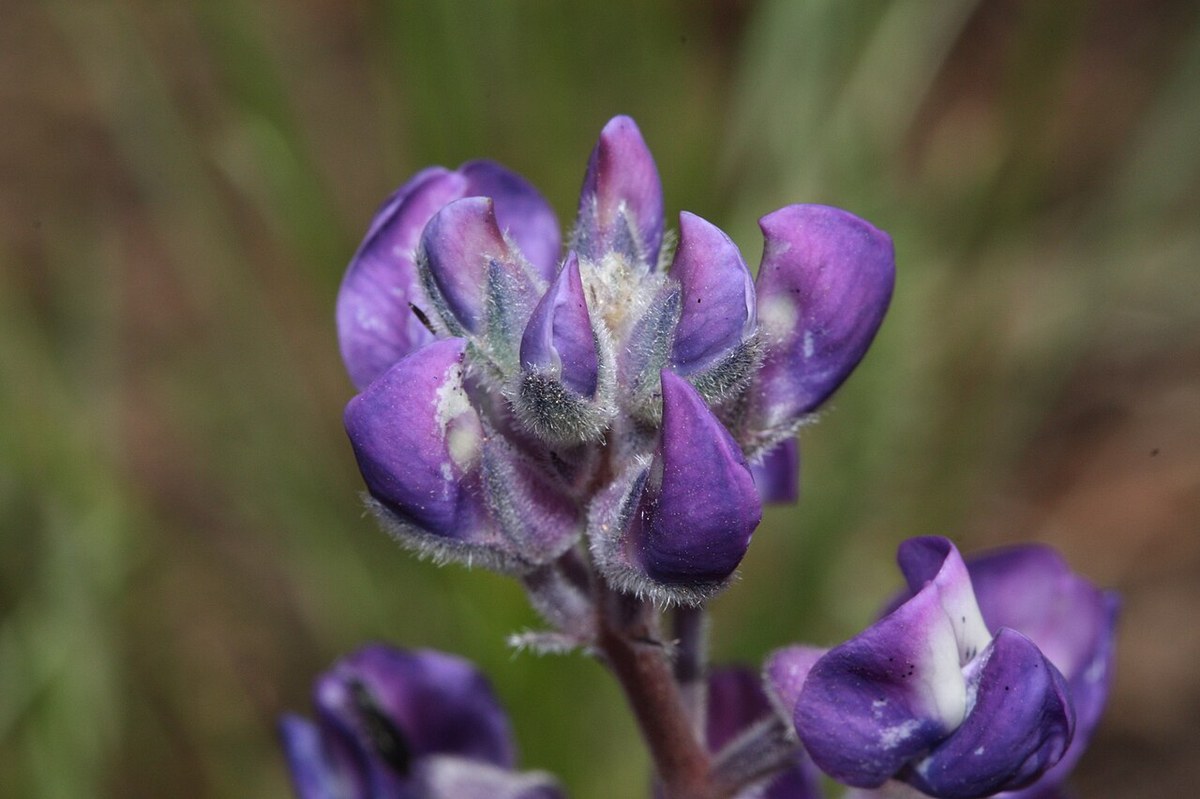
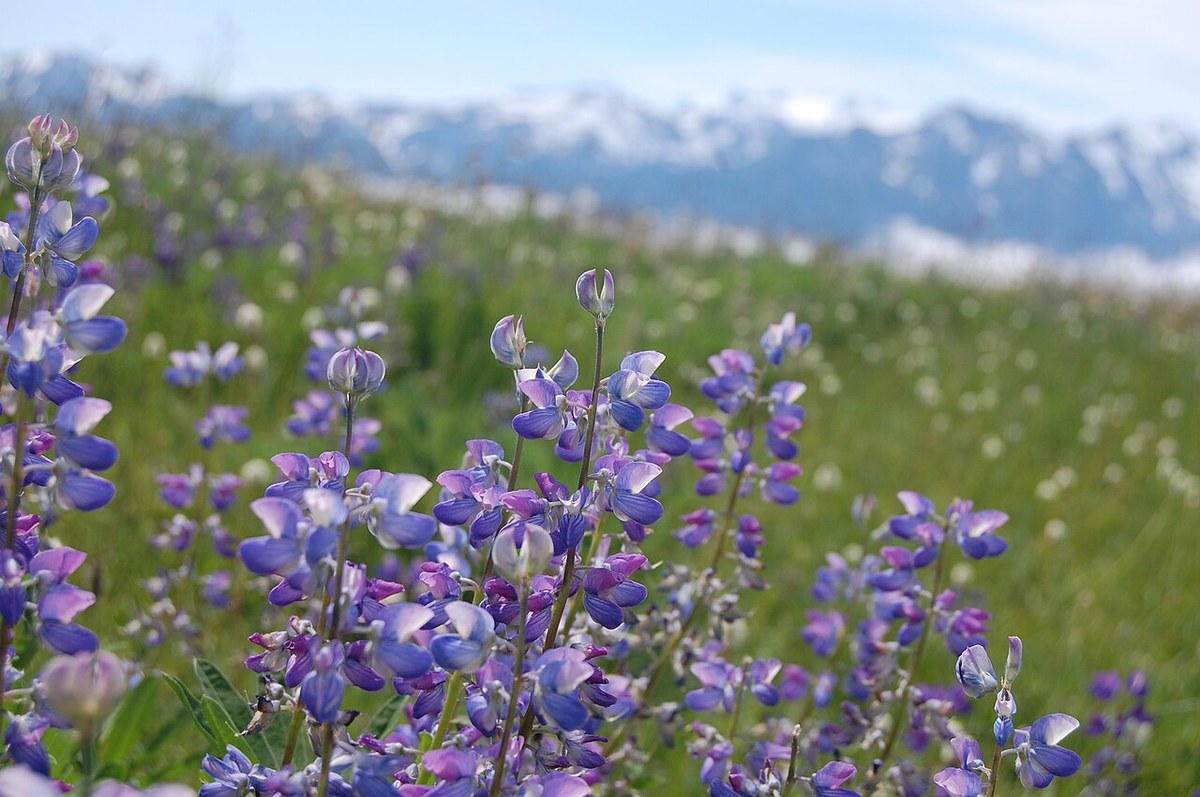
Flowers are borne in dense, elongated racemes 4 to 12 inches long, held well above the foliage on upright stalks. Each individual flower is a classic pea-family shape — a broad upper banner petal, two side wing petals, and a keel — typically ½ to ¾ inch long, in shades of blue to violet-purple, often with a white or pale patch on the banner that can turn pinkish-purple with age, a common lupine signal to pollinators that a flower has already been visited. Bloom time runs from May into August depending on elevation, with high subalpine populations flowering later in the season.
Fruit & Seeds
Flowers are followed by flattened, hairy seed pods about 1 to 1½ inches long, each containing several mottled brown seeds. Pods dry and twist explosively as they mature, flinging seeds a short distance from the parent plant. Like many lupines, the seeds contain bitter quinolizidine alkaloids and are not edible to people or livestock.
Quick Facts
| Scientific Name | Lupinus latifolius |
| Family | Fabaceae (Pea/Legume) |
| Plant Type | Herbaceous Perennial Wildflower |
| Mature Height | 1–3 ft |
| Mature Spread | 1–2½ ft |
| Growth Rate | Moderate |
| Sun Exposure | Full Sun to Part Shade |
| Water Needs | Low to Moderate |
| Soil Type | Well-drained; rocky, gravelly or sandy loam |
| Soil pH | 5.5–7.0 (slightly acidic to neutral) |
| Bloom Time | May – August |
| Flower Color | Blue to violet-purple, often with a pale banner patch |
| Fall Color | Foliage dies back; no notable fall color |
| Fruit | Hairy, flattened seed pods, 1–1½ in |
| Deer Resistant | Yes (foliage and seeds contain bitter alkaloids) |
| USDA Hardiness Zones | 5–9 |
Native Range
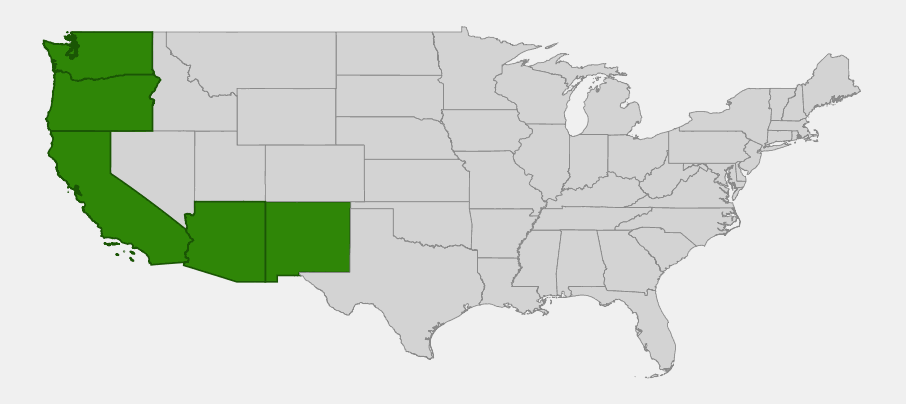
Broadleaf lupine ranges widely across the western United States, from Washington and Oregon south through California to the mountains of Arizona and New Mexico. In the Pacific Northwest it is common on both sides of the Cascades, from coastal bluffs and lowland prairies to subalpine meadows well above 6,000 feet. Further south and east, populations become more localized, tracking moist mountain canyons and high plateaus in otherwise dry desert country, including protected stands in Arizona’s Prescott and Tonto National Forests, and scattered ranges across New Mexico.
Across this range the species occupies a wide variety of plant communities: subalpine and montane meadows, open coniferous forest, coastal prairie and bluffs, streamside thickets, and rocky slopes in the desert Southwest’s “sky island” mountain ranges. It is typically found from near sea level on the Washington coast to above 9,000 feet in the Sierra Nevada and Rocky Mountain foothills, making it one of the most elevationally flexible lupines in the West.
Several regional varieties are recognized across this broad range, reflecting the species’ adaptation to very different climates — from the cool, wet meadows of Mount Rainier to the hot, dry canyons of central Arizona. Gardeners should source seed or plants grown from populations in their own region when possible, since local ecotypes are best adapted to local rainfall and temperature patterns.
📋 Regional plant lists featuring broadleaf lupine: California & Nevada · Western Oregon & Western Washington · Idaho, Eastern Oregon & Eastern Washington · Arizona & New Mexico
Growing & Care Guide
Broadleaf lupine is an easy, rewarding perennial for a native sunny border, meadow planting, or rock garden, as long as the soil drains freely. Once established, it needs very little attention and returns reliably for years.
Light
Plants perform best in full sun to light shade. In hot interior valleys and in the desert Southwest portion of its range, afternoon shade helps extend bloom and prevents scorching; in cooler coastal and mountain sites, full sun produces the densest, most floriferous plants.
Soil & Water
Good drainage is essential — broadleaf lupine is prone to root rot in heavy clay or soils that stay soggy. A gritty, rocky, or sandy loam that mimics its native mountain slopes and meadows works best. Established plants are drought tolerant and need only occasional deep watering through summer dry spells; overwatering, especially in warm weather, shortens the plant’s life. As with other lupines, avoid high-nitrogen fertilizer, since the plant fixes its own nitrogen through root nodules and excess fertility encourages floppy growth at the expense of flowers.
Planting Tips
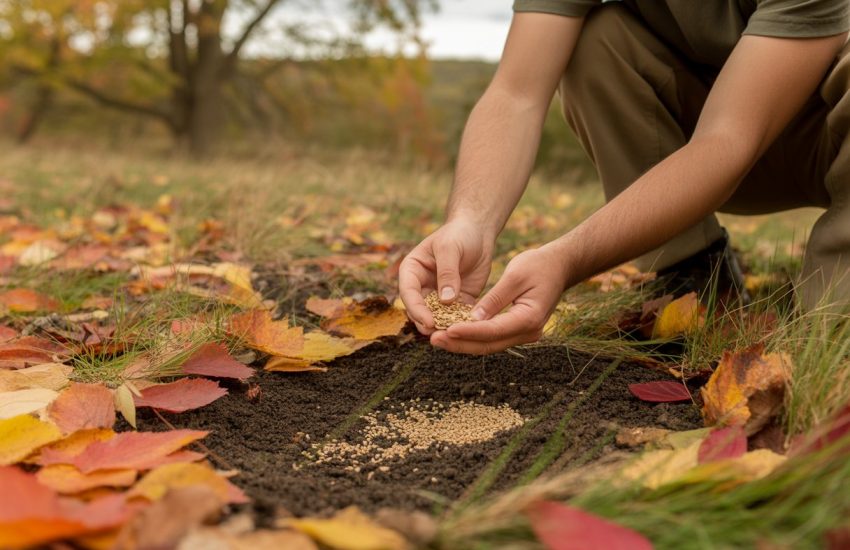
Start from seed in fall or late winter; scarifying the hard seed coat (nicking it lightly with sandpaper or a file) and soaking seeds overnight speeds germination. Nursery-grown plants transplant best while young, since lupines develop a deep taproot that resents disturbance once established. Space plants 12 to 18 inches apart to allow for their mature spread.
Pruning & Maintenance
Deadhead spent flower spikes to encourage a second, lighter bloom flush and to prevent excessive self-seeding where a tidier look is wanted. Cut plants back to the basal rosette after they finish flowering and the foliage begins to decline in late summer. Broadleaf lupine is generally short-lived as an individual plant (often 3 to 5 years) but readily reseeds itself in suitable conditions, forming a self-sustaining colony.
Propagation
Propagate by seed rather than division, since the taproot does not divide well. Collect pods just as they begin to split open and dry further indoors before extracting seed. Scarified, cold-stratified seed germinates reliably within two to four weeks.
Landscape Uses
- Pollinator and wildflower meadows mixed with native grasses and other perennials
- Rock gardens and gravel beds where drainage is excellent
- Slope plantings on dry, sunny banks
- Restoration plantings in disturbed meadows and forest clearings
- Cut flowers for informal bouquets
Wildlife & Ecological Value
Broadleaf lupine is an important nectar and host-plant resource across its wide range, supporting pollinators, butterflies, and small mammals through the growing season.
For Pollinators
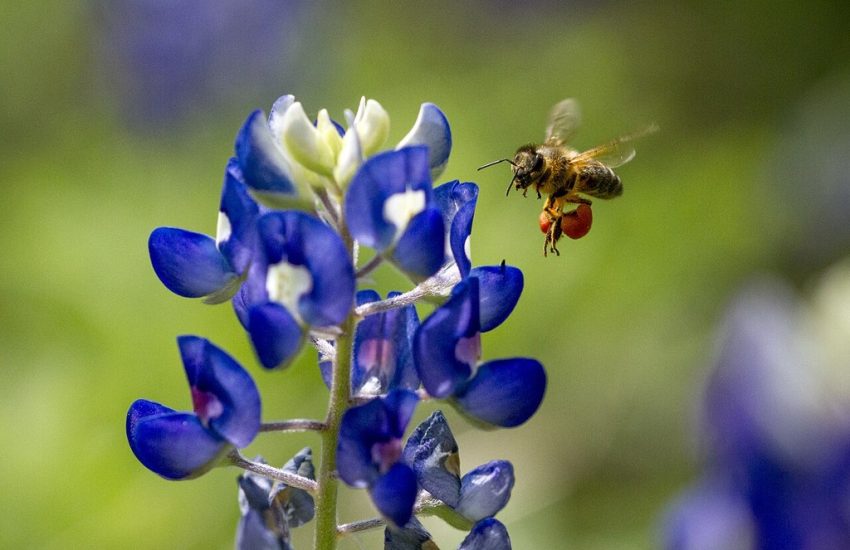
The flowers are heavily visited by bumblebees, which are strong enough to trip the keel petal and access the pollen and nectar inside, as well as by other native bees and occasional hummingbirds. Broadleaf lupine also serves as a larval host plant for several blue butterflies, including species in the genus Plebejus, and for some fritillary and sulphur species in parts of its range.
For Birds
Seed-eating birds, including finches and sparrows, feed on the mature seeds once pods split open. The dense foliage and flower spikes provide cover for ground-foraging birds in open meadow habitat.
For Mammals
Deer and other large herbivores generally avoid browsing broadleaf lupine because of the bitter alkaloids in its foliage and seeds, making it a reliably deer-resistant choice for gardens near wildland edges. Small mammals and granivorous rodents will take fallen seed.
Ecosystem Role
As a nitrogen-fixing legume, broadleaf lupine improves soil fertility wherever it grows, often acting as an early colonizer of disturbed ground, burned meadows, and avalanche chutes. Its presence can facilitate the establishment of less nitrogen-tolerant meadow species that follow in forest succession, making it a valuable component of restoration seed mixes in its native range.
Cultural & Historical Uses
Lupines as a group have long been noticed by Indigenous peoples and early botanists for their striking blue flower spikes and their tendency to appear abundantly after fire or disturbance, but broadleaf lupine itself was not a significant food or fiber plant. Like most lupine species, its seeds and foliage contain bitter quinolizidine alkaloids that make it unpalatable and potentially toxic to people and livestock if consumed in quantity, and historical accounts from the region note that stock losses to lupine poisoning were an occasional hazard on western rangelands.
The genus name Lupinus comes from the Latin lupus, meaning wolf, reflecting an old and inaccurate belief that lupines “wolfishly” stripped the soil of nutrients — in fact, as nitrogen-fixers, lupines generally enrich rather than deplete the soils they grow in. Early American botanists and collectors, including members of 19th-century survey expeditions through the Cascades and Sierra Nevada, documented broadleaf lupine among the showier wildflowers of the high country, and it remains a favorite subject for wildflower photographers and hikers today.
In modern horticulture, broadleaf lupine and its relatives are valued chiefly for their ornamental and ecological contributions rather than any historical utilitarian use — as a dependable, low-input source of early- to mid-summer color and pollinator forage in native plant gardens throughout its range.
Frequently Asked Questions
Is broadleaf lupine the same as the lupine that carpets Texas Hill Country?
No. The Texas Hill Country lupine is bluebonnet (Lupinus texensis and relatives), an annual species native to Texas. Broadleaf lupine is a separate perennial species native to the Pacific Coast states and scattered mountain ranges of the interior West, and it is not native to Texas.
Are broadleaf lupine seeds or foliage edible?
No. The seeds and foliage contain bitter alkaloids that are toxic in quantity to livestock and are not safe for people to eat. Treat this as an ornamental and wildlife plant, not a food source.
Why do established lupine plants sometimes die after a few years?
Broadleaf lupine is naturally short-lived, often persisting only 3 to 5 years as an individual plant, especially in garden conditions with more water and richer soil than it would receive in the wild. It compensates by reseeding readily, so a planting that allows some seed to mature will usually sustain itself as a self-renewing colony.
Does broadleaf lupine need fertilizer?
No, and it generally performs worse with it. As a nitrogen-fixing legume, it manufactures much of its own nitrogen through root nodules, and high-fertility soil tends to produce weak, floppy growth with fewer flowers.
Will broadleaf lupine grow outside its native mountain and coastal range?
It can be difficult to establish outside the cool-summer or high-elevation conditions it is adapted to. Gardeners in hot, humid, or low-elevation regions outside its native states should look for a lupine species native to their own area rather than attempting broadleaf lupine.

Looking for a nursery that carries broadleaf lupine?
Browse our native plant nursery directory: California · Nevada · Washington · Oregon · Arizona & New Mexico