Golden Eardrops (Dicentra chrysantha)
Dicentra chrysantha (accepted name Ehrendorferia chrysantha), commonly called golden eardrops, is a striking California native perennial in the poppy family (Papaveraceae, formerly placed in Fumariaceae) best known for its tall, airy spikes of unusual golden-yellow flowers and its habit of appearing abruptly after wildfire. Unlike its shade-loving pink relatives such as bleeding heart, golden eardrops is a sun-loving plant of dry, disturbed slopes, and its bright color and odd, pouch-shaped flowers make it one of the more distinctive wildflowers of the California chaparral and foothill woodland.
The plant forms a basal clump of finely divided, blue-gray foliage from which tall, branching flower stalks rise 2 to 4 feet, sometimes more, topped with clusters of inch-long golden flowers shaped like small lockets or hanging earrings — the source of its common name. Golden eardrops is famously a fire-follower: its seeds can lie dormant in the soil for years, germinating in large numbers after fire clears competing vegetation and exposes bare mineral soil, then fading from a site again as shrub cover returns over subsequent seasons.
In the garden, golden eardrops is best suited to a dry, sunny chaparral-style planting where its brief but showy appearance can be appreciated, understanding that it behaves more like a short-lived, self-seeding opportunist than a permanent anchor plant. It pairs naturally with other California chaparral and foothill species and is a good choice for gardeners interested in native plants with a direct connection to the state’s fire ecology.
Identification
Golden eardrops is an herbaceous to semi-woody perennial, typically 2 to 4 feet tall and wide, occasionally taller in favorable conditions, with a basal rosette of foliage and tall, airy, branching flower stalks.
Leaves
Leaves are finely divided and fern-like, blue-green to gray-green in color, forming a loose basal clump. The dissected, lacy texture of the foliage is attractive even when the plant is not in bloom, giving it some ornamental value as foliage alone.
Flowers
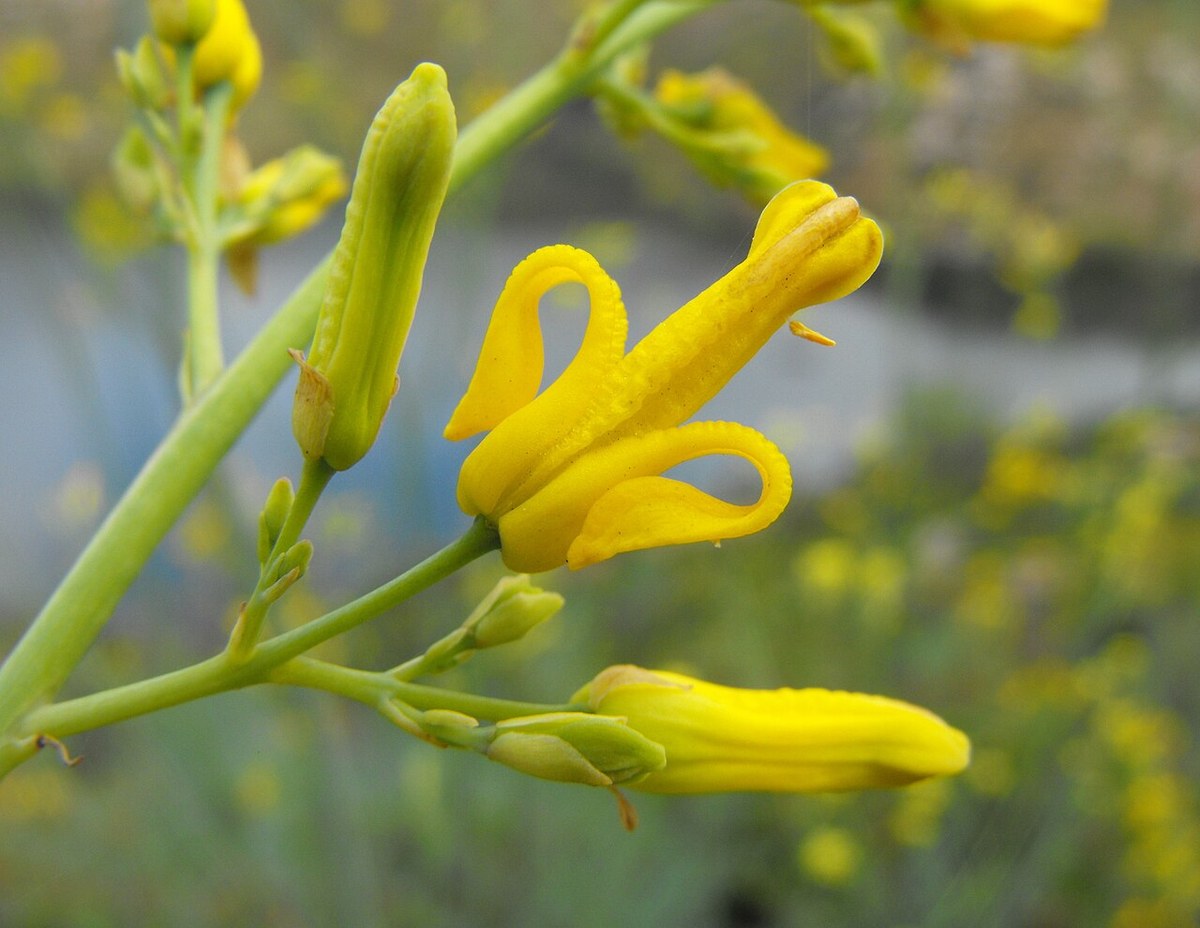
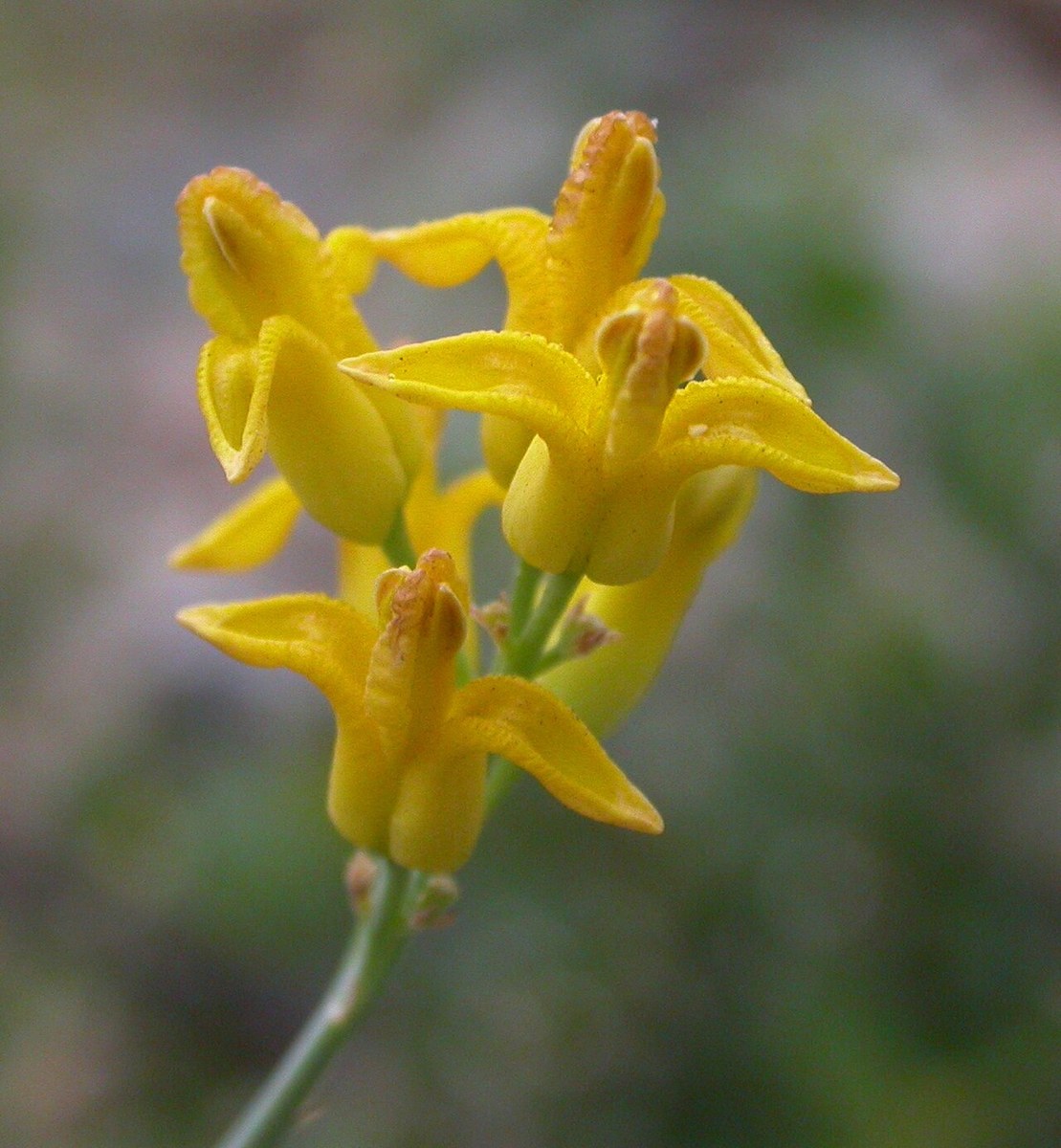
Flowers are borne in loose, branching clusters atop tall, nearly leafless stalks that rise well above the foliage. Each flower is roughly ¾ to 1¼ inches long, bright golden yellow, and distinctively shaped — somewhat heart- or locket-shaped with two outward-flaring, spurred petals, giving rise to both the “eardrops” common name and the family’s older name, Fumariaceae (“smoke” family, for the similarly shaped flowers of other fumitories). Bloom time runs from late spring through summer, typically May into August, often continuing longer than many other chaparral wildflowers.
Fruit & Seeds
Flowers are followed by narrow, elongated seed capsules that split to release numerous small, shiny black seeds. These seeds can persist in the soil seed bank for many years, a key adaptation that allows the species to reappear reliably after fire even when no plants have been visible on a site for a long time.
Quick Facts
| Scientific Name | Dicentra chrysantha (syn. Ehrendorferia chrysantha) |
| Family | Papaveraceae (Poppy) |
| Plant Type | Herbaceous Perennial Wildflower |
| Mature Height | 2–4 ft (to 5 ft in bloom) |
| Mature Spread | 2–3 ft |
| Growth Rate | Fast, often short-lived |
| Sun Exposure | Full Sun to Light Shade |
| Water Needs | Low |
| Soil Type | Well-drained; tolerates poor, rocky, disturbed soils |
| Soil pH | 6.0–7.5 (slightly acidic to neutral) |
| Bloom Time | May – August |
| Flower Color | Golden yellow |
| Fall Color | None notable; foliage dies back |
| Fruit | Narrow capsules with shiny black seeds |
| Deer Resistant | Yes (light browsing only) |
| USDA Hardiness Zones | 7–10 |
Native Range
Golden eardrops is native to California, where it occurs widely through the interior Coast Ranges, the Sierra Nevada foothills, the Transverse and Peninsular Ranges of Southern California, and other mountainous and hilly parts of the state, extending south into Baja California, Mexico. It is not found outside California within the United States.
Across this range, golden eardrops grows in yellow pine forest, foothill woodland, and chaparral plant communities, typically on dry slopes and disturbed sites at low to moderate elevations. It is strongly associated with recently burned ground, often appearing in large, conspicuous numbers on hillsides the first one to a few years after a wildfire, then becoming scarce or locally absent again as shrubs regrow and shade the site, persisting instead as dormant seed in the soil.
Because of this fire-following behavior, golden eardrops populations can appear and disappear from a given hillside over time, and encountering it in large numbers is often a sign of a recent burn rather than evidence of an established permanent colony. Gardeners should expect a similarly impermanent, opportunistic character in cultivation.
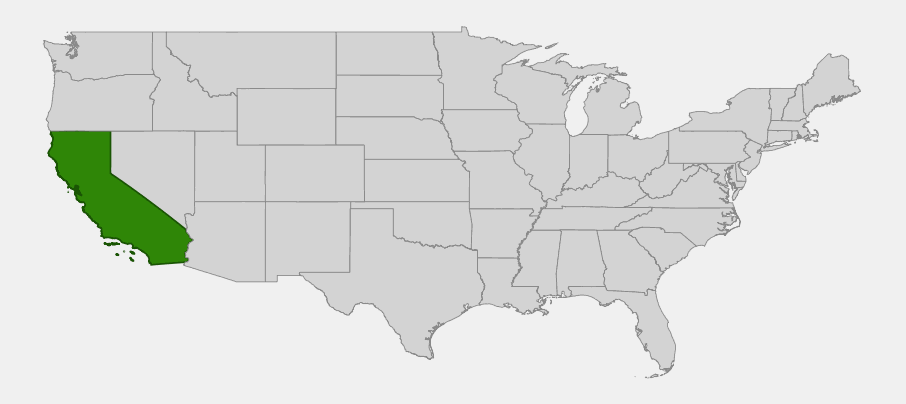
📋 Regional plant lists featuring golden eardrops: California & Nevada
Growing & Care Guide
Golden eardrops rewards gardeners who can offer it dry, sunny, lean conditions reminiscent of a recently disturbed chaparral slope, and it is best approached as a dramatic but short-lived addition rather than a long-term garden anchor.
Light
Full sun produces the most compact, floriferous plants; light afternoon shade is tolerated, especially in hotter interior gardens, and may prolong the bloom period.
Soil & Water
This species thrives in lean, fast-draining soils and needs very little supplemental water once established — occasional deep watering during extended summer drought is usually sufficient. Avoid rich, regularly irrigated garden beds, which shorten the plant’s lifespan and encourage weak, floppy growth. Good drainage is essential; soggy soil, especially in winter, leads to root rot.
Planting Tips
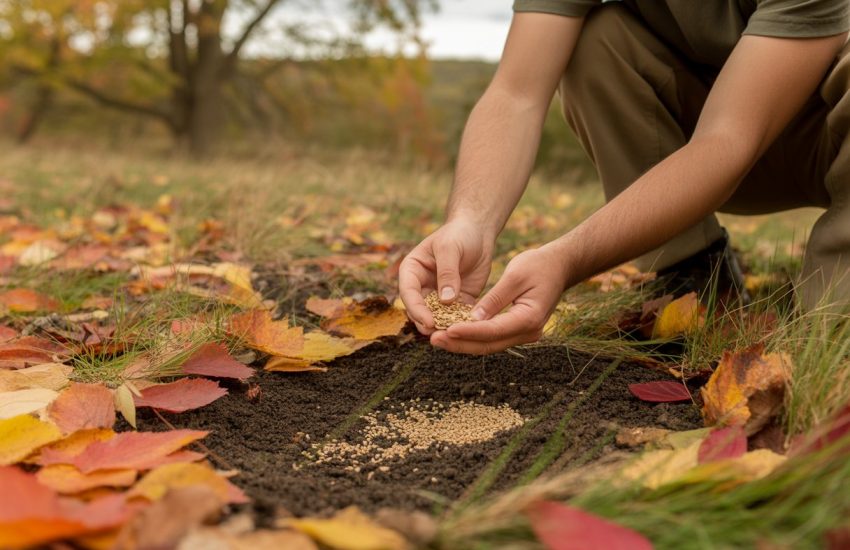
Golden eardrops germinates most reliably from seed treated to mimic fire cues — some growers use smoke treatment or brief heat exposure to break dormancy, reflecting the plant’s natural fire-follower biology. Direct sowing in fall, after scarification, is the most practical approach for most gardeners; nursery-grown plants can also be used but may be short-lived once transplanted. Give plants 2 to 3 feet of space to allow for their eventual branching habit.
Pruning & Maintenance
Cut back spent flower stalks after seed has matured and shattered, if a neater look is desired, or leave them in place to let the plant release seed naturally for future generations. Golden eardrops is often short-lived, especially in garden settings with more consistent moisture than it receives in the wild, so allowing some self-seeding helps sustain a planting over time.
Propagation
Propagate from seed only. Collect ripe capsules before they split, and store seed in a cool, dry place; some gardeners improve germination with a brief smoke or heat treatment before fall sowing, replicating the post-fire conditions the species is adapted to.
Landscape Uses
- Chaparral and fire-recovery theme gardens
- Dry slope and hillside plantings with sharp drainage
- Restoration seeding on recently disturbed or burned sites
- Informal wildflower borders mixed with other chaparral natives
- Specimen plantings where its unusual flower form can be appreciated up close
Wildlife & Ecological Value
Golden eardrops contributes to the recovery and diversity of California’s fire-adapted plant communities, offering resources to pollinators during its showy but often brief appearances.
For Pollinators
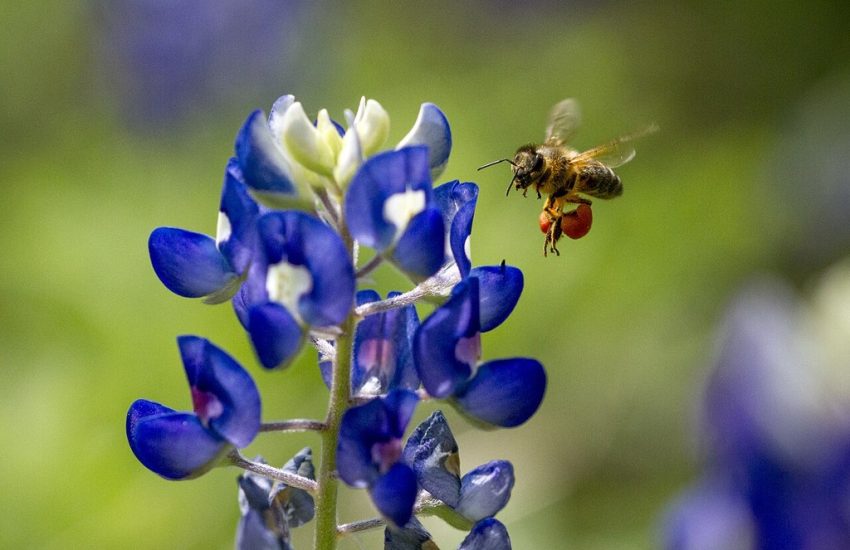
The unusual, spurred flowers are visited by bumblebees and other larger native bees capable of accessing the nectar held within the pouch-shaped petals, as well as by hummingbirds in some areas, which are drawn to the bright golden color.
For Birds
Seed-eating birds may forage on the small seeds released from mature capsules, though golden eardrops is not considered a major food source for birds compared to its role for pollinators.
For Mammals
Deer generally browse golden eardrops only lightly, likely due to the alkaloid compounds typical of the poppy family, making it a reasonably deer-resistant choice in fire-prone wildland-adjacent gardens.
Ecosystem Role
As a classic fire-follower, golden eardrops plays an important role in the early post-fire recovery of chaparral and foothill woodland communities, quickly covering bare, burned ground with flowers and providing nectar resources for pollinators at a time when many other plants have yet to resprout. Its long-lived seed bank is a textbook example of the fire-adapted reproductive strategies common among California’s chaparral flora.
Cultural & Historical Uses
Golden eardrops and its relatives in the genus Dicentra/Ehrendorferia are part of the Papaveraceae, a family that includes several plants historically noted for containing isoquinoline alkaloids. While detailed ethnobotanical records specific to golden eardrops are limited, the broader fumitory and poppy relatives of this group have a long history of caution in traditional use due to their alkaloid content, and golden eardrops itself is not documented as a food or medicinal plant among California’s Indigenous peoples.
The plant’s dramatic post-fire appearance has long been noted by California botanists and naturalists as one of the more visually striking signs of chaparral recovery, and it remains a frequently photographed and discussed example of fire-follower biology in California natural history writing and wildflower guides.
In modern horticulture, golden eardrops is valued chiefly by native plant enthusiasts and restoration practitioners for its ornamental, ecological, and educational value — a living illustration of how California’s fire-adapted flora responds to disturbance.
Frequently Asked Questions
Why did golden eardrops suddenly appear on a hillside that never had it before?
This is classic behavior for the species. Its seeds can remain dormant in the soil for years and germinate in large numbers after a wildfire clears competing vegetation, so a sudden appearance usually follows a recent burn rather than indicating a brand-new colonization.
Is golden eardrops related to garden bleeding heart?
Yes, it is in the same broader group (historically Fumariaceae, now included in Papaveraceae) as the pink, shade-loving bleeding hearts sold in nurseries, but golden eardrops is adapted to dry, sunny chaparral rather than moist shade, and its flowers are a distinctly different golden-yellow, spurred shape.
Can I eat or use golden eardrops medicinally?
No. There is no established food or medicinal use for this species, and relatives in the poppy family often contain alkaloids that make unsupervised use inadvisable. Grow it strictly as an ornamental wildlife plant.
Why did my golden eardrops plant die after a couple of years?
This species is often naturally short-lived, especially in garden conditions with more moisture than it receives on a dry wild hillside. Its long-term persistence depends on self-seeding, so allowing some seed capsules to mature and shatter each year helps maintain a planting.
Does golden eardrops need fertilizer or regular watering?
No. It is adapted to lean, disturbed soils and minimal summer water; rich soil and frequent irrigation tend to shorten its lifespan and reduce its typically lean, wiry, drought-adapted character.

Looking for a nursery that carries golden eardrops?
Browse our native plant nursery directory: California