
Step by Step Basil Planting Guide for Thriving Herb Gardens
Last updated: August 27, 2026
Growing basil really starts with figuring out what it likes and sticking to a simple process. Here’s a step-by-step basil planting guide to help you prep soil, pick seeds or seedlings, and get the light and water just right for happy, thriving plants.
The key to planting basil is making sure you’ve got well-drained soil, plenty of sunlight, and steady moisture—but not too much.
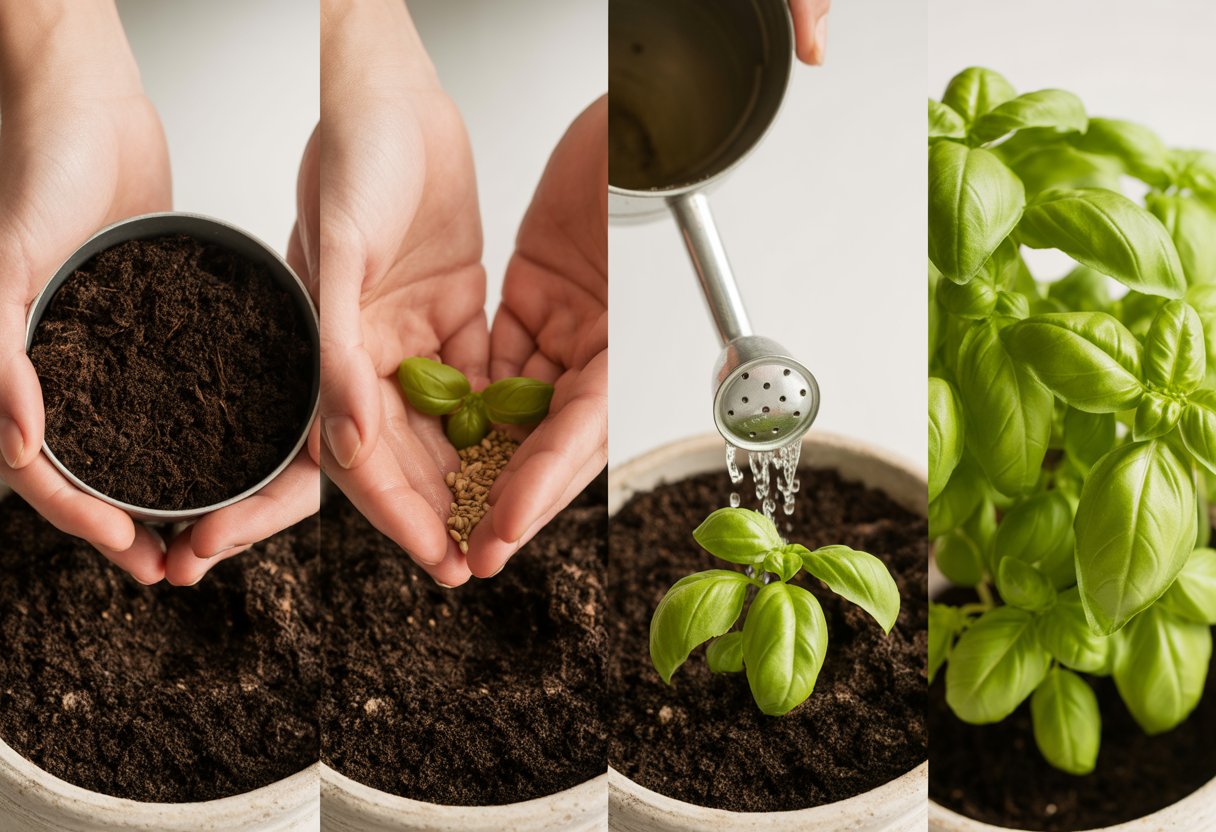
Anyone can grow healthy basil at home—whether that’s in a backyard or just a few pots on the balcony. Small details make a big difference, and avoiding rookie mistakes leads to better, tastier leaves.
With a little attention, basil planting isn’t tough at all. You’ll have fresh herbs for cooking or tossing on pizza in no time.
This guide’s for both beginners and seasoned gardeners. If you want clear, practical advice on growing basil, you’re in the right place.
Choosing the Right Basil Variety
Picking a basil variety comes down to what you want in taste, how you plan to use it, and what your growing conditions are like. Each type is a little different—some smell stronger, some look purple, some are just tiny.
Popular Basil Types
Sweet basil is everywhere, and for good reason. It’s got a mild, sweet flavor and those classic big green leaves that are perfect for pasta or salads.
It grows fast and gives you a lot to harvest. If you’re after something with a little more kick, Dark Opal basil might be your style.
Its deep purple leaves look amazing and taste a bit spicier. It’s great for salads and as a garnish.
This one likes a bit more sun, so keep that in mind. Thai basil and lemon basil are fun if you want something unique, but they can be a bit fussy and want it warmer.
Your choice really depends on your climate and what you want to cook.
Selecting Seeds or Transplants
Seeds are cheap and usually sprout pretty well. They just need warmth, a little patience, and some light—most pop up in about a week.
Fresh seeds work best, in my experience. If you’re not into waiting, transplants speed things up.
Grab healthy, pest-free plants from the nursery. When you plant them, be gentle with the roots.
Both seeds and transplants can give you healthy basil, but seeds need more attention at the start. You’ll need to watch the temperature and water carefully.
Preparing for Planting
Getting things ready makes all the difference. You’ll want to know what basil likes, pick the right containers and soil, and figure out how to start from seed.
Ideal Growing Conditions
Basil loves it warm—think 70-85°F (21-29°C). It craves full sun for at least 6-8 hours a day.
The soil should drain well and have plenty of organic matter to hold just enough moisture. Humidity helps, but don’t forget about airflow—good circulation keeps fungus away.
Stick with a soil pH between 6.0 and 7.5. Mixing in compost before planting makes the soil richer and helps the plant soak up nutrients.
Choosing Containers and Potting Mix
If you’re short on space or just want basil indoors, containers work great. Go for pots with drainage holes so roots don’t get soggy.
Use a potting mix meant for herbs or veggies. It’s lighter and usually has organic matter mixed in.
Skip garden soil; it’s too heavy and holds too much water. A good mix is equal parts organic soil, compost, and perlite or vermiculite.
This combo keeps things moist but not swampy. Pots should be at least 6-8 inches deep, and wider is better so plants don’t crowd each other.
Starting Basil from Seeds
Basil seeds want warmth and steady moisture to sprout, usually in 5-10 days. Plant them about 1/4 inch deep in damp potting mix.
Cover them lightly and keep the soil moist—don’t overdo it. Misting helps if things dry out.
Put the container somewhere warm with indirect light. Once you see sprouts, give them 12-16 hours of light each day, from a window or a grow light.
Thin out seedlings so there’s one per pot, or space them 12 inches apart outside. Move them when they have 2-3 true leaves, using compost-enriched soil.
Be gentle with the little guys—roots don’t like rough handling.
Step-by-Step Basil Planting Instructions
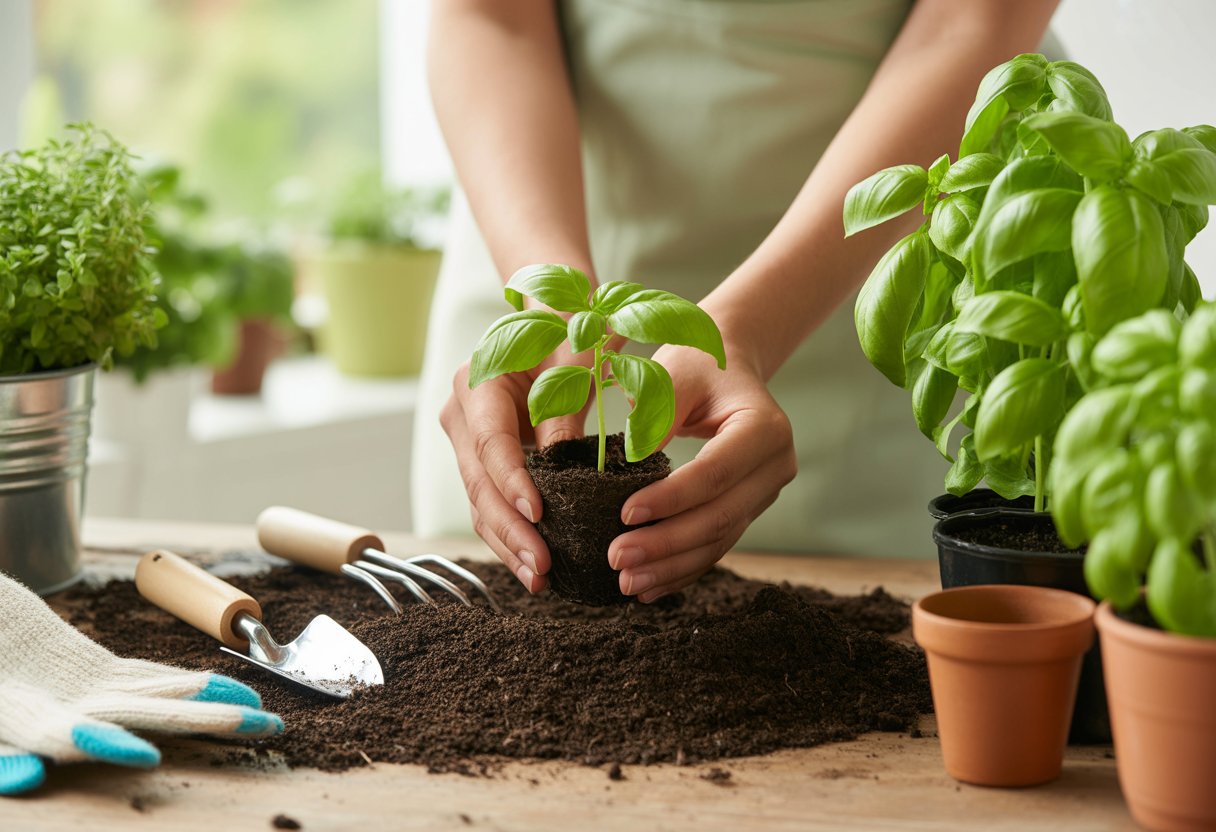
Good spacing, steady watering, and a little fertilizer go a long way for basil. Transplanting and mulching right can save you headaches like yellow leaves or stunted growth.
Transplanting and Spacing
Move basil seedlings outside after the last frost, when soil’s warmed up to 70°F (21°C). Each plant needs about 12 to 18 inches of space.
Give the roots a gentle touch when transplanting. Set them at the same depth as in their pots.
Rich, well-drained soil helps roots spread out. If you cram basil together, you’ll get fewer leaves and more fungus problems.
Space them out and you’ll have healthier, bushier plants.
Watering and Mulching
Basil likes its soil moist, but not soaked. Water when the top inch feels dry.
Too much water leads to root rot and mold—trust me, it’s not pretty. Add a 1 to 2-inch layer of mulch (straw or shredded leaves works well) to keep moisture in and weeds out.
Mulch also helps keep the soil temperature steady. Water in the morning so leaves dry off by evening.
Wet leaves overnight can mean fungus, and nobody wants that.
Fertilizing for Growth
Feed basil with a balanced liquid fertilizer every 4 to 6 weeks. Something like a 10-10-10 NPK ratio keeps them happy.
Don’t go overboard with nitrogen or you’ll get lots of leaves but not much flavor. Always follow the directions for how much to use and how often.
Fertilize after watering to avoid burning the roots. If you use too much fertilizer, you could actually do more harm than good.
Caring for Basil and Harvesting
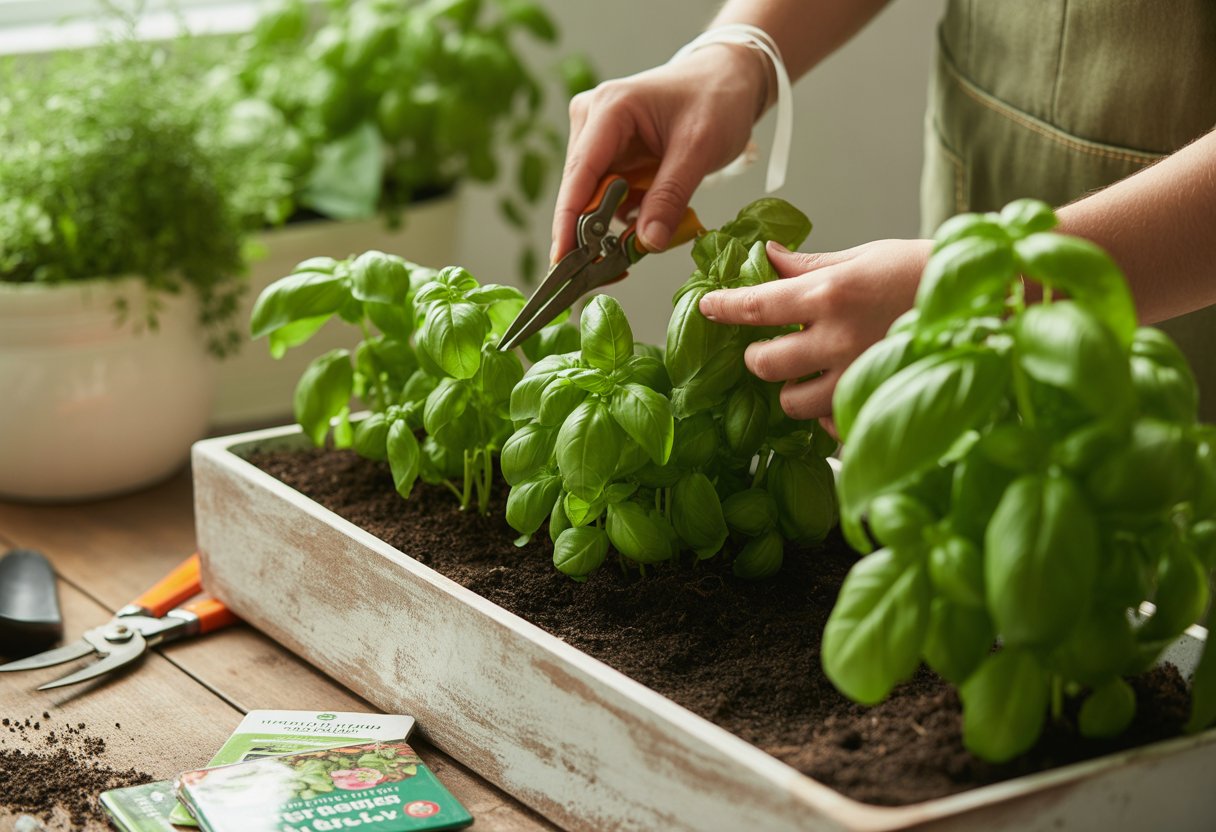
A little love keeps basil healthy and tasty all season. Watch for bugs and diseases, harvest the right way, and use or store your leaves quickly for the best flavor.
Pest and Disease Management
Basil does get bothered by pests. Aphids, Japanese beetles, and slugs show up sometimes, so act fast with insecticidal soap or just pick them off.
Watch out for downy mildew (fuzzy gray stuff under the leaves), fusarium wilt (wilting stems), and bacterial leaf spot (those dark spots). Pull off bad leaves right away and keep the air moving around your plants.
Skip overhead watering to avoid fungal problems. If it gets chilly, bring pots inside or cover outdoor basil at night.
Rotating crops and planting basil away from rosemary can help too, since rosemary sometimes draws pests.
Proper Harvesting Techniques
Start harvesting when basil is about 6-8 inches tall. Pick from the top to make the plant bushier and delay flowering (which makes the leaves taste worse).
Use scissors or just pinch off the stems right above a pair of leaves. This encourages new growth and keeps the plant full.
Don’t strip a whole stem bare—leave some leaves so it keeps growing. Only harvest what you’ll use to keep the basil fresh and productive.
Regular picking, every few days, keeps the plant healthy and stops it from going to seed too soon.
Maximizing Freshness and Flavor
Fresh basil loses its potency fast after you pick it. If you want that punchy flavor for pesto or whatever else, use it right away or stash it properly.
I usually wrap the leaves loosely in a damp paper towel, then tuck them into an airtight container in the fridge. Don’t wash the leaves first; extra moisture speeds up decay, and nobody wants slimy basil.
If you need to keep basil longer, freeze it in ice cube trays with water or oil. That way, it holds onto its aroma for cooked dishes.
Drying basil doesn’t work so well for pesto, but it’s fine for seasoning. Just keep your harvested basil away from direct sun and heat—nothing ruins that bright, aromatic kick like a hot windowsill.
Wish I’d found this before I made some mistakes last season. Live and learn I guess!
Glad you found it useful, Scott! Best of luck this season. -Plant Native Team