Arrowleaf Balsamroot (Wyethia sagittata)
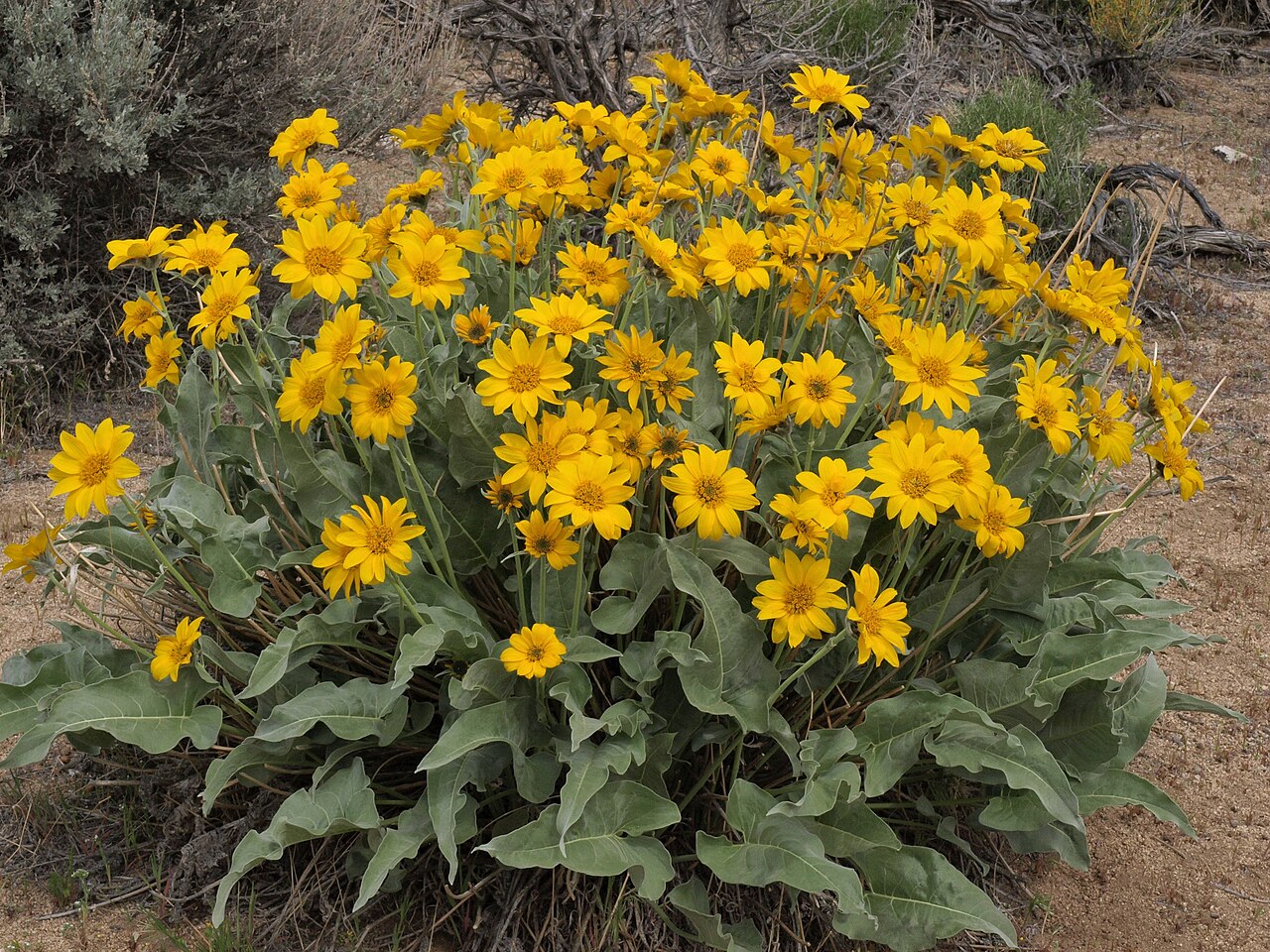
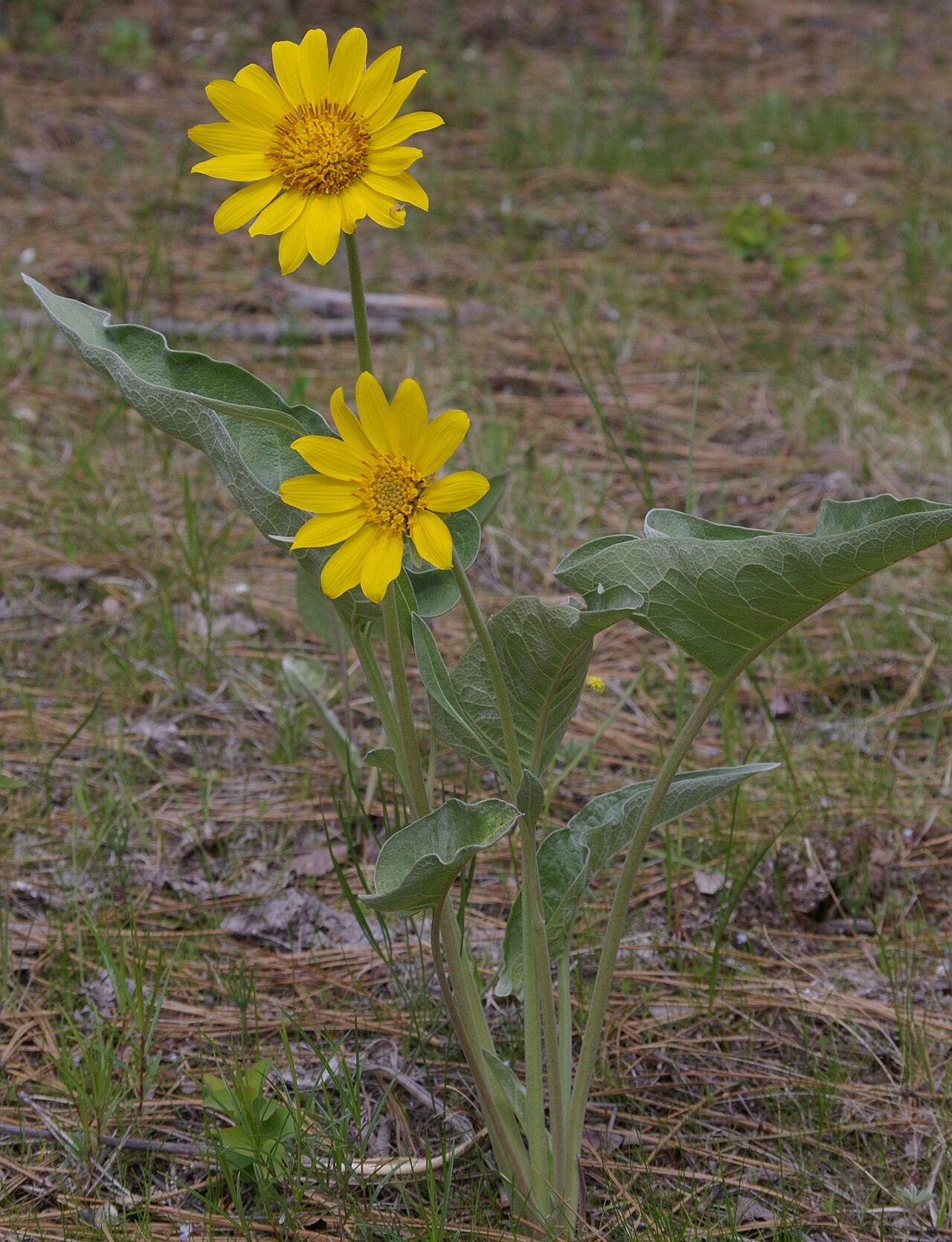
Arrowleaf balsamroot is one of the defining spring wildflowers of open western hillsides. Large, softly gray-green leaves form a basal clump, while yellow flower heads rise above them on comparatively spare stalks. A mature plant can look effortless in a dry landscape, but that appearance depends on a substantial perennial root system built over time.
This page treats the plant long known as Balsamorhiza sagittata. Kew currently accepts the name Wyethia sagittata and places Balsamorhiza sagittata in synonymy; USDA and many native-plant nurseries still use the familiar Balsamorhiza name. These names refer to the same taxon here. The regional-table spelling “sagittate” was an error, not a separate species.
For a garden, the important distinction is between a slow-starting, long-lived native perennial and a quick replacement for an annual sunflower. Arrowleaf balsamroot is best planted where its large leaves, spring flowers and later seasonal dormancy can all be accommodated. It is a poor choice for a bed expected to remain lush under frequent summer irrigation.
Identification
Large arrow-shaped basal leaves
The conspicuous leaves arise mainly from the base. Their blades are arrow-shaped to somewhat heart-shaped, with broad basal lobes, long stalks and generally entire margins. Pale hairs can give them a woolly gray cast, especially when young. Leaf shape should be checked on several mature leaves, because small developing leaves do not always show the full outline.
Yellow sunflower-like heads
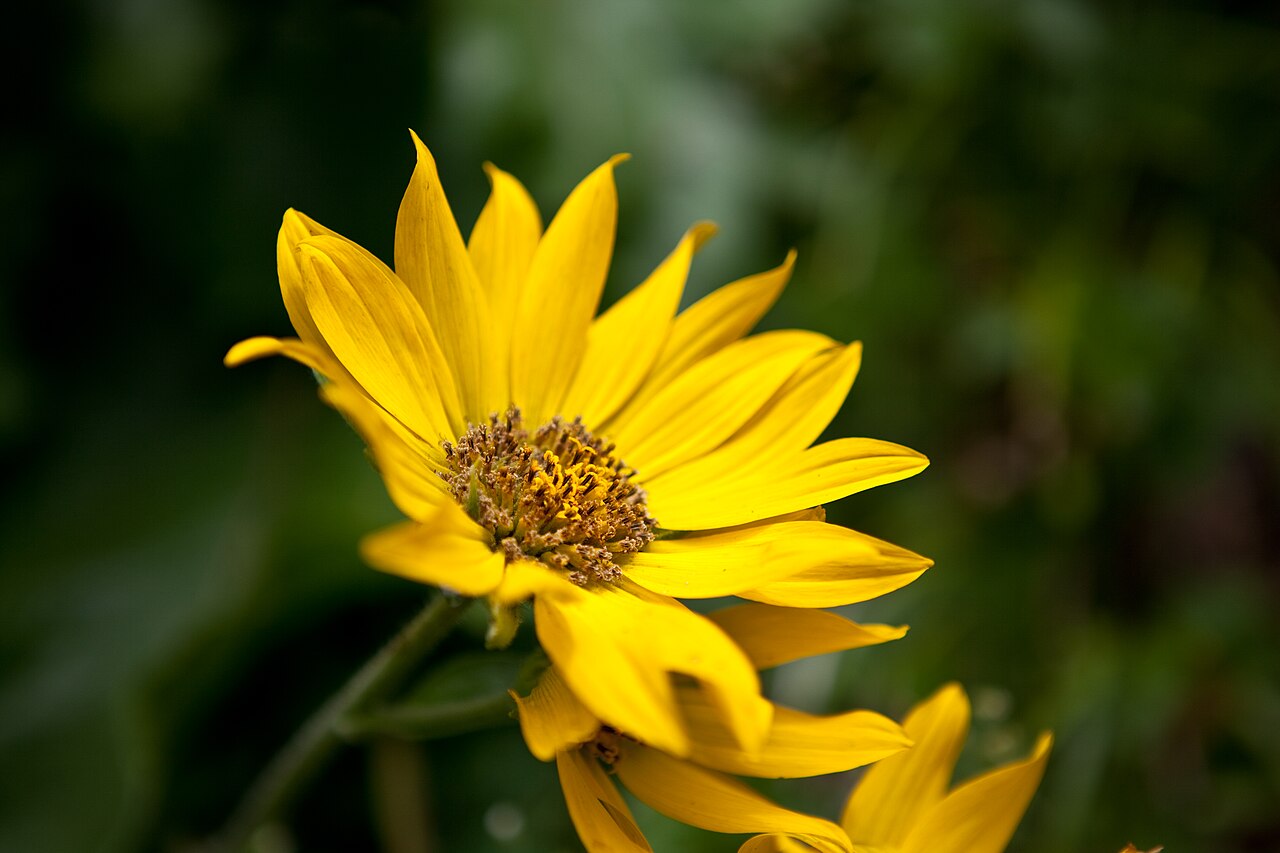
The yellow heads are composites, with outer ray florets around a central disk. Flower stalks commonly carry a single prominent head, though the architecture of an individual plant can vary. Heads rise above the basal foliage and are part of the spring display. A photograph of a head alone is not enough to separate all western sunflower relatives.
Stem leaves and overall habit
Compared with the broad basal leaves, leaves on flowering stems are fewer and narrower. The plant forms a clump rather than producing the dense, leafy branching stem of an ordinary garden sunflower. The combination of basal arrow-shaped leaves, woolly surfaces and yellow heads is more informative than flower color alone.
A persistent root beneath seasonal foliage
A deep, substantial taproot supports repeat growth over many seasons. Published management accounts describe roots much larger than the above-ground plant would suggest. This explains both established drought tolerance and why digging a wild plant or dividing an old clump is a poor propagation shortcut. Dormant foliage does not mean the root has disappeared.
Compare names and lookalikes carefully
Arrowleaf balsamroot shares western landscapes with other balsamroots and mule’s-ears. Some have narrower or differently divided leaves. Check the full combination of leaves, hairs, flower-stalk arrangement and a reliable regional key. When purchasing, request the species, and record both Wyethia sagittata and Balsamorhiza sagittata so a name change does not create a duplicate identity.
Quick Facts
| Scientific Name | Wyethia sagittata (syn. Balsamorhiza sagittata) |
| Family | Asteraceae |
| Plant Type | Long-lived herbaceous perennial with a deep taproot |
| Mature Height | Usually about 1–2 feet; some regional plants approach 30 inches |
| Mature Spread | A broad basal clump; allow space for the large leaves |
| Growth Rate | Slow establishment from seed; established plants can be long-lived |
| Sun Exposure | Full sun to open, lightly shaded woodland |
| Water Needs | Low once established; spring growth uses seasonal moisture |
| Soil Type | Well-drained loam, silt loam or rocky soils; avoid a shallow water table |
| Soil pH | Tolerates a range from mildly acidic to moderately alkaline soils |
| Bloom Time | Spring to early summer, later at higher elevations |
| Flower Color | Yellow composite flower heads |
| Fall Color | Foliage commonly dries or becomes dormant before autumn |
| Fruit | Small, relatively smooth achenes in the spent heads |
| Deer Resistant | No; valuable browse for several large herbivores |
| USDA Hardiness Zones | Use regional provenance and local nursery guidance rather than one blanket zone range |
Native Range
The U.S. native-state overview used here includes Arizona, California, Colorado, Idaho, Montana, Nevada, North Dakota, Oregon, South Dakota, Utah, Washington and Wyoming. Kew also records Alberta and British Columbia. Some older management accounts use broader distribution descriptions; the map follows the stated current taxonomic source rather than silently combining every reported boundary.
Typical settings include open slopes, sagebrush communities, native grasslands and open ponderosa-pine or oak woodland. Soil is generally well drained. The species is associated with seasonal spring moisture followed by drier conditions, not with a constantly saturated root zone. Native occurrence within a state does not make every urban clay basin or irrigated border suitable.
Published management guides give a broad elevation span near 1,000–9,000 feet, with narrower regional ranges such as those described for Colorado. Elevation interacts with latitude, slope and exposure. A locally adapted seed source and a site resembling nearby native habitat are more useful than treating the broadest reported elevation as a universal planting guarantee.
Native Range at a Glance
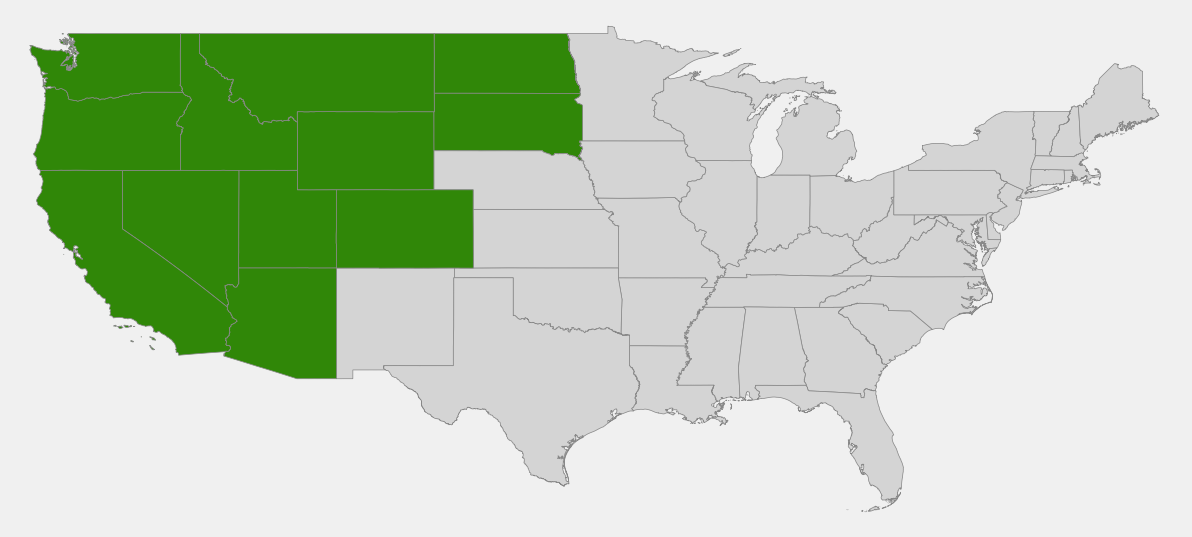
| U.S. States | Arizona, California, Colorado, Idaho, Montana, Nevada, North Dakota, Oregon, South Dakota, Utah, Washington, Wyoming |
| Mexico / Canada / Other Range | Western Canada, including Alberta and British Columbia in the current Kew treatment |
| Ecoregion | Western sagebrush country, dry foothills and open ponderosa-pine or oak woodland |
| Elevation Range | Broadly about 1,000–9,000 feet in published management accounts; local limits vary |
| Habitat | Open slopes, ridges, well-drained grasslands and lightly wooded uplands |
| Common Associates | Regional sagebrush, native bunchgrasses and open ponderosa-pine communities |
Explore our regional native-plant lists: UT regional list. These lists cover several states; each species has its own native range.
Growing & Care Guide
Choose a permanent, well-drained position
Allow room for the basal leaves and plan to leave the plant in place. An open slope or dry meadow edge can be more suitable than a crowded border requiring regular lifting and division. Avoid sites with a shallow water table or prolonged winter saturation. Where soil is compacted, improve the broader planting area rather than creating a small pocket of rich wet soil.
Give young plants time
Seedlings establish slowly compared with many annual flowers and weeds. Keep competing vegetation away during establishment without repeatedly disturbing the young root. Mark the planting location so a small or dormant plant is not accidentally dug out. A slow first season does not justify excessive fertilizer or a forced watering schedule.
Water according to establishment stage
New nursery stock needs enough moisture to connect its root ball with surrounding soil. Gradually reduce intervention as it establishes, taking rainfall and soil drainage into account. Established plants are drought adapted, but that does not mean a freshly planted plug can survive any dry spell. Equally, summer foliage decline is not always a signal to keep the soil wet.
Use seed rather than dividing old roots
Seed propagation fits the plant’s root architecture better than digging and splitting a mature crown. Published propagation guidance emphasizes dormancy and the value of cold, moist conditions. Autumn outdoor sowing is one practical way to provide seasonal cues where the climate is appropriate. Seed source, storage and local winter conditions influence results, so follow a tested supplier protocol rather than promising rapid germination.
Leave space for seasonal dormancy
Spring foliage and flowers may give way to dry leaves during summer. Combine the plant with regionally suitable species that provide later interest without requiring a much wetter regime. Cut old stalks only when appropriate for your habitat goals, and avoid trimming living leaves merely to force a tidier mound. The dormant crown still occupies its permanent space.
Protect establishment from herbivores
USDA accounts describe arrowleaf balsamroot as forage for wildlife and livestock. It is not reliably deer resistant. Where browsing prevents establishment, use a temporary protective barrier that does not trap stems or wildlife. Avoid assuming damage indicates disease; inspect for browsing, competition and drainage before choosing a treatment.
Landscape Uses
- Dry native meadows where a long-lived spring component is wanted.
- Open foothill gardens with room for broad basal leaves.
- Naturalistic plantings alongside locally native bunchgrasses.
- Restoration work using appropriate provenance and establishment planning.
Wildlife & Ecological Value
For Pollinators
The yellow heads provide flowering resources during the spring season. Bees visit balsamroot flowers, and seed production depends on successful flowering and pollination. A planting gains more value from avoiding disruptive insecticide use and supplying other seasonal bloom than from an unsupported claim that this one species supports every local pollinator.
For Birds
USDA management accounts describe seeds as food for birds and small mammals. Leaving some heads to mature preserves that opportunity. A few retained stalks also add seasonal structure in a meadow, although balsamroot alone does not supply the nesting cover or woody habitat offered by shrubs.
For Mammals
Deer, elk, bighorn sheep and pronghorn are among the wildlife associated with balsamroot forage in management literature. Livestock may also use it. For a garden, this is a reason to expect browsing rather than advertise the plant as deer proof. Protecting young plants can allow a perennial root system to become established before repeated herbivory.
Ecosystem Role
A long-lived root and early-season growth make this plant a persistent part of western upland communities. Its role is not interchangeable with that of a short-lived ornamental sunflower. Establishment, competition and grazing all influence its persistence, so conservation planting requires attention to the surrounding plant community as well as the individual species.
Cultural & Historical Uses
USDA plant guides document historical Indigenous uses of arrowleaf balsamroot, including use of plant parts as food. Such records belong to specific cultural knowledge and preparation traditions; they are not a general invitation to harvest or eat a plant based on a website photograph. This page provides no preparation or medicinal instructions.
The familiar name Balsamorhiza remains common in restoration, nursery and botanical literature. Current placement in Wyethia is a taxonomic change, not a discovery that the old plant vanished. Keeping the synonym visible helps gardeners compare seed catalogs, herbarium records and management guides without buying or counting the same species twice.
Its appeal comes partly from the spring landscapes it helps define. Nursery propagation and responsibly produced seed are preferable to digging wild plants, which damages both the source population and the large root system. In restoration, local provenance and realistic expectations about slow establishment matter more than producing an immediate floral display.
Frequently Asked Questions
Why does this page use two scientific names?
Kew accepts Wyethia sagittata; Balsamorhiza sagittata remains widely used by USDA and nurseries. They refer to the same taxon in this page.
Can I divide a wild clump?
Avoid it. The deep, substantial taproot is easily damaged, and wild collection harms populations. Use nursery stock or responsibly sourced seed.
Is it deer resistant?
No reliable claim of deer resistance is appropriate. Wildlife management sources describe it as valuable forage.
Why did the leaves dry in summer?
Seasonal dormancy or decline after spring growth can be normal. Check the crown and site conditions before increasing irrigation.
Will it bloom immediately from seed?
Do not expect an instant display. Germination and establishment can be slow, and young plants need time to build their root system.
Sources & Further Reading
- Kew Plants of the World Online: identity, synonyms and native distribution
- USDA PLANTS profile
- Kew: Balsamorhiza sagittata synonym record
- USDA Forest Service: Arrowleaf Balsamroot species review
- USDA/NRCS: Arrowleaf Balsamroot plant guide
- USDA Forest Service: Western Forbs, Arrowleaf Balsamroot
Find Native Plants Near You
Ask a native-plant nursery for correctly identified, nursery-propagated stock and information about regional provenance. Match the plant to your site rather than collecting it from a wild population.
Utah native plant nurseries · Colorado native plant nurseries
Also listed in our native plants for Idaho, eastern Oregon and eastern Washington. Select locally native material appropriate to your site.