Skyrocket Gilia (Ipomopsis aggregata)
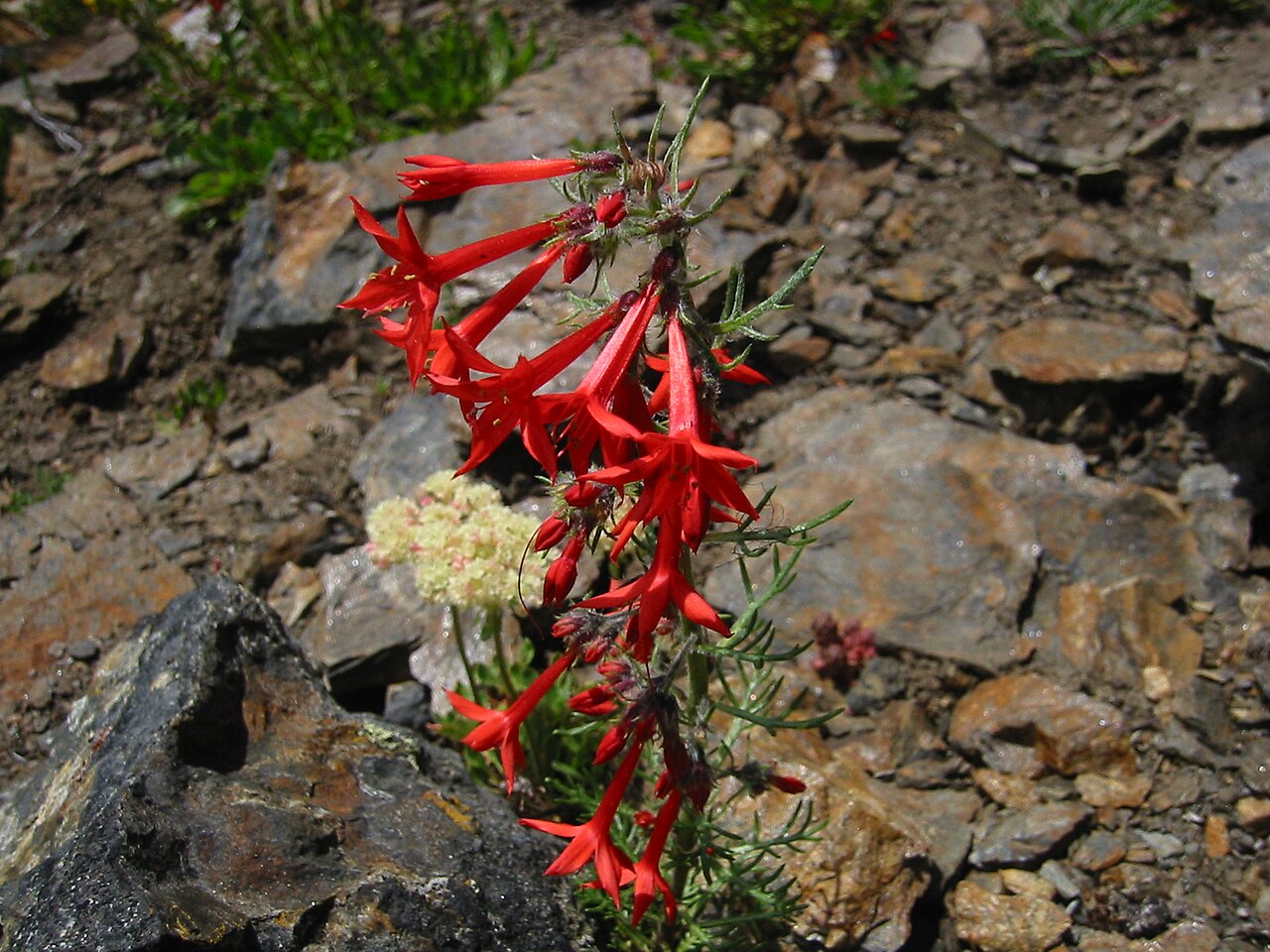
Skyrocket gilia sends narrow flowering stems above a rosette of finely divided leaves. Scarlet tubular flowers are the best-known form, but Ipomopsis aggregata is variable: pink and white flowers occur as well. In a sunny native garden, the airy stems bring vertical color without creating a broad mass of foliage.
The name Gilia aggregata is an older synonym, and scarlet gilia is another widely used common name. The regional-table label “Cilia aggregate” was a spelling error. This page covers Ipomopsis aggregata at species level; it does not treat every flower color or geographic form as interchangeable nursery material.
A key part of growing it successfully is accepting its life cycle. Many plants spend a period as a low rosette, then flower, set seed and die. It is therefore better understood as a renewing population of biennial or short-lived plants than as a permanent clump that should be divided every few years.
Identification
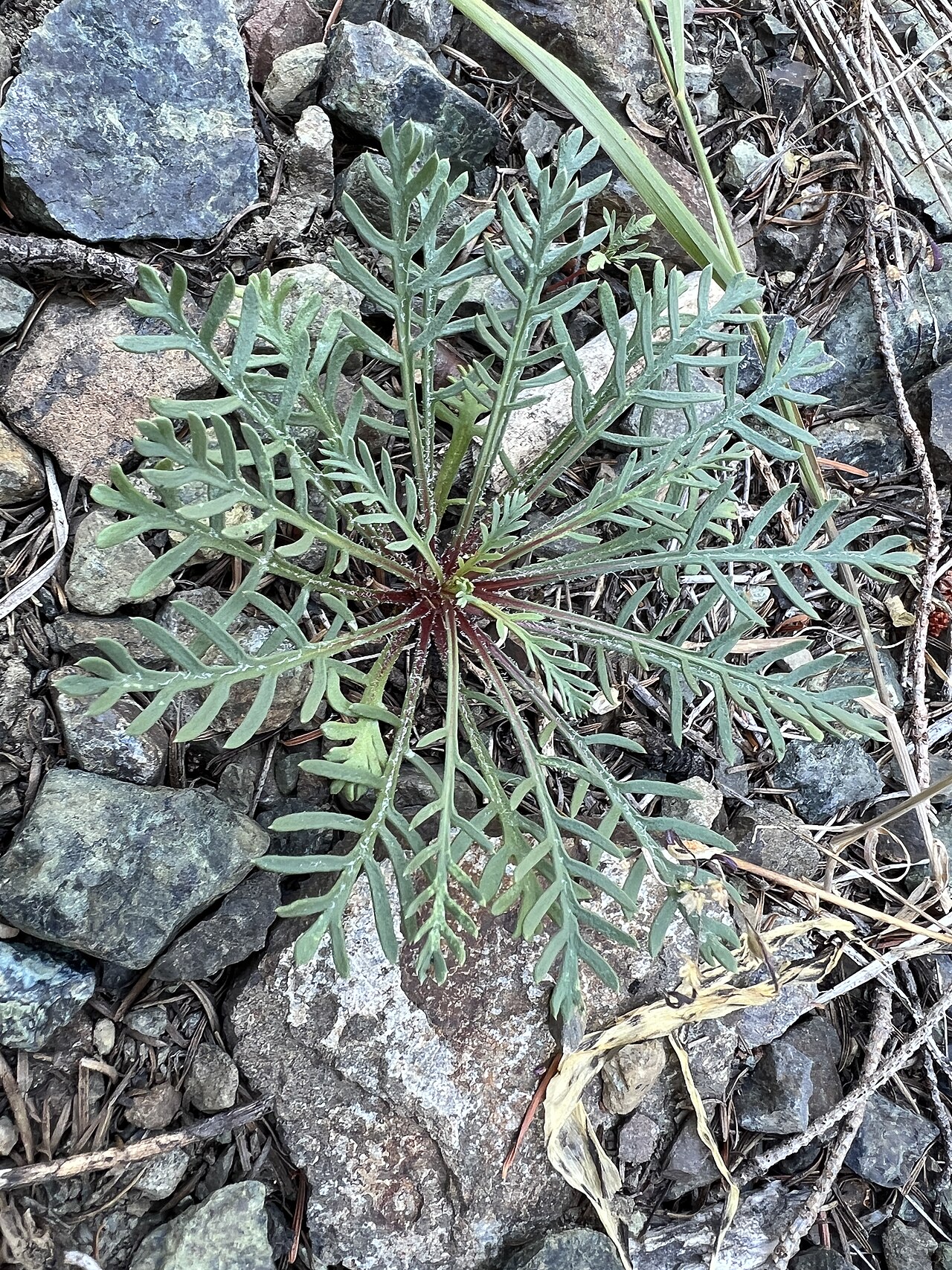
Finely divided rosette leaves
Young plants form a low rosette with narrow, finely divided foliage. The segments can look almost feathery from a distance. This stage is much less conspicuous than the flowering plant, which makes accidental weeding a common practical risk. Mark seedlings and compare the whole leaf rather than identifying a rosette by location alone.
Tubular flowers with spreading lobes
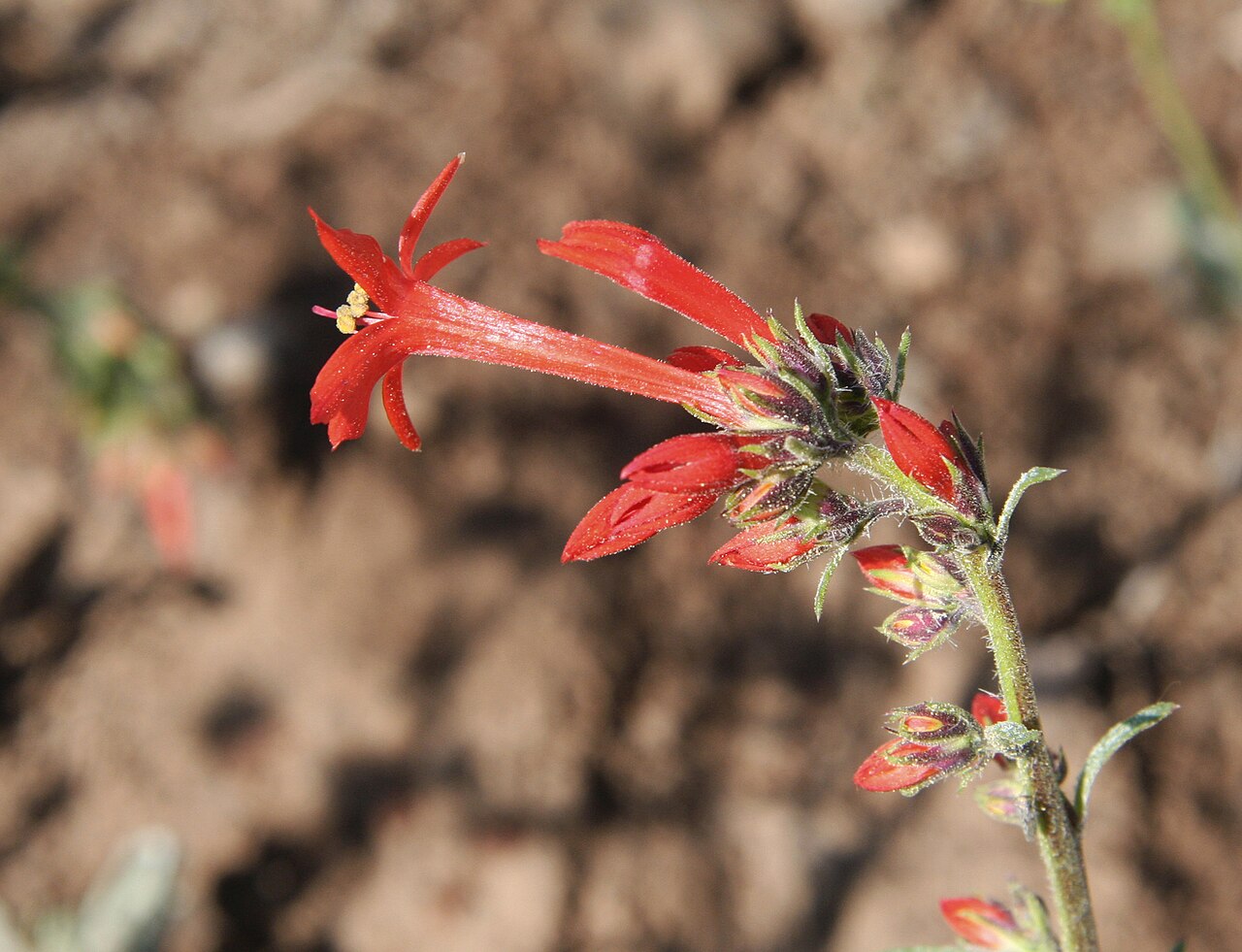
The corolla forms a long narrow tube ending in five spreading lobes. The floral shape is well suited to visits by hummingbirds. Scarlet or red is familiar, but pink, pale and white-flowered populations belong within the species complex. Color alone is not enough to assign a subspecies or prove that two plants have the same regional origin.
Upright flowering stems
Flowering stems rise above the basal leaves and carry several tubular flowers along the upper portion. Stem leaves are smaller and finely divided. Colorado State University gives a common garden height of about 12–30 inches, while wild size varies with population and conditions. A single narrow height figure does not capture the whole species.
Capsules and the end of flowering
After successful pollination, flowers give way to dry seed capsules. The stalk can gradually brown as seeds mature. For a plant that flowers only once, this is a normal completion of its life cycle, not necessarily an irrigation failure. Leave selected stems if you want seed to replenish the planting.
Distinguish other gilias and similar red flowers
Several western plants share the word gilia, and red tubular flowers also occur in unrelated genera. Confirm the divided leaves, growth form, corolla and a reliable regional identification. A nursery label should use Ipomopsis aggregata, with provenance if available, rather than a generic packet labeled only “red wildflower.”
Quick Facts
| Scientific Name | Ipomopsis aggregata (syn. Gilia aggregata) |
| Family | Polemoniaceae |
| Plant Type | Biennial or short-lived perennial wildflower; often flowers once |
| Mature Height | Usually about 12–30 inches; some plants are taller |
| Mature Spread | A modest basal rosette with upright flowering stems |
| Growth Rate | Rosette first, then an upright flowering phase; renews from seed |
| Sun Exposure | Full sun to open light shade |
| Water Needs | Low once established; avoid prolonged saturation |
| Soil Type | Well-drained sandy, gravelly or rocky soil |
| Soil pH | Use a suitable well-drained regional soil; no narrow pH requirement asserted |
| Bloom Time | Summer; timing varies with elevation and population |
| Flower Color | Scarlet, red, pink or white; intermediate shades occur |
| Fall Color | Often dry after seed maturation; not an autumn-foliage plant |
| Fruit | Dry capsules containing small seeds |
| Deer Resistant | Often less preferred in garden lists, but browsing resistance is not guaranteed |
| USDA Hardiness Zones | Match regional provenance and elevation; no single blanket range is assigned |
Native Range
The native-state outline used here includes Arizona, California, Colorado, Idaho, Montana, Nevada, New Mexico, Oklahoma, Oregon, Texas, Utah, Washington and Wyoming. Kew also records British Columbia and northern Mexico. This broad species distribution includes several recognized geographic forms; a state-level map is not a claim that one seed source is appropriate throughout the shaded area.
Open woodland, rocky slopes, dry meadows and other well-drained settings are characteristic. The plant needs light and space rather than dense competition under a closed canopy. In Colorado horticultural guidance it is used at elevations up to about 9,000 feet, but local native occurrence and garden performance depend on more than elevation alone.
The combined Utah and western Colorado regional list is appropriate context for this species, but site selection still matters within that region. Warm dry slopes, cool mountain openings and irrigated city beds have different moisture patterns. Choose a seed source suited to your locality and interpret the map together with habitat, exposure and drainage.
Native Range at a Glance
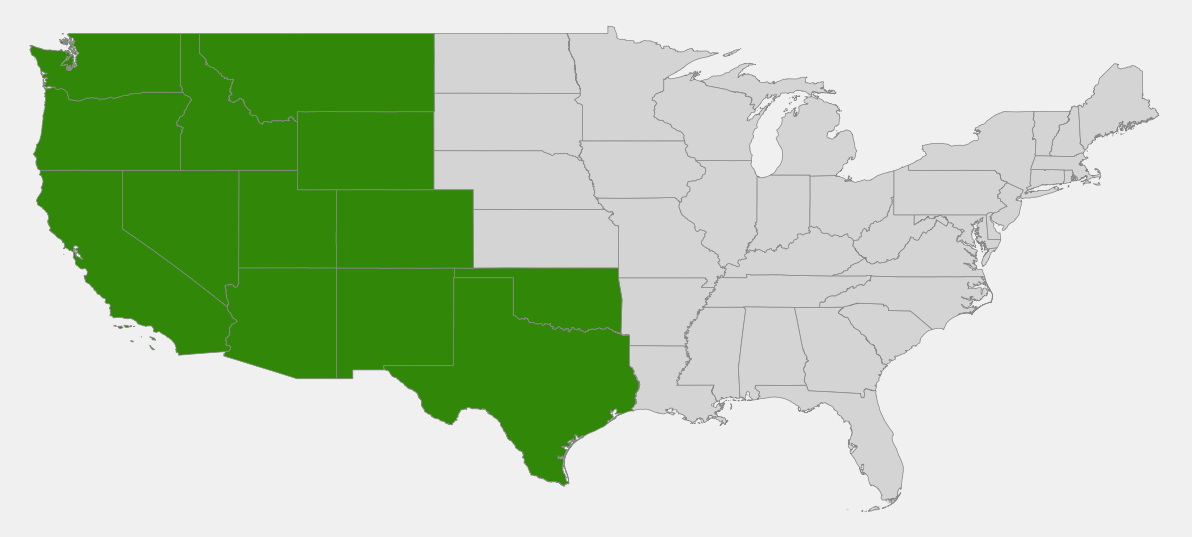
| U.S. States | Arizona, California, Colorado, Idaho, Montana, Nevada, New Mexico, Oklahoma, Oregon, Texas, Utah, Washington, Wyoming |
| Mexico / Canada / Other Range | British Columbia and northern Mexico |
| Ecoregion | Western open woodland, dry mountain meadows and rocky foothills |
| Elevation Range | Colorado gardening guidance includes sites to about 9,000 feet; native limits vary regionally |
| Habitat | Open, well-drained slopes, dry meadows and woodland openings |
| Common Associates | Regionally native bunchgrasses and dry-site forbs in open western communities |
Explore our regional native-plant lists: UT regional list. These lists cover several states; each species has its own native range.
Growing & Care Guide
Prepare an open, well-drained site
Choose sun or an open position with ample light and soil that releases excess water. Rocky or gravelly surroundings often suit its form better than a rich, densely planted border. Remove aggressive competitors before sowing or planting. Improving drainage across the site is more effective than creating a small amended pocket that collects water.
Establish the rosette carefully
Plant nursery stock at its existing crown depth and water it into the surrounding soil. A small rosette should remain visible and not be buried by mulch or neighboring plants. During establishment, check actual root-zone moisture rather than following a fixed daily schedule. The aim is successful rooting without maintaining saturated conditions.
Allow the life cycle to proceed
A plant may remain a rosette before producing its flowering stalk. After flowering, many individuals die even when care has been appropriate. Do not repeatedly replace them with the assumption that a perennial must keep the same crown forever. Instead, plan for seedlings at different stages so the planting renews itself.
Keep seed opportunities in the planting
Let some capsules mature and retain areas where seed can reach the soil. Thick mulch and intensive removal of every spent stalk work against natural recruitment. If collecting seed from garden-grown plants, label the parent identity and origin. Avoid wild collection without authorization, and follow regional guidance if the planting is intended for ecological restoration.
Use local propagation guidance
Seed germination and seasonal timing depend on origin and conditions. Consult the seed supplier for a tested protocol, and avoid assuming every population requires an identical treatment. Sowing a modest trial and recording dates, weather and germination is more useful than promising an exact success percentage. Handle young plants gently to avoid damaging developing roots.
Balance tidiness with habitat
Remove only the stems needed for access or appearance, leaving some seed and natural structure where practical. Do not respond to normal post-flowering decline with excessive fertilizer. If a plant fails before flowering, inspect drainage, competition and browsing. A low-water garden still requires observation, especially while seedlings establish.
Landscape Uses
- Sunny native wildflower gardens with room for self-renewal.
- Hummingbird-oriented plantings using locally appropriate seed.
- Dry meadow edges and open rocky borders.
- Mixed-age naturalistic plantings where rosettes and seed stalks are welcome.
Wildlife & Ecological Value
For Pollinators
Hummingbirds are a well-documented part of the appeal of scarlet gilia. Colorado State University recommends it for hummingbird gardens, including higher-elevation settings. The long flower tube and exposed reproductive structures fit visits by these birds. Maintain other bloom periods as well, since one species cannot provide nectar throughout an entire season.
For Birds
The strongest bird association described here is flower visitation by hummingbirds, not a claim that a particular songbird depends on its seeds. Native shrubs, trees and grasses can complement the wildflower by providing cover and perches. A layered habitat is more valuable than a row of nectar flowers surrounded by bare, intensively treated ground.
For Mammals
Some gardening guidance lists scarlet gilia among less-preferred plants for deer, but local feeding pressure varies. This is not a guarantee against browsing. Protect vulnerable seedlings where necessary and distinguish clipped stems from normal senescence after seed production before deciding how to respond.
Ecosystem Role
Population renewal is part of its ecological strategy. A garden that allows seedlings to establish, retains occasional seed stalks and avoids blanket weed suppression better accommodates that strategy. Recognizing the nonflowering rosette is as important as admiring the flowering stem, because future displays depend on those young plants.
Cultural & Historical Uses
The common names skyrocket and scarlet gilia describe the upright display and familiar red flowers. They do not encompass every flower color, and they should not replace a scientific identification when selecting native seed. The older name Gilia aggregata remains useful for finding historical references and nursery records.
Its use in western native gardening is documented by university extension and Forest Service guides. Those sources emphasize site suitability and its biennial or short-lived habit. Understanding that habit avoids the mistaken expectation that every flowering individual should return indefinitely from the same crown.
No medicinal or edible use is recommended here. This page concentrates on identification, habitat and garden care. Choose nursery-grown material or responsibly produced seed, keep provenance information when available, and avoid moving plants from protected wildflower populations into gardens.
Frequently Asked Questions
Is skyrocket gilia the same as scarlet gilia?
Both names commonly refer to Ipomopsis aggregata. Use the scientific name to distinguish it from other plants called gilia.
Why did my plant die after flowering?
Many individuals flower once, produce seed and die. This can be normal for a biennial or short-lived plant rather than a care failure.
Are white flowers the wrong species?
Not necessarily. White and pink forms occur within the species complex. Identity requires more than flower color, and local provenance still matters.
Does it attract hummingbirds?
Yes. University extension and Forest Service guides document its value in hummingbird plantings.
Should I deadhead every flower?
Not if you want the planting to renew from seed. Leave selected capsules and suitable open soil for the next generation.
Sources & Further Reading
- Kew Plants of the World Online: identity, synonyms and native distribution
- USDA PLANTS profile
- Colorado State University: native herbaceous perennials
- Colorado State University: high-elevation hummingbird gardens
- USDA Forest Service: Modoc wildflower guide
- USDA Forest Service: native plant gardening guidance
- Colorado State University: preventing deer damage
Find Native Plants Near You
Ask a native-plant nursery for correctly identified, nursery-propagated stock and information about regional provenance. Match the plant to your site rather than collecting it from a wild population.
Utah native plant nurseries · Colorado native plant nurseries
Also listed in our native plants for Idaho, eastern Oregon and eastern Washington. Select locally native material appropriate to your site.