
Night-scented Orchid (Epidendrum nocturnum)
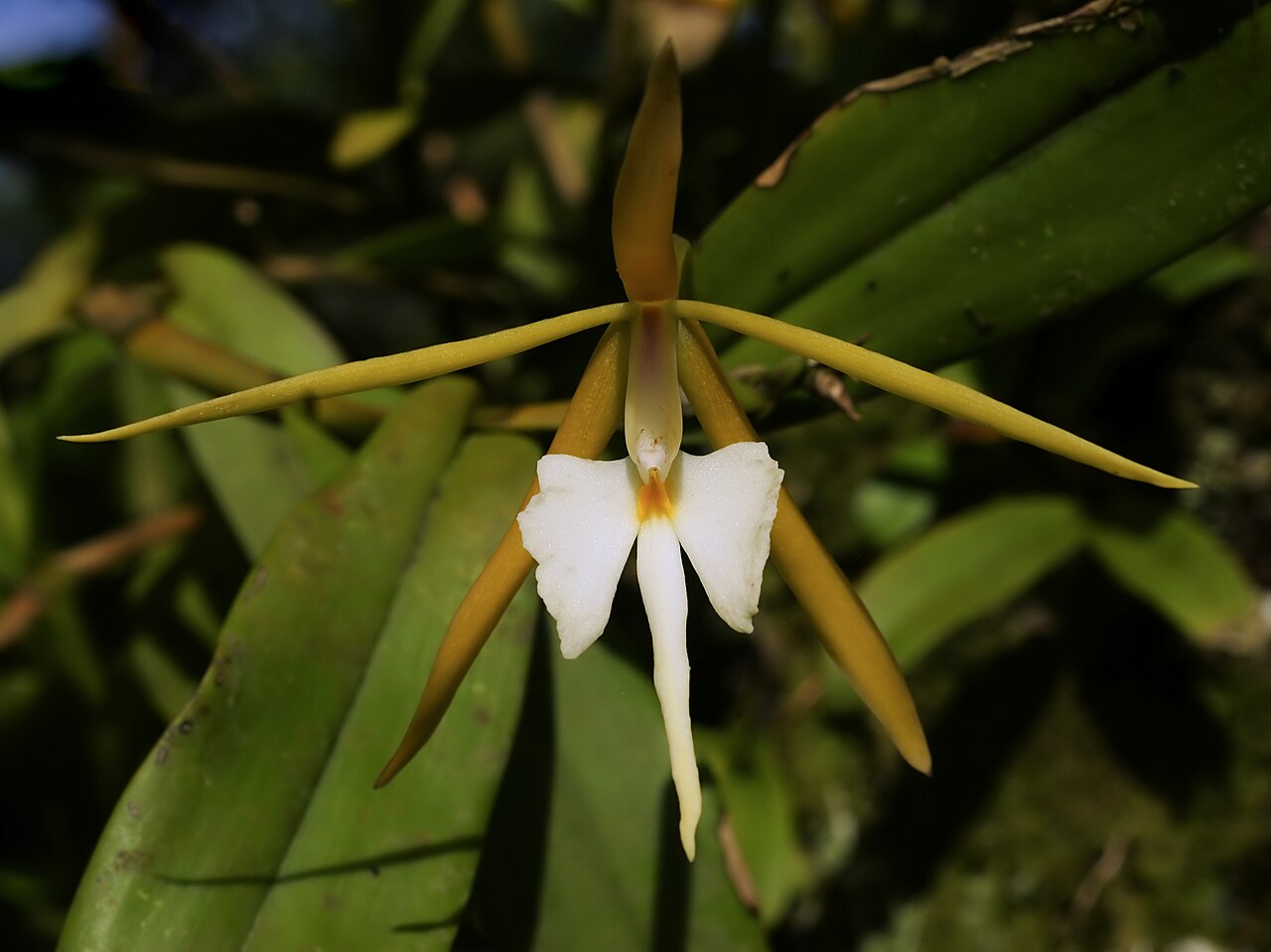
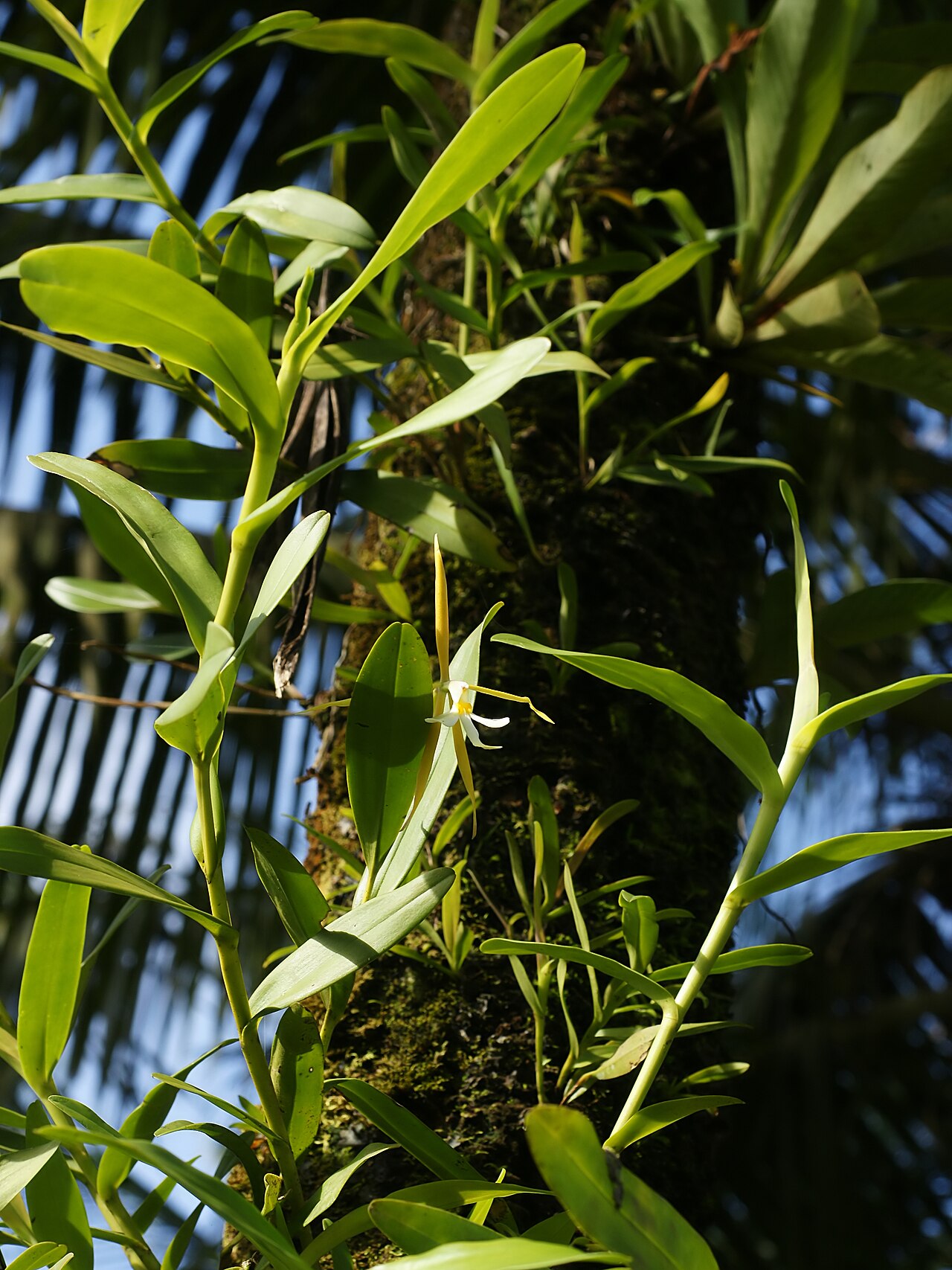
Epidendrum nocturnum, the Night-scented Orchid (also called nocturnal epidendrum or night-scented epidendrum), is a native epiphytic orchid of South Florida, Puerto Rico and the American tropics. In the wild it grows on the trunks and branches of trees in swamps, cypress sloughs and humid hammocks, and occasionally on rocks.
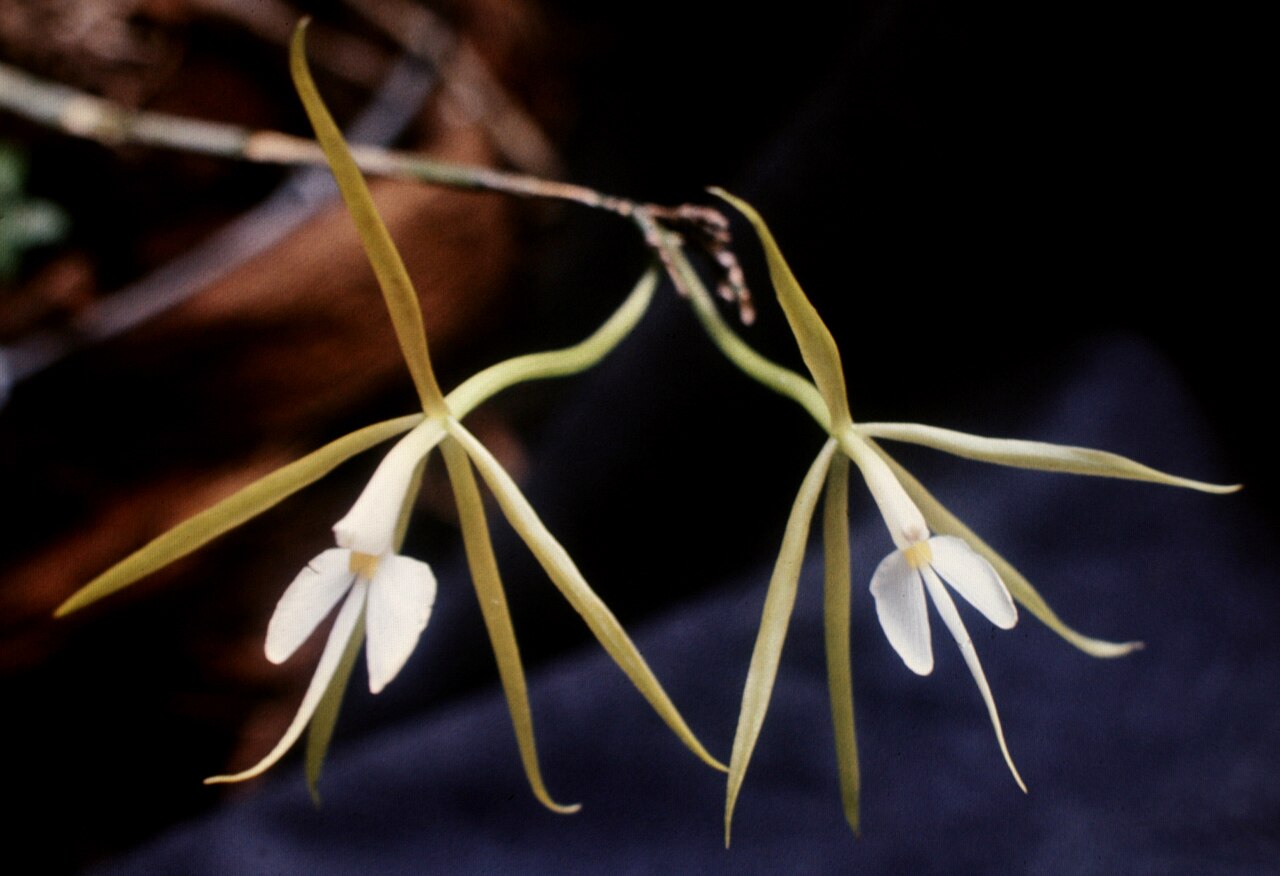
It has upright, reed-like stems with two rows of leathery leaves and produces large, spidery flowers with long, narrow, yellowish-green sepals and petals and a striking white, three-lobed lip. The flowers are strongly fragrant at night, a scent that in other orchids attracts sphinx moths, although this species usually pollinates itself.
It is the type species of Epidendrum, one of the largest orchid genera, and it is a popular, easy orchid for collectors. In Florida it is protected by state law. This guide covers how to recognize it, where it grows, how to grow nursery-propagated plants outdoors in zones 10 to 11 or indoors, and why wild plants must never be collected.
Identification
Night-scented orchid is an epiphyte with upright, leafy, cane-like stems and one or a few large, spidery, greenish and white flowers at the stem tips.
Stems & Leaves
The stems are slender, upright to arching and cane-like, usually 8 inches to 2 feet tall, and grow in clumps. They carry two rows of alternate, leathery, oblong to elliptic leaves 2 to 6 inches long. The plant has no pseudobulbs, unlike many other epiphytic orchids.
Flowers
Flowers appear one or a few at a time from the stem tips, mainly from summer to fall, with scattered flowers at other times. Each flower is 3 to 5 inches across, with long, very narrow sepals and petals that are pale yellow-green to tan, and a white lip with two spreading side lobes and a long, slender middle lobe. They are fragrant at night, with a sweet scent.
Fruit
The fruit is a ribbed, green capsule 1 to 3 inches long that splits to release thousands of dust-like seeds. Because the flowers often pollinate themselves, many flowers set fruit.
Look-alikes
Other native Florida orchids differ clearly. Greenfly Orchid has much smaller, green flowers in clusters. Florida Butterfly Orchid and Clamshell Orchid grow from pseudobulbs. Fringed Star Orchid has a similar white lip but with fringed side lobes.
Quick Facts
| Scientific Name | Epidendrum nocturnum Jacq. |
| Family | Orchidaceae (orchid family) |
| Plant Type | Epiphytic orchid (perennial) |
| Mature Height | 8 in–2 ft |
| Mature Spread | 6–18 in clumps |
| Growth Rate | Moderate |
| Sun Exposure | Bright, filtered light |
| Water Needs | Moderate; high humidity, roots should dry between waterings |
| Soil Type | Epiphytic: bark, tree trunks or coarse orchid mix |
| Soil pH | Slightly acidic |
| Bloom Time | Mainly summer–fall |
| Flower Color | Yellow-green sepals and petals; white lip |
| Fall Color | None (evergreen) |
| Fruit | Ribbed capsule with dust-like seeds |
| Deer Resistant | Yes (epiphytic) |
| USDA Hardiness Zones | 10–11 (houseplant elsewhere) |
Native Range
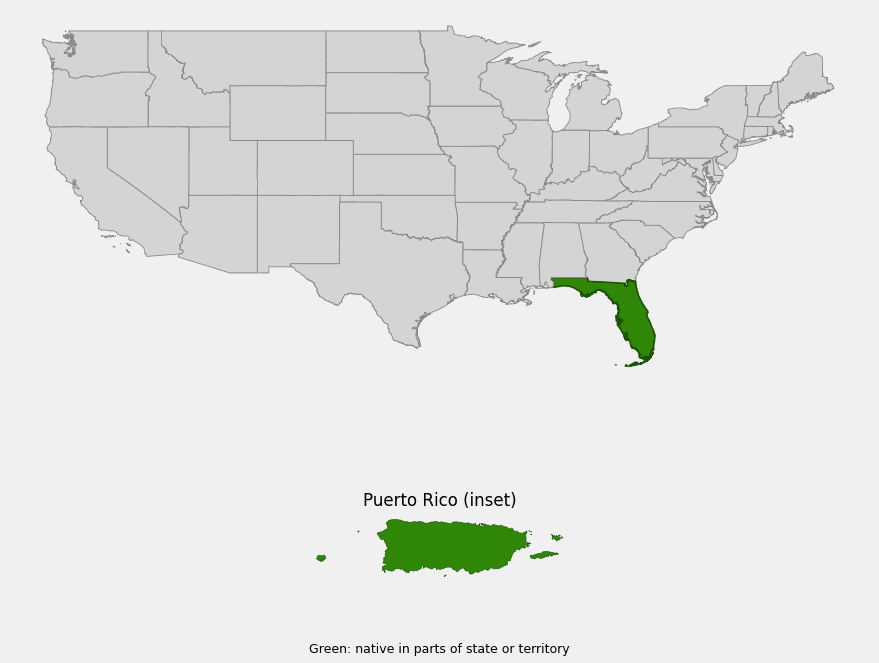
Night-scented orchid is native to South Florida and Puerto Rico in the United States. USDA PLANTS lists it in both. Beyond the U.S., it ranges through the Bahamas and the West Indies and from Mexico through Central America to northern South America and Brazil.
In Florida it grows mainly in the southern part of the peninsula, especially in the cypress swamps and strands of Collier County, such as the Fakahatchee Strand, and in nearby swamps and hammocks. Its Florida populations are small and have been reduced by habitat loss, freezes and historical collecting, and it is listed as endangered by the State of Florida.
It grows as an epiphyte on the trunks and branches of trees in shaded, humid swamps, sloughs and hardwood hammocks. In Puerto Rico and the tropics it also grows in moist and wet forests from the lowlands into the mountains.
📋 Regional plant lists featuring Night-scented Orchid: North & South Florida · Puerto Rico
Growing & Care Guide
Night-scented orchid is an easy, rewarding orchid for collectors and is sold by orchid nurseries from laboratory-propagated seedlings. Buy only nursery-propagated plants; it is state-listed in Florida, and collecting wild plants is illegal and harms small native populations. Outdoors it can be mounted on trees in frost-free South Florida and Puerto Rico (zones 10 to 11), and elsewhere it grows well indoors or in a greenhouse.
Light
Give it bright, filtered light, like the dappled shade of a swamp canopy. Indoors, an east or lightly shaded south window works well. Too much direct sun scorches the leaves.
Soil & Water
Mount it on cork or a tree branch, or pot it in a coarse bark mix. Water often in warm weather so the roots stay slightly moist but never soggy, and keep humidity high. Reduce water slightly in winter.
Planting Tips
Outdoors in South Florida, tie it to the trunk of a shade tree such as live oak or pond apple with soft cotton string until its roots attach. Indoors, keep it in a warm spot above about 55°F, with good air movement.
Pruning & Maintenance
Remove only old, shriveled stems. Feed with a dilute orchid fertilizer during active growth. Watch for scale insects.
Propagation
Divide large clumps in spring, keeping several stems per division. Commercial plants are grown from seed in the laboratory.
Landscape Uses
- Houseplants and greenhouses: easy orchid with fragrant night-blooming flowers
- South Florida landscapes: mounted on shade trees in frost-free gardens
- Moon and night gardens: sweet fragrance after dark
- Conservation and education: native orchid displays and reintroduction
Wildlife & Ecological Value
Night-scented orchid is part of the remarkable epiphyte communities of South Florida swamps and Caribbean forests.
For Pollinators
Its pale color and night fragrance are classic signs of moth pollination, and sphinx moths may visit, but most flowers self-pollinate, sometimes even before they open.
For Birds
Epiphyte-covered branches provide foraging sites for warblers, gnatcatchers and other insect-eating birds.
For Mammals
As an epiphyte high on trees, it is rarely eaten by mammals.
Ecosystem Role
Along with bromeliads, ferns and other orchids, it adds to the structural complexity of swamp forests, providing microhabitats for insects, spiders and tree frogs.
Cultural & Historical Uses
Nikolaus Joseph von Jacquin, an Austrian-Dutch botanist who explored the Caribbean, described Epidendrum nocturnum in 1760. It is the type species of the genus Epidendrum, meaning that it anchors the scientific name of a genus with more than a thousand species.
The genus name Epidendrum means “upon trees,” describing the epiphytic way of life of most of its species.
South Florida’s Fakahatchee Strand Preserve State Park is famous for its native orchids, which drew collectors for decades. Today all native orchids there are protected, and night-scented orchid is one of the species that visitors may see on swamp walks.
Frequently Asked Questions
Is night-scented orchid native to Florida?
Yes. It is native to South Florida and Puerto Rico, as well as the Caribbean and tropical America. It is listed as endangered by the State of Florida.
Why is it called night-scented orchid?
Its flowers release a sweet fragrance at night, a trait typical of moth-pollinated flowers.
Can I grow night-scented orchid as a houseplant?
Yes. It is an easy orchid indoors in bright, filtered light with regular watering and good humidity. Buy only nursery-propagated plants.
When does night-scented orchid bloom?
Mainly from summer to fall, with scattered flowers at other times.
Where can I see night-scented orchid in the wild?
In South Florida swamps such as the Fakahatchee Strand, and in moist forests in Puerto Rico. Never remove plants.

Looking for a nursery that carries Night-scented Orchid?
Browse our native plant nursery directory: Florida

