
Fringed Star Orchid (Epidendrum ciliare)
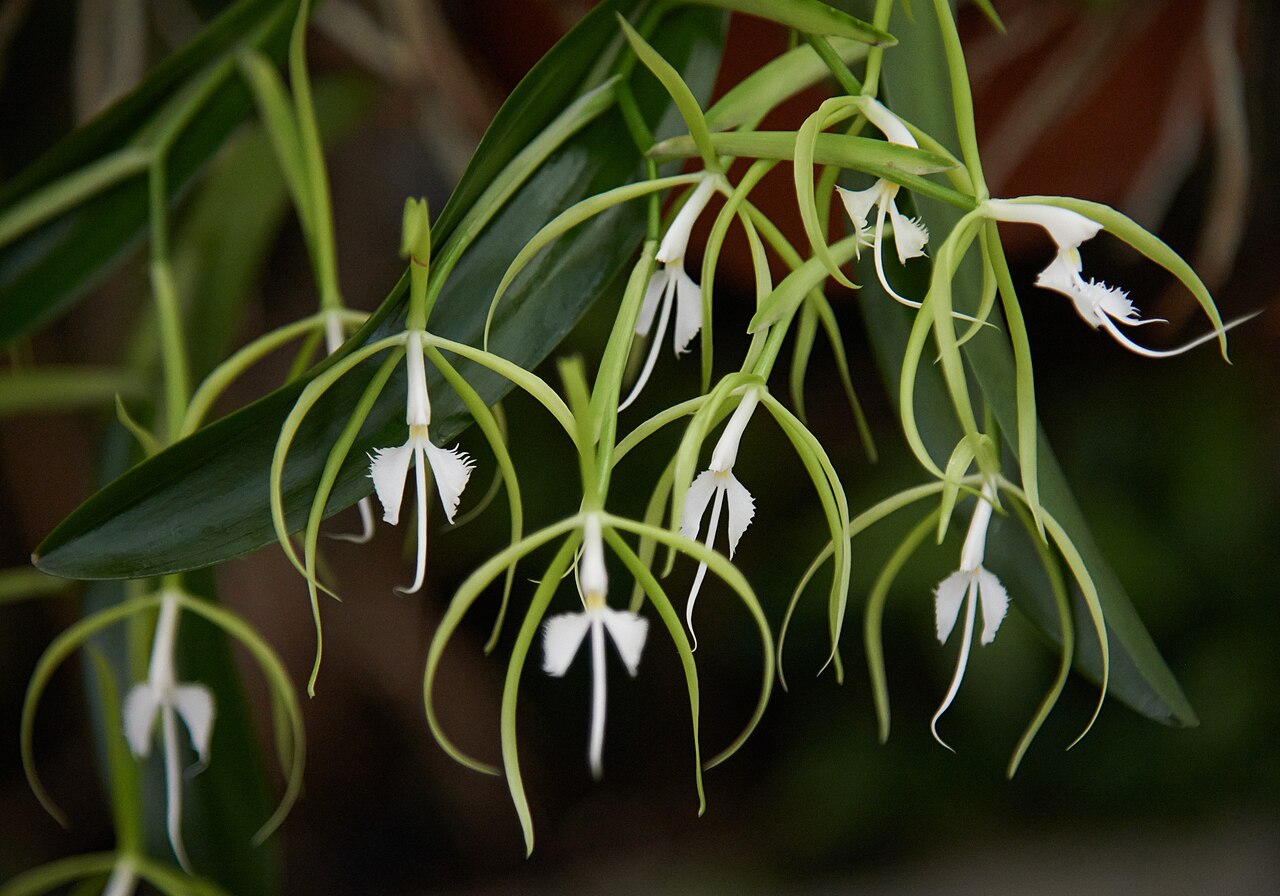
Epidendrum ciliare, the Fringed Star Orchid, is a large-flowered epiphytic orchid of the American tropics. Each flower is a pale green star of long, narrow sepals and petals, 4 to 5 inches across, set off by a pure white lip whose side lobes are cut into a fine, ragged fringe. The species name ciliare means “fringed,” as in eyelashes, and in the orchid trade it is also called the eyelash orchid or chicken-feather orchid.
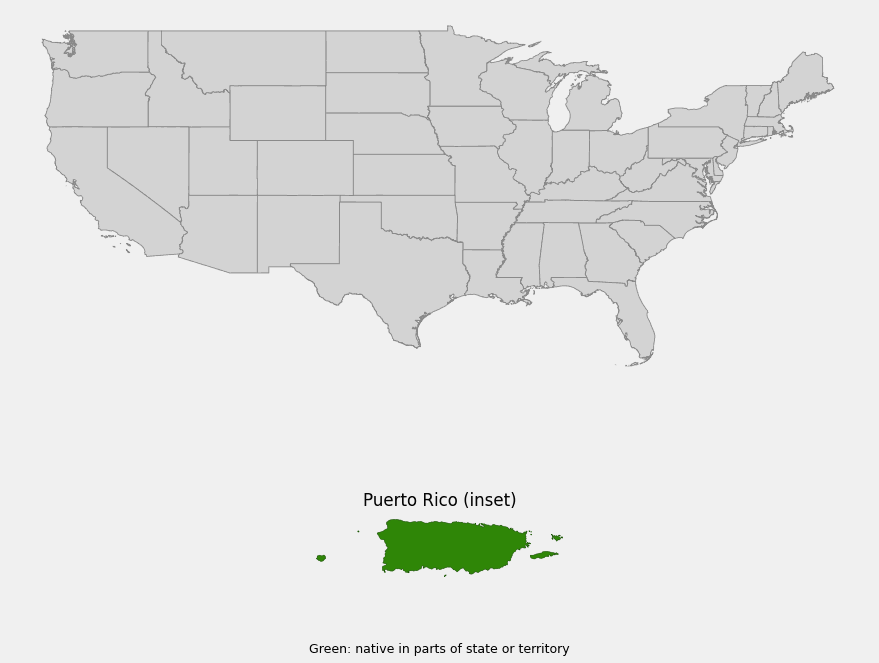
USDA PLANTS lists the fringed star orchid as native in Puerto Rico and the U.S. Virgin Islands. It does not grow wild in Florida or elsewhere in the 50 states. In Puerto Rico the Institute for Regional Conservation (IRC) records it in Maricao, Susúa and Río Abajo state forests, at middle elevations of about 500 to 1,000 m. The Smithsonian’s Flora of the West Indies also lists it from Vieques. In Puerto Rico it has been observed being pollinated by a large night-flying moth, the tetrio sphinx.
This guide covers how to recognize the fringed star orchid, where it grows in Puerto Rico and the wider tropics, how it is pollinated, and how to grow nursery-raised plants on trees or in baskets. Like all orchids, it is listed in CITES Appendix II, so buy only nursery-propagated plants and never collect it from the wild.
Identification
Epidendrum is one of the largest orchid genera in the Americas, and most of its species have small flowers. The fringed star orchid stands out for its large, spidery, green-and-white flowers and its deeply fringed lip.
Pseudobulbs & Leaves
The plant grows from a creeping rhizome that produces a cluster of upright, cylindrical to slightly flattened pseudobulbs (thickened stems), each up to about 8 inches (20 cm) long and grooved lengthwise. According to the Spanish Wikipedia, each pseudobulb carries a single stiff, leathery leaf up to about 9 inches (23 cm) long and almost 2 inches (4.5 cm) wide, with a rounded tip. Over time a plant forms a dense clump of pseudobulbs and leaves.
Flowers
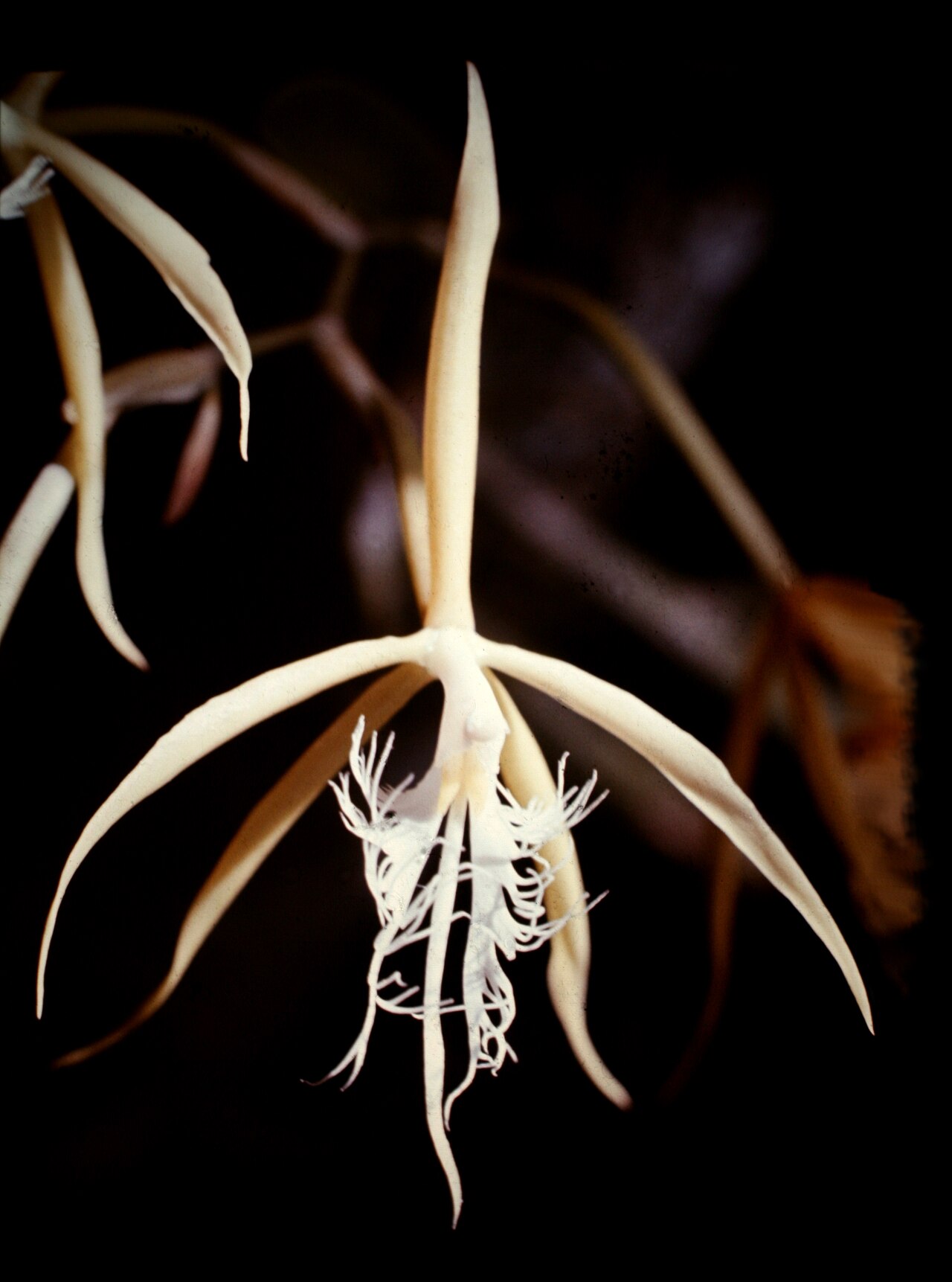
The flower spike rises from the top of a pseudobulb and carries 4 to 6 large flowers on a stalk about 6 inches long, wrapped at the base in papery bracts. The sepals and petals are very narrow, pointed and green to yellowish green, the sepals up to about 2⅓ inches (60 mm) long. The white lip is three-lobed: two curved side lobes deeply and irregularly fringed on their outer edges, and a long, thread-like middle lobe up to about 1⅓ inches (35 mm) long, with two small yellowish calli at its base. The flowers are fragrant at night.
Fruit & Seeds
Pollinated flowers ripen into a ribbed capsule containing thousands of dust-like seeds, which drift on the wind. Like all orchid seeds, they need a compatible fungus to germinate in the wild.
Similar Species
Other night-fragrant white-and-green orchids in Puerto Rico have smaller flowers and lack the deeply fringed lip. In cultivation the fringed star orchid is often confused with its hybrids, and with plants once sold as Epidendrum cuspidatum or Epidendrum viscidum, names now treated as synonyms. It has also been placed in the genera Auliza, Encyclia and Coilostylis.
Quick Facts
| Scientific Name | Epidendrum ciliare L. (syn. Auliza ciliaris, Coilostylis ciliaris, Epidendrum cuspidatum) |
| Family | Orchidaceae (orchid family) |
| Plant Type | Epiphytic or rock-dwelling orchid; evergreen perennial with pseudobulbs |
| Mature Height | 8–16 in (pseudobulb and leaf), flower spike above |
| Mature Spread | Forms clumps 1–3 ft across over time |
| Growth Rate | Slow to moderate |
| Sun Exposure | Bright filtered light to partial sun |
| Water Needs | Moderate; water freely in the growing season, less after growth matures |
| Soil Type | None; grows on bark or rock; in cultivation, mounted or in coarse bark mix |
| Soil pH | Not applicable (epiphyte) |
| Bloom Time | Varies by region; recorded April–December in Nicaragua |
| Flower Color | Pale green to yellowish-green sepals and petals; white fringed lip |
| Fall Color | None; evergreen |
| Fruit | Ribbed capsule with dust-like seeds |
| Deer Resistant | Not applicable in Puerto Rico; grows on trees out of reach of browsers |
| USDA Hardiness Zones | 10b–13 (frost-tender) |
Native Range
The fringed star orchid has a wide tropical American range. Wikipedia describes it from Mexico through Central America and the Caribbean to northern and western South America, and the Spanish Wikipedia extends it to Peru, Bolivia and Brazil. The Smithsonian’s Flora of the West Indies lists it as native in Puerto Rico (including Vieques), the U.S. and British Virgin Islands, and many of the Lesser Antilles. Within the area PlantNative covers, USDA PLANTS lists it as native in Puerto Rico and the U.S. Virgin Islands, and nowhere in the 50 states.
In Puerto Rico, IRC records the fringed star orchid in three conservation areas: Maricao State Forest and Susúa State Forest on the serpentine hills of the west, and Río Abajo State Forest in the northern karst, among the haystack hills (mogotes). IRC places it at middle elevations of 500 to 1,000 m (about 1,600 to 3,300 ft). There it grows on tree trunks and branches, and sometimes on rocks, in forests with a marked dry season.
Elsewhere in its range it is a plant of deciduous and semi-deciduous forests. In Nicaragua the Spanish Wikipedia reports it at 500 to 1,350 m, and in Costa Rica and Panama in lower montane and semi-deciduous forests at 1,200 to 1,500 m.
📋 Regional plant lists featuring Fringed Star Orchid: Puerto Rico
Growing & Care Guide
The fringed star orchid is one of the easier tropical orchids to grow and a parent of many hybrids. In Puerto Rico it can be grown outdoors, mounted on a tree, and on the mainland it does well in a bright, warm greenhouse or a sheltered spot in frost-free South Florida. All orchids are listed in CITES Appendix II, which regulates international trade, and wild populations in Puerto Rico’s state forests are protected. Buy only nursery-propagated plants and never collect them from the wild.
Light
Give it bright, filtered light, such as the dappled shade of an open tree canopy or 50 to 70 percent shade cloth. A few hours of gentle morning sun are fine. Too much shade gives soft, dark leaves and few flowers, while harsh midday sun can scorch the leaves.
Soil & Water
Grow it mounted on bark or a tree branch, or in a basket or pot of coarse bark or similar fast-draining mix. Water freely and keep humidity high while new growths are developing, letting the roots dry slightly between waterings. Once the new pseudobulbs have matured, give it less water for a few weeks, which mimics the dry season of its native forests and helps it flower.
Planting Tips
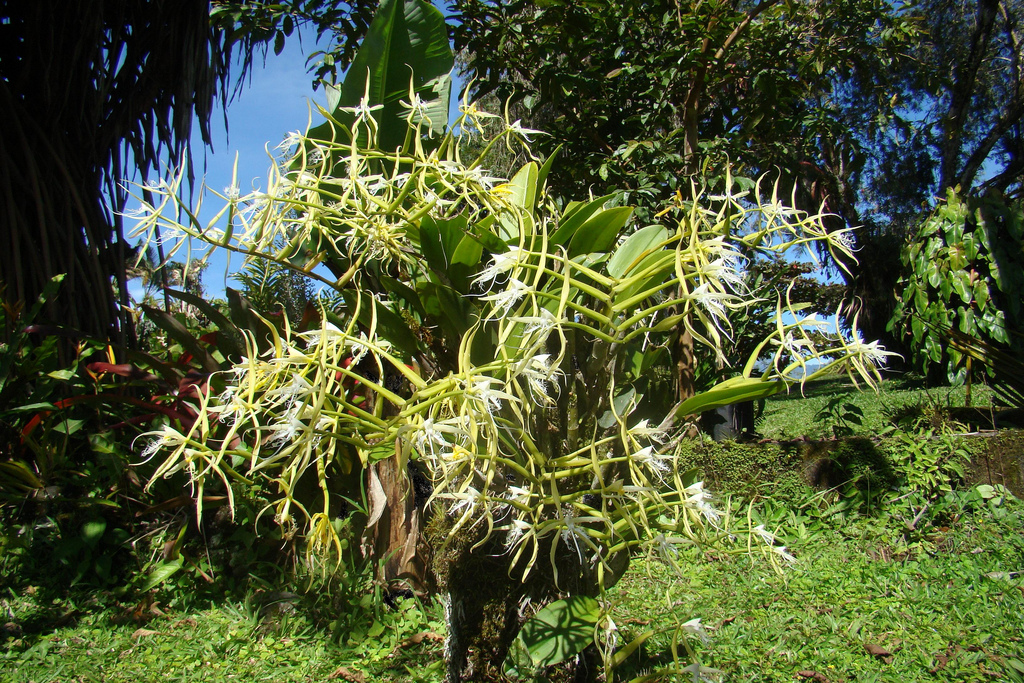
To mount it on a tree in Puerto Rico, choose a rough-barked tree that lets light through, such as a calabash or a citrus. Tie the plant firmly against the bark with cotton string or fishing line so the rhizome sits on the surface, and the roots will grip the bark within a few months. Avoid trees with peeling or flaking bark.
Pruning & Maintenance
Remove spent flower spikes and any dead leaves. Old, leafless pseudobulbs still store water and food, so leave them unless they are shriveled and brown. Feed lightly with a dilute orchid fertilizer during active growth. Repot or remount only when the plant outgrows its mount, just as new roots begin to grow.
Propagation
Large clumps can be divided into pieces of at least three or four pseudobulbs when new roots appear. Growing orchids from seed requires sterile laboratory culture and is best left to specialist nurseries.
Landscape Uses
- Tree-mounted gardens: grown on garden trees in Puerto Rico, as it grows in the wild
- Moth gardens: night-fragrant flowers for evening gardens
- Orchid collections: a classic, easy species and a parent of many hybrids
- Greenhouse and windowsill: for growers outside the tropics
- Native epiphyte plantings: alongside other native orchids and bromeliads on trees
Wildlife & Ecological Value
The fringed star orchid is a classic example of moth pollination, and in Puerto Rico it is part of a chain of species linked by one large sphinx moth.
For Pollinators
The white, star-shaped flowers are most fragrant at night, the typical signals of a flower adapted to moths. Wikipedia notes that the tetrio sphinx moth (Pseudosphinx tetrio) has been observed pollinating it in Puerto Rico. This large moth’s black-and-yellow-striped caterpillars, the frangipani hornworm, feed on Frangipani and related plants.
For Birds
The orchid has no direct food value for birds, but the tree canopies where it grows give birds shelter and foraging sites.
For Mammals
The fringed star orchid has no known importance to Puerto Rico’s mammals, which are mostly bats.
Ecosystem Role
As an epiphyte, it uses trees only for support and takes water and nutrients from rain, mist and debris that collect around its roots. Its seeds depend on soil and bark fungi to germinate. Together with bromeliads, ferns and other orchids, it is part of the community of plants that live on trees in Puerto Rico’s forests.
Cultural & Historical Uses
Carl Linnaeus described Epidendrum ciliare in 1759 in the tenth edition of Systema Naturae, making it one of the first tropical American orchids known to European science. The genus name Epidendrum means “upon a tree,” and Linnaeus first used it for nearly all epiphytic orchids.
The fringed star orchid was soon a favorite in European hothouses. It was illustrated in Curtis’s Botanical Magazine around 1799 and in The Botanical Register in 1824, and Pierre-Joseph Redouté painted it for Les Liliacées. Botanists have moved it among several genera, including Auliza, Encyclia and Coilostylis, but Plants of the World Online keeps it in Epidendrum.
Wikipedia reports that different plants have been found with 40, 80 and 160 chromosomes, an unusual range for a single species. Plants also vary considerably in size and flower form across the species’ wide range. Today it remains a popular orchid with hobby growers, valued for its large, fragrant flowers and its ease of culture.
Frequently Asked Questions
Is the fringed star orchid native to Puerto Rico?
Yes. USDA PLANTS lists Epidendrum ciliare as native in Puerto Rico and the U.S. Virgin Islands, and IRC records it in Maricao, Susúa and Río Abajo state forests.
Is it native to Florida?
No. USDA PLANTS does not list it from Florida, although it is often grown there in gardens and greenhouses.
Why is it called the fringed star orchid?
The narrow sepals and petals form a star, and the side lobes of the white lip are cut into a fine fringe. The species name ciliare means “fringed,” like eyelashes.
When is it fragrant?
The flowers are fragrant mainly at night, when the sphinx moths that pollinate them are flying.
Can I collect it from the forest?
No. Wild orchids in Puerto Rico’s state forests are protected, and all orchids are covered by CITES Appendix II. Buy plants raised in nurseries, which also adapt much better to garden conditions.

Looking for a nursery that carries Fringed Star Orchid?
Our nursery directory does not yet include Puerto Rico. Browse the native plant nursery directory by state: Alabama–Arkansas · California · Colorado–Hawaii · Idaho–Kansas · Kentucky–Montana · Nebraska–Oklahoma · Oregon · Pennsylvania–Virginia · Washington · West Virginia–Wyoming