
Dancing-lady Orchid (Tolumnia variegata)
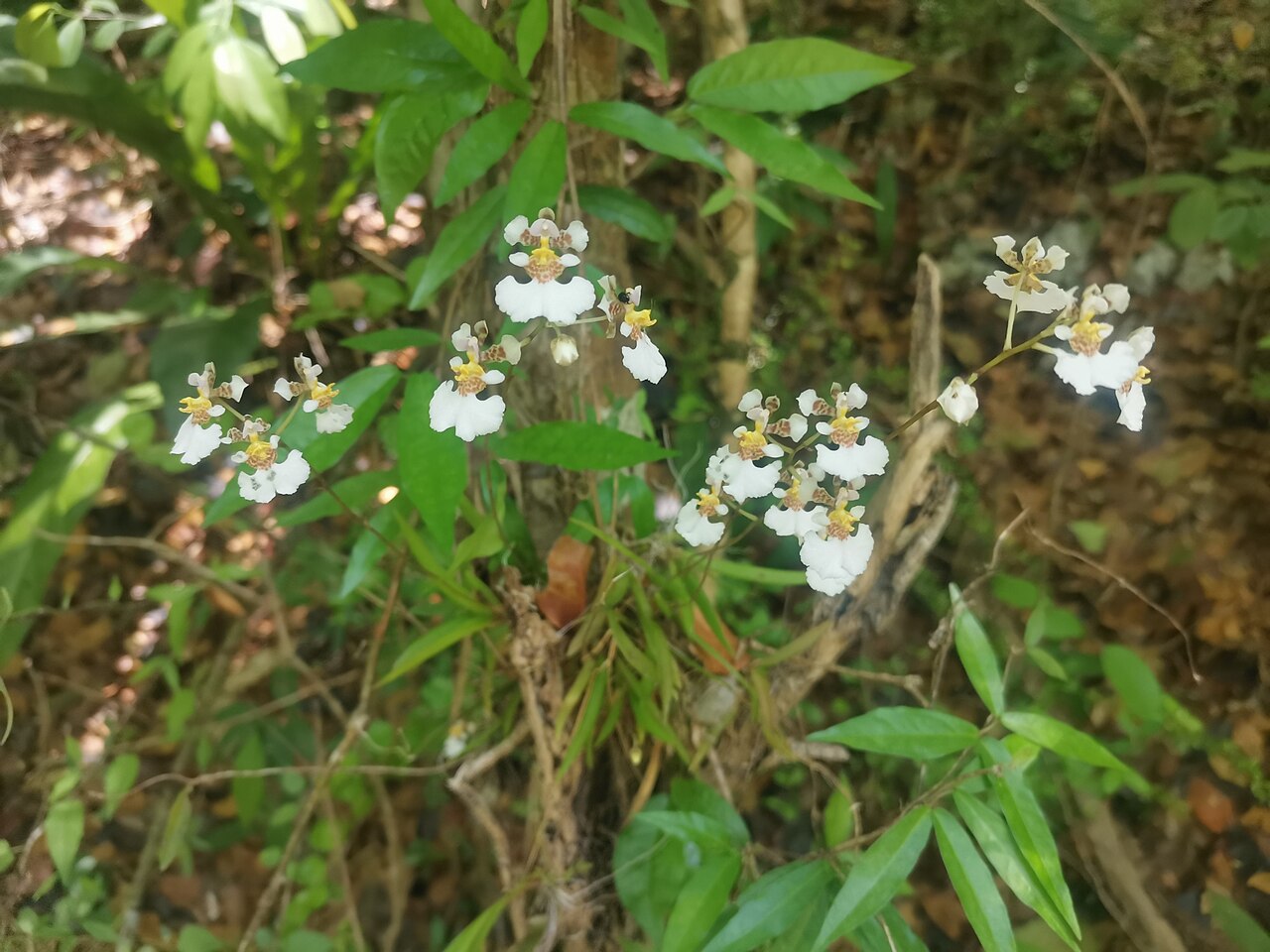
Tolumnia variegata, known as the Dancing-lady Orchid or harlequin dancing-lady orchid, and in Puerto Rico as angelitos or angelitos del cafetal (“little angels of the coffee grove”), is a small epiphytic orchid that perches on the twigs of trees and shrubs. From a tiny fan of stiff leaves it sends up wiry stems carrying a dozen or more white flowers, each with a broad, ruffled lip that looks like the skirt of a dancer. Many older books and nurseries call it Oncidium variegatum.
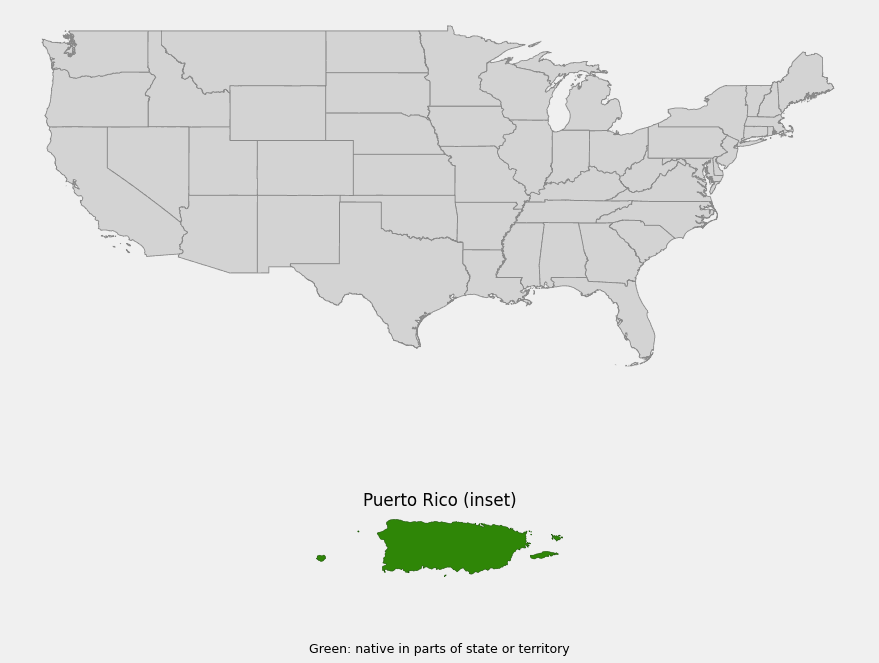
This orchid is a Caribbean native. The Institute for Regional Conservation (IRC) describes it as endemic to the Greater Antilles, from Cuba and Hispaniola to Puerto Rico, Vieques and the Virgin Islands, and Wikipedia calls it the most widespread member of its genus. USDA PLANTS lists it as native in Puerto Rico and the U.S. Virgin Islands. In Puerto Rico it grows in both dry and moist forests, from Guánica and the coast to the northern karst and the western mountains, and it is famous for colonizing the twigs of coffee, citrus and calabash trees.
This guide covers how to recognize angelitos, where they grow in Puerto Rico, and how to grow them. Like all orchids it is listed on CITES Appendix II, which regulates international trade. Enjoy it in the wild, and grow only nursery-propagated plants; never strip orchids from trees in forests or on other people’s land.
Identification
The dancing-lady orchid is small enough to overlook when not in bloom, but its sprays of white “dancing” flowers are unmistakable. The genus Tolumnia is known for its fans of short, stiff, folded leaves, which set it apart from the larger Oncidium orchids it was once included in.
Leaves & Growth Habit
Plants form small fans of a few narrow, stiff, folded leaves arranged in two ranks, each about 4¾ inches (12 cm) long and ⅝ inch (1.5 cm) wide according to Wikipedia, with pointed tips. The plants are stoloniferous: they creep along twigs and produce new fans along the way, so a single plant can wrap around a branch in a series of little tufts. The thin roots cling tightly to the bark.
Flower Stems
The slender, wiry flower stem (inflorescence) arises from the base of the leaf fan and grows up to about 16 inches (40 cm) long, branched or unbranched, carrying up to 30 flowers that open in succession, so a plant can stay in bloom for weeks.
Flowers
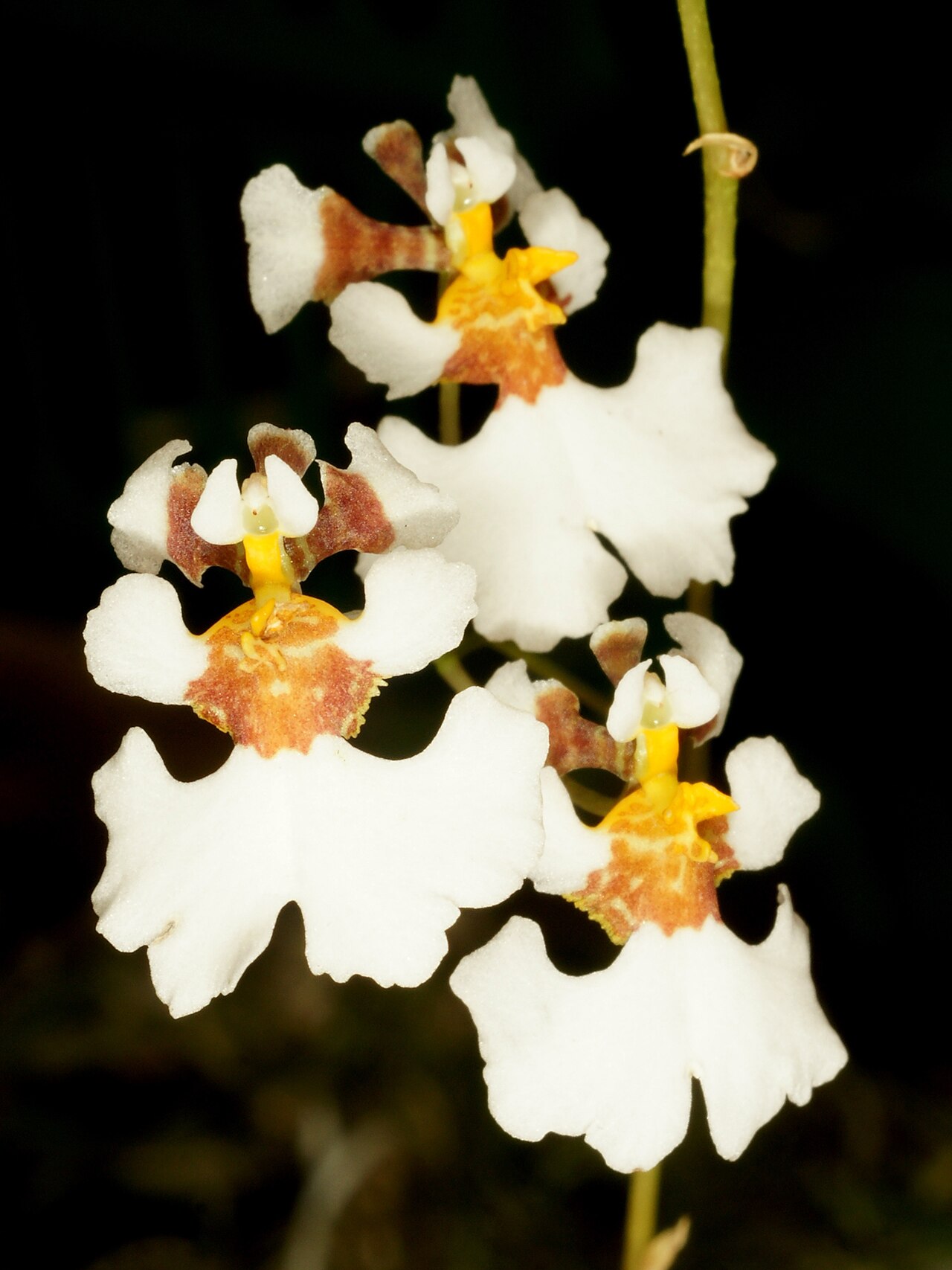
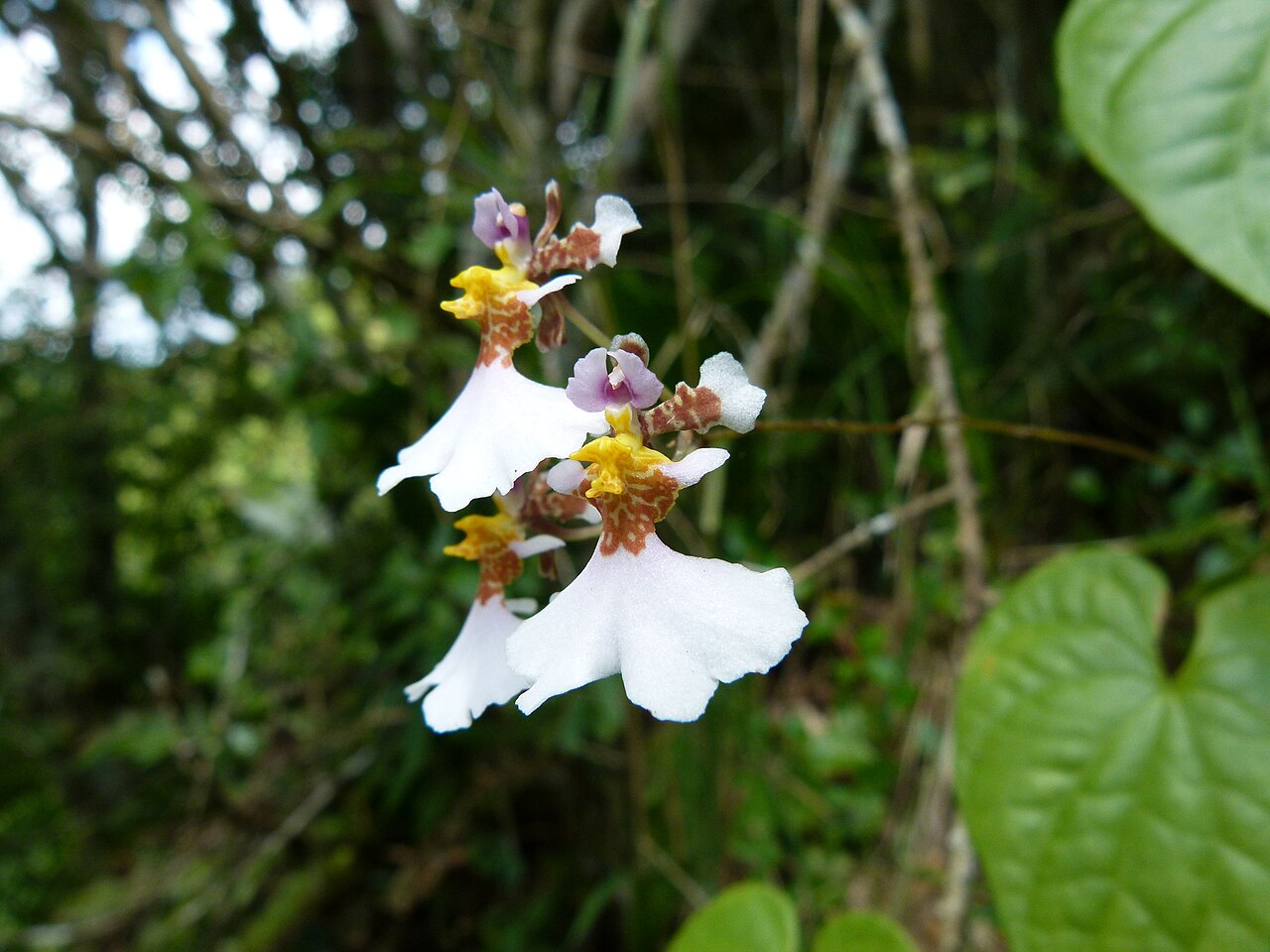
The flowers are small and highly variable in size, shape and color. Most are white, sometimes flushed pink or lilac, with a yellow column and crest and brown to purple spots or bands on the sepals, petals and base of the lip. The large, ruffled, two-lobed lip forms the “skirt,” while the small upper petals and column form the “arms” and “head” of the dancing lady. Wikipedia gives the flowering season as spring and fall.
Fruit & Seeds
Pollinated flowers form small, ribbed capsules that split when ripe to release thousands of dust-like seeds. The seeds drift on air currents onto twigs, where they need a partner fungus to germinate, as with all orchids.
Quick Facts
| Scientific Name | Tolumnia variegata (Sw.) Braem; USDA common name: harlequin dancing-lady orchid |
| Family | Orchidaceae (orchid family) |
| Plant Type | Small evergreen epiphytic orchid |
| Mature Height | 2–5 in leaf fans; flower stems to 16 in |
| Mature Spread | Creeps along twigs, forming clusters of fans |
| Growth Rate | Slow to moderate |
| Sun Exposure | Bright filtered light to partial sun |
| Water Needs | Moderate; dries quickly between rains or waterings |
| Soil Type | Epiphytic; on twigs, small branches or a bare cork or wood mount |
| Soil pH | Not applicable (epiphyte) |
| Bloom Time | Spring and fall |
| Flower Color | White, sometimes pink or lilac, with yellow and brown to purple markings |
| Fall Color | None; evergreen |
| Fruit | Small capsule with dust-like seeds |
| Deer Resistant | Yes; grows on twigs out of reach |
| USDA Hardiness Zones | 10b–12; frost-tender |
Native Range
Dancing-lady orchid is a Caribbean endemic. IRC describes its native range as the Greater Antilles, including Cuba, Hispaniola, Puerto Rico, Vieques and the Virgin Islands, and Wikipedia lists it from the Cayman Islands (Grand Cayman), Cuba, the Dominican Republic, Haiti, Puerto Rico, and the British and U.S. Virgin Islands. Within the area PlantNative covers, USDA PLANTS lists it as native in Puerto Rico and the U.S. Virgin Islands. It does not grow wild in Florida or any other state.
In Puerto Rico IRC records angelitos in seven conservation areas that span the island’s range of habitats: Guánica State Forest in the southern dry forest; the coastal reserves of Piñones and Punta Guaniquilla; Cambalache and Río Abajo state forests in the northern karst, where it also grows on limestone; and Maricao and Susúa state forests in the western uplands. Wikipedia notes that it grows in both moist and dry forests at all but the highest elevations.
It is just as at home in farmed landscapes. Wikipedia lists its hosts as the branches of trees and shrubs including calabash, guava, citrus and coffee, and the Spanish name angelitos del cafetal recalls how often it appears on the twigs of shade-grown coffee. Old coffee farms and dooryard fruit trees across Puerto Rico can still host thriving colonies.
📋 Regional plant lists featuring Dancing-lady Orchid: Puerto Rico
Growing & Care Guide
Angelitos are rewarding orchids for Puerto Rico gardeners, especially when mounted on a garden tree where they can grow as they do in the wild. They are grown and sold by orchid nurseries and orchid societies on the island. Buy nursery-propagated plants only: wild orchids are slow to recover, and collecting them from forests is harmful and, in protected areas, illegal.
Light
Give it bright, filtered light, such as the outer branches of a tree with a light canopy. In the wild it often grows on small twigs in the open parts of a tree, so it tolerates more light than many orchids. Too little light means few flowers; harsh full sun can scorch the leaves.
Soil & Water
Do not pot it in soil or a dense medium. Tolumnias grow best mounted, with their roots exposed to air so they dry quickly after watering; constantly wet roots rot. Outdoors in Puerto Rico rain and dew are often enough; in dry spells mist or water mounted plants in the morning so they dry by evening.
Planting Tips
Mount plants on a twig or small branch of a garden tree (citrus, calabash and coffee are classic hosts), or on a piece of cork or a twig in a shade house. Hold the plant in place with soft string or fishing line until the roots attach, which usually takes a few months. Thin branches with good air flow are better than thick, mossy trunks.
Pruning & Maintenance
Little care is needed. After a flower stem finishes, leave it for a while: some stems produce new flowers or small plantlets (keikis) along their length. Cut it off once it browns. Feed occasionally with a weak orchid fertilizer during active growth.
Propagation
Remove keikis once they have roots and mount them separately, or divide a large clump into groups of several fans with roots. Orchid seed requires laboratory flasking with sterile media, which is how commercial growers raise new plants.
Landscape Uses
- Tree-mounted gardens: on citrus, calabash, coffee and other garden trees
- Orchid collections: small mounted plants for shade houses
- Shade-grown coffee farms: a traditional companion on coffee twigs
- Pollinator gardens: spring and fall flowers for native bees
- Conservation education: a native orchid that thrives in farmed landscapes
Wildlife & Ecological Value
Dancing-lady orchids are part of the small-epiphyte community on the twigs of Caribbean trees, and their flowers are adapted to attract specialized bees.
For Pollinators
Like many oncidium-type orchids, the flowers offer little or no nectar. Their bright yellow crest and spotted lip are thought to mimic oil- or pollen-rewarding flowers and attract bees, which carry off the pollinia (pollen packets) on their bodies.
For Birds
Small birds forage for insects among the twigs where the orchids grow, but the plants are not a significant food source for birds.
For Mammals
It has no particular value for Puerto Rico’s mammals, most of which are bats.
Ecosystem Role
As an epiphyte it adds to the diversity of the canopy without harming its host, since it takes water and nutrients from rain and debris rather than from the tree. Its ability to colonize farm trees makes it a useful indicator that a coffee farm or orchard still supports native epiphytes.
Cultural & Historical Uses
The Swedish botanist Olof Swartz described this orchid in 1788 as Epidendrum variegatum, from his travels in the West Indies, and later transferred it to Oncidium. For much of the twentieth century it was known as Oncidium variegatum, the name still used in many orchid books. Botanists later split the small, fan-leaved species into the genus Tolumnia, and Guido Braem made the combination Tolumnia variegata. IRC also notes that Britton and Wilson (1924) treated Puerto Rico plants under the name Oncidium leiboldii, now considered a misapplied name.
The Spanish name angelitos (“little angels”) and the English “dancing lady” both describe the same image: a small figure in a wide, flaring skirt. Angelitos del cafetal ties the plant to the coffee farms of Puerto Rico’s mountains, where it often grows on the coffee shrubs and shade trees.
Tolumnias, sometimes still called “equitant oncidiums” for their overlapping leaves, are popular with orchid hobbyists, and Caribbean species, including Tolumnia variegata, have been used to breed colorful hybrids. The wild form remains a favorite of Puerto Rico’s orchid growers because it is native, compact and adapted to the island’s climate.
Frequently Asked Questions
Is the dancing-lady orchid native to Puerto Rico?
Yes. USDA PLANTS lists Tolumnia variegata as native in Puerto Rico and the U.S. Virgin Islands, and IRC describes it as endemic to the Greater Antilles.
What is it called in Spanish?
In Puerto Rico it is called angelitos or angelitos del cafetal (“little angels of the coffee grove”).
Is it the same as Oncidium variegatum?
Yes. Oncidium variegatum is an older name for the same species. Botanists now place the small, fan-leaved “equitant” oncidiums in the genus Tolumnia.
Can I grow it in a pot?
It is best mounted on a twig, branch or cork slab so the roots dry quickly. If you must use a pot, choose a very small clay pot with a coarse, open medium and water only when it is nearly dry.
Is it legal to collect it from trees?
Do not collect it from the wild. Taking plants from state forests and reserves is prohibited, and orchids are covered by CITES rules on international trade. Buy nursery-propagated plants from orchid growers instead.

Looking for a nursery that carries Dancing-lady Orchid?
Our nursery directory does not yet include Puerto Rico. Browse the native plant nursery directory by state: Alabama–Arkansas · California · Colorado–Hawaii · Idaho–Kansas · Kentucky–Montana · Nebraska–Oklahoma · Oregon · Pennsylvania–Virginia · Washington · West Virginia–Wyoming