
Caribbean Heliconia (Heliconia caribaea)
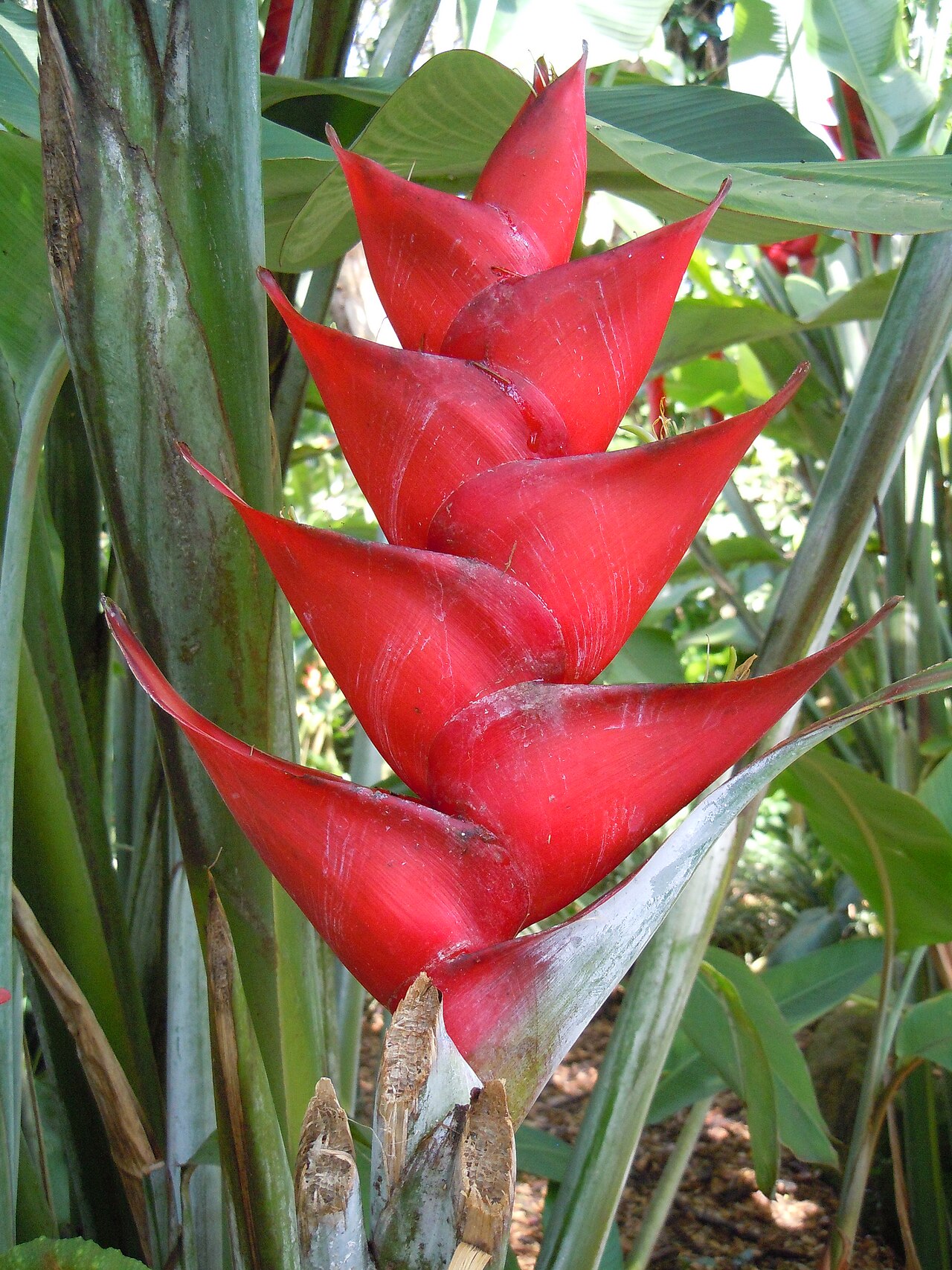
Heliconia caribaea, the Caribbean heliconia (USDA PLANTS: lobsterclaw), is a big, banana-like herb of West Indian rain forests with stiff, upright spikes of glossy, boat-shaped bracts in red, yellow or green-and-gold. In Puerto Rico it is known by country names that compare it to its relatives in the banana family’s order: plátano de indio, guineo cimarrón, guineo silvestre, pámpano and botecitos (“little boats”, after the bracts).
It is one of only a handful of heliconias native to the islands. The Smithsonian Flora of the West Indies records it from Cuba, Jamaica, Hispaniola, Puerto Rico (including Vieques), the Virgin Islands and much of the Lesser Antilles, but nowhere on the mainland, so it is a true West Indian endemic.
For gardeners in the wetter parts of Puerto Rico it is a spectacular native alternative to the many imported heliconias and gingers sold in nurseries, and a dependable hummingbird plant.
Identification
Heliconias look like small banana plants, but the flowers give them away: they are hidden inside tough, brightly colored bracts arranged in two ranks along an upright or hanging stalk. Caribbean heliconia has an upright inflorescence with large, broad bracts stacked closely in a single plane, unlike the hanging “lobster claw” heliconias common in cultivation.
Form & Leaves
A clump-forming herb from underground rhizomes, commonly 8 to 15 feet tall in good sites. Each “stem” is actually a pseudostem made of rolled leaf sheaths, topped by large, paddle-shaped, banana-like leaves on long stalks. Like banana leaves, they often tear along the veins in wind.
Inflorescence
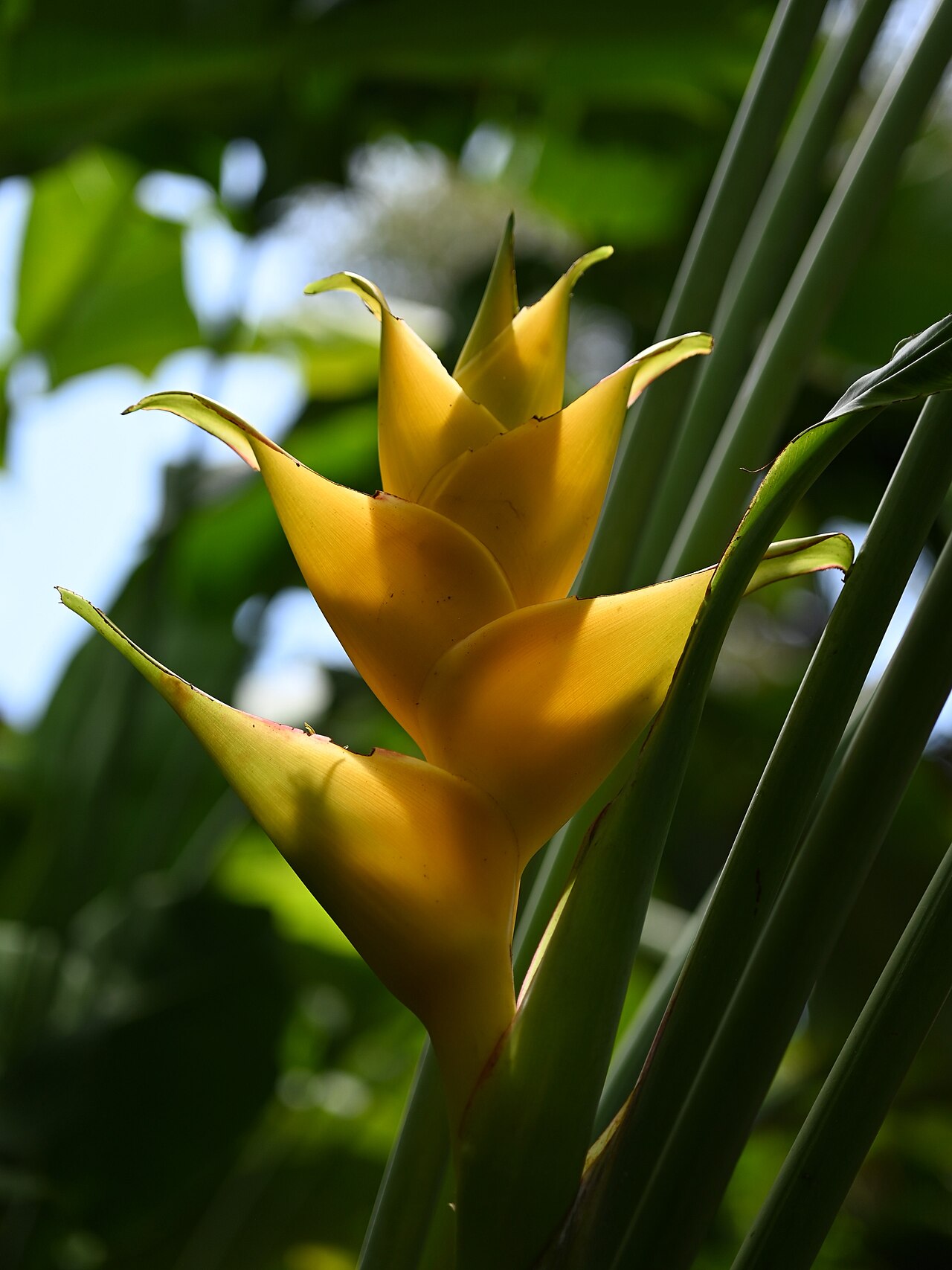
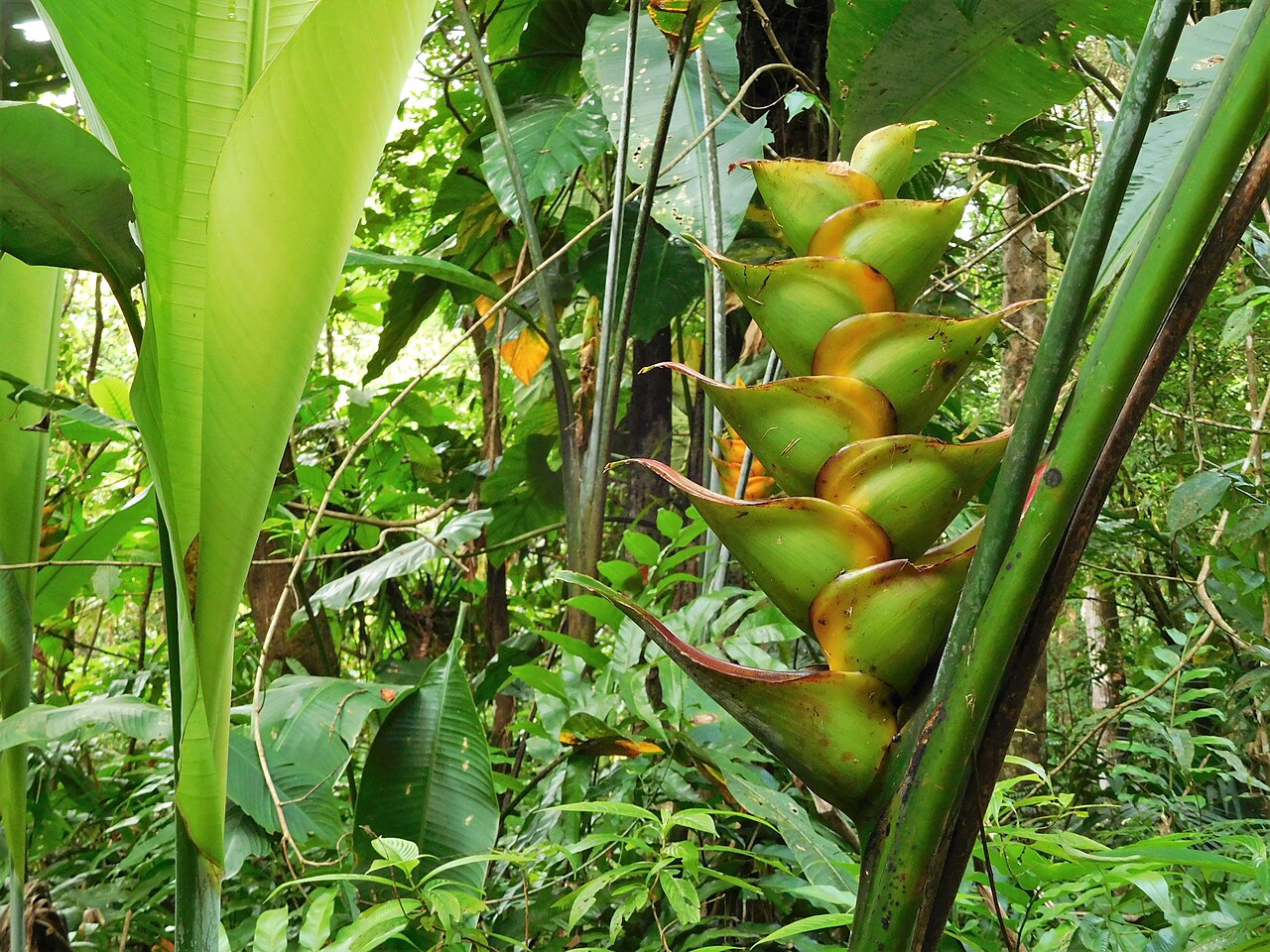
The inflorescence rises from the top of a leafy shoot and stands erect. It carries several broad, boat-shaped bracts arranged alternately in two ranks, each 5 to 8 inches long or more, waxy and stiff. Color varies from deep red to yellow, or red or green with yellow edges, and several color forms are cultivated under selection names.
Flowers
The true flowers are small, tubular and whitish to greenish, emerging a few at a time from within each bract. They are shaped for hummingbird bills.
Fruit
Pollinated flowers ripen into small, bright blue fruits with a few hard seeds, held inside the bracts.
Quick Facts
| Scientific Name | Heliconia caribaea Lam. |
| Family | Heliconiaceae (heliconia family) |
| Plant Type | Large clump-forming herbaceous perennial |
| Mature Height | 8–15 ft |
| Mature Spread | Clumps spread steadily by rhizomes; allow 6–10 ft |
| Growth Rate | Fast in warm, wet conditions |
| Sun Exposure | Part shade to full sun |
| Water Needs | High; needs constant moisture |
| Soil Type | Rich, moist, well-drained loam high in organic matter |
| Soil pH | Slightly acid to neutral |
| Bloom Time | Mainly in the wetter months; scattered through the year |
| Flower Color | Bracts red, yellow, or green and gold; true flowers whitish |
| Fall Color | None; evergreen |
| Fruit | Small blue fruits inside the bracts |
| Deer Resistant | Not applicable in Puerto Rico; no native deer on the island |
| USDA Hardiness Zones | 10–12; frost-sensitive |
Native Range
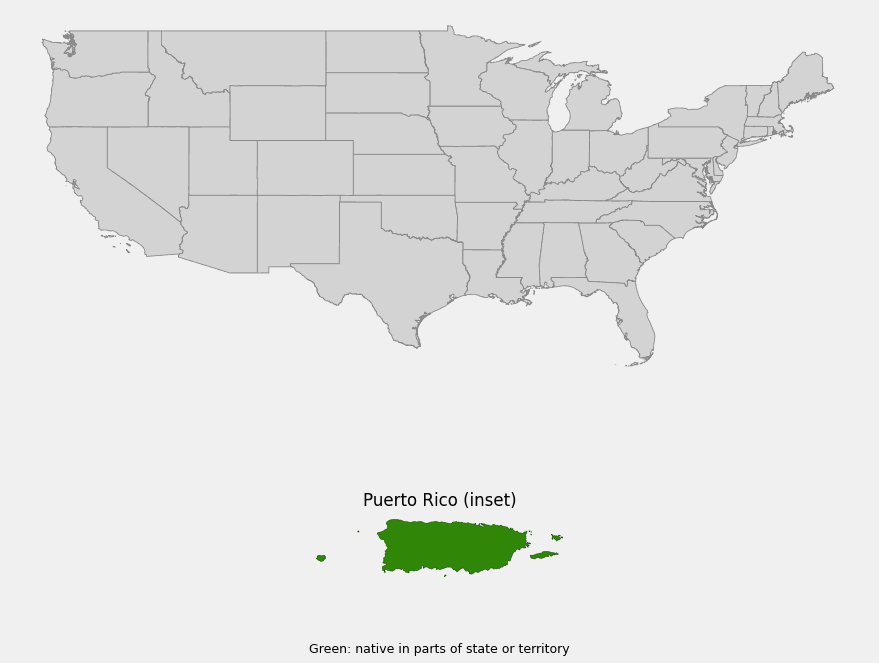
USDA PLANTS lists Caribbean heliconia as native in Puerto Rico and the U.S. Virgin Islands. Its whole natural range lies in the West Indies: the Smithsonian Flora of the West Indies records it from Cuba, Jamaica, Hispaniola, Puerto Rico and Vieques, the Virgin Islands (including Tortola), and the Lesser Antilles from Antigua and Montserrat south through Guadeloupe, Dominica, Martinique, St. Lucia and St. Vincent to Grenada. It is cultivated throughout the tropics.
In nature it is a plant of moist to wet forest: stream banks, ravines, landslide scars, road cuts and forest edges where a gap in the canopy lets in light. In Puerto Rico that places it in the humid mountains and wetter lowlands rather than the dry south coast.
It is not native to Florida or any U.S. state, although it is grown outdoors in frost-free South Florida gardens.
📋 Regional plant lists featuring Caribbean Heliconia: Puerto Rico
Growing & Care Guide
Give Caribbean heliconia what a rain forest gap provides: warmth, steady moisture, rich soil and some shelter from wind, and it grows fast and blooms freely.
Light
Bright, filtered light or morning sun with afternoon shade is ideal. It tolerates full sun in humid areas if kept well watered, but leaves scorch and tatter in hot, dry, windy spots. In deep shade it grows leafy and blooms little.
Soil & Water
Plant in deep, moist, organically rich soil that drains well. Water often during dry spells; it is not drought tolerant and does best in Puerto Rico’s wetter regions. A thick mulch of leaves keeps the rhizomes cool and moist.
Planting Tips
Allow plenty of room: clumps expand steadily and can reach 6 to 10 feet across in a few years. Plant out of strong wind so the leaves stay presentable. It works beside streams and ponds, at the back of a shaded border, or as a screen.
Pruning & Maintenance
Each shoot flowers once. Cut flowered shoots to the ground after the bracts fade to make room for new growth, and remove tattered leaves. Feed with compost or a balanced fertilizer in the rainy season for heavier bloom.
Propagation
Divide rhizomes, each with one or two shoots and some roots, at the start of the rainy season. Seed is slow and germination erratic. Buy plants from nurseries rather than digging them from the forest.
Landscape Uses
- Hummingbird gardens: nectar-rich flowers shaped for hummingbirds
- Shade and stream-side plantings: bold foliage for moist, partly shaded sites
- Native tropical landscapes: a native replacement for imported heliconias and gingers
- Cut flowers: long-lasting bracts popular in floral arrangements
Wildlife & Ecological Value
Heliconias and hummingbirds evolved together, and Caribbean heliconia is one of the best-studied examples.
For Pollinators
The tubular flowers are adapted to hummingbirds. On St. Lucia and Dominica, research on Heliconia caribaea and the purple-throated carib hummingbird became a textbook case of a plant and bird whose flower and bill shapes match. In Puerto Rico the flowers are visited by the island’s native hummingbirds.
For Birds
Besides hummingbirds, the blue fruits are eaten by birds, which spread the seeds. The bracts often hold rainwater and small insects that birds forage among.
For Mammals
Puerto Rico’s only native land mammals are bats, and heliconia is not a significant bat plant. Its value is to hummingbirds, fruit-eating birds and the small animals that live in its bracts and leaf litter.
Ecosystem Role
Caribbean heliconia is a fast colonizer of landslides, tree-fall gaps and stream banks after storms, stabilizing soil and providing quick cover. The water-filled bracts host a small community of aquatic insect larvae and other invertebrates.
Cultural & Historical Uses
The many Puerto Rican names, among them plátano de indio, guineo cimarrón and guineo silvestre, all compare the plant to bananas and plantains, which it closely resembles before it blooms. The name botecitos (“little boats”) describes the bracts.
The genus is named after Mount Helicon, home of the Muses in Greek mythology, a name chosen to suggest its kinship with Musa, the banana. The species was described by the French naturalist Jean-Baptiste Lamarck in the late 18th century.
Caribbean heliconia is grown in many named color forms and has been used in breeding cultivated heliconias, including some popular in the tropical cut-flower trade. Its best-documented scientific role is in hummingbird pollination research in the Lesser Antilles, where the shapes of its flowers and of the purple-throated carib’s bill have been studied as an example of coevolution.
Frequently Asked Questions
Is Caribbean heliconia native to Puerto Rico?
Yes. USDA PLANTS lists it as native in Puerto Rico and the U.S. Virgin Islands, and the Smithsonian Flora of the West Indies records it on the main island and on Vieques.
How often does it bloom?
Each shoot blooms once, mainly in the wetter months. A healthy clump produces new shoots continually, so established plants carry flowers over a long season.
Can I grow it in a dry area?
It struggles in dry, sunny, windy places. It needs regular water and some shade, so it is best suited to Puerto Rico’s wetter regions or an irrigated, sheltered spot.
Does it attract hummingbirds?
Yes. The flowers are adapted to hummingbird pollination and produce nectar that the island’s native hummingbirds visit.
Should I cut the old flower stalks?
Yes. After the bracts fade, cut the whole flowered shoot to the ground; it will not bloom again, and removing it makes room for new shoots.

Looking for a nursery that carries Caribbean Heliconia?
Our nursery directory does not yet include Puerto Rico. Browse the native plant nursery directory by state: Alabama–Arkansas · California · Colorado–Hawaii · Idaho–Kansas · Kentucky–Montana · Nebraska–Oklahoma · Oregon · Pennsylvania–Virginia · Washington · West Virginia–Wyoming