
Monarch Amazonvine (Stigmaphyllon emarginatum)
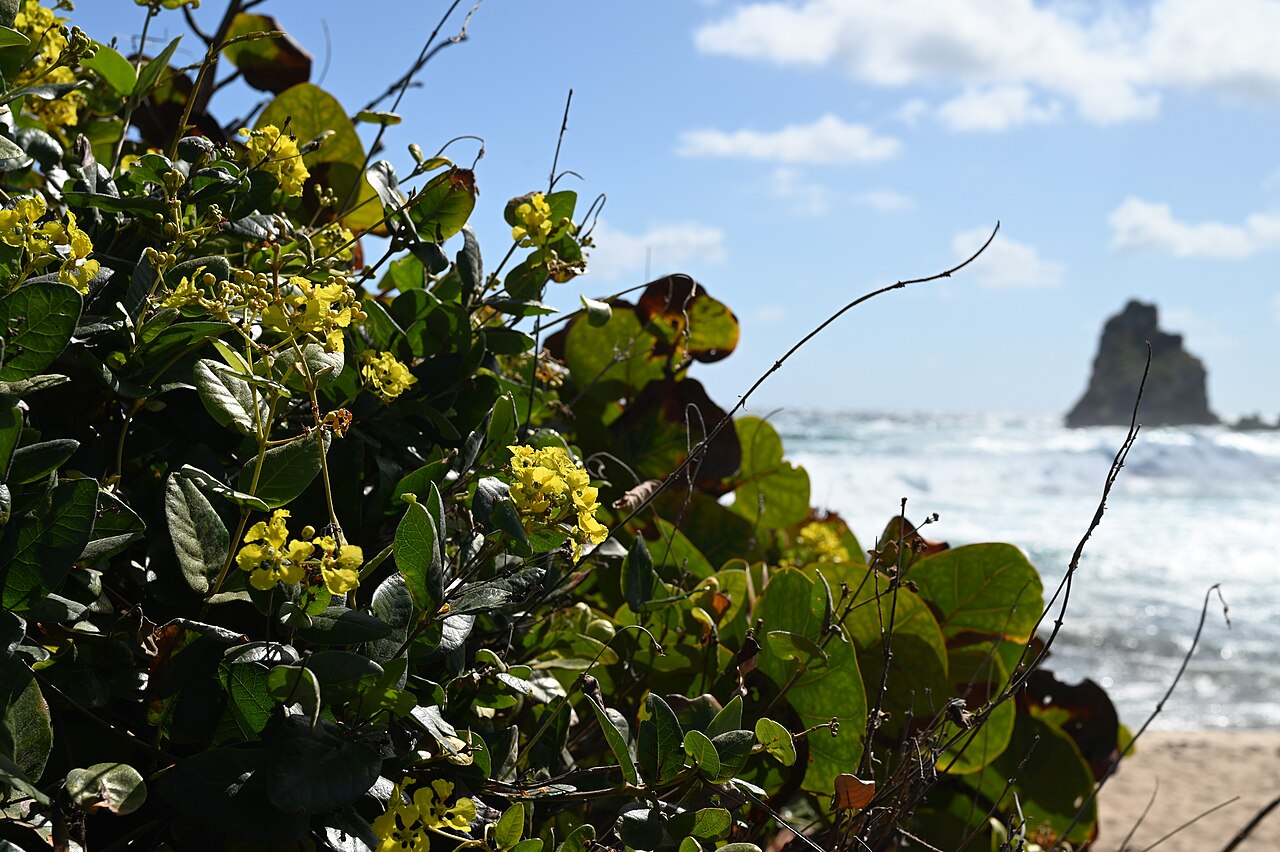
Stigmaphyllon emarginatum, known as Monarch Amazonvine and in Puerto Rico as bejuco de San Pedro, is a woody twining vine of the West Indies that covers shrubs, fences and forest edges with clusters of bright yellow, ruffled flowers. It belongs to the Malpighiaceae, the same family as acerola (Malpighia) and the locustberries (Byrsonima). The Institute for Regional Conservation (IRC) describes it as endemic to the West Indies, found in both the Greater and Lesser Antilles, and lists it as native in Puerto Rico. USDA PLANTS lists it as native in Puerto Rico and the U.S. Virgin Islands and nowhere on the U.S. mainland.
In Puerto Rico bejuco de San Pedro grows from the coast to the mountains. IRC records it in coastal reserves such as Piñones, Jobos Bay and Punta Guaniquilla, in Guánica and Ceiba state forests, and in the western uplands at Maricao and Susúa. It is a plant of sunny edges and thickets rather than deep forest, which makes it a good fit for home gardens across the island.
This guide covers how to recognize monarch amazonvine, where it grows in Puerto Rico, how to grow it on a fence or arbor, and why its flowers matter to the island’s oil-collecting bees. Older references and some nurseries use the synonyms Stigmaphyllon lingulatum and Stigmaphyllon periplocifolium for the same plant.
Identification
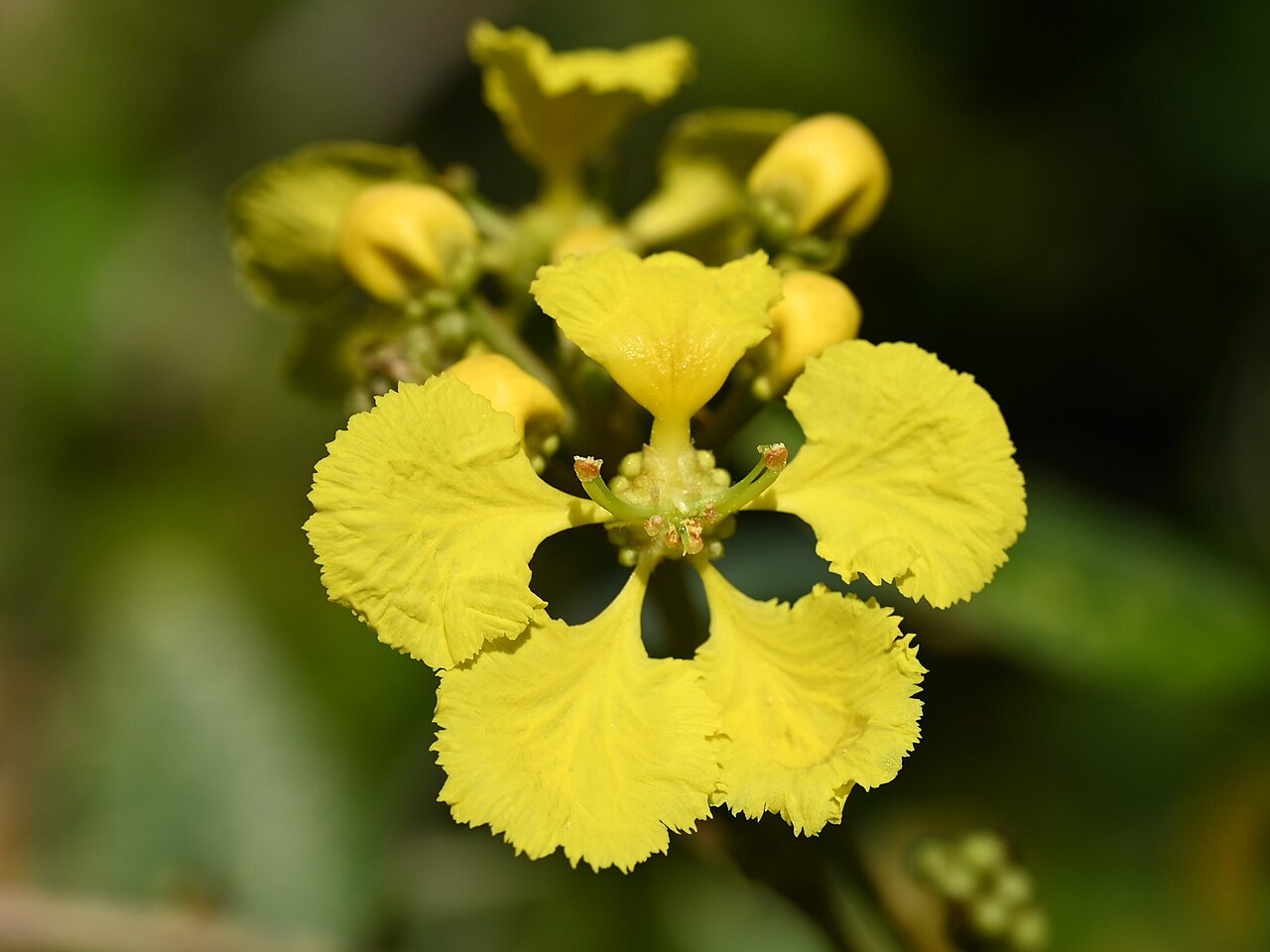
Several yellow-flowered vines grow in Puerto Rico’s thickets, but monarch amazonvine is easy to pick out once you know the Malpighiaceae flower: five petals on narrow stalks (claws), with ruffled edges and one odd petal standing apart from the rest, held in rounded clusters at the ends of twining stems.
Stems
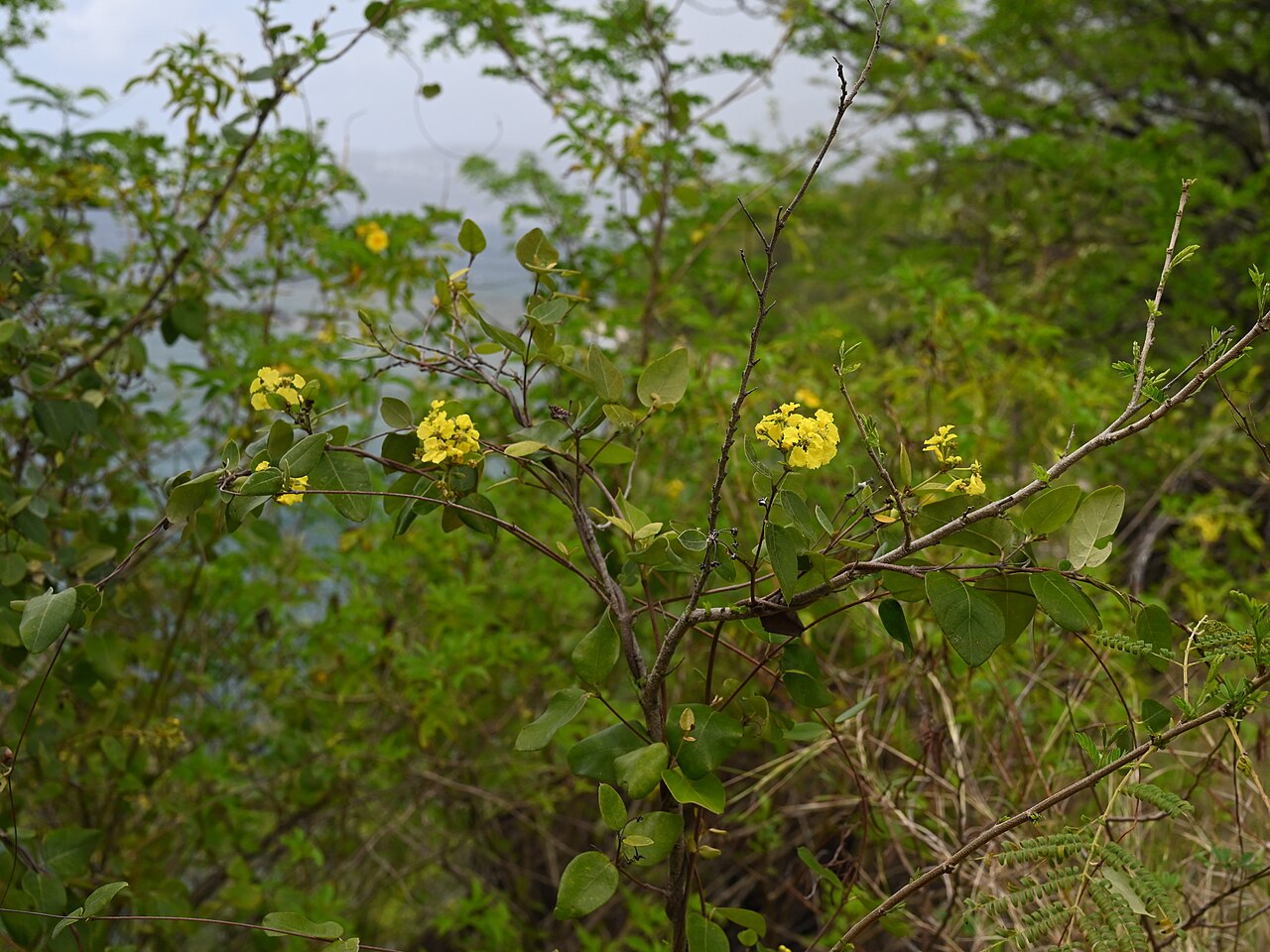
A woody, twining vine that climbs by wrapping its stems around shrubs, small trees and fences. Young stems are slender and green to brown; older stems become woody and rope-like. Where there is nothing to climb, it forms a sprawling, shrubby tangle, as on beach thickets.
Leaves
Leaves are opposite, simple and untoothed, oval to nearly round, with a smooth, slightly leathery surface and a pale underside. The species name emarginatum means “notched at the tip,” and many leaves end in a rounded, shallowly notched or blunt tip rather than a sharp point. As in other members of the genus, small glands are present near where the leaf blade joins its stalk.
Flowers
Flowers are bright yellow, about an inch across, in rounded, umbrella-like clusters at the branch tips. Each has five clawed petals with fringed or wavy margins; four spread outward and the fifth, upper petal is smaller and differently shaped. Look closely at the calyx under the petals: like most New World Malpighiaceae it carries paired oil glands, the reward that draws specialized bees. The genus name Stigmaphyllon (“stigma leaf”) refers to the small leaf-like flaps on the tips of the styles. In Puerto Rico, iNaturalist observations show flowers in every month of the year.
Fruit & Seeds
After flowering, each flower can develop into one to three winged fruits (samaras), each with a single seed and a wing that carries it on the wind, similar in principle to a maple key. Fruits ripen from green to tan and break apart when dry.
Quick Facts
| Scientific Name | Stigmaphyllon emarginatum (Cav.) A. Juss.; USDA common name: monarch Amazonvine |
| Family | Malpighiaceae (Barbados cherry family) |
| Plant Type | Woody twining vine (liana), evergreen |
| Mature Height | Climbs 10–20 ft or more into shrubs and small trees |
| Mature Spread | 6–15 ft on a fence or arbor |
| Growth Rate | Moderate to fast |
| Sun Exposure | Full sun to partial shade |
| Water Needs | Low to moderate; drought tolerant once established |
| Soil Type | Well-drained sandy, rocky or limestone soils; also clay and serpentine-derived soils in the uplands |
| Soil pH | Adaptable; slightly acidic to alkaline |
| Bloom Time | Much of the year in Puerto Rico |
| Flower Color | Bright yellow |
| Fall Color | None; evergreen |
| Fruit | Winged samaras that ripen from green to tan |
| Deer Resistant | Not applicable in Puerto Rico; no deer browse |
| USDA Hardiness Zones | 10b–12 (tropical; frost-tender) |
Native Range
Monarch amazonvine is a West Indian vine. The Institute for Regional Conservation describes its native range as endemic to the West Indies, in the Greater and Lesser Antilles; the photos on this page come from Guadeloupe, in the Lesser Antilles. Within the area PlantNative covers, USDA PLANTS lists it as native in Puerto Rico and the U.S. Virgin Islands. It does not grow wild anywhere in the 50 states, and the Atlas of Florida Plants does not include it in Florida’s flora.
In Puerto Rico IRC records bejuco de San Pedro in seven conservation areas spread across the island: the coastal forests and reserves of Piñones (Loíza), Jobos Bay National Estuarine Research Reserve and Punta Guaniquilla; the dry forests of Guánica and Ceiba state forests; and the western uplands of Maricao and Susúa state forests, where IRC records it at middle elevations of about 1,600 to 3,300 feet (500 to 1,000 m). It grows on forest edges, in coastal thickets and scrub and over shrubs along roadsides, scrambling toward the light.
Because the species is native only in the Caribbean, it appears on PlantNative’s Puerto Rico list but not on any mainland regional list. Gardeners in South Florida who want a native yellow-flowered Malpighiaceae should look instead at Long Key Locustberry, a shrub that shares the family’s oil-gland flowers.
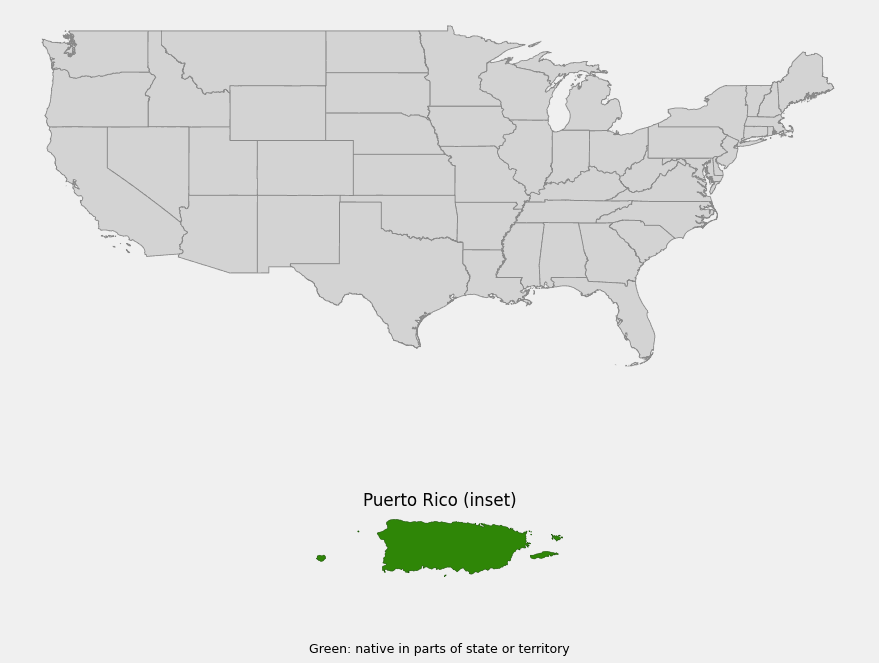
📋 Regional plant lists featuring Monarch Amazonvine: Puerto Rico
Growing & Care Guide
Bejuco de San Pedro is a tough, low-maintenance vine for sunny gardens in Puerto Rico and the Virgin Islands. It is not widely sold, so look for it at native plant nurseries and plant sales on the island, or grow it from seed collected responsibly from plants on private land with permission.
Light
Plant it in full sun to light shade. It flowers most heavily in sun, as it does on coastal thickets and dry forest edges. In deeper shade it climbs toward the light and flowers mainly at the top of its support.
Soil & Water
Any well-drained soil works, including sandy coastal soil and rocky limestone. Water regularly until the vine is established, then only during long dry spells. Its presence in Guánica dry forest and on coastal reserves shows it handles heat and seasonal drought well. Avoid soggy ground.
Planting Tips
Give it something to twine around: a chain-link fence, a wire trellis, an arbor or a sturdy shrub. Wide flat walls are hard for twining vines to climb without wires. Space plants about 6 to 10 feet apart along a fence. Coastal gardeners can use it in salt-tolerant plantings with sea grape and buttonwood, where it naturally scrambles.
Pruning & Maintenance
Prune after a flush of flowering to keep it in bounds, cutting back long runners and thinning tangled stems. A woody vine left alone will eventually climb into nearby trees, so check it once or twice a year. No regular fertilizing is needed.
Propagation
Sow fresh samaras (winged fruits) collected when they turn tan, removing the wings and pressing the seeds lightly into moist, well-drained mix. Semi-woody stem cuttings may also root under mist or a humidity cover, as with many other Malpighiaceae vines.
Landscape Uses
- Fences and arbors: a flowering native screen for sunny yards
- Coastal gardens: scrambles over sea grape and other salt-tolerant shrubs
- Pollinator gardens: oil and pollen for solitary bees
- Dry forest restoration: a native liana for edges in southern Puerto Rico
- Wildlife thickets: dense cover for small birds and lizards
Wildlife & Ecological Value
Monarch amazonvine is part of the vine layer of Puerto Rico’s coastal thickets and forest edges, where it ties shrubs together into dense cover and feeds specialized bees.
For Pollinators
Like most New World members of the Malpighiaceae, the flowers offer floral oil from glands on the calyx, along with pollen. Oils of this kind are collected by specialized solitary bees, such as species of Centris, which use them to provision their nests. Other bees and butterflies also visit the open yellow flowers.
For Birds
The tangled vines make secure cover and perches for small birds such as bananaquits and warblers, which forage for insects among the leaves and flowers.
For Mammals
Puerto Rico has few native land mammals other than bats. The vine is not a known food plant for mammals; its main wildlife value is cover and its role in feeding insects.
Ecosystem Role
As a liana of edges and thickets, it helps knit coastal scrub and dry forest margins together, shading the soil and creating sheltered microhabitats. Its wind-dispersed samaras let it colonize gaps and disturbed edges.
Cultural & Historical Uses
The Spanish botanist Antonio José Cavanilles first described this plant in the late 1700s as Banisteria emarginata. The French botanist Adrien de Jussieu later moved it to his new genus Stigmaphyllon, named from Greek words for “stigma” and “leaf” for the leafy flaps on the styles. It has also been published under the names Stigmaphyllon lingulatum and S. periplocifolium, both now treated as synonyms.
The Spanish common name bejuco de San Pedro (“Saint Peter’s vine”) is recorded for this species in Puerto Rico by the Institute for Regional Conservation. Bejuco is the general Spanish word for a woody climbing vine. The English name amazonvine is a USDA name applied to the whole genus Stigmaphyllon, most of whose roughly 100 species live in tropical South and Central America.
Malpighiaceae flowers are a classic example of a plant family shaped by its pollinators. Most New World species offer oil instead of nectar, and botanists have long studied the relationship between these oil flowers and the bees that collect the oil, which is why the family’s flowers look so similar from Mexico to the Antilles.
Frequently Asked Questions
Is monarch amazonvine native to Puerto Rico?
Yes. USDA PLANTS lists Stigmaphyllon emarginatum as native in Puerto Rico and the U.S. Virgin Islands, and the Institute for Regional Conservation lists it as native in Puerto Rico and endemic to the West Indies.
What is the Spanish name for this vine?
In Puerto Rico it is called bejuco de San Pedro.
Can I grow it in Florida?
It is not native to Florida and is not part of Florida’s flora. It is frost-tender and could only be grown in the warmest parts of South Florida. Florida gardeners looking for a native plant in the same family can try Long Key Locustberry.
Will it take over my yard?
It is a vigorous woody vine but not an invasive one in its native range. Give it a fence or arbor, prune it after flowering, and keep it from climbing into trees you want to keep clear.
Is it the same as the yellow orchid vine sold in nurseries?
No. The “orchid vine” of the nursery trade is usually Callaeum macropterum (or relatives), a related Malpighiaceae vine from Mexico and Central America that is not native to Puerto Rico. Check the scientific name on the label and choose Stigmaphyllon emarginatum for a native planting.

Looking for a nursery that carries Monarch Amazonvine?
Our nursery directory does not yet include Puerto Rico. Browse the native plant nursery directory by state: Alabama–Arkansas · California · Colorado–Hawaii · Idaho–Kansas · Kentucky–Montana · Nebraska–Oklahoma · Oregon · Pennsylvania–Virginia · Washington · West Virginia–Wyoming