
Native Begonia (Begonia decandra)
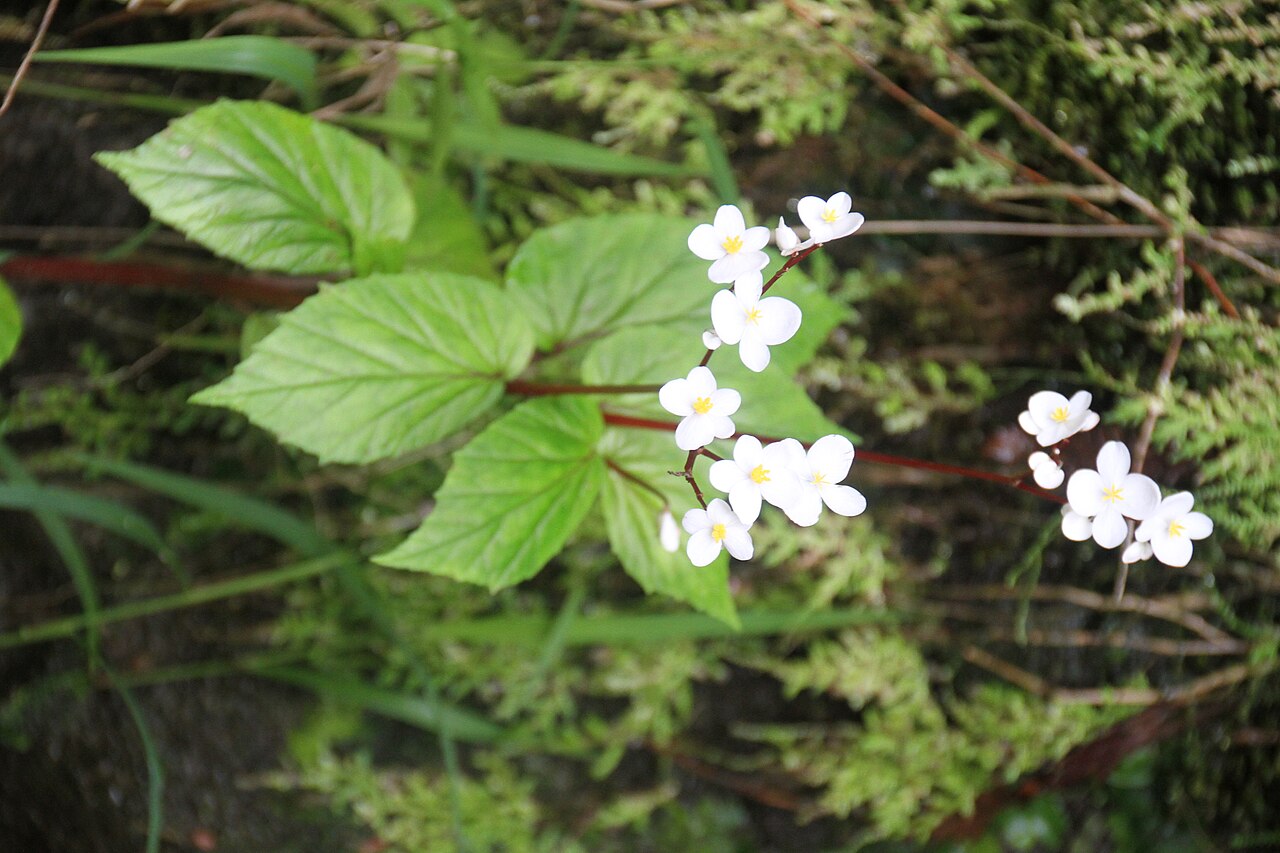
Begonia decandra, the Native Begonia, is Puerto Rico’s own wild begonia. In Puerto Rico it is called begonia de sierra, begonia nativa, begonia de poeta and corazón de poeta (“poet’s heart”), a name that suits its lopsided, heart-based leaves. It is a soft-stemmed perennial herb of the forest floor, with reddish stems, toothed green leaves and airy sprays of white flowers, often blushed with pink, held on long red stalks. It belongs to the begonia family, Begoniaceae, the same family as the countless begonias sold as bedding and house plants.
Unlike most of those garden begonias, which come from South America, Africa and Asia, this one is found nowhere else on Earth. The Smithsonian’s Flora of the West Indies and the Institute for Regional Conservation both list it as endemic to the island of Puerto Rico. It lives in the shady understory of the island’s wet mountain forests, especially in the Luquillo Mountains of El Yunque National Forest, and more locally in the Cordillera Central, the Sierra de Cayey and the northern karst hills.
Native begonia is a familiar sight to hikers in El Yunque, where it flowers along trails and road banks for much of the year. It has also been a subject of ecological research at the El Verde Field Station in the Luquillo Experimental Forest. This guide covers how to recognize it, where it grows, how it can be grown in shady tropical gardens from cuttings, and the role it plays in Puerto Rico’s rain forests.
Identification
Several begonias have escaped from cultivation in Puerto Rico, so it helps to know the native species well. Native begonia is a fairly small, upright to sprawling plant with green (not variegated or bronze) leaves, red stems and leaf stalks, and white to pale pink flowers in loose, branching clusters well above the leaves.
Stems & Sap
The stems are succulent, jointed and usually red or reddish, growing upright or leaning on neighboring plants, and they root easily where they touch moist soil. Plants are usually knee-high or lower. A distinctive feature reported from the elfin forest studies in the Luquillo Mountains is that the leaf veins exude a red sap when crushed. As in other begonias, a pair of papery stipules sits at the base of each leaf stalk.
Leaves
The leaves are alternate, on long red petioles, and broadly ovate with a pointed tip. Like nearly all begonias they are asymmetric: one side of the base is larger than the other, giving the leaf a slightly lopsided, heart-shaped outline. The margins are irregularly toothed, sometimes doubly so, and the surface is bright to medium green, glossy when wet, with the main veins radiating from the base. Leaves grown in deep shade are thinner and larger; those in brighter gaps are smaller and firmer.
Flowers
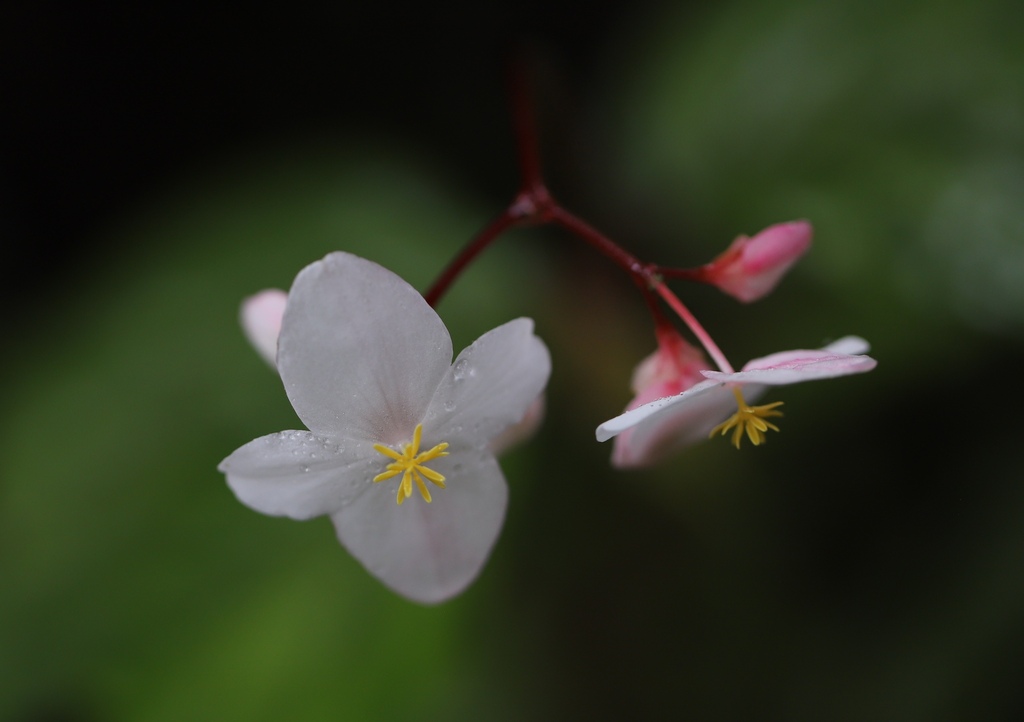
Flowers are borne in loose, forked clusters (cymes) on long red stalks that rise from the leaf axils above the foliage. As in all begonias, male and female flowers are separate but on the same plant. Male flowers have broad white tepals, often tinged pink on the outside, around a central knot of bright yellow stamens. The species name decandra means “ten stamens.” Female flowers have a yellow, twisted stigma and sit on top of a winged ovary. The pink buds and blushed outer tepals give the clusters a two-toned look.
In the Luquillo Experimental Forest the main flowering season runs from about April to October, with sporadic flowering in winter. In practice, flowering plants can be found in El Yunque in most months.
Fruit & Seeds
After pollination the ovary of a female flower ripens into a dry, papery capsule with three wings, the typical begonia fruit. It splits to release many dust-fine seeds, which are spread by wind and rain splash and germinate on bare, moist soil, mossy banks and the edges of trails and landslides.
Quick Facts
| Scientific Name | Begonia decandra Pav. ex A. DC. (syn. Begonia portoricensis, B. acutifolia) |
| Family | Begoniaceae (begonia family) |
| Plant Type | Evergreen, soft-stemmed perennial herb; USDA common name “native begonia” |
| Mature Height | Roughly 1–2 ft (small understory herb) |
| Mature Spread | 1–2 ft; spreads slowly as stems root |
| Growth Rate | Moderate; faster in brighter gaps |
| Sun Exposure | Shade to part shade; avoid strong sun |
| Water Needs | High; constantly moist soil and humid air |
| Soil Type | Moist, humus-rich forest soil; well drained |
| Soil pH | Acid to near neutral (about 5.0–7.0) |
| Bloom Time | Mainly April–October; sporadically in winter |
| Flower Color | White, often blushed pink; yellow stamens |
| Fall Color | None; evergreen |
| Fruit | Three-winged papery capsule with dust-fine seeds |
| Deer Resistant | Not applicable in Puerto Rico; soft foliage is browsed by slugs and snails |
| USDA Hardiness Zones | 10b–12 (frost-free); house or greenhouse plant elsewhere |
Native Range
Native begonia is endemic to Puerto Rico; USDA PLANTS lists it as native there, and it occurs in no U.S. state. The Institute for Regional Conservation describes it as scattered across the island from low to high elevations, recording it in the Sierra de Luquillo, the Caguas Valley, the Sierra de Cayey, the eastern Cordillera around La Torrecilla, the Cordillera Central and the northern limestone hills of Río Abajo State Forest. It is present in El Yunque National Forest and Río Abajo State Forest and has been reported from Maricao State Forest.
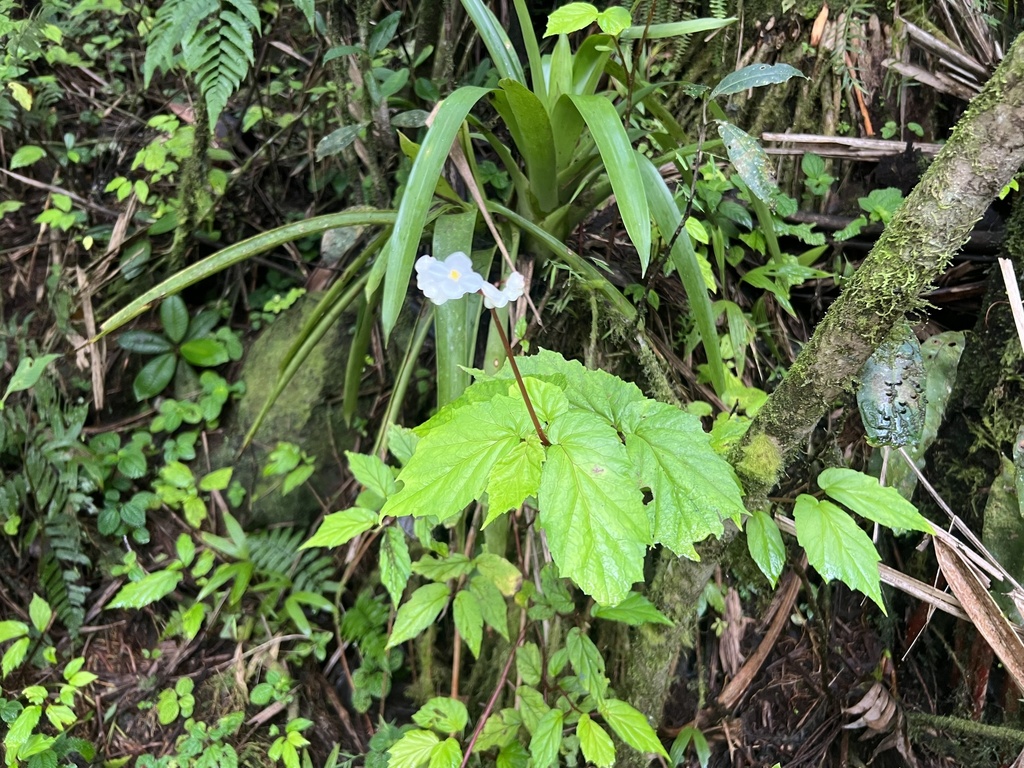
Its stronghold is the wet, eastern mountains. Most herbarium specimens and observations come from the Luquillo Mountains in the municipalities of Río Grande, Naguabo and Luquillo, with smaller numbers from Adjuntas, Orocovis, Cayey and Jayuya in the interior. A study at El Verde in the Luquillo Experimental Forest describes it as an understory herb of the eastern mountains at roughly 300 to 1,000 m (1,000 to 3,300 ft), in the subtropical wet forest life zone where rainfall there averages almost 4,000 mm (over 150 inches) a year.
Within these forests it grows in the shaded understory of tabonuco forest, along streams and road cuts, on wet, mossy banks and at the edges of trails, and it has been studied in the elfin forest on the high peaks. It also responds to disturbance: after Hurricane Hugo in 1989, researchers found natural populations growing in the forest clearings and large gaps the storm had opened.
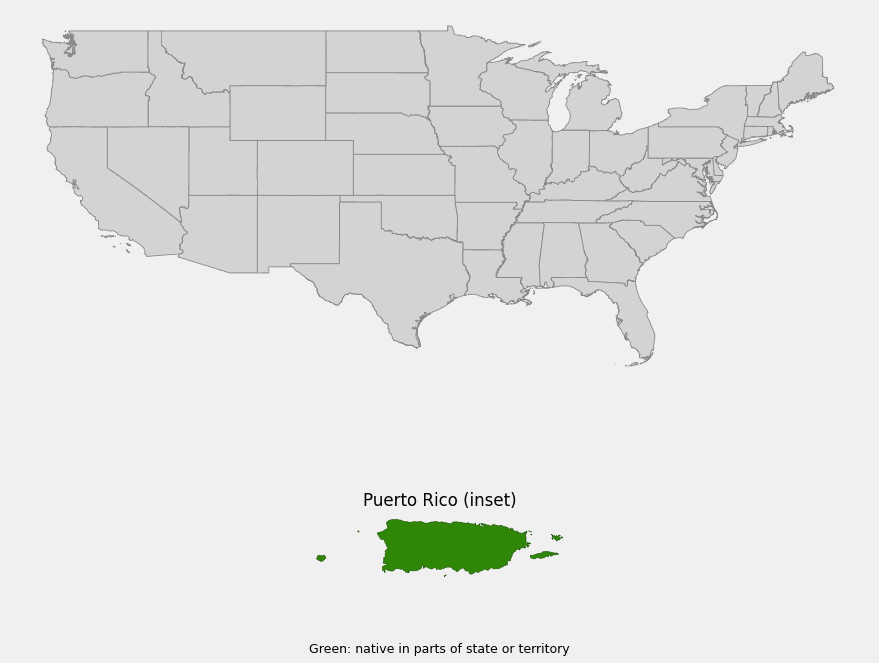
📋 Regional plant lists featuring Native Begonia: Puerto Rico
Growing & Care Guide
Native begonia is not a common nursery plant, but it is one of the easier Puerto Rican forest plants to grow, because, like most begonias, it roots readily from cuttings. It is a plant for shade and humidity: in Puerto Rico it suits shady gardens in the wetter mountains and the humid north and east. On the U.S. mainland it can be grown outdoors only in frost-free South Florida (and in Hawaii), and even there it needs shade and steady moisture; elsewhere grow it as a house plant or in a greenhouse. Because it is endemic to a single island, start from cuttings shared by growers, botanical gardens or native plant nurseries rather than digging plants from the forest. Collecting is prohibited in El Yunque and the commonwealth forests.
Light
Give it shade to bright, filtered light, like the understory of a forest. Research at El Verde found that plants grew faster in brighter canopy gaps, but very strong light can scorch and even kill it. Morning sun or dappled light is the most it should get in a lowland garden.
Soil & Water
Use a loose, humus-rich soil or potting mix that holds moisture but drains freely; begonia stems rot in soggy, airless soil. Keep it evenly moist and never let it dry out completely. High humidity is important: in dry air the leaf edges brown. Mulch with leaf litter in the garden.
Planting Tips
Plant in a sheltered spot out of the wind, such as beside a wall, under trees or among ferns and other shade plants, where the soft stems will not be broken. In a pot, a wide, shallow container suits its spreading, rooting stems. Indoors, a bright window without hot afternoon sun or a terrarium works well.
Pruning & Maintenance
Pinch the stem tips to keep plants bushy, and cut back leggy stems; every cutting can become a new plant. Remove spent flower stalks if you want a tidier look. Feed lightly with a balanced, diluted fertilizer during active growth; in the El Verde study, added nutrients increased growth mostly in shade. Watch for slugs and snails, which favor the tender leaves.
Propagation
Stem cuttings root quickly in moist potting mix or even in water; the plants used in the El Verde research were grown from cuttings. Take pieces with two or three nodes, remove the lower leaves and keep them humid and shaded until they root. Seed is dust-fine: sow it on the surface of moist, sterile mix, do not cover it, and keep it under clear cover in bright shade.
Landscape Uses
- Shade gardens in Puerto Rico: under trees, beside walls and along paths in humid gardens, especially in the mountains and the wetter north and east
- Fern and forest-floor plantings: with ferns, bromeliads and other native understory plants
- Containers, terrariums and house plants: for growers on the mainland or in drier parts of Puerto Rico
- Education: a living example of Puerto Rico’s endemic flora and of El Yunque’s understory
Wildlife & Ecological Value
Native begonia is a small plant, but as a widespread member of the understory in El Yunque it is part of the dense, layered vegetation that shelters many of Puerto Rico’s forest animals.
For Pollinators
Begonia flowers produce no nectar. Male flowers offer pollen, which is gathered by small bees, and in many begonias the female flowers resemble the male flowers closely enough to attract the same pollen-collecting visitors, even though they offer no reward. The pollinators of native begonia itself have not been studied in detail.
For Birds
Native begonia has no fleshy fruit for birds. Its value to birds is as part of the understory cover where ground- and low-foraging birds hunt insects and other small prey.
For Mammals
Puerto Rico has few native land mammals other than bats, and none are known to depend on this plant.
Ecosystem Role
As a shade-tolerant herb that also colonizes light gaps, landslides and trailsides, native begonia is part of the ground layer that helps cover and stabilize bare soil on steep, wet mountain slopes. Its moist leaves and stems shelter small invertebrates, and leaf-litter frogs such as the coquíes forage among understory herbs like it. It recovered and spread in the gaps opened by Hurricane Hugo, showing how understory plants help forests regrow after storms.
Cultural & Historical Uses
The genus Begonia has deep Caribbean roots. The French botanist Charles Plumier, who explored the French Antilles in the 1690s, named the genus for Michel Bégon, a French official and patron of botany. Native begonia was described much later: Alphonse de Candolle published Begonia decandra in 1859 from a name coined by the Spanish botanist José Antonio Pavón. Older names for the same plant include Begonia portoricensis and Begonia acutifolia.
The Puerto Rican name corazón de poeta, “poet’s heart,” and its shorter form begonia de poeta, refer to the plant’s lopsided, heart-shaped leaves, while begonia de sierra, “mountain begonia,” reflects its home in the island’s mountain forests. The plant is a common sight for hikers in El Yunque and is often one of the first wildflowers visitors notice along trails.
Native begonia has also contributed to science. Studies of the elfin forest of the Luquillo Mountains in the 1960s included it among plants whose colored leaves and sap were analyzed chemically, and later research at the El Verde Field Station used it to test how understory herbs respond to light gaps and nutrients, an important question in forests shaped by hurricanes.
Frequently Asked Questions
Is native begonia really found only in Puerto Rico?
Yes. The Smithsonian’s Flora of the West Indies and the Institute for Regional Conservation both list Begonia decandra as endemic to the island of Puerto Rico. The other begonias seen growing wild in Puerto Rico are mostly escapes from gardens.
Where can I see it?
Look along trails and road banks in El Yunque National Forest, especially in the tabonuco and palm forest at middle elevations. It also grows more locally in the mountains of the Cordillera Central and the Sierra de Cayey and in Río Abajo State Forest.
Can I grow it on the U.S. mainland?
Outdoors only in frost-free areas such as South Florida, and then only in shade with steady moisture and humidity. Elsewhere it makes a good house plant, terrarium plant or greenhouse plant, much like other cane-stemmed begonias.
How do I propagate it?
From stem cuttings, which root easily in moist mix or water. Please use cuttings from cultivated plants rather than collecting from the forest.
Is it endangered?
It is not listed under the U.S. Endangered Species Act and is fairly common in El Yunque. Because it is found only in Puerto Rico, however, its populations depend on the protection of the island’s wet mountain forests, and plants should not be removed from the wild.

Looking for a nursery that carries Native Begonia?
Our nursery directory does not yet include Puerto Rico. Browse the native plant nursery directory by state: Alabama–Arkansas · California · Colorado–Hawaii · Idaho–Kansas · Kentucky–Montana · Nebraska–Oklahoma · Oregon · Pennsylvania–Virginia · Washington · West Virginia–Wyoming