
West Indian Walnut (Juglans jamaicensis)
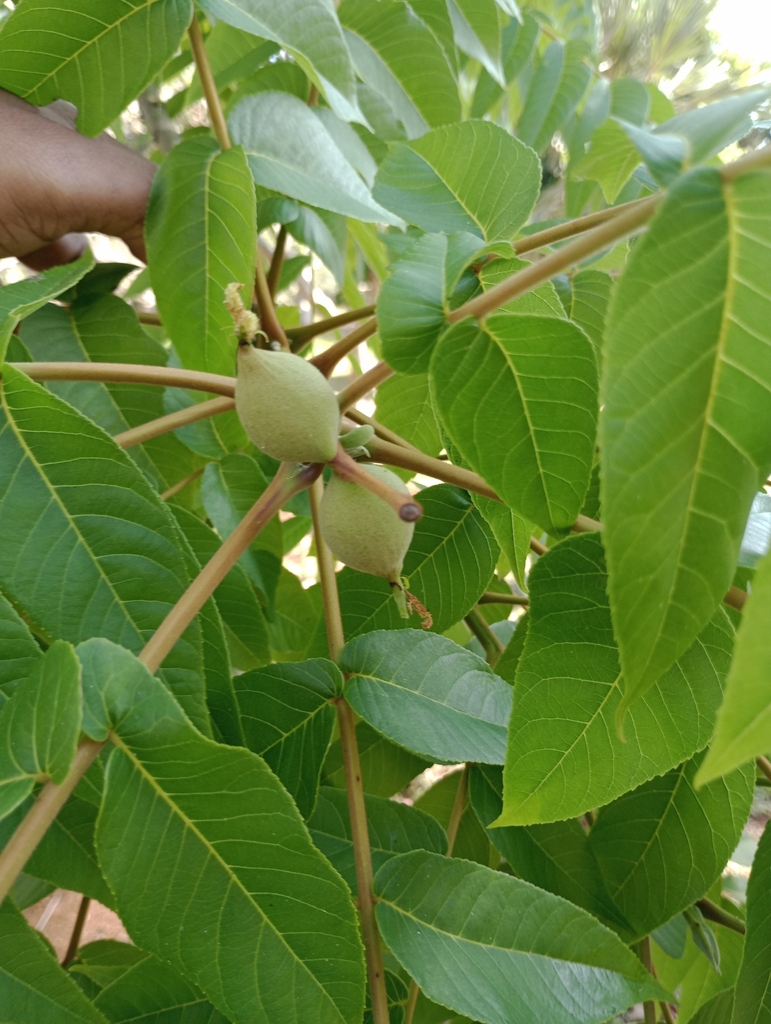
Juglans jamaicensis, the West Indian Walnut, is known in Puerto Rico as nogal, nuez or palo de nuez. It is a large tree of the walnut family (Juglandaceae) and the only walnut native to the Caribbean islands, a close relative of the black walnut of the eastern United States. It grows in the mountain forests of Cuba, Hispaniola and Puerto Rico. Despite its name, it has never been found in Jamaica.
In Puerto Rico the nogal is one of the rarest trees on the island. The U.S. Fish and Wildlife Service listed it as federally endangered in January 1997. At the time of listing, only 14 wild trees were known in Puerto Rico, all at a single privately owned site in the mountains of Adjuntas, near the Monte Guilarte Commonwealth Forest. The forests where it once grew in the central Cordillera were largely cleared for coffee, and the tree was probably also cut for its prized wood.
Because the West Indian walnut is federally endangered, anyone who wants to plant it should use nursery-propagated plants only and never collect seeds, seedlings or cuttings from wild trees. Puerto Rico government and conservation nurseries have raised seedlings from the remaining trees for planting. This guide covers how to recognize the nogal, where it grows, and how it can be cultivated as part of its recovery.
Identification
The nogal is the only walnut in Puerto Rico’s native flora, so the combination of large pinnate leaves, catkins and hard, ridged nuts in a black husk identifies it. Gardeners from the mainland will recognize the family resemblance to black walnut at once.
Trunk & Bark
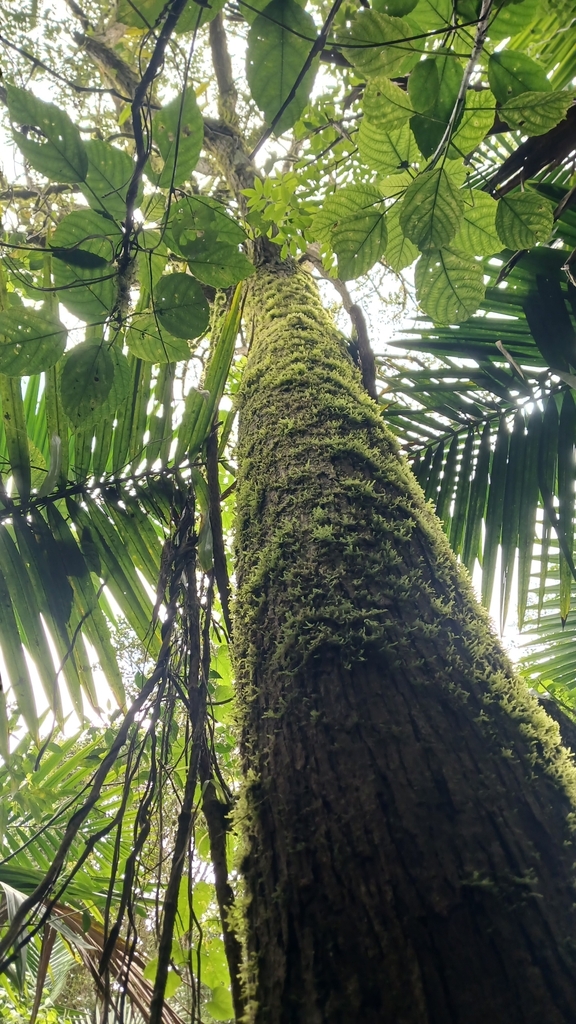
The West Indian walnut is a large tree that can reach about 82 feet (25 m) tall. The largest tree in the 1992 survey of the Adjuntas population was more than 66 feet (20 m) tall. Twigs, buds and leaf stalks are covered in minute rusty hairs.
Leaves
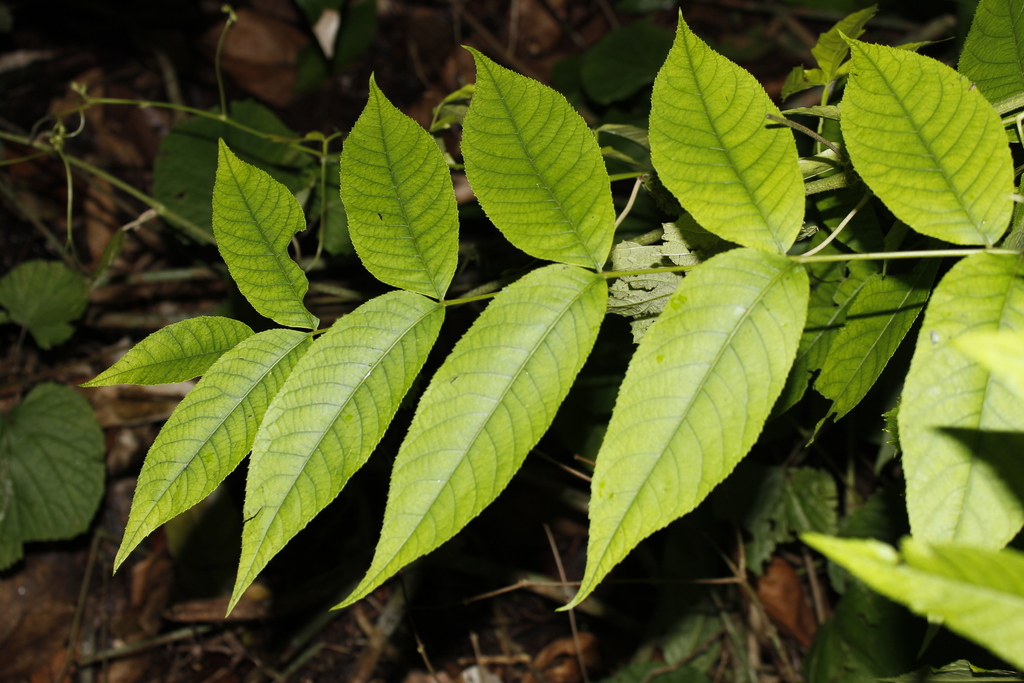
The leaves are alternate and pinnately compound, with about 16 to 20 mostly paired, nearly stalkless leaflets. Each leaflet is lance-shaped, roughly 2 to 3½ inches (5.5 to 9 cm) long and about 1 to 1½ inches wide, thin, finely toothed and long-pointed, with an uneven, rounded base. They are nearly hairless except along the veins on the underside.
Flowers
Like other walnuts, the nogal is monoecious: separate male and female flowers grow on the same tree. Male flowers hang in drooping green catkins about 3½ to 4¼ inches (8.8 to 11 cm) long on the previous year’s twigs. Female flowers are small, about a fifth of an inch long, and sit in short spikes at the tips of the new season’s shoots. The flowers are wind-pollinated and have no showy petals.
Fruit & Nuts
The fruit is a round walnut with a green husk that turns blackish as it ripens. Inside is a brown, hard, rough-ridged shell about ⅝ to 1⅛ inches (1.6 to 2.75 cm) wide, holding one large, oily, edible seed. The nuts look like small black walnuts. Fallen fruits often turn yellowish on the forest floor before the husk darkens and rots away.
Quick Facts
| Scientific Name | Juglans jamaicensis (syn. J. insularis, J. portoricensis); USDA common name: West Indian walnut |
| Family | Juglandaceae (walnut family) |
| Plant Type | Large montane canopy tree; federally endangered |
| Mature Height | 50–82 ft |
| Mature Spread | Broad, rounded crown on open-grown trees |
| Growth Rate | Moderate (little published data) |
| Sun Exposure | Full sun to partial shade |
| Water Needs | Moderate to high; humid mountain climate with regular rain |
| Soil Type | Deep, well-drained mountain forest soils |
| Soil pH | Not well documented |
| Bloom Time | Catkins appear with the new shoots; timing in Puerto Rico not well documented |
| Flower Color | Green (male catkins and small female flowers) |
| Fall Color | None of note in Puerto Rico |
| Fruit | Walnut with a blackish husk; hard, ridged shell 0.6–1.1 in wide; edible seed |
| Deer Resistant | Not applicable in Puerto Rico |
| USDA Hardiness Zones | 10–11 (frost-free only) |
Native Range
The West Indian walnut is endemic to the Greater Antilles. The Smithsonian’s Flora of the West Indies records it as native to Cuba, Hispaniola (both the Dominican Republic and Haiti) and Puerto Rico, and USDA PLANTS lists it as native to Puerto Rico. The name jamaicensis is a historical mistake: Augustin de Candolle named the species from an illustration published by the French naturalist Descourtilz, and he wrongly believed the tree came from Jamaica. No native walnut has ever been found there. The species is described as rare and declining on Cuba and Hispaniola as well.
In Puerto Rico the nogal is a tree of the central mountains. Augustin Stahl first collected it around 1865 between Peñuelas and Adjuntas at about 2,300 feet (700 m), and the German botanist Paul Sintenis collected it again near Adjuntas in 1886 and near Utuado in 1887. After a final collection in 1915, it was not seen for decades, and botanists thought it might be extinct on the island. In 1974 Roy Woodbury rediscovered it on the upper north slopes of Cerro La Silla de Calderón in southwestern Adjuntas, at about 3,500 feet (1,070 m).
A 1992 U.S. Forest Service survey counted 14 trees at that site, on private land surrounded by coffee farms near the Monte Guilarte Commonwealth Forest. The 1997 listing rule names clearing for “sun coffee” (coffee grown without shade trees), rural housing, past logging for its valuable wood and hurricanes such as Hugo (1989) as the main threats. The IUCN Red List assessed the species as Vulnerable in 1998.
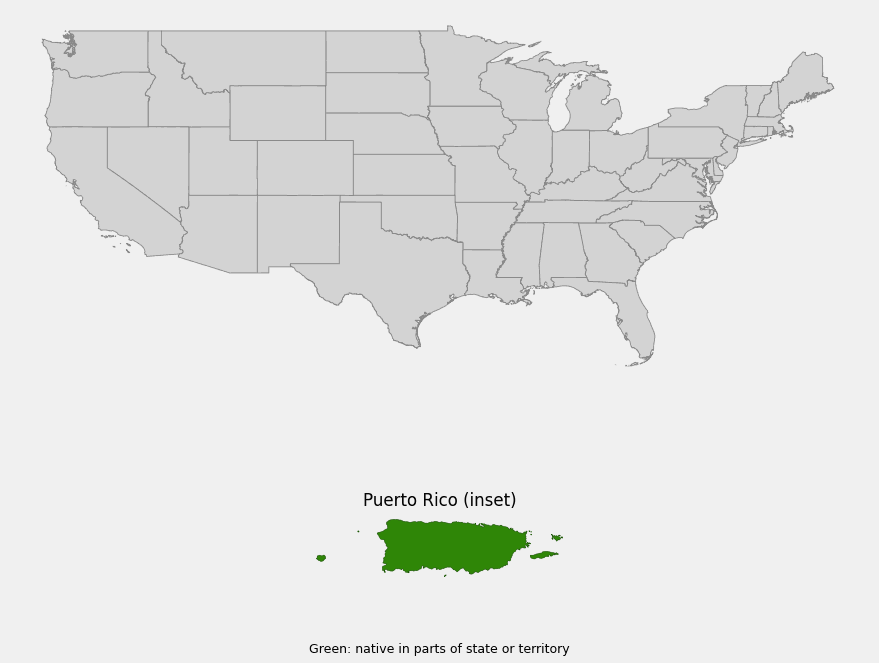
📋 Regional plant lists featuring West Indian Walnut: Puerto Rico
Growing & Care Guide
The West Indian walnut is a conservation tree rather than an ordinary landscape tree. In Puerto Rico it is planted in recovery and reforestation projects, in botanical collections, and occasionally on mountain farms as a native shade or timber tree. Use only seedlings from legitimate nurseries, such as those that propagate the species for recovery. Never take seeds, seedlings or cuttings from wild trees; the species is protected under the federal Endangered Species Act. On the U.S. mainland it could only be grown outdoors in frost-free areas, and it is essentially unavailable there.
Light
Young trees tolerate partial shade, as in a forest gap or among coffee shade trees, but grow best with more light as they mature. Mature trees form part of the forest canopy and need full sun on their crowns.
Soil & Water
Plant nogal in deep, well-drained soil that stays evenly moist. In Puerto Rico it grows in the humid central mountains at middle elevations, with frequent rain and mild temperatures. Water young trees regularly during dry spells for the first year or two. Like its mainland relatives, it is unlikely to tolerate waterlogged soil or salty coastal conditions.
Planting Tips
Choose a site with plenty of room: this is a large tree. In the mountains of Puerto Rico, a forest edge, stream terrace or the canopy layer of a shade-coffee farm suits it well. Plant nursery seedlings at the start of the rainy season and protect them from mowers and weed trimmers. Keep a mulched, weed-free circle around young trees.
Pruning & Maintenance
Prune only to remove dead, damaged or crossing branches, and to train a single straight trunk if timber is a goal. Mainland walnuts produce juglone, a chemical that inhibits some neighboring plants; whether nogal does the same to the same degree is not well documented, so watch nearby sensitive plantings. Inspect trees after hurricanes and remove broken limbs cleanly.
Propagation
The nogal is grown from fresh seed. Walnut seeds do not stay viable long when dried out, so nurseries sow them soon after collection. The Puerto Rico Department of Natural and Environmental Resources, the Conservation Trust of Puerto Rico and the U.S. Forest Service International Institute of Tropical Forestry have raised seedlings from the wild trees. Because the species is federally endangered, propagation from wild trees is a job for these recovery programs, not for home gardeners.
Landscape Uses
- Endangered species recovery: planting nursery-raised trees in protected areas of the central mountains to build new populations
- Shade-coffee farms: a native canopy tree for farms in Adjuntas, Utuado and neighboring municipalities
- Mountain reforestation: on stream terraces and slopes within its former range, using nursery stock
- Botanical and educational collections: a living link between Caribbean and mainland walnuts
- Specimen tree: on large mountain properties in Puerto Rico with deep, moist soil
Wildlife & Ecological Value
Very little research has been done on the ecology of the West Indian walnut in Puerto Rico, simply because so few trees remain. Its biology can be inferred partly from its walnut relatives, but much is unknown.
For Pollinators
Walnuts are wind-pollinated. The drooping male catkins shed large amounts of pollen that drifts to female flowers on other trees, and they offer no nectar. Bees may still collect pollen from the catkins.
For Birds
The tree has no documented importance to particular birds in Puerto Rico, but as a tall canopy tree in the central mountains it provides perches, nesting sites and insect-foraging habitat for forest birds.
For Mammals
Puerto Rico’s only native land mammals are bats, and the island has no native squirrels to cache and plant walnuts the way gray and fox squirrels spread black walnut on the mainland. How the nogal’s heavy nuts were dispersed in the past is unknown; the remaining Puerto Rico trees were reported to be reproducing poorly in the wild in the 1990s.
Ecosystem Role
The nogal is part of the montane forest of the Cordillera Central, much of which was converted to coffee and pasture. Restoring it helps rebuild the native canopy of these forests. It also shows how Caribbean mountain forests share some plant groups with the temperate forests of North America.
Cultural & Historical Uses
The species has a tangled naming history. The French naturalist Descourtilz illustrated it in his Flore médicale des Antilles under the name Juglans fraxinifolia, and Augustin de Candolle later published it as Juglans jamaicensis, wrongly believing it came from Jamaica. Other names used for the same species include J. insularis and J. portoricensis.
In Puerto Rico the tree has long been valued for its wood, which resembles that of the black walnut, and its nuts are edible, which is reflected in the names nuez and palo de nuez. That value probably contributed to its decline: the 1997 listing rule notes that the tree was cut for its prized wood in the past, while much of its mountain habitat was cleared for coffee.
The rediscovery of the nogal in Adjuntas in 1974, after decades in which botanists feared it was gone from the island, is one of the better-known stories of Puerto Rican plant conservation. Since its federal listing in 1997, recovery efforts have centered on protecting the remaining trees and growing seedlings from them for planting in protected forests.
Frequently Asked Questions
Is the West Indian walnut endangered?
Yes. The U.S. Fish and Wildlife Service listed Juglans jamaicensis as endangered under the Endangered Species Act in 1997. At listing only 14 wild trees were known in Puerto Rico, at one site in Adjuntas. Plant only nursery-propagated trees and never collect from the wild.
Does the West Indian walnut grow in Jamaica?
No. The name is a historical error. The species grows in Cuba, Hispaniola and Puerto Rico, and no native walnut has ever been found in Jamaica.
Are the nuts edible?
Yes. Each nut contains one large, oily, edible seed, and the names nuez and palo de nuez refer to it. The nuts are small and hard-shelled like black walnuts. Since the tree is so rare, any nuts from wild trees should be left for regeneration and recovery programs.
Can I grow West Indian walnut on the mainland?
Only in frost-free climates, and it is essentially unavailable outside Puerto Rico’s conservation nurseries. Mainland gardeners who want a native walnut should plant one native to their own region, such as black walnut or butternut in the East.
How is it related to black walnut?
Both belong to the same group of walnuts (Juglans section Rhysocaryon), which have nuts with dark husks and deeply ridged shells. The nogal’s leaves, catkins and nuts look like smaller versions of those of the Black Walnut.

Looking for a nursery that carries West Indian Walnut?
Our nursery directory does not yet include Puerto Rico. Browse the native plant nursery directory by state: Alabama–Arkansas · California · Colorado–Hawaii · Idaho–Kansas · Kentucky–Montana · Nebraska–Oklahoma · Oregon · Pennsylvania–Virginia · Washington · West Virginia–Wyoming