
Frangipani (Plumeria alba)
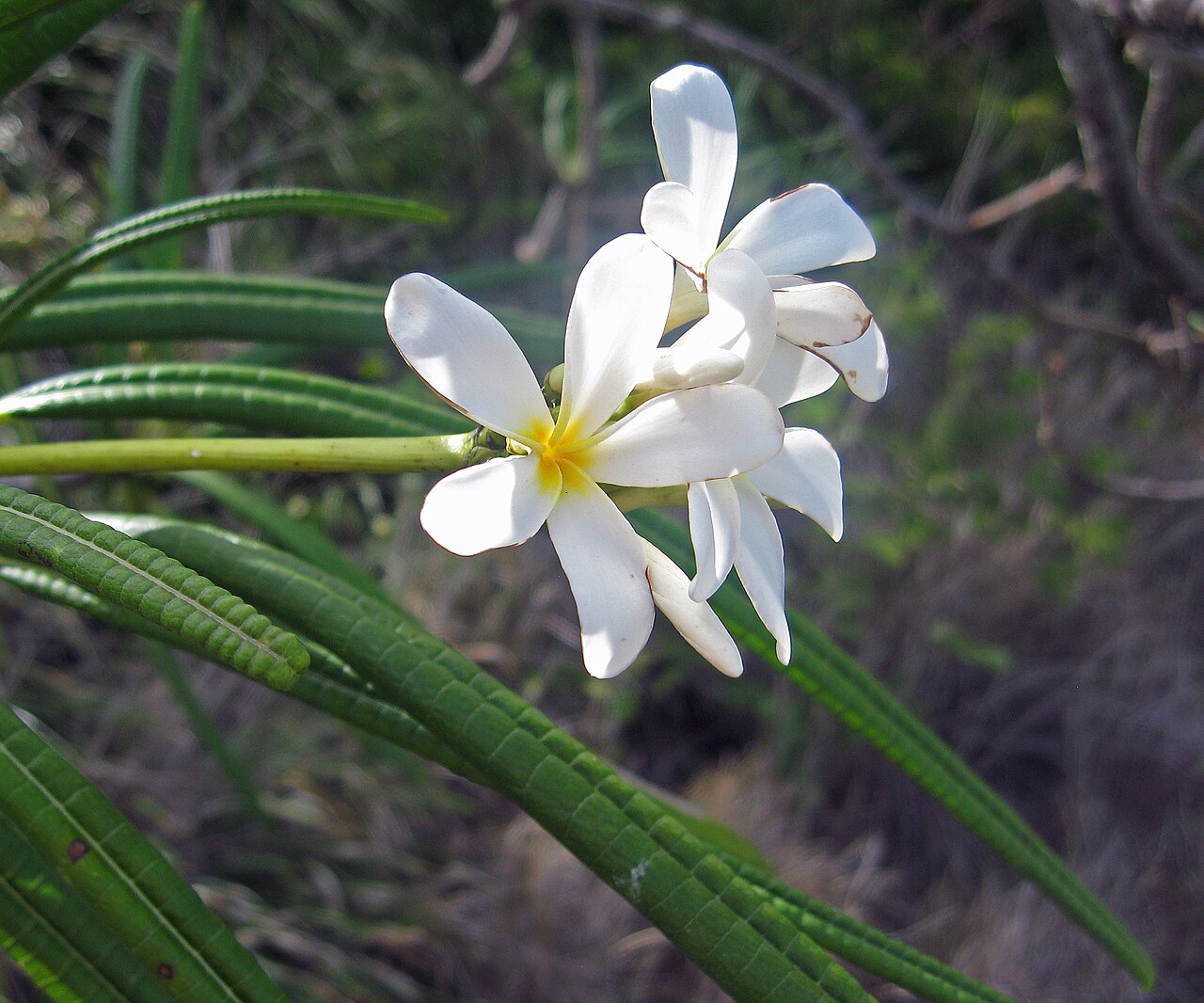
Plumeria alba, the white or West Indian frangipani, is a small, thick-branched tree of rocky Caribbean coasts and dry forests. In Puerto Rico it is known as alelí, alelí blanco or alelí cimarrón, and also as tabaiba; USDA lists it in English as nosegaytree. It bears clusters of waxy, intensely fragrant white flowers with yellow centers at the tips of its stubby, candelabra-like branches.
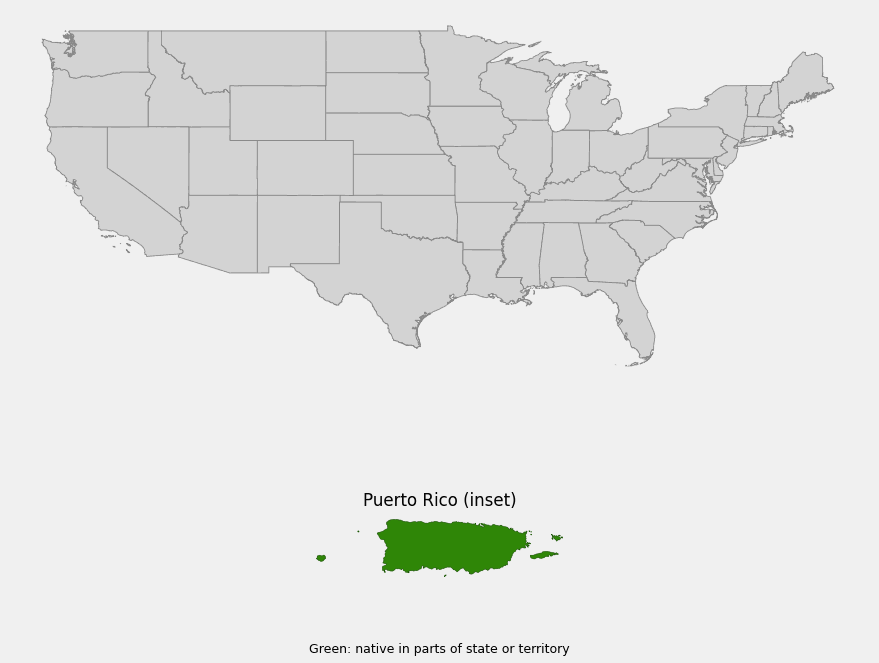
Unlike the familiar pink and red garden frangipanis, which come from Mexico and Central America, Plumeria alba is a true West Indian native. USDA PLANTS lists it as native in Puerto Rico and the U.S. Virgin Islands, and the Smithsonian’s Flora of the West Indies records it from Puerto Rico, including the offshore islands of Caja de Muertos and Culebra, and from many islands of the Lesser Antilles. It is easily recognized by its long, very narrow leaves with rolled-under edges.
This is one of the best native plants for hot, dry, sunny gardens in Puerto Rico. It thrives on thin, rocky soil, tolerates salt wind and drought, and needs almost no care. All parts contain a milky sap that can irritate skin, so wear gloves when pruning.
Identification
The genus is easy to recognize by its thick, blunt branches, milky sap and fragrant five-petaled flowers. White frangipani is told from cultivated species by its narrow leaves.
Form & Branches
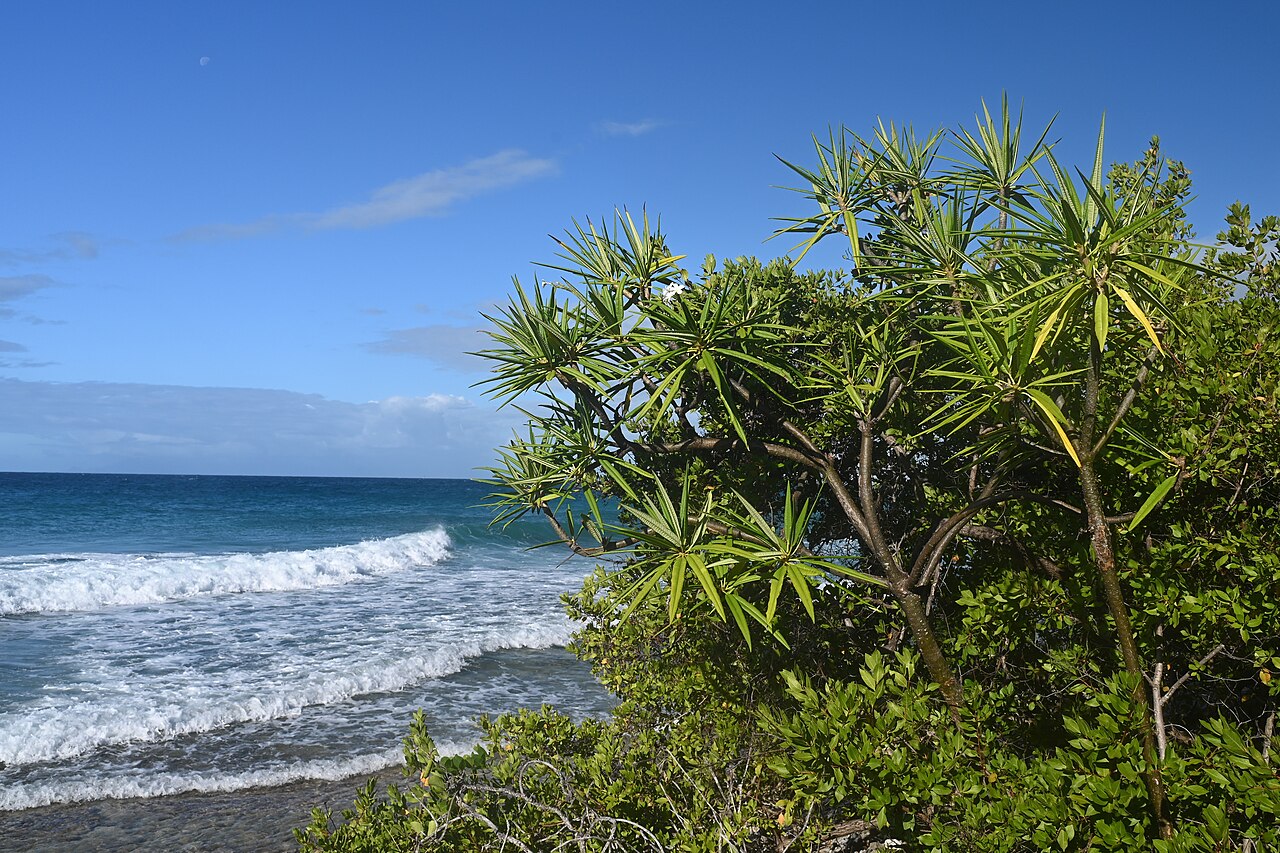
It is a small tree or large shrub, usually 10 to 25 feet tall, with a few thick, gray-green, rubbery branches that fork repeatedly to form an open, vase-shaped or candelabra-like crown. Leaves are clustered in tufts at the branch tips, and the bare branches are conspicuous when the plant drops its leaves in the dry season. Broken stems and leaves bleed a white, milky sap.
Leaves
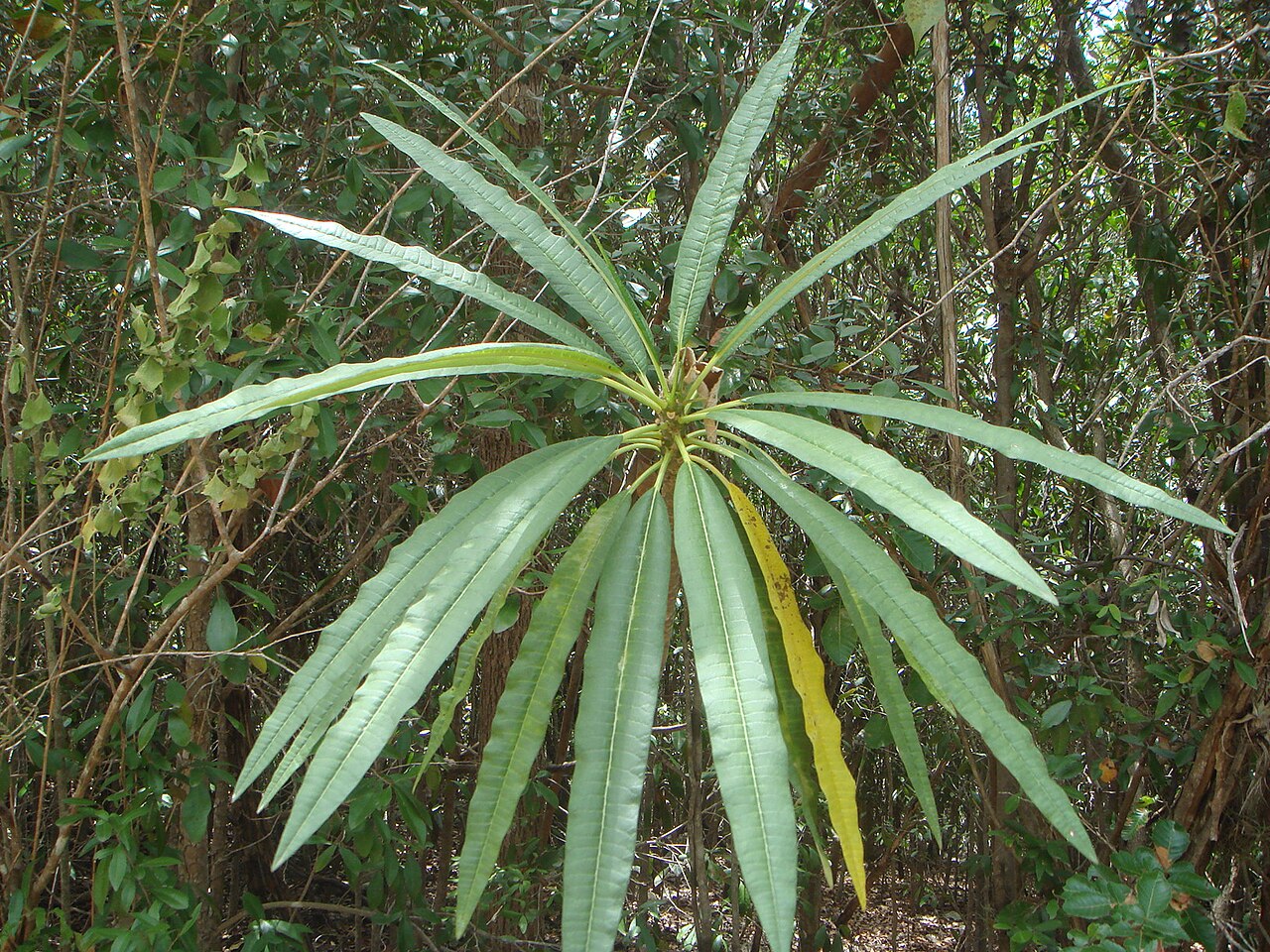
The leaves are alternate, simple and crowded in spirals near the ends of the stems. They are long and narrow, up to about 12 inches long but only an inch or so wide, dark green above and paler below, with many closely spaced side veins and edges that roll under. These narrow, strongly veined leaves are the best way to separate it from other frangipanis, which have much broader leaves.
Flowers
The flowers are about 2 inches across, with five white, waxy, overlapping petals and a yellow center. They are sweetly fragrant and open in clusters at the ends of the branches, mainly during the warmer, wetter months.
Fruit & Seeds
The fruit is a pair of long, narrow pods (follicles) that ripen slowly and split open to release flat seeds, each with a papery wing that carries it on the wind.
Quick Facts
| Scientific Name | Plumeria alba L. |
| Family | Apocynaceae (dogbane family) |
| Plant Type | Deciduous small tree or large shrub |
| Mature Height | 10–25 ft |
| Mature Spread | 8–20 ft |
| Growth Rate | Slow to moderate |
| Sun Exposure | Full sun |
| Water Needs | Low; very drought-tolerant once established |
| Soil Type | Rocky, sandy or limestone soils; must drain well |
| Soil pH | Neutral to alkaline |
| Bloom Time | Mainly the warmer, wetter months; variable |
| Flower Color | White with a yellow center |
| Fall Color | None; drops leaves in the dry season |
| Fruit | Paired narrow pods with winged seeds |
| Deer Resistant | Not a concern in Puerto Rico, which has no native deer |
| USDA Hardiness Zones | 10b–12; frost-sensitive |
Native Range
Plumeria alba is a West Indian endemic. USDA PLANTS lists it as native in Puerto Rico and the U.S. Virgin Islands, and the Smithsonian’s Flora of the West Indies records it from Puerto Rico and its satellite islands, including Caja de Muertos and Culebra, and from Anguilla, Antigua, Barbuda, Saba, St. Martin, St. Barthélemy, Martinique, Dominica, St. Lucia, St. Vincent, the Grenadines, Grenada and Barbados. It has been planted throughout the tropics, from Florida gardens to South and Southeast Asia, but those plants are cultivated, not native.
In Puerto Rico it grows on rocky limestone and coastal sites in the dry south and on the offshore islands. It grows in Guánica Commonwealth Forest, one of the best-preserved subtropical dry forests in the Caribbean, where it grows among cacti and other drought-adapted shrubs on thin soil over limestone.
Its preference for open, rocky, well-drained places means it is often found on sea cliffs, coastal scrub and exposed ridges, where few larger trees can grow.
📋 Regional plant lists featuring Frangipani: Puerto Rico
Growing & Care Guide
White frangipani is a tough, low-maintenance plant for the hottest, driest parts of a Puerto Rican garden. The main way to kill it is to overwater it or plant it in soil that stays wet.
Light
Give it full sun. In shade it becomes leggy and flowers poorly.
Soil & Water
It grows best in fast-draining rocky, sandy or limestone soil, and does well in raised beds and large containers. Water young plants occasionally until established; after that it rarely needs watering. It naturally drops its leaves in the dry season, so a bare plant is not necessarily a sick one. Avoid soggy soil, which leads to stem rot.
Planting Tips
Use it as a specimen in dry gardens, near the coast, in rock gardens or near patios where its fragrance can be enjoyed. It tolerates salt wind well. Choose plants grown from local Puerto Rican stock where possible, rather than the cultivated Mexican and Central American frangipanis sold widely in garden centers.
Pruning & Maintenance
Very little pruning is needed. Cut only to remove damaged branches or to shape young plants, and wear gloves and eye protection, because the milky sap can irritate skin and eyes. Large caterpillars sometimes strip the leaves; the plant regrows and does not need spraying.
Propagation
It roots easily from cuttings: take a branch tip, let the cut end dry and callus for a week or more, then plant it in dry, sandy soil and water sparingly until it roots. It can also be grown from fresh winged seed.
Landscape Uses
- Dry and coastal gardens: thrives in sun, wind, salt and thin, rocky soil
- Fragrance gardens: intensely scented flowers near patios and windows
- Containers: grows well in large, well-drained pots
- Restoration: suited to dry forest and coastal scrub restoration in southern Puerto Rico
- Butterfly and moth gardens: host plant for the large tetrio sphinx caterpillar
Wildlife & Ecological Value
White frangipani is part of the specialized community of Caribbean dry forests and rocky coasts, where it is known for one especially spectacular insect visitor.
For Pollinators
The fragrant white flowers are most strongly scented in the evening and attract sphinx moths. Like other frangipanis, they offer little or no nectar, so visiting moths carry pollen between flowers while searching for a reward that is not there.
For Birds
The open crown provides perches in dry coastal scrub, and birds that feed on caterpillars visit plants carrying sphinx moth larvae.
For Mammals
No important mammal interactions are documented. The toxic milky sap discourages most browsing animals.
Ecosystem Role
Frangipani is the main host plant of the tetrio sphinx moth (Pseudosphinx tetrio), whose large, black-and-yellow banded caterpillars with orange heads feed on the leaves. The caterpillars are boldly colored to warn predators that they are distasteful, and they can strip a plant before pupating; the plant releafs without lasting harm.
Cultural & Historical Uses
The genus is named after Charles Plumier, a French friar, botanist and traveler who explored the Caribbean in the late 1600s, and the species name alba means white. Linnaeus described Plumeria alba in 1753. The common name frangipani is traditionally linked to an Italian family of perfumers, because the flower’s scent was compared to a perfume of that name.
In Puerto Rico the plant goes by alelí, alelí blanco and alelí cimarrón, the “wild” alelí, as well as tabaiba or tapaiba. It has also been called milktree for its milky sap.
White frangipani has been carried around the world as an ornamental. In Cambodia it is planted at pagodas and its flowers are used in offerings and garlands, and the flowers have been eaten as fritters in parts of Southeast Asia.
Frequently Asked Questions
Is frangipani native to Puerto Rico?
White frangipani (Plumeria alba) is. USDA PLANTS lists it as native in Puerto Rico and the U.S. Virgin Islands. The common pink and red frangipanis (Plumeria rubra) are native to Mexico and Central America, not Puerto Rico.
How can I tell Plumeria alba from other frangipanis?
Look at the leaves. Plumeria alba has long, very narrow leaves with rolled-under edges and closely spaced veins, while most cultivated frangipanis have much broader leaves.
What is frangipani called in Puerto Rico?
It is called alelí, alelí blanco or alelí cimarrón, and also tabaiba or tapaiba.
Why are big striped caterpillars eating my frangipani?
They are caterpillars of the tetrio sphinx moth, which feeds on frangipani. They can strip the leaves, but the plant usually regrows, and the caterpillars become large native moths.
Is frangipani sap poisonous?
The milky sap can irritate skin and eyes and should not be eaten. Wear gloves when pruning and keep it away from children and pets that chew plants.

Looking for a nursery that carries Frangipani?
Our nursery directory does not yet include Puerto Rico. Browse the native plant nursery directory by state: Alabama–Arkansas · California · Colorado–Hawaii · Idaho–Kansas · Kentucky–Montana · Nebraska–Oklahoma · Oregon · Pennsylvania–Virginia · Washington · West Virginia–Wyoming