
Pitch Apple (Clusia rosea)
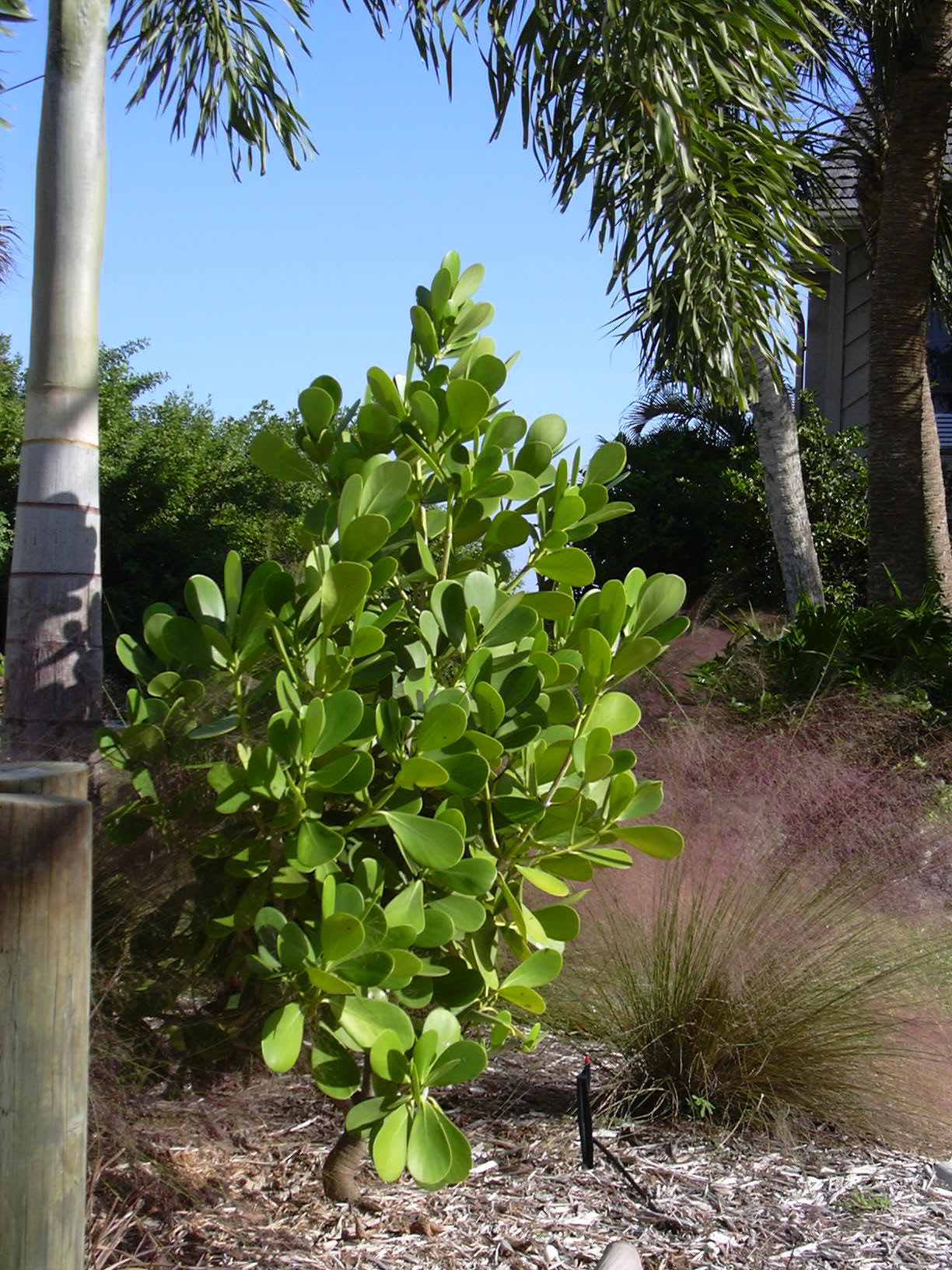
Clusia rosea, commonly known as Pitch Apple, Autograph Tree, or Balsam Apple, is a thick-leaved, evergreen tree that reaches the northern edge of its range in the hammocks and coastal strands of extreme South Florida. Easily recognized by its broad, leathery, rounded leaves and sculptural, often multi-trunked form, Pitch Apple is beloved by Florida gardeners — though the wild, truly native populations are far scarcer and more restricted than the countless cultivated hedges and specimen plantings seen throughout South Florida landscaping today.
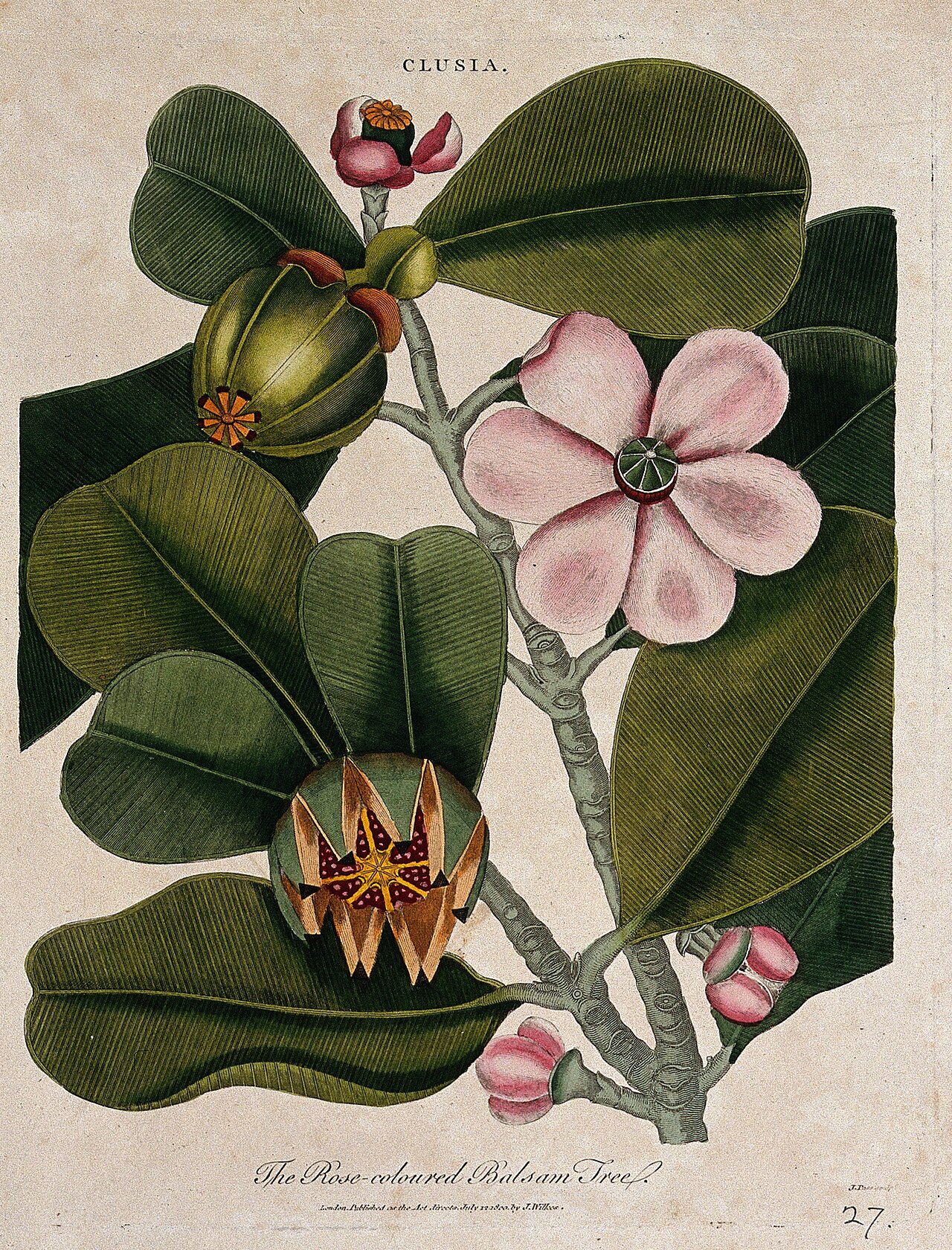
In the wild, Pitch Apple begins life as a hemiepiphyte, germinating high in the canopy of a host tree and sending roots downward toward the soil, sometimes enveloping its host in a strangler-fig-like fashion before eventually rooting independently. Mature trees reach 25 to 40 feet, with a dense, rounded crown of large, glossy, succulent-looking leaves and showy white-and-pink flowers followed by distinctive leathery fruit capsules that split open in a dramatic star shape.
While Pitch Apple is planted extensively across South Florida as a hedge and screening plant — a use so common that many residents assume every specimen they see is simply landscaping — true wild, native populations are rare and largely confined to a handful of tropical hammocks and coastal sites in the Florida Keys and the southern tip of the mainland. For a native-plant garden, sourcing nursery stock of Florida provenance and giving the tree room to develop its natural sculptural form is the most faithful way to grow this striking coastal tropical species.
Identification
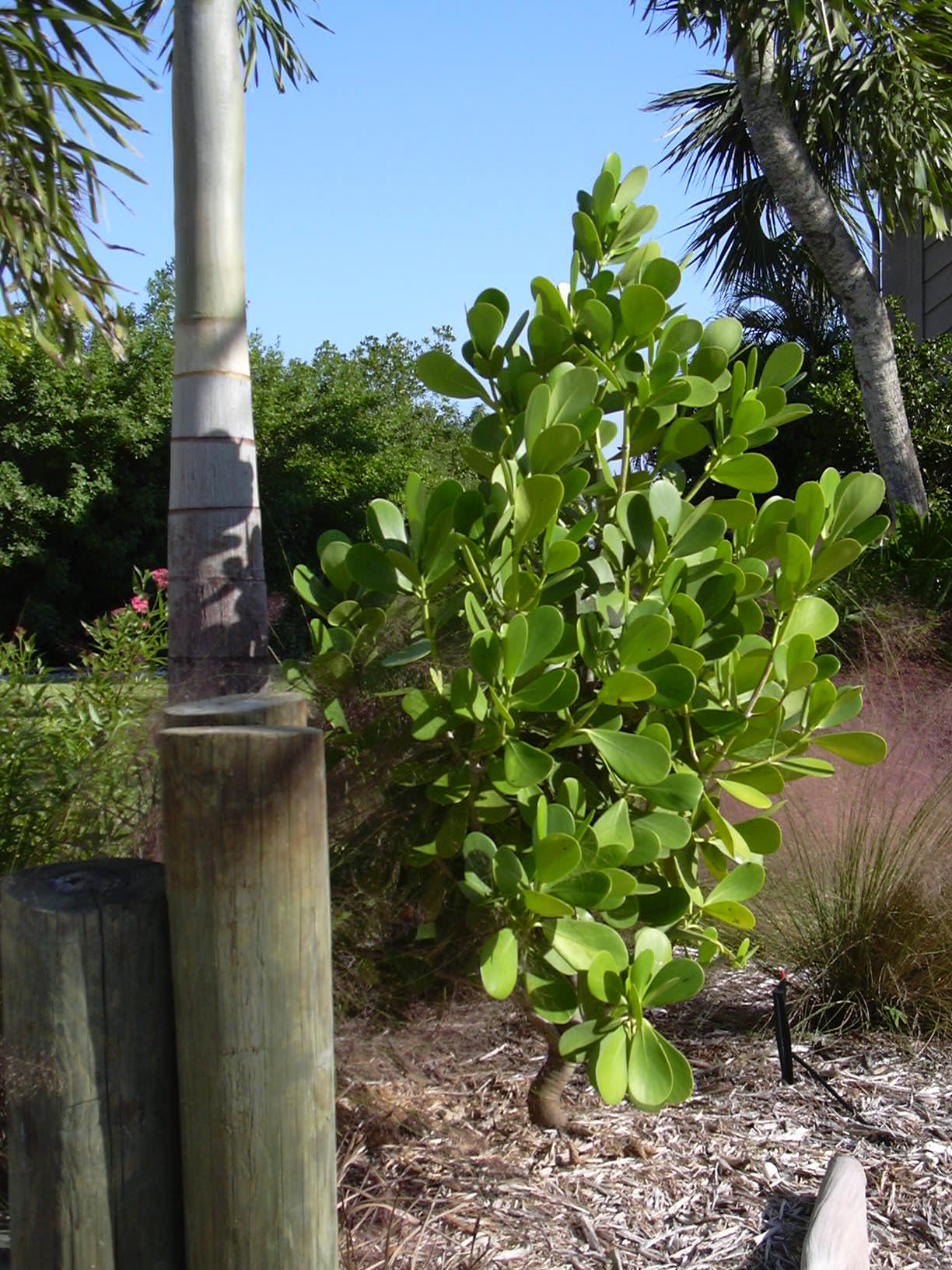
Pitch Apple grows as a dense, rounded, evergreen tree or large shrub, typically 10 to 25 feet tall in cultivation but capable of reaching 40 feet with a broad, umbrella-like crown where it matures undisturbed. Many wild individuals begin as hemiepiphytes on a host tree, eventually developing thick, often buttressed or fused aerial roots that can obscure the original host entirely.
Bark & Stems
Bark is smooth and grayish on young growth, becoming somewhat rougher with age. Stems and leaves exude a sticky, yellow latex-like sap when cut or bruised — the source of the common name “pitch apple” — which was historically used much like pitch or caulk.
Leaves
The leaves are the tree’s most recognizable feature: thick, leathery, broadly oval to rounded, 4 to 8 inches long, with a glossy dark green upper surface and a succulent, almost rubbery texture. The common name “Autograph Tree” comes from the ease with which words or initials scratched into the leaf surface remain visible for weeks, as the wound darkens against the still-living leaf tissue.
Flowers & Fruit
Flowers are showy, 2 to 3 inches across, with thick, waxy petals that are white tinged with pink to rose, appearing mainly in late spring and summer. Female and male flowers occur on separate plants (the species is dioecious). The fruit is a distinctive leathery, greenish to brown capsule about 2 to 3 inches across that splits open into a dramatic star-shaped pattern when ripe, revealing numerous seeds coated in a sticky, bright orange-red pulp that attracts fruit-eating birds.
Quick Facts
| Scientific Name | Clusia rosea |
| Family | Clusiaceae (Mangosteen/Garcinia) |
| Plant Type | Evergreen Tree (often hemiepiphytic when young) |
| Mature Height | 10–25 ft in cultivation (to 40 ft in favorable wild sites) |
| Mature Spread | 15–25 ft |
| Growth Rate | Slow to moderate |
| Sun Exposure | Full Sun to Part Shade |
| Water Needs | Low to Moderate once established |
| Soil Type | Sandy or limestone-based, well-drained soils |
| Soil pH | 6.5–8.0 (neutral to alkaline) |
| Bloom Time | Late spring – summer |
| Flower Color | White tinged pink to rose |
| Fall Color | None (evergreen) |
| Fruit | Star-splitting leathery capsules with orange-red pulp |
| Deer Resistant | Yes |
| USDA Hardiness Zones | 10b–11 |
Native Range
Pitch Apple reaches the northernmost edge of its native range in extreme South Florida, including the Florida Keys and scattered tropical hammock and coastal sites on the southern mainland. South of the U.S., it is far more common and widespread, native across the Bahamas, Cuba, Hispaniola, Puerto Rico, and other Caribbean islands, as well as parts of southern Mexico, Central America, and northern South America.
Within Florida, true wild Pitch Apple is a specialist of tropical hardwood hammocks, coastal strand vegetation, and rockland hammock habitat, often beginning life high in a host tree’s canopy as a hemiepiphyte before developing independent roots. It is important to distinguish these wild, native populations from the far more numerous cultivated specimens planted as hedges and screens throughout South Florida landscaping, which, while the same species, are not evidence of natural occurrence at a given site.
Because genuinely wild Pitch Apple is now uncommon relative to its ubiquitous use in landscaping, native-plant gardeners in South Florida who want to support the species in its natural ecological role should prioritize nursery stock propagated from Florida-native material and plant it in habitat conditions — such as hammock-edge or coastal strand settings — that reflect its wild origins.
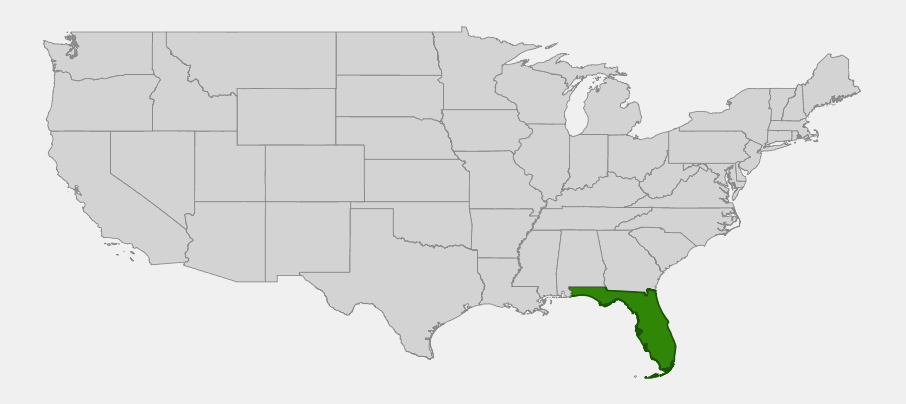
📋 Pitch Apple’s native range is too narrow to be covered by any of our broader regional plant lists — see our full native plant directory for more South Florida species.
Growing & Care Guide
Pitch Apple is a forgiving, low-maintenance tree for South Florida gardeners, tolerant of salt spray, wind, and a wide range of soils, which explains its enormous popularity as a landscape and hedge plant throughout the region.
Light
Full sun produces the densest, most compact growth and best flowering, though Pitch Apple also tolerates partial shade, particularly when young and still establishing as an understory or hemiepiphytic plant in hammock settings.
Soil & Water
Pitch Apple adapts well to the sandy and limestone-based soils typical of South Florida, including alkaline conditions that many other trees struggle with. It is notably drought-tolerant once established and also handles occasional flooding and brief saltwater exposure, making it well suited to coastal plantings.
Planting Tips
Plant container-grown stock in spring or early summer, choosing a site with room for the tree’s eventual broad, rounded crown if grown as a specimen rather than a clipped hedge. Because of its dense, heavy canopy, Pitch Apple can be susceptible to wind-throw in extreme storms if not well rooted, so avoid overly wet or loose soils at planting time.
Pruning & Maintenance
Pitch Apple tolerates heavy shearing extremely well, which is why it is so widely used as a clipped hedge in South Florida landscapes. For a more natural, tree-like specimen, prune minimally to remove dead or crossing branches and allow the rounded, sculptural crown to develop on its own. The plant is generally pest- and disease-resistant.
Propagation
Propagation is typically done from seed, which should be sown fresh since viability declines quickly after extraction from the fruit, or from cuttings, which root readily in warm, humid conditions. Because the species is dioecious, seed-grown plants will not flower or fruit until they mature enough to reveal their sex, which can take several years.
Landscape Uses
Pitch Apple’s toughness and bold foliage make it one of South Florida’s most versatile landscape trees:
- Clipped hedge or privacy screen in coastal and urban landscapes
- Specimen or accent tree showing off its natural rounded form
- Coastal and salt-tolerant plantings near beaches and waterfront properties
- Tropical hammock restoration when sourced from Florida-native stock
Wildlife & Ecological Value
Within its native South Florida hammock and coastal habitats, Pitch Apple provides food and structural habitat that supports a range of tropical wildlife.
For Birds
The star-splitting fruit capsules, which reveal seeds coated in bright orange-red pulp, are highly attractive to fruit-eating birds, which help disperse the seeds to new host trees and hammock sites. The dense evergreen canopy also provides year-round nesting and roosting cover in hammock habitat.
For Mammals
The thick, tangled growth and tolerance for wind and salt exposure make mature Pitch Apple stands a valuable source of cover for small mammals in coastal hammock environments, where few other trees combine this level of density with resilience to storm exposure.
For Pollinators
The large, waxy flowers, though not heavily fragrant, attract a range of insect pollinators; notably, in parts of its broader range, Pitch Apple is known for producing a resinous floral reward rather than nectar in some populations, a specialized pollination strategy of ongoing interest to tropical plant researchers.
Ecosystem Role
As a hemiepiphyte-turned-independent tree, Pitch Apple plays a distinctive structural role in South Florida’s tropical hammocks, often beginning its life cycle intertwined with a host tree before becoming an independent, often massive, canopy or sub-canopy presence. Its dense, wind- and salt-tolerant growth also makes it ecologically valuable in stabilizing and buffering coastal hammock edges against storm damage.
Cultural & Historical Uses
The name “Pitch Apple” refers to the sticky, resinous sap exuded from cut stems and leaves, which Caribbean and Florida residents historically used in a manner similar to pitch or caulk — for sealing boat seams and other practical waterproofing tasks, a use documented across much of its Caribbean range.
The common name “Autograph Tree” reflects a long-standing, informal tradition of visitors and residents scratching initials or short messages into the thick, leathery leaves, which remain legible for weeks as the wound tissue darkens against the still-living leaf — a simple but memorable feature that has made the species a familiar and well-loved fixture of South Florida yards, parks, and botanical gardens for generations.
Today, Pitch Apple is primarily valued ornamentally, prized throughout South Florida and the broader Caribbean for its toughness, salt tolerance, and bold tropical foliage, making it one of the most widely planted native trees in the region even as truly wild populations remain comparatively limited.
Frequently Asked Questions
Is Pitch Apple really native to Florida, or just planted everywhere?
Both are true. Pitch Apple is a genuine Florida native, with wild populations in Keys and South Florida hammocks, but the species is also planted so extensively as a hedge and landscape plant that most specimens seen around South Florida are cultivated rather than naturally occurring.
Why is it called the Autograph Tree?
Because its thick, leathery leaves hold a scratched inscription — initials, names, or short messages — for weeks, as the damaged tissue darkens visibly against the still-living leaf surface.
Can you eat Pitch Apple fruit?
No. Despite the common name “apple,” the fruit is not a food source for people; it is valuable primarily as a wildlife food, consumed by birds that are drawn to the orange-red pulp coating the seeds inside the star-splitting capsule.
How salt-tolerant is Pitch Apple?
Very. It is one of the more salt- and wind-tolerant native Florida trees, which is a major reason it is so widely planted in coastal and beachfront landscaping throughout South Florida.
Does Pitch Apple need a host tree to grow?
Only when young, in some cases. Many wild individuals begin life as hemiepiphytes, germinating in the canopy of a host tree and sending roots downward, but nursery-grown plants are typically rooted conventionally in soil from the start and do not require a host tree to thrive.

Looking for a nursery that carries Pitch Apple?
Browse our native plant nursery directory: Florida
For more South Florida landscaping ideas, see our guides to the best evergreen trees to grow in Florida and best shade trees for Florida.

