
Subalpine Larch (Larix lyallii)
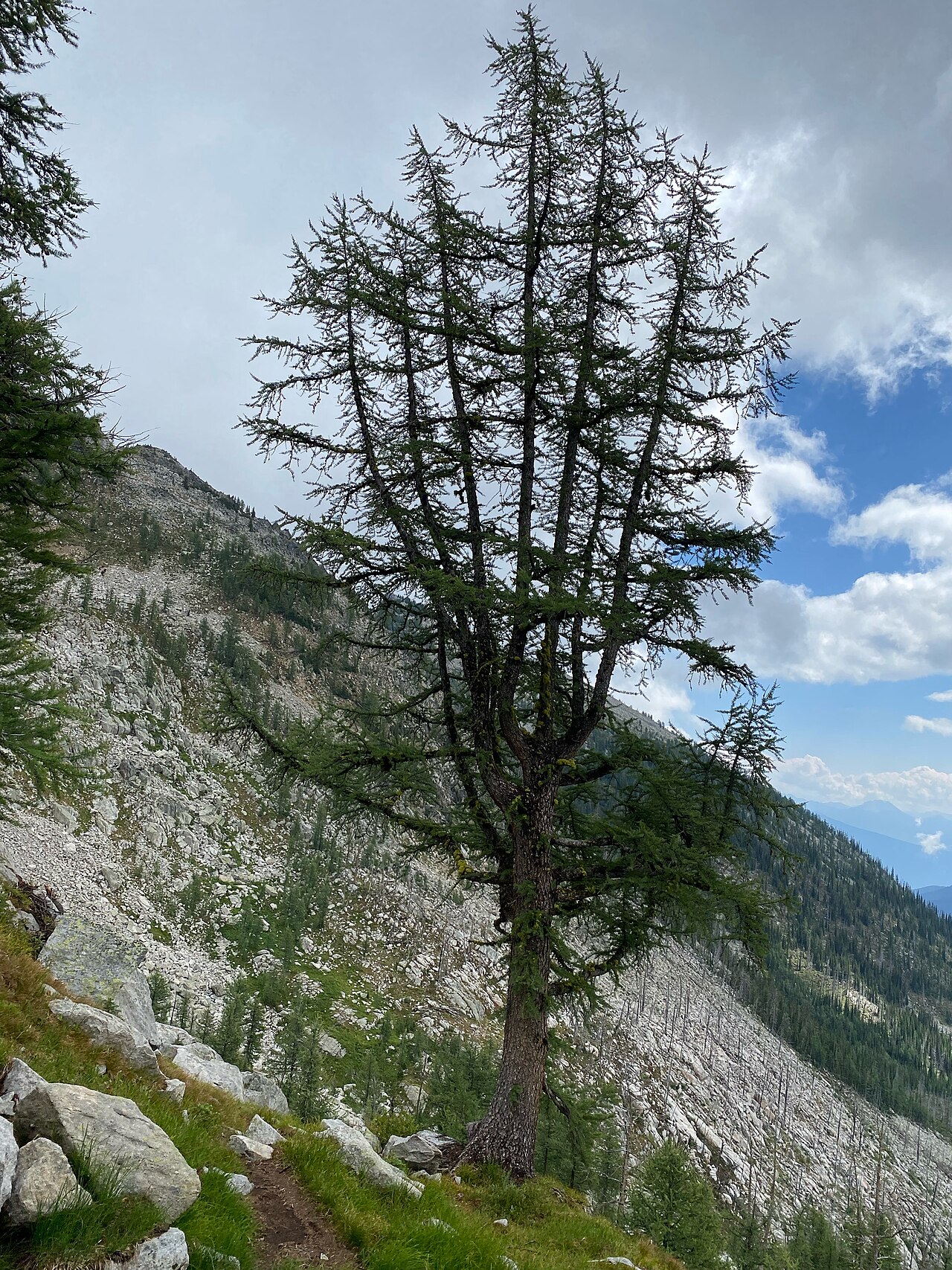
Larix lyallii, commonly known as Subalpine Larch or Alpine Larch, is a rugged, deciduous conifer that grows at the very edge of where trees can survive in the northern Rocky Mountains. Unlike the evergreen firs and spruces that share its high-elevation home, Subalpine Larch drops its soft needles every autumn in a brilliant display of gold, making it one of the most striking and sought-after sights in the mountains of Washington, Idaho, and Montana each fall.
This slow-growing, long-lived tree typically reaches 30 to 50 feet tall in the harsh, rocky, windswept terrain just below and at timberline, where few other trees can gain a foothold. Its twisted, weathered form, pale furrowed bark, and soft blue-green needles clustered in dense tufts make it instantly recognizable to hikers who venture into the high basins and ridgelines where it grows. Some individuals are known to live well over 1,000 years, making Subalpine Larch one of the oldest living things in the northern Rockies.
Because it is restricted to a narrow band of high-elevation habitat, Subalpine Larch is rarely planted in typical home gardens, but it is an extraordinary choice for high-elevation native plantings, alpine rock gardens, and restoration projects within or near its natural range in north-central Washington, the Idaho Panhandle, and northwestern Montana.
Identification
Subalpine Larch grows as a single- or multi-stemmed tree, often stunted and twisted (krummholz form) at its uppermost elevation limits, becoming a more upright, conical tree of 30 to 50 feet in more sheltered subalpine basins. Trunk diameters rarely exceed 2 feet even in very old trees, a reflection of the extremely slow growth imposed by its harsh high-mountain environment.
Bark & Stems
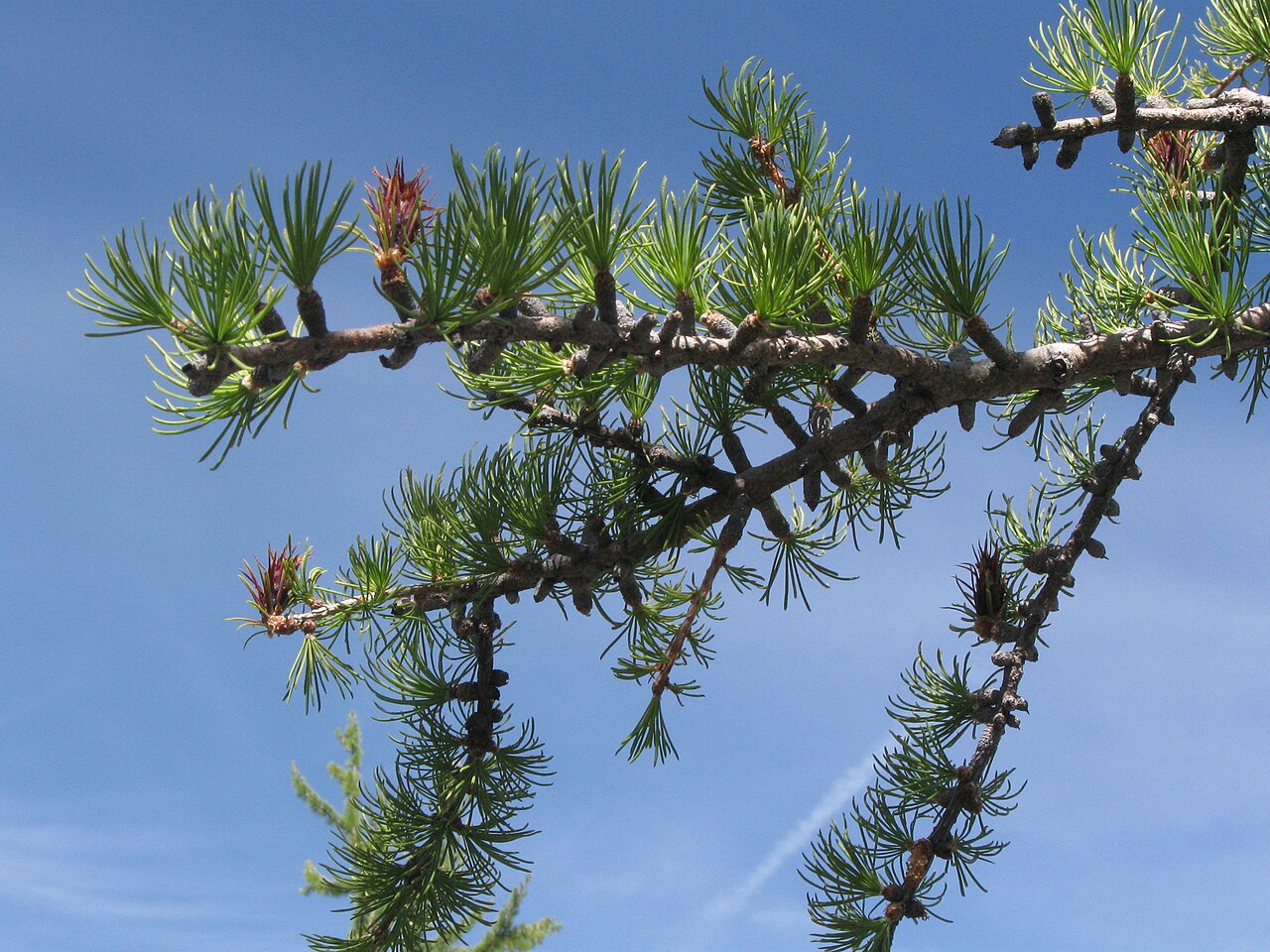
Young bark is thin, smooth, and grayish, becoming thicker, furrowed, and reddish-brown to gray with age, breaking into irregular plates on old trunks. Twigs are densely covered in fine, woolly, rust-colored hairs — a distinctive feature that separates this species from the related Western Larch (Larix occidentalis) found at lower elevations, whose twigs are hairless.
Leaves
Needles are soft, four-sided, and bluish-green, about 1 to 2 inches long, growing in dense tufts of 30 to 40 needles on short spur shoots along the branches. Being deciduous, the entire tree turns a brilliant golden-yellow in late September and October before dropping its needles for winter — one of the few North American conifers to do so.
Flowers & Fruit
Subalpine Larch is monoecious, producing small reddish-purple male cones and showier reddish female cones in late spring, appearing alongside the new needle growth. The mature seed cones are egg-shaped, 1½ to 2 inches long, with exserted, downward-curving bracts that give the cone a shaggy, bristled look. Cones ripen to purplish-brown by late summer and persist on the branches, often remaining visible through the following winter.
Quick Facts
| Scientific Name | Larix lyallii |
| Family | Pinaceae (Pine) |
| Plant Type | Deciduous Conifer Tree |
| Mature Height | 30–50 ft (stunted krummholz form at treeline) |
| Mature Spread | 15–25 ft |
| Growth Rate | Very slow |
| Sun Exposure | Full Sun |
| Water Needs | Low to Moderate; relies on snowmelt |
| Soil Type | Thin, rocky, well-drained alpine soils |
| Soil pH | 5.5–7.0 |
| Bloom Time | Late May – June (cones, not showy flowers) |
| Flower Color | Reddish-purple cones |
| Fall Color | Brilliant golden-yellow |
| Fruit | Small bristled cones, 1½–2 in |
| Deer Resistant | Yes, generally |
| USDA Hardiness Zones | 2–5 |
Native Range
Subalpine Larch grows in a narrow, high-elevation band of the northern Rocky Mountains, from southwestern Alberta and southeastern British Columbia south into north-central Washington, the Idaho Panhandle, and northwestern Montana. It is typically found between about 5,900 and 7,900 feet in elevation, occupying the harsh transition zone between closed subalpine forest and open alpine tundra.
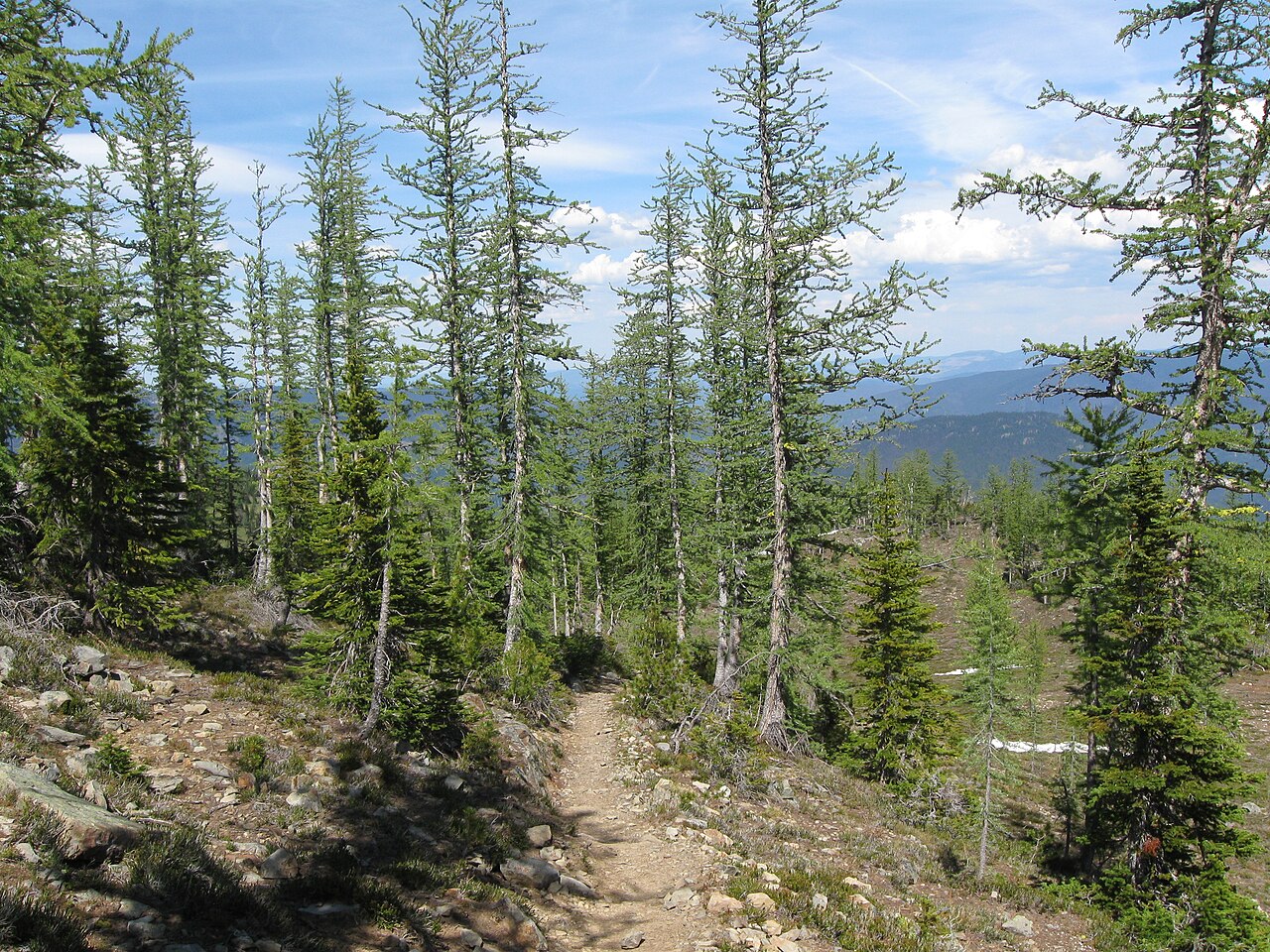
Within this range, Subalpine Larch is most often found on steep, rocky, north- or east-facing slopes, talus fields, and cirque basins where snow lingers late into summer. In Washington, it is best known from the high basins of the North Cascades — places like Larch Valley-style terrain near Washington Pass and the Enchantments-adjacent peaks of the Wenatchee Mountains. It frequently grows alongside Subalpine Fir and Whitebark Pine, often as one of the last trees before bare rock and permanent snowfields take over.
Because it occupies such a narrow and climate-sensitive elevational band, Subalpine Larch is considered especially vulnerable to a warming climate, which is expected to push suitable habitat higher and shrink the extent of this already limited species over time.
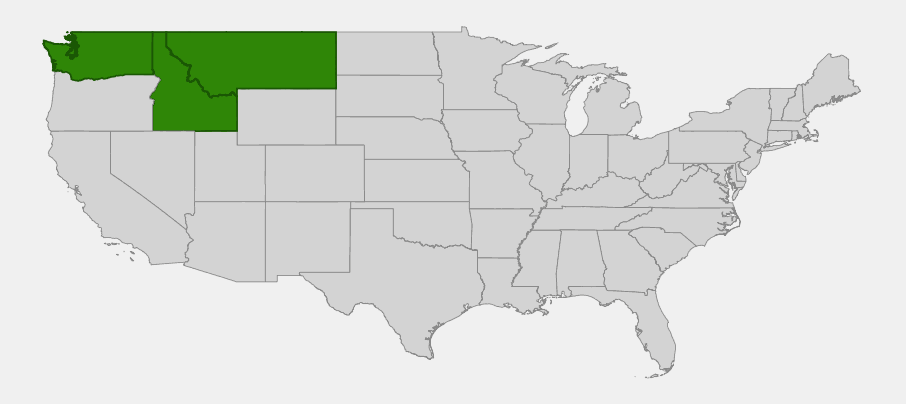
📋 Regional plant lists featuring Subalpine Larch: Idaho, Eastern Oregon & Eastern Washington · Montana & Wyoming
Growing & Care Guide
Subalpine Larch is extremely difficult to establish outside of true high-elevation, cold-winter conditions, and it is best reserved for alpine gardens, restoration plantings, and botanic collections within or close to its native mountain range rather than typical residential landscaping.
Light
This species demands full sun and intense light, matching the open, exposed conditions of its native ridgelines and talus slopes. It will not thrive or develop its characteristic form in shaded or sheltered sites.
Soil & Water
Thin, rocky, extremely well-drained soils are essential — Subalpine Larch will not tolerate heavy, poorly drained, or fertile garden soils, which promote root disease and weak growth. In its native habitat it depends on a deep winter snowpack and cool summer soil moisture from snowmelt; gardeners outside its elevation range should not expect it to perform well in typical low-elevation summer heat.
Planting Tips
Planting is realistically limited to high-elevation sites (generally above 5,500 feet) with cold winters and a reliable snowpack. Specialty alpine or conifer nurseries occasionally offer grafted or seed-grown stock; young trees should be planted in early spring into rocky, lean soil and given protection from browsing animals during establishment.
Pruning & Maintenance
Established trees require essentially no pruning; their naturally twisted, wind-sculpted form is part of their character and should not be corrected. Avoid any fertilization, which can promote weak, disease-prone growth unsuited to the tree’s harsh native environment.
Propagation
Propagation from seed is slow and challenging, requiring extended cold stratification to mimic the long alpine winters the species evolved with. Because of difficult germination and extremely slow early growth, most horticultural interest in this species is limited to specialty collectors and high-elevation restoration programs rather than general nursery production.
Landscape Uses
Realistic uses for Subalpine Larch are narrow but distinctive:
- High-elevation alpine and rock garden specimen in appropriate climates
- Restoration plantings in subalpine habitat recovering from disturbance
- Botanic garden and arboretum collections at higher-elevation institutions
- Fall color accent in mountain towns within its native elevation band
Wildlife & Ecological Value
As one of the few trees able to survive right at treeline, Subalpine Larch plays an outsized ecological role in the high-mountain habitats of the northern Rockies and North Cascades.
For Birds
Clark’s Nutcrackers and various finches forage on the seeds released from mature cones, and the open, scattered form of larch stands provides perching and foraging habitat for high-elevation birds that would find denser subalpine fir stands less accessible.
For Mammals
Red Squirrels cache larch cones for winter food, and the open stands created by Subalpine Larch provide important summer and fall habitat for Mountain Goats and Hoary Marmots, which are commonly seen foraging among the rocky slopes where this tree grows.
For Pollinators
Like other conifers, Subalpine Larch is wind-pollinated and offers negligible direct forage for pollinators. Its greatest pollinator value is indirect — the sparse tree cover it provides allows sunlight to reach alpine wildflowers growing in its understory, which do support native bees and butterflies at these elevations.
Ecosystem Role
Subalpine Larch is a foundational treeline species, marking the upper elevational limit where trees can survive the extreme wind, cold, and short growing season of the alpine zone. Its presence stabilizes thin, rocky high-mountain soils and creates microhabitats that allow other subalpine plants to establish. Because treeline species like this one are especially sensitive indicators of climate change, long-lived Subalpine Larch stands are closely studied by researchers tracking shifts in alpine ecosystems.
Cultural & Historical Uses
Subalpine Larch grows in remote, high-elevation terrain that saw relatively limited use by Indigenous peoples of the region compared with lower-elevation forest and valley resources, though the broader larch genus held practical and symbolic significance for mountain-traveling tribes of the northern Rockies and Columbia Plateau, who recognized larch as a signal of changing seasons when its needles turned gold each fall.
The tree’s extreme remoteness and slow growth meant it was never commercially harvested the way lower-elevation Western Larch was for lumber. Instead, Subalpine Larch has long been valued simply as a landmark and seasonal spectacle — its golden autumn color draws hikers into the high basins of the North Cascades and northern Rockies each October, a tradition that continues to grow in popularity today.
Modern interest in the species is largely scientific and recreational: dendrochronologists study its extremely old, slow-growing individuals (some documented beyond 1,000 years) to reconstruct past climate conditions, while hikers and photographers travel specifically to see its brief, brilliant fall display.
Frequently Asked Questions
Why does Subalpine Larch lose its needles if it’s a conifer?
Subalpine Larch is one of the relatively few conifers that is deciduous. Dropping its needles each autumn, after a brilliant golden color change, helps it survive the extreme cold, wind, and heavy snow loads of its treeline habitat better than evergreen needles could withstand.
Where can I see Subalpine Larch in the wild?
The North Cascades of Washington are the most accessible and popular viewing area in the United States, along with high basins in the Idaho Panhandle and northwestern Montana’s Rocky Mountains, generally above about 6,000 feet.
Can I grow Subalpine Larch in a regular garden?
It is very difficult outside true high-elevation, cold-winter sites. The species depends on intense light, thin rocky soil, and a long cold dormant season, so it rarely succeeds in typical low- or mid-elevation residential landscapes.
How is Subalpine Larch different from Western Larch?
Subalpine Larch grows at much higher elevations at or near treeline, has woolly-haired twigs, and is a smaller, slower-growing, more twisted tree. Western Larch (Larix occidentalis) grows at lower elevations, has hairless twigs, and becomes a much larger timber tree.
How old can Subalpine Larch trees get?
Because of its extremely slow growth in harsh conditions, Subalpine Larch is remarkably long-lived, with some documented individuals exceeding 1,000 years old, making it one of the oldest tree species in the northern Rocky Mountains.

Looking for a nursery that carries Subalpine Larch?
Browse our native plant nursery directory: Idaho · Montana · Washington
For more mountain tree ideas, see our guides to evergreen trees to grow in Idaho, growing conifer trees, and the best shade trees for Montana.

