
Water Smartweed (Polygonum amphibium)
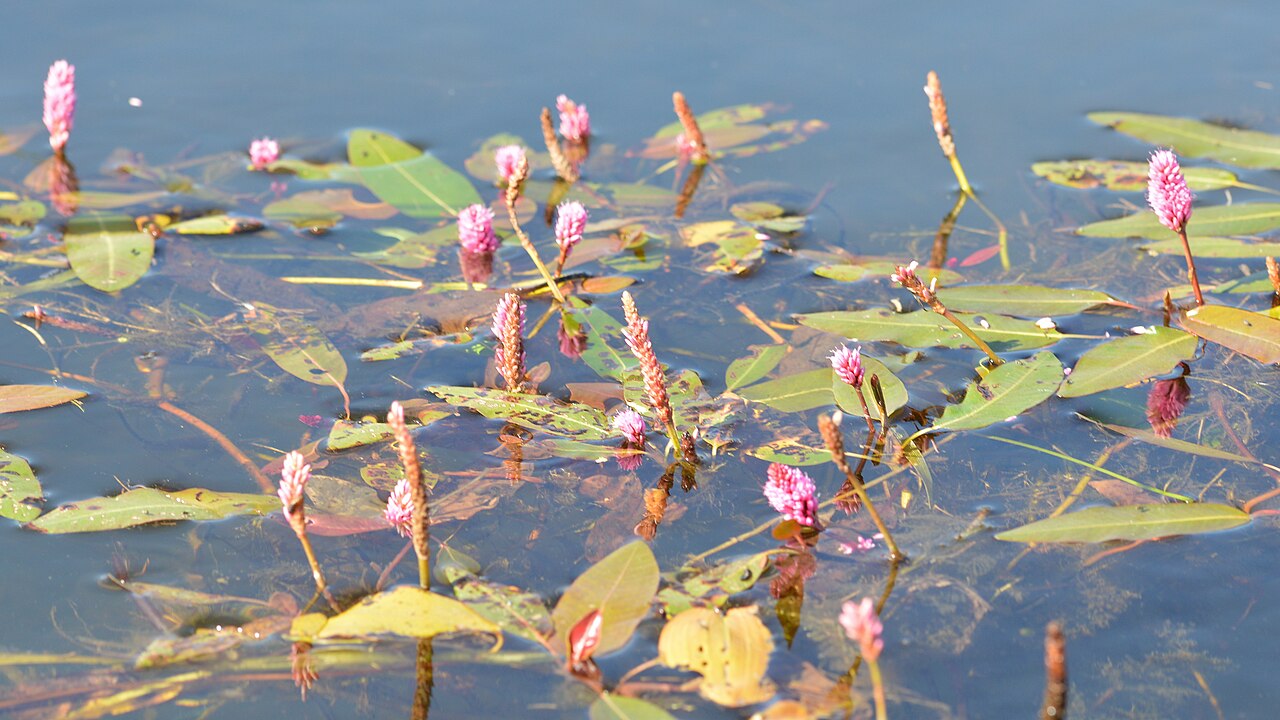
Polygonum amphibium, known as Water Smartweed, water knotweed (the USDA common name), longroot smartweed or amphibious bistort, is a native perennial of the buckwheat family (Polygonaceae). Many botanists and field guides now call it Persicaria amphibia. It is one of the most widespread wetland plants in the world, native across North America, Europe and Asia.
True to its name, it is amphibious. In ponds and lakes it grows as a floating aquatic, with smooth oval leaves resting on the water like small lily pads. On muddy shores, in wet meadows and ditches, the same species grows as an upright land plant with longer, often hairy leaves. In both forms it produces dense spikes of bright pink flowers from early summer into fall.
Water smartweed is valuable for pond edges, rain gardens and wetland restorations, where it feeds waterfowl and pollinators. It also spreads vigorously by rhizomes, so it needs some room. This guide covers how to identify both forms, where it grows, how to grow it and its value for wildlife.
Identification
Look for a smartweed with a single, dense, rose-pink flower spike at the tip of each stem, growing either as a floating plant with long-stalked oval leaves in water or as an upright plant with lance-shaped leaves on wet ground. Long, creeping rhizomes connect the plants into colonies.
Growth Form
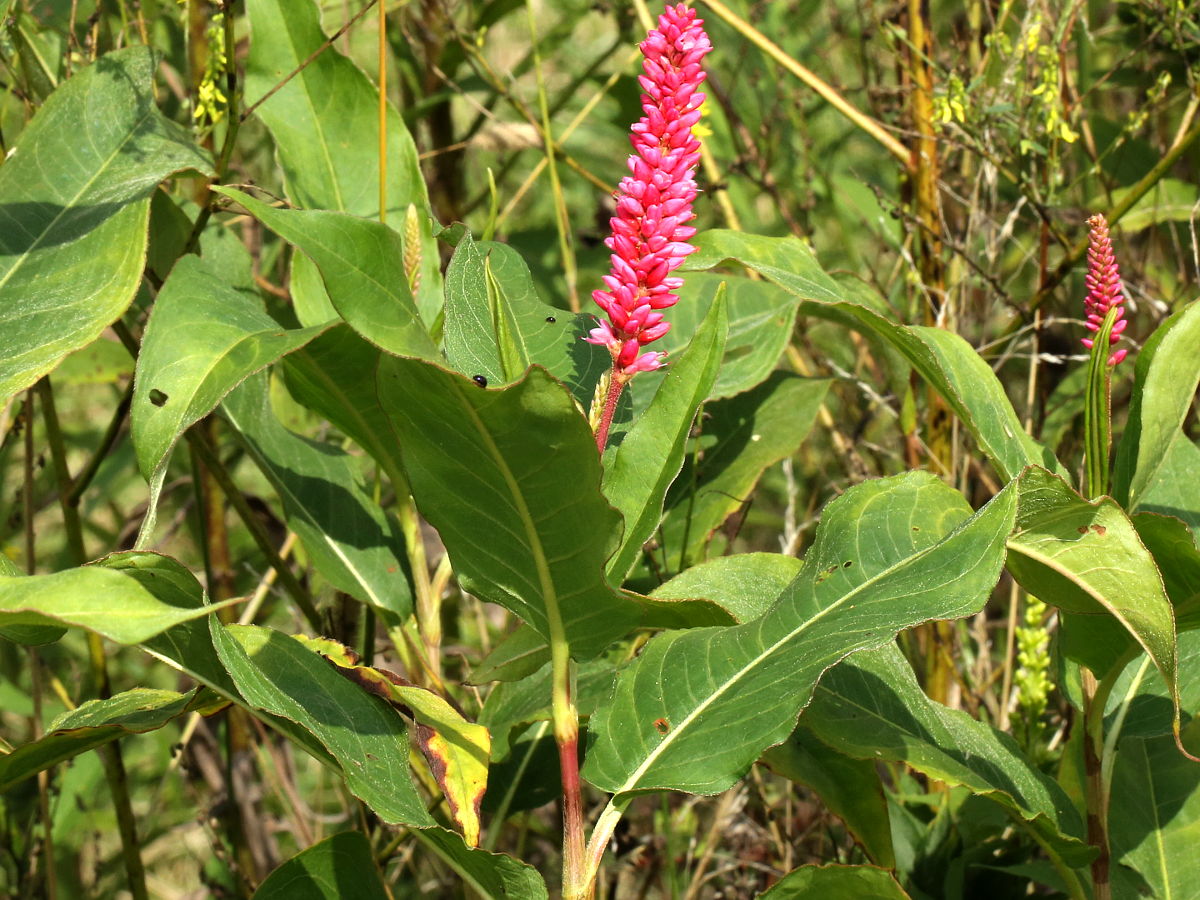
A rhizomatous perennial that forms colonies. The water form has long, flexible stems rooted in the bottom mud, with leaves floating at the surface in water up to several feet deep. The land form has upright or sprawling stems 1 to 3 feet tall. Plants can switch between forms as water levels rise and fall, and the two forms can look like different species.
Leaves
Leaves are alternate, with a papery sheath (ocrea) around the stem at each node, typical of smartweeds. Floating leaves are smooth, glossy, leathery, oblong to elliptic with a blunt or rounded tip, 2 to 6 inches long, on long stalks. Land-form leaves are longer and narrower, lance-shaped with a pointed tip, up to 8 inches long, and often roughly hairy.
Flowers
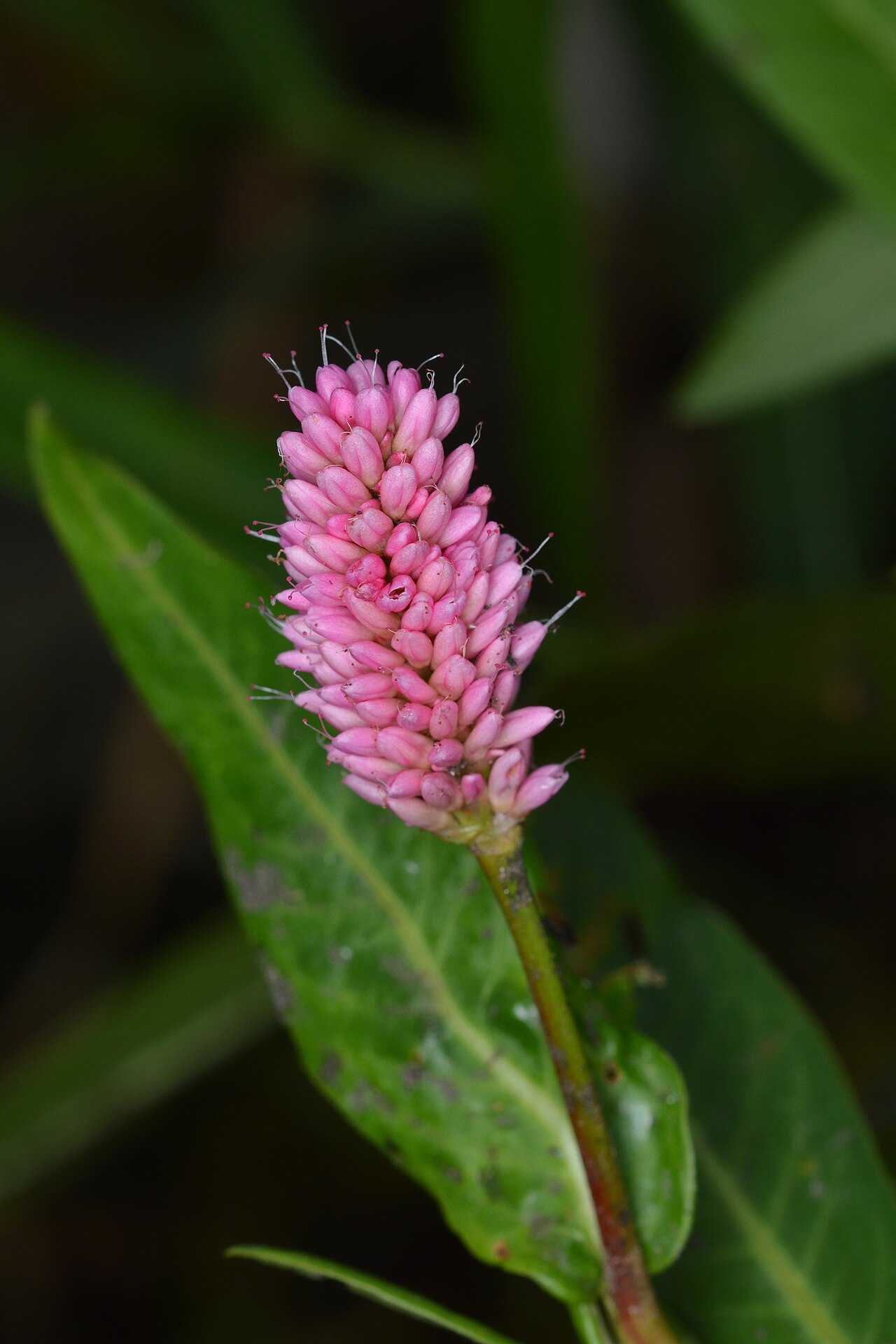
The flowers are small, bright pink to rose-red, and packed into a dense, cylindrical spike at the end of the stem. Spikes on the water form are short and plump, about ½ to 1½ inches long; on the land form they are longer and more slender, up to 4 inches or more. Stamens often protrude, giving the spike a fuzzy look. Bloom runs from about June to September.
Fruit & Seeds
Each flower produces one small, shiny, dark brown, lens-shaped seed (achene). Many plants set relatively little seed and spread mainly by rhizomes and stem fragments.
Similar Species
Pennsylvania smartweed (Polygonum pensylvanicum) and other annual smartweeds have several shorter, branched spikes per stem and no long rhizomes or floating leaves. Arrowleaf tearthumb has arrow-shaped leaves and stems lined with tiny backward-pointing prickles. American bistort of western mountains has white flower clusters and grows in moist meadows, not in water.
Quick Facts
| Scientific Name | Polygonum amphibium (syn. Persicaria amphibia) |
| Family | Polygonaceae (buckwheat family) |
| Plant Type | Rhizomatous aquatic or emergent perennial |
| Mature Height | Floating; land form 1–3 ft |
| Mature Spread | Spreads widely by rhizomes |
| Growth Rate | Fast |
| Sun Exposure | Full sun to part shade |
| Water Needs | High; shallow water to wet soil |
| Soil Type | Mucky, silty, sandy or clay pond and stream sediments |
| Soil pH | About 5.5–8.5 |
| Bloom Time | June–September |
| Flower Color | Bright pink to rose-red |
| Fall Color | Floating leaves may redden |
| Fruit | Small, shiny, lens-shaped achenes |
| Deer Resistant | Somewhat; may be browsed |
| USDA Hardiness Zones | 2–10 |
Native Range
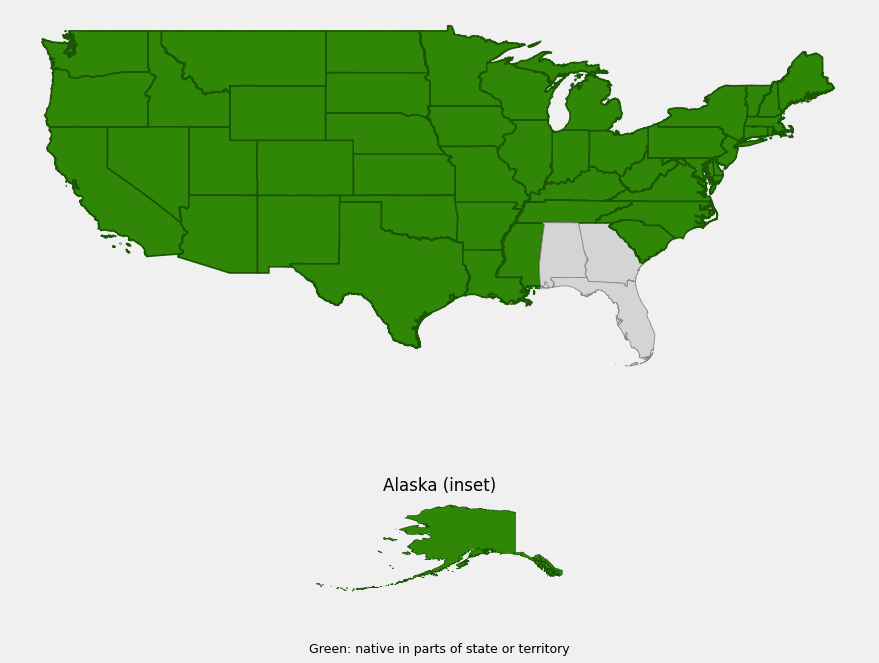
Water smartweed is native across nearly all of the United States: USDA PLANTS records it in Alaska and in every lower-48 state except Alabama, Georgia and Florida. It is also native throughout most of Canada, from Yukon and the Northwest Territories to Newfoundland and Labrador, and it is widespread across Europe and Asia, with populations in Africa.
It is most common in the northern half of the country, from New England and the Great Lakes across the northern Plains to the Pacific Northwest, and becomes more scattered in the South and the desert Southwest.
The water form grows in ponds, lakes, marshes, beaver ponds, oxbows and slow streams, in water up to about 6 feet deep. The land form grows on exposed mudflats, shores, wet meadows, ditches, wet prairies, prairie potholes and even moist fields. Fluctuating water levels favor it.
📋 Regional plant lists featuring Water Smartweed: New York, Pennsylvania & Northern New Jersey · Idaho, Eastern Oregon & Eastern Washington · Ohio & Indiana · Montana & Wyoming · Michigan, Wisconsin & Eastern Minnesota · Kentucky & Tennessee · Nebraska, Kansas & Eastern Colorado · Utah & Western Colorado · Connecticut, Massachusetts & Rhode Island · New Hampshire, Maine & Vermont · Maryland, Virginia & West Virginia · Delaware, Southern New Jersey & Long Island · Arizona & New Mexico · Illinois, Iowa & Missouri · Alabama, Georgia & Mississippi · Alaska · North & South Carolina · Arkansas, Louisiana, Eastern Oklahoma & Eastern Texas · North Dakota, South Dakota & Western Minnesota · Western Oregon & Western Washington · California & Nevada
Growing & Care Guide
Water smartweed is an easy plant for ponds, wet shorelines, rain gardens and wetland restorations. It is attractive in bloom and valuable for wildlife, but because it spreads by rhizomes, choose its spot with care.
Light
It grows and blooms best in full sun and tolerates part shade.
Soil & Water
Plant it in mucky or silty soil in water from a few inches to about 3 feet deep for the floating form, or in wet to moist soil along a shore or in a rain garden for the land form. It tolerates fluctuating water levels and seasonal drying, and switches forms as needed.
Planting Tips
In small ponds, plant it in a submerged pot or planting basket to keep the rhizomes contained. In larger ponds and wetlands, plant pieces of rhizome directly into the mud along the margin. Combine it with pickerelweed, duck potato and swamp milkweed for a varied, wildlife-friendly edge.
Pruning & Maintenance
Little care is needed. Pull or cut back runners where they spread too far, and thin dense patches every few years to keep open water. In the land form it can spread into adjacent moist ground, so edge a planting bed if needed.
Propagation
It is easiest to propagate from divisions of rhizomes or stem cuttings in spring or summer; pieces root readily in mud. Seed germination is often low, but fresh seed can be sown in wet soil after a period of cold, wet stratification.
Landscape Uses
- Ponds and water gardens: floating leaves and pink spikes on open water
- Rain gardens and swales: the land form handles wet-dry cycles
- Wetland and shoreline restoration: stabilizes mud and feeds waterfowl
- Wildlife ponds: cover for fish, frogs and invertebrates
- Pollinator plantings: summer-long pink flower spikes
Wildlife & Ecological Value
Water smartweed is an important wetland plant for wildlife, providing seeds, foliage and cover both above and below the water.
For Pollinators
The pink flower spikes attract bees, flies, wasps and butterflies through the summer, offering nectar and pollen at the water’s edge where few other plants are blooming.
For Birds
The seeds of smartweeds are a well-known food of ducks and other waterfowl, as well as rails and songbirds such as red-winged blackbirds and sparrows. Floating leaf beds also shelter the aquatic insects and snails that ducklings feed on.
For Mammals
Muskrats and beavers eat the stems and rhizomes, and deer and moose may browse the plants along shores.
Ecosystem Role
Its floating leaf beds shade the water, provide cover and egg-laying sites for fish, frogs and aquatic insects, and dampen wave action. The land form holds exposed mud and stabilizes shorelines as water levels drop.
Cultural & Historical Uses
The species name amphibium means “living a double life” (on land and in water), describing its two forms. Linnaeus named it Polygonum amphibium in 1753. Many modern botanists split the large genus Polygonum and place smartweeds in Persicaria, so you will often see it as Persicaria amphibia. Older North American books also treat the land and water forms as separate species or varieties, such as Polygonum coccineum and Polygonum natans.
The name “smartweed” comes from the sharp, peppery sap of some relatives, such as water pepper (Persicaria hydropiper), which can make the mouth and skin smart. Water smartweed is milder, but it is not a garden food plant, and no wild plant should be eaten without expert identification.
Because it spreads so well and survives both flooding and drying, water smartweed can become a weed in irrigated fields and crowded small ponds. In natural wetlands, though, it is a valued native that thrives where water levels rise and fall each season.
Frequently Asked Questions
Is water smartweed the same as Persicaria amphibia?
Yes. Polygonum amphibium and Persicaria amphibia are two names for the same species. USDA PLANTS uses Polygonum, while many other floras use Persicaria.
Why does it look so different in water and on land?
It is amphibious. In water it has smooth, floating oval leaves and short flower spikes; on land it grows upright with longer, often hairy leaves and longer spikes. A single colony can change form as water levels change.
Is water smartweed invasive?
It is native, but it spreads aggressively by rhizomes and can fill small ponds or spread into moist fields. Plant it in a pot or basket in small water gardens.
Is it good for wildlife?
Yes. Ducks and other birds eat the seeds, muskrats and beavers eat the stems and rhizomes, pollinators visit the flowers, and fish, frogs and insects use the leaf beds as cover.
Where does water smartweed grow?
It is native in Alaska, every lower-48 state except Alabama, Georgia and Florida, across Canada and throughout much of Europe and Asia, in ponds, lakes, marshes and wet ground.

Looking for a nursery that carries Water Smartweed?
Browse our native plant nursery directory: Alaska, Arizona & Arkansas · California · Colorado, Connecticut & Delaware · Idaho, Illinois, Indiana, Iowa & Kansas · Kentucky, Louisiana, Maine, Maryland, Massachusetts, Michigan, Minnesota, Mississippi, Missouri & Montana · Nebraska, Nevada, New Hampshire, New Jersey, New Mexico, New York, North Carolina, North Dakota, Ohio & Oklahoma · Oregon · Pennsylvania, Rhode Island, South Carolina, South Dakota, Tennessee, Texas, Utah, Vermont & Virginia · Washington · West Virginia, Wisconsin & Wyoming