Western Coneflower (Rudbeckia occidentalis)
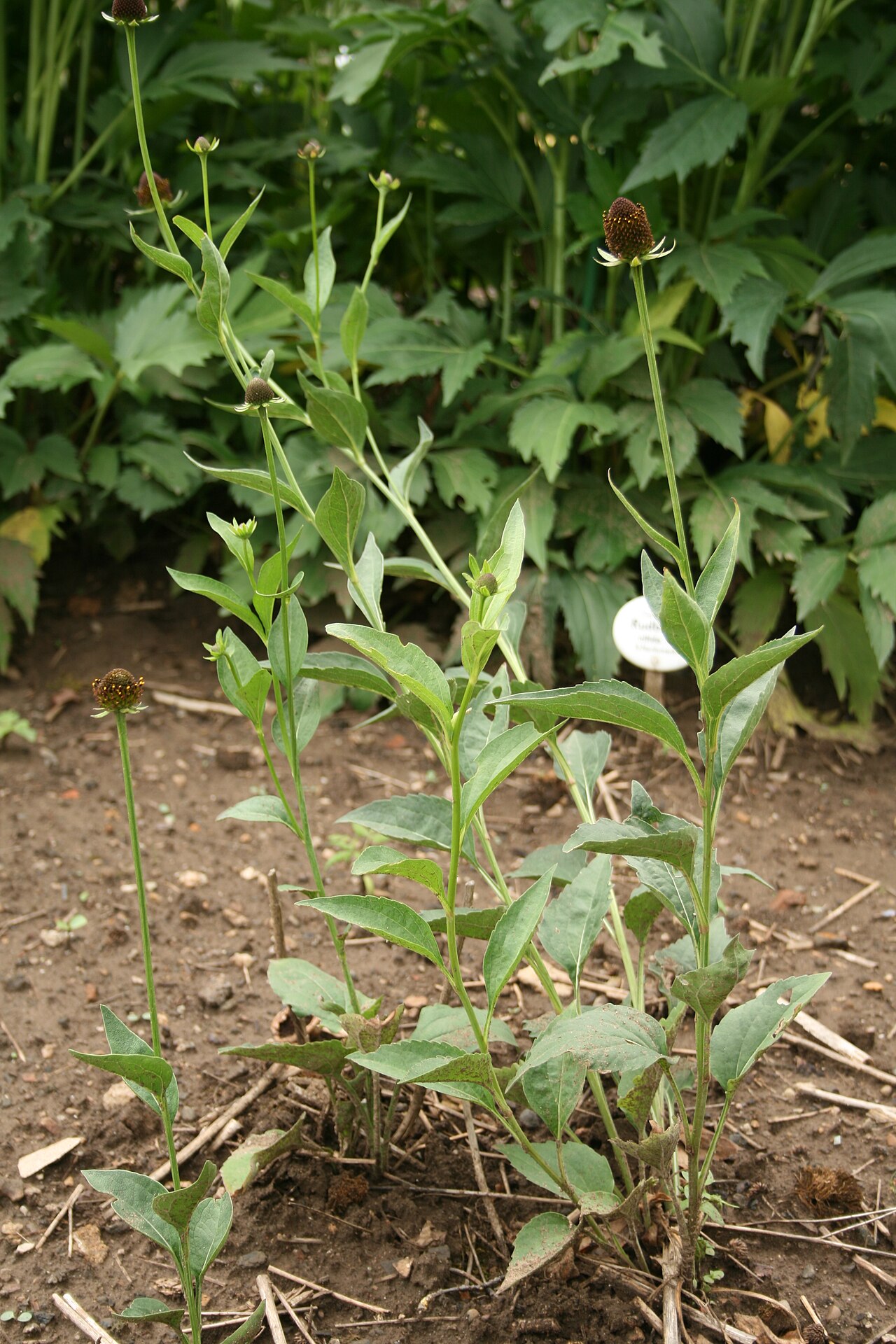
Rudbeckia occidentalis, commonly known as Western Coneflower, is one of the most unusual members of the Rudbeckia genus — the same group that gives us the familiar yellow-rayed Black-eyed Susan (Rudbeckia hirta) and Orange Coneflower (Rudbeckia fulgida). Rather than showy yellow petals, Western Coneflower produces a tall, dark, thimble-shaped central cone with no ray florets at all, giving it the alternate common name “Western Chocolate Cone.” It is a tall, rhizomatous perennial of moist mountain meadows and subalpine openings across the interior Northwest and northern Rockies.
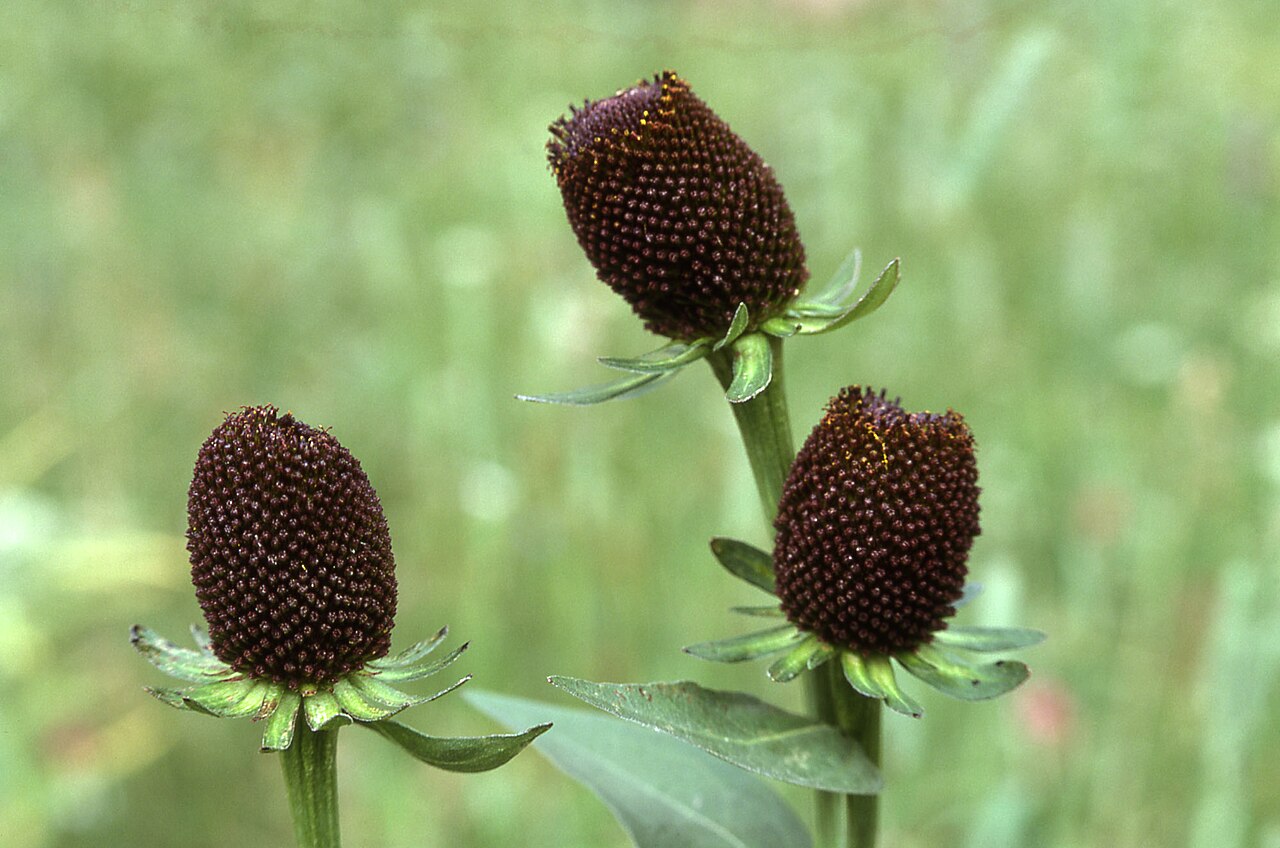
The plant forms clumps of coarse, broad-toothed leaves and erect, mostly unbranched stems that can approach 6 feet in height on good sites, each topped by one or more purplish-brown to black cone-shaped heads. A thin ring of tiny yellow disc-floret tips rims the base of each developing cone, but there are no petal-like rays — a striking departure from the rest of its showy genus, and often the feature that first catches a hiker’s eye.
Because it thrives in the kind of moist, partly shaded mountain meadows found through the Cascades, Sierra Nevada, and Rocky Mountains, Western Coneflower is an excellent choice for naturalistic plantings at higher elevations, streamside gardens, and woodland-edge restorations where many lowland prairie natives struggle with summer heat.
Identification
Western Coneflower is an upright, clump-forming perennial herb growing from a thick rhizome, typically 2 to 4 feet tall but reaching nearly 6 feet on rich, moist sites. The mostly unbranched, hairy stems carry large, oval-to-pointed leaves with lightly to deeply toothed margins.
Leaves
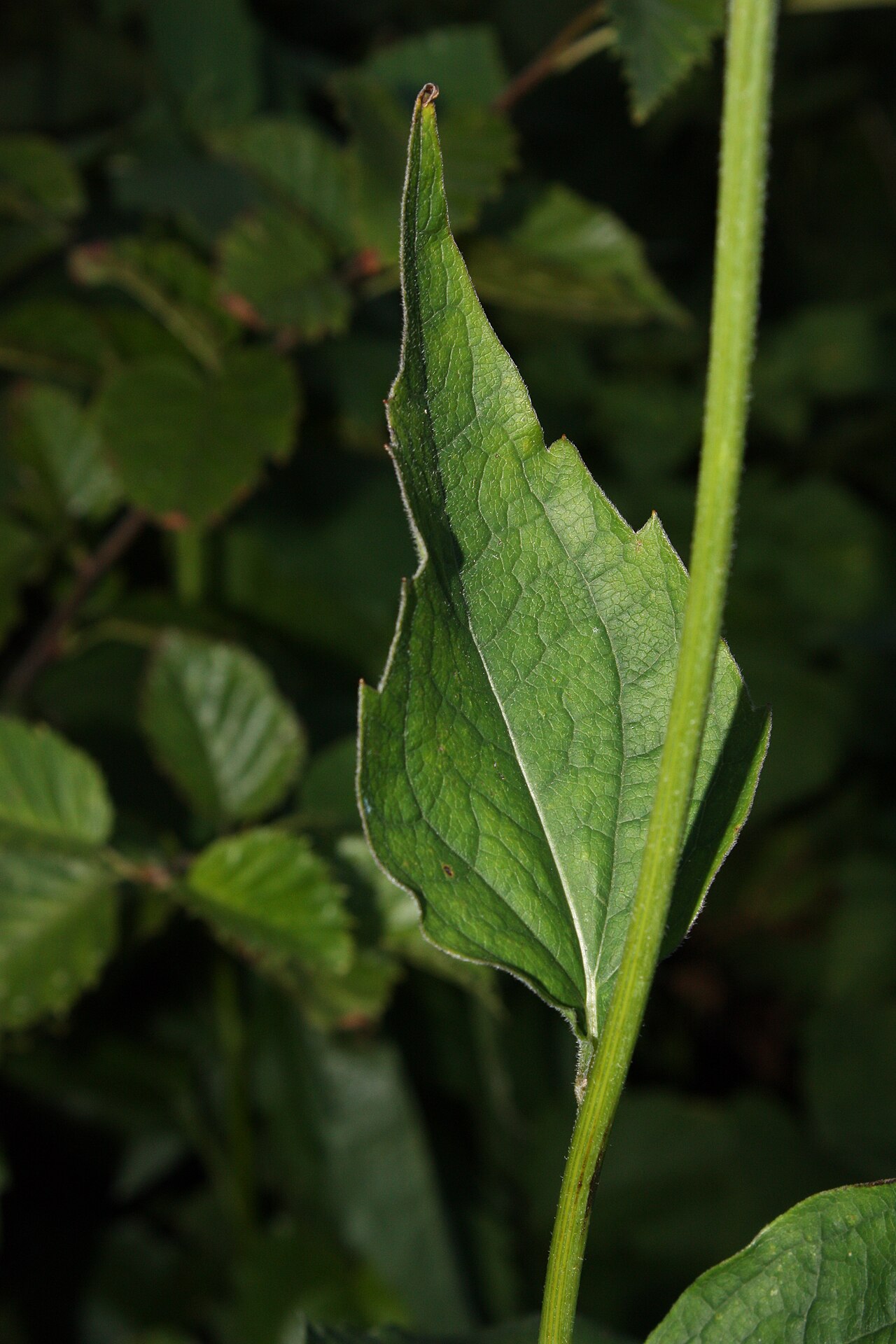
Leaves are large — up to a foot long on vigorous plants — oval but tapering to a point, rough-textured, and arranged alternately up the stem. Margins range from lightly serrated to sharply toothed. Lower leaves are the largest and often short-stalked; upper leaves are smaller and clasp the stem more directly.
Flowers
The flower heads are the plant’s signature feature: a tall, domed to cylindrical cone of densely packed disc florets, purplish-brown at the base and darkening toward the tip, reaching up to 2.5 inches wide at the base. Unlike nearly every other Rudbeckia, there are no ray florets — instead, reflexed green-to-bronze phyllaries (bracts) splay outward beneath the cone. A narrow band of tiny yellow floret tips is sometimes visible low on the cone early in bloom. Flowering runs from June into September, peaking with the height of the mountain growing season.
Fruit & Seeds
As the season progresses, the receptacle lengthens and the cone elongates further, eventually drying to a dark, bristly seed structure packed with small achenes tipped with tiny scale-like pappi. The persistent dried cones remain attractive through fall and winter.
Quick Facts
| Scientific Name | Rudbeckia occidentalis |
| Family | Asteraceae (Aster) |
| Plant Type | Herbaceous Perennial Wildflower |
| Mature Height | 2–6 ft |
| Mature Spread | 1.5–3 ft, spreading slowly by rhizome |
| Growth Rate | Moderate to fast on moist sites |
| Sun Exposure | Full Sun to Part Shade |
| Water Needs | Moderate to High |
| Soil Type | Moist, rich, well-drained loam |
| Soil pH | Neutral to slightly acidic |
| Bloom Time | June – September |
| Flower Color | Purplish-brown to black cone; no rays |
| Fall Color | Dried dark brown seed cones persist |
| Fruit | Small achenes with scale-like pappi |
| Deer Resistant | Moderate; not a preferred browse |
| USDA Hardiness Zones | 4–8 |
Native Range
Western Coneflower is native to the mountains of the interior Pacific Northwest and northern Rockies, ranging from Washington and the Cascades of Oregon south through the Sierra Nevada of northern California, east through Idaho and Nevada, and into Montana, Wyoming, Utah, and western Colorado. It is primarily a species of mid-to-high elevation mountain country rather than the lowlands.
Throughout this range it grows in moist montane and subalpine meadows, along stream corridors, in aspen groves, and at the edges of coniferous forest openings where soil stays damp through the growing season. It often grows alongside corn lily, cow parsnip, and other tall, moisture-loving meadow perennials, and tolerates the dappled light found at forest margins better than most prairie coneflowers.
Because it depends on consistently moist mountain meadow habitat, Western Coneflower can be locally sensitive to grazing pressure, trampling, and shifts in snowmelt timing, making garden and restoration plantings a useful way to maintain regional populations outside heavily grazed public land.
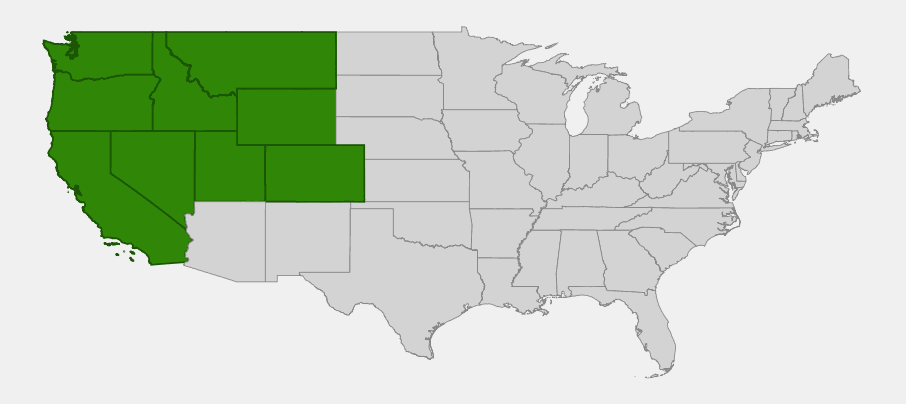
📋 Regional plant lists featuring Western Coneflower: California & Nevada · Idaho, Eastern Oregon & Eastern Washington · Western Oregon & Western Washington · Montana & Wyoming · Utah & Western Colorado
Growing & Care Guide
Western Coneflower rewards gardeners at higher, cooler elevations or anyone with a reliably moist, part-shaded spot — conditions that mimic its mountain meadow home.
Light
It grows well in full sun at higher, cooler elevations, but appreciates afternoon shade or the dappled light of a forest edge at lower elevations or in hotter climates, where full, unrelieved sun combined with heat stress can scorch the foliage.
Soil & Water
This species wants consistently moist, humus-rich soil and does not tolerate prolonged drought the way many prairie Rudbeckia species do. A streamside, rain garden, or regularly irrigated bed suits it well. Good drainage is still important — it should not sit in standing water — but the soil should never be allowed to dry out completely during the growing season.
Planting Tips
Plant in spring after the soil has warmed, siting it where moisture is dependable: near a downspout, along a stream edge, or in a part-shaded bed that receives regular watering. Space plants 18 to 24 inches apart to accommodate its spreading rhizomes and eventual height. For broader strategies on combining it with other moisture-loving natives in a mountain-climate meadow, see our wildflower meadow planting guide for Utah.
Pruning & Maintenance
Little pruning is needed. Cut stems back in late winter or leave the dried cones standing for winter interest and bird forage. Divide crowded clumps every few years in early spring if flowering declines.
Propagation
Propagate by dividing the rhizomatous clump in spring, or by sowing fresh seed in fall for natural cold stratification over winter. Division is the faster, more reliable method for establishing new plants true to the parent.
Landscape Uses
- Mountain and subalpine gardens at higher elevations
- Streamside and rain garden plantings where moisture is dependable
- Woodland-edge and dappled-shade borders, paired with ferns and other shade-tolerant natives (see our woodland garden design guide)
- Naturalistic meadow restorations in the Rockies and Cascades
- Conversation-piece specimen for its unusual rayless cone flower
- Dried flower arrangements using the persistent cone heads
Wildlife & Ecological Value
Despite lacking showy rays, Western Coneflower is a valuable nectar and pollen source in the high-country meadows where it grows.
For Pollinators
Bumblebees are especially frequent visitors, often seen clustered directly on the dense disc florets of the cone, along with other native bees and beneficial insects. Because it blooms through summer in cooler mountain habitats, it provides forage during a period when lowland flowers may already be fading from heat and drought.
For Birds
Seed-eating birds forage on the ripened achenes in the dried cone heads through fall, and the tall persistent stems offer perches and cover in open meadow habitat.
For Mammals
Elk and deer browse the foliage to some degree in mountain meadows, particularly where more palatable forage is scarce, but the coarse, hairy leaves are not a preferred food source, making it reasonably deer resistant in the garden.
Ecosystem Role
As a tall, rhizomatous perennial of wet mountain meadows, Western Coneflower helps stabilize streamside and meadow soils and adds structural diversity to subalpine plant communities that are otherwise dominated by grasses and low forbs. Its presence is often associated with healthy, well-watered meadow systems.
Cultural & Historical Uses
Western Coneflower does not carry the extensive ethnobotanical record of some other native wildflowers, though as a conspicuous component of montane meadow flora across the Northwest and northern Rockies, it has long been noted by botanists and naturalists exploring these high-elevation plant communities.
Its unusual rayless flower head has made it a subject of curiosity among wildflower enthusiasts and hikers, who often remark on how different it looks from other, more familiar Rudbeckia species. This distinctiveness has helped drive its slow but steady adoption in native plant gardens at higher elevations, where gardeners look for species adapted to shorter, cooler growing seasons.
Today its main significance is ecological and horticultural rather than historical: it is prized by native plant gardeners in mountain climates for its toughness, unusual form, and reliable performance in the moist, partly shaded conditions that challenge many lowland perennials.
Frequently Asked Questions
Why doesn’t Western Coneflower have yellow petals like other Rudbeckia?
Western Coneflower lacks ray florets entirely, a trait that sets it apart from nearly every other species in its genus. Only a thin band of tiny yellow disc-floret tips is sometimes visible at the base of the developing cone.
How tall does Western Coneflower get?
It typically reaches 2 to 4 feet, but can grow to nearly 6 feet on rich, consistently moist sites with a long growing season.
Does Western Coneflower need full sun?
Not necessarily. It tolerates full sun at higher, cooler elevations but generally performs better with afternoon shade or dappled light at lower elevations or in hotter climates, as long as soil moisture stays consistent.
Is Western Coneflower drought tolerant?
No, it is one of the less drought-tolerant Rudbeckia species and prefers consistently moist, humus-rich soil typical of mountain meadows and streambanks.
Where does Western Coneflower grow best in a garden?
It does best in cooler, higher-elevation gardens or any reliably moist, partly shaded spot such as a streamside bed, rain garden, or woodland edge.

Looking for a nursery that carries Western Coneflower?
Browse our native plant nursery directory: California · Idaho · Oregon · Washington · Wyoming · Utah · Montana · Colorado · Nevada