Smooth Ruellia (Ruellia strepens)
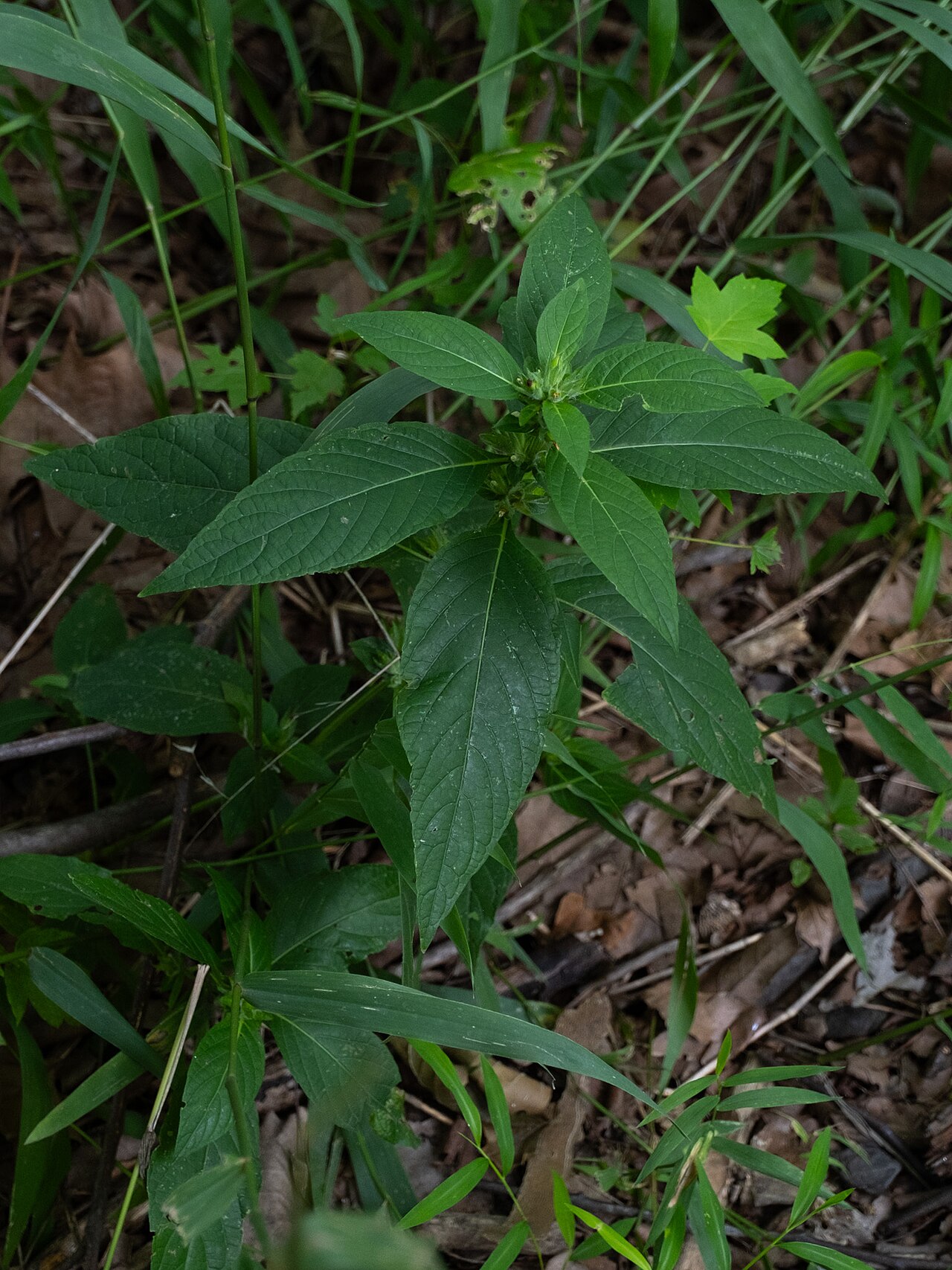
Ruellia strepens, commonly called Smooth Ruellia, Limestone Wild Petunia, or Smooth Wild Petunia, is a shade-tolerant perennial wildflower of moist bottomland forests across the central and eastern United States. It shares its lavender-blue, funnel-shaped flowers with its close relative Carolina Wild Petunia (Ruellia caroliniensis), but is readily told apart by its smoother, hairless or sparsely hairy stems (hence “smooth” ruellia) and its preference for richer, consistently moist soils rather than dry upland woods. Like Carolina Wild Petunia, it has no botanical relationship to garden Petunias; the resemblance in flower shape is coincidental.
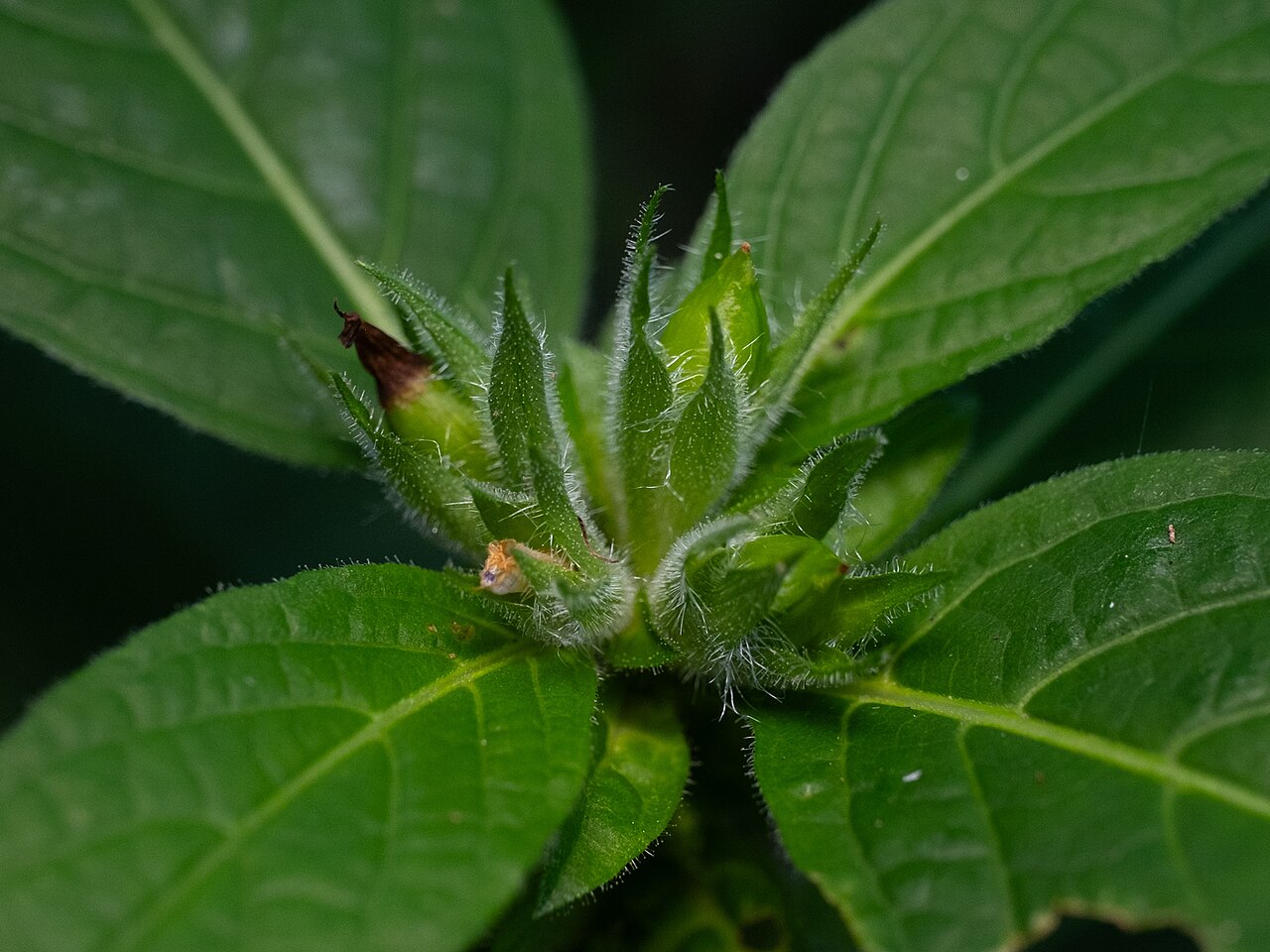
Smooth Ruellia forms clumps of broad, opposite, lance-shaped leaves on green stems that branch occasionally, reaching up to 3 feet tall. Clusters of pale lavender to bluish flowers open near the middle of the stem through the growing season. Unusually among wildflowers, the plant keeps growing taller even after its fruit matures, so late-season plants can end up twice as tall as they were in full bloom.
In the wild it grows in bottomland forests, streambanks, and rich upland woods — moist, humus-rich sites quite different from the drier ground favored by Carolina Wild Petunia. In the garden it is an excellent, easy-care choice for shaded, moist beds where many showy perennials struggle, and it tolerates nearly full shade better than most flowering natives.
Identification
Smooth Ruellia is an upright to somewhat sprawling perennial herb growing up to 3 feet tall, branching occasionally from green, smooth to sparsely hairy stems — a key difference from the more uniformly hairy stems of related Ruellia species.
Leaves
Leaves are opposite, short-petioled, lanceolate to ovate, tapering to a sharp point, up to 5 inches long and 3 inches across, with smooth to slightly wavy margins. The broad, glossy leaves are noticeably less hairy than those of Carolina Wild Petunia, giving the whole plant a cleaner, smoother look.
Flowers
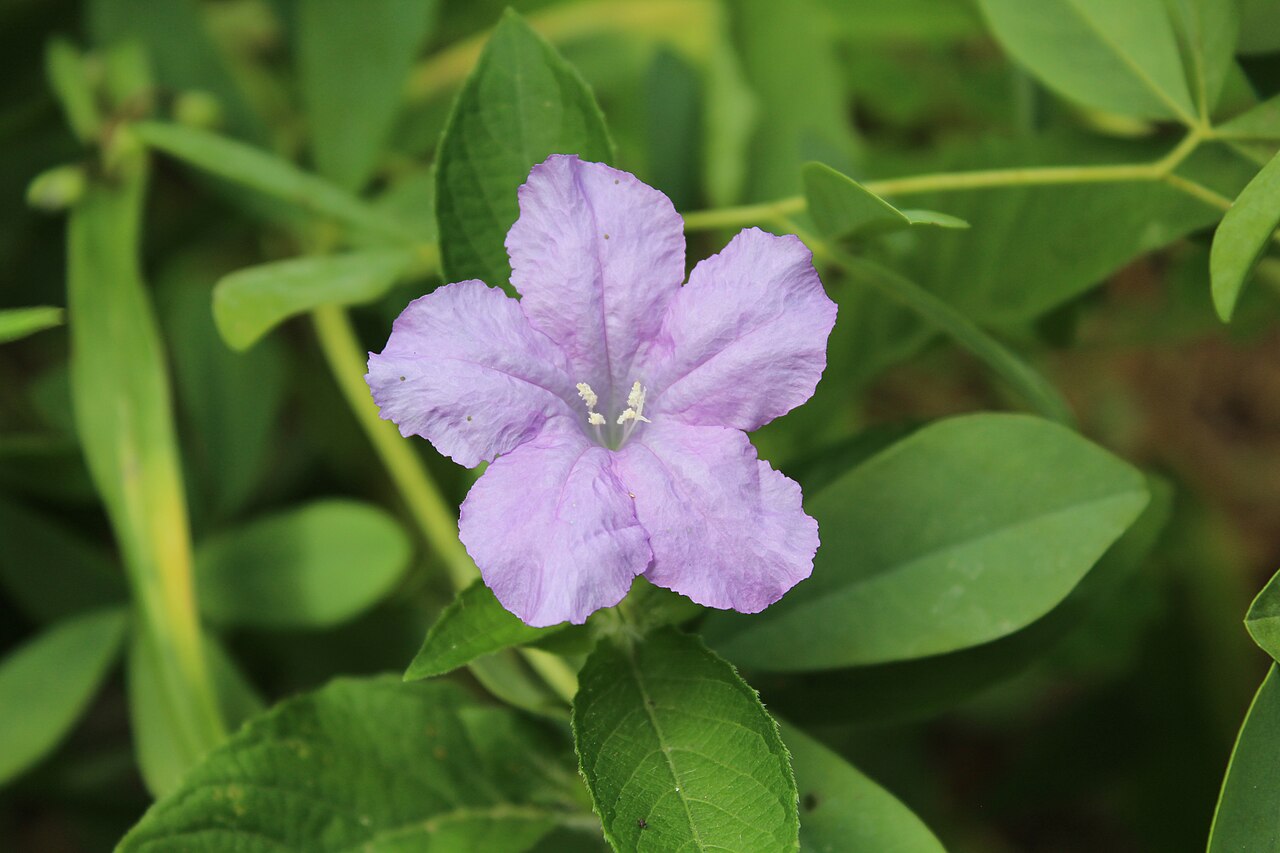
Flowers are lavender to bluish, tubular with five flaring lobes, up to 2 inches long, growing in small clusters from nodes near the middle of the stem. As with other Ruellia species, individual flowers are short-lived, but the plant produces them in succession through much of summer. Bloom runs from May through October depending on latitude, among the longest flowering seasons in the genus.
Fruit & Seeds
The fruit is a narrow capsule that, like other wild petunias, splits open explosively at maturity to scatter seed. A notable trait of this species is that it continues growing taller after flowering and fruiting, so plants observed in late summer or fall may be considerably larger than they appeared at peak bloom.
Quick Facts
| Scientific Name | Ruellia strepens |
| Family | Acanthaceae (Acanthus) |
| Plant Type | Herbaceous Perennial Wildflower |
| Mature Height | 1–3 ft |
| Mature Spread | 1–1.5 ft clump |
| Growth Rate | Moderate |
| Sun Exposure | Part Shade to Full Shade |
| Water Needs | Moderate |
| Soil Type | Rich, moist loam |
| Soil pH | Neutral to slightly alkaline |
| Bloom Time | May – October |
| Flower Color | Lavender to bluish-purple |
| Fall Color | Foliage persists green late, browns after frost |
| Fruit | Narrow explosive seed capsule |
| Deer Resistant | Moderate |
| USDA Hardiness Zones | 5–9 |
Native Range
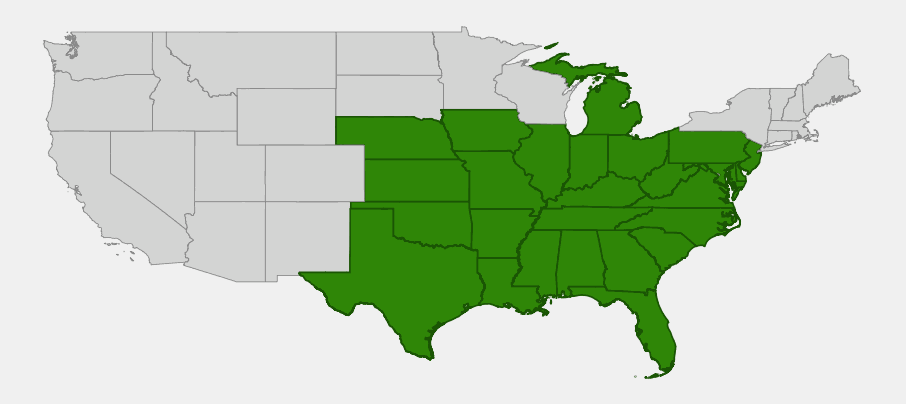
Smooth Ruellia is native across a broad swath of the central and eastern United States, from Nebraska and Kansas east to Michigan and Pennsylvania, and south through the Mississippi Valley to the Gulf Coast and Florida and west into eastern Texas and Oklahoma. It is one of the more widely distributed members of its genus in North America.
It typically grows in bottomland forests, rich upland woods, river and stream banks, and the edges of ponds and lakes, and occasionally in bottomland prairies, fens, pastures, moist roadsides, and railroad margins. Unlike Carolina Wild Petunia, it favors richer, more consistently moist soils and tolerates deeper shade, often found in mature floodplain forest understory.
Smooth Ruellia is listed as endangered in Michigan and North Carolina and critically imperiled in South Carolina, reflecting the loss and fragmentation of bottomland forest habitat at the northern and eastern edges of its range. Over most of its core range through the Mississippi and Ohio valleys it remains fairly common, but local populations at range margins deserve conservation attention.
📋 Regional plant lists featuring Smooth Ruellia: Georgia, Alabama & Mississippi · Arkansas, Louisiana, Eastern Oklahoma & Eastern Texas · Illinois, Iowa & Missouri · Ohio & Indiana · Kentucky & Tennessee · Maryland, Virginia & West Virginia · Michigan, Wisconsin & Eastern Minnesota · North Carolina & South Carolina · Nebraska, Kansas & Eastern Colorado · New York, Pennsylvania & Northern New Jersey · Delaware, Southern New Jersey & Long Island, New York
Growing & Care Guide
Smooth Ruellia is a reliable, low-fuss perennial for moist, shaded corners of the garden where it will reward patient gardeners with months of intermittent lavender bloom.
Light
It grows well from part shade to nearly full shade, making it one of the more shade-tolerant flowering natives available, though it will also take morning sun with adequate moisture. For design ideas pairing it with other understory natives, see our woodland garden design guide.
Soil & Water
Smooth Ruellia prefers rich, consistently moist, humus-laden soil, unlike the drier soils favored by Carolina Wild Petunia. It performs best in bottomland-type garden conditions: a shaded bed that receives regular moisture, near a downspout, low spot, or woodland edge with good organic content.
Planting Tips
Plant in spring or fall in a moist, shaded site with rich soil. Space plants 12 to 18 inches apart. It combines naturally with other bottomland and woodland wildflowers and sedges, and establishes readily from nursery-grown container stock.
Pruning & Maintenance
Minimal care is needed. No deadheading is required, as spent flowers drop daily on their own. Cut back old growth in late winter. Established plants can be divided in spring if a larger patch is desired.
Propagation
Propagate by dividing clumps in spring, or by collecting seed from capsules as they change from green to brown (watch closely, as mature capsules dehisce explosively and scatter seed). Stem cuttings taken in summer also root readily.
Landscape Uses
- Shaded woodland gardens, including nearly full-shade spots
- Bottomland and streamside plantings with rich, moist soil
- Rain gardens sited in part shade
- Butterfly gardens as a larval host plant
- Naturalized ground layer beneath deciduous trees
- Pollinator gardens, following tips in our pollinator garden design basics guide
Wildlife & Ecological Value
Like Carolina Wild Petunia, Smooth Ruellia offers steady nectar and serves as a host plant for native butterflies through the growing season.
For Pollinators
The tubular lavender flowers attract long-tongued native bees and occasionally hummingbirds. Because bloom continues from late spring well into fall, Smooth Ruellia offers one of the longer nectar windows among native woodland wildflowers.
For Birds
Though not a major bird-food source, the dense foliage in shaded understory settings offers cover for ground-foraging songbirds and shelters the insects they feed on.
For Mammals
Foliage is not heavily browsed by deer or rabbits, giving it reasonable deer resistance for a shade garden planting.
Ecosystem Role
Smooth Ruellia is a larval host plant for the Common Buckeye butterfly and related species, the same role filled by Carolina Wild Petunia. In bottomland forest ecosystems, it contributes to the herbaceous understory layer that supports a range of woodland insects and helps stabilize soil along streambanks.
Cultural & Historical Uses
Smooth Ruellia does not have an extensive documented history of medicinal or culinary use among Indigenous peoples of its range; its significance has mostly come through botanical description of bottomland and rich woodland flora across the Mississippi and Ohio valleys.
The specific epithet strepens refers to the rustling or crackling sound made by the plant’s seeds as they uncoil and work themselves into the ground after the capsule splits open — a detail noted by early botanists describing the species. Its distribution through rich bottomland forest has also made it a useful indicator species for assessing the condition of floodplain habitat, particularly at the northern edge of its range in Michigan, where it is now listed as endangered.
Today the plant is valued primarily by native plant gardeners seeking a reliable, long-blooming perennial for shaded, moist conditions, and by conservationists tracking the health of bottomland forest remnants across its range; for ideas on combining it with other Missouri natives in an informal planting, see our Missouri wildflower meadow planting guide.
Frequently Asked Questions
How is Smooth Ruellia different from Carolina Wild Petunia?
Smooth Ruellia has smoother, less hairy stems and leaves, and it prefers richer, consistently moist bottomland soil in part to full shade. Carolina Wild Petunia is hairier overall and prefers drier upland woods. Both are native, unrelated to garden Petunia, and bloom for just a day per flower.
Is Smooth Ruellia endangered?
It is listed as endangered in Michigan and North Carolina and critically imperiled in South Carolina, reflecting bottomland forest habitat loss at the margins of its range, though it remains fairly common through the core of its range in the Mississippi and Ohio valleys.
Does Smooth Ruellia tolerate full shade?
Yes, it is one of the more shade-tolerant native flowering perennials and performs well from part shade to nearly full shade, especially with reliably moist soil.
Why does the plant keep growing after it flowers?
Unlike many herbaceous perennials that stop growing or decline after bloom, Smooth Ruellia continues to get taller as its fruit matures, so plants can be noticeably larger in late summer and fall than they were at peak flowering.
What does “strepens” mean?
The species name refers to the rustling sound the seeds make as they uncoil and bury themselves in the ground after the seed capsule splits open explosively at maturity.

Looking for a nursery that carries Smooth Ruellia?
Browse our native plant nursery directory: Alabama & Arkansas · Delaware, Florida & Georgia · Illinois, Indiana, Iowa & Kansas · Kentucky, Louisiana, Maryland, Michigan, Mississippi & Missouri · Nebraska, North Carolina, New Jersey, Ohio & Oklahoma · Pennsylvania, South Carolina, Tennessee, Texas & Virginia · West Virginia