Shiny Coneflower (Rudbeckia nitida)
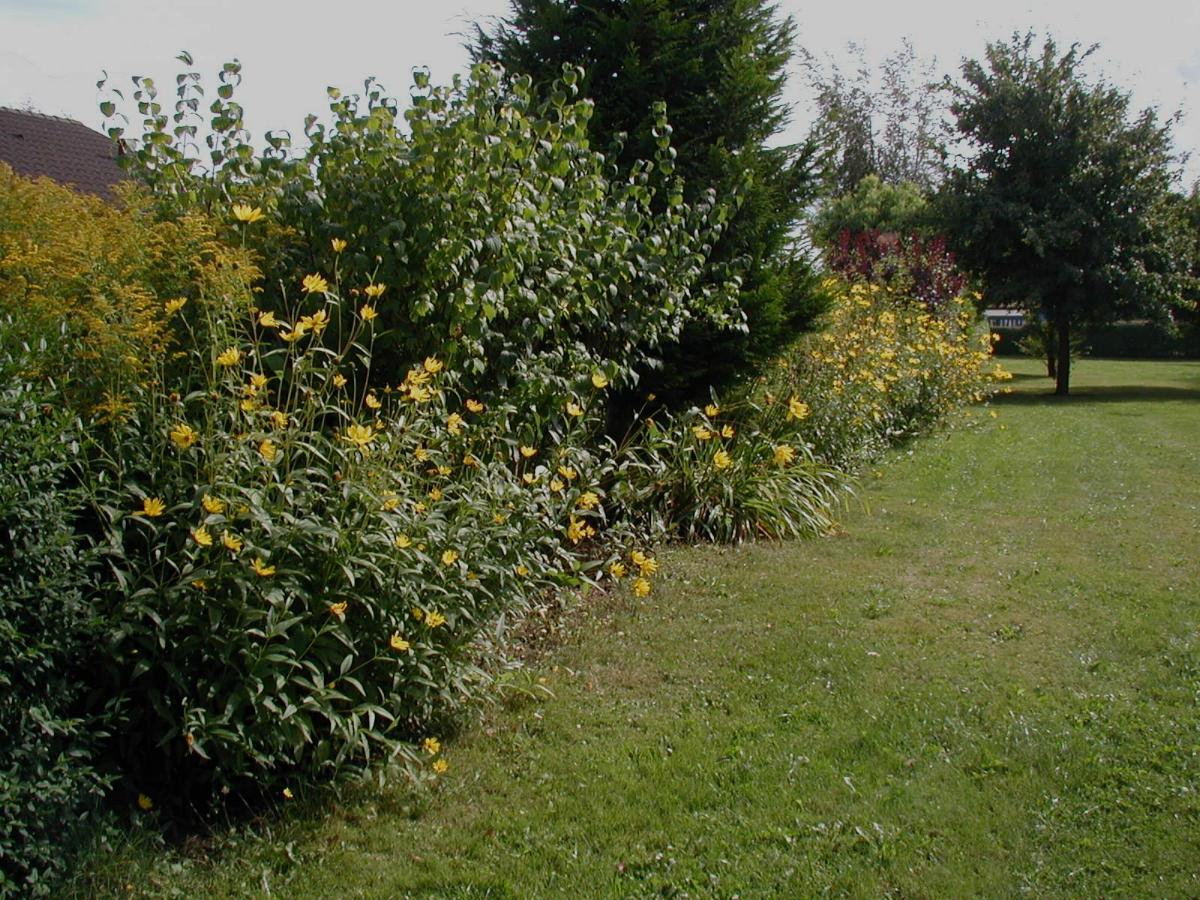
Rudbeckia nitida, known as Shiny Coneflower or Shining Coneflower, is a tall, moisture-loving perennial wildflower of the southeastern Coastal Plain. Like its relatives Orange Coneflower (Rudbeckia fulgida) and Black-eyed Susan (Rudbeckia hirta), it produces cheerful yellow daisy-like flowers, but it stands apart for its smooth, glossy, blue-green foliage (the source of its “shiny” common name) and its distinctive greenish-yellow central cone rather than the dark brown or black disc typical of most coneflowers.
This is a big, architectural plant for a wet meadow or pondside planting: sturdy stems can reach 4 to 5 feet, carrying smooth lance-shaped leaves and large flower heads with drooping yellow rays through summer. The pale, greenish disc is a useful field mark that separates it at a glance from the more common Black-eyed Susan and Orange Coneflower.
In the wild, Shiny Coneflower is a plant of wet pine savannas, flatwoods, and bog margins across the Coastal Plain of Alabama, Georgia, and Florida — habitats shaped by seasonal moisture and historically maintained by fire. In gardens, it is an excellent choice for consistently moist, sunny sites where a tall, dependable native wildflower is needed for structure and late-summer color.
Identification
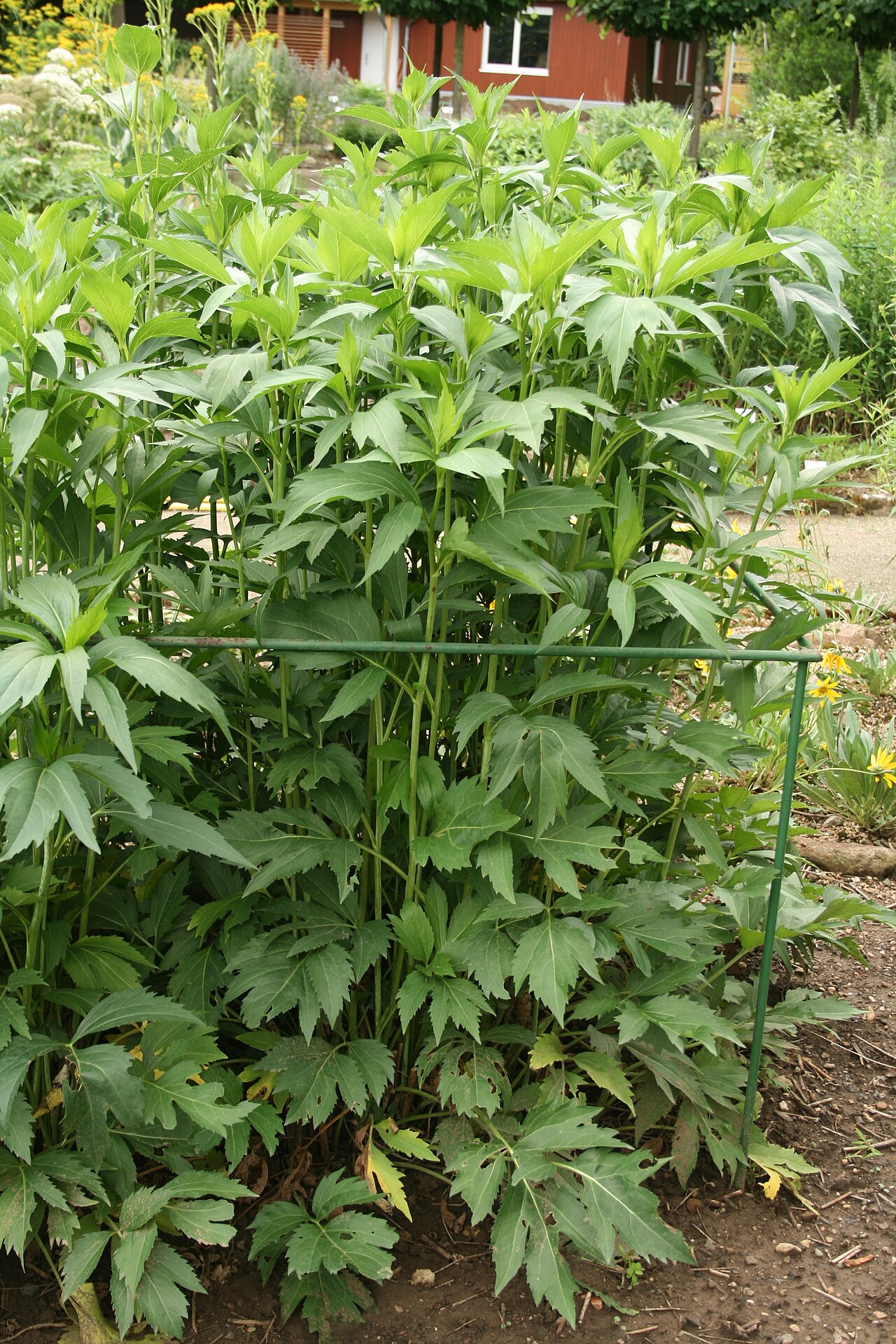
Shiny Coneflower is an upright, clump-forming perennial reaching 3 to 5 feet tall, with relatively few, sturdy, mostly unbranched stems arising from a woody crown.
Leaves
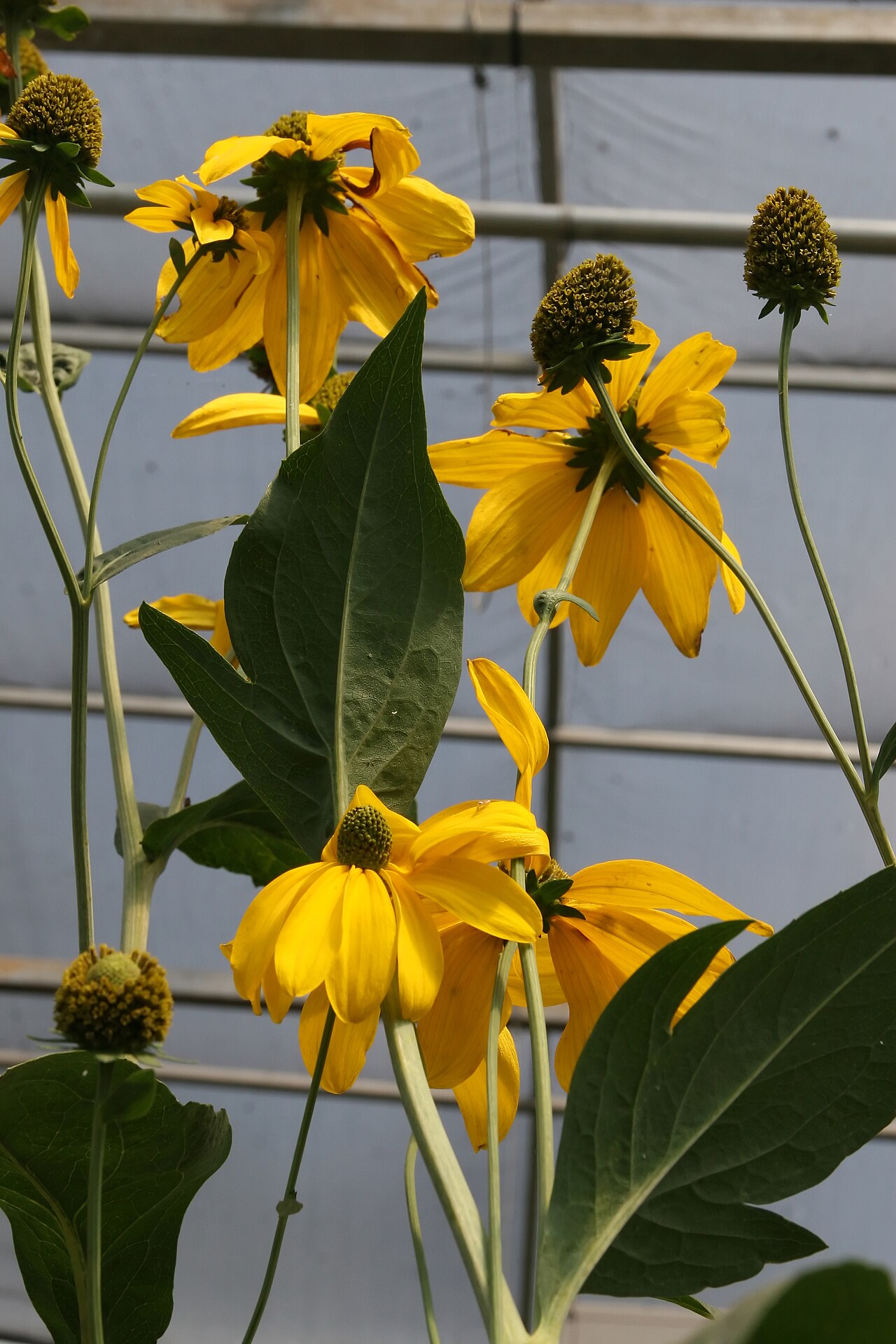
The leaves are smooth, glossy, and blue-green to gray-green, lance-shaped to oblong, 3 to 8 inches long, with smooth (entire) margins — markedly less rough and hairy than most other Rudbeckia species. Lower leaves may be stalked; upper leaves are smaller, narrower, and stalkless. This smooth, polished foliage is the easiest way to distinguish it from similar coneflowers in the field.
Flowers
Flower heads are 3 to 4 inches across, with 8 to 15 drooping, bright yellow ray florets surrounding a domed to conical central disc that is distinctly greenish-yellow rather than brown or black — an unusual trait among the black-eyed-susan group. Bloom occurs from late spring into summer, typically April through August depending on latitude.
Fruit & Seeds
After flowering, the disc dries into a firm, cone-shaped seedhead holding small achenes. The dried seedheads persist into fall and winter and are readily taken by seed-eating birds.
Quick Facts
| Scientific Name | Rudbeckia nitida (syn. Rudbeckia glabra) |
| Family | Asteraceae (Aster) |
| Plant Type | Herbaceous Perennial Wildflower |
| Mature Height | 3–5 ft |
| Mature Spread | 1.5–2.5 ft clump |
| Growth Rate | Moderate to fast |
| Sun Exposure | Full Sun to Part Shade |
| Water Needs | Moderate to High |
| Soil Type | Moist to wet, sandy or loamy |
| Soil pH | Slightly acidic |
| Bloom Time | April – August |
| Flower Color | Bright yellow rays, greenish-yellow disc |
| Fall Color | Tan dried seedheads; foliage persists late |
| Fruit | Dry cone-shaped seedhead (achenes) |
| Deer Resistant | Generally yes |
| USDA Hardiness Zones | 7–9 |
Native Range
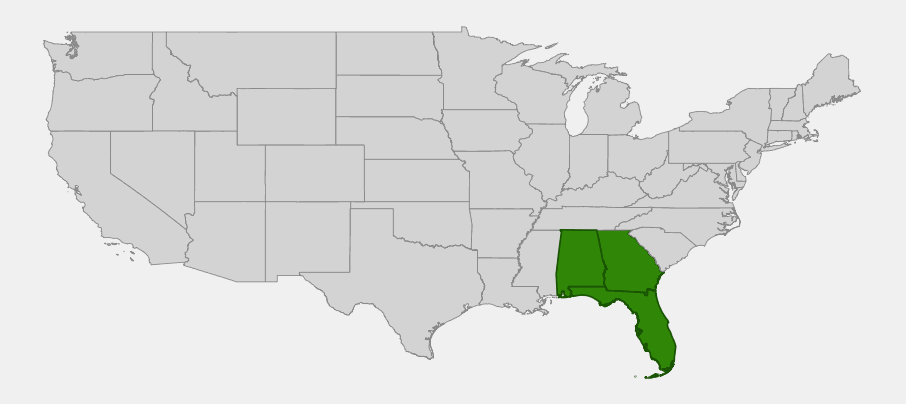
Shiny Coneflower is native to the Coastal Plain of the Deep South, found in Alabama, Georgia, and throughout Florida. It is a true Coastal Plain specialist, essentially absent from the Piedmont and mountain regions farther inland.
Across this range it grows in wet pine flatwoods, savannas, seepage bogs, and the margins of ponds and wet ditches — fire-maintained wetland habitats that stay consistently moist through most of the growing season. It is often found growing with pitcher plants, sedges, and other specialists of these increasingly rare wet pine savanna communities; for Georgia gardeners looking to pair it with other easy-care regional natives, see our low-maintenance native plants for Georgia guide.
Because wet pine savanna habitat has been heavily reduced by drainage, fire suppression, and conversion to pine plantation across the Southeast, Shiny Coneflower populations are closely tied to the health of these remaining wetland communities, making garden plantings in appropriate wet sites a meaningful way to support the species regionally.
📋 Regional plant lists featuring Shiny Coneflower: Georgia, Alabama & Mississippi
Growing & Care Guide
Shiny Coneflower is easy to grow in the right spot — it simply needs the one thing most garden perennials dislike: reliably wet feet.
Light
Grow it in full sun to light part shade. Full sun produces the sturdiest stems and most abundant bloom, though it tolerates some afternoon shade, especially in the hottest parts of its range.
Soil & Water
This species wants consistently moist to wet, slightly acidic soil, and it is one of the more water-loving members of its genus — it will not thrive in average dry garden soil the way Black-eyed Susan does. It is well suited to rain gardens, pond margins, low spots that collect water, and irrigated beds. It tolerates occasional standing water for short periods, mimicking its native wet savanna habitat.
Planting Tips
Plant in spring into a site that stays reliably moist, such as a rain garden, pond edge, or low area of the yard. Space plants 18 to 24 inches apart to allow the clump to fill in. Mulching helps retain moisture between waterings if the site is not naturally wet.
Pruning & Maintenance
Deadhead for a tidier look or leave seedheads for birds and winter interest. Cut stems back in late winter before new growth emerges. Staking is rarely needed given its sturdy stems, though very rich, wet soil can occasionally produce floppier growth that benefits from support.
Propagation
Propagate by dividing clumps in early spring, or by sowing fresh seed in fall for natural cold stratification. General Rudbeckia propagation techniques, covered in our guide on how to propagate black-eyed Susan, apply well to this species too.
Landscape Uses
- Rain gardens and bioswales that handle seasonal wet conditions
- Pond and water-feature margins
- Wet meadow and savanna restorations in the Southeast
- Pollinator gardens sited in consistently moist soil
- Cut flower gardens — sturdy stems hold up well
- Low-lying yard areas that are too wet for typical perennials
Wildlife & Ecological Value
Shiny Coneflower brings the same pollinator and bird value shared across its genus, with the added benefit of thriving in wetland habitats where fewer tall flowering perennials are available.
For Pollinators
The large flower heads attract native bees, honeybees, butterflies, and beneficial wasps and flies. Its height and abundant bloom make it a conspicuous, easy-to-find nectar source in open wet savanna habitat. For broader design ideas on layering bloom times and heights for pollinators, see our pollinator garden design basics guide.
For Birds
Goldfinches and other seed-eating songbirds feed on the ripened seedheads in fall and winter, and the tall stems offer perching sites in open savanna and meadow habitat.
For Mammals
The foliage is not a preferred browse for deer and rabbits, consistent with its relatively low palatability compared to many wetland plants.
Ecosystem Role
As a conspicuous tall forb of wet pine savannas, Shiny Coneflower contributes to the structural diversity of these increasingly rare, fire-dependent wetland plant communities, which support a wide range of specialized insects, amphibians, and carnivorous plants found nowhere else.
Cultural & Historical Uses
Shiny Coneflower has no major documented history of medicinal or culinary use among Indigenous peoples of the Southeast comparable to some other regional wildflowers; it is primarily known through botanical study of Coastal Plain savanna and flatwoods flora.
The species has become better known in cultivation through the long-popular garden selection sold as Rudbeckia nitida ‘Herbstsonne’ (also spelled Herbstonne, “autumn sun”), a vigorous, tall-growing form first distributed from a German nursery in the early twentieth century and widely planted in perennial borders for its height and late bloom. While that selection has made the species’ greenish-coned flower form familiar to gardeners worldwide, the wild species itself remains a true Southeastern Coastal Plain native tied to wet savanna habitat.
Today, Shiny Coneflower’s main significance is horticultural and ecological: it is valued both as an architectural native perennial for wet garden sites and as an indicator of healthy wet pine savanna habitat in its home range.
Frequently Asked Questions
What makes Shiny Coneflower different from other Rudbeckia species?
Its smooth, glossy blue-green leaves (versus the rough, hairy foliage of most coneflowers) and its distinctive greenish-yellow central disc, rather than the typical dark brown or black cone, set it apart. It is also notably more tolerant of wet soil than most of its relatives.
Is the garden plant ‘Herbstsonne’ the same as wild Shiny Coneflower?
‘Herbstsonne’ (also spelled Herbstonne) is a long-cultivated garden selection of this species, prized for its height and late bloom. It shares the species’ basic flower structure but was selected for vigor in cultivation rather than collected as a typical wild form.
Does Shiny Coneflower need wet soil?
Yes, it performs best in consistently moist to wet soil and is one of the more water-loving members of its genus. It is not a good choice for dry, average garden soil.
How tall does Shiny Coneflower grow?
It typically reaches 3 to 5 feet, forming an upright, architectural clump that works well as a backdrop in a wet meadow or rain garden planting.
Where is Shiny Coneflower native?
It is native to the Coastal Plain of Alabama, Georgia, and Florida, where it grows in wet pine savannas, flatwoods, and the margins of bogs and ponds.

Looking for a nursery that carries Shiny Coneflower?
Browse our native plant nursery directory: Alabama · Georgia & Florida