Missouri Coneflower (Rudbeckia missouriensis)
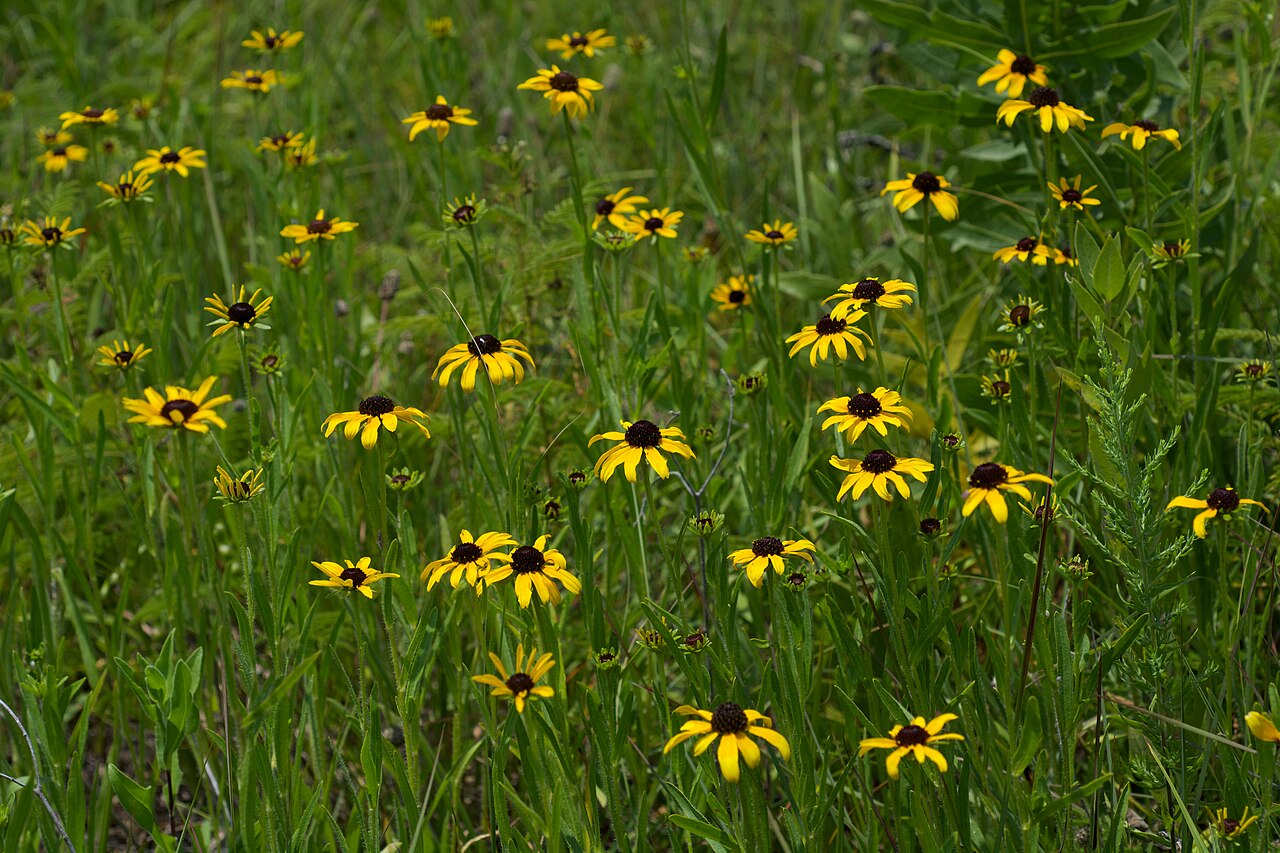
Rudbeckia missouriensis, commonly called Missouri Coneflower or Missouri Orange Coneflower, is a sun-loving perennial wildflower of the south-central United States. It belongs to the aster family (Asteraceae) and is one of several closely related black-eyed-susan types in the genus Rudbeckia, a group that also includes the widespread Orange Coneflower (Rudbeckia fulgida) and the familiar Black-eyed Susan (Rudbeckia hirta). Some older floras treated this plant as Rudbeckia fulgida var. missouriensis, but USDA PLANTS and most current state floras recognize it as its own species, distinguished by its narrower, more numerous ray petals, taller stature, and preference for drier, rockier soils than its eastern cousin.
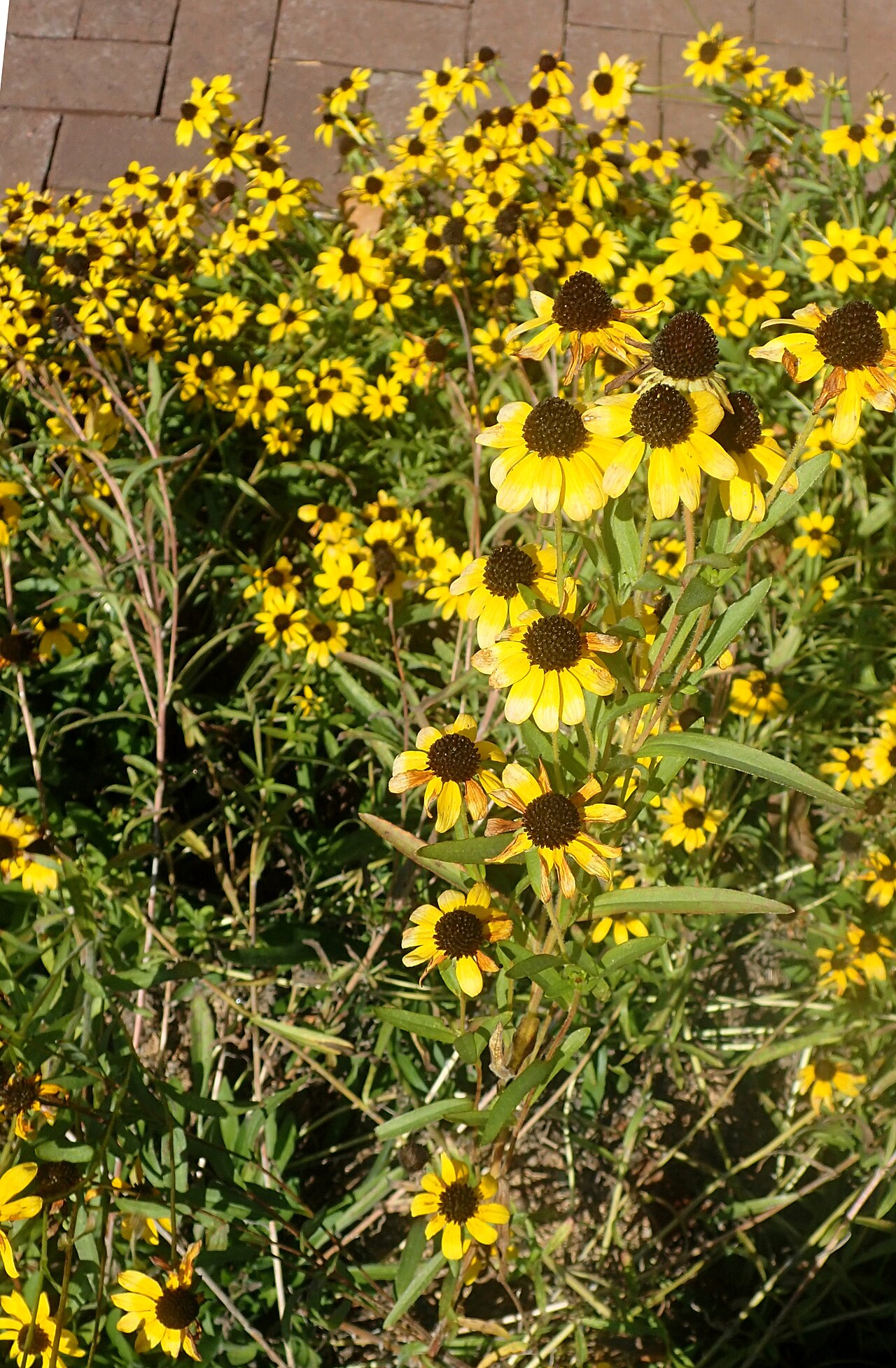
Missouri Coneflower forms clumps of slender, hairy stems topped with cheerful golden-yellow flower heads from midsummer into fall. Each flower surrounds a raised, blackish-brown central disc, giving the plant the classic “black-eyed Susan” look but with narrower, more needle-like rays than R. hirta. It spreads slowly by short rhizomes to form an attractive clump rather than running aggressively, which makes it well behaved in a perennial border while still being tough enough for open glades and limestone prairie.
In the wild it favors calcareous (limestone-based) glades, dry rocky woodland openings, and blackland prairie remnants across the Ozark Plateau and the western Gulf Coastal Plain. Gardeners value it for extending the coneflower season — it often blooms later and longer than R. fulgida — and for its drought tolerance once established, making it a reliable choice for sunny, well-drained native plantings from Missouri south into Texas.
Identification
Missouri Coneflower is an upright, clump-forming herbaceous perennial reaching roughly 2 to 3 feet tall, occasionally taller on rich sites. Stems are slender, ridged, and covered in short, rough hairs, branching near the top to carry multiple flower heads per stem.
Leaves
Leaves are lance-shaped to narrowly elliptic, 2 to 6 inches long, with smooth (entire) margins and a rough, sandpapery texture typical of the genus. Basal and lower stem leaves are the largest and are often slightly stalked, while upper leaves are smaller, narrower, and stalkless (sessile), clasping the stem directly.
Flowers
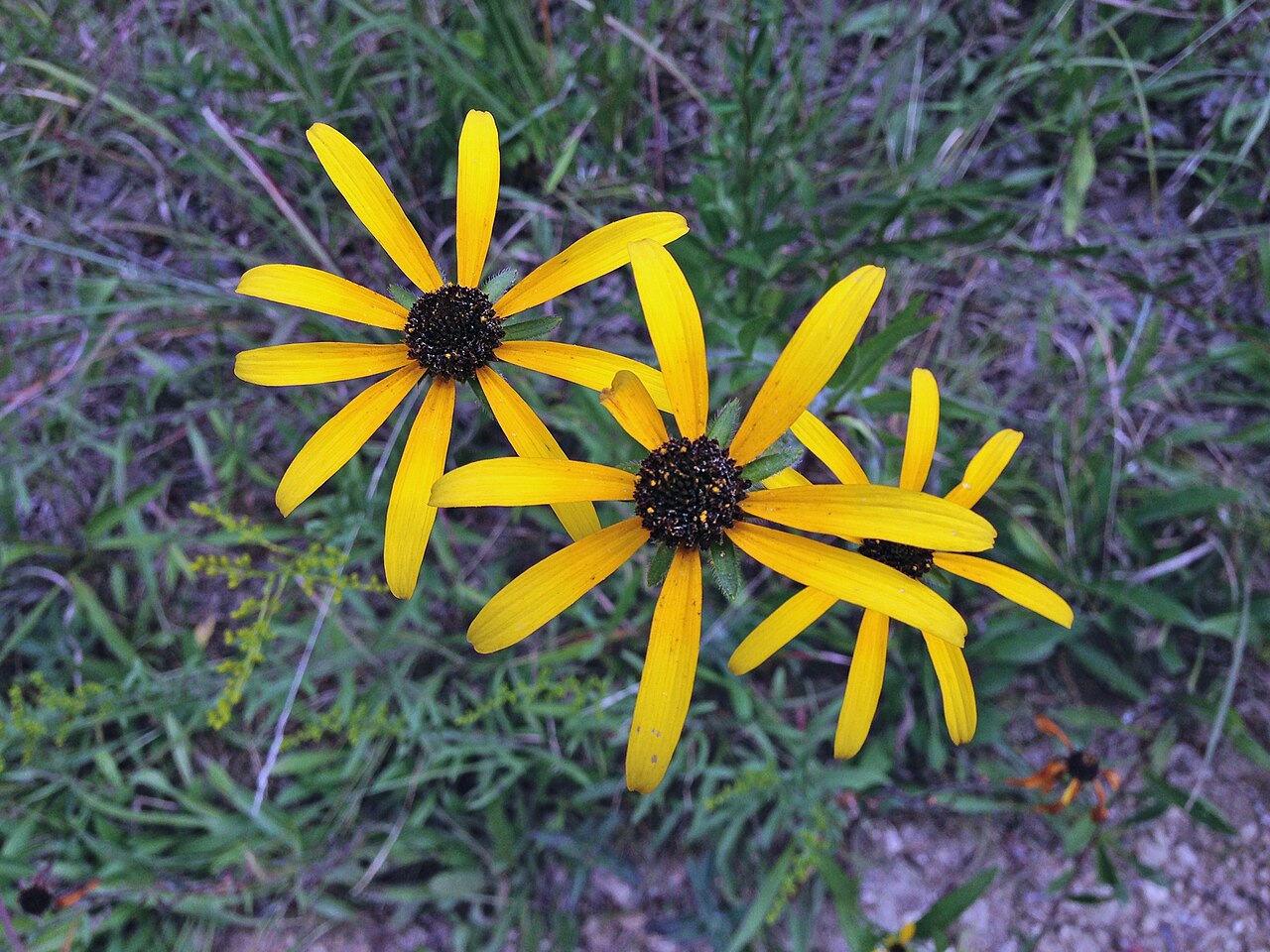
Each flower head is 2 to 3 inches across, with 12 to 20 narrow, slightly drooping yellow-orange ray florets surrounding a domed, purplish-brown to black central disc of tiny disc florets. The rays are noticeably narrower and more numerous than those of Black-eyed Susan, giving the flower a finer, almost starburst appearance. Bloom occurs from July into October, later and longer than most other native coneflowers in its range, which makes it valuable for extending late-season color and pollen for pollinators.
Fruit & Seeds
After bloom, the disc dries into a dark, bristly seedhead packed with small four-angled achenes (cypselae). Left standing through winter, these seedheads provide food for seed-eating birds and persist as attractive architectural interest in the dormant garden.
Quick Facts
| Scientific Name | Rudbeckia missouriensis (syn. Rudbeckia fulgida var. missouriensis) |
| Family | Asteraceae (Aster) |
| Plant Type | Herbaceous Perennial Wildflower |
| Mature Height | 2–3 ft |
| Mature Spread | 1.5–2 ft clump |
| Growth Rate | Moderate |
| Sun Exposure | Full Sun |
| Water Needs | Low to Moderate |
| Soil Type | Rocky, limestone-based or well-drained loam |
| Soil pH | Neutral to alkaline |
| Bloom Time | July – October |
| Flower Color | Golden-yellow to orange-yellow rays, dark brown disc |
| Fall Color | Tan seedheads, foliage browns after frost |
| Fruit | Dry bristly seedhead (achenes) |
| Deer Resistant | Yes, generally avoided |
| USDA Hardiness Zones | 5–9 |
Native Range
Missouri Coneflower is native to the south-central United States, centered on the Ozark Plateau of Missouri and Arkansas and extending through southern Illinois, western Kentucky, eastern Oklahoma, Louisiana, and into eastern Texas. Within Oklahoma and Texas its range is limited to the eastern portions of those states — the Ozark-Ouachita region and the Pineywoods/blackland prairie belt — rather than the arid west.
Across this range it is a plant of open, sunny, well-drained ground: limestone and dolomite glades, rocky woodland borders, blackland prairie remnants, and dry upland prairie. It is often found alongside little bluestem, prairie dropseed, and other glade and prairie associates, and it tolerates the thin, mineral soils and summer drought typical of these habitats better than most garden perennials.
Because it thrives in exposed, rocky sites that are poor for cultivation, much of its native habitat has been protected incidentally from row-crop agriculture, but glade and prairie remnants are still lost to woody encroachment and development. Planting it in gardens and restorations helps maintain regional seed sources for this specialist of calcareous openings.
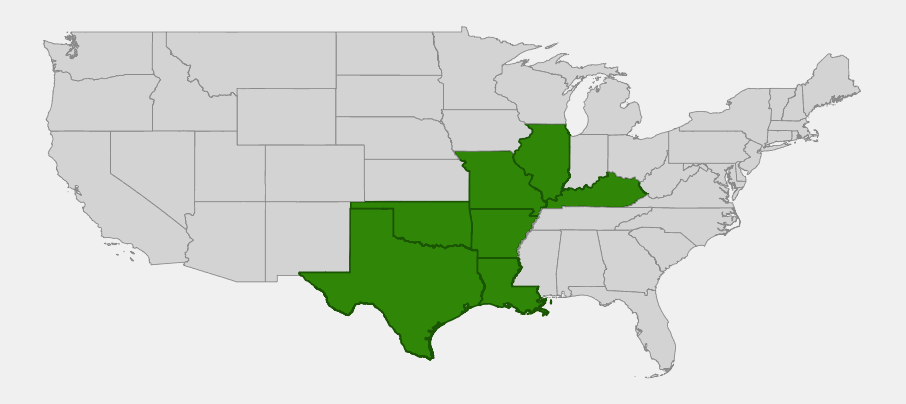
📋 Regional plant lists featuring Missouri Coneflower: Arkansas, Louisiana, Eastern Oklahoma & Eastern Texas · Illinois, Iowa & Missouri · Kentucky & Tennessee
Growing & Care Guide
Missouri Coneflower is an easygoing, low-maintenance perennial once sited correctly. It is built for lean, sunny, well-drained conditions and will struggle — or flop and rot — if given rich, consistently moist soil.
Light
Give it full sun — at least 6 hours of direct light daily. In partial shade, stems stretch, flowering is reduced, and plants become floppy and prone to disease. This is a true prairie-and-glade sun lover.
Soil & Water
It thrives in rocky, gravelly, or limestone-derived soils that drain quickly, including thin soils over bedrock where little else will grow. Heavy clay or soils that stay wet, especially in winter, can cause crown rot. Established plants are quite drought tolerant and rarely need supplemental watering once their root systems mature; water new transplants regularly through their first season.
Planting Tips
Plant in spring or fall into a site with excellent drainage. Amending with coarse sand or gravel can help on heavier soils. Space plants 15 to 18 inches apart to allow for its modest clump-forming spread. It pairs well with other glade and prairie species that share its preference for lean soil.
Pruning & Maintenance
Deadheading is optional — spent blooms can be left for seed-eating birds and for self-sowing. Cut stems back in late winter before new growth emerges, or leave standing through winter for wildlife and winter interest. Divide crowded clumps every 3 to 4 years in early spring to maintain vigor.
Propagation
Propagate by division of the clump in early spring, or by seed sown outdoors in fall (seed benefits from a period of cold stratification). Self-sown seedlings often appear nearby in favorable conditions; for genus-wide tips that apply equally well here, see our guide on how to propagate black-eyed Susan. Missouri Coneflower is largely trouble-free, but it can occasionally develop the same foliar issues covered in our common Rudbeckia problems and solutions guide, particularly in soil that stays too wet.
Landscape Uses
- Prairie and meadow plantings on dry, sunny sites
- Rock gardens and limestone glades replicating native habitat
- Pollinator gardens for extended late-season bloom
- Xeriscaping and low-water perennial borders
- Cut flower gardens — long stems hold up well in arrangements
- Erosion control on dry rocky slopes
Wildlife & Ecological Value
Like other members of its genus, Missouri Coneflower is a workhorse for pollinators and seed-eating wildlife across the growing season.
For Pollinators
The flowers attract a wide range of native bees, honeybees, butterflies, and beneficial flies and wasps seeking nectar and pollen. Because it blooms later into the season than many other coneflowers, it provides an important late nectar source as other prairie flowers fade — the kind of long-season planning covered in our pollinator garden design basics guide.
For Birds
Goldfinches, sparrows, and other seed-eating songbirds feed on the ripened seedheads in fall and winter. Leaving the dried flower stalks standing through the cold months provides a valuable food source during lean times.
For Mammals
The coarse, hairy foliage is not a preferred browse for deer or rabbits, which is one reason this species persists well in grazed glades and makes a reliably deer-resistant garden choice.
Ecosystem Role
As a glade and prairie specialist, Missouri Coneflower helps anchor plant communities adapted to thin, rocky, drought-prone soils — habitats that support a distinct suite of insects and reptiles found nowhere else in the regional flora. Its persistence in these harsh microhabitats makes it a useful indicator of glade quality.
Cultural & Historical Uses
Missouri Coneflower has no major documented history of medicinal or culinary use among Indigenous peoples comparable to some of its relatives; it has instead become known primarily through twentieth-century botanical study of Ozark glade flora and, more recently, through the native plant gardening movement.
Because it was long lumped with Rudbeckia fulgida as a variety, much of its popular recognition has come only as regional floras and nurseries began distinguishing it as a separate species suited to drier, rockier conditions than its eastern relative. Botanists and conservationists use it as a marker species for high-quality limestone glade habitat in the Ozarks.
Today its main cultural value is horticultural: it has become a sought-after plant among native plant enthusiasts and prairie restorationists in its home region for its drought tolerance, extended bloom season, and ability to thrive where more demanding perennials fail.
Frequently Asked Questions
Is Missouri Coneflower the same as Black-eyed Susan?
No. Missouri Coneflower (Rudbeckia missouriensis) is a distinct species, though it is closely related to Black-eyed Susan (Rudbeckia hirta) and to Orange Coneflower (Rudbeckia fulgida), with which it was once classified as a variety. It has narrower, more numerous rays and prefers drier, rockier soil than either relative.
How is Missouri Coneflower different from Orange Coneflower?
Missouri Coneflower has narrower, slightly drooping rays, blooms later into fall, and tolerates much drier, rockier soil than Orange Coneflower, which prefers richer, moister ground. Both are excellent native perennials but suit different garden conditions.
Does Missouri Coneflower spread aggressively?
No. It spreads slowly by short rhizomes to form a tidy clump rather than running widely, and any self-sown seedlings are easy to manage or share with other gardeners.
Is Missouri Coneflower drought tolerant?
Yes, once established it is quite drought tolerant, reflecting its origin on thin, rocky glade and prairie soils that dry out quickly in summer.
When does Missouri Coneflower bloom?
It typically blooms from July through October, often later and longer than other native coneflowers in its range, making it valuable for extending the native garden’s bloom season into fall.

Looking for a nursery that carries Missouri Coneflower?
Browse our native plant nursery directory: Illinois · Oklahoma · Arkansas · Kentucky, Louisiana & Missouri · Texas