
Long-stalked Clover (Trifolium longipes)
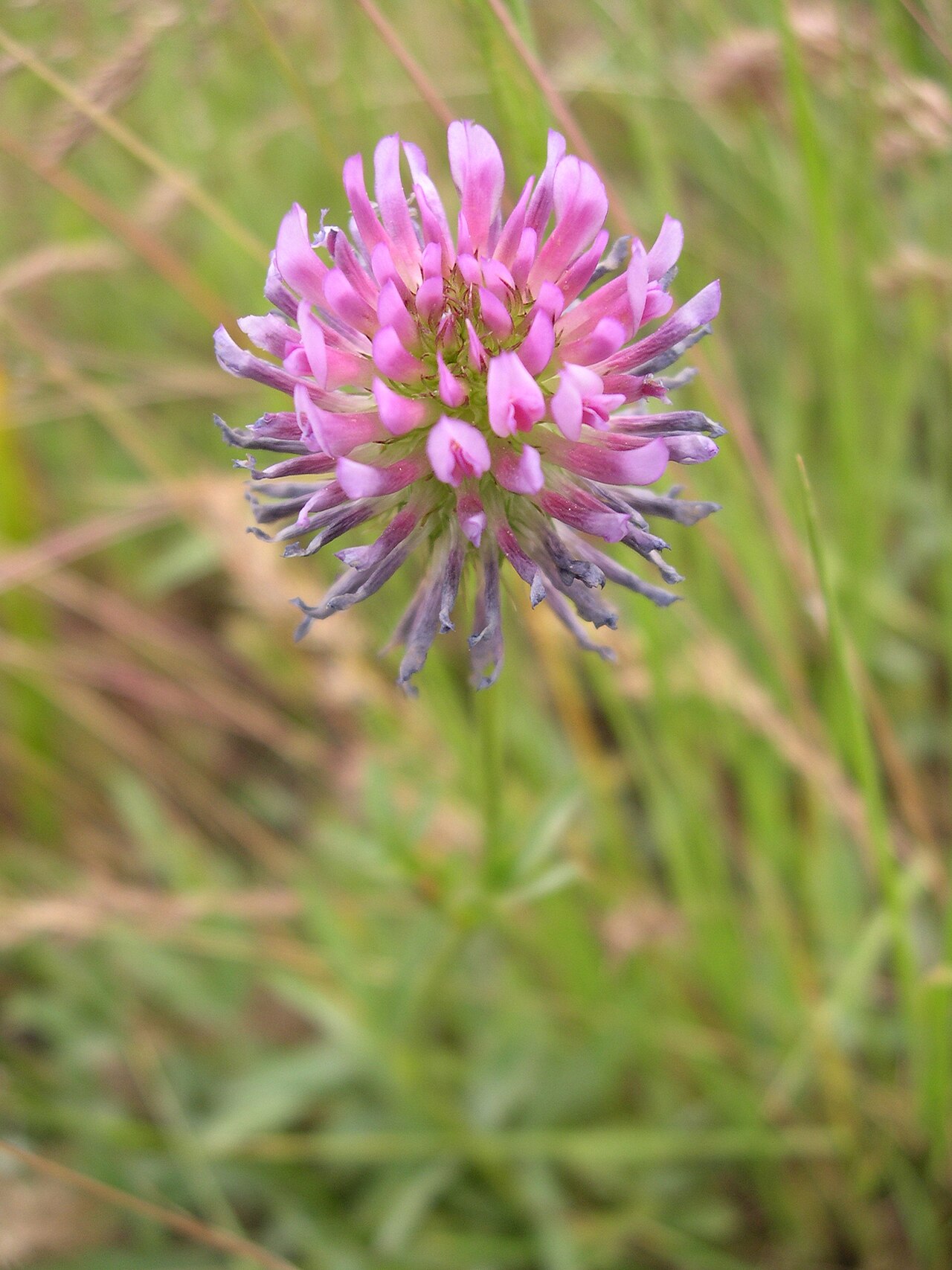
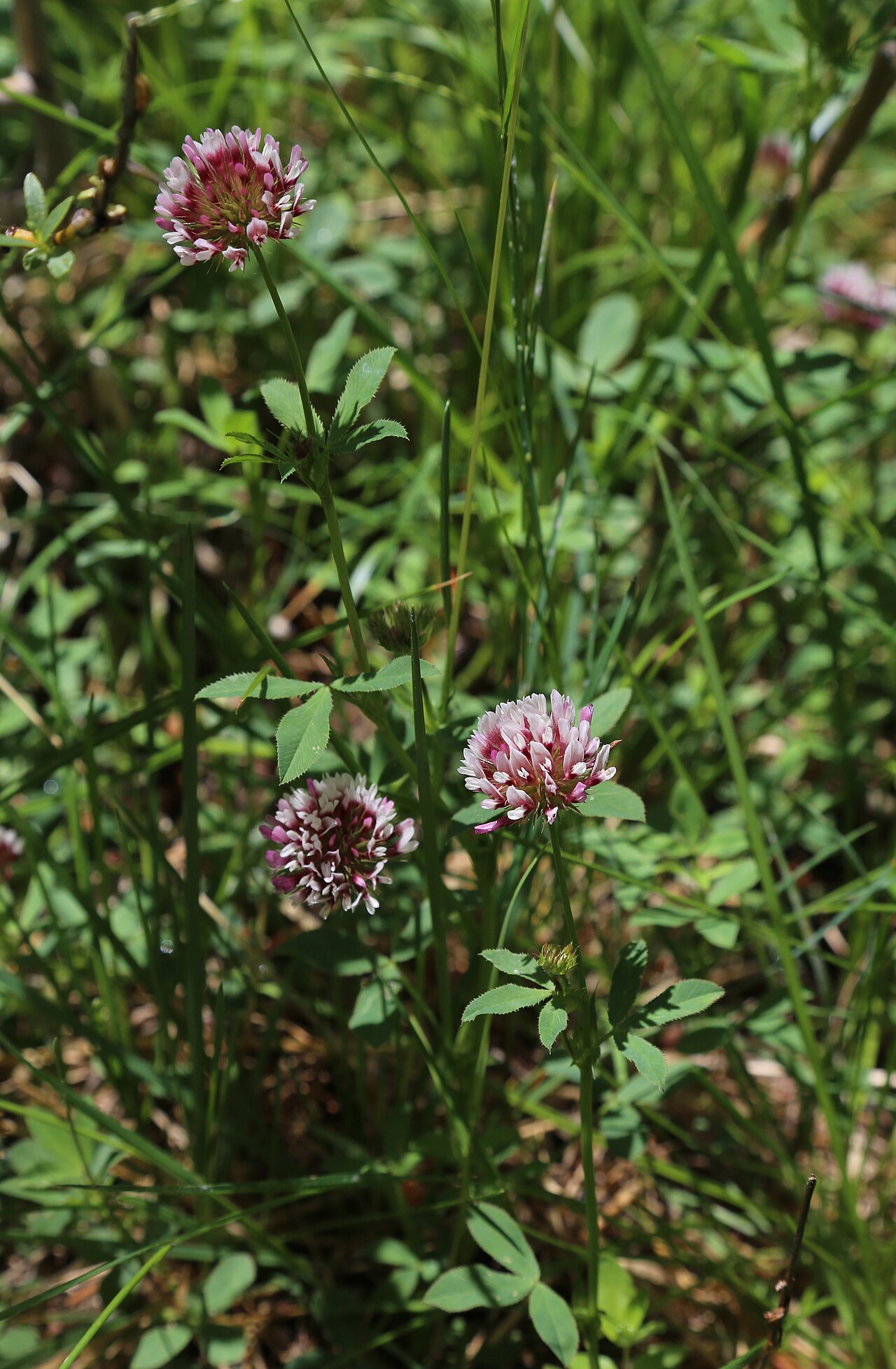
Trifolium longipes, known as Long-stalked Clover or longstalk clover, is a native perennial clover of mountain meadows, stream banks and open forests across the western United States. It is a low plant, usually 2 to 12 inches tall, with narrow, finely toothed leaflets in threes and rounded heads of white, pink or purple flowers held up on long, slender stalks well above the leaves, the feature behind both its common name and the species name longipes, “long foot”.
Unlike the familiar white and red clovers of lawns and pastures, which were brought from Europe, long-stalked clover is one of the many clovers native to western North America. It is a highly variable species, with several named varieties that differ in flower color, hairiness and leaf shape from one mountain range to the next. Like other members of the pea family (Fabaceae), it hosts nitrogen-fixing bacteria in its roots.
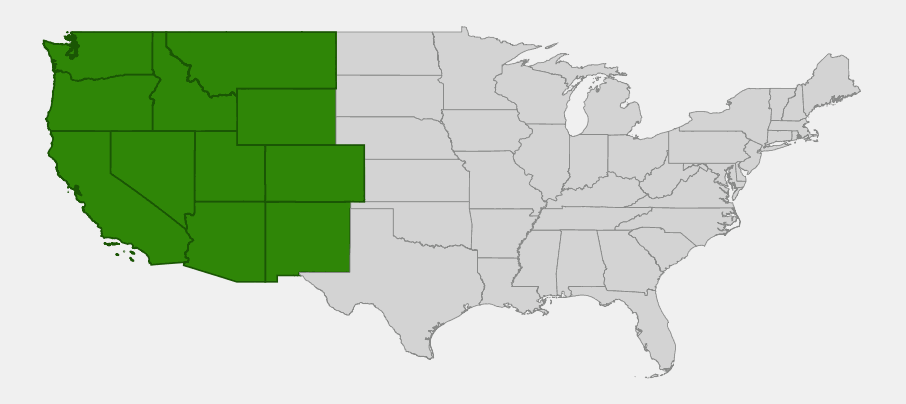
It ranges from Washington, Idaho and Montana south through the Cascades, Sierra Nevada, Great Basin ranges and Rocky Mountains to California, Arizona and New Mexico, mostly at middle to high elevations. This guide covers how to identify it, where it grows, how to use it in native meadow gardens, and its value to bees and wildlife.
Identification
Long-stalked clover looks like a small, neat clover with unusually narrow leaflets. The best clues are the long, bare flower stalks rising from the base of the plant and the native mountain meadow or forest-edge habitat.
Growth Habit
It is a low, clumping or loosely spreading perennial, usually 2 to 12 inches tall, from a taproot or short rhizomes. Some forms make small patches; others grow as scattered single plants among grasses.
Leaves
Each leaf has three leaflets that are narrow, lance-shaped to elliptic, mostly 1/2 to 2 inches long and much longer than wide, with fine teeth along the edges. They may be hairless or softly hairy depending on the variety. Papery stipules sheathe the leaf stalks at the base.
Flowers
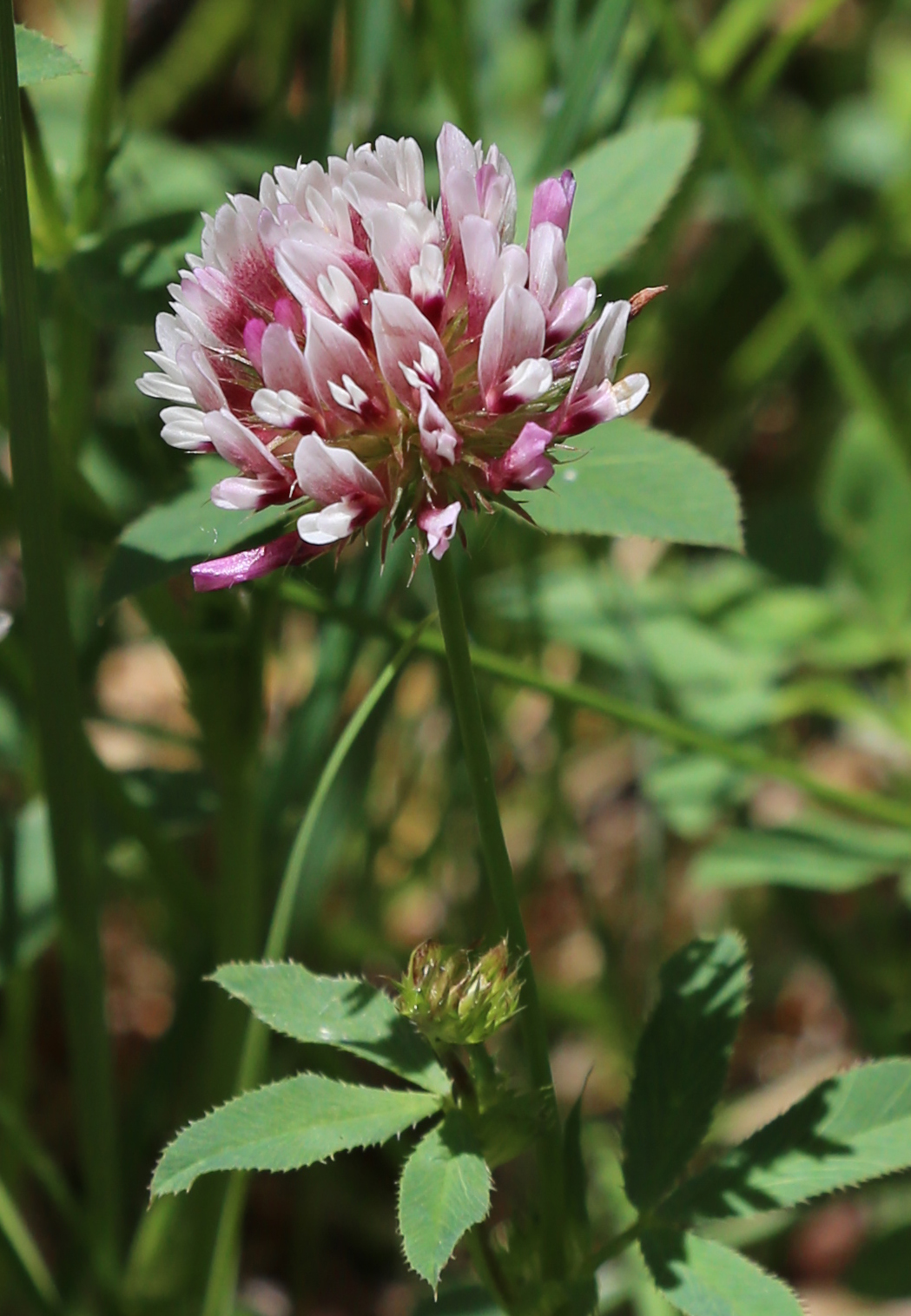
The flowers are packed into rounded heads about 3/4 to 1 1/4 inches across, on stalks that are usually longer than the leaves. Individual flowers are typical pea-family flowers, white, cream, pink, purple or two-toned, and they often bend downward as they age. It blooms in summer, mainly June to August.
Fruit & Seeds
Each flower forms a tiny pod, hidden in the dried flower, with one or a few small seeds. The withered brown heads stay on the stalks into late summer.
Varieties
Botanists recognize several varieties, including the purple-flowered atrorubens of the Sierra Nevada and Klamath region, the pink-and-white nevadense, and others such as reflexum, hansenii and elmeri. Their names and boundaries vary between floras.
Look-alikes
White clover (Trifolium repens) and red clover (T. pratense) are introduced; white clover creeps along the ground and has rounded leaflets, and red clover has broad leaflets with pale chevrons and heads that sit right on the leaves. Other native mountain clovers, such as springbank clover, have broader leaflets or a cup-like ring of bracts under the head.
Quick Facts
| Scientific Name | Trifolium longipes Nutt. |
| Family | Fabaceae (pea family) |
| Plant Type | Herbaceous perennial (native clover) |
| Mature Height | 2–12 in |
| Mature Spread | 4–12 in |
| Growth Rate | Moderate |
| Sun Exposure | Full sun to part shade |
| Water Needs | Moderate; moist in spring and early summer |
| Soil Type | Moist loams, meadow soils and gravelly stream banks |
| Soil pH | About 5.5–7.5 |
| Bloom Time | June–August |
| Flower Color | White, cream, pink or purple, often two-toned |
| Fall Color | None notable; foliage dies back in fall |
| Fruit | Tiny pod with one to few seeds, hidden in the dried flower |
| Deer Resistant | No; clovers are readily grazed by deer and elk |
| USDA Hardiness Zones | 3–8 |
Native Range
Long-stalked clover is native to the mountains of the western United States. USDA PLANTS lists it in Washington, Oregon, Idaho, Montana, Wyoming, California, Nevada, Utah, Colorado, Arizona and New Mexico.
It is widespread in the Cascades and the mountains of eastern Oregon and Washington, in the Olympic Mountains, the Klamath Mountains and the Sierra Nevada, and in the Rocky Mountains from Montana and Idaho south through Wyoming, Utah and Colorado. It also occurs in the higher ranges of Nevada and reaches the mountains of northern Arizona and northern New Mexico. In Oregon and Washington it grows on both sides of the Cascades, with a few populations near the coast.
It grows in moist mountain meadows, along streams and seeps, in aspen groves and open conifer forests, and in sagebrush openings, mostly from about 4,000 to over 11,000 feet, lower in the north. It is a frequent member of montane and subalpine meadow communities.
📋 Regional plant lists featuring Long-stalked Clover: Idaho, Eastern Oregon & Eastern Washington · Western Oregon & Western Washington · Montana & Wyoming · Utah & Western Colorado · Arizona & New Mexico · California & Nevada
Growing & Care Guide
Long-stalked clover is a modest but charming plant for native meadow gardens and restoration in the mountain West. It is mostly available as seed from regional native seed suppliers rather than as nursery plants, and it is best grown where it is native, in cool-summer gardens with moist soil in spring.
Light
Grow it in full sun to part shade. In hot, low-elevation gardens it does best with afternoon shade.
Soil & Water
It likes moist, well-drained loam or gravelly soil, similar to a mountain meadow. Keep the soil moist through spring and early summer; established plants tolerate some drying later in the season but look best with occasional summer water. It does not need fertilizer, since it fixes its own nitrogen.
Planting Tips
Sow seed in fall, or in spring after cold stratification, in a meadow or among low grasses such as tufted hairgrass. Because it is small, plant it in groups or mixed into a seed blend with other meadow wildflowers, where its flower heads will rise above the grasses.
Pruning & Maintenance
Little care is needed. Mow or cut a meadow planting in late summer or fall, after seeds have dropped. Keep vigorous introduced clovers and pasture grasses from crowding it out.
Propagation
Grow it from seed. Like many clovers, the seeds have hard coats; scarify them lightly (rub with sandpaper) and stratify for a few weeks before spring sowing. Inoculating with clover rhizobia can help in soils where native clovers have not grown. Collect seed only in small amounts and only where permitted.
Landscape Uses
- Native meadow gardens: a low, flowering clover among mountain grasses and wildflowers
- Restoration: meadow, streambank and burned-area seedings in the mountain West
- Pollinator gardens: an excellent nectar and pollen source for bumble bees
- Soil improvement: fixes nitrogen and enriches meadow soils
- Native lawn alternative: a native alternative to introduced white clover in low-traffic areas
Wildlife & Ecological Value
Long-stalked clover is a valuable meadow plant for wildlife, providing summer flowers for bees and nutritious foliage for grazing animals.
For Pollinators
Its flower heads are visited heavily by bumble bees, which can open the pea-type flowers, and by other native bees and butterflies. Clovers are also larval host plants for several butterflies in the sulphur and blue families.
For Birds
Grouse eat clover leaves and flowers, and seed-eating birds take the small seeds.
For Mammals
Like other clovers, its protein-rich leaves are eaten by elk, deer, bighorn sheep and livestock, and by smaller mammals such as pikas, marmots, pocket gophers and ground squirrels. Black bears graze clovers in mountain meadows in summer.
Ecosystem Role
As a legume, it adds nitrogen to meadow and forest soils through bacteria in its root nodules, benefiting neighboring plants. Native clovers are important in mountain meadows but can decline under heavy grazing or competition from introduced clovers and grasses.
Cultural & Historical Uses
Thomas Nuttall described Trifolium longipes in the nineteenth century from plants collected on early expeditions to the American West. The species name means “long foot” or “long stalk”, referring to the long flower stalks.
Native clovers were eaten by many Indigenous peoples of the West, usually as fresh greens or cooked leaves in spring. Clovers can cause bloating if eaten in quantity, so they were generally eaten in moderation.
Western North America is a center of clover diversity, with dozens of native Trifolium species. Long-stalked clover is one of the most widespread of the mountain species and a good example of how variable a single native plant can be across its range.
Frequently Asked Questions
Is long-stalked clover native?
Yes. It is native to the mountains of the western United States, unlike white and red clover, which were introduced from Europe.
Why is it called long-stalked clover?
Its flower heads are held on long, slender stalks that rise well above the leaves. The species name longipes means “long foot”.
Where does long-stalked clover grow?
It grows in moist mountain meadows, stream banks and open forests from Washington and Montana to California, Arizona and New Mexico, mostly at middle to high elevations.
Is long-stalked clover good for bees?
Yes. Bumble bees and other native bees visit its flowers heavily, and it blooms through the summer.
Can I grow long-stalked clover in my garden?
Yes, in a sunny or partly shaded native meadow garden with moist soil in spring, especially in the mountain West. Sow scarified seed in fall or after cold stratification.

Looking for a nursery that carries Long-stalked Clover?
Browse our native plant nursery directory: Arizona · California · Colorado · Idaho · Montana · Nevada & New Mexico · Oregon · Utah · Washington · Wyoming

