Tufted Hairgrass (Deschampsia caespitosa)
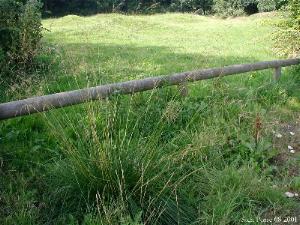
Deschampsia caespitosa, commonly known as Tufted Hairgrass or Tussock Grass, is one of the most widespread and ecologically significant native grasses in the Northern Hemisphere — a true cosmopolitan species found from Alaska to Patagonia, from Scotland to Siberia, and from sea level to alpine tundra. In Alaska, it is a dominant grass of wet meadows, stream banks, coastal marshes, subalpine slopes, and disturbed habitats across the state, forming the characteristic large, dense clumps or “tussocks” that define much of Alaska’s lowland and subalpine grassland landscape.
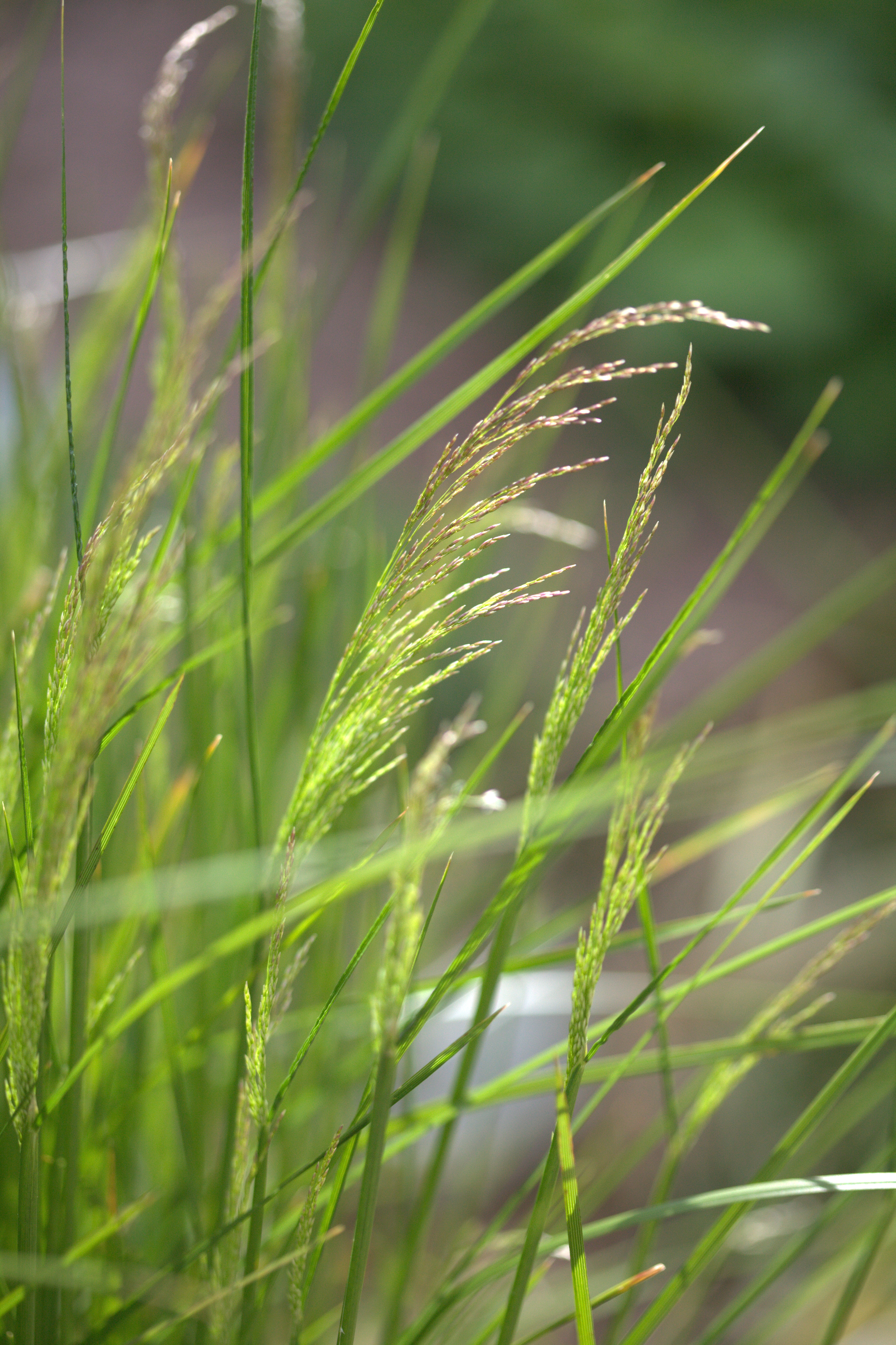
The genus name Deschampsia honors the French botanist Louis Auguste Deschamps (1765–1842), while caespitosa means “tufted” or “growing in clumps” — perfectly describing the plant’s characteristic growth form. Each clump (tussock) is a dense, semi-evergreen mound of narrow, arching dark-green leaves that persists through winter, providing structure in the dormant landscape. In early summer, the plant produces spectacular, airy seed heads — cloud-like panicles of tiny, shimmering, silvery-green to golden flowers that catch the light magnificently, making Tufted Hairgrass one of the most ornamentally beautiful native grasses in the Alaskan landscape.
For gardeners and restoration practitioners, Tufted Hairgrass offers outstanding practical value alongside its ornamental appeal. It is one of the most erosion-tolerant native grasses for wet and seasonally flooded sites, its dense root systems stabilize soil effectively, and its seeds are an important food source for seed-eating birds. It tolerates a broad range of soil conditions — from nutrient-poor mineral soils to organic wetland soils — and adapts to full sun or partial shade. For those creating native plant gardens, meadow restorations, or bioswale plantings in Alaska, Tufted Hairgrass is an indispensable species.
Identification
Tufted Hairgrass is a cool-season perennial grass that grows in dense, compact tussocks (clumps) typically 1 to 3 feet (30–90 cm) tall and wide, though exceptional plants in favorable conditions may reach 4 feet. The clump-forming habit — produced by the plant’s non-spreading basal growth — is the most immediately recognizable field feature. Individual plants produce many narrow, arching, dark green leaves and airy flowering stems that rise well above the foliage in summer.
Leaves
The leaves are narrow — typically 1–3 mm wide — flat to folded, and dark green on the upper surface with a lighter, often ridged underside. They are rough to the touch when stroked upward (due to tiny forward-pointing serrations on the margins) — a characteristic shared with many grasses in this group. Leaves are persistent through winter and semi-evergreen in Alaska’s milder coastal climates, giving the clumps a year-round presence in the landscape. Leaf sheaths are smooth, and the ligule (a small membrane at the junction of sheath and blade) is elongated and pointed — 3–10 mm long.
Flower Heads (Panicles)
The flowering stems rise 1 to 4 feet (30–120 cm) above the foliage in summer. The panicle (flower head) is open, airy, and delicate — a branching structure bearing hundreds of tiny, two-flowered spikelets. Each spikelet is approximately 3–5 mm long, with a short, straight awn. The panicles are silvery-green when young, maturing to golden-yellow or straw-colored in late summer. When backlit by the sun, the shimmering, transparent quality of the panicle is extraordinarily beautiful — one of the great visual attractions of the Alaska summer landscape. Flowering occurs from June through August depending on elevation.
Roots & Clump Structure
The root system is fibrous and extensive — individual clumps can develop over many years into large, elevated tussocks with a mound of accumulated dead organic material at the base. These tussocks can reach 2 feet in height and become extremely dense over time. In Alaskan wetlands, tussocks of various grass and sedge species (including Tufted Hairgrass) create the characteristic hummocky terrain that is challenging to traverse and essential for water management, carbon storage, and biodiversity in boreal wetland ecosystems.
Quick Facts
| Scientific Name | Deschampsia caespitosa |
| Family | Poaceae (Grass family) |
| Plant Type | Perennial Grass (clump-forming) |
| Mature Height | 2–3 ft (foliage); up to 4 ft in flower |
| Sun Exposure | Full Sun |
| Water Needs | High |
| Foliage | Semi-evergreen, dark green, narrow blades |
| Bloom Time | June – August |
| Flower Color | Silvery-green maturing to golden straw |
| Spread | Clump-forming (non-spreading) |
| USDA Hardiness Zones | 4–9 (cold-tolerant; AK populations to Zone 2) |
Native Range
Tufted Hairgrass has one of the most extensive natural ranges of any grass in the Northern Hemisphere — it is found on every continent except Antarctica, though its core distribution is circumpolar, spanning boreal and temperate zones of North America, Europe, and Asia. In North America, it occurs from Alaska across all of Canada to the Atlantic coast, extending south through the northeastern and Great Lakes states, down through the Rocky Mountains to Colorado, and along the Pacific Coast to California. It is absent from much of the arid interior West and the southeastern states.
In Alaska, Tufted Hairgrass is one of the most abundant and widespread grasses in the state — occurring in virtually every habitat type from coastal salt marshes and beach meadows to boreal forest clearings, subalpine meadows, and alpine tundra. It is particularly abundant in the wet meadows and stream-side communities of Interior Alaska and along the Gulf Coast, where it often forms the dominant ground layer in open, wet habitats. At higher elevations, it transitions into alpine communities alongside sedges, saxifrages, and other tundra species.
The species is both a native plant and an ecological indicator — its abundance and vigor in a particular area reflects soil moisture, disturbance history, and nutrient availability. In post-fire communities, Tufted Hairgrass is one of the first grasses to reestablish, and in degraded or disturbed habitats, it provides rapid ground cover that stabilizes soil and initiates ecological recovery. In alpine and subalpine zones worldwide, it is one of the most abundant and ecologically important native grasses, playing a central role in the structure and function of mountain grassland ecosystems.
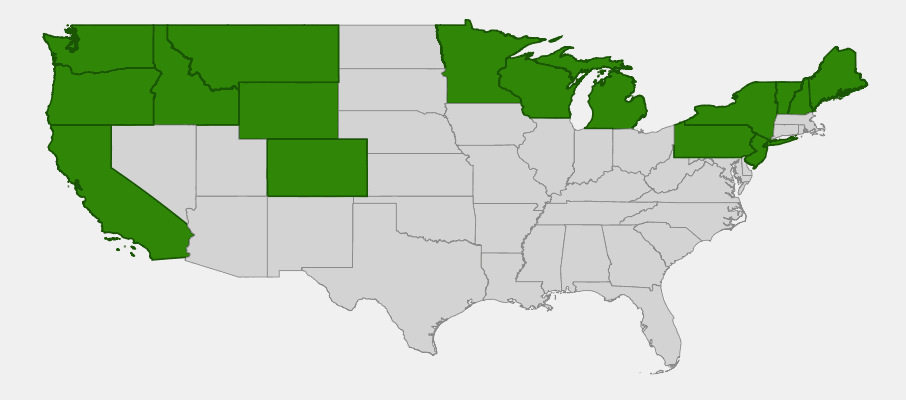
📋 Regional plant lists featuring Tufted Hairgrass: Alaska
Growing & Care Guide
Tufted Hairgrass is an excellent native grass for moist, open gardens in Alaska. Its elegant form, shimmering flower heads, and semi-evergreen texture provide year-round interest with minimal maintenance. It is particularly well-suited to rain gardens, wet meadow plantings, bioswales, and stream-side landscapes.
Light
Tufted Hairgrass prefers full sun for the most vigorous growth and most spectacular flower display. In Alaska’s long summer days, a full-sun site provides ideal growing conditions. It tolerates partial shade — particularly in warmer, more southern climates — but in Alaska’s cool climate, full sun helps the plant achieve its best form. In partial shade, the foliage clumps remain healthy but flowering may be slightly reduced.
Soil & Water
High moisture is the most important growing requirement for Tufted Hairgrass. It thrives in wet to moist soils — persistently moist, even seasonally flooded conditions are acceptable. It grows naturally in waterlogged meadow soils and stream bank margins. Plant it where soil stays consistently moist or in areas that receive natural water accumulation. It tolerates a wide range of soil types — from nutrient-poor mineral soils to rich organic wetland soils — and performs well at soil pH from acidic (4.5) to slightly alkaline (7.5). Avoid very dry or excessively well-drained soils.
Planting Tips
Plant in spring or fall, spacing clumps 18–24 inches apart for ground cover effect or 24–36 inches for individual specimens. Tufted Hairgrass establishes readily from container-grown plants and self-seeds moderately in suitable conditions. In restoration plantings, seed can be broadcast in fall for spring germination. Mulch lightly to retain moisture and suppress weeds during establishment. No fertilizer needed in typical moist Alaska soils — over-fertilization produces lush, floppy growth.
Pruning & Maintenance
Tufted Hairgrass is very low-maintenance. Cut back the entire clump to about 3–4 inches in late winter or early spring before new growth begins — this removes old foliage and spent flower stalks, allowing fresh growth to emerge cleanly. This is also a good time to divide large clumps that have become congested, using a sharp spade. Division every 3–5 years keeps plants vigorous. The grass has minimal pest and disease issues in its native range.
Landscape Uses
- Rain gardens and bioswales — excellent tolerance for wet, seasonally flooded conditions
- Native meadow gardens providing ornamental structure and wildlife value
- Stream bank and pond edge plantings for erosion control and bank stabilization
- Wet meadow restoration — a dominant species in many Alaskan wet meadow communities
- Border grass — the clumping form and shimmering flower heads add elegance to garden edges
- Seasonal interest — semi-evergreen foliage provides winter structure; flower heads persist for months
Wildlife & Ecological Value
Tufted Hairgrass is an ecologically productive native grass that supports diverse wildlife communities across its vast range.
For Birds
The seeds of Tufted Hairgrass are consumed by numerous seed-eating birds, including Snow Buntings, Savannah Sparrows, Lincoln’s Sparrows, Common Redpolls, and various finches. The dense tussocks provide outstanding nesting habitat and winter cover for ground-nesting and ground-foraging birds. In Alaska’s wet meadows, Tufted Hairgrass tussocks are a preferred nesting site for Savannah Sparrows and other grassland birds that nest in depressions among clumps. The seeds remain available through winter, providing food when other resources are scarce.
For Mammals
Caribou, Moose, and Dall Sheep graze on Tufted Hairgrass leaves, which are palatable and nutritious. The large tussocks of Alaskan wetlands provide important habitat structure for small mammals — voles, lemmings, and shrews nest among and beneath tussocks, using the accumulated organic matter for insulation and the elevated tussock surface as a dry platform above wet soils. Snowshoe Hares use dense grass tussocks for concealment. The invertebrate communities supported by tussock grass habitats — particularly soil invertebrates — are an important food source for shorebirds and other ground-foraging wildlife.
For Pollinators
Tufted Hairgrass is wind-pollinated and provides limited direct nectar or pollen resources for pollinators. However, the complex tussock structure provides nesting habitat for ground-nesting bees, and the leaf litter accumulating at the base of tussocks supports a diverse soil invertebrate community including beetles, flies, and other insects that are important prey for many wildlife species.
Ecosystem Role
Tufted Hairgrass tussocks play an extraordinary ecological role in boreal and subarctic wetlands. The elevated tussock structure is a defining feature of Alaskan wet meadow landscapes — these hummocks elevate plant growth above the water table, create microsites of varying moisture and temperature, and accumulate organic carbon over decades as dead material builds up beneath the live crown. This carbon accumulation makes tussock grass communities significant carbon sinks in Alaska’s climate system. The complex physical structure of tussock wetlands supports remarkable biodiversity — far greater than open water or homogeneous sedge meadows — and is recognized as critical habitat for migratory shorebirds, waterfowl, and many other wildlife species.
Cultural & Historical Uses
Tufted Hairgrass has been used by Alaska Native and northern Indigenous peoples primarily for practical rather than medicinal purposes, owing to its abundance and the quality of its tough, flexible leaves. The leaves and stems were used by various Athabascan, Yup’ik, Inupiaq, and coastal groups in basket weaving, mat making, and as padding material in footwear. The tough, flexible leaves were braided or twisted into cordage for various applications. In coastal communities, grass was used extensively to insulate and line food storage containers, keeping cached salmon and other preserved foods protected from moisture and insect damage.
The large tussocks were also recognized as landmarks and navigational features in the flat, featureless landscapes of Interior Alaska and the tundra. Travelers crossing wet meadows and tundra learned to read the distribution of tussocks as indicators of the safest crossing routes — and to treat uneven tussock terrain with respect, as crossing tussock fields is physically demanding and ankle-twisting without appropriate footwear and technique. Indigenous knowledge of tussock distribution and ecology was a practical navigational tool in landscapes without other prominent features.
In modern times, Tufted Hairgrass has gained significant recognition as an ornamental grass, with numerous cultivars developed from European populations — including ‘Goldtau,’ ‘Goldgehänge,’ ‘Northern Lights’ (with variegated white-and-green leaves), and others widely planted in gardens worldwide. Native Alaskan populations are increasingly used in ecological restoration, mine reclamation, and disturbed land revegetation projects, where the species’ rapid establishment, tolerance for poor soils, and erosion-control ability make it a standard component of restoration seed mixes across the boreal zone.
Frequently Asked Questions
Does Tufted Hairgrass spread aggressively?
No — it is a strictly clump-forming grass that does not spread by rhizomes or stolons. Individual clumps expand slowly over the years, and the plant self-seeds moderately in appropriate moist conditions. It will not take over a garden or become invasive. This makes it a well-behaved, reliable native grass for garden use.
Can Tufted Hairgrass grow in standing water?
It tolerates periodic flooding and grows naturally at the margins of streams and in seasonally inundated wet meadows. However, it prefers consistently moist to wet soil rather than permanently standing water. For permanently submerged areas, sedges and rushes are more appropriate. Tufted Hairgrass is perfect for the wet but not-always-flooded zones of rain gardens, bioswales, and pond edges.
When does Tufted Hairgrass flower in Alaska?
Flowering occurs from June through August in Alaska, depending on elevation and location. In coastal lowlands, flowering begins in June; at higher elevations or in interior regions, it may not peak until July–August. The airy panicles remain ornamental through fall, persisting as dry, golden seed heads well into winter.
Is it hard to grow Tufted Hairgrass from seed?
No — it germinates readily from fresh seed sown in fall (cold-stratification by winter naturally breaks dormancy) or from seed stratified for 4–6 weeks in a refrigerator before spring sowing. Sow seeds on the soil surface or just lightly covered; they need light to germinate. Seedling establishment is faster in moist conditions. Container-grown plants establish more quickly than direct seeding in garden settings.
How does Tufted Hairgrass look in winter?
Beautifully — the semi-evergreen clumps maintain their dark green to bronze-green color through much of the Alaskan winter, and the golden, dried flower stems and seed heads persist for months, catching light and adding movement and texture to the winter garden. In areas with heavy, persistent snow cover, the plants emerge in spring looking intact and ready to begin growing again.

Looking for a nursery that carries Tufted Hairgrass?
Browse our native plant nursery directory: Alaska