Oak Tree in Virginia: Characteristics and Habitat
Last updated: September 17, 2026
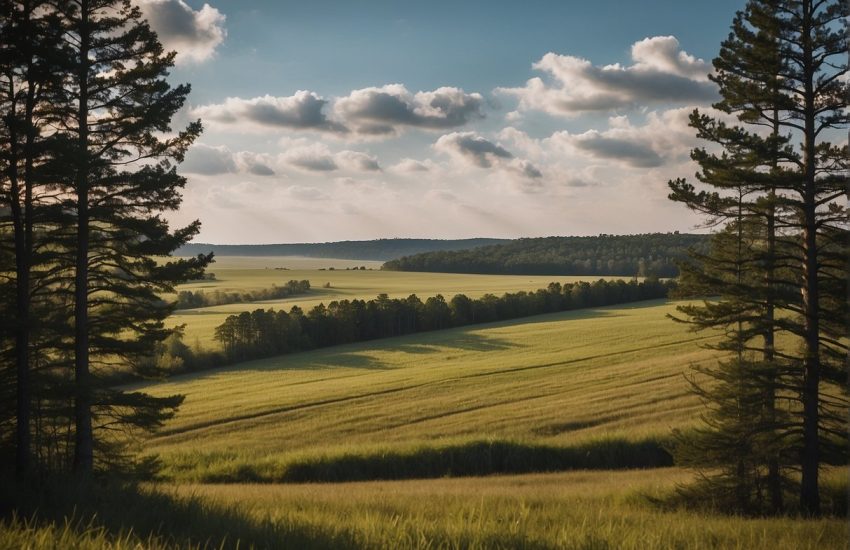
Oak trees are a common sight in Virginia, as the state is home to a variety of native oak species. These tall, majestic trees are known for their sturdy trunks, sprawling canopies, and acorns that provide sustenance for wildlife. Virginia’s oak trees are an important part of the state’s ecosystem, and they play a crucial role in maintaining the health and balance of the environment.
Key Takeaways: Oak Trees in Virginia
- Virginia is home to over 20 oak species, including White Oak, Red Oak, Chestnut Oak, and Southern Live Oak
- Most Virginia oaks prefer well-drained, slightly acidic soils (pH 5.5–6.5) in full sun to partial shade
- White Oak (Quercus alba) is considered the best native oak for landscaping — long-lived, wildlife-friendly, and stunning in fall
- Oak trees support over 500 species of caterpillars — making them the most wildlife-valuable trees in the Eastern U.S.
- Plant in fall or early spring; water deeply for the first 2 years until established
- Main threats: oak wilt, gypsy moth caterpillars, and drought stress in young trees
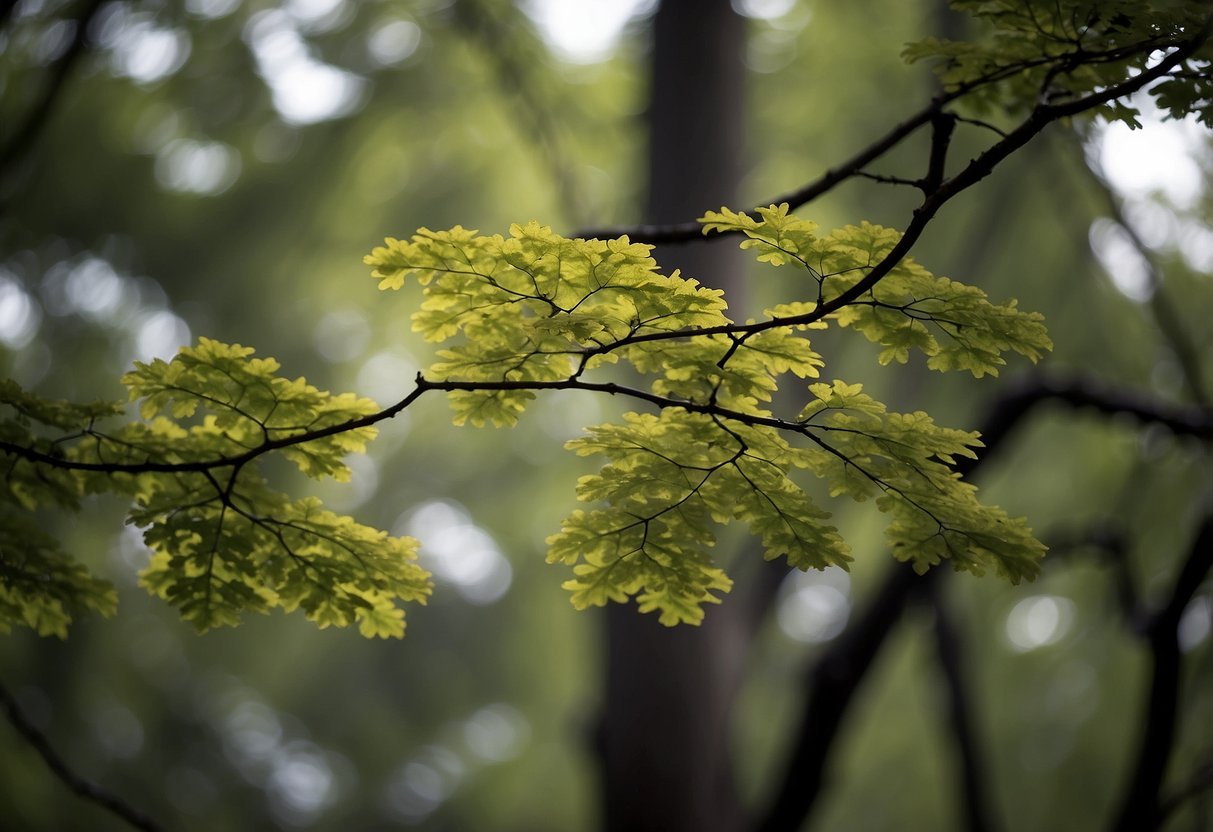
There are many different types of oak trees that grow in Virginia, and each has its own unique characteristics. Some of the most common native oak species in Virginia include the red oak, white oak, chestnut oak, and black oak. These trees can be identified by their leaves, bark, and acorns, and they have different growth habits and environmental preferences. For example, some oak species prefer moist soils, while others can tolerate drought conditions.
Despite their importance, oak trees in Virginia face a number of threats, including disease, insect infestations, and habitat loss. In recent years, the state has taken steps to protect and conserve its oak tree populations, including planting new trees, managing forested areas, and educating the public about the importance of these valuable resources. By working together, Virginia residents can help ensure that the state’s oak trees continue to thrive for generations to come.
Species and Characteristics
White Oak
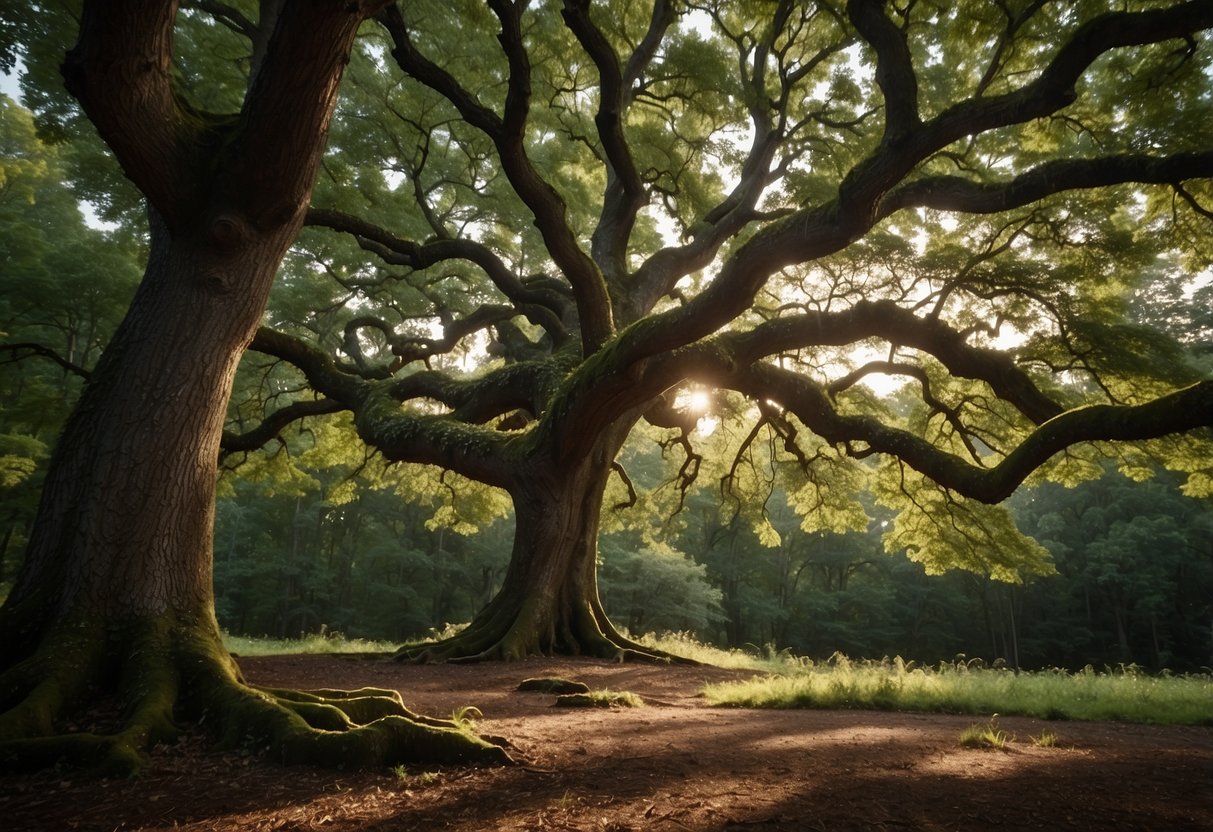
White Oak (Quercus alba) is one of the most common oak trees in Virginia. It is a massive, deciduous tree that can grow up to 100 feet tall and has a spread of up to 80 feet. The bark of the White Oak is light gray and scaly, and the leaves are large, lobed, and leathery. The acorns of the White Oak are also large and round, with a sweet taste.
Southern Live Oak
The Southern Live Oak (Quercus virginiana) is an evergreen tree that is native to the southeastern United States, including Virginia. It is a massive, long-lived tree that can grow up to 80 feet tall and has a spread of up to 100 feet. The bark of the Southern Live Oak is dark gray and deeply furrowed, and the leaves are leathery and elliptical. The tree is often covered in Spanish moss, which adds to its beauty.
Red Oaks
There are several species of Red Oak that are native to Virginia, including the Northern Red Oak (Quercus rubra), Southern Red Oak (Quercus falcata), Black Oak (Quercus velutina), and Scarlet Oak (Quercus coccinea). These trees are all deciduous and can grow up to 100 feet tall. The bark of the Red Oaks is dark gray and deeply furrowed, and the leaves are leathery and have pointed lobes. The acorns of the Red Oaks are also large and round.
Other Notable Species
Other notable species of oak trees in Virginia include the Willow Oak (Quercus phellos), Water Oak (Quercus nigra), Post Oak (Quercus stellata), Chestnut Oak (Quercus montana), Swamp Chestnut Oak (Quercus michauxii), Blackjack Oak (Quercus marilandica), Pin Oak (Quercus palustris), and Laurel Oak (Quercus laurifolia). Each of these species has its own unique characteristics, such as the slender leaves of the Willow Oak and the drought-tolerant nature of the Post Oak.
Oak trees are known for their strong, durable wood, which is used for furniture, flooring, and construction. The acorns of oak trees are an important food source for wildlife, and the foliage provides shelter for birds and small animals. Overall, oak trees are an important part of Virginia’s natural landscape and provide numerous benefits to the ecosystem.
Ecology and Habitat
Growth Conditions
Virginia is home to a variety of oak trees, including the post oak, chestnut oak, and southern live oak. These trees thrive in a range of soil types, including rocky and sandy soils, as well as well-drained soils. They can be found in a variety of habitats, including swamps, along rivers and streams, and in upland forests. The pH of the soil can affect the growth of oak trees, with some species preferring more acidic soils.
The height, crown, and trunk of an oak tree can vary depending on the species and the growing conditions. Southern live oaks, for example, can grow up to 60 feet tall with a crown spread of up to 120 feet. The trunk can have a diameter of up to 6 feet.
Environmental Impact
Oak trees are valuable to local wildlife, providing food and habitat for a variety of species, including birds, insects, and mammals. They also serve as a shade tree and are often used in landscaping.
Oak trees play an important role in the ecosystem, providing a variety of ecological services, such as carbon sequestration, soil stabilization, and water regulation. However, they are also susceptible to diseases, such as oak wilt, which can have a significant impact on their health and longevity.
Threats and Preservation
Conservation efforts are underway to preserve oak tree populations in Virginia. Threats to these trees include habitat loss, disease, and climate change. Efforts to protect oak trees include monitoring for diseases, promoting habitat conservation, and planting new trees in areas where populations have declined. It is important to preserve oak tree populations to maintain the ecological services they provide and to protect the local wildlife that depend on them.
How to Plant Oak Trees in Virginia
Planting a native oak tree is one of the best long-term investments you can make for your Virginia property. These trees add significant value to your landscape, provide shade, and support a rich ecosystem of birds and beneficial insects. Here’s how to do it right:
Choosing the Right Location
Most Virginia oak species prefer full sun to partial shade and need plenty of space for their root system. Before planting, consider the mature size of your chosen species — a White Oak can reach 80–100 feet tall with an equally wide crown, so plant at least 20–30 feet from buildings, power lines, and neighboring trees.
For smaller yards, consider the Willow Oak (Quercus phellos), which has a more columnar form, or the Shumard Oak (Quercus shumardii), which tolerates urban conditions well and puts on a spectacular red fall display.
Soil Preparation and Planting
Virginia oaks thrive in a wide range of soils, from clay to sandy loam, as long as drainage is adequate. Avoid planting in spots where water pools after rain. The ideal soil pH is 5.5 to 6.5 (mildly acidic). If your soil tests above 7.0, add elemental sulfur to bring it down over time.
When planting:
- Dig a hole 2–3 times the width of the root ball and no deeper than the root ball itself
- Set the tree so the root flare is at or slightly above ground level
- Backfill with native soil — no need for amendments unless your soil is extremely compacted
- Mulch the root zone with 3–4 inches of wood chips, keeping mulch away from the trunk
- Water deeply (10–15 gallons) immediately after planting
Watering Young Oaks
For the first 2–3 years, young oak trees need consistent moisture to establish a deep root system. Water once or twice a week during dry spells, providing about 10 gallons per watering. After the third year, established Virginia oaks are remarkably drought-tolerant and need little supplemental watering except in extreme drought conditions.
Oak Tree Care and Maintenance in Virginia
Once established, Virginia oak trees are low-maintenance and incredibly resilient. Here’s what you need to know to keep them healthy:
Pruning Oak Trees in Virginia
The most important rule for pruning oak trees in Virginia is timing. Never prune oaks between April and October — this is when the oak wilt fungus (Ceratocystis fagacearum) is most active and freshly cut wood can attract the beetles that spread it.
Prune oaks during winter dormancy (December through February). Remove only:
- Dead, diseased, or damaged branches
- Branches that cross and rub against each other
- Water sprouts growing straight up from branches
- Low branches that interfere with pathways
Always paint large cuts (over 2 inches in diameter) with pruning wound sealer immediately to deter beetles.
Fertilizing
Healthy, established oaks in native soil rarely need fertilizing. In fact, high-nitrogen fertilizers can stimulate excessive leaf growth that makes trees more vulnerable to pests and disease. If your tree shows signs of nutrient deficiency (pale yellow leaves, poor growth), have a soil test done first. If needed, apply a slow-release, low-nitrogen fertilizer (such as 10-6-4) in early spring at the drip line.
Common Diseases and Pests of Virginia Oak Trees
Oak Wilt
Oak wilt is the most serious threat to Virginia oaks. Caused by the fungus Ceratocystis fagacearum, it’s spread both by bark beetles and through connected root systems. Red oaks are especially susceptible — infected trees can die within weeks. White oaks are more resistant.
Signs of oak wilt: leaves turn brown from the edges inward, beginning at branch tips and spreading rapidly throughout the crown. There is no cure once a tree is infected, but you can prevent spread by:
- Never wounding oaks during warm months
- Avoiding root grafts from infected nearby trees (severing root connections)
- Having a certified arborist apply propiconazole injections as a preventative measure for high-value trees
Gypsy Moth Caterpillars
The gypsy moth (Lymantria dispar) can defoliate entire oak trees during heavy outbreak years. While a single defoliation rarely kills a healthy oak, repeated defoliation over several years weakens the tree significantly. Check your trees in May–June for egg masses (tan, fuzzy ovals on the bark) and caterpillars. Contact your county cooperative extension office for current management recommendations, which may include Bacillus thuringiensis (Bt) applications.
Oak Leaf Blister
This fungal disease causes raised, blistered areas on oak leaves. While alarming-looking, it’s rarely fatal to the tree and mainly a cosmetic issue. No treatment is necessary for healthy trees; improve air circulation by removing crossing branches.
Virginia Oak Trees and Wildlife
No other native tree supports more wildlife than the oak. A single mature White Oak can support over 500 species of moth and butterfly caterpillars — a critical food source for nesting birds, which need thousands of caterpillars to raise a single clutch of chicks. Oaks also produce acorns that feed white-tailed deer, wild turkeys, squirrels, blue jays, woodpeckers, and black bears.
If you’re interested in creating wildlife-friendly habitat in Virginia, planting a native oak is the single most impactful thing you can do for your local ecosystem.
Best Oak Trees for Virginia Landscaping
If you’re choosing an oak for your Virginia garden or yard, here are the top picks based on landscape performance, wildlife value, and adaptability:
- White Oak (Quercus alba): Best overall native oak. Magnificent fall color, sweet acorns loved by wildlife, very long-lived. Needs space.
- Willow Oak (Quercus phellos): Fine-textured leaves, excellent urban tolerance, good street tree. Faster-growing than most oaks.
- Shumard Oak (Quercus shumardii): Brilliant scarlet fall color, fast-growing, tolerates clay soil and urban heat well.
- Chestnut Oak (Quercus montana): Outstanding for rocky, thin soils on slopes and ridges. Very drought-tolerant once established.
- Southern Live Oak (Quercus virginiana): Evergreen icon of the Southeast. Best for warmer parts of Virginia (zones 7b–8). Dramatic, spreading form.
For more ideas on landscaping with Virginia’s native trees, see our guide to ornamental trees to grow in Virginia.
Frequently Asked Questions About Virginia Oak Trees
Q: What is the fastest-growing oak tree in Virginia?
The Willow Oak (Quercus phellos) and Shumard Oak (Quercus shumardii) are among the fastest-growing Virginia native oaks, gaining 1.5–2 feet per year under good conditions. Water Oak (Quercus nigra) is also fast-growing but prefers moist soils near streams and rivers.
Q: When do oak trees drop acorns in Virginia?
White oak acorns ripen and drop in September–October in a single season. Red oak acorns take two years to mature and typically drop from October through December. Heavy acorn years (called “mast years”) occur every 2–5 years and are triggered by the previous spring’s weather conditions.
Q: How long do oak trees live in Virginia?
Virginia oak trees are remarkably long-lived. White Oaks commonly live 200–500 years, with some specimens exceeding 600 years. Red oaks typically live 200–300 years. Southern Live Oaks are known to exceed 1,000 years in ideal conditions. With proper care and no major disease pressure, your oak tree will likely outlive your house.
Q: Are Virginia oak trees messy in a yard?
All oaks drop leaves, acorns, and small twigs — this is just part of owning one. However, the ecological benefits far outweigh the maintenance. Leaves can be left in natural areas as mulch, and acorns are quickly cleaned up by squirrels and deer. If leaf cleanup is a concern, consider planting a Willow Oak — its small, needle-like leaves decompose quickly and are easy to mow over.