Post Oak (Quercus stellata)
Quercus stellata, commonly known as Post Oak, Cross Oak, or Iron Oak, is one of North America’s most drought-tolerant and resilient oak species, perfectly adapted to the challenging conditions of the south-central United States. This member of the white oak group (Fagaceae) earned its common name from its historical use as fence posts — the dense, decay-resistant wood could last for decades in the ground without treatment. The scientific name “stellata” refers to the star-shaped appearance of its deeply lobed leaves, which create one of the most distinctive and recognizable silhouettes in the American forest.
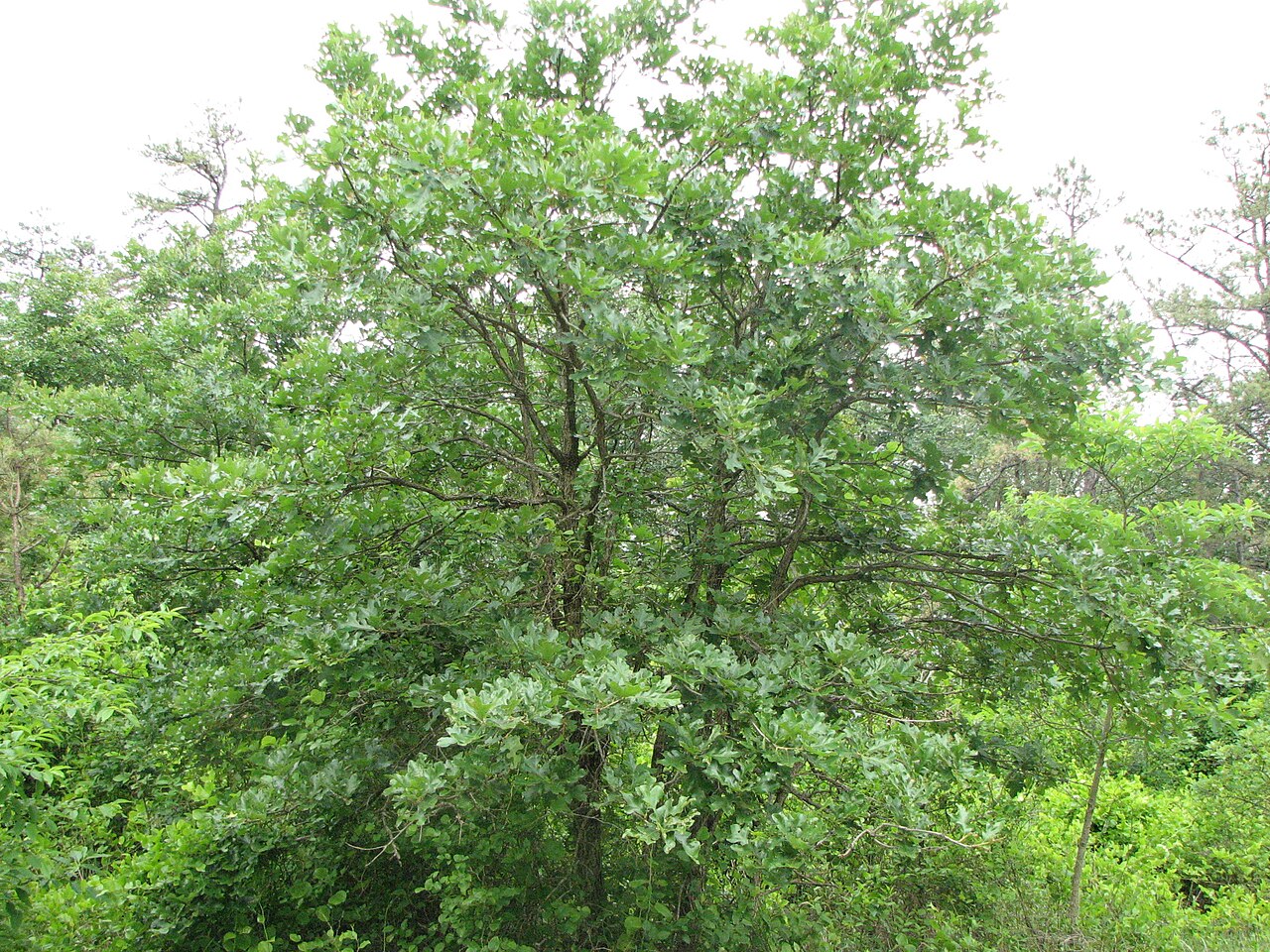
Post Oak is the signature tree of the Cross Timbers region, a narrow band of forest that once stretched from Kansas to Texas, serving as a natural barrier between the eastern forests and the Great Plains. This hardy oak typically grows 40-50 feet tall with a broad, rounded crown and distinctively thick, often horizontal branches that give mature trees a rugged, architectural appearance. Unlike many oaks that prefer rich, moist soils, Post Oak thrives in thin, rocky, or sandy soils where other trees struggle, making it an invaluable species for challenging sites.
Beyond its practical uses, Post Oak plays a crucial ecological role as a keystone species in dry upland forests and savannas throughout the South. Its deep taproot system allows it to access water during extended droughts, while its acorns feed dozens of wildlife species. The tree’s exceptional heat and drought tolerance make it increasingly valuable for climate-resilient landscaping and restoration projects in an era of changing weather patterns.
Identification
Post Oak is easily recognized by its distinctive leaves, bark, and growth habit. The tree typically develops a broad, rounded crown with thick, sturdy branches that often grow horizontally, creating a characteristic “sculptural” appearance that sets it apart from other oaks.
Leaves
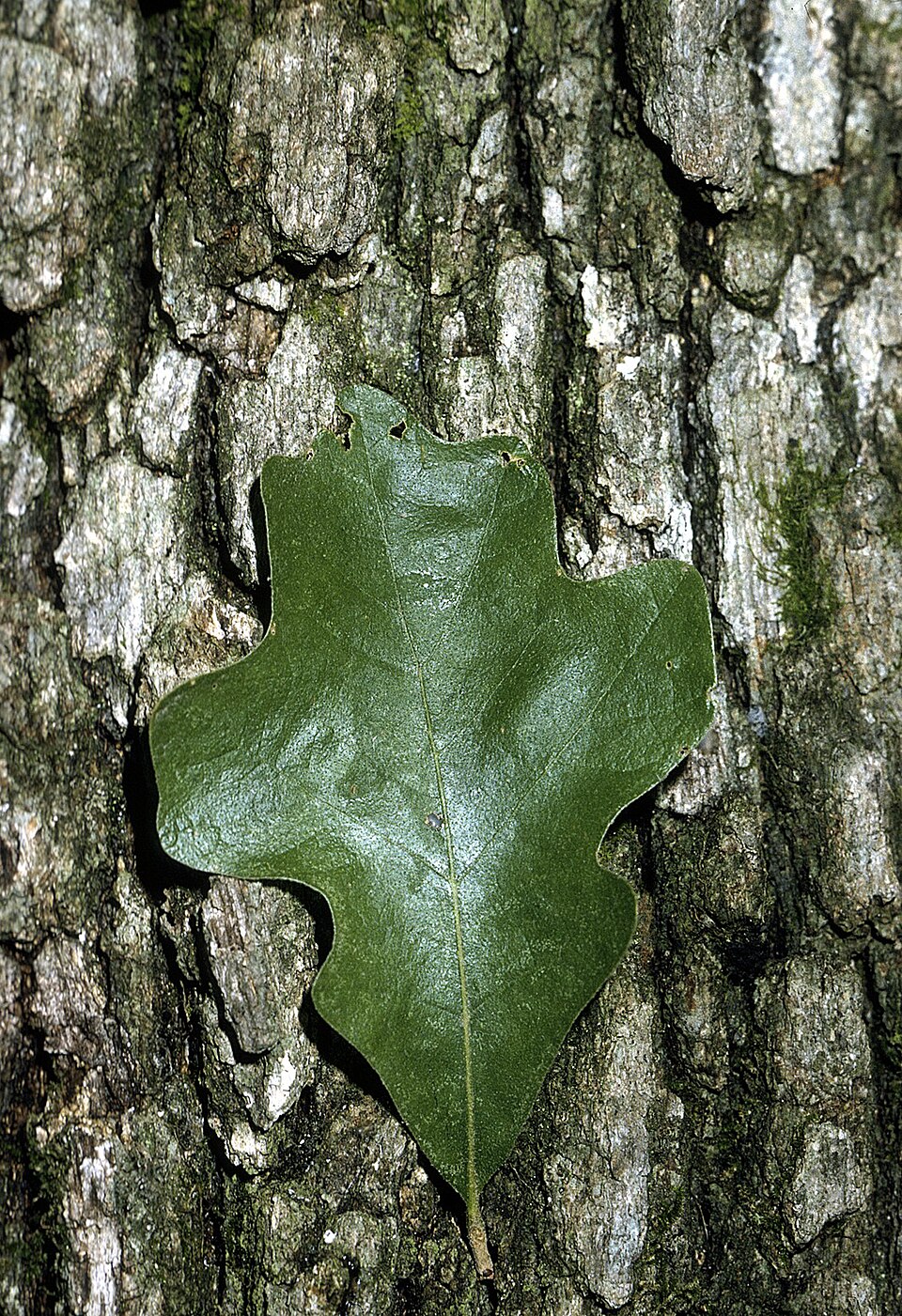
Post Oak leaves are perhaps the most distinctive feature of this species — they are deeply lobed with a characteristic “cross” or “star” shape that gives the tree its alternate common names. Each leaf is 4-6 inches long and 3-4 inches wide, with 5-7 rounded lobes separated by deep sinuses. The two middle lobes are typically larger and more prominent, resembling arms of a cross. The leaves are thick and leathery with a dark green, somewhat glossy upper surface and a paler, slightly fuzzy underside.
What makes Post Oak leaves particularly memorable is their shape consistency — while many oaks show considerable leaf variation on the same tree, Post Oak leaves maintain their characteristic cross-like silhouette remarkably consistently throughout the canopy. In fall, the leaves turn a warm brown to russet color and often persist on the tree well into winter.
Bark
The bark of Post Oak is distinctive and varies with the tree’s age. Young trees have smooth, gray bark, but as the tree matures, the bark develops into thick, irregular blocks or scales separated by deep furrows. Mature bark is typically gray to brown with a rough, deeply furrowed texture that gives the trunk a rugged, armor-like appearance. This thick bark provides excellent protection against fire and harsh weather conditions.
Acorns
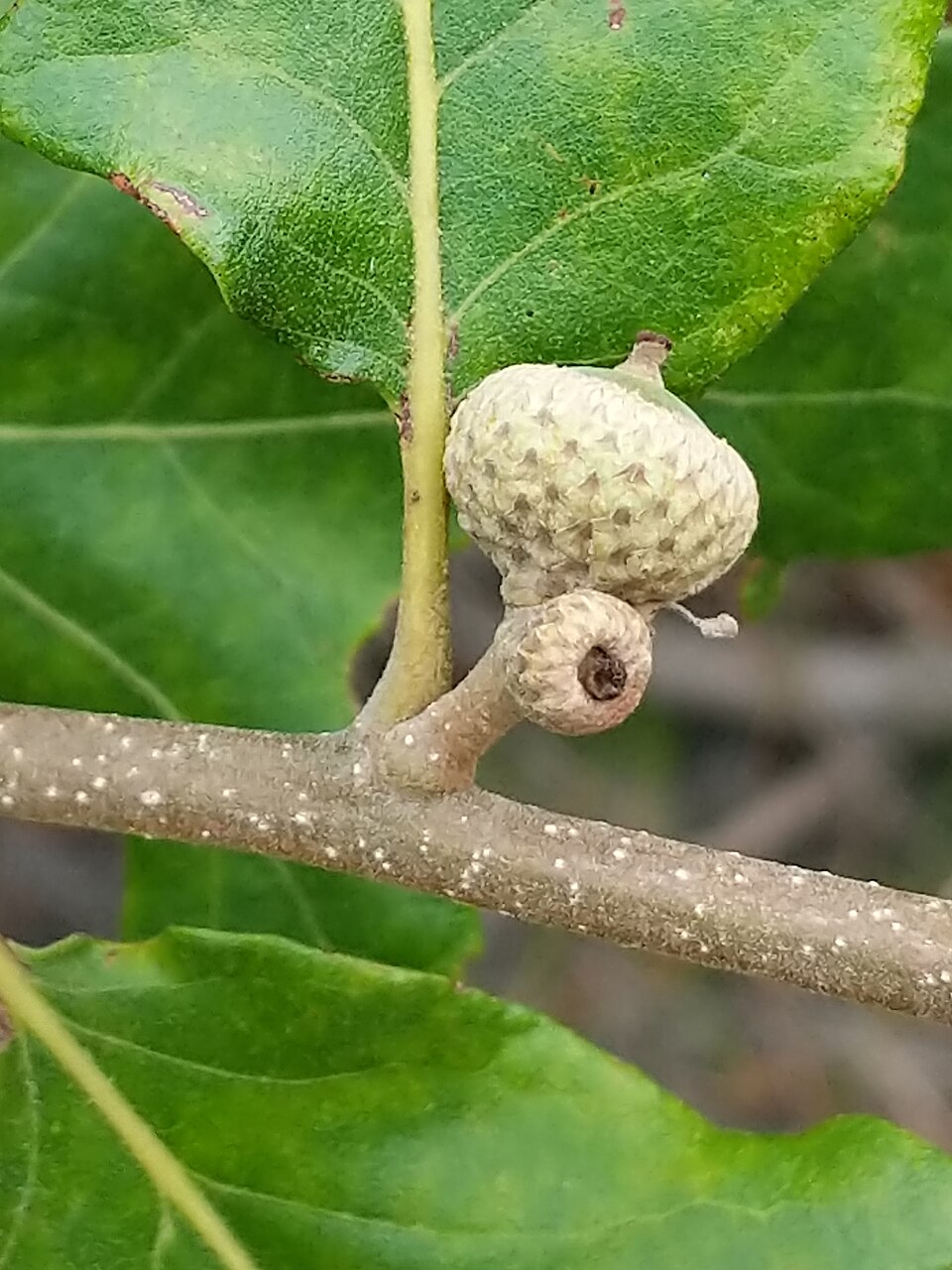
Post Oak produces typical white oak group acorns that mature in a single growing season. The acorns are relatively small, ½ to ¾ inch long, with a shallow cup that covers about one-third of the nut. They are light brown to tan in color and have a sweet flavor that makes them highly prized by wildlife. Acorn production is typically cyclical, with heavy crops every 3-4 years interspersed with lighter production years.
Quick Facts
| Scientific Name | Quercus stellata |
| Family | Fagaceae (Oak) |
| Plant Type | Deciduous Tree |
| Mature Height | 40–50 ft |
| Sun Exposure | Full Sun |
| Water Needs | Low (Drought Tolerant) |
| Bloom Time | April – May |
| Flower Color | Yellowish-green catkins |
| USDA Hardiness Zones | 5–9 |
Native Range
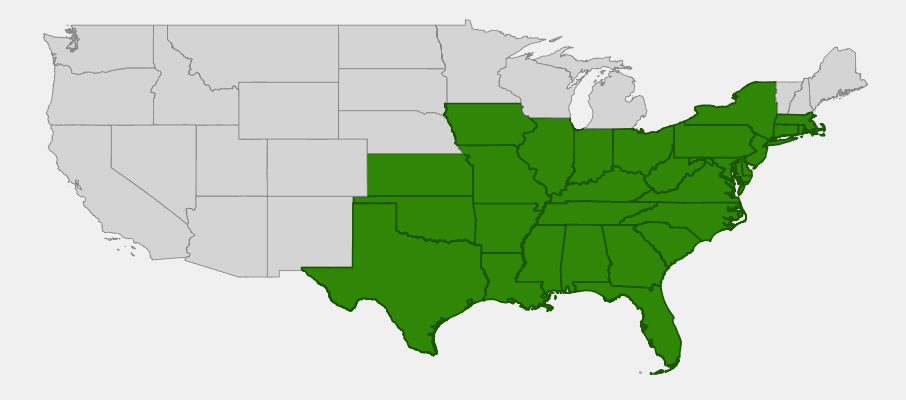
Post Oak has an extensive native range across the south-central and southeastern United States, extending from southeastern Kansas and eastern Texas north to Iowa and Illinois, and east to Virginia and Florida. The species reaches its greatest abundance in the Cross Timbers region of Texas, Oklahoma, and Kansas, where it forms the dominant tree species in extensive woodlands and savannas. This unique ecosystem once covered over 12 million acres and served as a natural transition zone between the eastern deciduous forests and the Great Plains grasslands.
Throughout its range, Post Oak demonstrates remarkable adaptability to challenging growing conditions. It thrives on shallow, rocky soils, sandy uplands, serpentine barrens, and clay hardpan sites where few other trees can survive. The species is particularly associated with dry upland sites, ridgetops, and south-facing slopes where drought stress eliminates competition from less tolerant species.
Post Oak plays a critical ecological role in its native range, often serving as the sole tree species capable of surviving in extremely harsh sites. In many areas, it forms pure stands or associates with other drought-tolerant species like Blackjack Oak, Eastern Red Cedar, and various prairie grasses. The species is also an important component of oak-hickory forests, oak-pine woodlands, and prairie-forest transition zones throughout the South.
📋 Regional plant lists featuring Post Oak: North Carolina & South Carolina
Growing & Care Guide
Post Oak is one of the easiest native trees to grow, provided you understand its preferences for full sun and well-drained soil. This is not a tree for rich, moist garden sites — it actually performs best in the challenging conditions that many other trees cannot tolerate.
Light
Post Oak absolutely requires full sun to thrive. Unlike many oaks that can tolerate some shade, Post Oak is specifically adapted to open, sunny conditions and will perform poorly in partial shade. In its native habitat, it often grows in full sun prairie-forest transition zones and open woodlands where it receives direct sunlight throughout the day.
Soil & Water
The key to success with Post Oak is well-drained soil — this species cannot tolerate wet or poorly drained conditions. It thrives in sandy soils, clay hardpan, rocky sites, and even shallow soils over limestone or serpentine. The tree is extremely drought tolerant once established, making it an excellent choice for xeriscaping and low-water landscapes. In fact, Post Oak often performs better in poor, dry soils than in rich, amended garden soils.
Avoid regular irrigation once the tree is established — Post Oak is adapted to natural rainfall patterns and can actually be weakened by excessive water. The deep taproot system allows mature trees to access water during extended dry periods.
Planting Tips
Plant Post Oak in fall or early spring, choosing the sunniest, driest spot available. This tree is perfect for challenging sites like slopes, rocky areas, or compacted soils where other trees struggle. Space trees 30-40 feet apart for full development, or closer for grove plantings. Post Oak transplants best as a young tree — older specimens can be difficult to establish due to the deep taproot.
Pruning & Maintenance
Post Oak requires minimal maintenance once established. Prune dead or damaged branches in late fall or winter when the tree is dormant. Avoid heavy pruning, as Post Oak naturally develops an attractive, sturdy branching structure. The tree is naturally pest- and disease-resistant, making it virtually maintenance-free in appropriate sites.
Landscape Uses
Post Oak’s exceptional drought tolerance and distinctive appearance make it valuable for many landscape applications:
- Xeriscaping — perfect centerpiece tree for low-water landscapes
- Problem sites — thrives in compacted, rocky, or shallow soils
- Street tree — tolerates urban heat and pollution
- Wildlife habitat — acorns feed numerous species
- Windbreak — sturdy structure withstands strong winds
- Prairie restoration — authentic tree for grassland-forest transitions
- Erosion control — extensive root system stabilizes slopes
Wildlife & Ecological Value
Post Oak is a keystone species that supports an remarkable diversity of wildlife throughout its range. As one of the dominant trees in many dry upland ecosystems, it provides both food and habitat structure that numerous species depend upon.
For Birds
Post Oak acorns are a critical food source for many game birds and songbirds. Wild Turkeys, Bobwhite Quail, Blue Jays, Red-headed Woodpeckers, and various nuthatches all rely heavily on Post Oak acorns. The tree’s thick, horizontal branching pattern provides excellent nesting sites for species like Red-tailed Hawks, Great Horned Owls, and various songbirds. During spring, the catkins attract numerous insect-eating birds that feed on the abundant small insects drawn to the flowers.
For Mammals
White-tailed Deer browse Post Oak leaves and twigs, while the acorns are consumed by numerous mammals including squirrels, chipmunks, Wild Turkeys, and Black Bears where ranges overlap. The acorns are particularly important because they are sweet (unlike red oak group acorns) and can be eaten immediately without processing. Small mammals like mice and voles also cache Post Oak acorns for winter food supplies.
For Pollinators
Post Oak flowers in early spring before the leaves emerge, producing abundant pollen that supports early-season pollinators. While wind-pollinated, the flowers attract numerous small beetles, flies, and other insects that serve as food for migratory songbirds arriving in spring. The tree also hosts numerous species of native moths and butterflies, including several that depend specifically on oaks for their larval development.
Ecosystem Role
Post Oak serves as a foundation species in many dry upland ecosystems, often being the only tree species capable of surviving in harsh sites. Its ability to grow in poor soils and withstand extended droughts allows it to create forest structure in areas that would otherwise remain grassland. The deep root system helps prevent soil erosion, while fallen leaves create habitat for ground-dwelling invertebrates and slowly enrich the soil over time.
Cultural & Historical Uses
Post Oak has played a crucial role in the settlement and development of the American South and Southwest. The tree’s common name derives from its most important historical use — the extremely dense, decay-resistant wood made excellent fence posts that could last 20-30 years in the ground without treatment. Early settlers relied heavily on Post Oak for fencing, as the wood’s natural rot resistance made it far superior to most other available species for this purpose.
The dense, hard wood also found use in construction, furniture making, and railroad ties. Cross-ties made from Post Oak were particularly prized because they could withstand the weight of trains while resisting decay. The wood burns exceptionally hot and clean, making it valuable for fuel and smoking meats — barbecue enthusiasts still seek out Post Oak wood for its clean-burning properties and mild flavor.
Indigenous peoples of the Post Oak’s native range, including various Plains and Southeastern tribes, used the acorns as an important food source. The sweet acorns required no processing to remove bitter tannins (unlike red oak acorns) and could be eaten fresh, ground into flour, or stored for winter use. The bark was occasionally used medicinally, and the straight branches were shaped into various tools and implements.
Post Oak holds particular cultural significance in Texas, where it is closely associated with the Cross Timbers region and the state’s ranching heritage. The tree appears in numerous place names, county names, and business names throughout Texas and Oklahoma. Many historic properties and cattle ranches in the region are named after the distinctive Post Oak groves that once dominated the landscape.
Frequently Asked Questions
Why is my Post Oak growing so slowly?
Post Oak is naturally a slow-growing tree, typically adding 12-24 inches per year under good conditions. However, slow growth can also indicate the tree is planted in too rich or too moist soil. Post Oak actually grows better in poor, dry soils and may struggle in typical “good” garden conditions. Ensure full sun and avoid overwatering or fertilizing.
Can Post Oak grow in clay soil?
Yes! Post Oak is one of the best native trees for clay soils, particularly clay hardpan that becomes very hard when dry. The key is ensuring the clay soil drains reasonably well — Post Oak can tolerate clay but not constantly wet or waterlogged conditions. It’s actually better adapted to clay than sandy soil in many cases.
How long does it take for Post Oak to produce acorns?
Post Oak typically begins producing acorns when 15-20 years old, though full production may not occur until the tree is 25-30 years old. Acorn production is cyclical, with heavy crops every 3-4 years interspersed with lighter years. Solitary trees may produce fewer acorns than those growing near other oaks due to limited cross-pollination.
Is Post Oak good for firewood?
Excellent! Post Oak is considered one of the best native firewoods, burning hot and clean with minimal smoke. It’s particularly prized for smoking meats because it burns evenly and imparts a mild, pleasant flavor. The dense wood produces excellent coals and burns longer than most other hardwoods.
Will Post Oak grow in my area if I’m outside its native range?
Post Oak can potentially grow outside its native range in areas with similar climate conditions — full sun, hot summers, and well-drained soils. However, it’s adapted specifically to the climate patterns of the south-central U.S. and may struggle in areas with very different precipitation patterns, extreme cold, or high humidity. Consult local extension services for advice on oak species better suited to your specific region.

Looking for a nursery that carries Post Oak?
Browse our native plant nursery directory: North Carolina · South Carolina