Arrow-wood Viburnum (Viburnum dentatum)
Viburnum dentatum, commonly known as Arrow-wood Viburnum or Southern Arrow-wood, is a highly adaptable native deciduous shrub that stands as one of North America’s most valuable wildlife plants. This member of the Adoxaceae family (formerly Caprifoliaceae) earned its common name from Indigenous peoples who crafted arrow shafts from its straight, strong stems. The species epithet “dentatum” refers to its distinctly toothed leaves, which help distinguish it from other viburnums in the eastern United States.
Growing naturally in diverse habitats from wet swamps to dry upland woods, Arrow-wood Viburnum demonstrates remarkable adaptability across much of the eastern United States. Its showy white flower clusters in late spring give way to small blue-black berries that are eagerly consumed by over 35 species of birds, making it an exceptional choice for wildlife gardens. The dense, multi-stemmed growth habit provides excellent nesting habitat and year-round cover for songbirds and small mammals.
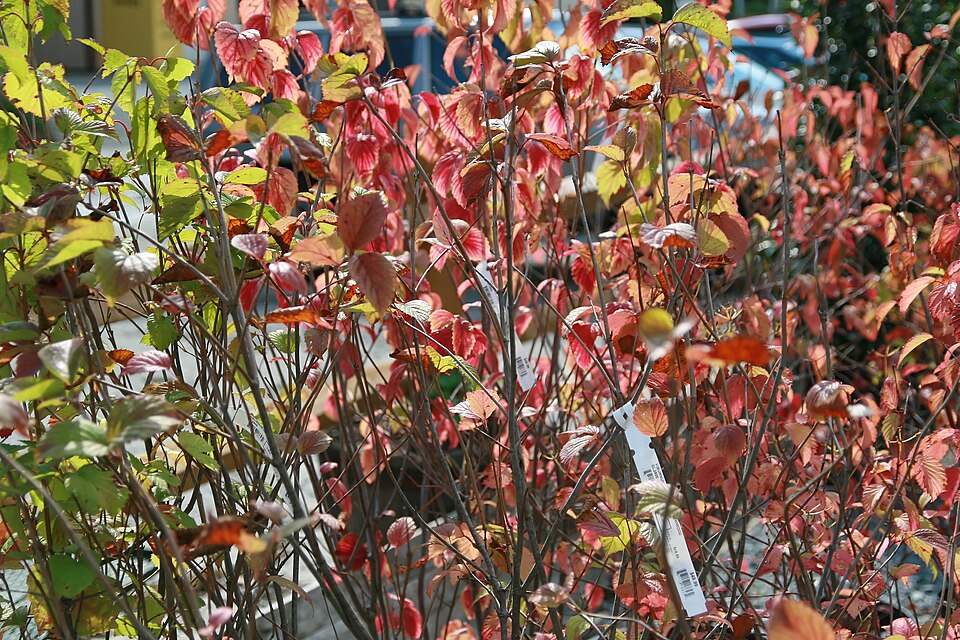
Beyond its ecological value, Arrow-wood Viburnum offers outstanding ornamental qualities with its glossy green foliage, abundant spring flowers, colorful fall berries, and reliable yellow to reddish fall color. Its tolerance for a wide range of growing conditions — from full sun to part shade, wet to moderately dry soils — makes it an ideal foundation plant for native landscaping throughout the Southeast and much of the eastern United States.
Identification
Arrow-wood Viburnum typically grows as a dense, multi-stemmed deciduous shrub reaching 5 to 9 feet tall and equally wide, though it can occasionally reach 15 feet in ideal conditions. The growth form is naturally rounded and somewhat irregular, with multiple stems arising from the base and spreading outward to create excellent wildlife cover.
Bark
The bark on young stems is smooth and grayish-brown, developing shallow furrows with age. Older stems have a distinctive ridged texture with grayish-brown bark that may show hints of red or brown undertones. The young twigs are often reddish-brown and may have a slight pubescence when new, becoming smooth as they mature.
Leaves
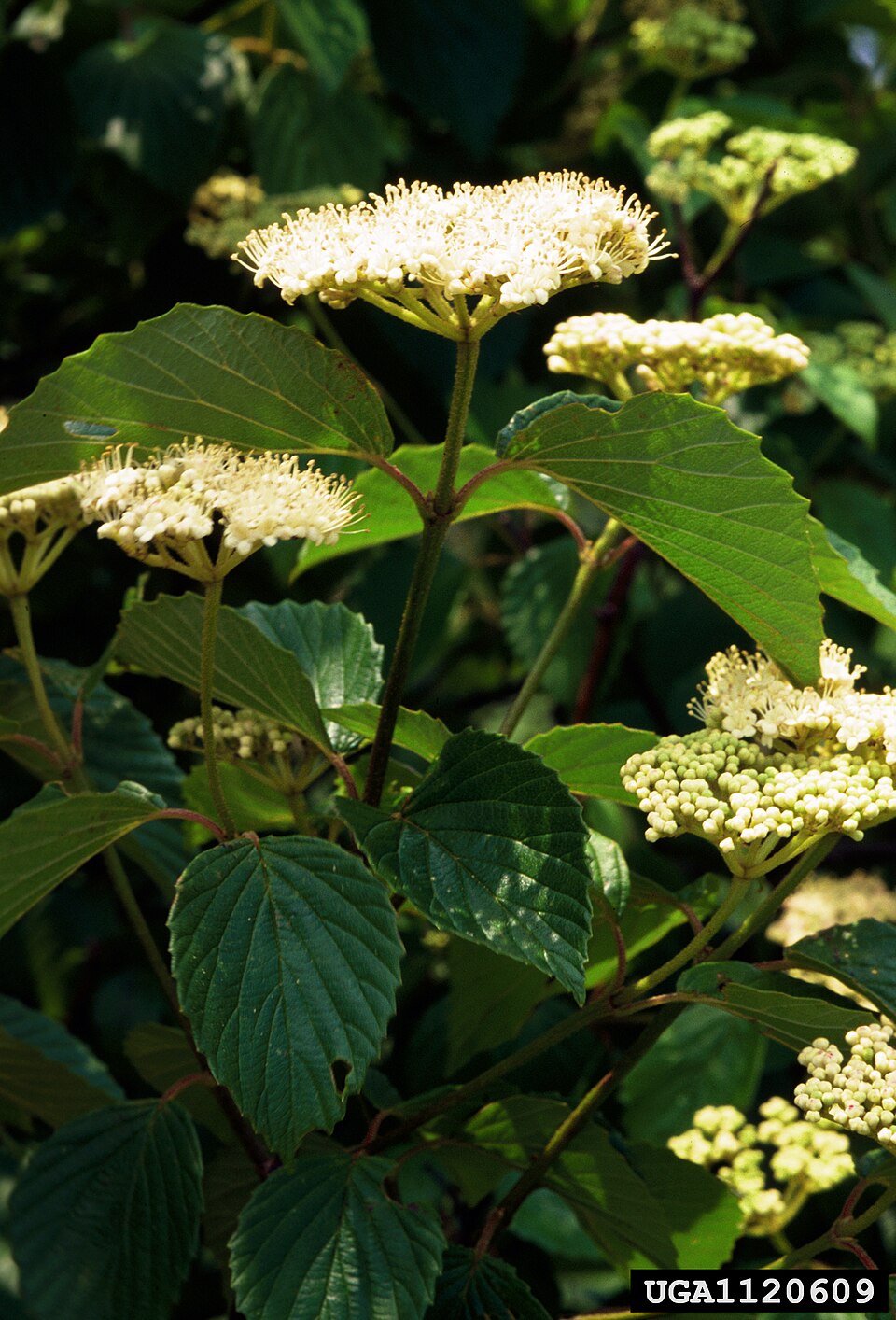
The leaves are simple, opposite, and distinctly toothed — the defining characteristic that gives this viburnum its species name “dentatum.” Each leaf is oval to broadly elliptic, 2 to 4 inches long and 1½ to 3 inches wide, with prominent parallel veining running from the midrib to the leaf margins. The upper surface is dark green and somewhat glossy, while the underside is paler green and may have fine hairs along the veins. The leaf margins have coarse, sharp teeth that are readily apparent. In fall, the foliage turns attractive shades of yellow to orange-red before dropping.
Flowers & Fruit
The flowers appear in late spring (May to June) in showy, flat-topped clusters called cymes, typically 2 to 4 inches across. Each individual flower is small and white, with five petals, but the overall effect of the cluster is quite striking against the dark green foliage. The flowers are mildly fragrant and attract a variety of pollinators including native bees, butterflies, and beneficial insects.
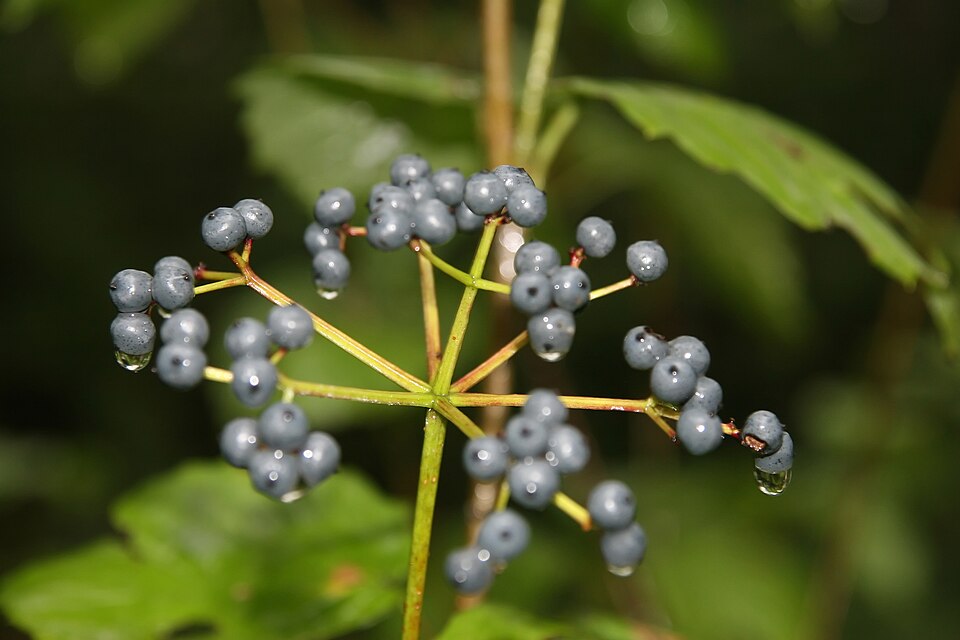
The fruit is a small drupe, about ¼ inch in diameter, that begins green, turns pink or red, and finally ripens to blue-black in late summer to early fall. The berries are borne in clusters and persist on the plant well into fall, providing an important late-season food source for migrating birds. Each berry contains a single flattened seed.
Quick Facts
| Scientific Name | Viburnum dentatum |
| Family | Adoxaceae (Moschatel) |
| Plant Type | Deciduous Shrub |
| Mature Height | 5–9 ft |
| Sun Exposure | Full Sun to Part Shade |
| Water Needs | Low to Moderate |
| Bloom Time | May – June |
| Flower Color | White |
| USDA Hardiness Zones | 3–8 |
Native Range
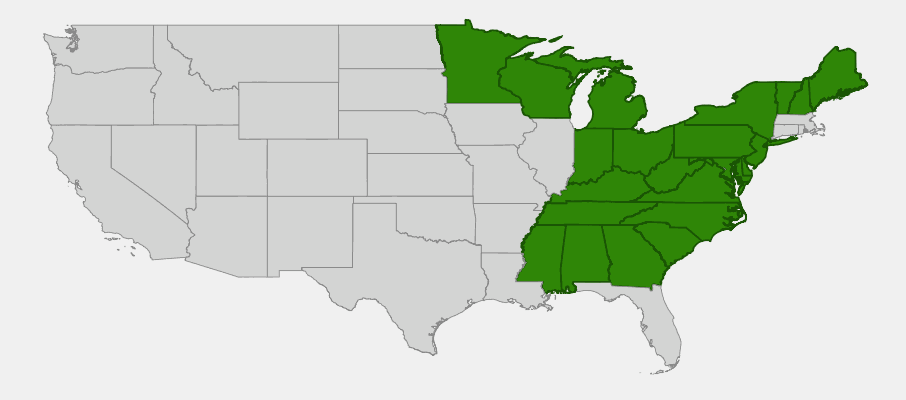
Arrow-wood Viburnum has one of the most extensive native ranges of any viburnum in North America, occurring naturally throughout much of the eastern United States from southern Maine west to southeastern Minnesota and south to northern Georgia and Mississippi. The species is particularly common in the Atlantic and Gulf Coastal Plains, the Piedmont, and lower elevations of the Appalachian Mountains.
This viburnum demonstrates remarkable habitat flexibility, growing in diverse ecosystems from wetland margins and floodplains to dry upland woods and forest edges. It thrives in both acidic and neutral soils and tolerates seasonal flooding as well as moderate drought conditions once established. This adaptability has allowed it to colonize a wide variety of habitats across its extensive range.
Historically, Arrow-wood Viburnum was likely even more abundant before European colonization, as it benefits from forest edge habitats and light gaps that were maintained by Indigenous burning practices and natural disturbances. Today, it remains common throughout most of its range and is considered a stable species, though local populations may be impacted by development and habitat fragmentation.
📋 Regional plant lists featuring Arrow-wood Viburnum: North Carolina & South Carolina
Growing & Care Guide
Arrow-wood Viburnum is among the easiest native shrubs to grow successfully, thanks to its adaptability and low maintenance requirements. Once established, it thrives with minimal care and provides years of seasonal interest and wildlife value.
Light
This viburnum performs well in full sun to part shade, though flowering and fruiting are most abundant with at least 4-6 hours of direct sunlight daily. In full sun, plants develop a denser, more compact form, while those in partial shade may be more open and slightly taller. The species tolerates quite a bit of shade, making it useful for naturalizing in woodland gardens or forest edges.
Soil & Water
Arrow-wood Viburnum is remarkably tolerant of diverse soil conditions. It thrives in moist, well-drained soils but also tolerates wet sites, seasonal flooding, clay soils, and moderate drought once established. The plant prefers slightly acidic to neutral pH (5.5-7.0) but adapts to a wide range. For best results, incorporate organic matter like compost into the planting area, and apply a 2-3 inch layer of mulch to conserve moisture and suppress weeds.
Planting Tips
Plant in fall or early spring for best establishment. Space plants 6-8 feet apart if creating a screen or hedge, or give individual specimens 8-10 feet of space to develop their natural form. Dig a hole twice as wide as the root ball but no deeper than the container. Water thoroughly after planting and maintain consistent moisture through the first growing season.
Pruning & Maintenance
Arrow-wood Viburnum requires minimal pruning. Remove dead, damaged, or crossing branches in late winter or early spring. To maintain size or shape, prune immediately after flowering since next year’s flower buds form on current-year wood. The plant can be rejuvenated by cutting oldest canes to the ground in late winter, which encourages new growth from the base.
Landscape Uses
This versatile shrub excels in many landscape applications:
- Wildlife gardens — exceptional value for birds and pollinators
- Native hedgerows and screens — provides privacy and habitat
- Rain gardens — tolerates wet conditions and helps with stormwater management
- Naturalized areas — low maintenance choice for large spaces
- Mixed shrub borders — combines well with other native plants
- Erosion control — dense root system stabilizes slopes
- Foundation plantings — provides year-round structure
Wildlife & Ecological Value
Arrow-wood Viburnum ranks among the top native shrubs for wildlife value, supporting an extensive food web and providing critical habitat structure throughout the year.
For Birds
Over 35 species of birds consume Arrow-wood Viburnum berries, making it one of the most important native plants for avian nutrition. Key consumers include American Robins, Cedar Waxwings, Northern Cardinals, Blue Jays, Gray Catbirds, Brown Thrashers, Eastern Bluebirds, and various woodpecker species. The dense branching structure provides excellent nesting sites for songbirds, while the thorny stems offer protection from predators. Many birds also glean insects from the foliage during breeding season.
For Mammals
White-tailed deer browse the foliage and twigs, particularly during winter when other food sources are scarce. Rabbits and other small mammals consume the berries and find shelter within the dense thickets. The multi-stemmed growth form creates ideal cover for ground-nesting animals and provides travel corridors for small wildlife moving through the landscape.
For Pollinators
The spring flower clusters attract a diverse array of pollinators including native bees, honeybees, butterflies, and beneficial wasps. The flowers provide both nectar and pollen when many native plants are not yet blooming, making them particularly valuable for early-season pollinators. Several species of native flies also visit the flowers and aid in pollination.
Ecosystem Role
Arrow-wood Viburnum serves as a host plant for several moth and butterfly caterpillars, including the larvae of the Spring Azure butterfly. The plant supports over 40 species of Lepidoptera (moths and butterflies), which in turn feed birds and other wildlife. Its ability to grow in diverse habitats makes it a key species for connecting fragmented ecosystems and providing wildlife corridors between forest patches.
Cultural & Historical Uses
Arrow-wood Viburnum holds significant cultural importance among Indigenous peoples of eastern North America, who recognized and utilized its unique properties long before European contact. The plant’s straight, flexible young stems were highly valued by various tribes for crafting arrow shafts — the source of its enduring common name. The wood was particularly prized because it could be easily straightened when heated and maintained its form when cooled, creating superior projectiles for hunting and warfare.
Beyond arrow-making, Indigenous communities found multiple uses for this versatile shrub. The Chippewa and other Great Lakes tribes used the inner bark to make cordage and basketry materials, while the berries were occasionally consumed fresh or dried, though they were generally considered less palatable than other native fruits. Some tribes prepared medicinal teas from the bark and roots for treating various ailments, though specific applications varied among different cultural groups.
Early European settlers quickly adopted Indigenous knowledge about Arrow-wood Viburnum’s utility. Colonial craftsmen used the straight stems for tool handles, basket rims, and other items requiring strong, flexible wood. The plant became known in folk medicine for similar uses to those of its Indigenous applications, though many of these traditional uses lacked scientific validation and could be potentially harmful.
In modern times, Arrow-wood Viburnum has found renewed importance in ecological restoration and sustainable landscaping. Wildlife biologists and conservation organizations frequently recommend it as one of the most valuable native shrubs for supporting biodiversity, particularly in suburban and urban settings where habitat connectivity is crucial. Its exceptional wildlife value and adaptability have made it a cornerstone species in many native plant gardens and habitat restoration projects across the eastern United States.
Frequently Asked Questions
How can I tell Arrow-wood Viburnum apart from other viburnums?
Arrow-wood Viburnum is distinguished by its distinctly toothed leaves (hence “dentatum”), flat-topped white flower clusters, and blue-black berries. The leaves have prominent parallel veining and coarse, sharp teeth along the margins — more pronounced than most other viburnums.
Do the berries attract unwanted wildlife?
The berries primarily attract beneficial wildlife like songbirds, which help disperse seeds and control insect populations. While deer may browse the plant, this is generally not problematic and actually helps create a more natural, open growth form.
How long does it take for Arrow-wood Viburnum to produce berries?
Plants typically begin producing flowers and berries in their second or third year after planting, with peak production occurring after 4-5 years when plants are fully established. Cross-pollination between different individual plants increases berry production.
Can Arrow-wood Viburnum handle wet soils?
Yes, this is one of the most moisture-tolerant viburnums, naturally growing in wetland margins and areas with seasonal flooding. It’s an excellent choice for rain gardens, pond edges, and sites with clay soils or drainage issues.
Is Arrow-wood Viburnum deer resistant?
No, deer will browse the foliage and young stems, particularly in winter. However, the plant typically recovers well from browsing and the dense, thorny growth habit provides some protection. In areas with heavy deer pressure, temporary fencing may help young plants establish.

Looking for a nursery that carries Arrow-wood Viburnum?
Browse our native plant nursery directory: North Carolina · South Carolina