Scarlet Paintbrush (Castilleja miniata)
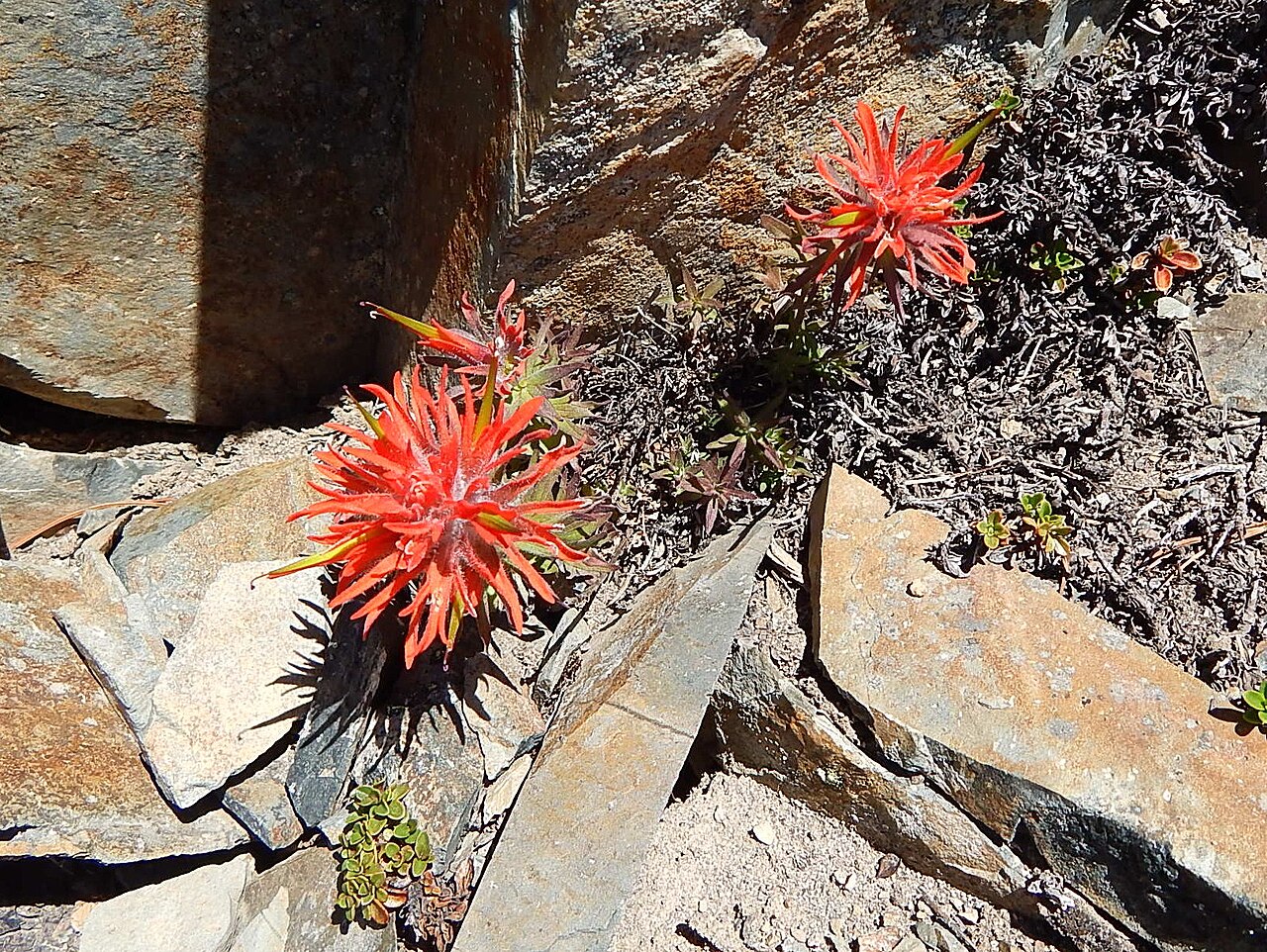
Castilleja miniata, commonly known as Scarlet Paintbrush or giant red Indian paintbrush, is one of the most widely distributed and reliably showy paintbrush species in western North America. It forms upright clumps topped with dense spikes of brilliant red to orange-red bracts, blooming through much of the summer in meadows, open forests, and rocky slopes from sea level to above timberline across the Rocky Mountains, Sierra Nevada, Cascades, and Great Basin ranges.
Like every member of its genus, Scarlet Paintbrush is a root hemiparasite — it carries out its own photosynthesis but also forms connections with the roots of nearby plants, typically grasses, sedges, and various perennial wildflowers, to draw supplemental water and nutrients. This dependence on a living host is the single biggest reason paintbrush has a reputation as “impossible to grow”: it is not a plant that will thrive for long on its own in an isolated garden bed, and it should never be dug from the wild, since removing it severs its root connections and damages both the plant and its host.
Where its needs are met, Scarlet Paintbrush is a dependable, long-blooming perennial and an important nectar source for hummingbirds migrating and breeding through the mountains and high plains of the West. Its wide elevational and geographic range makes it one of the more adaptable paintbrushes, found everywhere from coastal Alaska to the Mogollon Rim of Arizona.
Identification
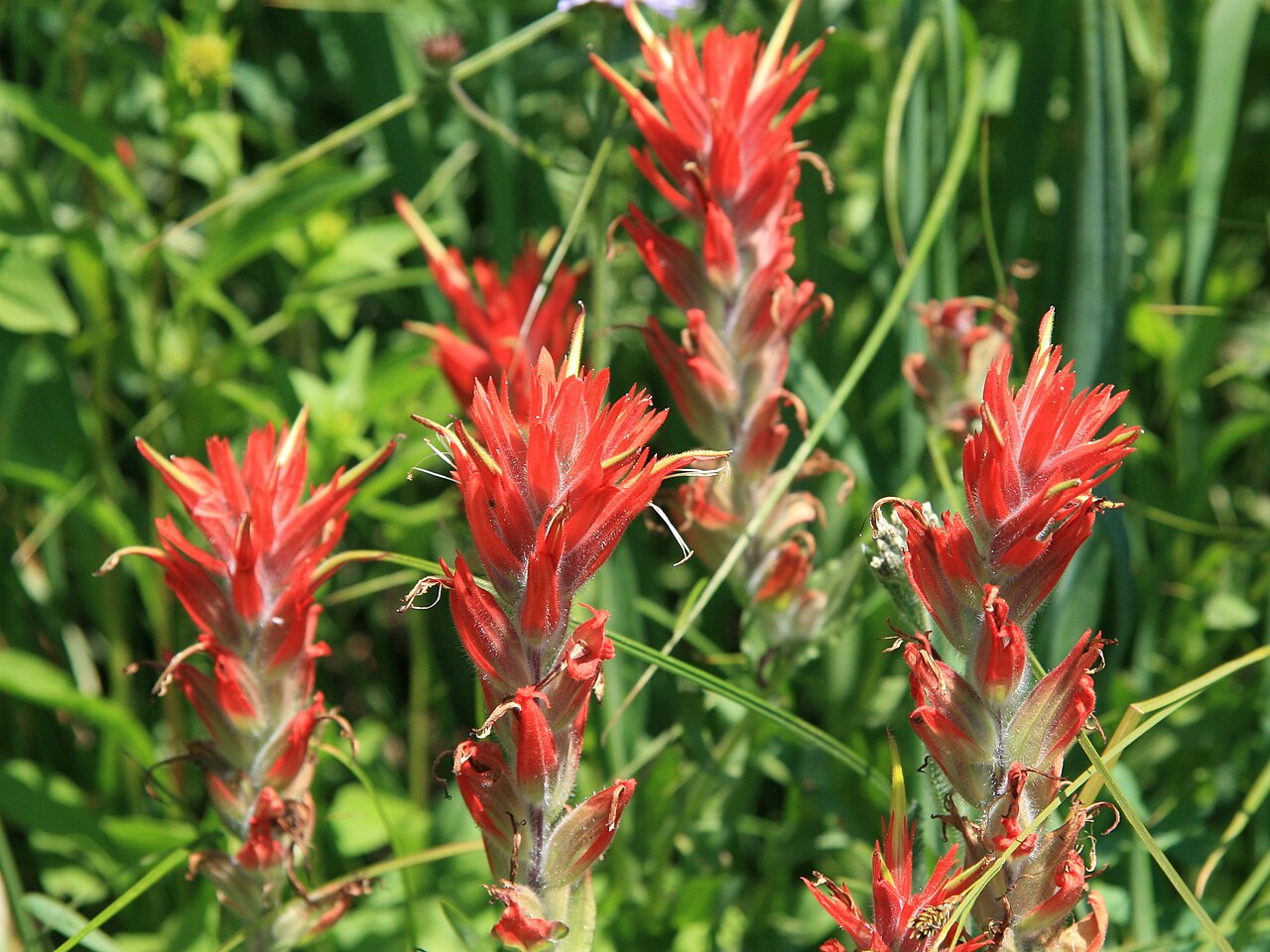
Scarlet Paintbrush is identified by its upright, often unbranched stems, lance-shaped leaves, and dense, bottlebrush-like spikes of red to orange bracts that largely conceal the small true flowers within.
Stems & Leaves
Plants grow 8 to 32 inches tall from a woody, perennial base, usually with one to several erect, slightly hairy stems. Leaves are alternate, narrowly lance-shaped to linear, 1 to 4 inches long, usually unlobed or with a few narrow lobes near the stem tip, and sessile (without a leaf stalk). The foliage is a plain mid-green, giving no hint of the color display to come.
Flowers
The flower spike is dense and bottlebrush-like, 2 to 8 inches long, made up of overlapping, deeply three- to five-lobed bracts in shades of scarlet, orange-red, or occasionally yellow to salmon. As in all paintbrushes, the true flowers are narrow, tubular, and greenish-yellow, mostly hidden by the showier bracts. Bloom time runs from June through August or into September at high elevation, making this one of the longest-blooming paintbrushes where snowmelt timing varies by elevation.
Fruit & Seeds
The fruit is a small, dry, two-chambered capsule containing many tiny, netted seeds. As with other paintbrushes, seedlings must make contact with a suitable host root within their first year or two of growth to persist as mature plants.
Quick Facts
| Scientific Name | Castilleja miniata |
| Family | Orobanchaceae (Broomrape) |
| Plant Type | Perennial Wildflower (root hemiparasite) |
| Mature Height | 8–32 in |
| Mature Spread | 8–14 in |
| Growth Rate | Slow (dependent on host establishment) |
| Sun Exposure | Full Sun to Light Shade |
| Water Needs | Moderate |
| Soil Type | Well-drained loam or gravelly soil |
| Soil pH | Neutral to slightly acidic |
| Bloom Time | June – September |
| Flower Color | Scarlet to orange-red bracts (rarely yellow) |
| Fall Color | None notable; foliage dies back |
| Fruit | Small dry capsule with numerous tiny seeds |
| Deer Resistant | Mostly |
| USDA Hardiness Zones | 3–8 |
Native Range
Scarlet Paintbrush has one of the broadest ranges of any western paintbrush, native from coastal and interior Alaska south through British Columbia and the Yukon into Washington, Oregon, Idaho, Montana, and Wyoming, and continuing south through the Sierra Nevada and Cascade ranges of California, the Great Basin of Nevada and Utah, and the Rocky Mountains of Colorado into northern Arizona and New Mexico.
It grows across an unusually wide elevational band for a single species — from near sea level in coastal Alaska and the Pacific Northwest to alpine and subalpine meadows above 11,000 feet in the Sierra Nevada and Rockies. Typical habitats include moist mountain meadows, open coniferous forest, sagebrush steppe, and rocky slopes and talus, often alongside grasses and sedges that serve as host plants.
Scarlet Paintbrush does not occur in the lower-elevation deserts of the Southwest or in the eastern two-thirds of the country; where it is offered by nurseries or seed companies outside its native mountain and Pacific coast range, it should be treated as a garden ornamental rather than a locally native plant.
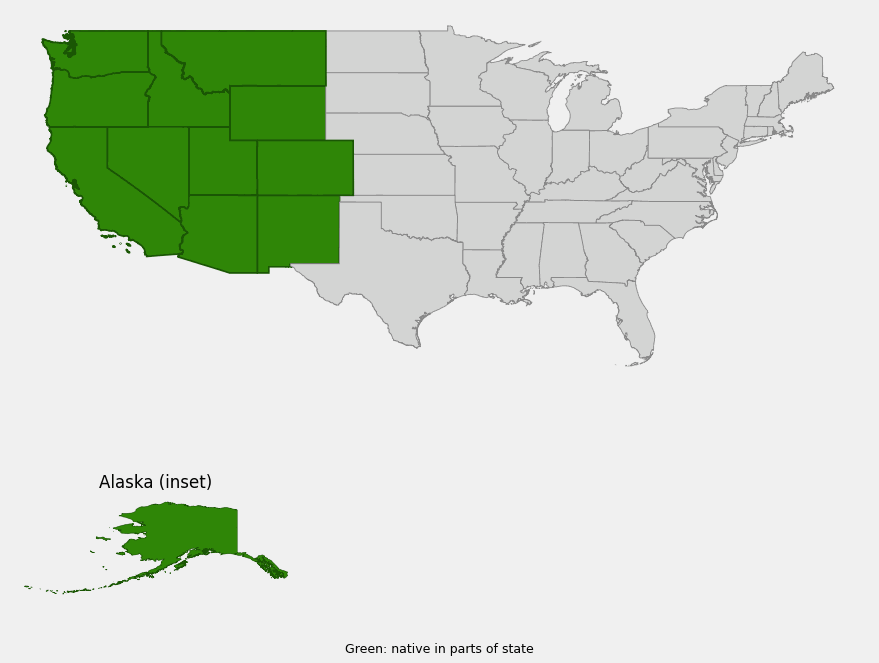
📋 Regional plant lists featuring Scarlet Paintbrush: Alaska · Montana & Wyoming · Idaho, Eastern Oregon & Eastern Washington · Western Oregon & Western Washington · Utah & Western Colorado · Arizona & New Mexico
Growing & Care Guide
Scarlet Paintbrush rewards patience and the right companion planting more than it rewards fertilizer or extra water. Because it is a root hemiparasite, success depends far more on what you plant it with than on how you otherwise treat it. Never dig a wild plant to transplant — it is already attached to a living host root system, and lifting it breaks that connection and usually kills the plant while damaging the host and surrounding soil.
Light
Full sun to light, open shade suits most populations, matching the open meadows, forest edges, and rocky slopes where it grows wild. Plants from higher, more exposed sites generally want more direct sun than those from partly wooded habitat.
Soil & Water
A well-drained, loamy to gravelly soil that does not stay soggy is best; this species tolerates more moisture than true desert paintbrushes but still dislikes heavy, waterlogged clay. Moderate water during the growing season is appropriate, tapering off as the plant goes dormant in fall. Avoid rich, heavily fertilized garden soil, which favors the host and competing plants over the paintbrush itself.
Planting Tips
Plant seed or nursery plugs directly alongside an already-established host — native bunchgrasses and sedges work particularly well for this species, as do many perennial wildflowers of mountain meadows. Fall sowing lets winter moisture and cold naturally stratify the seed. As with other paintbrushes, bare-root or potted paintbrush plants with no host nearby rarely persist past the first year or two.
Pruning & Maintenance
Minimal maintenance is needed. Skip fertilizer, which benefits the host and surrounding plants more than the paintbrush and can reduce its vigor. Deadheading is unnecessary; allowing seed to mature and drop near the host helps the planting persist and spread naturally over time.
Propagation
Propagate from seed sown near an establishing host plant. Fresh seed benefits from 4 to 8 weeks of cold-moist stratification, which happens naturally with outdoor fall sowing ahead of spring germination. Division and cuttings are not practical because of the plant’s dependence on an intact connection to its host’s root system.
Landscape Uses
- Native meadow and wildflower gardens interplanted with bunchgrasses or sedges
- Hummingbird and pollinator gardens in mountain and high-desert regions
- Alpine and rock gardens at higher elevations within its native range
- Habitat restoration in montane meadow and sagebrush steppe projects
Wildlife & Ecological Value
Scarlet Paintbrush is one of the most consistently used nectar sources for hummingbirds across its broad mountain and coastal range, and it plays a supporting role in the ecology of the meadows and open forests where it grows.
For Pollinators
The tubular flowers are well suited to long-tongued pollinators, especially hummingbirds, and are also visited by native bees and some butterflies. Its long bloom season, often running from early summer into early fall depending on elevation, makes it a steady nectar source through much of the growing season.
For Birds
Rufous, Broad-tailed, Calliope, and other western hummingbirds rely heavily on Scarlet Paintbrush and related species during their breeding and migration seasons in mountain habitats, timing their movements in part around paintbrush and other nectar-rich wildflower bloom.
For Mammals
Deer, elk, and other large herbivores occasionally browse the foliage, though it is not a preferred forage plant. Small mammals use the surrounding meadow vegetation, including host grasses and sedges, for cover.
Ecosystem Role
As a root hemiparasite, Scarlet Paintbrush interacts directly with the roots of its grass and sedge neighbors, and this low-level parasitism is thought to help limit the dominance of the most vigorous grasses in some meadow communities, contributing to overall plant diversity. Its presence across such a wide elevational gradient also makes it a useful indicator of healthy, intact montane meadow and open-forest plant communities.
Cultural & Historical Uses
Various Indigenous peoples across the Rocky Mountains, Great Basin, and Pacific Northwest used paintbrush species, including Scarlet Paintbrush, in limited traditional contexts, most often the colorful bracts as a source of dye and occasionally in small amounts as a flavoring or garnish in historical accounts. These are recorded historical and ethnobotanical practices, not present-day foraging advice — paintbrush species can take up and concentrate selenium from certain soils, and the plant should not be eaten.
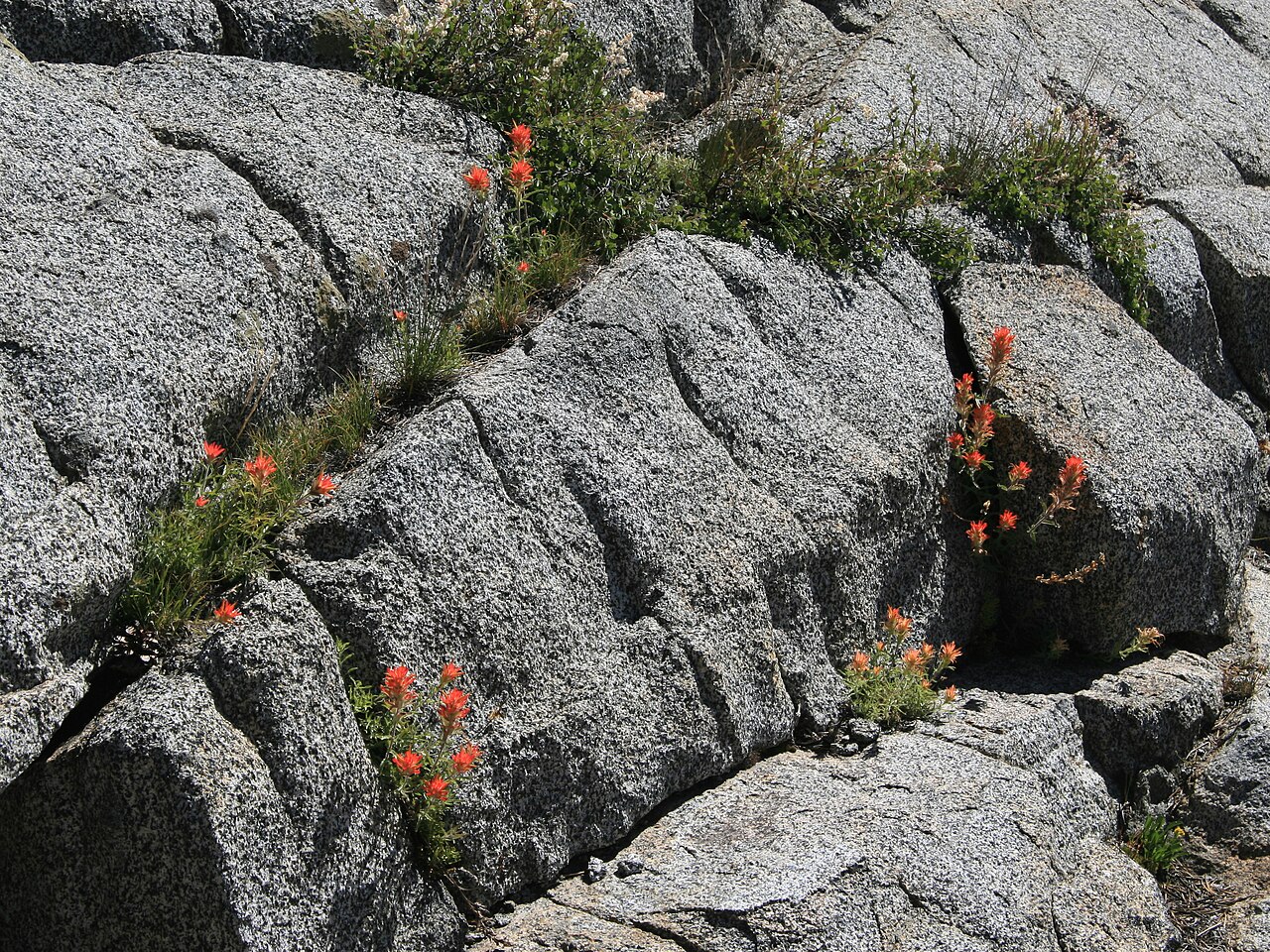
Scarlet Paintbrush has long been one of the most photographed and admired wildflowers of the western mountains, prized by hikers and naturalists for its vivid color against alpine rock and meadow. It remains more of a specialty native-plant-garden subject than a mainstream horticultural crop, owing to its dependence on a living host for best performance.
Frequently Asked Questions
Why does Scarlet Paintbrush need another plant nearby to grow well?
It is a root hemiparasite: while it can photosynthesize on its own, it also taps into a neighboring plant’s roots for extra water and nutrients. Without a compatible host — typically a native grass or sedge — it usually struggles or fails within a year or two.
Can I dig a Scarlet Paintbrush from the wild and move it to my garden?
No. Digging it severs its connection to its host plant’s roots, which almost always kills the paintbrush and damages the host and surrounding soil. Start instead from nursery seed or host-paired plugs.
How is Scarlet Paintbrush different from Desert Paintbrush?
Scarlet Paintbrush grows taller, with longer bottlebrush-like flower spikes, and occupies cooler, moister mountain meadows and forests across a huge elevational range, from sea level in Alaska to above timberline in the Sierra Nevada. Desert Paintbrush is shorter and bushier, restricted to hot, dry, low-to-mid elevation sagebrush and desert habitat in the Intermountain West and Southwest.
Is Scarlet Paintbrush toxic?
It is not considered a major toxicity risk in ordinary garden contact, but like other paintbrushes it can accumulate selenium from soil and should not be eaten by people or pets.
What’s the best way to attract hummingbirds with this plant?
Plant Scarlet Paintbrush alongside an established native bunchgrass or sedge host in a sunny spot, and let it establish over a couple of seasons. Its long summer bloom period makes it a reliable, long-running nectar source once established.

Looking for a nursery that carries Scarlet Paintbrush?
Browse our native plant nursery directory: Alaska & Arizona · Washington · Oregon · Idaho · Montana · Wyoming · Colorado · Utah · Nevada & New Mexico · California