
Fendler’s Meadow-rue (Thalictrum fendleri)
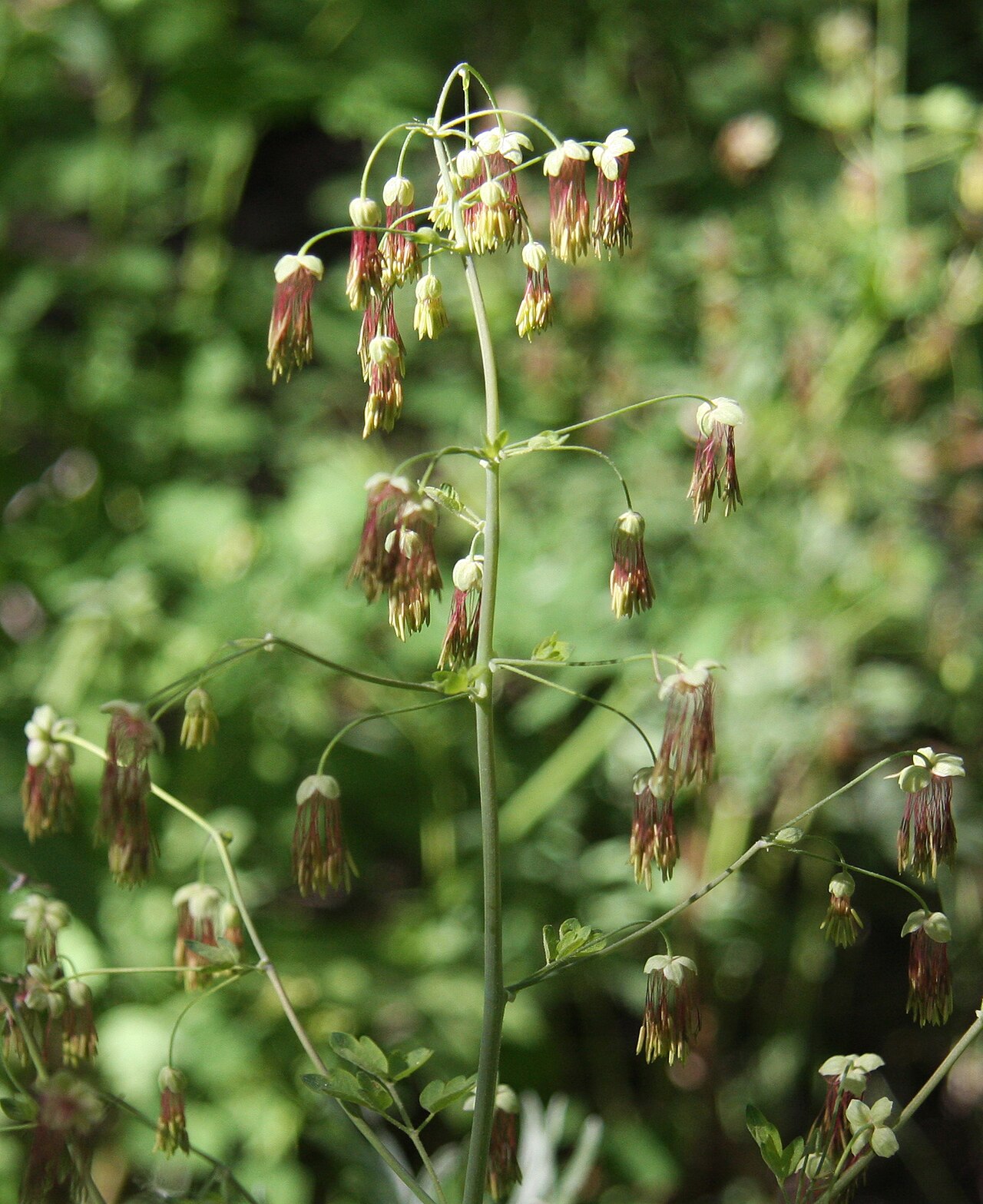
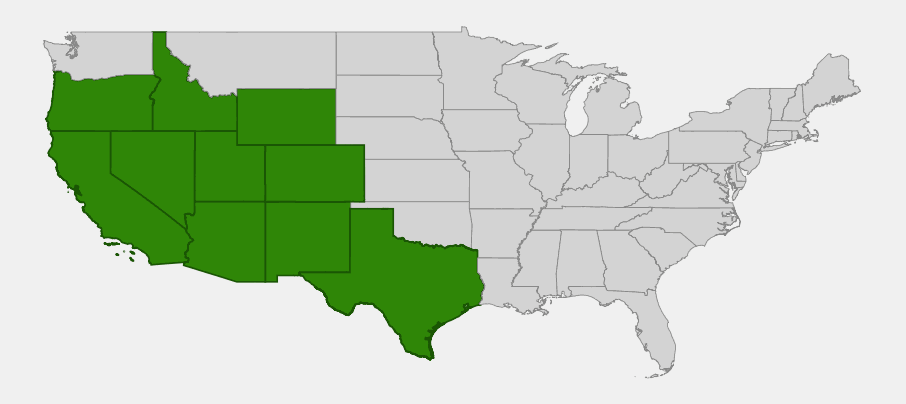
Thalictrum fendleri, known as Fendler’s Meadow-rue, is a graceful, airy perennial of the buttercup family (Ranunculaceae) that grows in moist, shady places in the mountains of the American West. It ranges from Oregon, Idaho and Wyoming south through California, the Great Basin and the Rocky Mountains to Arizona, New Mexico, West Texas and northern Mexico.
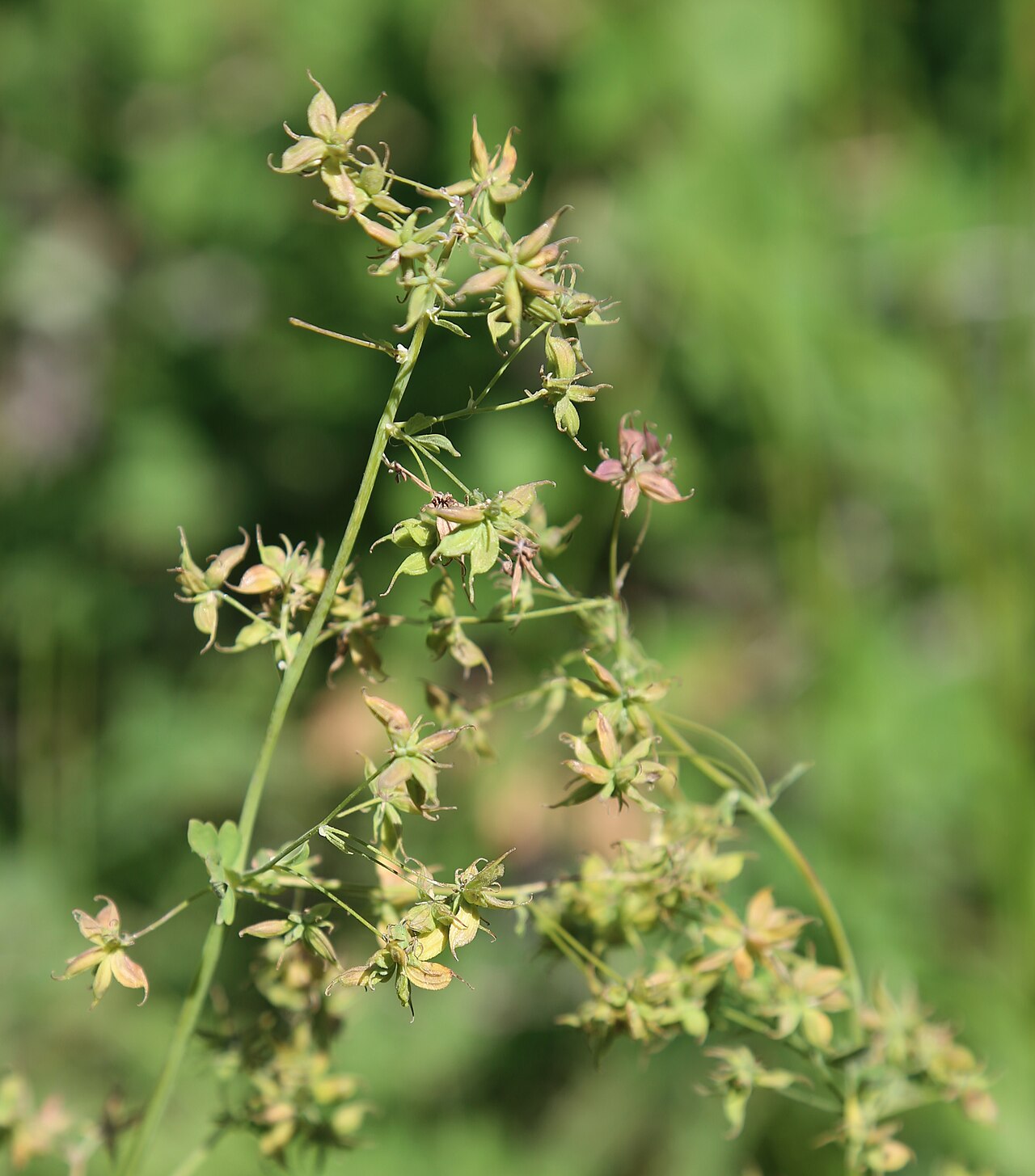
The plant is grown and noticed mostly for its foliage: mounds of lacy, blue-green, columbine-like leaves divided into many small, rounded, lobed leaflets. Male and female flowers grow on separate plants. Male plants carry delicate tassels of dangling yellow to purplish stamens in early summer, while female plants bear small clusters of purplish pistils that become star-like heads of flattened fruits.
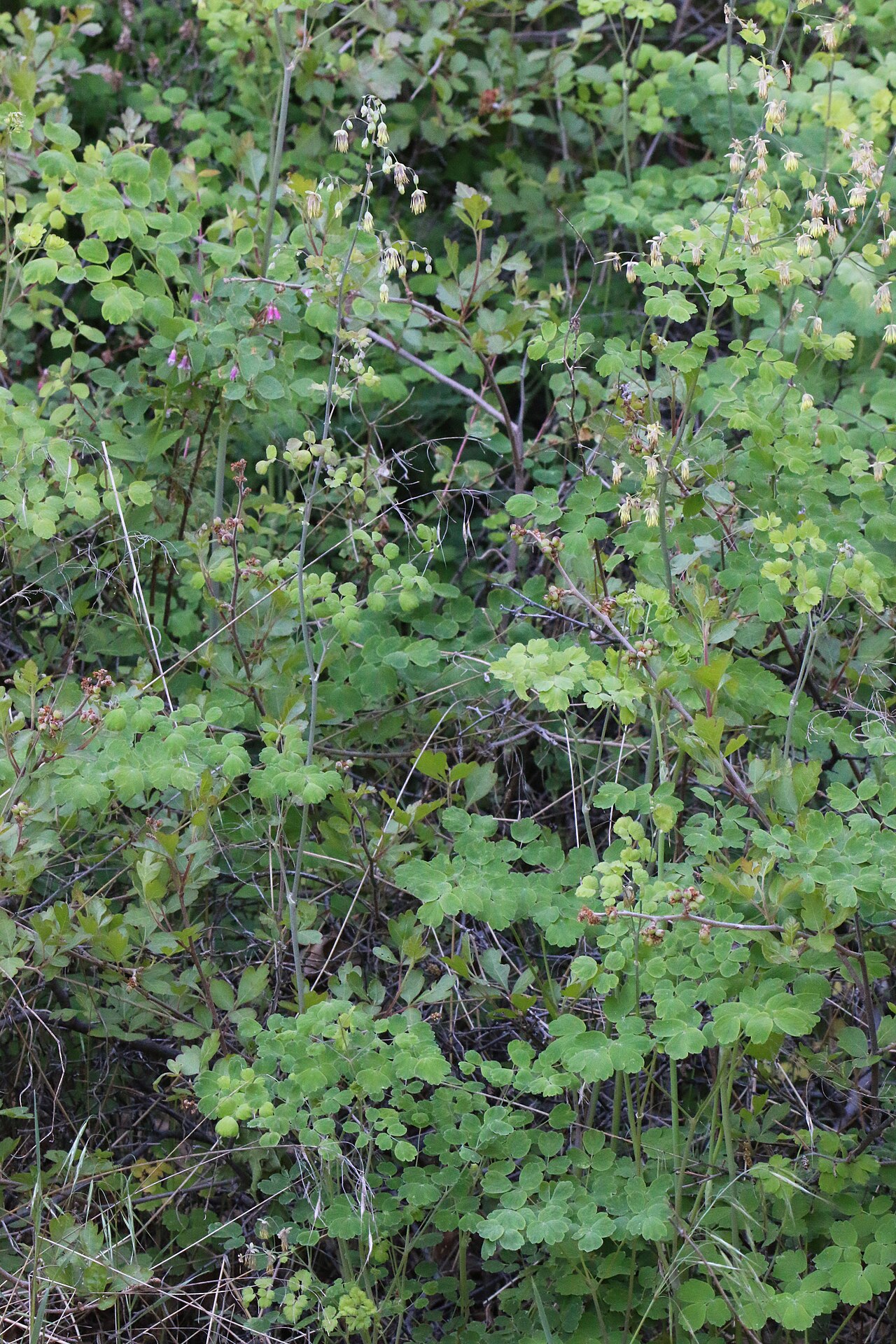
Fendler’s meadow-rue is common in aspen groves, conifer forests, canyon bottoms and streamside thickets from about 4,000 to 11,000 feet. In gardens it brings fine texture and movement to shady beds and woodland plantings in the West, and it pairs well with columbines, geraniums and ferns.
Identification
Look for a soft, mounded plant with lacy, columbine-like leaves in mountain shade, with tiny petal-less flowers hanging in loose, airy clusters above the foliage.
Growth Habit
Fendler’s meadow-rue is a clump-forming perennial from a short rootstock. Its slender, leafy stems are usually 1 to 3 feet tall, occasionally to about 5 feet in rich, moist sites, and branch into open, airy flower clusters. Plants die back to the ground each winter.
Leaves
The leaves are alternate and three or four times divided into threes, ending in many small, rounded leaflets about 1/4 to 3/4 inch long, each with three to several shallow lobes. They are thin, blue-green to bright green and often finely glandular on the underside. The leaves look much like those of columbine or maidenhair fern.
Flowers
Flowers appear from about May to August. The plants are dioecious, with male and female flowers on separate plants. The flowers are small and have no petals, only four or five greenish-white to purplish sepals that soon fall. Male flowers carry many dangling stamens with long, thread-like filaments and yellow to purplish anthers. Female flowers carry several purplish pistils with feathery stigmas.
Fruit & Seeds
Each female flower develops into a small cluster of flattened, ribbed achenes, each about 1/4 inch long with a short beak, spreading in a star-like head. They ripen in mid to late summer and drop near the plant.
Look-alikes
Western meadow-rue (Thalictrum occidentale) of the Northwest and northern Rockies is very similar; botanists separate the two mainly by details of the fruits. Few-flowered meadow-rue (Thalictrum sparsiflorum) has bisexual flowers. Colorado blue columbine (Aquilegia coerulea) has similar leaves but large, spurred flowers. In the East, early meadow-rue (Thalictrum dioicum) is a close look-alike.
Safety Notes
Like many members of the buttercup family, meadow-rues contain alkaloids and other compounds that may be toxic if eaten. Fendler’s meadow-rue is not a food plant; do not eat it, and keep it away from livestock in large amounts.
Quick Facts
| Scientific Name | Thalictrum fendleri |
| Family | Ranunculaceae (buttercup family) |
| Plant Type | Herbaceous perennial |
| Mature Height | 1–3 ft (to 5 ft) |
| Mature Spread | 1–2 ft |
| Growth Rate | Moderate |
| Sun Exposure | Part shade to full shade |
| Water Needs | Medium; moist, well-drained soil |
| Soil Type | Humus-rich loam or sandy loam |
| Soil pH | About 5.5–7.5 |
| Bloom Time | May–August |
| Flower Color | Greenish white to purplish; yellow to purple stamens |
| Fall Color | Foliage turns yellow before dying back |
| Fruit | Clusters of flattened achenes |
| Deer Resistant | Moderate |
| USDA Hardiness Zones | 4–8 |
Native Range
Fendler’s meadow-rue is native to the western United States and northern Mexico. USDA PLANTS lists it as native in Arizona, California, Colorado, Idaho, Nevada, New Mexico, Oregon, Texas, Utah and Wyoming.
It is common in the southern and central Rocky Mountains, the mountains of Arizona and New Mexico, the Great Basin ranges, the Colorado Plateau and the Sierra Nevada. In Texas it is found mainly in the mountains of the Trans-Pecos. A many-fruited form (variety polycarpum) grows in California and southern Oregon.
Typical habitats are moist, shady forests of aspen, ponderosa pine, Douglas-fir, spruce and fir, along with canyon bottoms, streamside thickets, moist meadow edges and shady rocky slopes, from about 4,000 to 11,000 feet in elevation.
📋 Regional plant lists featuring Fendler’s Meadow-rue: California & Nevada · Arizona & New Mexico · Utah & Western Colorado · Montana & Wyoming · Idaho, Eastern Oregon & Eastern Washington · South & West Texas · Western Oregon & Western Washington
Growing & Care Guide
Fendler’s meadow-rue is offered by a few native plant nurseries and seed suppliers in the Rocky Mountain region and the Southwest. It is an easy, long-lived plant for moist shade in cool, high-elevation or northern gardens.
Light
Grow it in part shade to full shade. Morning sun is fine where summers are cool; in hot, low-elevation gardens give it afternoon shade.
Soil & Water
It prefers moist, humus-rich, well-drained loam. Water regularly during dry spells, especially in its first year and at lower elevations. Established plants tolerate brief dry periods in shade but look best with steady moisture.
Planting Tips
Use it in shady beds, woodland gardens, under aspens or on the north side of buildings with columbines, geraniums, bluebells and ferns. Plant both male and female plants if you want seed. Its airy foliage softens bolder plants.
Pruning & Maintenance
Little care is needed. Cut back the stems after they yellow in fall, or leave them for winter interest. A light layer of leaf mulch helps keep the roots cool and moist.
Propagation
Sow fresh seed outdoors in fall; it needs a cold, moist period to germinate. Clumps can be divided carefully in early spring as new growth begins.
Landscape Uses
- Shade and woodland gardens: fine, lacy texture in moist shade
- Mountain and high-elevation gardens: hardy and long-lived in cool climates
- Riparian restoration: streamside and canyon-bottom plantings in the West
- Fern-like foliage accent: a native alternative to ferns in dry-summer regions
- Aspen-grove plantings: a typical understory plant under aspen
Wildlife & Ecological Value
Fendler’s meadow-rue is a modest but common part of western mountain forests and streamsides.
For Pollinators
The flowers are mainly wind-pollinated; the dangling stamens release pollen into the breeze. Bees and syrphid flies sometimes collect pollen from the male flowers.
For Birds
Ground-feeding birds may eat the seeds, and the leafy clumps give cover to small birds of shady forests and streamsides.
For Mammals
Deer and elk browse it lightly. Small mammals may eat the seeds.
Ecosystem Role
As a common herb of aspen groves, conifer forests and streamsides, Fendler’s meadow-rue adds to the rich understory of western mountain forests and helps cover and hold soil in moist, shady places.
Cultural & Historical Uses
The species is named for Augustus Fendler (1813–1883), a German-born naturalist who collected plants around Santa Fe, New Mexico, in 1846 and 1847. His collections, studied by Asa Gray and George Engelmann, included many species new to science.
The genus name Thalictrum is an ancient Greek plant name used by Dioscorides. The common name “meadow-rue” refers to the resemblance of the leaves to those of the herb rue, although the two are not related.
Like other meadow-rues, Fendler’s meadow-rue was used in traditional medicine by some Indigenous peoples of the Southwest. Today it is valued by gardeners in the West as a hardy, native alternative to ferns for shady spots.
Frequently Asked Questions
Why don’t all Fendler’s meadow-rue plants have the same flowers?
The species is dioecious: male plants carry dangling stamens, while female plants carry pistils that turn into seed heads. You need both for seed.
Does Fendler’s meadow-rue grow in shade?
Yes. It grows naturally in shady forests, aspen groves and canyon bottoms and is well suited to part to full shade in gardens.
Is Fendler’s meadow-rue poisonous?
Like many members of the buttercup family, meadow-rues contain compounds that may be toxic if eaten. It is not a food plant.
How is it related to columbine?
Both are in the buttercup family and have similar lacy, divided leaves, but meadow-rues have tiny, petal-less flowers, while columbines have large, spurred flowers.
Where does Fendler’s meadow-rue grow?
It grows in the mountains of the western United States, from Oregon, Idaho and Wyoming south to California, Arizona, New Mexico, West Texas and northern Mexico.

Looking for a nursery that carries Fendler’s Meadow-rue?
Browse our native plant nursery directory: Arizona · California · Colorado · Idaho · Nevada & New Mexico · Oregon · Texas & Utah · Wyoming

