
Nuttall’s Thistle (Cirsium nuttallii)
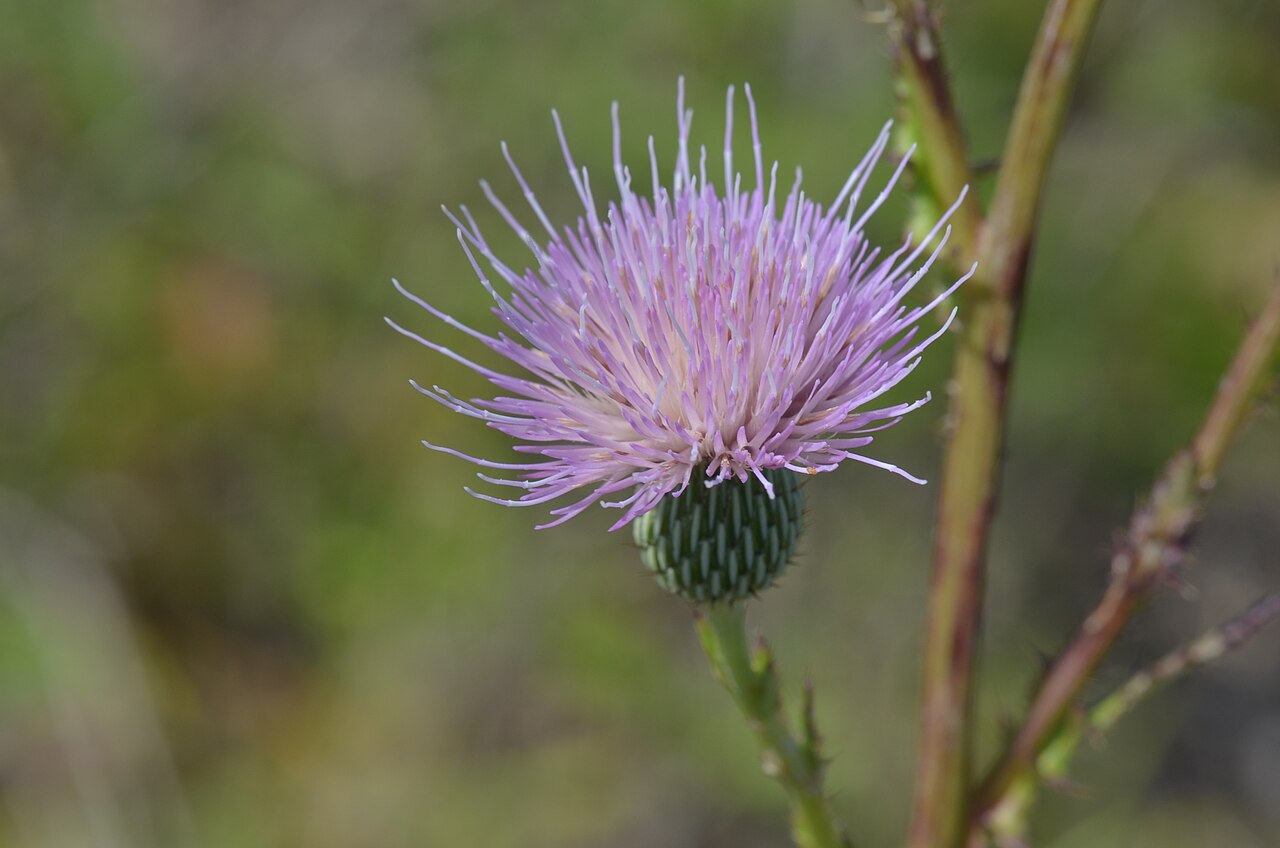
Cirsium nuttallii, known as Nuttall’s Thistle, is a tall, slender native thistle of the southeastern Coastal Plain. It is a biennial or short-lived perennial in the aster family (Asteraceae) that spends its first year as a flat rosette of spiny, deeply lobed leaves, then sends up a branching stem that can reach 4 to 10 feet or more. From late spring through summer the branches carry many small flower heads, each about an inch across, in shades of pale lavender, pink or white.
It is important to say clearly: Nuttall’s thistle is not an invasive thistle. It is a native wildflower of Florida, Georgia, the Carolinas and the Gulf Coast states, and it belongs in the region’s pinelands and wet prairies. The aggressive weedy thistles of pastures and roadsides, such as bull thistle, Canada thistle and musk thistle, are European and Asian introductions. Native thistles like this one rarely spread beyond their natural habitats and are now in decline in many areas, partly because they are often mowed or sprayed by mistake.
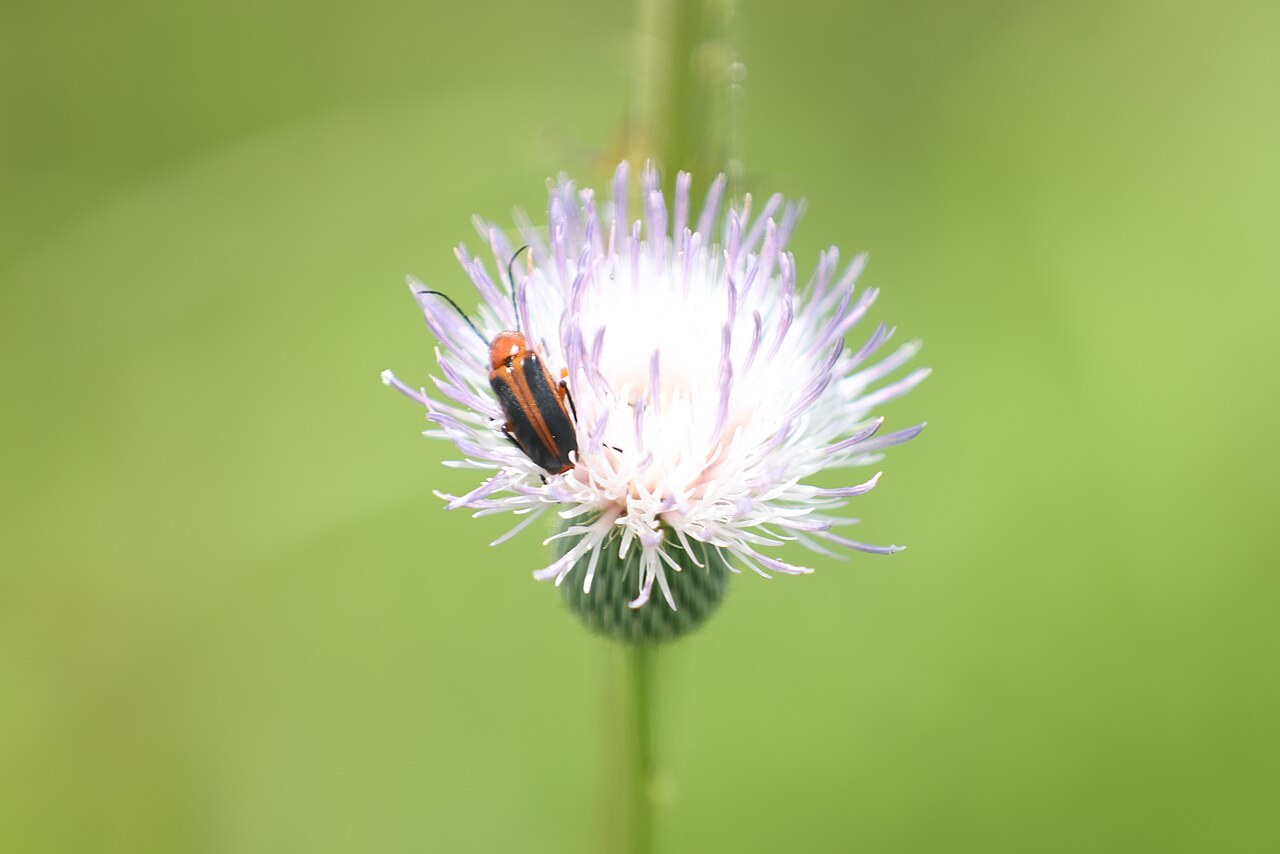
Few native plants are as valuable to pollinators. Its flower heads are packed with nectar and draw bumble bees, long-horned bees, swallowtails, skippers and other butterflies, and its seeds feed goldfinches. This guide covers how to identify Nuttall’s thistle, where it grows, how to include it in a wildlife garden, and how to tell it from the non-native thistles it is often mistaken for.
Identification
Nuttall’s thistle is the tallest and most slender of the southeastern native thistles. Its small, numerous flower heads, narrow, deeply cut leaves and airy, branching habit are the best clues.
Rosette & Leaves
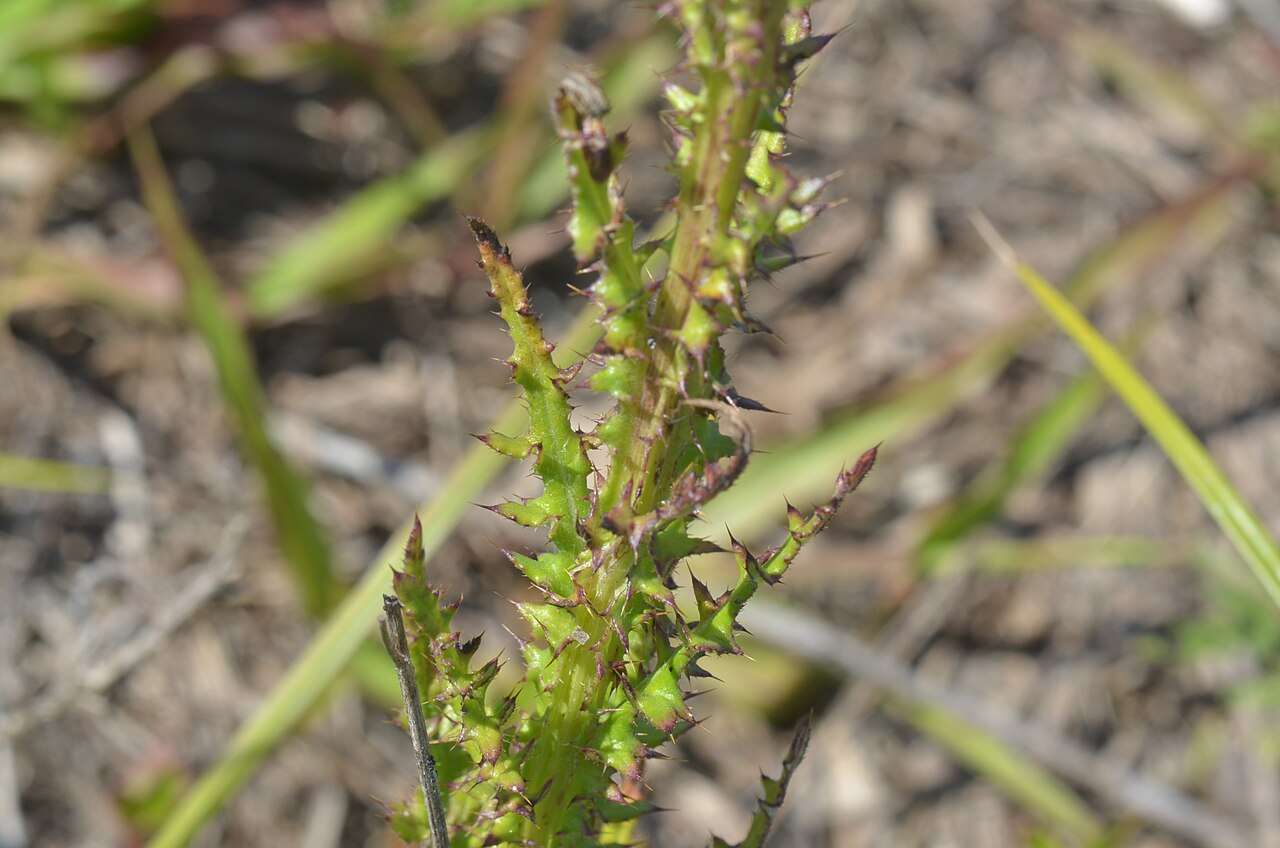
The first-year rosette is flat, up to about 1½ feet across, with long, narrow leaves cut almost to the midrib into slender, spine-tipped lobes. The leaves are green above and covered with white, woolly hairs beneath. Stem leaves are similar but smaller toward the top, and their bases run down the stem as narrow, spiny wings. The overall look is finer and more feathery than most thistles.
Stems
In the flowering year the plant produces a single main stem, often 4 to 10 feet tall, that branches widely in its upper half. The stem is ridged and green to reddish, with interrupted spiny wings below and fewer spines above. A large plant has an open, candelabra-like form.
Flower Heads
Each branch ends in one or a few flower heads about ¾ to 1¼ inches across. The heads contain only disk florets, with no ray petals, in pale lavender, pink, rose-purple or white. Below the florets is a rounded involucre of overlapping green bracts (phyllaries), each tipped with a short, weak spine. Bloom runs from spring into late summer, starting earlier in Florida.
Fruit & Seeds
After flowering, each head produces many small, smooth seeds (cypselae) topped with a parachute of feathery bristles. The heads open into fluffy white seed balls that release the seeds on the wind.
Look-alikes
Purple Thistle (Cirsium horridulum), another southeastern native, is much shorter and stouter, with large heads 2 to 3 inches across surrounded by a collar of very spiny leafy bracts. Tall Thistle and Field Thistle are native too, with larger heads and broader, less deeply cut leaves. Non-native bull thistle (C. vulgare) has larger heads, very spiny winged stems and leaves rough and prickly on top.
Quick Facts
| Scientific Name | Cirsium nuttallii |
| Family | Asteraceae (aster family) |
| Plant Type | Biennial or short-lived perennial herb |
| Mature Height | 4–10 ft (occasionally taller) |
| Mature Spread | 2–3 ft |
| Growth Rate | Fast |
| Sun Exposure | Full sun to part shade |
| Water Needs | Moderate; tolerates moist soil and dry spells |
| Soil Type | Sand, sandy loam; moist to well-drained |
| Soil pH | About 5.0–7.0 |
| Bloom Time | April–August (spring to summer; earlier in Florida) |
| Flower Color | Pale lavender, pink or white |
| Fall Color | None; flowering stems die after seed set |
| Fruit | Small seeds with feathery, parachute-like bristles |
| Deer Resistant | Yes; spines deter browsing |
| USDA Hardiness Zones | 7–10 |
Native Range
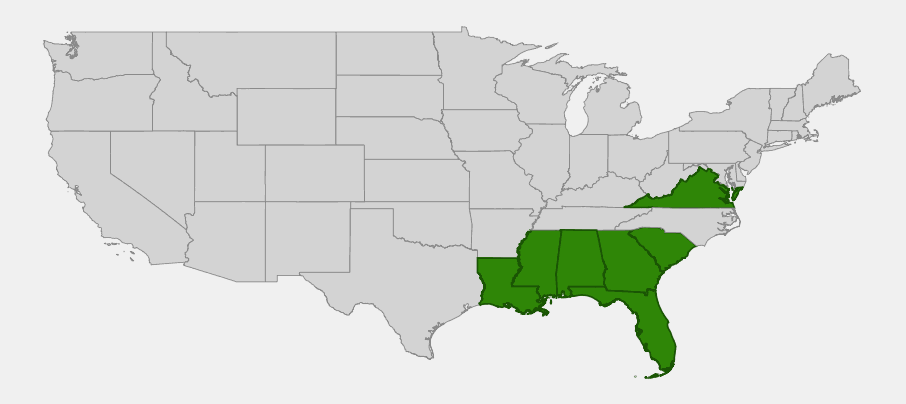
Nuttall’s thistle is native to the southeastern United States. USDA PLANTS records it from South Carolina, Georgia and Florida west along the Gulf Coast through Alabama and Mississippi to Louisiana, with an isolated record in Virginia. It is a plant of the Coastal Plain, and it is most frequent in Florida and southern Georgia, where it grows throughout the peninsula and panhandle. The Virginia record is an outlying one well north of the main range.
It grows in open, sunny to lightly shaded places with sandy soils: pine flatwoods and savannas, the edges of marshes and swamps, wet prairies, coastal hammocks, old fields, ditches, roadsides and powerline corridors. It tolerates seasonally moist soil and is often found where pinelands meet wetlands.
It is one of several native thistles in the region, and it is the one most likely to be seen towering above roadside vegetation in summer.
📋 Regional plant lists featuring Nuttall’s Thistle: Maryland, Virginia & West Virginia · Alabama, Georgia & Mississippi · North & South Florida · North & South Carolina · Arkansas, Louisiana, Eastern Oklahoma & Eastern Texas
Growing & Care Guide
Nuttall’s thistle is easy to grow in the Southeast if you give it sun, sandy soil and space. It is not for tidy borders, because it is tall, spiny and short-lived, but it is outstanding in meadows, pollinator gardens and the wild edges of a property.
Light
Full sun produces the strongest plants and the most flowers. It also grows in light shade at woodland edges, where it tends to be taller and more open.
Soil & Water
It prefers sandy, moderately moist soil but tolerates seasonally wet ground and dry spells once established. No fertilizer is needed; lean soil keeps plants sturdier.
Planting Tips
Sow seed or set out young rosettes in fall or early spring. Place plants toward the back of a meadow or wildlife planting where the tall flowering stems will not be in the way and the spines will not catch passersby. Plan for some open ground nearby so that new seedlings can replace the parents.
Pruning & Maintenance
Each plant flowers once and then dies, usually in its second year. Leave the seed heads in place for goldfinches, then cut the dead stems down. If you do not want seedlings, cut the heads off as they finish blooming. Avoid mowing rosettes along the edges of your property; they are easy to mistake for weedy thistles.
Propagation
Grow it from seed. Sow fresh seed on the surface of sandy soil in fall or after a few weeks of cold, moist stratification in spring. Seedlings form rosettes in the first year and flower the next. Established plants self-sow modestly in open, sunny ground.
Landscape Uses
- Pollinator and butterfly gardens: a top nectar plant for bees and butterflies in the Southeast
- Wildflower meadows: adds height and summer bloom to sunny meadow and prairie plantings
- Pine flatwoods and savanna restoration: a natural component of open pinelands and their wet edges
- Bird gardens: goldfinches feed on the seeds and may use the thistle down to line their nests
- Roadsides and rights-of-way: a native alternative worth protecting rather than spraying
Wildlife & Ecological Value
Native thistles are among the most valuable wildflowers for insects and seed-eating birds, and Nuttall’s thistle is a prime example in the Southeast.
For Pollinators
The flower heads offer abundant nectar and pollen over a long season. They are visited by bumble bees, long-horned bees, leafcutter bees, sweat bees and other native bees, by butterflies including swallowtails, sulphurs, skippers and gulf fritillaries, and by day-flying moths and beetles. A single tall plant in full bloom can host dozens of insects at once.
For Birds
American goldfinches eat the seeds, and goldfinches and other small birds may use thistle down for nest material. Insect-eating birds such as warblers and wrens forage on the many insects that visit the flowers.
For Mammals
The spiny leaves and stems deter deer, rabbits and livestock from browsing.
Ecosystem Role
Native thistles host many plant-feeding insects, and the painted lady butterfly uses thistles as caterpillar food plants. In pinelands, Nuttall’s thistle often appears after fire or other disturbance opens the ground, and its seeds and flowers support wildlife until longer-lived plants fill in.
Cultural & Historical Uses
The species is named in honor of Thomas Nuttall (1786–1859), who explored and wrote about the plants of North America and spent time in the Southeast. Nuttall’s name is attached to many native plants and birds.
Native thistles have a long history of use. Several southeastern tribes used the down of thistle seed heads as fletching for blowgun darts, and the peeled young stems of many thistles were eaten as a cooked vegetable. These uses are not specific to Nuttall’s thistle.
Today native thistles are gaining attention from conservationists and pollinator advocates. Many are declining because of broad herbicide use and mowing aimed at invasive thistles. Learning to recognize native species like Nuttall’s thistle, and leaving them in place, is one of the easiest ways to help bees and butterflies in the Southeast.
Frequently Asked Questions
Is Nuttall’s thistle invasive?
No. It is a native southeastern wildflower and does not spread aggressively. The invasive thistles of pastures and roadsides, such as bull thistle and Canada thistle, are introduced from Europe and Asia.
How can I tell Nuttall’s thistle from bull thistle?
Nuttall’s thistle is tall and slender with many small heads about an inch across and narrow, deeply cut leaves that are white-woolly beneath. Bull thistle is stouter, with larger heads, very spiny winged stems and leaves that are rough and prickly on top.
Is Nuttall’s thistle good for pollinators?
Yes. It is one of the best native nectar plants in the Southeast, visited by many bees and butterflies, and its seeds feed goldfinches.
Does Nuttall’s thistle come back every year?
Individual plants usually live only two years: a rosette the first year and flowers the second. They self-sow, so a patch can persist for years if there is some open ground for seedlings.
Where can I see Nuttall’s thistle?
Look in open pinelands, wet prairies, marsh edges, ditches and roadsides of the Coastal Plain from South Carolina to Florida and west to Louisiana, especially in late spring and summer.

Looking for a nursery that carries Nuttall’s Thistle?
Browse our native plant nursery directory: Alabama · Florida & Georgia · Louisiana & Mississippi · South Carolina & Virginia

