Slash Pine (Pinus elliottii)
Pinus elliottii, commonly known as Slash Pine, is a fast-growing evergreen conifer of the Coastal Plain, native to the wet flatwoods and pond margins of the lower Southeast. A member of the Pinaceae (pine family), it gets its common name from “slashes” — the local term for the swampy, brushy ground between pine stands where the tree grows thickest. Slash pine has the smallest native range of the South’s major pines, concentrated in Georgia and Florida, but it has been planted so widely for timber and pulpwood across the Southeast that many people assume it is native well beyond its original footprint.
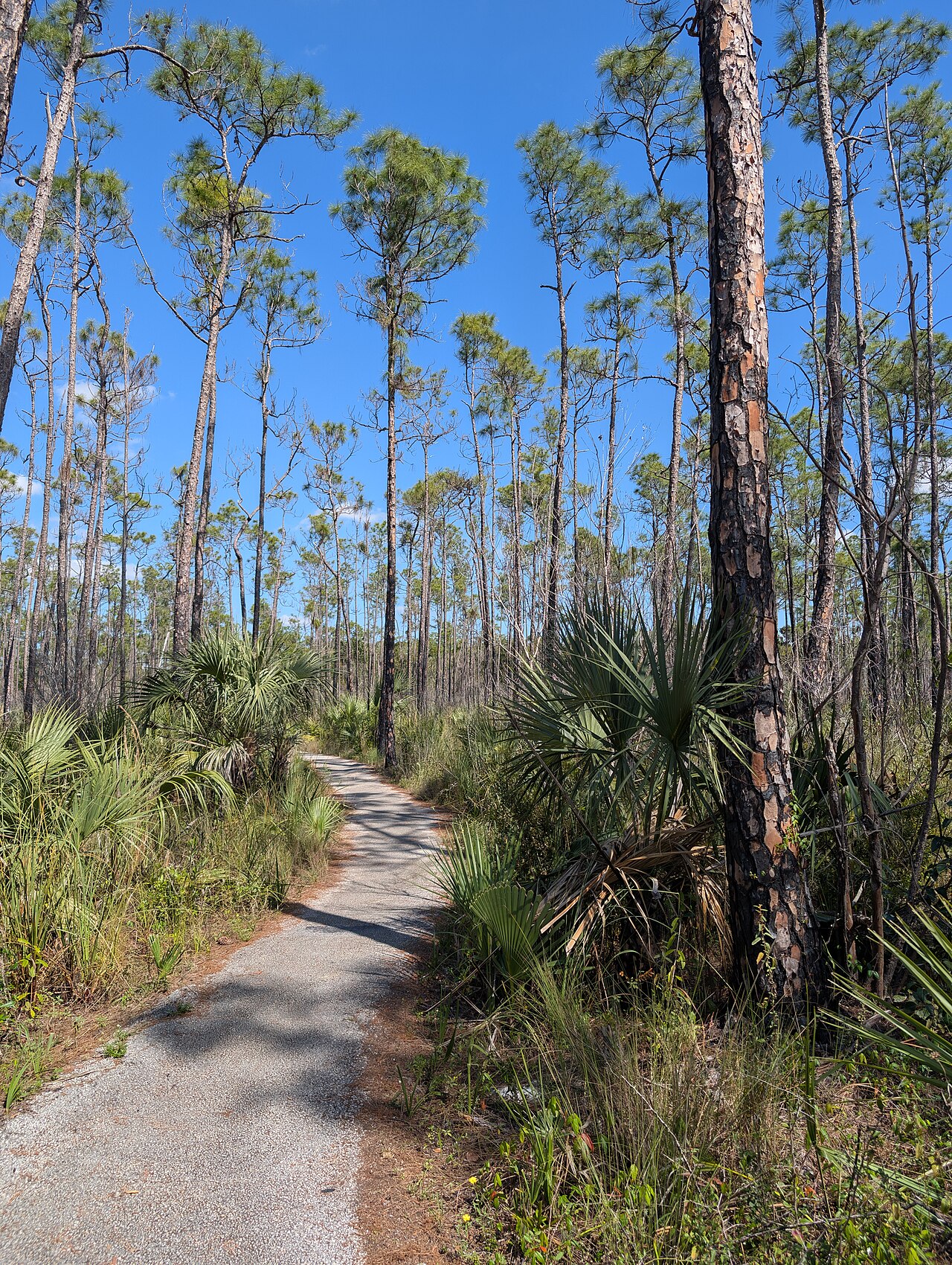
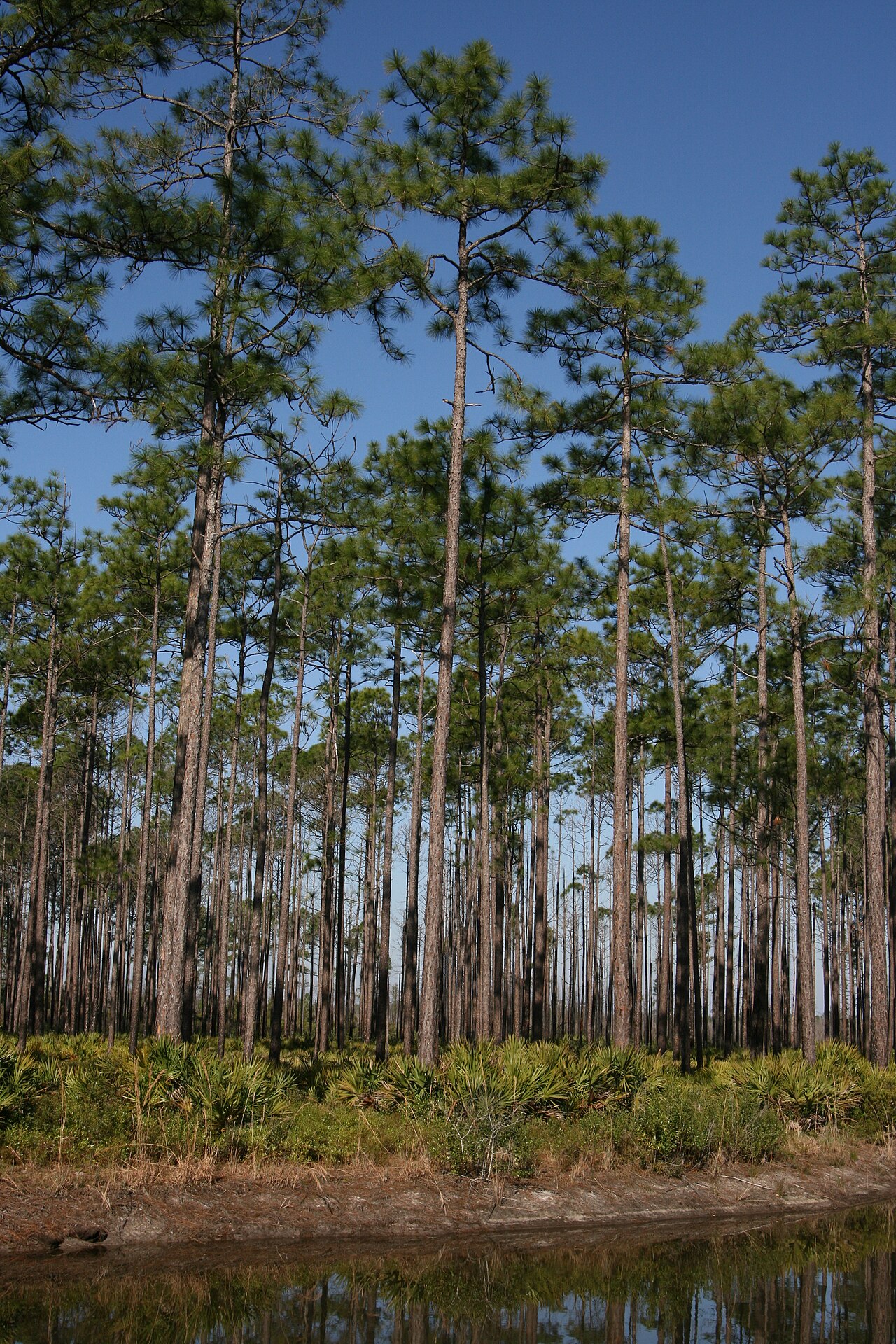
In the wild, slash pine forms tall, arrow-straight trunks topped with a dense, rounded crown of long, glossy needles, typically reaching 60 to 100 feet. Its thick, plated orange-brown bark and large, glossy brown cones make it easy to tell apart from its pine neighbors once you know the clues. It thrives on sites too wet and acidic for most other pines, often standing in shallow standing water for weeks at a time in poorly drained flatwoods.
Slash pine is both an ecological cornerstone and an economic workhorse. Its wood and resin built the naval-stores and pulpwood industries of the historic South, and it remains one of the most widely planted timber trees in the region today. For home landscapes and restoration plantings within its native coastal range, it offers fast shade, wildlife value, and a genuine piece of Deep South pine flatwoods character — provided it’s planted where it actually belongs.
Identification
Slash pine is a medium to large evergreen tree, usually 60 to 80 feet tall at maturity (occasionally reaching 100 feet on good sites), with a straight trunk 2 to 2.5 feet in diameter and a compact, rounded to oval crown of upswept branches. Young trees grow quickly, often adding 2 feet or more of height per year, and pass through a brief “bottlebrush” sapling stage with a tuft of long needles atop a bare stem before branching begins.
Bark & Stems
Young bark is dark gray-brown and relatively smooth, but it matures into thick, orange-brown to purplish-brown bark broken into large, flat, papery plates with a purplish cast visible between the scales — a good field mark that separates slash pine from the finer, more orange-platy bark of longleaf pine. The plates flake off in large, loose scales rather than small chips.
Leaves
Needles are dark glossy green, 7 to 10 inches long, and borne in fascicles (bundles) of two or three on the same tree — a distinctive mixed bundle count that few other southeastern pines share. The needles are noticeably stouter and shinier than loblolly pine’s and droop slightly, clustering in dense tufts near the branch tips.
Flowers & Fruit
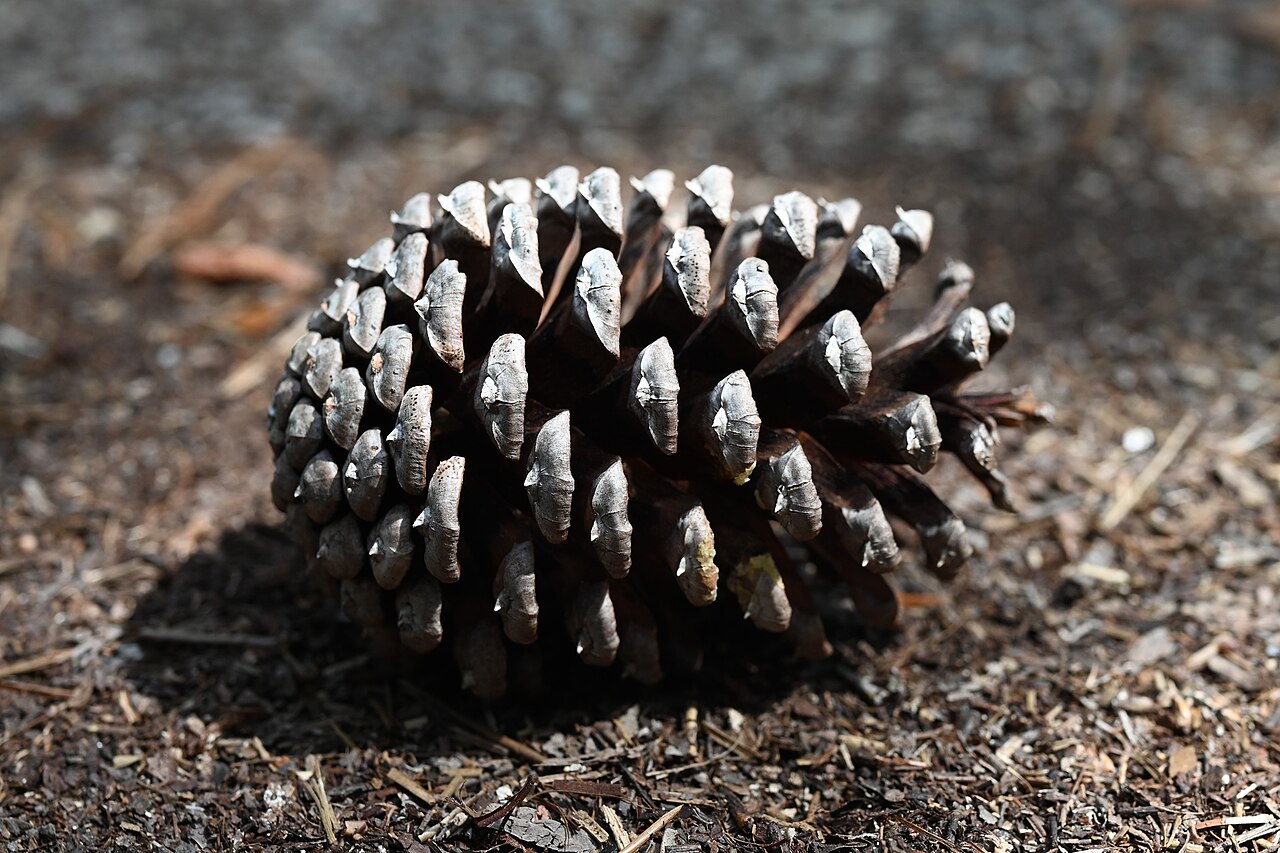
Slash pine is wind-pollinated and monoecious, bearing small, purplish male (pollen) cones in clusters near the branch tips in late winter, and separate greenish female cones that develop at the branch ends. The mature seed cones are glossy reddish-brown, 3 to 6 inches long, egg-shaped, and armed with a small prickle on each scale. Cones ripen over about two years and open in fall, releasing winged seeds that are quickly taken by birds and small mammals. A South Florida variety, Pinus elliottii var. densa, has a grass-stage seedling habit similar to longleaf pine and is adapted to the fire-prone pine rocklands and scrub of central and southern Florida.
Quick Facts
| Scientific Name | Pinus elliottii |
| Family | Pinaceae (Pine) |
| Plant Type | Evergreen Tree |
| Mature Height | 60–80 ft (occasionally to 100 ft) |
| Mature Spread | 25–35 ft |
| Growth Rate | Fast |
| Sun Exposure | Full Sun |
| Water Needs | Moist to seasonally wet; tolerates standing water |
| Soil Type | Sandy, poorly drained flatwoods soils |
| Soil pH | 4.5–6.5 (acidic) |
| Bloom Time | January – March |
| Flower Color | Purplish (male); green (female) |
| Fall Color | None (evergreen) |
| Fruit | Glossy brown prickly cones, 3–6 in |
| Deer Resistant | Yes (mature trees rarely browsed) |
| USDA Hardiness Zones | 8–10 |
Native Range
Slash pine is native to the lower Atlantic and Gulf Coastal Plain, from the southern tip of South Carolina south through Georgia and Florida, and west along the Gulf to eastern Louisiana. Within this range it is most abundant in Georgia and Florida, which together hold the great majority of the species’ natural stands; the southern variety, P. elliottii var. densa, is confined to central and southern Florida, including the pine rocklands of the Everglades region.
True wild slash pine is a tree of flat, low-lying terrain — pine flatwoods, the margins of cypress ponds and bay swamps, and the edges of seasonal wetlands — where it tolerates saturated, acidic soils that exclude many other pines. It is far less common on well-drained sandhills, which belong more to longleaf pine. Because slash pine has long been planted for timber well outside this native footprint, including Texas, Arkansas, and areas as far north as Virginia, it’s important to distinguish natural stands from plantation and naturalized populations when thinking about what’s truly native to a given site.
Within its native range, slash pine forests were historically tapped for turpentine and rosin and later became a mainstay of the Southern pulpwood industry; by the mid-20th century it had also been planted extensively for reforestation, sometimes encroaching into sandhill and scrub habitats better suited to longleaf pine. In a few places outside the U.S. — notably parts of South Africa and South America — plantation slash pine has become invasive in native grasslands, a reminder that even a beneficial native tree can behave very differently once moved far from the ecosystem it evolved with.
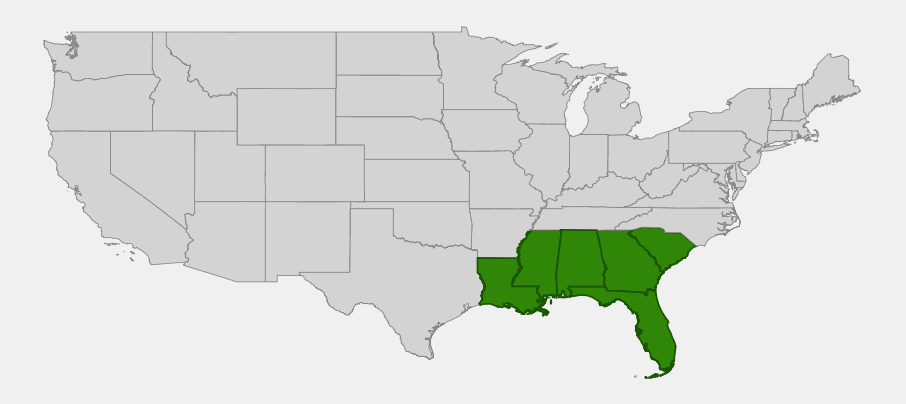
📋 Regional plant lists featuring Slash Pine: North Carolina and South Carolina · Georgia, Alabama and Mississippi · Arkansas, Louisiana, Eastern Oklahoma, and Eastern Texas
Growing & Care Guide
Slash pine is a tough, adaptable tree for large properties within or near its native coastal range, prized for quick shade and a genuine pine-flatwoods look. It is not a tree for small urban lots or formal gardens — give it room to reach its full height and spread.
Light
Slash pine needs full sun to grow well and develop its characteristic open, rounded crown. It will not tolerate shade as a seedling or sapling; wild stands regenerate in open flatwoods or after fire or logging removes the canopy.
Soil & Water
This is one of the few pines genuinely happy in wet feet. It grows naturally in poorly drained, acidic, sandy flatwoods soils and tolerates standing water for extended periods during the wet season, though it also does well on moderately well-drained sandy sites. Avoid heavy clay or alkaline soils. Once established, slash pine tolerates both seasonal flooding and the dry spells common between Southern rains.
Planting Tips
Plant container or bare-root seedlings in fall through early spring. Choose a site with full sun and acidic, sandy soil, and allow generous space — 25 to 35 feet between trees for a naturalistic flatwoods stand. Young trees grow fast and benefit from protection from mowing or foot traffic during their early “bottlebrush” stage, when the terminal bud is especially vulnerable.
Pruning & Maintenance
Slash pine needs little pruning beyond removing dead, damaged, or crossing lower limbs as the tree matures. Avoid topping or heavy crown pruning, which the species does not recover from gracefully. Established trees are low-maintenance and largely pest- and disease-resistant, though they can be affected by pine bark beetles during drought stress.
Landscape Uses
Slash pine’s rapid growth and tolerance of wet, acidic ground make it valuable in several settings:
- Wetland and flatwoods restoration on poorly drained, acidic sites
- Quick shade for new Deep South properties within its native range
- Wildlife habitat plantings paired with saw palmetto and gallberry understory
- Windbreaks and screens on large rural lots
- Naturalized pine-flatwoods landscaping in coastal Georgia and Florida
Fire Ecology
Slash pine is adapted to the frequent lightning fires of the Coastal Plain, though less specialized for fire than longleaf pine. Young trees are vulnerable to top-kill by fire before their bark thickens, but once past the sapling stage, mature trees develop thick, insulating bark that protects the cambium from low-intensity surface fires. The South Florida variety, var. densa, has an even stronger fire adaptation, including a brief grass-stage habit that keeps the growing tip protected near the ground, similar to longleaf pine seedlings.
Wildlife & Ecological Value
Slash pine flatwoods support a distinctive community of Coastal Plain wildlife, from canopy to understory.
For Birds
The cones provide seed for Brown-headed Nuthatches, Pine Warblers, and various finches, while the furrowed bark hosts insects favored by woodpeckers, including occasional foraging by the endangered Red-cockaded Woodpecker, which more typically favors longleaf pine but will use mature slash pine stands. Ospreys and Bald Eagles often nest in the tall, open crowns near coastal wetlands.
For Mammals
Gray squirrels and fox squirrels feed heavily on the seeds held in slash pine cones, caching and dispersing them in the process. White-tailed deer browse young seedlings only lightly, since the resinous needles are not a preferred food, which helps explain the species’ good deer resistance once past the seedling stage.
For Pollinators
As a wind-pollinated conifer, slash pine does not rely on insect pollinators, but its pollen is a minor early-season food source for some native bees in late winter, when few other plants are flowering in the flatwoods.
Ecosystem Role
Slash pine flatwoods form one of the Southeast’s signature wetland-adjacent forest types, with an understory of saw palmetto, wiregrass, gallberry, and wax myrtle that supports its own suite of ground-nesting birds, reptiles, and insects. The open canopy lets enough light through for a rich shrub and grass layer, and the trees’ tolerance of seasonal flooding helps stabilize hydrology at the margins of cypress ponds and bay swamps.
Cultural & Historical Uses
Slash pine was a foundation of the historic Southern naval-stores industry, which tapped living pines for resin used to make turpentine, rosin, and pitch for shipbuilding and industry from the colonial era through the early 20th century. Along with longleaf pine, it supplied the raw material that made Georgia and the Carolinas the world’s leading producers of naval stores for over a hundred years.
As the naval-stores trade declined, slash pine’s fast growth made it the preferred species for the South’s booming pulpwood and timber plantations beginning in the mid-1900s, and it remains one of the most commercially planted pines in the Southeastern United States today, valued for pulp, lumber, and plywood production.
Beyond industry, slash pine flatwoods have long been part of the cultural landscape of coastal Georgia and Florida, providing hunting grounds, turpentine camps, and, more recently, the backdrop for state forests and wildlife management areas that preserve a working memory of the historic Coastal Plain pine woods.
Frequently Asked Questions
Is slash pine the same as longleaf pine?
No. They are closely related and often grow near each other, but slash pine has shorter needles (7–10 in versus longleaf’s 8–18 in) in bundles of two or three rather than longleaf’s bundles of three, smaller cones, and a strong preference for wetter, poorly drained flatwoods rather than longleaf’s well-drained sandhills.
Will slash pine grow in standing water?
It tolerates seasonally saturated, poorly drained soils and brief standing water better than almost any other Southern pine, which is why it dominates wet flatwoods and pond margins in its native range. It does not, however, grow in permanently flooded swamps the way bald cypress does.
How fast does slash pine grow?
Very fast — young trees commonly add 2 feet or more of height per year under good conditions, which is why it has been the pine of choice for Southern timber plantations for decades.
Is slash pine invasive?
Within its native Coastal Plain range it is not invasive, but plantation slash pine planted outside its native footprint — including parts of Texas, and especially South Africa and South America — has spread into native grasslands and is considered invasive in those places. Stick to locally native stock within the species’ true range.
Does slash pine need fire to regenerate?
It benefits from periodic fire, which clears competing hardwoods and prepares bare mineral soil for seedlings, but it is less fire-dependent than longleaf pine. Mature trees survive low-intensity surface fires thanks to their thick bark, while the South Florida variety has stronger fire adaptations, including a brief grass stage.

Looking for a nursery that carries Slash Pine?
Browse our native plant nursery directory: South Carolina · Georgia, Florida · Alabama · Mississippi, Louisiana