Cabbage Palm (Sabal palmetto)
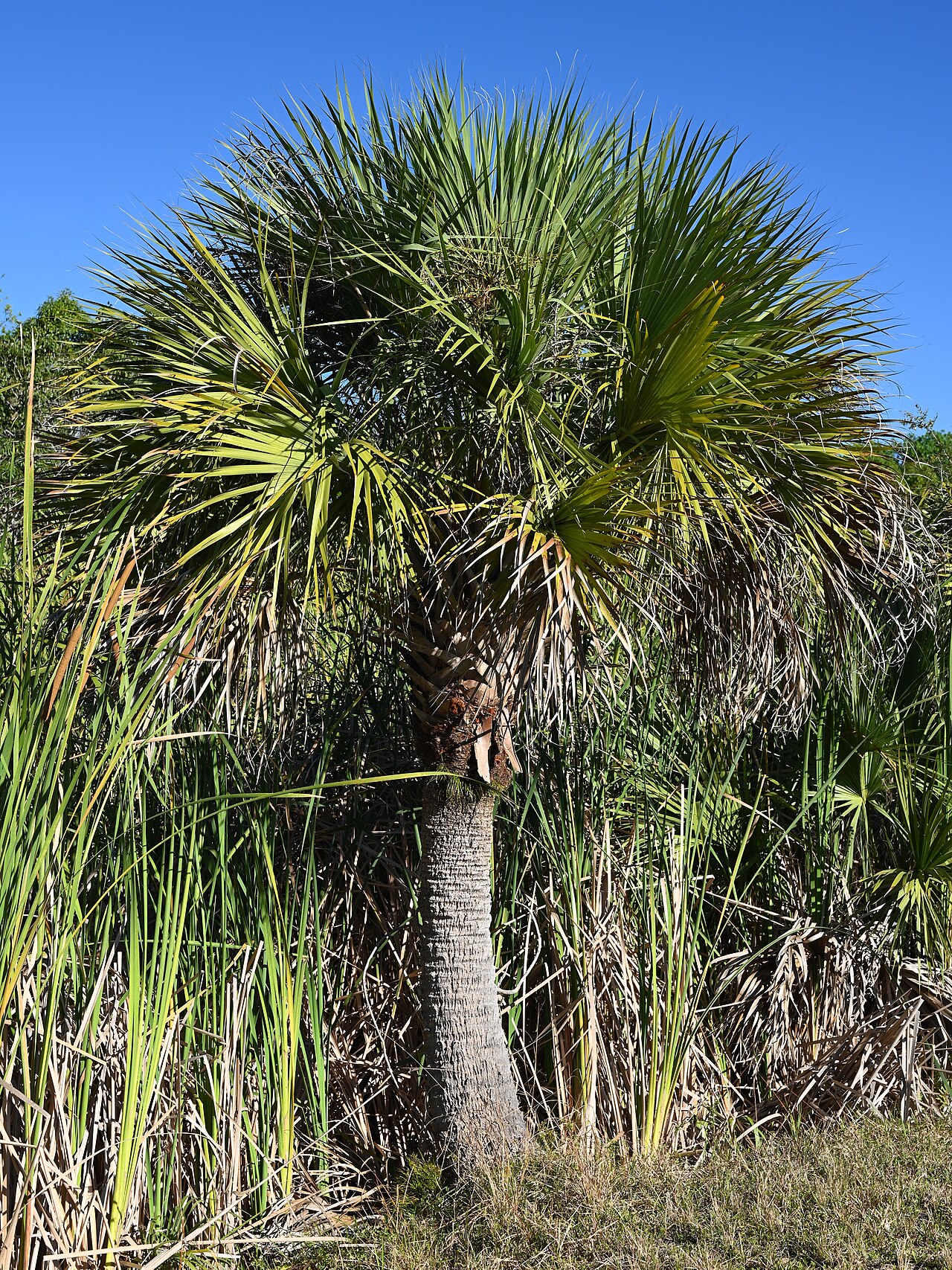
Sabal palmetto, commonly known as Cabbage Palm or Cabbage Palmetto, is the signature palm of the Southeastern coastal plain and the state tree of both Florida and South Carolina. A member of the Arecaceae (palm family), it is an unbranched, single-trunked evergreen that has defined the look of the Lowcountry and peninsular Florida landscape for centuries — the tall, shaggy-booted or smooth gray trunk topped by a dense globe of stiff, fan-shaped (costapalmate) leaves is one of the most recognizable silhouettes in American horticulture.
Cabbage palm is remarkably tough and adaptable, growing naturally on sandy coastal dunes, in brackish maritime forests, along the edges of freshwater marshes, and in seasonally flooded hammocks. It tolerates salt spray, strong wind, standing water, and poor sandy soil equally well, which is why it survives so readily along the Atlantic and Gulf coasts where few other trees persist. Creamy, fragrant flower clusters in early summer give way to small black fruits that feed a long list of birds and mammals through fall and winter.
Long-lived and slow-growing, a cabbage palm planted today can easily outlive the gardener who planted it — specimens are documented living well over a century. For anyone gardening along the southeastern coast, it is an essential native tree: storm-resistant, drought-tolerant once established, and ecologically woven into maritime forest, hammock, and marsh-edge plant communities from southeastern North Carolina through Florida.
Identification
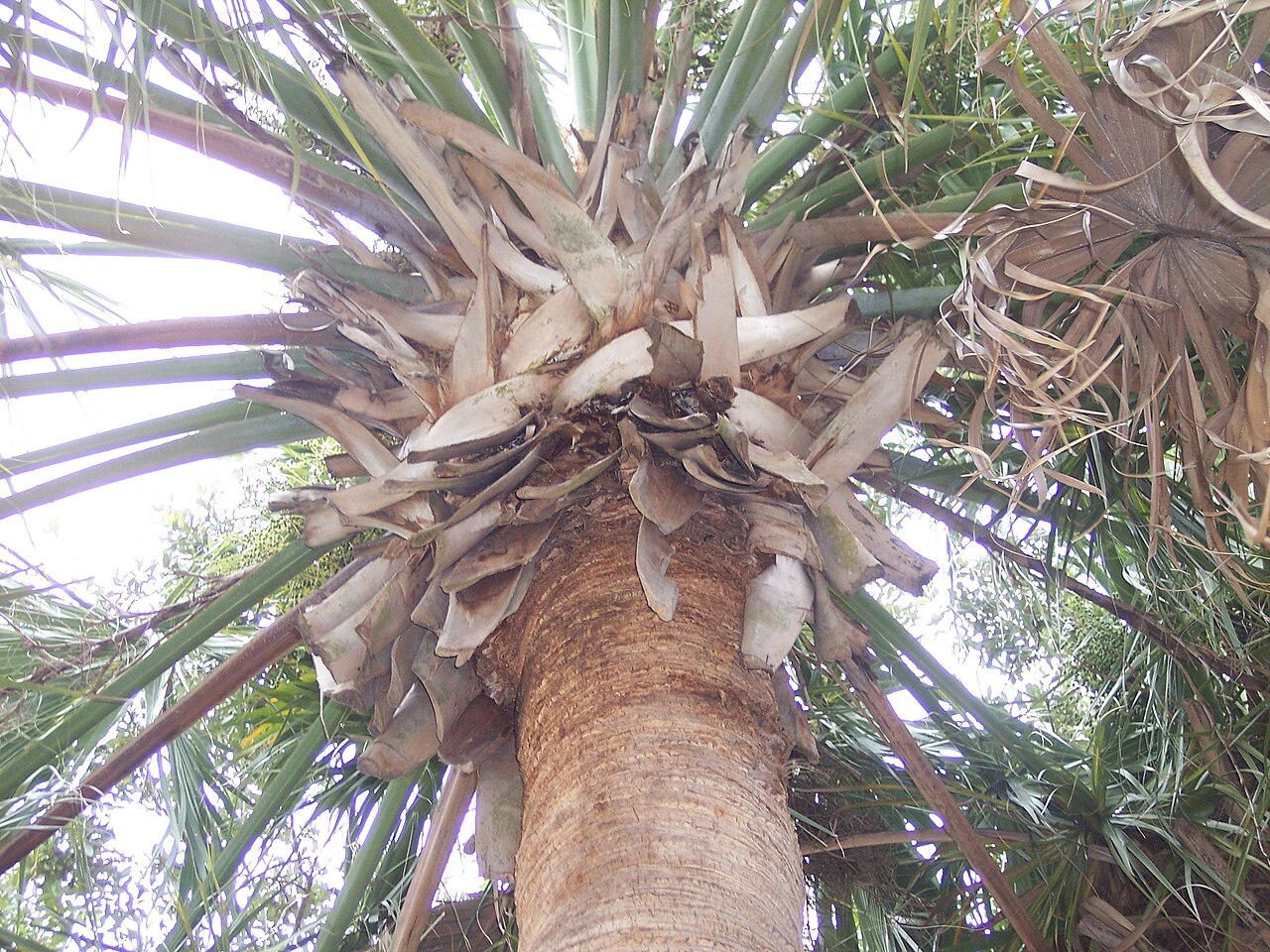
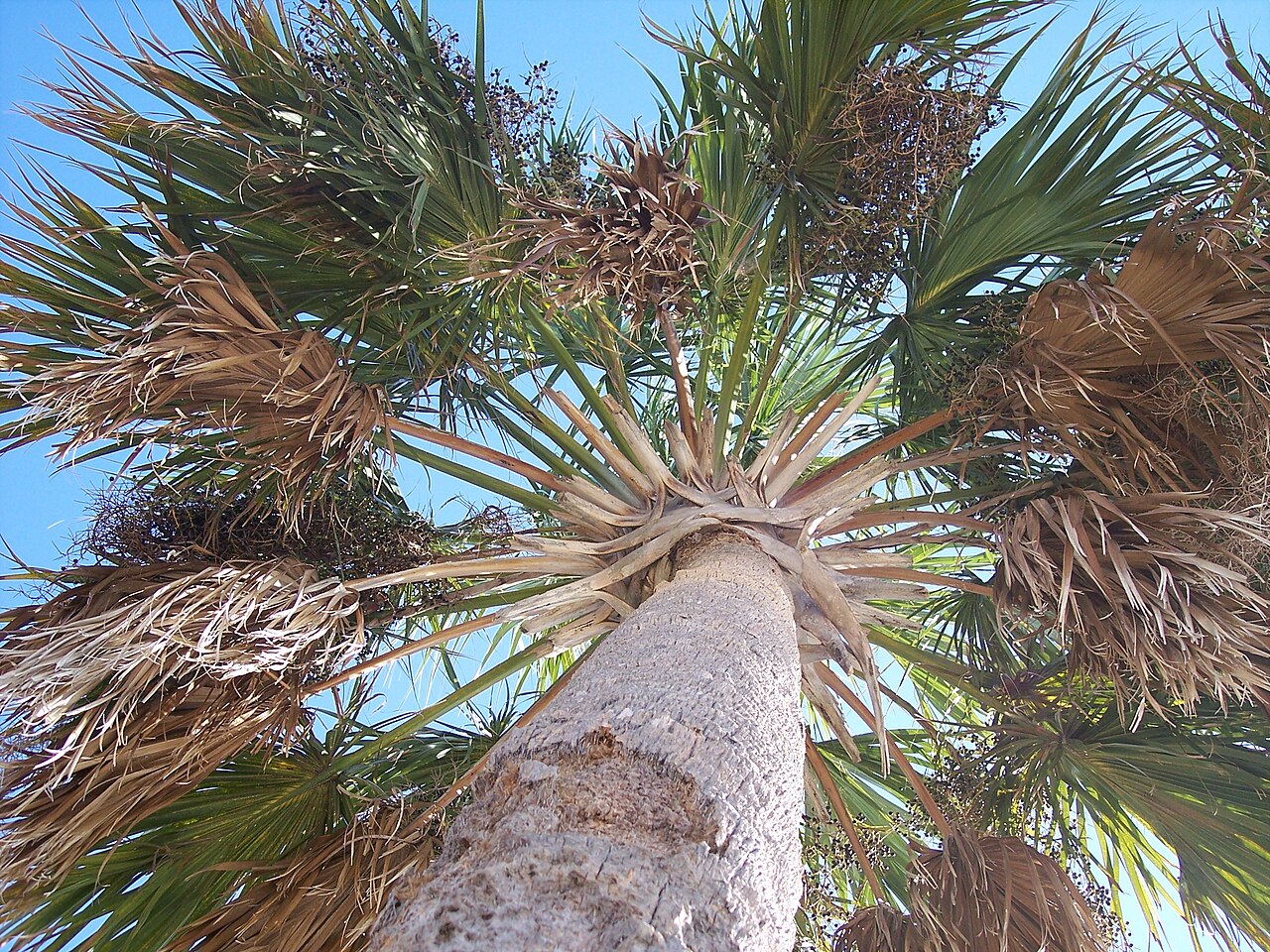
Cabbage palm is a solitary, unbranched palm with a single straight trunk that typically reaches 40 to 60 feet tall, occasionally taller in old, undisturbed specimens, with a trunk diameter of about 12 to 20 inches. Unlike many ornamental palms, it has no offshoots or suckers — each tree grows from a single apical bud (the “cabbage” for which it is named), and damaging that bud kills the entire tree.
Trunk
Young and middle-aged trees often retain a shaggy “boot jack” of old persistent leaf bases — overlapping, criss-crossed brown leaf stubs — clothing part or all of the trunk. On older trees these boots eventually shed, leaving behind a smooth, light gray trunk marked with faint horizontal leaf-scar rings. The trunk often has a slightly bulging or swollen base and may lean or curve, especially on coastal dune and wind-exposed trees.
Leaves
The leaves are costapalmate — fan-shaped but with the midrib extending partway into the blade, giving the leaf a gentle downward curve rather than lying perfectly flat. Each leaf is 5 to 8 feet long including the stout, fibrous petiole, with a blade divided into many stiff, pointed segments that droop slightly at the tips. Leaves are yellow-green to deep green, and dead fronds often hang down against the trunk before eventually dropping or being removed.
Flowers & Fruit
In early summer the tree produces one or more large, branched flower clusters (panicles) up to 3 feet long that emerge from among the leaf bases and arch outward beyond the crown. The individual flowers are tiny, creamy white, and fragrant, borne in the thousands along the branched stalk and visited heavily by bees. Flowering is followed by abundant round to oblong black fruits, about ⅜ to ½ inch across, each containing a single hard brown seed; fruit ripens from late summer into early winter and often persists on the tree for months.
Quick Facts
| Scientific Name | Sabal palmetto |
| Family | Arecaceae (Palm) |
| Plant Type | Evergreen Palm Tree |
| Mature Height | 40–60 ft (occasionally taller) |
| Trunk Diameter | 12–20 in |
| Growth Rate | Slow |
| Sun Exposure | Full Sun to Part Shade |
| Water Needs | Low to Moderate |
| Soil Type | Highly adaptable; sand, loam or clay, dry to seasonally wet |
| Soil pH | Wide range, acidic to alkaline |
| Bloom Time | June – July |
| Flower Color | Creamy white, fragrant |
| Fall Color | Evergreen, no fall color change |
| Fruit | Round black drupes, ripening late summer–winter |
| Deer Resistant | Yes |
| USDA Hardiness Zones | 8a–11 |
Native Range
Cabbage palm is native to the coastal plain of the southeastern United States, from southeastern North Carolina’s Cape Fear region south through South Carolina and Georgia, and throughout essentially all of Florida. It also occurs natively in the Bahamas and Cuba. Within the continental range it is most abundant and reaches its largest size in Florida, where it is found statewide, while North Carolina populations near the northern edge of its range are smaller and more localized.
Across this range, cabbage palm grows in a wide variety of plant communities: maritime forests and hammocks just behind coastal dunes, the transition zones between salt marsh and upland forest, pine flatwoods, freshwater and brackish marsh edges, and hydric hammocks that flood seasonally. It is remarkably tolerant of both salt spray on its foliage and periodic inundation at the roots, though it does poorly in consistently saline soil. This flexibility lets it colonize sites too harsh or too wet for most other trees.
Because it tolerates wind, salt aerosol, and storm surge so well, cabbage palm is often one of the last trees standing after a hurricane moves through the coastal Southeast, and it plays an important stabilizing role in maritime forest and dune-edge plant communities. Its wide pH and soil tolerance also make it one of the most dependable native trees for difficult coastal planting sites.
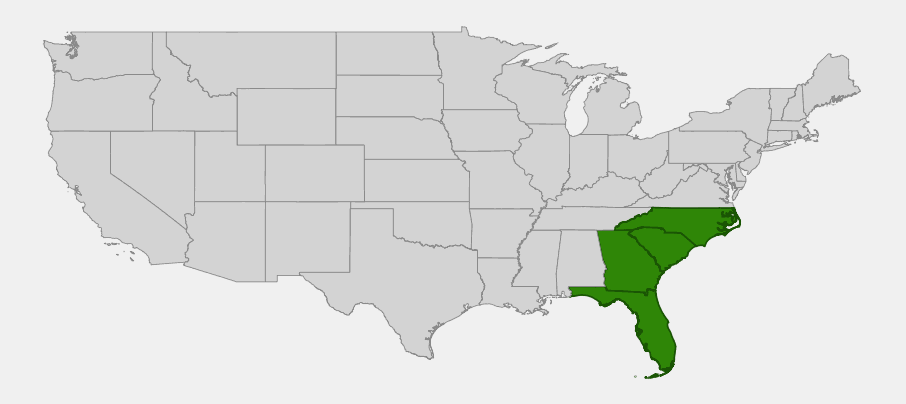
📋 Regional plant lists featuring Cabbage Palm: North Carolina & South Carolina · Georgia, Alabama & Mississippi
Growing & Care Guide
Few native trees are as forgiving as cabbage palm once it is established. Its main demand is patience — it grows slowly and spends its early years building an underground root initiation zone before putting up visible trunk height — but it asks very little in return.
Light
Cabbage palm grows best in full sun, where it develops the fullest crown, though young trees establish readily in part shade beneath an open canopy. It is not a true shade plant and will stretch and thin out if kept in deep, continuous shade for years.
Soil & Water
This palm is exceptionally adaptable to soil type, growing well in pure beach sand, sandy loam, or heavier clay, and tolerating both dry upland sites and seasonally flooded ground. It accepts a wide pH range, from acidic to distinctly alkaline soils, which is unusual among southeastern natives and part of why it thrives on shell-rich or limestone-influenced coastal soils. Once established, mature trees are quite drought tolerant, needing supplemental water only in extended dry spells; young, newly planted palms need regular watering for the first one to two years.
Planting Tips
Plant container-grown or properly root-pruned, hardened-off field palms in spring through early summer so roots can establish before winter. Cabbage palm transplants with a surprisingly high success rate for a large tree, partly because its root initiation zone regenerates new roots readily, but freshly transplanted palms should be braced and watered deeply and regularly until new roots take hold. Give it at least 15 to 20 feet of open overhead space to allow the crown and arching flower stalks to develop fully.
Pruning & Maintenance
Remove only fully brown, dead fronds; cutting green or yellowing leaves (“hurricane cuts”) stresses the tree and should be avoided, since the trunk gains some of its stored nutrients from older fronds before they die back naturally. Never damage or cut the single growing bud at the crown’s center, as this kills the entire palm. Beyond removing dead fronds and spent flower stalks, cabbage palm needs essentially no maintenance.
Landscape Uses
Cabbage palm’s toughness and iconic silhouette make it useful in several settings:
- Coastal and beachfront landscaping, where salt spray and wind rule out most other trees
- Street and avenue plantings, prized for its narrow, storm-resistant profile
- Wildlife gardens, where flowers and fruit support pollinators, birds, and mammals
- Naturalistic hammock and flatwoods restoration alongside saw palmetto and longleaf pine
- Rain garden or marsh-edge plantings, tolerating both standing water and dry spells
- Specimen or focal-point tree in a native-plant landscape
Fire Ecology
Cabbage palm is well adapted to the fire-prone pine flatwoods and hammocks of the Southeast. The thick, fibrous leaf bases and the insulated, below-ground growing point protect the bud from all but the most intense fires, so established trees routinely survive the frequent, low-intensity fires that historically swept through flatwoods and savanna habitats, resprouting new fronds within weeks.
Wildlife & Ecological Value
Cabbage palm is a keystone resource in southeastern coastal ecosystems, feeding and sheltering wildlife across every season.
For Birds
The abundant black fruits are eaten by a long list of birds, including cedar waxwings, American robins, northern mockingbirds, pileated and red-bellied woodpeckers, and migrating warblers, which rely on the fall and winter fruit crop. The crown itself, especially where old leaf boots persist, provides nest cavities and roosting cover; bald eagles and ospreys sometimes build nests directly in the crown.
For Mammals
Raccoons, gray foxes, and black bears feed on the fallen fruit, and white-tailed deer will browse young seedlings and fronds within reach. Historically, feral and free-ranging hogs have also fed heavily on fallen fruit in Florida hammocks.
For Pollinators
The huge, fragrant June flower panicles, each bearing thousands of small blossoms, are a major nectar source for honeybees and native bees during a season when fewer other plants are blooming; beekeepers in Florida and coastal Georgia value cabbage palm as an important honey plant.
Ecosystem Role
As one of the few trees able to establish directly in salt-sprayed, wind-exposed, and periodically flooded coastal ground, cabbage palm helps stabilize dune-edge and hammock soils and provides the structural backbone of maritime forest communities. Its persistence through storms and fire makes it a long-term anchor species in habitats that are otherwise frequently disturbed.
Cultural & Historical Uses
Cabbage palm has deep roots in the human history of the Southeast. Indigenous peoples of Florida and the coastal Carolinas and Georgia, including the Seminole and earlier Timucua and other groups, used the tree extensively: the terminal bud (“heart of palm” or “swamp cabbage”) was eaten, the fibrous leaf bases and trunk fiber were woven into mats, baskets, cordage, and thatch, and the fronds thatched chickee-style dwellings still used in the Everglades today.
European and later American settlers adopted many of these uses, and “swamp cabbage” — the cooked heart of the palm — became a traditional Florida dish still celebrated at the annual Swamp Cabbage Festival in LaBelle, Florida. Harvesting the heart kills the tree, since it removes the single growing bud, so modern harvest for food is limited and regulated.
Cabbage palm has been the official state tree of Florida since 1953 and of South Carolina since 1939, where its image appears on the state flag, a legacy tied to the earthen Fort Moultrie’s palmetto-log walls that famously absorbed British cannon fire during the Revolutionary War rather than splintering. Today it remains one of the most widely planted ornamental trees in the coastal Southeast, valued for its storm resilience as much as its history.
Frequently Asked Questions
How fast does cabbage palm grow?
Very slowly, especially in its early years. A young palm may spend several years building its root system underground before any visible trunk appears, and overall height gain is often just a few inches to about a foot per year. Mature growth rate picks up once a trunk is established, but this remains a patient gardener’s tree.
Is cabbage palm salt tolerant?
Yes, it is one of the most salt-tolerant native trees in the Southeast and handles direct salt spray on its foliage very well, which is why it thrives on beachfront and dune-edge sites. However, it does not tolerate consistently saline soil at its roots, so it should not be planted where the root zone sits in salty groundwater.
Can you eat cabbage palm?
The terminal bud, known as “heart of palm” or “swamp cabbage,” is edible and was traditionally eaten by Indigenous peoples and later settlers. Harvesting it kills the entire tree because it removes the single growing point, so it should never be harvested from a landscape or wild specimen you want to keep alive.
Does cabbage palm need pruning?
Very little. Only remove fully brown, dead fronds and spent flower stalks; cutting green or yellowing fronds (a “hurricane cut”) weakens the tree by removing stored nutrients and should be avoided. Never prune or damage the single bud at the crown’s center.
Is cabbage palm cold hardy?
It tolerates cold reasonably well for a palm, generally surviving briefly down to around 15°F, which corresponds to USDA zone 8a. This is why its native range extends into southeastern North Carolina even though it is far more common and larger-growing in Florida.

Looking for a nursery that carries Cabbage Palm?
Browse our native plant nursery directory: North Carolina · South Carolina · Georgia & Florida