Saw Palmetto (Serenoa repens)
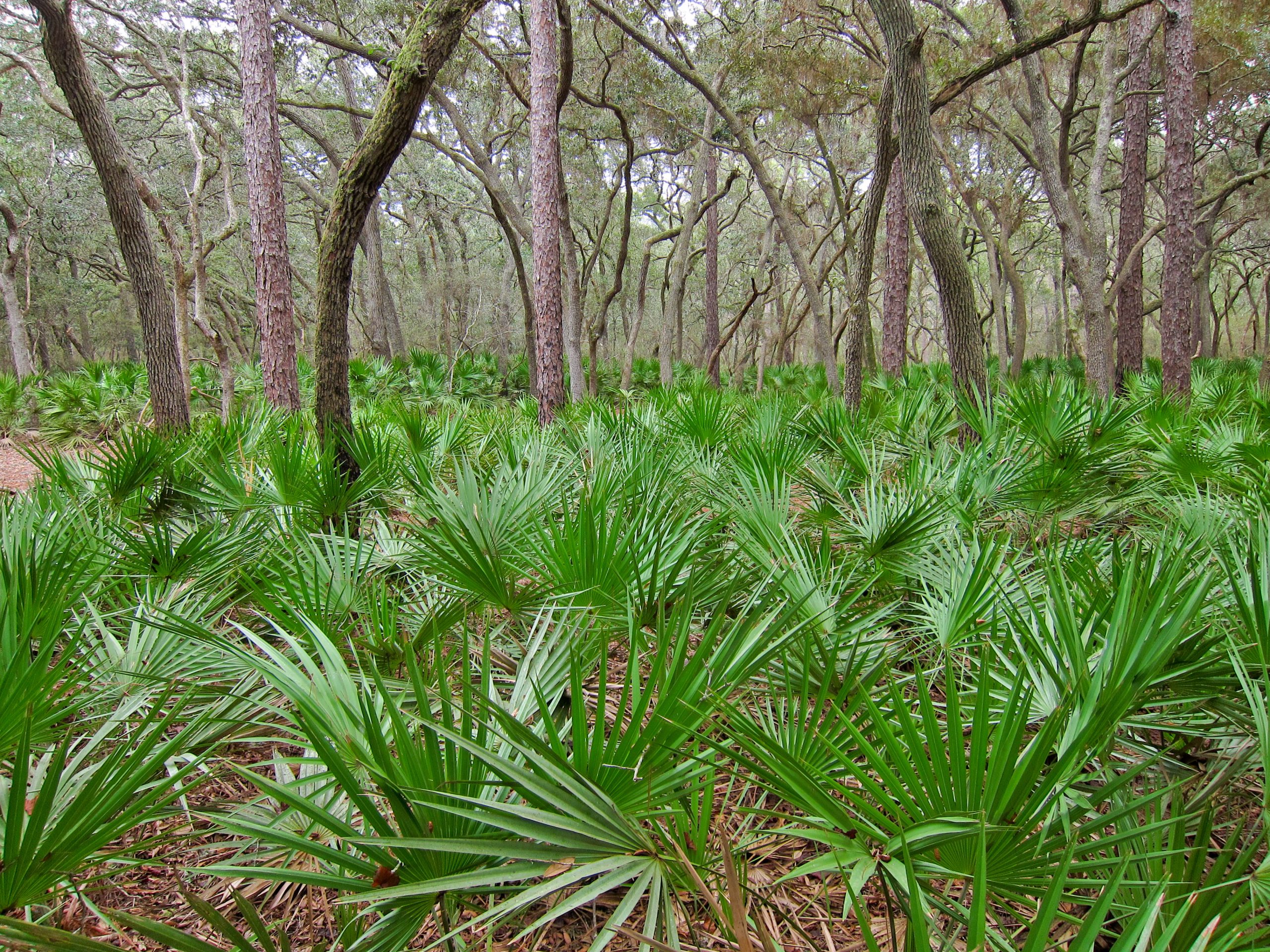
Serenoa repens, commonly known as Saw Palmetto, is the signature understory palm of the southeastern coastal plain, forming dense, fan-leaved thickets beneath pine flatwoods, sand scrub, and hardwood hammocks from South Carolina to Louisiana. Usually sprawling rather than upright, it spreads by thick, creeping stems that often run along or just beneath the ground, so a mature colony can cover considerable ground while standing only 3 to 8 feet tall. It is the sole member of its genus and one of the longest-lived palms in North America, with some wild clumps estimated at several centuries old.
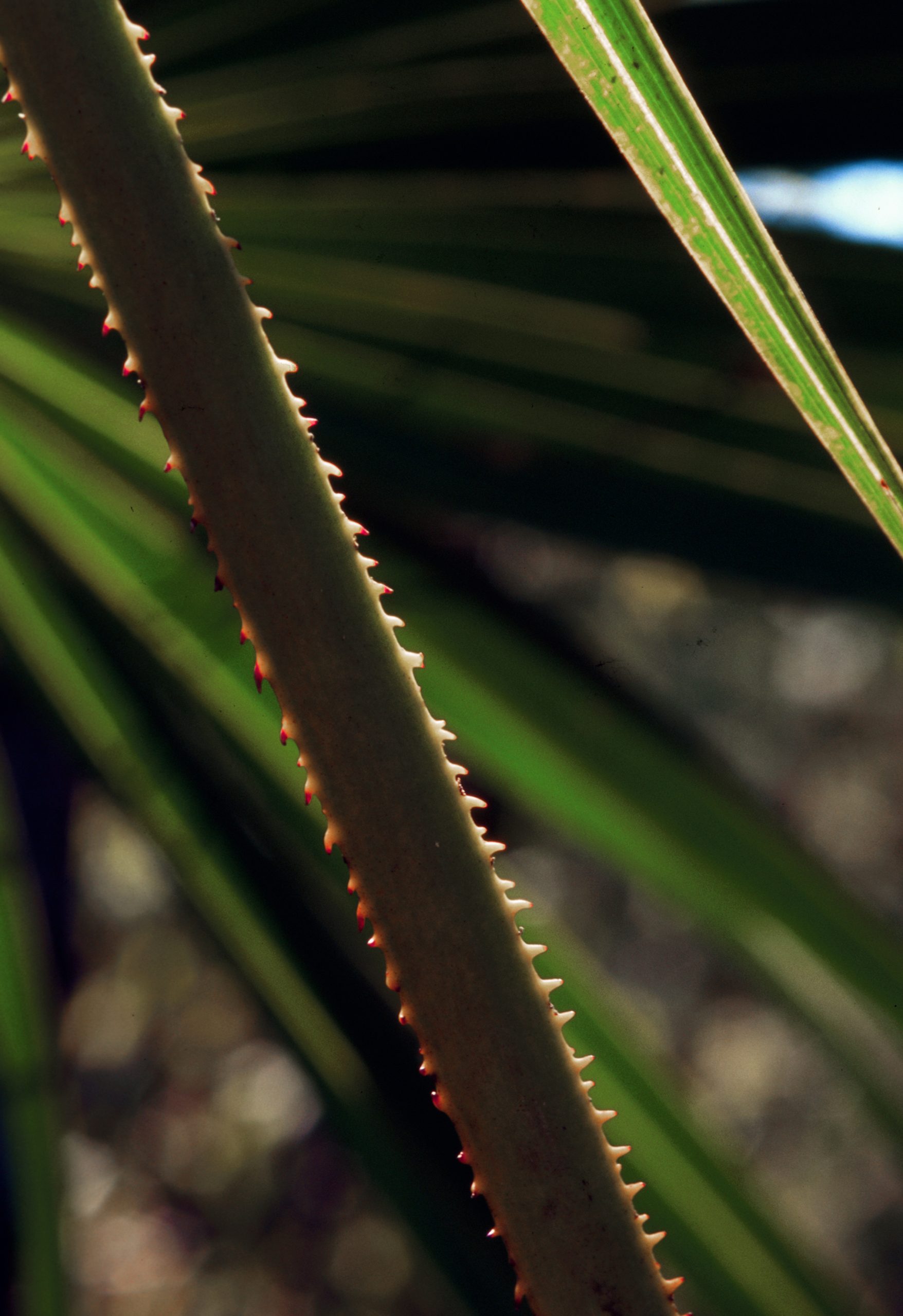
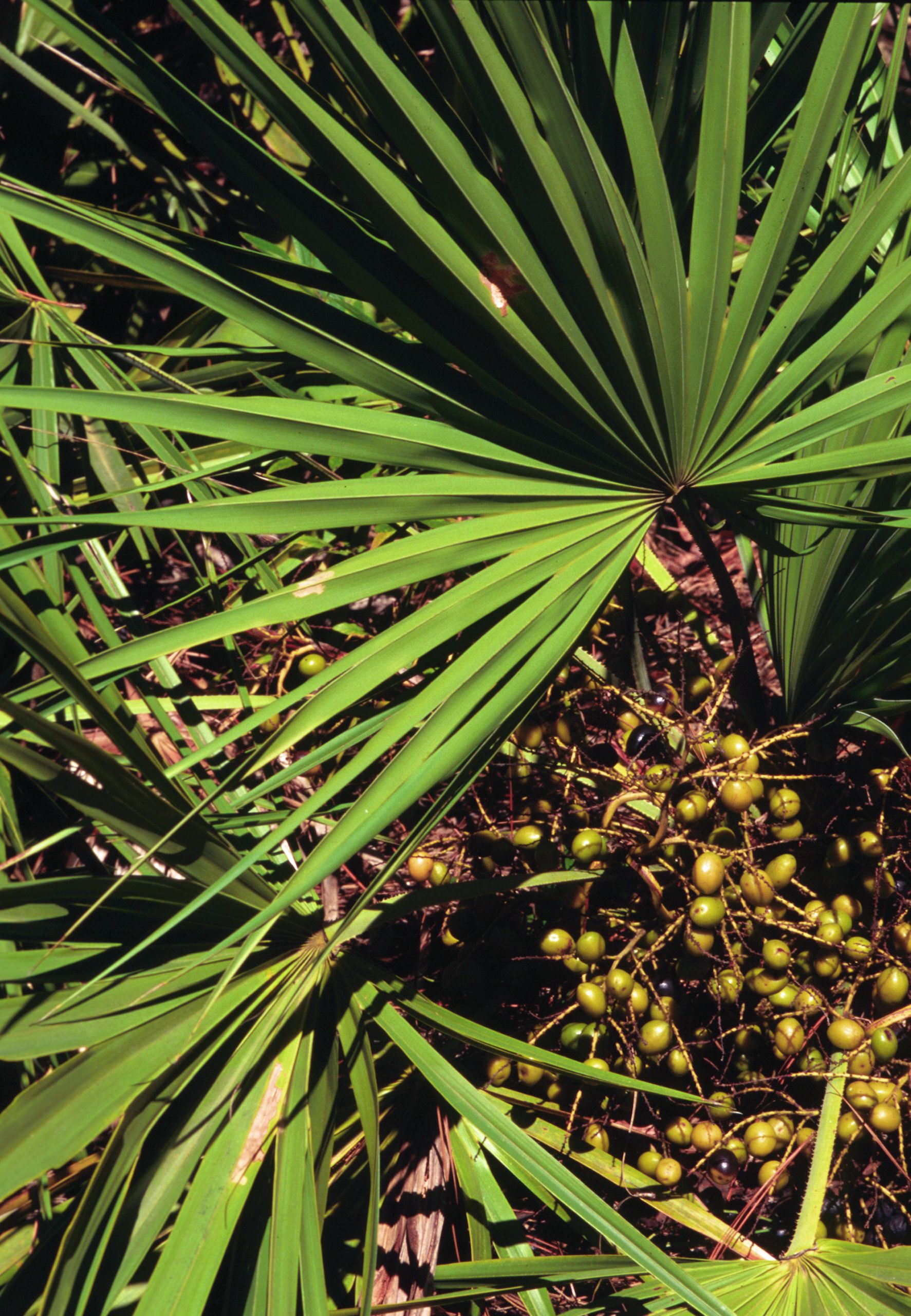
The plant takes its common name from the sharp, saw-toothed spines that line the edges of its long leaf stalks, a feature that makes saw palmetto an effective, low-maintenance barrier planting as well as a defining texture of the Deep South landscape. Its tough, fan-shaped leaves range from deep green to a striking silvery blue, and its small, fragrant spring flowers give way to dark, olive-like fruits that are among the most important wildlife foods in the southeastern coastal plain.
For gardeners from the Carolinas through the Gulf Coast, saw palmetto is about as reliable as native plants get: drought tolerant once established, fire adapted, salt tolerant near the coast, and almost entirely pest-free. It asks for very little and gives back structure, wildlife value, and year-round evergreen presence in return.
Identification
Saw palmetto typically grows as a low, spreading shrub rather than a true tree, with stems that creep horizontally along or just under the soil surface before curving upward. Occasionally, especially in older colonies, a stem will grow mostly upright, producing a short trunk a few feet tall, but this is the exception rather than the rule. A single plant can form a dense clump 6 to 10 feet wide over many decades.
Stems
The stems are thick, woody, and usually prostrate or only slightly inclined, often hidden under leaf litter or partly buried. They branch slowly, and because growth is so slow, an individual stem system can persist and expand for centuries, making large colonies some of the oldest living clonal plants in the southeastern United States.
Leaves
The leaves are palmate (fan-shaped), 1 to 3 feet across, divided into 20 or more stiff, pointed leaflets radiating from the top of a long petiole. Leaf color varies regionally from yellow-green to a striking silvery blue-gray, with coastal and scrub populations often showing the bluest foliage. The petiole is unarmed at the leaf itself but edged along its length with small, sharp, forward-curving teeth, like the teeth of a saw, which give the plant both its common name and its defensive character.
Flowers & Fruit
Small, fragrant, creamy white flowers appear in spring and early summer on branched flower stalks that emerge from among the leaves. They are rich in nectar and pollen and draw huge numbers of insects. The fruit is a large, olive-shaped drupe about three-quarters of an inch long, ripening from green to yellow-orange and finally to a dark bluish-black, with a single large seed inside a thin layer of oily, strong-smelling pulp. Fruits ripen mainly in late summer and fall.
Quick Facts
| Scientific Name | Serenoa repens |
| Family | Arecaceae (Palm) |
| Plant Type | Evergreen spreading shrub palm |
| Mature Height | 3–8 ft |
| Mature Spread | 6–10 ft (clumps widen slowly over decades) |
| Growth Rate | Very slow |
| Sun Exposure | Full Sun to Part Shade |
| Water Needs | Low once established; tolerates both drought and seasonal wet soil |
| Soil Type | Sandy, well-drained to seasonally wet; tolerates poor, infertile soil |
| Soil pH | Acidic to neutral (about 5.0–7.0) |
| Bloom Time | March – July |
| Flower Color | Creamy white |
| Fall Color | None (evergreen) |
| Fruit | Dark bluish-black drupes, about ¾ in, late summer–fall |
| Deer Resistant | Yes |
| USDA Hardiness Zones | 7b–11 |
Native Range
Saw palmetto is native to the coastal plain of the southeastern United States, with its heaviest concentration in Florida, where it is arguably the most widespread native plant in the state. Its range extends north along the Atlantic coastal plain into South Carolina, and west along the Gulf coastal plain through Georgia, Alabama and Mississippi into southern Louisiana.
Typical habitat includes pine flatwoods, sand pine and oak scrub, coastal dunes and hammocks, and the drier margins of hardwood hammocks and savannas. It grows equally well in deep, well-drained sand and in low, seasonally wet flatwoods soils, which is part of why it dominates so much ground across such varied Florida habitats. Saw palmetto is strongly fire adapted: its growing points sit at or below ground level, protected from all but the hottest fires, and most colonies resprout vigorously within weeks of a burn.
Because individual clumps are so long-lived and grow so slowly, large saw palmetto colonies represent centuries of undisturbed habitat. Commercial harvest of the berries for the herbal supplement trade is a significant industry in Florida, regulated through permits on both public and private land, but the plant itself remains abundant and is not considered at risk.
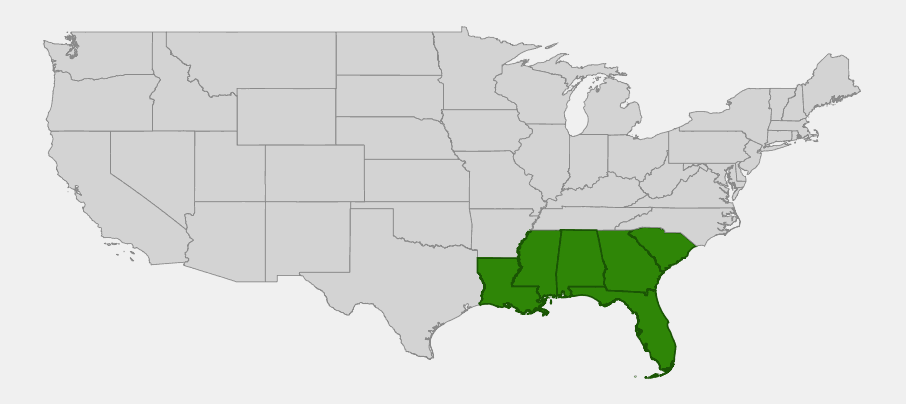
📋 Regional plant lists featuring Saw Palmetto: Georgia, Alabama & Mississippi · Arkansas, Louisiana, Eastern Oklahoma & Eastern Texas · North Carolina & South Carolina
Growing & Care Guide
Saw palmetto is about as low-maintenance as native landscaping gets once it is in the ground, but patience is essential: this is a slow grower that rewards gardeners who give it time rather than fertilizer.
Light
Saw palmetto grows well from full sun to fairly deep shade, which is part of why it dominates so many different plant communities across Florida. In full sun it forms a denser, more compact clump with the best flowering and fruiting; in shadier spots under pines or oaks it grows more openly but still thrives.
Soil & Water
This palm is highly adaptable, growing in deep, well-drained sand as readily as in low, seasonally wet flatwoods soil. Established plants are strongly drought tolerant, drawing on their extensive underground stem systems during dry spells, and they also tolerate occasional standing water. Saw palmetto needs essentially no supplemental irrigation once established beyond its first year or two, and it is notably salt tolerant, making it a good choice for coastal gardens.
Planting Tips
Plant container-grown saw palmetto in spring, giving it a well-drained site with room to spread 6 to 10 feet wide over time. Because nursery-grown plants are slow to establish a strong root system, keep the root ball consistently moist for the first growing season even though mature plants need little water. Wear heavy gloves when handling or planting near saw palmetto, since the leaf-stalk teeth are sharp enough to cut skin easily.
Pruning & Maintenance
Saw palmetto needs almost no pruning. Remove dead or damaged fronds at the base of the stalk as needed, wearing gloves to avoid the saw-toothed petioles. The plant has very few pest or disease problems and does not need regular fertilizing in its native range; it is adapted to the low-nutrient sandy soils of Florida scrub and flatwoods.
Propagation
Saw palmetto is propagated from seed, which should be cleaned of fruit pulp and sown fresh, since viability drops quickly in storage. Germination is slow and can take several months to a year, and seedlings grow very slowly for the first several years as they establish an underground stem system before putting energy into visible top growth. Because of this, nursery-grown saw palmetto is typically more expensive and harder to find in larger sizes than faster-growing landscape plants.
Landscape Uses
- Evergreen groundcover and mass planting beneath pines and oaks, mimicking its natural role in flatwoods
- Coastal and salt-tolerant landscaping near beaches and brackish areas
- Security and barrier plantings below windows, where the saw-toothed leaves discourage foot traffic
- Naturalistic plantings with longleaf pine and wiregrass
- Low-water, low-maintenance landscaping once established
- Wildlife gardens, since the fruit and dense cover support an exceptional range of animals
Wildlife & Ecological Value
Few plants in the southeastern coastal plain support as much wildlife, in as many different ways, as saw palmetto. Its combination of dense evergreen cover, abundant nectar, and heavy fruit crops makes it a true keystone species of Florida’s scrub and flatwoods ecosystems.
For Pollinators
The fragrant spring flowers are a major nectar source for native and honey bees; “palmetto honey” is a distinct, prized varietal across the Southeast. The blooms also draw a wide range of beetles, flies and butterflies during a season when few other plants in pine flatwoods are flowering.
For Birds
Saw palmetto fruit is eaten by a long list of birds, including wild turkey, and the dense fan-leaved thickets provide critical nesting and escape cover for ground-nesting species such as Florida scrub-jay, bobwhite quail, and numerous songbirds that shelter from predators and weather within the clumps.
For Mammals
Black bears depend heavily on saw palmetto fruit in late summer and fall, when it can make up a large share of their diet. White-tailed deer, raccoons, foxes and smaller mammals also eat the fruit, and the dense ground cover shelters everything from marsh rabbits to the endangered Florida panther, which uses saw palmetto thickets as denning and stalking cover.
Ecosystem Role
As the dominant understory plant across millions of acres of Florida scrub and flatwoods, saw palmetto shapes the structure of the entire plant community, moderating light and moisture at ground level and carrying fire through the landscape in the frequent, low-intensity burns these ecosystems depend on. Its deep, extensive underground stems also help stabilize sandy soils.
Cultural & Historical Uses
Saw palmetto has a long history of use by the Indigenous peoples of Florida and the Gulf Coast, including the Seminole, Creek, Choctaw and Timucua, among others. Leaves were widely used for thatching roofs, a practice common enough that at least one Florida place name derives from the word for “palm house.” Fibers from the plant were also woven into cordage and baskets, and archaeological evidence shows saw palmetto fiber was traded far outside its native range, turning up among materials from Indigenous sites as far north as Wisconsin and New York.
The fruit became the basis of a major modern herbal industry beginning in the late 20th century, when extracts were marketed for prostate and urinary health. Saw palmetto berries remain one of the most commercially harvested wild plant products in the eastern United States, collected under permit from both public and private land each fall. Scientific reviews of the extract’s effectiveness for prostate symptoms have been mixed, and recent large reviews have found little to no clear benefit, so any such product should be discussed with a healthcare provider rather than used as self-treatment.
Beyond its herbal trade, saw palmetto remains deeply woven into Florida’s cultural identity. It is the state’s most recognizable native groundcover, featured in state park interpretive displays, used widely in commercial landscaping, and still gathered locally for traditional thatching and craft work in some communities.
Frequently Asked Questions
Does saw palmetto actually cut you?
Yes. The leaf stalks are lined with small, sharp, forward-curving teeth that can easily cut bare skin or snag clothing, which is exactly how the plant earned its common name. Wear thick gloves and long sleeves when planting, pruning, or working near saw palmetto.
How fast does saw palmetto grow?
Very slowly. Seedlings can take years to show much top growth as they first establish an underground stem system, and established clumps expand only a little each year. Mature wild colonies are often estimated to be many decades or even centuries old, so patience is part of growing this plant.
Is saw palmetto fruit edible for people?
The fruit is not a food crop; it has an oily, strongly scented pulp that is unpalatable to most people, and it is grown and harvested commercially for herbal supplement extracts rather than as food. Leave the fruit for wildlife, which rely on it far more than humans ever have.
Does saw palmetto need full sun?
No. It is one of the more shade-tolerant native palms, growing well from full sun to fairly deep shade under pines and oaks. Full sun generally produces a denser clump with more flowers and fruit, but shaded plants still thrive and are a common sight in hammock understories.
Will saw palmetto survive a freeze?
Established saw palmetto tolerates occasional hard freezes within its native range (zones 7b–11), with foliage sometimes browning in a severe cold snap before recovering from the protected growing point near ground level. It is not reliably cold-hardy much north of its native range without protection.

Looking for a nursery that carries Saw Palmetto?
Browse our native plant nursery directory: Alabama · Florida & Georgia · Louisiana & Mississippi · South Carolina