Fraser Fir (Abies fraseri)
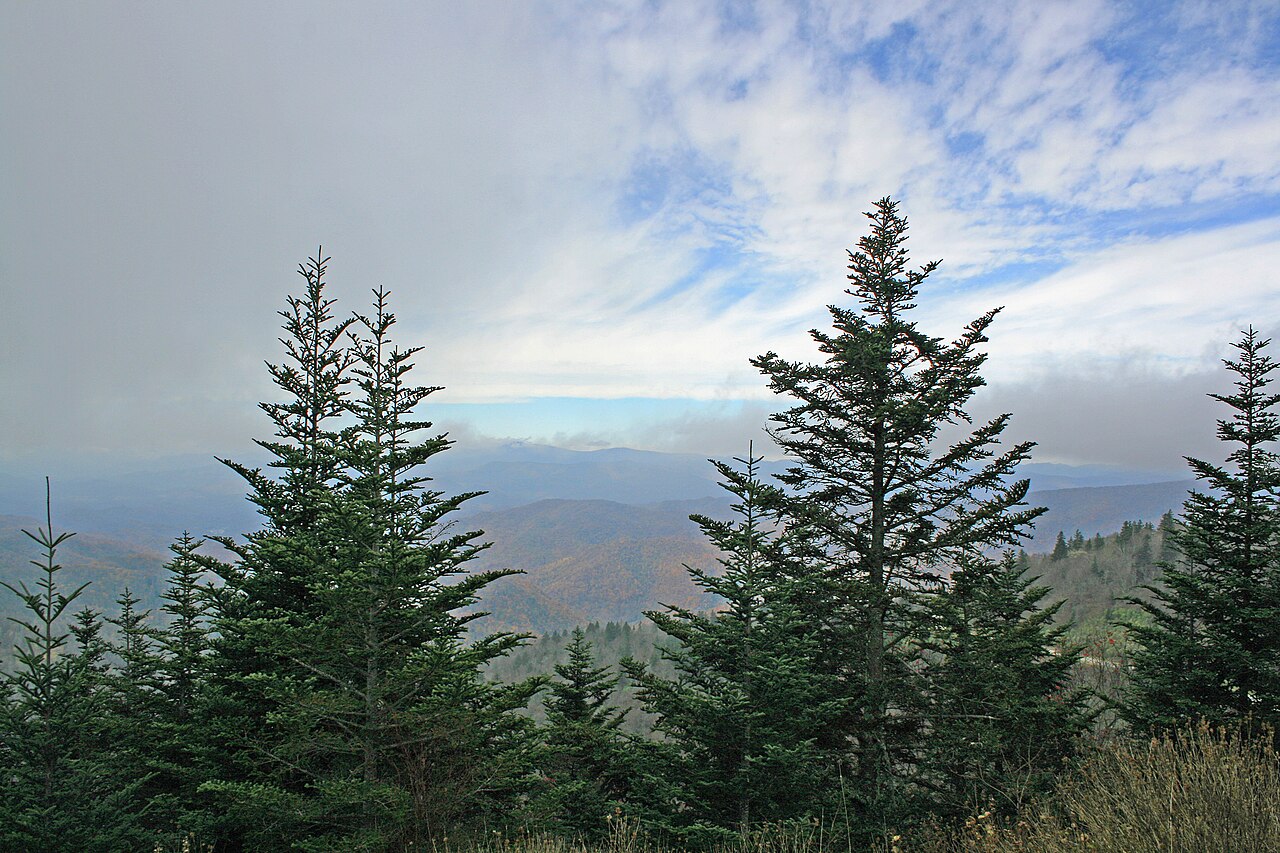
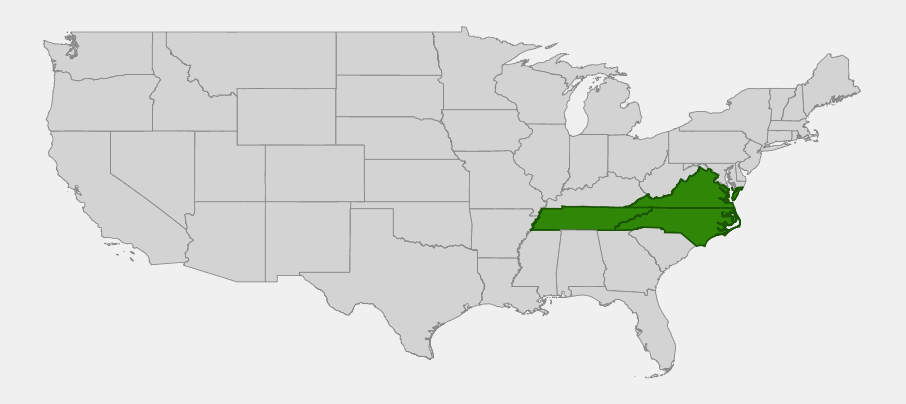
Abies fraseri, the Fraser fir, is a small evergreen conifer endemic to a handful of mountaintops in the southern Appalachians — one of the most range-restricted native tree species in eastern North America. It grows only above roughly 4,000 feet in a scatter of spruce-fir “sky island” forests across southwestern Virginia, western North Carolina, and eastern Tennessee, places cool and cloud-wrapped enough to mimic the climate of New England or southern Canada despite their latitude. Dense, dark blue-green needles, a neat conical form, and a pleasant balsam fragrance have made it famous far beyond its native range as the most popular Christmas tree species grown in the eastern United States.
In the wild, Fraser fir is anything but common. The IUCN lists it as Endangered and NatureServe ranks it G2 (Imperiled), the result of a non-native insect, the balsam woolly adelgid, that has killed the majority of mature trees since its introduction from Europe. Fraser fir forms the canopy of the Southern Appalachian spruce-fir forest, one of the rarest and most threatened forest ecosystems in the country, alongside red spruce. Seedlings regenerate well in the open conditions left by adelgid-killed canopy, and recent surveys show a real recovery underway in places like Great Smoky Mountains National Park.
For gardeners, Fraser fir is a plant of narrow opportunity: it needs the cool, consistently moist, high-humidity conditions of its mountain home, and it generally fails in lowland gardens, hot summers, or drought-prone sites. Outside its native high-elevation range it is grown almost exclusively as a cultivated Christmas tree crop under intensive management, rather than as a durable landscape tree. Within appropriate cool mountain microclimates, though, it is a strikingly handsome specimen conifer and an important species for anyone restoring spruce-fir habitat.
Identification
Fraser fir is a small to medium evergreen conifer, typically 30 to 50 feet tall at maturity with a trunk 20 to 30 inches in diameter, though old-growth individuals have reached 80 feet. The crown is densely conical when young, becoming more open and flat-topped with age, with straight branches held horizontal to slightly upturned.
Bark & Stems
Bark on young trees is thin, smooth, and grayish brown, studded with resin blisters that can be popped to release sticky, aromatic sap — the source of its old folk name “she-balsam.” With age the bark becomes scaly and fissured. Twigs are grayish and finely hairy, and buds are resinous and rounded.
Leaves
Needles are flat, 0.4 to 0.9 inch long, dark to blue-green above with a strong turpentine fragrance, and marked below with two bright white stomatal bands that make the foliage look silvery from underneath. Needles are arranged spirally on the twig but twist at the base to appear two-ranked, spreading to either side with a few needles pointing upward over the top of the shoot — a helpful identification feature that distinguishes it from true two-ranked firs.
Cones
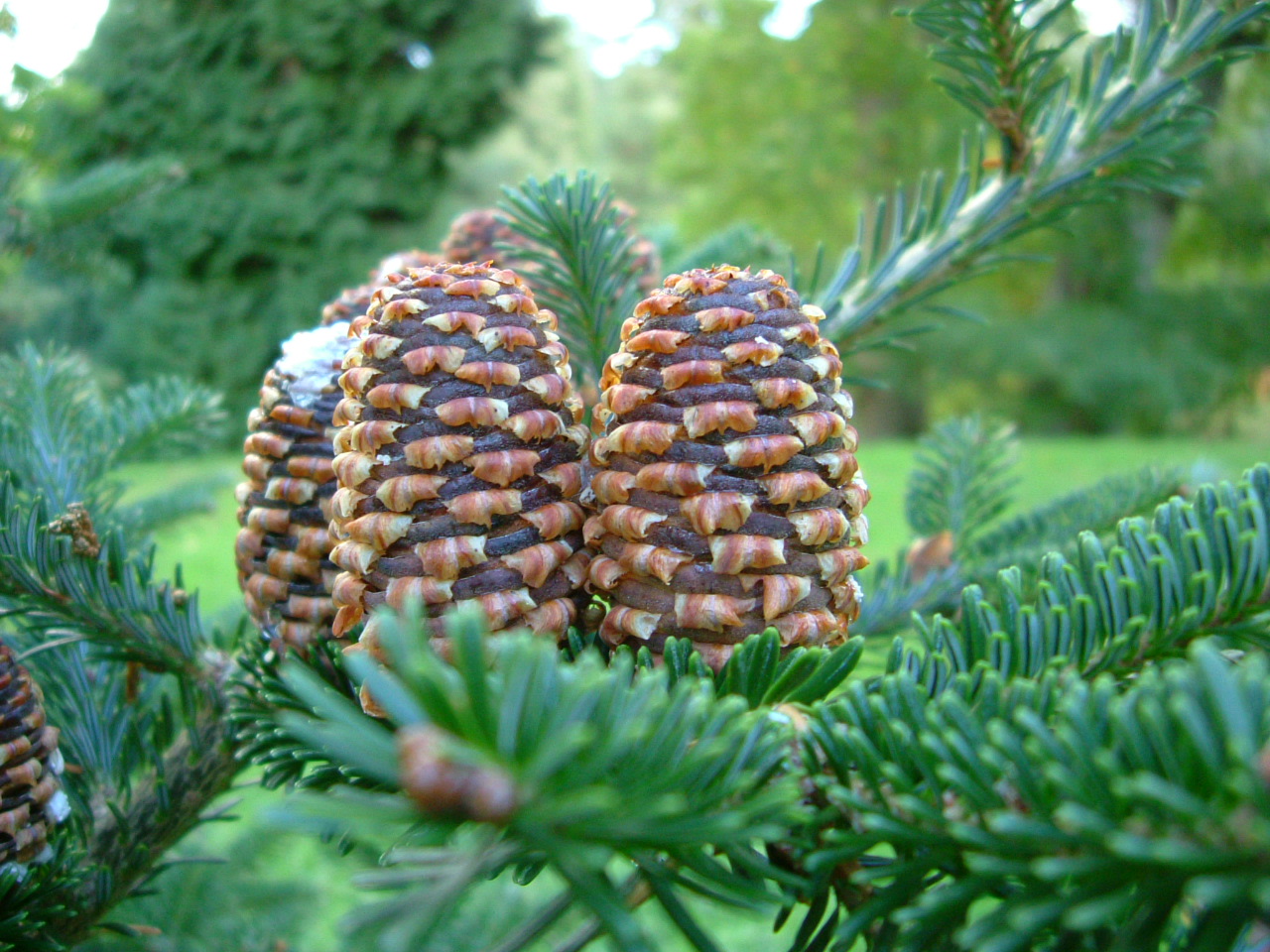
Cones are erect and held upright on the upper branches like candles, 1.4 to 2.8 inches long, cylindrical, dark purple when young and ripening to pale brown. Distinctive long, reflexed bracts extend well past the cone scales, giving mature cones a shaggy, bristled look that is one of the easiest ways to identify the species at a glance. Like all true firs, the cones disintegrate on the tree to release their winged seeds rather than falling intact.
Quick Facts
| Scientific Name | Abies fraseri |
| Family | Pinaceae (Pine) |
| Plant Type | Evergreen Conifer Tree |
| Mature Height | 30–50 ft, rarely to 80 ft |
| Mature Spread | 15–25 ft |
| Growth Rate | Slow to moderate |
| Sun Exposure | Full Sun to Part Shade |
| Water Needs | Moderate to High; requires consistent moisture and humidity |
| Soil Type | Moist, well-drained, acidic sandy loam |
| Soil pH | 4.5–6.0 (acidic) |
| Bloom Time | Mid-May to early June (cones) |
| Flower Color | Not applicable (conifer; cones dark purple) |
| Fall Color | Not applicable (evergreen) |
| Fruit | Upright cones with long reflexed bracts; disintegrate at maturity |
| Deer Resistant | Yes, more resistant than many conifers |
| USDA Hardiness Zones | 4–7 (cool, high-elevation or northern microclimates only) |
Native Range
Fraser fir is endemic to the southern Appalachian Mountains, restricted to roughly 48 scattered high-elevation populations across just seven mountain ranges in southwestern Virginia, western North Carolina, and eastern Tennessee. It grows from about 4,000 feet up to the highest summits in the region, including Mount Mitchell at 6,683 feet, the tallest peak east of the Mississippi River.
Within this narrow band, Fraser fir forms the Southern Appalachian spruce-fir forest together with red spruce, growing in cool, cloud-shrouded conditions with high rainfall, frequent fog, and heavy winter snow that together mimic a much more northern climate. It is typically found on acidic, moist, well-drained sandy loam, often mixed with Carolina hemlock, yellow birch, paper birch, and sugar maple at slightly lower elevations within its zone.
Because this habitat exists only as isolated mountaintop “islands,” Fraser fir populations are naturally fragmented and unusually vulnerable to disturbance. The decline of mature trees from the introduced balsam woolly adelgid has also reduced moss habitat that supports the endangered spruce-fir moss spider, an invertebrate found only in this same forest type.
📋 Regional plant lists featuring Fraser Fir: North Carolina & South Carolina · Kentucky & Tennessee · Maryland, Virginia & West Virginia
Growing & Care Guide
Fraser fir is not a tree for the average home landscape outside its narrow native elevation band or an equivalently cool, humid climate. Within those conditions — typically USDA zones 4 to 7 with cool summers — it is a handsome, fragrant specimen conifer; outside them, it struggles with heat and drought stress and is short-lived.
Light
Give young trees full sun to light shade. In its native high-elevation habitat, ample light combined with consistently cool air and high humidity keeps the dense, symmetrical form that makes the species popular as an ornamental and Christmas tree.
Soil & Water
Fraser fir needs consistently moist, acidic, well-drained soil and struggles badly with both standing water and drought. It depends on the frequent fog and cloud cover of its mountain habitat to maintain favorable plant water status even during warm weather, so gardens in hot, dry, or low-humidity climates are a poor match regardless of soil preparation. Mulching helps conserve soil moisture in cultivated settings.
Planting Tips
Plant balled-and-burlapped or containerized stock in fall or early spring, in a site that stays cool and shaded from harsh afternoon sun, ideally at higher elevation or in a northern climate with cool summers. Avoid low-lying frost pockets as well as hot, exposed, south-facing slopes. Because of its narrow climate tolerance, Fraser fir is best reserved for mountain properties or northern gardens rather than general suburban landscaping.
Pruning & Maintenance
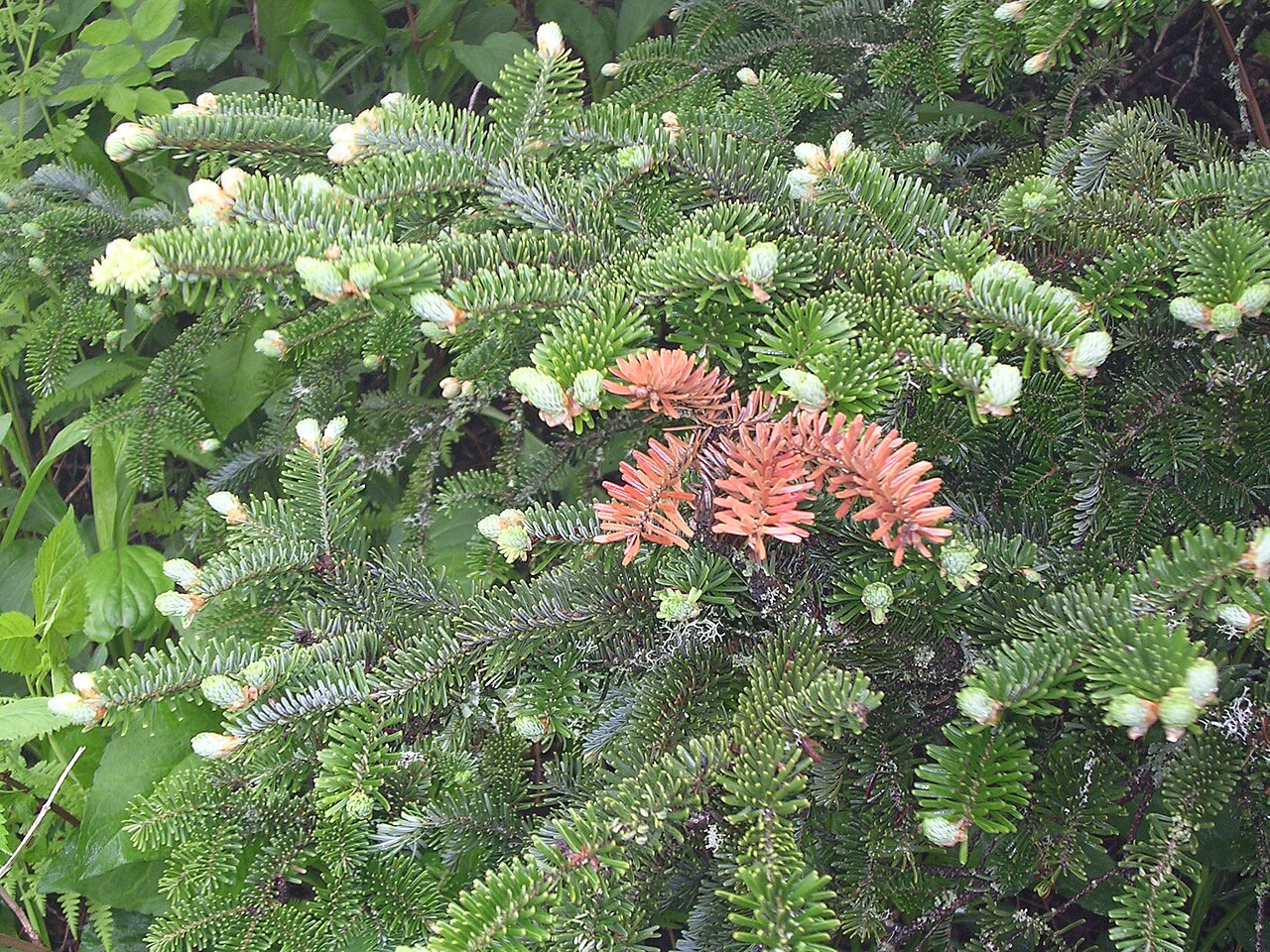
Established trees need little pruning beyond removing dead or damaged branches. Watch closely for the balsam woolly adelgid, a tiny introduced insect that appears as small white, woolly tufts on bark and twigs; it has killed the majority of wild mature Fraser firs and can also damage or kill cultivated trees without monitoring and, where appropriate, treatment. Avoid planting in sites with poor air circulation, which can worsen pest and fungal problems.
Propagation
Fraser fir is propagated from seed, which germinates best after cold moist stratification, on mineral soil, moss, or well-decayed wood and litter that stays consistently moist. Commercial Christmas tree growers typically start seedlings in nursery beds before transplanting to the field, where trees take seven to ten years to reach a marketable 6 to 7 feet.
Landscape Uses
- Specimen conifer in cool, high-elevation or northern gardens
- Spruce-fir habitat restoration plantings in its native range
- Screening and windbreaks where climate conditions suit it
- Christmas tree production, its most common cultivated use
- Conservation plantings supporting recovery after adelgid damage
Wildlife & Ecological Value
As the dominant canopy tree of one of the rarest forest types in the eastern United States, Fraser fir’s ecological importance far exceeds its tiny geographic footprint.
For Pollinators
Like other conifers, Fraser fir is wind-pollinated and provides little direct nectar resource, but its dense canopy and needle litter support the understory moss and fungal communities that many high-elevation invertebrates depend on.
For Birds
Fraser fir and red spruce forest canopies provide essential nesting and foraging habitat for high-elevation specialists such as the red crossbill and golden-crowned kinglet, species closely tied to the cool spruce-fir zone. Winter wrens and various warblers also use the dense cover during breeding season.
For Mammals
Northern flying squirrels, a federally endangered subspecies in parts of the southern Appalachians, rely on mature spruce-fir forest for denning and foraging habitat, making canopy loss from the balsam woolly adelgid a direct threat to their survival. Black bears also pass through these high-elevation forests seasonally.
Ecosystem Role
Fraser fir anchors the Southern Appalachian spruce-fir forest, an ecosystem found nowhere else on Earth and already reduced to scattered mountaintop remnants. Its decline from the balsam woolly adelgid triggered cascading effects including moss habitat loss for the endangered spruce-fir moss spider, underscoring how the fate of this one conifer is tied to the survival of an entire rare ecological community.
Cultural & Historical Uses
Fraser fir takes its name from Scottish botanist John Fraser, who collected extensively in the southern Appalachians in the late 1700s. Historically it was known locally as “she-balsam” because its resin blisters could be “milked” of sap, in contrast to the non-blistering bark of red spruce, which was called “he-balsam.” It has also been called southern balsam fir.
The species has never been an important timber tree, but its dense pyramidal form, strong branches that hold ornaments well, long-lasting soft needles, pleasant fragrance, and excellent needle retention after cutting have made it the most widely used Christmas tree species grown in the eastern United States. North Carolina produces the majority of the nation’s Fraser fir Christmas trees, and in 2005 the state legislature named it North Carolina’s official Christmas tree. It has also served as the White House Christmas tree more often than any other species.
Beyond the holiday trade, Fraser fir has long been valued simply for being present atop some of the most scenic high peaks in the East, and today it is closely tied to conservation efforts in Great Smoky Mountains National Park and other protected high-elevation sites working to document and support its recovery from decades of adelgid damage.
Frequently Asked Questions
Can I grow Fraser fir outside the mountains?
Generally not successfully as a long-lived landscape tree. It needs the cool, humid, high-elevation conditions of its native range or an equivalent cool northern climate; in lowland or hot-summer areas it typically struggles with heat and drought stress.
Why is Fraser fir endangered in the wild?
The introduced balsam woolly adelgid, a European insect, has killed the majority of mature wild trees since its spread through the southern Appalachians. Combined with the species’ already tiny, fragmented mountaintop range, this has pushed Fraser fir to Endangered status on the IUCN Red List.
Is Fraser fir the same tree used as a Christmas tree?
Yes. Fraser fir is the most widely grown Christmas tree species in the eastern United States, prized for its fragrance, needle retention, and sturdy branches, with North Carolina as the leading producer.
How is Fraser fir different from balsam fir?
Fraser fir is closely related to balsam fir (Abies balsamea) and has sometimes been classified as a subspecies or variety of it. Fraser fir’s cone bracts are longer and more visibly exserted beyond the cone scales, and its native range is restricted to the southern Appalachians rather than the broader northern range of balsam fir.
Where can I see wild Fraser fir?
Great Smoky Mountains National Park, the Blue Ridge Parkway near Mount Mitchell, and Grandfather Mountain, North Carolina, along with Mount Rogers in Virginia, all protect accessible stands of native Fraser fir at high elevation.

Looking for a nursery that carries Fraser Fir?
Browse our native plant nursery directory: North Carolina · Tennessee, Virginia