
Bushy Bluestem (Andropogon glomeratus)
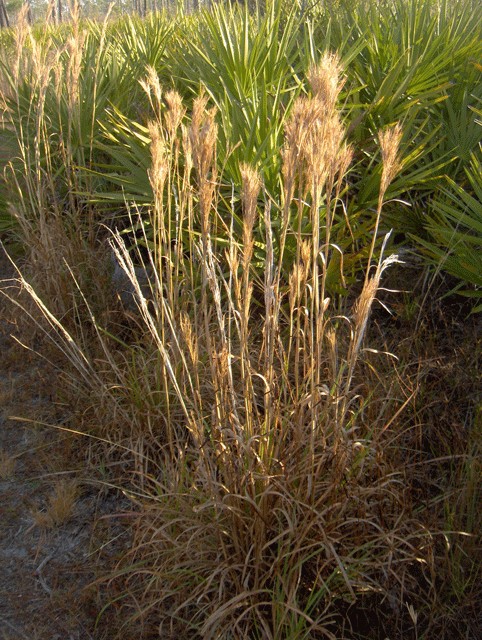
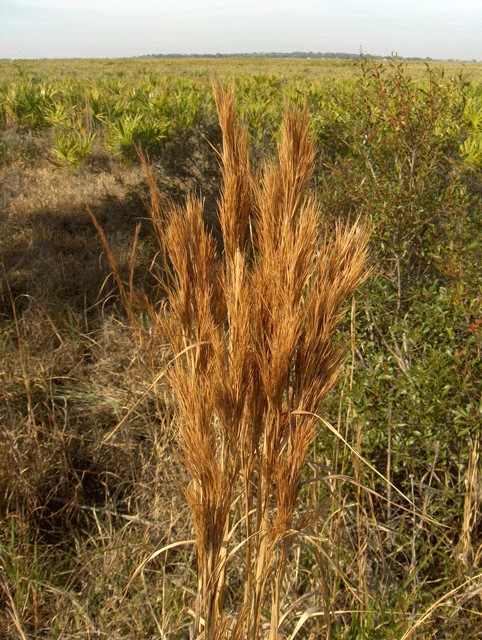
Andropogon glomeratus, known as Bushy Bluestem (also bushy beardgrass, and in Puerto Rico matojilla or yerba barbuda), is a tall, clumping native grass of wet, sunny ground. It grows in upright tufts of blue-green leaves 2 to 5 feet tall, topped from late summer onward by dense, fluffy, broom-like seed heads that catch the light like tufts of silver cotton candy. On the mainland the whole plant turns coppery orange in fall and stays handsome through winter.
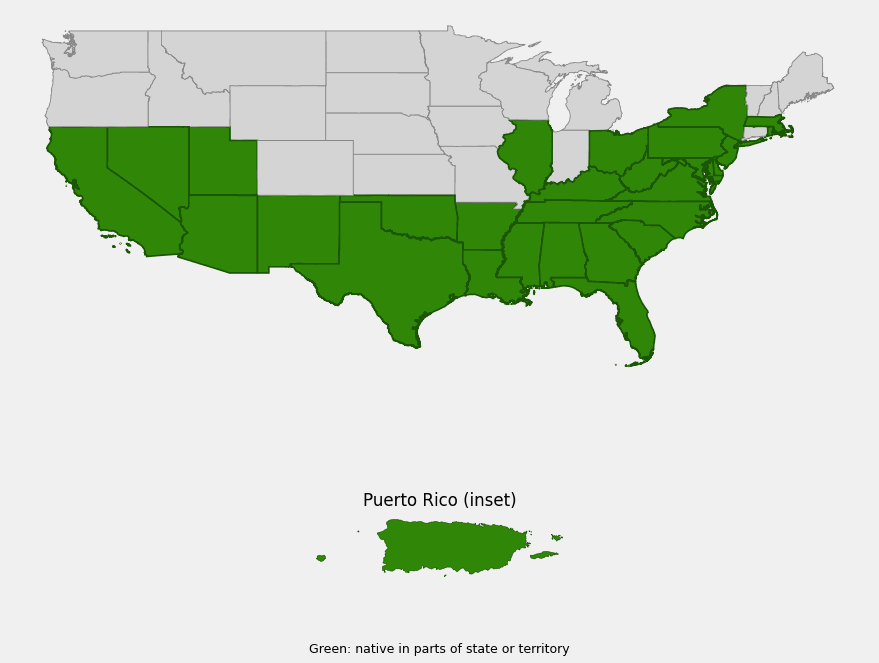
This is one of the most widespread bluestems in the Americas. USDA PLANTS lists it as native in Puerto Rico and the lower 48 states, where it grows from Florida and Texas north to New England and west through the Southwest to California and Nevada. It is introduced in Hawaii and the U.S. Virgin Islands. In Puerto Rico, the Institute for Regional Conservation records it from the Jobos Bay estuarine reserve on the south coast, the Río Abajo State Forest in the northern karst, and the Toro Negro State Forest in the central mountains.
This guide covers how to recognize bushy bluestem and tell it from its relatives, where it grows, how to use it in rain gardens and wet meadows, and what it offers birds, butterflies and other wildlife.
Identification
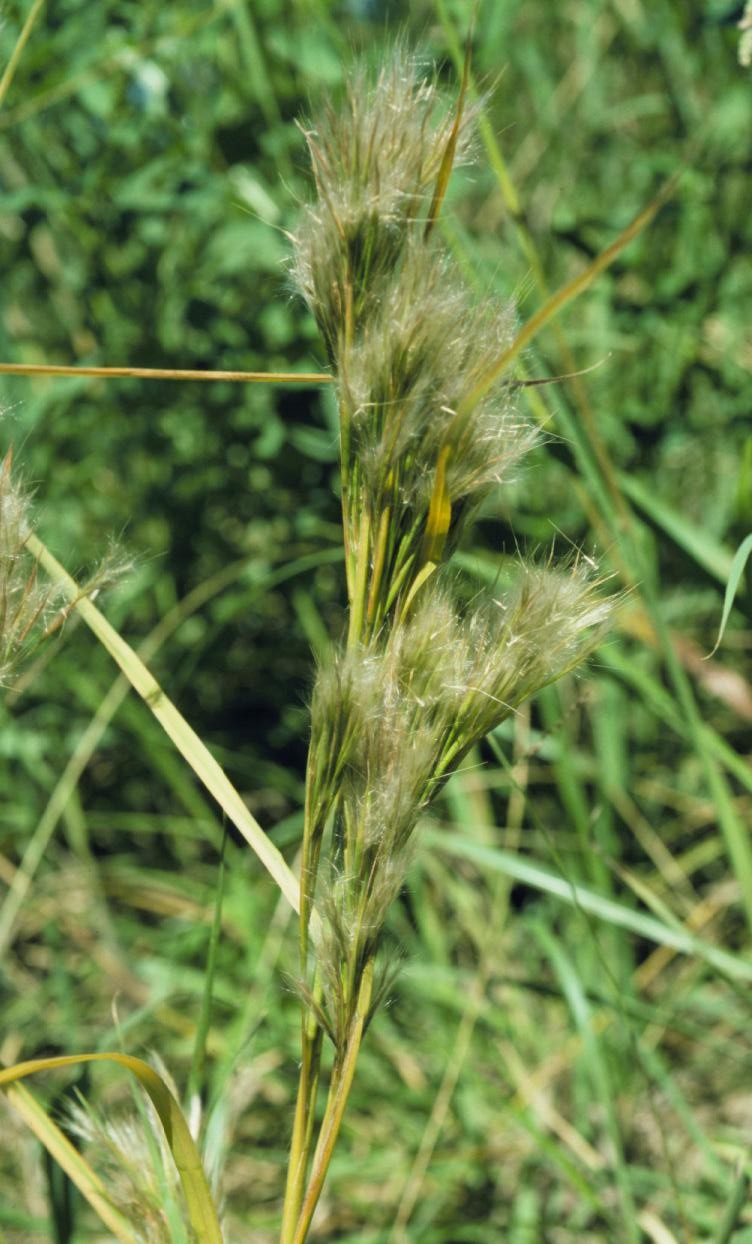
Bushy bluestem belongs to the same group as broomsedge and big bluestem. The best clue is in the name: the flower heads are crowded into a dense, bushy, club- or broom-shaped mass at the top of the stem, rather than spread out along it.
Growth Habit
It is a warm-season perennial bunchgrass that forms dense, upright clumps. Flowering stems usually reach 2 to 5 feet, and occasionally taller in rich, wet soil. The lower stems and leaf sheaths are often flattened and keeled, and the leaves are blue-green to gray-green in summer.
Leaves
Leaf blades are long and narrow, up to about a foot or more, and fold or flatten along the stem. The sheaths are smooth to slightly hairy. In fall on the mainland, leaves and sheaths turn coppery red-brown to salmon-orange, a color that lasts well into winter.
Flower Heads
The flowering stems branch repeatedly toward the top, and each branch ends in a pair of short, slender spikes (racemes) partly wrapped in a swollen, leafy sheath. Long, silky white hairs on the spikelets give the whole top of the plant a fluffy, feathery look. Lady Bird Johnson Wildflower Center records bloom from August to November in the United States, and the heads persist into winter. In the tropics flowering is less tied to a single season.
Similar Species
Broomsedge (Andropogon virginicus) is similar but has seed heads spread more loosely along the upper stem and grows on drier, poorer soils. Bushy bluestem’s dense, crowded “bushy” top and preference for wet ground usually set it apart.
Quick Facts
| Scientific Name | Andropogon glomeratus (Walter) Britton, Sterns & Poggenb. |
| Family | Poaceae (grass family) |
| Plant Type | Warm-season perennial bunchgrass |
| Mature Height | 2–5 ft |
| Mature Spread | 1–2 ft |
| Growth Rate | Moderate to fast |
| Sun Exposure | Full sun |
| Water Needs | High; moist to wet soil |
| Soil Type | Clay, loam or sand; tolerates poor drainage and some salinity |
| Soil pH | Acidic to slightly alkaline |
| Bloom Time | August–November on the mainland |
| Flower Color | Silvery-white, fluffy seed heads |
| Fall Color | Copper to salmon-orange (mainland) |
| Fruit | Small grain carried on hairy spikelets; wind-dispersed |
| Deer Resistant | Yes |
| USDA Hardiness Zones | 5–11; also frost-free Puerto Rico |
Native Range
Bushy bluestem is native to the Americas. The Lady Bird Johnson Wildflower Center describes its natural range as Florida to the eastern half of Texas, north to New England, with outlying areas in Kentucky, Oklahoma, New Mexico, Arizona and California, and south through Mexico to Central America and the West Indies. USDA PLANTS lists it as native in Puerto Rico and the lower 48 states, with records from Alabama, Arizona, Arkansas, California, Delaware, the District of Columbia, Florida, Georgia, Illinois, Kentucky, Louisiana, Maryland, Massachusetts, Mississippi, Nevada, New Jersey, New Mexico, New York, North Carolina, Ohio, Oklahoma, Pennsylvania, Rhode Island, South Carolina, Tennessee, Texas, Utah, Virginia and West Virginia. In the dry West it is found mostly near springs, seeps and streams.
In Puerto Rico, the Institute for Regional Conservation lists it as native and present from the lowlands up to middle elevations of about 1,000 meters, with records from the Jobos Bay National Estuarine Research Reserve, the Río Abajo State Forest in the northern karst and the Toro Negro State Forest in the Cordillera Central. There it grows in wet pastures, ditches, marsh edges and open, disturbed ground. Across its range it favors low, moist, sunny sites: grassland swales, roadside ditches, wet savannas and pine flatwoods, bogs and the edges of marshes.
USDA PLANTS lists the species as introduced in Hawaii and the U.S. Virgin Islands, so it is not included on PlantNative’s Hawaii list. Because it seeds heavily and colonizes disturbed, wet ground, it can be weedy in pastures; CABI notes that it has been listed as a weed in Puerto Rico. In a garden that same vigor makes it a dependable plant for difficult wet spots.
📋 Regional plant lists featuring Bushy Bluestem: Puerto Rico · North & South Florida · Alabama, Georgia & Mississippi · North & South Carolina · Maryland, Virginia & West Virginia · Kentucky & Tennessee · Arkansas, Louisiana, Eastern Oklahoma & Eastern Texas · South & West Texas · Illinois, Iowa & Missouri · Ohio & Indiana · New York, Pennsylvania & Northern New Jersey · Delaware, Southern New Jersey & Long Island · Connecticut, Massachusetts & Rhode Island · Arizona & New Mexico · Utah & Western Colorado · California & Nevada
Growing & Care Guide
Bushy bluestem is one of the easiest native grasses for wet, sunny places. Give it sun and moisture and it does the rest.
Light
Plant it in full sun. In shade it grows lanky, flops and flowers poorly. The Lady Bird Johnson Wildflower Center notes that full sun and moisture are essential.
Soil & Water
It grows in clay, loam or sand, and tolerates poor drainage, standing water for short periods, and some salt. Moist to wet soil is ideal: rain gardens, pond and stream edges, drainage swales and low spots that stay damp. Once established it tolerates short dry spells, but it is not a plant for dry, sandy uplands.
Planting Tips
Set plants 18 to 24 inches apart for a massed planting or plant singly as an accent. Plant in spring or at the start of the rainy season so roots establish while moisture is plentiful. Container plants can become root-bound quickly, so do not leave them in pots too long.
Pruning & Maintenance
Leave the stems standing through winter for color and for seed-eating birds, then cut clumps back to a few inches before new growth begins. The plant seeds out heavily and may flop once it reaches full height, so it is best suited to larger, naturalistic plantings where volunteers are welcome. Pull unwanted seedlings while small.
Propagation
Grow it from seed or by dividing established clumps. Sow fresh seed on the surface of moist soil in warm weather and keep it damp until seedlings establish. Divide clumps during the dormant season on the mainland.
Landscape Uses
- Rain gardens and bioswales: thrives in soil that is wet after storms
- Pond and stream edges: helps hold soil along wet banks
- Wet meadows and prairies: fluffy seed heads and winter color
- Wildlife gardens: seed, cover and nesting material
- Puerto Rico wetland edges: a native grass for wet pastures and ditches
Wildlife & Ecological Value
Like other native bunchgrasses, bushy bluestem provides food, cover and nesting material through much of the year.
For Pollinators
Grasses are wind-pollinated, so bushy bluestem does not attract pollinators for nectar. However, the Xerces Society notes that it provides nesting materials and structure for native bees, and the Lady Bird Johnson Wildflower Center lists it as a larval host for skippers and satyr butterflies, whose caterpillars feed on grass leaves.
For Birds
Seeds are eaten by songbirds, including field sparrows and juncos, and by other granivorous birds. Birds use the fluffy seed heads and leaves as nesting material, and the dense clumps provide cover through winter.
For Mammals
Seeds are eaten by small mammals, and the clumps provide good cover for small animals. It is occasionally browsed by deer but is generally considered deer resistant.
Ecosystem Role
Bushy bluestem is a common grass of wet savannas, marsh edges and other open wetlands, where its deep, fibrous roots help hold soil. It readily colonizes newly disturbed wet ground, which makes it useful for stabilizing ditches and restoration sites, but also means it can become weedy in pastures.
Cultural & Historical Uses
The species was first described in 1788 by Thomas Walter in Flora Caroliniana, from plants in South Carolina, and was moved to Andropogon by Nathaniel Lord Britton and colleagues in 1888. The genus name comes from Greek words for “man” and “beard”, referring to the hairy spikelets of many species, and glomeratus means “bunched” or “clustered”, describing the crowded seed heads.
Its Puerto Rican names reflect its appearance and habit: yerba barbuda means “bearded grass”, and matojilla is a diminutive of matojo, a word for a bushy, weedy plant.
Today bushy bluestem is increasingly grown as an ornamental grass for rain gardens and naturalistic plantings. Its bright, fluffy seed heads and copper winter color have made it popular with gardeners in the Southeast, and it is offered by many native plant nurseries.
Frequently Asked Questions
Is bushy bluestem native to Puerto Rico?
Yes. USDA PLANTS lists Andropogon glomeratus as native in Puerto Rico, where it is known as matojilla or yerba barbuda, and the Institute for Regional Conservation records it in Jobos Bay, Río Abajo and Toro Negro.
Will bushy bluestem grow in standing water?
It tolerates poor drainage and short periods of standing water, and thrives in rain gardens, ditches and pond edges. It is not a true aquatic plant, so avoid permanently flooded spots.
Is bushy bluestem invasive?
It is native across much of the United States and in Puerto Rico. It does seed heavily and can be weedy in pastures, and it is introduced in Hawaii, where it should not be planted.
How is it different from broomsedge?
Broomsedge (Andropogon virginicus) has seed heads spread loosely along the upper stem and grows in dry, poor soil. Bushy bluestem has a dense, crowded top and grows in wet soil.
What other native bluestems can I grow?
For drier soils, try little bluestem (Schizachyrium scoparium) or, in larger spaces, big bluestem (Andropogon gerardii).

Looking for a nursery that carries Bushy Bluestem?
Our nursery directory does not yet include Puerto Rico. Browse the native plant nursery directory by state: Alabama–Arkansas · California · Colorado–Hawaii · Idaho–Kansas · Kentucky–Montana · Nebraska–Oklahoma · Oregon · Pennsylvania–Virginia · Washington · West Virginia–Wyoming