Hooker’s Evening Primrose (Oenothera elata)
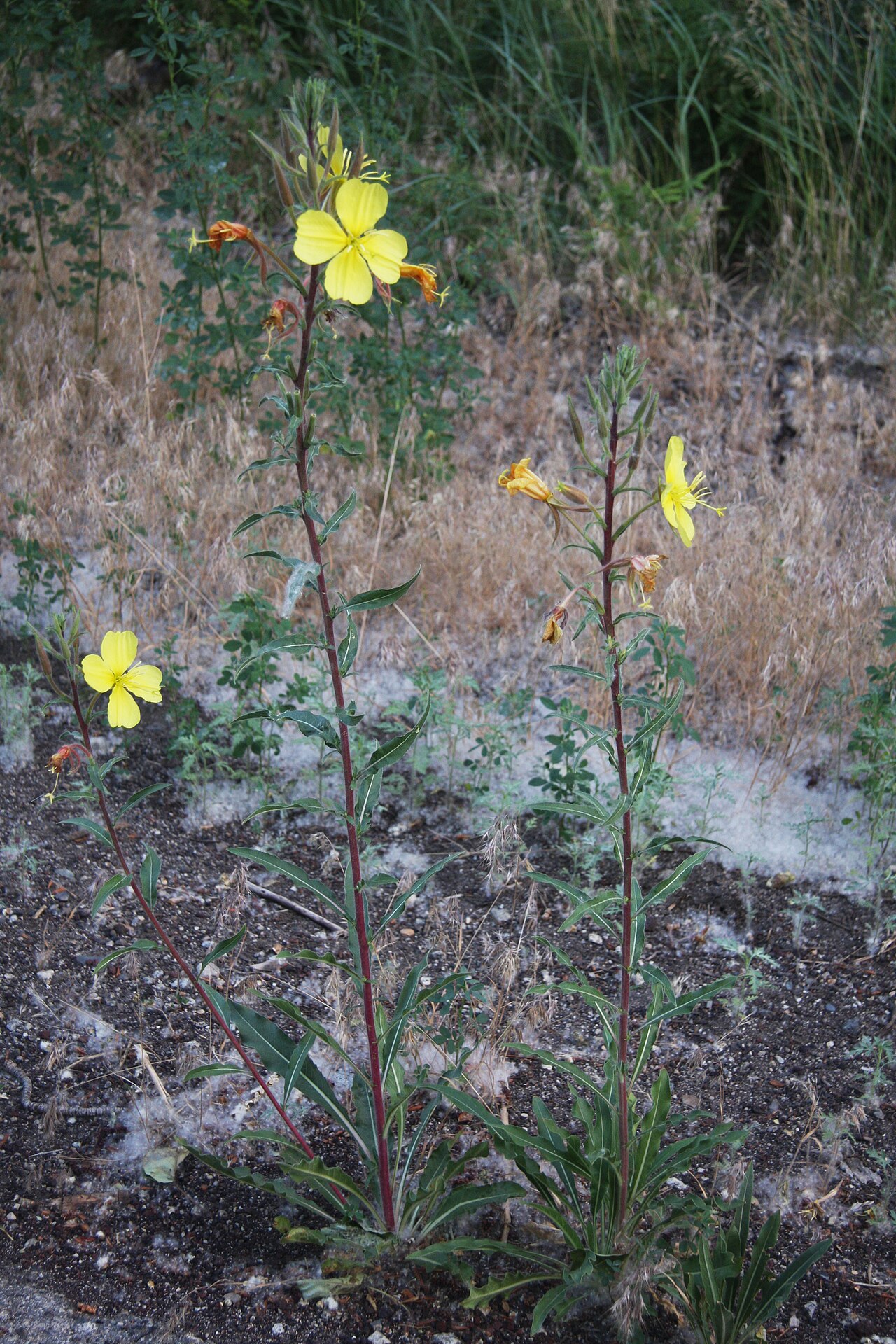
Oenothera elata, commonly known as Hooker’s Evening Primrose or Tall Evening Primrose, is a tall, striking native wildflower of the western and central United States, prized for its large, lemon-yellow flowers that unfurl in the evening and often stay open into the following morning. It belongs to the Onagraceae (evening primrose family), and its big, four-petaled blooms, reddish stems, and towering flower spikes make it one of the most dramatic native wildflowers for a western garden.
Typically biennial or short-lived perennial, Hooker’s Evening Primrose spends its first year as a low rosette of narrow leaves close to the ground, then sends up a tall, leafy flowering stalk in its second year that can reach 3 to 7 feet. Each evening through summer, new flowers open along the upper stem in a slow-motion show, attracting night-flying hawkmoths that are drawn to the pale color and sweet scent.
Several subspecies are recognized across its range — including ssp. hookeri along the Pacific Coast, ssp. hirsutissima in the interior West, and others in the Rocky Mountains and Southwest — and taxonomists have long debated exactly where to draw the lines between them. For garden purposes, all share the same tall habit, big yellow flowers, and value to night pollinators, so this page treats Oenothera elata as a whole.
Identification
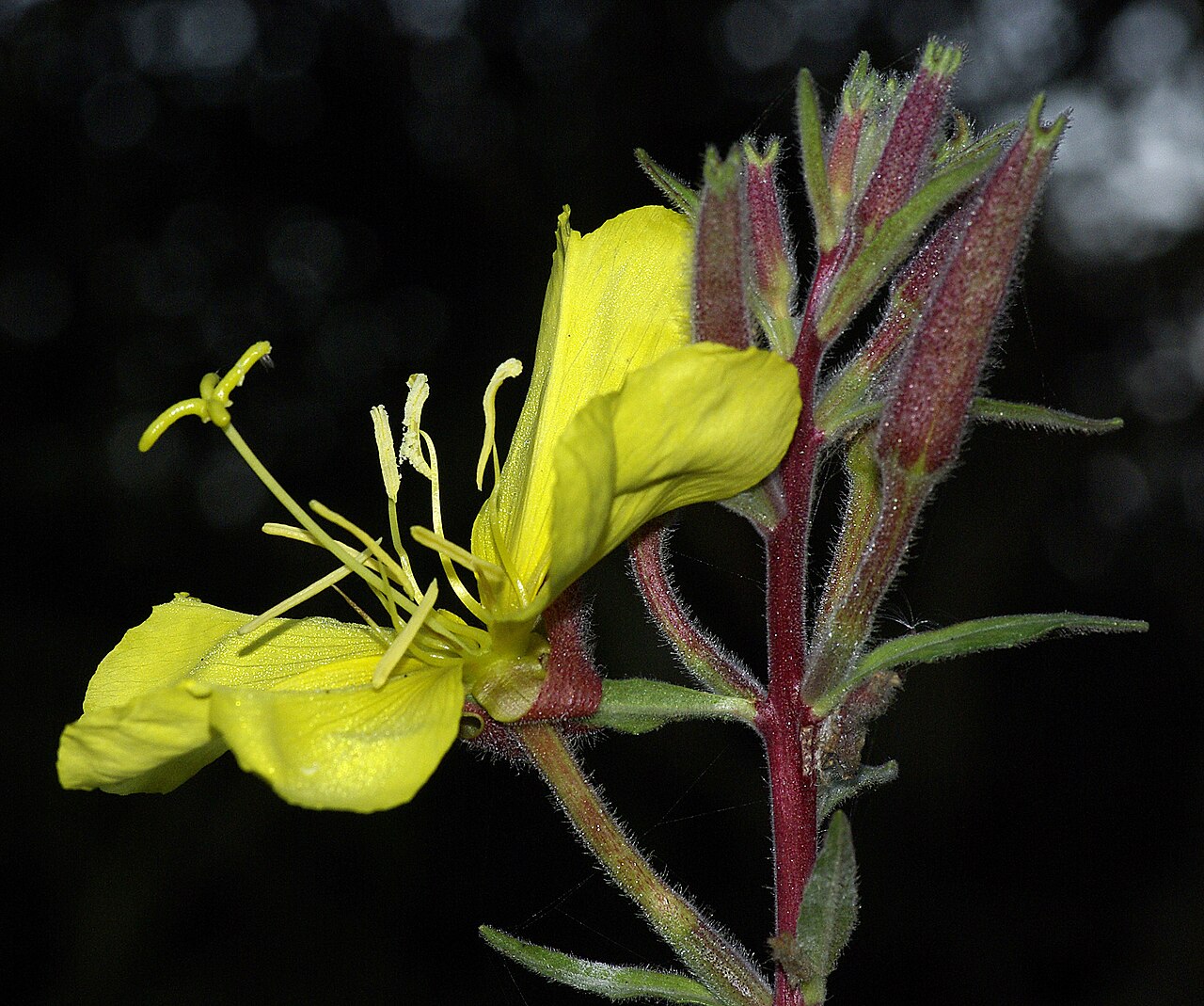
Hooker’s Evening Primrose grows as a basal rosette in its first season, then bolts into an erect, often unbranched flowering stalk 3 to 7 feet tall (occasionally taller in favorable sites), with reddish, hairy stems that are easy to spot even before the flowers open.
Stems & Leaves
The basal leaves form a rosette of narrow, lance-shaped leaves 4 to 8 inches long with shallow teeth, often tinged red at the midrib. As the plant bolts, smaller lance-shaped leaves alternate up the flowering stem, which is covered in soft to stiff hairs and typically has a reddish or purplish cast, especially in strong sun.
Flowers & Fruit
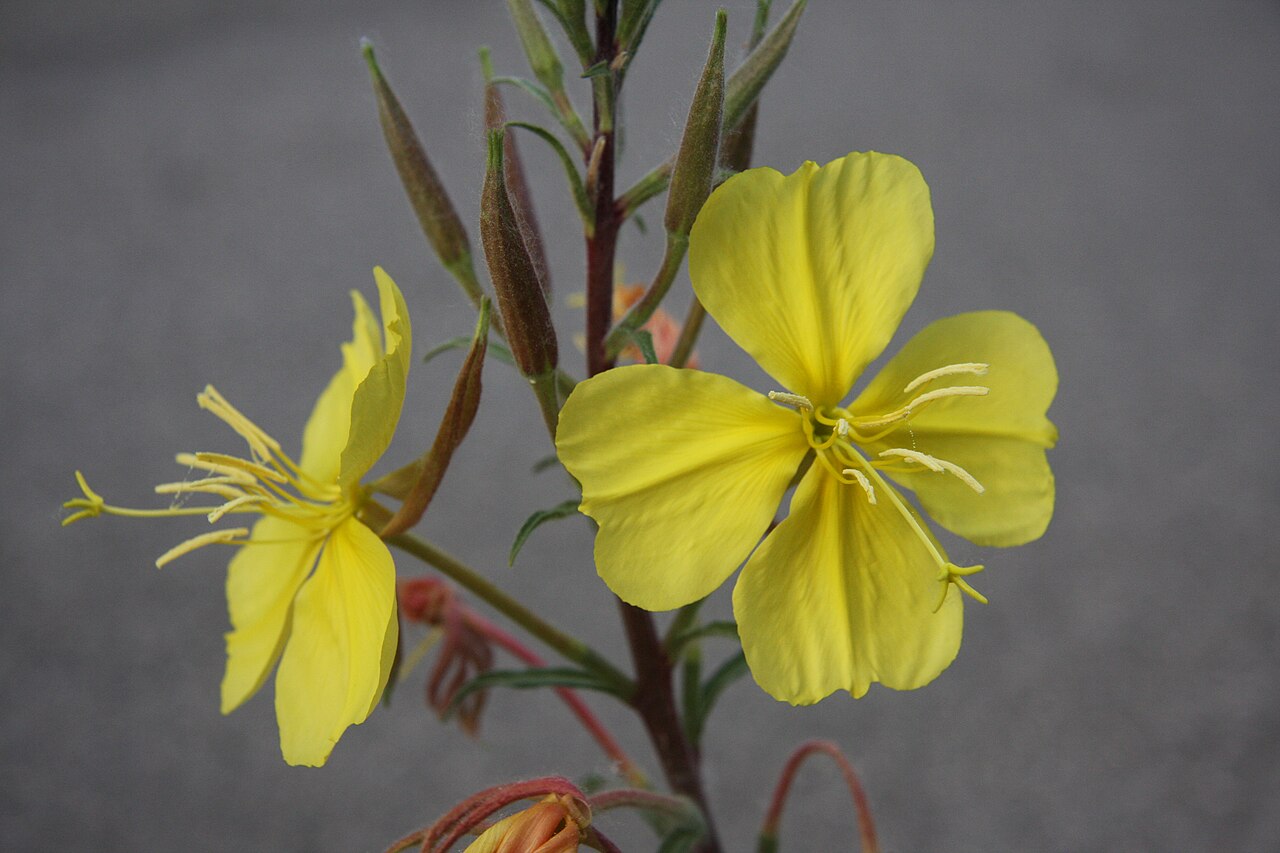
Flowers are large for a wildflower, 2 to 4 inches across, with four broad, overlapping, lemon-yellow petals and a prominent cross-shaped stigma surrounded by eight curved stamens. They open in the evening — sometimes visibly unfurling in a matter of minutes — and typically fade to orange or pink by the next afternoon as they wilt, a helpful identification clue since a single stalk may show fresh yellow flowers at top and spent orange ones lower down at the same time. After pollination, each flower develops into a narrow, cylindrical seed capsule up to 1.5 inches long that splits open to release numerous small seeds.
Quick Facts
| Scientific Name | Oenothera elata |
| Family | Onagraceae (Evening Primrose) |
| Plant Type | Biennial to short-lived Perennial Wildflower |
| Mature Height | 3–7 ft |
| Mature Spread | 1–2 ft |
| Growth Rate | Fast once bolting; self-seeds readily |
| Sun Exposure | Full Sun to Part Shade |
| Water Needs | Average; prefers some moisture but tolerates dry spells |
| Soil Type | Adaptable; moist to well-drained sand, loam, or gravel |
| Soil pH | 6.0–7.5 (neutral tolerant) |
| Bloom Time | June – September |
| Flower Color | Yellow, fading to orange/pink |
| Fall Color | None notable |
| Fruit | Narrow cylindrical seed capsules to 1.5 in |
| Deer Resistant | Moderate (occasionally browsed) |
| USDA Hardiness Zones | 5–10 |
Native Range
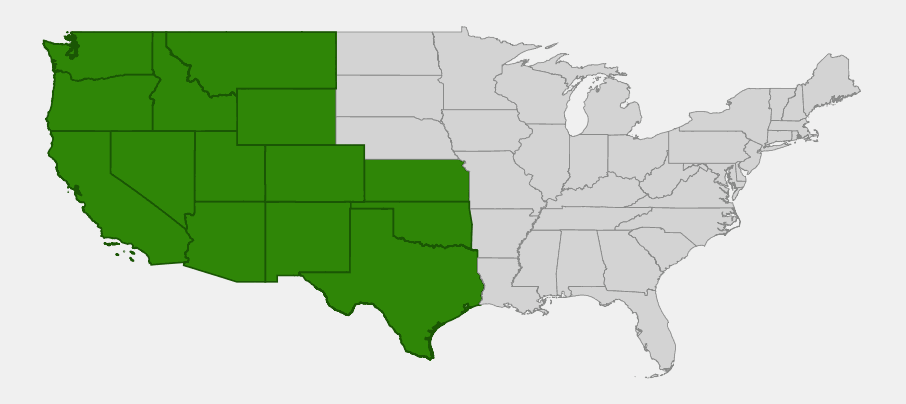
Hooker’s Evening Primrose is native across much of the western and south-central United States, from Washington and Oregon south through California to Arizona and New Mexico, and east across the Great Basin and Rocky Mountains into Montana, Wyoming, Colorado, Utah, Nevada, Idaho, Kansas, Oklahoma, and Texas. It also occurs in Baja California and parts of Mexico.
Across this range it favors open, disturbed, or seasonally moist ground: streambanks, seeps, roadside ditches, canyon bottoms, meadow edges, and recently disturbed soil from elevations near sea level up into montane zones above 8,000 feet in the Rockies and Sierra Nevada. It is often one of the first tall wildflowers to colonize bare ground after fire, flooding, or grading.
Because it is widespread, fast to establish, and tolerant of disturbed soil, Hooker’s Evening Primrose plays an important early-succession role across many western plant communities, stabilizing bare ground while providing a reliable nectar source for night-flying pollinators.
📋 Regional plant lists featuring Hooker’s Evening Primrose: California & Nevada · Western Oregon & Western Washington · Idaho, Eastern Oregon & Eastern Washington · Utah & Western Colorado · Nebraska, Kansas & Eastern Colorado · Montana & Wyoming · Arizona & New Mexico · Arkansas, Louisiana, Eastern Oklahoma & Eastern Texas · South & West Texas
Growing & Care Guide
Hooker’s Evening Primrose is easy to grow from seed and rewards minimal care with a dramatic, tall display of evening blooms its second year.
Light
Full sun produces the sturdiest stems and the most flowers, though plants tolerate part shade, especially in hot, low-elevation gardens where some afternoon shade reduces stress.
Soil & Water
This species is adaptable to a wide range of soils but performs best with at least occasional moisture — it is often found naturally near seeps and streambanks. In garden settings, average garden soil with regular watering during the first year produces the best second-year bloom; established plants tolerate some drought but may flower less and stay shorter.
Planting Tips
Sow seed in fall or early spring directly where plants are to grow, since the rosette resents transplanting once a taproot forms. Expect only a low rosette the first year — the dramatic flowering stalk comes in year two. Because it self-seeds readily, a single planting often maintains itself as a mix of first-year rosettes and second-year flowering stalks once established.
Pruning & Maintenance
Deadhead spent flower stalks to limit self-seeding, or leave some seed capsules to mature for next year’s plants and for birds. Cut the dead flowering stalk down after it finishes in fall; it will not bloom again.
Propagation
Grow from seed, which germinates readily without special pretreatment when sown in fall or cold-stratified before spring sowing. Volunteer seedlings transplant best while still small.
Landscape Uses
Hooker’s Evening Primrose brings height and drama to naturalistic western plantings:
- Back-of-border accent for its tall, architectural flowering stalks
- Moth and night-pollinator gardens, planted where evening blooms can be enjoyed
- Streamside and rain garden plantings that mimic its natural seep habitat
- Naturalized meadows and restoration plantings on disturbed ground
- Xeriscape and low-water gardens once established
Wildlife & Ecological Value
Hooker’s Evening Primrose is built around a nighttime pollination strategy, and its ecological value reflects that specialty.
For Pollinators
The large, pale, fragrant flowers open at dusk specifically to attract night-flying sphinx moths and hawkmoths, which hover and probe the deep floral tube much like hummingbirds do by day; the white-lined sphinx moth is a frequent visitor. Bees and other daytime pollinators also visit flowers that remain open into the morning.
For Birds
Hummingbirds occasionally visit the flowers for nectar in the early morning before they fully wilt, and seed-eating birds forage the ripe capsules in fall.
For Mammals
Deer and other browsers occasionally eat the foliage and flowering stalks, though the plant is not a preferred forage and is generally considered only moderately palatable.
Ecosystem Role
As a fast-establishing colonizer of disturbed and seasonally moist ground, Hooker’s Evening Primrose helps stabilize soil on streambanks, floodplains, and burned areas while providing an early source of structure and nectar as longer-lived perennials and shrubs become established around it.
Cultural & Historical Uses
Various Indigenous peoples across the western United States historically used evening primroses, including Oenothera elata and its relatives, for food and traditional medicine, eating young roots or shoots in some regions and preparing other plant parts for various remedies. These are historical ethnobotanical practices recorded in the literature, not modern food or medical guidance, and Hooker’s Evening Primrose is not cultivated as a food crop today, unlike its relative common evening primrose (Oenothera biennis), whose seed oil is sold commercially.
Early botanical collectors in the 19th century, including those honoring the British botanist William Jackson Hooker, documented the striking tall evening primroses of the American West, and the common name Hooker’s Evening Primrose persists from that era of exploration.
Today the species is grown mainly for its dramatic height, large yellow flowers, and value to night-flying pollinators, fitting naturally into western wildlife gardens and restoration plantings rather than as a food or herbal crop.
Frequently Asked Questions
Does Hooker’s Evening Primrose bloom the first year?
No. It typically grows as a low rosette the first year and sends up its tall flowering stalk the second year, behaving as a biennial. Established plantings usually include both stages at once once they are self-sowing.
Why do the flowers change color?
The large yellow flowers open in the evening and fade to orange or pink by the next afternoon as they wilt — a normal part of the bloom cycle, not a sign of a problem. A single stalk often shows fresh yellow flowers at the top and spent orange ones below at the same time.
What pollinates Hooker’s Evening Primrose?
Mainly night-flying sphinx and hawkmoths, drawn to the pale color and fragrance after dusk. Bees and other insects also visit flowers that are still open in the morning.
How tall does Hooker’s Evening Primrose get?
Most flowering stalks reach 3 to 7 feet in its second year, making it one of the taller native wildflowers for a western garden border.
Is Hooker’s Evening Primrose the same as common evening primrose?
No. Common Evening Primrose (Oenothera biennis) is a related but distinct, mostly eastern and central species with a somewhat different growth habit; Hooker’s Evening Primrose (Oenothera elata) is native to the West and tends to grow taller with larger flowers.

Looking for a nursery that carries Hooker’s Evening Primrose?
Browse our native plant nursery directory: Arizona · California · Colorado · Idaho & Kansas · Montana · New Mexico, Nevada & Oklahoma · Oregon · Texas & Utah · Washington · Wyoming
Related native primroses: Evening Primrose · Tufted Evening Primrose. See also: Growing Evening Primrose from Seed and Drought-Tolerant Native Plants for Arizona.