Western Vervain (Verbena lasiostachys)
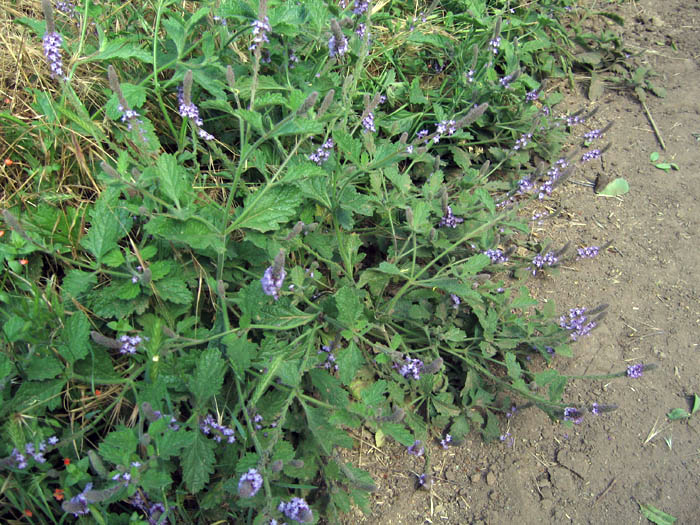
Verbena lasiostachys, commonly called Western Vervain, is a low, sprawling native perennial wildflower found through much of California and into southwestern Oregon. It belongs to the Verbenaceae (vervain family), the same family as the eastern Blue Vervain (Verbena hastata) and Hoary Vervain (Verbena stricta), and shares their characteristic square stems and small, tubular, five-lobed flowers. The species name lasiostachys means “woolly-spiked,” describing the soft, hairy flower spikes that are one of its most recognizable features.
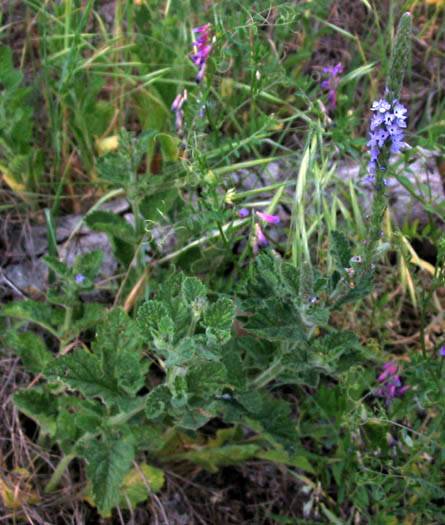
Unlike the stiffly upright eastern vervains, Western Vervain tends to sprawl or scramble, with stems that lean outward or lie along the ground before turning up at the tips, forming loose mounds or informal mats rather than erect spires. Its rough, coarsely toothed leaves and lavender-to-blue-violet flower spikes are a familiar sight in California grasslands, oak woodlands, and roadsides from late winter through summer, wherever the soil holds a little moisture.
Two recognized varieties occur across its range: the more common var. lasiostachys, and the more densely hairy var. scabrida, found mostly in the drier chaparral and coastal sage scrub of southern California. Both share the same garden value — an easy, drought-tolerant native that fills in bare ground, feeds pollinators over a long season, and asks for almost nothing once established.
Identification
Western Vervain is a low, often sprawling perennial typically 1 to 3 feet tall, with stems that may stand erect, lean, or trail along the ground depending on growing conditions and competition from neighboring plants. The square, four-angled stems are characteristic of the vervain family and are usually covered in short, rough or spreading hairs.
Stems & Leaves
The leaves are opposite, triangular-ovate to broadly lance-shaped, 1 to 3 inches long, with coarsely toothed to shallowly lobed margins. Leaf surfaces are rough to the touch (scabrous), more densely hairy in var. scabrida than in var. lasiostachys, giving the foliage a dusty gray-green cast in drier, sunnier sites. Lower leaves are often larger and more deeply cut than the smaller leaves near the flowering stems.
Flowers & Fruit
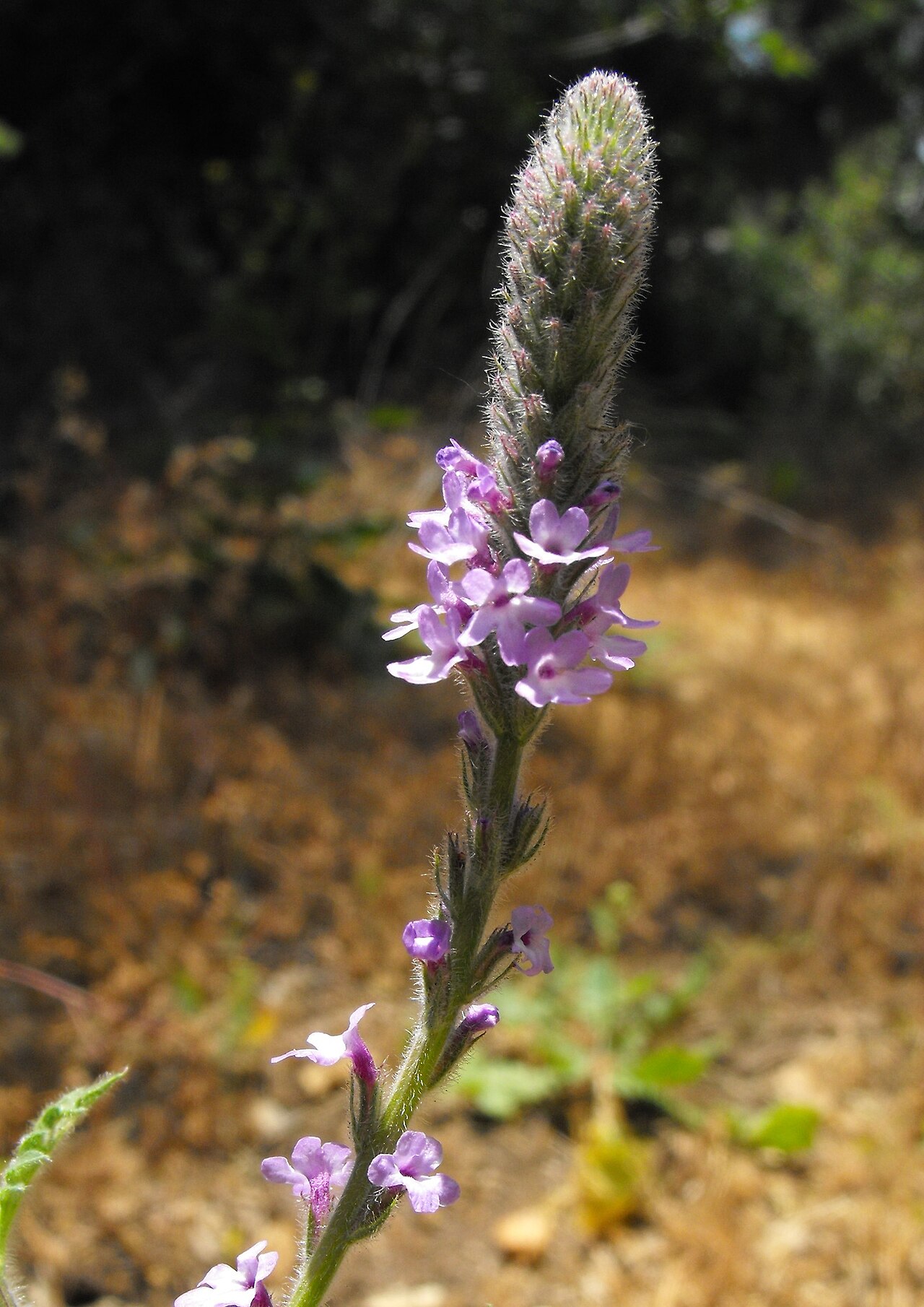
Flower spikes are soft and distinctly hairy or “woolly,” elongating as the season progresses so that open flowers cluster near the growing tip while spent flowers and developing fruit trail down the lengthening spike. Individual flowers are small, tubular, and five-lobed, in shades of lavender, blue-violet, or occasionally pale pink, blooming from late winter into summer or even fall where moisture allows repeat flushes. Each flower matures into a small dry fruit that splits into four tiny nutlets.
Quick Facts
| Scientific Name | Verbena lasiostachys |
| Family | Verbenaceae (Vervain) |
| Plant Type | Herbaceous Perennial Wildflower (sprawling) |
| Mature Height | 1–3 ft |
| Mature Spread | 2–4 ft (sprawling habit) |
| Growth Rate | Moderate to fast; self-seeds readily |
| Sun Exposure | Full Sun to Part Shade |
| Water Needs | Average while establishing; drought tolerant once rooted in |
| Soil Type | Tolerates clay, loam, and disturbed ground |
| Soil pH | 6.0–7.5 (neutral tolerant) |
| Bloom Time | February – September, moisture dependent |
| Flower Color | Lavender to blue-violet |
| Fall Color | None notable; foliage dies back in summer drought |
| Fruit | Tiny brown nutlets |
| Deer Resistant | Yes (rough, bitter foliage) |
| USDA Hardiness Zones | 8–10 |
Native Range
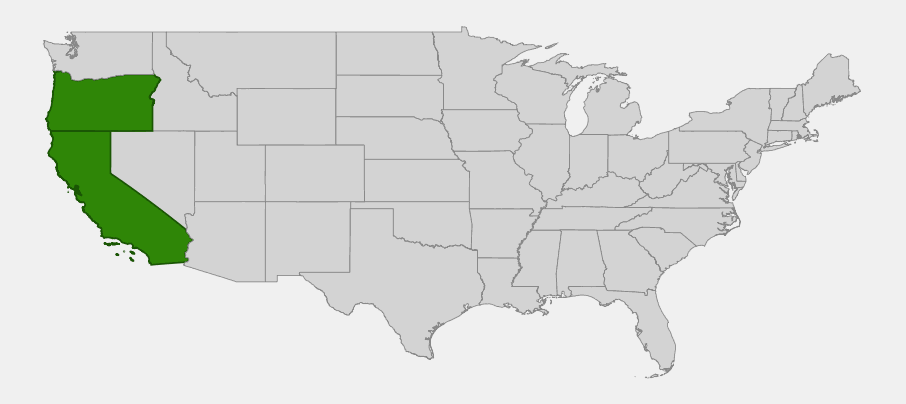
Western Vervain is native to California, where it occurs in nearly every county from the coast to the foothills and into the Central Valley, and it extends north into southwestern Oregon. It grows from near sea level up to around 5,000 feet, becoming less common at higher, colder elevations where other vervains take over.
Typical habitat includes open grasslands, oak woodland edges, chaparral margins, vernal pool margins, and disturbed ground such as roadsides, trail edges, and old fields. It often grows alongside or weaves through taller grasses and herbs, using its sprawling stems to lean on neighboring vegetation for support. The species tolerates the long, dry California summer by dying back to the root crown, then resprouting with the first rains.
Because it adapts readily to disturbed soil, Western Vervain is a common early colonizer after grading, fire, or grazing disturbance, and it persists in many altered landscapes across its native range, from suburban lots to grazed rangeland.
📋 Regional plant lists featuring Western Vervain: California & Nevada · Western Oregon & Western Washington
Growing & Care Guide
Western Vervain is a forgiving, low-water native that fills gaps in a California or southwestern Oregon garden with minimal care once it is established.
Light
Plant Western Vervain in full sun to part shade. It flowers most heavily in sun, though it tolerates the light shade of an oak woodland edge, one of its common wild settings.
Soil & Water
It is not fussy about soil, tolerating clay, loam, and disturbed ground alike. Water regularly the first season to establish a deep root system; after that, Western Vervain is quite drought tolerant and can get by on seasonal rainfall alone in most of its range, though occasional deep summer watering keeps it blooming longer.
Planting Tips
Set out nursery plants or direct-sow seed in fall to take advantage of winter rains. Western Vervain self-seeds readily once established, so a few plants will fill in a sunny bed or slope within a couple of seasons; give it room to sprawl rather than confining it to a tight formal border.
Pruning & Maintenance
Cut plants back hard after summer dormancy sets in, or in late fall, to tidy up dried stems and encourage fresh growth with the rainy season. Deadheading spent spikes during the bloom season can extend flowering and limit self-sowing in smaller gardens.
Propagation
Grow from seed sown in fall, or divide established clumps in early spring. Cuttings taken from non-flowering stems in spring will also root readily.
Landscape Uses
Western Vervain works well in informal, low-water native plantings:
- Dry meadow and grassland gardens mixed with native bunchgrasses
- Slope and bank plantings, where its sprawling habit helps hold loose soil
- Pollinator gardens, for its long bloom season and easy care
- Oak woodland understory at the sunnier edges
- Low-water and fire-wise landscaping once established
- Restoration plantings on disturbed or recently graded ground
Wildlife & Ecological Value
Western Vervain’s long bloom season makes it a steady, low-key resource for pollinators across much of the California growing year.
For Pollinators
Native bees, including small sweat bees and bumble bees, visit the flowers for nectar and pollen, along with butterflies such as checkerspots and skippers. Because flowering can stretch from late winter into fall depending on rainfall, Western Vervain helps bridge gaps between the showier spring wildflower bloom and the sparser pollinator forage of summer.
For Birds
The small nutlets that follow the flowers provide modest seed forage for sparrows and other seed-eating birds, particularly where plants are left standing through the dry season rather than cut back immediately.
For Mammals
The rough, bitter foliage discourages browsing by deer and rabbits, which makes Western Vervain a reliable choice in gardens with heavy deer pressure.
Ecosystem Role
As an early colonizer of disturbed and recently burned ground, Western Vervain helps stabilize bare soil and provides quick cover and forage while longer-lived shrubs and grasses reestablish. Its sprawling growth habit also helps knit together loose soil on slopes and banks.
Cultural & Historical Uses
Various California Indigenous peoples historically used native vervains, including Western Vervain, in traditional plant medicine, typically preparing the leaves or roots for general remedies. These uses are recorded as part of a long tradition of regional ethnobotanical knowledge; they are historical practices, not modern medical guidance, and Western Vervain is not used as food or a household remedy today.
Spanish and later American settlers in California were already familiar with vervains from Old World folklore, where various Verbena species carried a long reputation for protective and ceremonial use dating to antiquity, and that general association with the genus was sometimes extended informally to the California natives encountered after settlement.
Today, Western Vervain’s value is mainly horticultural and ecological: a tough, adaptable native that asks for little water, feeds pollinators over a long season, and helps hold the soil on the dry slopes and grasslands where it naturally grows.
Frequently Asked Questions
Is Western Vervain drought tolerant?
Yes, once established. It needs regular water the first season to build a deep root system, but after that it handles California’s dry summers well, often dying back and resprouting with fall rains.
Does Western Vervain spread aggressively?
It self-seeds readily and sprawls to fill available space, which makes it excellent for informal slopes and meadow gardens but potentially too enthusiastic for a tidy formal bed. Deadhead spent flowers if you want to limit spread.
What is the difference between Western Vervain and Blue Vervain?
Blue Vervain (Verbena hastata) is an upright, eastern and central U.S. native with stiff, narrow spikes, while Western Vervain (Verbena lasiostachys) is a sprawling California and southwestern Oregon native with soft, “woolly” spikes. They occupy different native ranges and rarely overlap in gardens.
Is Western Vervain good for pollinators?
Yes. Its long bloom season, often from late winter into fall, provides nectar and pollen for native bees and butterflies at times when fewer other wildflowers are in bloom.
How tall does Western Vervain grow?
Most plants reach 1 to 3 feet, but the sprawling stems can spread 2 to 4 feet wide, so it behaves more like a low, loose mound than an upright wildflower.

Looking for a nursery that carries Western Vervain?
Browse our native plant nursery directory: California · Oregon
Related native vervains: Blue Vervain · Hoary Vervain. See also: Low-Maintenance Native Plants for California and choosing ornamental native plants for landscaping.